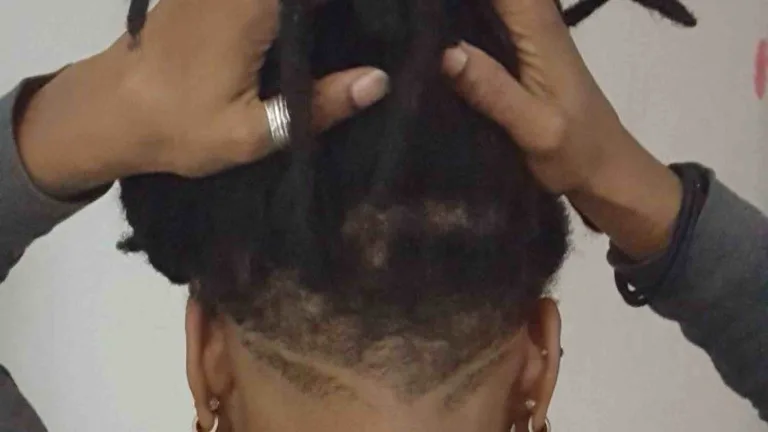
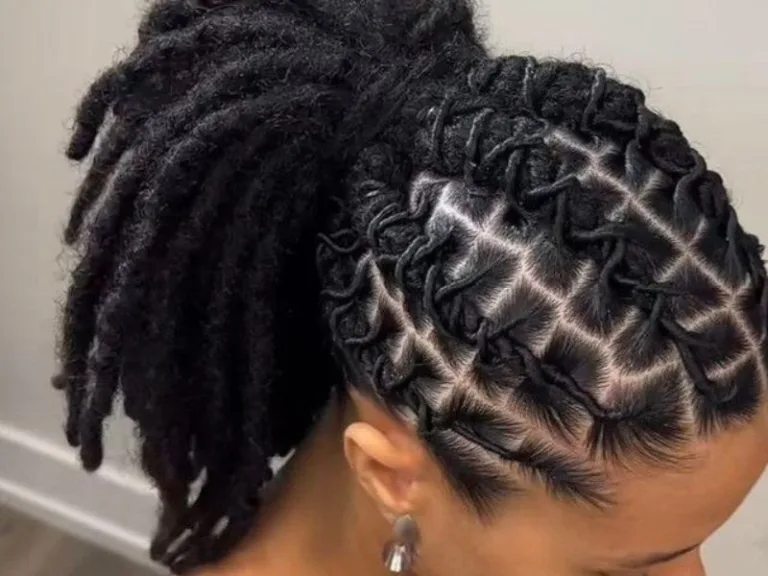
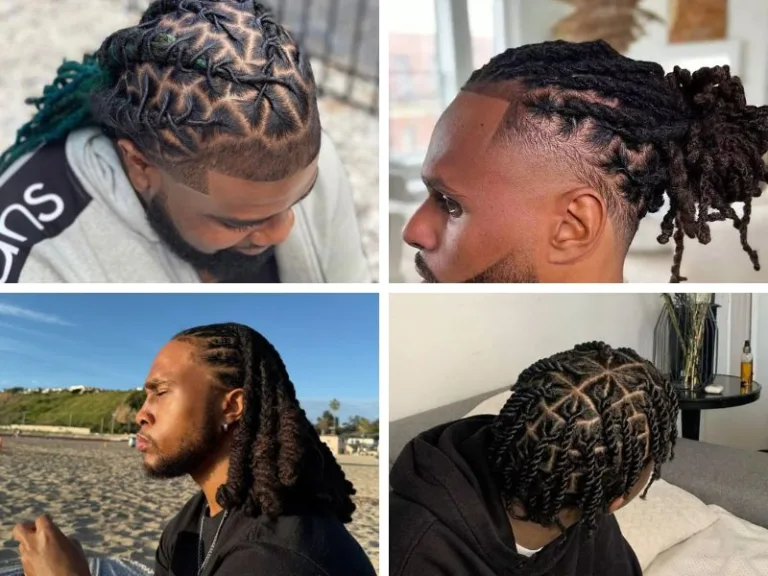
Exosome therapy for Loc thinning is an procedure many Loc – lovers need to understand. Thinning is predominantly detected at the roots, edges, crown, or hairline, which are the areas that normally experience the most tension and, therefore, the highest likelihood of thinning.
As hair restoration treatments gain attention, exosome therapy is increasingly seen as a promising option for people with thinning locs.
Unlike traditional treatments targeting only the hair shaft, this method specifically addresses the scalp and hair follicles.
It is essential to clearly understand what exosome therapy can and cannot achieve before including it in your loc care routine.

This segment outlines the process of exosome therapy, how it works, and what users can expect.
What is Exosome Therapy and how does it work?
Exosome therapy is a regenerative technique that uses exosomes (nanoparticles secreted by stem cells) as its main component. These messengers deliver growth factors, proteins, and crucial signaling molecules to target cells, facilitating cellular communication and repair.
In hair and scalp care, exosome therapy is used to promote healthier follicle function. Instead of creating new follicles, it is done by making the surrounding area of existing ones more hospitable.
By promoting increased cellular activity and improved blood flow, exosomes may help weak follicles function more effectively.
Exosome therapy, unlike hair transplants or surgical procedures, is not at all about relocating hair from one area of the scalp to another.
No cutting, grafting, or removal of locs is involved. Instead, the treatment focuses on improving scalp health at the cellular level, thereby empowering existing hair.
Top 6 Reasons for Loc Thinning in 2026
Before taking any advanced measures, it is crucial to comprehend the reasons behind loc thinning. Thinning is almost always multifactorial.
It usually starts with a single factor and worsens over time as more factors affect the scalp and hair follicles.
Roots become weaker and can no longer support the weight of mature locs when these factors overlap.
Awareness of the causes helps loc wearers make the right decisions about maintenance, styling, and treatment options.
1. Tension From Tight Styles And Frequent Retightening
Source
Repeated tension at the root is one of the most significant causes of loc thinning. Tight hairstyles, aggressive retightening, and frequent interlocking put constant stress on the same scalp areas.
This tension eventually reduces blood flow to the follicles, and thus they become unable to hold the hair securely.
Thin or fine hair gets especially prone to this. Too frequent retightening of locs, or pulling them too tightly to look neat, might cause the root area to gradually shrink.
This may lead to thinning, which will become more apparent with each maintenance cycle.
2. Traction Alopecia Around The Hairline And Crown
Traction alopecia is defined as hair loss caused by continuous pulling over a long period of time.
For loc wearers, this is most likely going to be seen along the hairline, temples, and crown. These areas already have hair that is naturally finer and more sensitive to the pulling force.
Practices such as tight ponytails, hair buns, or pulling back of locs can aggravate the condition.
Once traction alopecia starts, continued stress can make it difficult for the hair to regrow fully, even after changing styling habits.
3. Postpartum and Hormonal Shedding
Hair health is significantly affected by hormonal changes. Post-pregnancy weight gain and shedding, due to declining hormone levels, can make loc roots feel thinner or looser.
Hormonal shifts from stress, thyroid imbalances, or aging can disrupt the hair growth cycle.
When shedding outpaces regrowth, thinning at the loc base becomes increasingly noticeable.
4. Nutritional Deficiencies
Strong hair follicles depend on good nutrition. Deficiencies in iron, protein, vitamins, or minerals can weaken the hair from the root.
If the body is deprived of these nutrients, hair growth might slow, and existing strands might become brittle.
Weakened new growth for loc wearers might not be able to hold the weight of the mature locs.
This imbalance, over time, might lead to thinning or breakage close to the scalp.
5. Scalp Conditions And Buildup
A vigorous scalp is the foundation of firm locs. Persistent dryness, inflammation, dandruff, or the use of many products may hinder the function of hair follicles.
Hair growth may slow or weaken when the scalp is both clogged and irritated.
Heavy products that are not cleansed properly can also cause hair roots to become stressed by adding extra weight and residue. Tthe combination of these factors may lead to gradual thinning.
6. Genetic Thinning Patterns
Some individuals inherit a predisposition to thinning hair. These patterns often remain unnoticeable until later in life, but wearing locs can make thinning more apparent.
As people age, hair follicles shrink and produce finer strands. These finer strands struggle to support locs.
Source
Genetic thinning does not imply that locs cannot be kept; however, it requires more frequent, gentler care, less tension, and scalp treatments that allow for support.
Exosome Therapy for Loc Thinning Process
Exosome therapy for loc thinning is a well-thought-out, medically followed procedure. The practitioners’ methods may differ, though the major steps are usually the same.
Here is a clear, sequential description of the whole process from the consultation to recovery.
Step 1: Initial Consultation And Scalp Assessment
The first step in the process is a consultation with a trained medical or aesthetic professional with experience in hair and scalp treatments.
The provider’s assessment should cover:
- Degree of loc thinning and its distribution.
- Condition of scalp: presence of inflammation, dryness, or accumulation.
- Hair care regimen; styling methods, retightening intervals, and tension areas.
- Factors that could be hormones, stress, nutrition, or genetics.
This step cannot be skipped, as exosome therapy is most effective on weakened yet active follicles. In case of completely inactive or scarred follicles, the treatment might not be that successful.
The doctor uses this evaluation to determine whether to administer exosome therapy and to select the scalp areas where the treatment should be applied.
Step 2: Treatment Planning And Preparation
A treatment plan is generated once the suitability is established. This plan will include:
- Delineating the areas of thinning, such as the crown, hairline, or specific loc bases.
- Choosing the delivery method, which is generally microinjections (tiny injections using fine needles) or microneedling-assisted (tiny pinpricks with a device), topical application.
- Going over aftercare instructions and setting realistic expectations.
The scalp is cleansed before application to remove oil, buildup, or debris. This not only allows the exosomes to penetrate freely but also minimizes the chance of irritation or infection.
Step 3: Application Or Injection Of Exosomes
The exosome solution is then directly administered to the scalp and not the loc shaft. This is an important difference for loc users.
Microinjections, which are small injections made into the scalp at thinning areas. Application combined with microneedling for better absorption.
The objective is to introduce exosomes as close to the root as possible. These exosomes release growth factors that support follicle repair, blood circulation, and cell activity.
Read also: Exosome Body Serums for Skin Laxity: The Breakthrough Solution for Firmer Skin
Generally, the treatment is well-accepted, and no cutting, removal, or changes to locs are performed.
Step 4: Immediate Post-Treatment Care
After treatment, most individuals experience minimal to no downtime. There might be mild redness, tenderness, or sensitivity at the injection sites, which, however, will usually disappear within a short time.
Post-treatment instructions often contain:
- Keeping a distance from heavy sweating or serious workouts for some time.
- Scalp maintenance with light products only and clean.
- Retightening or tight styles are being delayed for a recommended period.
Adherence to aftercare instructions helps safeguard the scalp during the initial phases of the follicles responding to the treatment.
Step 5: Gradual Response And Ongoing Support
Exosome therapy does not produce immediate, visible changes. The treatment is performed gradually by creating a favorable scalp environment and supporting the follicles’ function over time.
During the period of weeks and months after the treatment, some individuals report noticing:
- Less shedding at the root.
- New growth that is stronger and more stable.
- Less inflammation and discomfort in the scalp area.
While some hair restoration methods are more effective than others, scalp conditions such as tension, hormonal imbalance, or nutritional deficiencies often lead to the best results when addressed.
The combined treatment of exosome therapy with gentler loc maintenance can still lead to satisfactory long-term effects in the case of hesitation about the need for multiple sessions among some providers.

If you are a loc wearer, exosome therapy will have its greatest effect when combined with good lifestyle habits. Among these are:
- Lessening of the pulling caused by styles or retightening.
- Staggering interlocking sessions.
- Scalp care and hydration improvement.
- Nutrition and stress management as support for hair health.
The patient is not cured but is supported through therapy. If included in a scalp-care strategy, it may help slow thinning and strengthen the roots of healthy locs, thereby increasing the number of healthier locs over time.
Final Words
Exosome therapy is a new treatment that aims to restore scalp function rather than interfere with the loc itself.
The treatment may be beneficial for loc wearers with thinning hair, as it can help strengthen roots and facilitate new hair growth when combined with proper care and lifestyle changes.
Always consult a qualified professional before considering any advanced treatment, as it is necessary to ensure the treatment is suitable for your scalp condition, your loc journey, and your long-term hair goals.
Frequently Asked Questions
1. Can Exosomes Reverse Hair Thinning?
Exosomes have the potential to reverse hair loss if the follicles are still alive but weak. They do so by enhancing intercellular communication, improving scalp conditions, and boosting follicular activity.
This could be a way to slow hair loss while simultaneously supporting stronger hair growth at the root. Nonetheless, exosomes are not responsible for the creation of new follicles.
The degree of their success depends on the cause of hair loss, the promptness of treatment, and the resolution of factors such as stress, inflammation, or nutrient deficiencies.
2. Can Exosomes Bring Back Hair Follicles That Are Dead?
Exosomes cannot restore follicles that are completely dead or already scarred. When a follicle has completely ceased to exist due to long-term traction alopecia or scarring, regeneration becomes impossible.
However, exosome therapy is helpful for dormant or weakened follicles that still hold the potential for hair production. Only a professional scalp evaluation can determine whether the follicles are still viable.
3. How Long Does Exosome Hair Treatment Last?
The outcomes of exosome hair treatments are gradual and can last from several months to a year, depending on individual factors like scalp health, genetics, lifestyle, and ongoing hair care practices.
It is common for providers to recommend follow-up sessions or maintenance treatments to maintain results.
Scalp care, together with stress reduction, is the most important for prolonging the effects.
4. Which Is Better: PRP or Exosomes for Hair Loss?
There isn’t a clear winner in this battle; both methods have different uses. PRP is based on blood drawing and delivers growth factors, whereas exosomes deliver concentrated regenerative signals from stem cells.
Generally, exosomes are more likely to provide a wider range of growth factors and work more quickly for some.
Moreover, PRP is more commonly used and, therefore, might be easier to get. The right choice is determined by the cause of hair loss, scalp condition, and the professional’s advice.