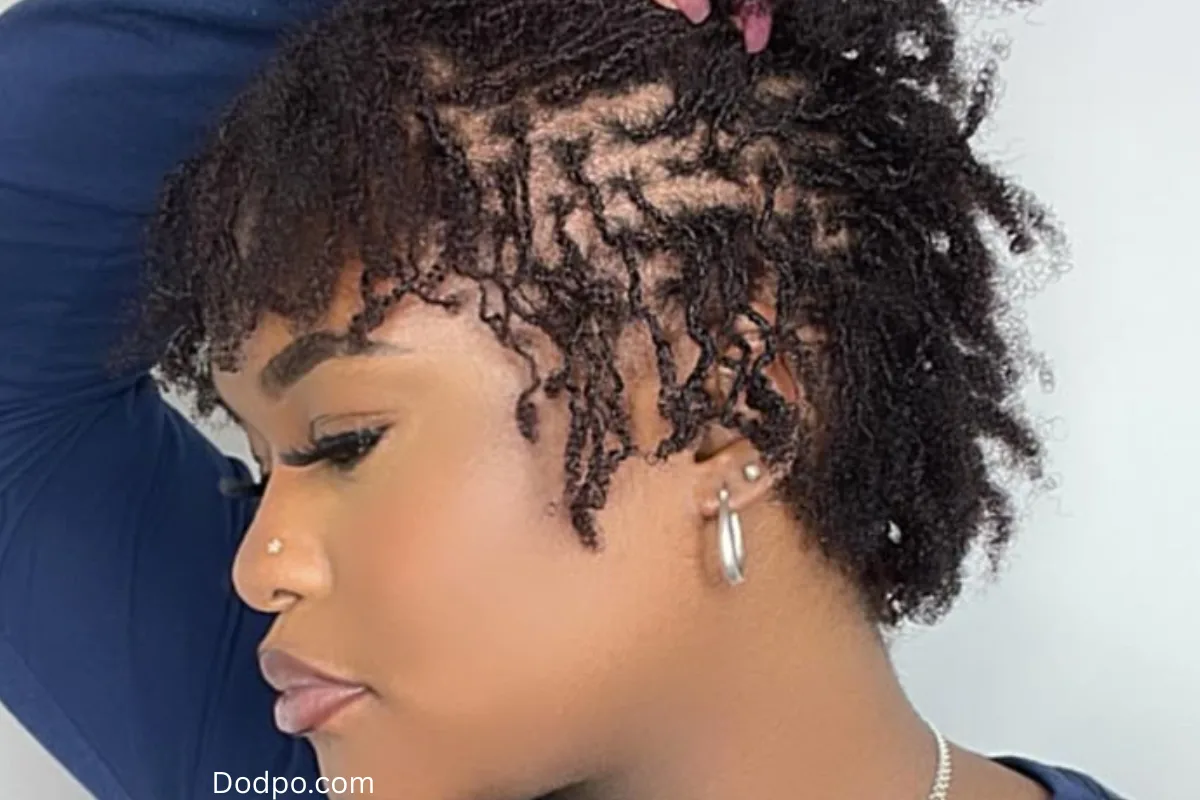
Braid-in starter locs offer the most structured and straightforward way to start your dreadlock journey.
Braid-in starter locs are a popular choice because they provide firmness, cleanliness, and minimal manipulation during the first phase of the loc process.
The braid base keeps the hair tightly together, which may be particularly advantageous for certain hair types or active lifestyles that need toughness.
This technique offers a neat, structured appearance at the start while allowing the hair to loc naturally over time.
What Are Braid-In Starter Locs?

Braid-in starter locs are made by dividing the hair into sections and braiding each section from the root to the tip.
These braids are not taken down, unlike traditional three-strand braids, which are meant for styling. Instead, they are intentionally kept in place.
As the hair grows and begins to frizz and intertwine, the braid pattern gradually dissolves, forming a loc.
The technique of braiding helps direct the hair into a uniform disposition and, at the same time, the hair’s natural locking process comes to an end.
The tips may be braided for a long time, but, with the right care, the hair slowly matures into a loc from the root to the tip.
This technique is preferred for its neat appearance, durability, and resistance to tangling during daily use.
Why People Choose Braid-In Starter Locs
1. Durability And Long-Lasting Hold
Among the various advantages, the longevity of the locs comes at the top of the list. One of the strongest reasons people choose braid-in starter locs is their durability.

Braids can, in fact, retain their shape much better than coils or two-strand twists, especially during the initial stages of the loc journey.
This makes them less prone to unraveling, excessive frizzing, or complete loss of structure after washing or daily activities.
For those with an active lifestyle, frequent workouts, or physically demanding jobs, braid-in starter locs are hassle-free.
The braided base holds hair in place during sweating, washing, or exposure to the elements.
Maintenance is easier during the starter phase because durability reduces the need for frequent retwisting.
2. Low-Maintenance And Reduced Manipulation
Braid-in starter locs are considered the least demanding method in terms of maintenance and care.
The reason for this is that the braids stay intact and dry, resulting in soft locks. Moreover, this less-frequent, makeshift manipulation reduces hair stress and protects it from breaking; thus, it grows more easily and faster.
Many love this method for its simplicity. Partitions made without touching are hardly visible. Though slower, the locking process remains just as intentional and neat.
3. Styling Versatility From The Beginning
Another important aspect of spiritually braided starter locs is their styling versatility.
Unlike other methods of starting locks, which require some time for threading before the hair can be styled, with braid locking, the hair can be dyed very early without disturbing the roots.
Simple styles like ponytails, buns, or half-up looks can be worn while the locs are still in the early stages. These styles hold well and look clean, even between appointments.
Braid-in starter locs are perfect for those wanting to change their look without compromising loc integrity.
4. Neat Appearance For Longer Periods
Braid-in starter locs keep a well-groomed look for longer periods. The braid pattern supports each loc and minimizes extra root frizz in the first month.
This method appeals to those who want neat hair without frequent upkeep.
This neatness enables wearers to confidently present themselves professionally or express personal style while the natural locking process progresses undisturbed.
5. Ideal For Looser Curl Patterns And Mixed Textures
Looser curl patterns and mixed hair textures most commonly use this method. For hair that does not readily coil or lock, beginning with coils or twists often leads to unraveling.
Braids securely cover the strands, allowing the hair to interlock naturally.
Braid-in starter locs secure the hair, creating a stable foundation that supports locking to a fuller extent over the coming period.
Therefore, the technique becomes practical and efficient for those whose hair requires more structure during the initial stages.
How Braid-In Starter Locs Are Installed

1. Starting With Clean, Detangled Hair
First, the installation process requires hair that is thoroughly cleaned and detangled. This ensures that product buildup, dirt, or oil that could block the locking process is absent.
Clean scalps support healthy loc development and also reduce irritation or odor as the locs mature.
Detangling is also necessary because it facilitates the sectioning of the hair into equal parts for braiding without knots or snags.
The use of smooth, detangled hair results in uniform braids, which, in turn, lead to locs of roughly the same size and shape over time.
2. Sectioning The Scalp For Loc Size And Structure
Once the hair pretreatment is complete, the scalp is parted into equal sections. These parts influence the final size, thickness, and number of locs.
Clean and precise parting is very important, as it dictates how the locs will fall, how uniformly they will develop, and how difficult future maintenance will be.
Sections are usually made in a grid or pattern that fits the head shape and desired style. Consistent parting prevents locs from pushing against each other and keeps scalp tension even.
3. Braiding Each Section From The Root
Right after dividing the hair, each section is braided from the root. The braid keeps the hair secure, providing a solid foundation for the locs to form.
The new growth is organized, and unraveling is reduced, especially during washes or styling, thanks to the root braiding.
The braid’s tightness is closely monitored. It must be tight enough to keep the hair together, but not so tight that the scalp feels discomfort.
4. Deciding Whether To Leave The Ends Loose Or Braided
There are two most popular methods of dealing with the ends of the hair. The first method is to leave the ends loose, which may result in faster locking and a more natural mat.
Loose ends create a softer, more organic look as the locs develop.
On the other hand, some loc technicians braid the locs up to the tips, meaning the very ends of each loc for consistency and length retention.
Fully braided ends present a tidier look and reduce the possibility of fraying, especially for people with fine or soft hair. Both techniques are equally efficient; the decision largely depends on hair texture, lifestyle, and personal preference.
5. Optional Use Of Extensions For Added Length
Braid-in starter locs do not require hair extensions. The process is effective with natural hair alone. However, some customers choose extensions for instant length or bulk.
If extensions are chosen, they are braided very finely into the natural hair. This ensures they aren’t noticed and that the weight is distributed evenly.
This step is optional and should be performed carefully to avoid excessive pressure on the scalp.
6. Flat Roots And Clean Parting Are The Main Factors
If done right, braid-in starter locs will be flat at the roots, and there will be a clean and visible parting through the placed part of the scalp.
Flat roots are good because they prevent rolling tension and make retwisting easier. Clean parts also give the locs an overall neat appearance, especially during the initial stage.
Good installation is essential, as it yields healthy, nice locs that later mature evenly and require less upkeep.
Stages Of Braid-In Starter Locs

1. Starter Stage
Initially, the braids are highly visible. The hair is clean and precise, and the locs remain soft and bendable. This stage typically lasts several months.
2. Budding Stage
First, the hair slowly reaches the roots and begins to puff and swell around the braid. The hairs also begin to interweave among themselves, especially at the roots.
Soon, it becomes hard to hide the resulting frizz, which signals that the locking process is underway.
3. Teenage Stage
The braid pattern separates as the locs grow thicker. Some hair matures quickly; other areas remain at an early stage, resulting in uneven locs.
Exercise patience and maintain a hands-off approach at this stage.
4. Mature Stage
Ultimately, the braid pattern formed at the start of the process is gone for good, and what remains are fully sculpted locs, or rope-like strands of hair.
At this point, locs have already gained strength; they are more consistent and easier to maintain.
Read also: Salt Water Benefits for Loc Maturation: How to Make Locs Mature Faster in 2026
Frequently Asked Questions About Braid-in Starter Locs
1. Is It Okay To Put Braids Over Starter Locs?
Yes, it is generally okay to put braids over starter locs, but it should be done carefully and sparingly.
Protective styles like braids can help reduce daily manipulation and protect the locs during the early stages.
However, the braids must be lightweight and not installed too tightly, as excessive tension can disrupt the loc foundation and cause scalp irritation.
It is also important to avoid keeping braided styles in for long periods. Starter locs need time to settle and begin the locking process, and over-covering them can slow maturation.
2. Can Starter Locs Be Braided?
Starter locs can be braided, especially during the early phase when the hair is still soft and forming its structure.
Braiding can help keep locs neat, prevent unraveling, and protect them during activities like workouts or travel.
That said, braiding should be viewed as a temporary styling option rather than a long-term solution.
The locs still need exposure and gentle movement to lock properly. Over-styling or frequent re-braiding can delay the natural locking process.
3. What To Avoid With Starter Locs?
With starter locs, it is important to avoid heavy products that cause buildup, such as thick creams, waxes, or greasy oils.
These products can clog the hair strands, attract dirt, and interfere with the locking process.
Excessive manipulation is another major issue to avoid. Constant twisting, redoing styles, or touching the locs too often can weaken the foundation.
Tight styles should also be avoided, as they can cause tension, thinning, or scalp soreness. Lastly, skipping regular cleansing can lead to scalp issues and odor, which negatively affects loc health.
4. How Long Should Starter Locs Be Braided?
Starter locs should typically be kept braided for no longer than two to four weeks at a time. This timeframe allows for protection without interfering with the early locking process.
Leaving braids in for too long can flatten the locs, slow down maturation, and create tension at the roots.
After removing the braids, it is best to allow the locs to rest and breathe before styling again.
This balance supports healthy loc development while still allowing occasional protective styling when needed.