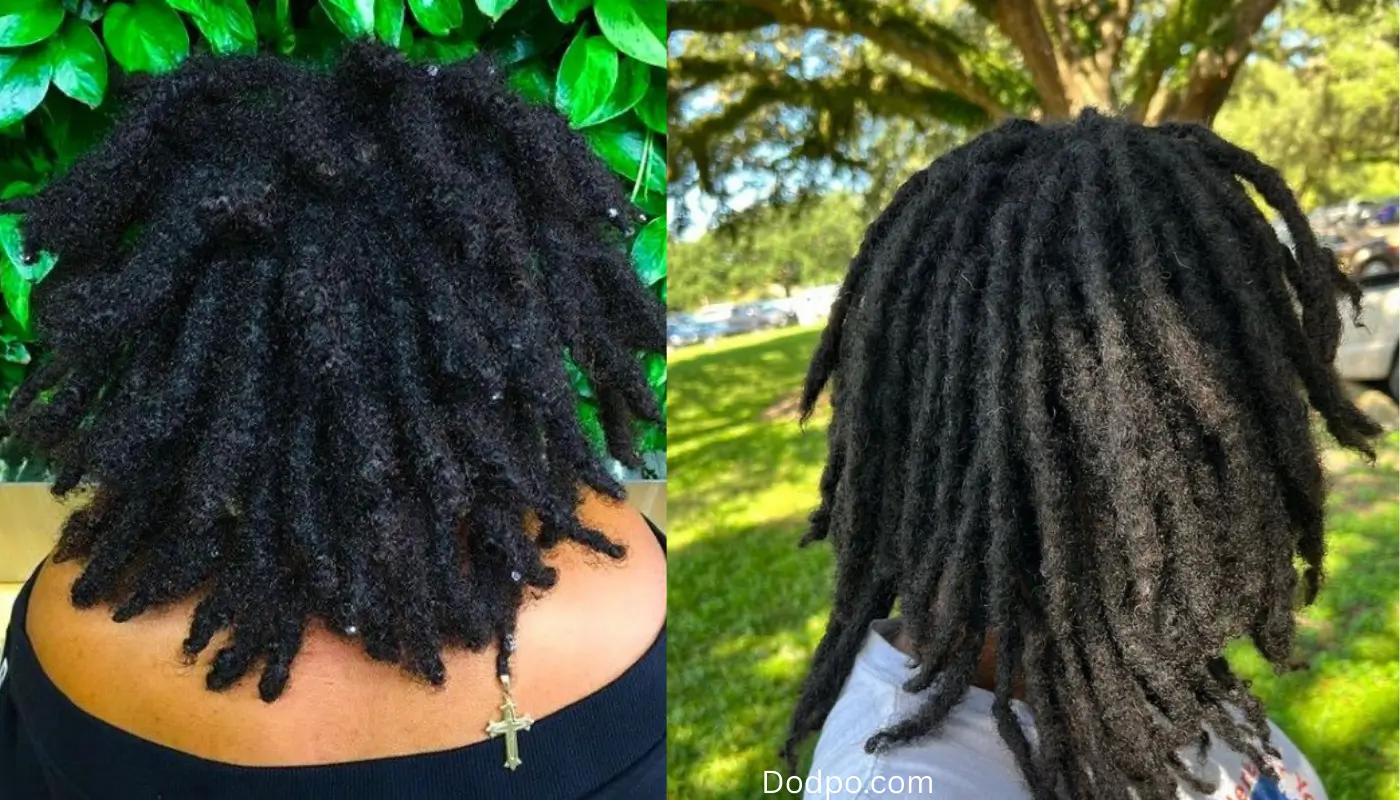
Freeform locs are more than a hairstyle, they’re a journey. They grow with time, patience, and a lot of trust in your hair’s natural process. For many people, choosing freeform locs is about freedom, self-expression, and letting go of rigid beauty rules.
Unlike traditional or manicured locs, freeform locs aren’t forced into neat parts or constant retwisting.
They form naturally, following your hair’s unique texture and pattern with very little manipulation. No two sets of freeform locs look the same, and that’s part of the beauty.
That said, “freeform” doesn’t mean no care at all. Gentle separation still plays an important role in keeping your roots strong, your scalp healthy, and your locs balanced as they grow.
Knowing when to step in and when to step back can make a big difference over time.
Whether you’re just starting your freeform journey or you’ve been growing your locs for years, learning how and when to separate your locs can help prevent unwanted congos, thinning, and buildup at the roots, without taking away from the natural look you love.
In this guide, we’ll break down practical, low-manipulation freeform loc separation techniques, share common mistakes to avoid, and help you find that sweet spot between letting your hair do its thing and giving it the care it needs to truly thrive.
What Are Freeform Locs?
Freeform locs are a natural method of locking hair that allows it to form on its own with little to no manipulation.
Instead of using combs, precise parting, or regular retwisting, freeform locs develop organically as the hair tangles, mats, and locks according to its natural texture and growth pattern. Each loc forms differently, making freeform locs unique to every individual.
Unlike traditional locs, which are often started with defined parts and maintained through frequent salon visits, freeform locs embrace irregular sizing, organic parting, and a more natural appearance.
Read also: Best Lint-Free Towels for Locs in 2026 (No More White Lint)
There are no strict rules; some locs may be thicker, others thinner, and some may naturally join together over time. This freedom is what gives freeform locs their character and authenticity.
Freeform locs also differ from semi-freeform locs. With semi-freeform locs, there is occasional manipulation such as light separation or infrequent retwisting, while true freeform locs are largely left alone.
Both approaches are valid, and many people move between the two depending on their hair goals.
At their core, freeform locs represent a low-maintenance, natural loc care approach that prioritizes hair health, patience, and individuality over uniformity or perfection.
Why Separating Freeform Locs Matters
Although freeform locs are meant to grow naturally, separation is an important part of maintaining healthy locs and a healthy scalp.
Separation doesn’t mean forcing parts or over-manipulating the hair, it simply means gently guiding the hair to prevent issues that can affect long-term loc growth.
One of the main reasons separating freeform locs matters is to prevent unwanted congos or wicks. As hair grows and naturally mats, multiple locs can begin to merge at the roots.
While some people embrace this look, others prefer individual locs with more defined separation.
Here is: How to Make a Vision Board That Actually Helps You Achieve Your Goals
Occasional separation allows you to maintain your preferred loc size without disrupting the freeform process.
Separation also supports scalp health. When locs fuse too tightly at the roots, it can trap buildup, make washing more difficult, and create tension that leads to discomfort or thinning.
Gently separating the roots helps keep the scalp accessible, clean, and properly moisturized.
Another key benefit of separation is balanced loc development. Without any guidance, some locs may grow much larger or heavier than others, which can place stress on the roots over time.
Light separation encourages more even weight distribution, reducing the risk of weak spots or breakage.
Ultimately, separating freeform locs is about balance. It allows you to honor the natural formation of your locs while still providing the care needed to promote strong, healthy, long-lasting growth.
When Should You Separate Freeform Locs?
Knowing when to separate freeform locs is just as important as knowing how. Because freeform locs develop at their own pace, there is no one-size-fits-all timeline.
Instead, separation should be based on the stage of your locs and how your hair is naturally forming.
- In the early or starter stage, separation is often done more intentionally. At this point, the hair is still loose and prone to matting together quickly, especially at the roots.
Gentle finger separation after washing or moisturizing can help prevent locs from merging too early and allow each loc to establish its own foundation.
- During the budding stage, separation becomes more occasional. As locs begin to firm up and take shape, you may notice roots growing together while the lengths remain separate.
This is a good time to lightly separate at the scalp, focusing only on areas where locs are clearly joining in a way you don’t prefer.
- In the mature loc stage, separation is minimal and done only when necessary. Mature freeform locs are more stable, but the roots can still grow together over time.
At this stage, separation is usually done during wash days or when the scalp feels tight or difficult to clean.
In general, freeform locs should be separated as needed, not on a strict schedule. Signs that it’s time to separate include locs merging at the roots, discomfort on the scalp, or difficulty washing and moisturizing effectively.
See now: Loc Longevity Treatments: How to Keep Locs Healthy for 10+ Years Without Thinning
Over-separating can disrupt the natural process, while under-separating may lead to thinning or buildup.
Listening to your hair and responding gently is the key to separating freeform locs at the right time while still honoring the freeform journey.
Best Freeform Loc Separation Techniques
Freeform loc separation techniques are all about being gentle, intentional, and minimal.
This is: How to Make a Man Fall in Love With You Without Chasing
The goal is not to create perfect parts or uniform locs, but to guide your hair in a way that supports healthy growth while preserving the natural, freeform look.
Below are some of the most effective and commonly used techniques:
1. Finger Separation (Most Recommended)
Finger separation is the safest and most natural method for freeform locs. Using clean, moisturized fingers, gently pull apart locs at the roots where they are beginning to join.
This technique works best on damp or freshly washed hair, as the hair is more flexible and less prone to breakage.
Finger separation allows you to control loc size while maintaining an organic appearance.
2. Gentle Pull-Apart Method
This method involves slowly and carefully pulling locs apart at the roots when they begin to fuse together. It should be done with patience and never forced. If the hair resists, stop and try again later when the hair is damp.
This technique is helpful during the early and budding stages but should be used sparingly to avoid thinning at the roots.
3. Twist and Release Technique
Twist and release is a light separation method where the root is gently twisted just enough to define the separation, then left alone. Unlike traditional retwisting, this technique does not aim for long-lasting definition.
It’s ideal for those who want slight root guidance without compromising the freeform look.
4. Water-Assisted Separation
Separating freeform locs on dry hair can cause unnecessary tension and breakage. Lightly misting the hair with water or a natural leave-in spray softens the roots and makes separation easier.
This method reduces stress on the hair and helps maintain moisture during the process.
5. Minimal-Intervention Freeforming
Some people prefer to let their locs separate naturally with little to no assistance. This approach works best for those who are comfortable with locs joining and varying in size.
While minimal intervention can be effective, it’s still important to monitor the scalp and roots to ensure healthy growth.
Check out: Modern and Chic Christmas Nails Ideas for Women to Elevate Your Festive Style
Each of these techniques can be used alone or combined depending on your hair type, loc stage, and personal preference.
The key is to keep manipulation light, listen to your hair, and allow your freeform locs to develop naturally over time.
What NOT to Do When Separating Freeform Locs
When it comes to freeform locs, how you separate them matters just as much as what you do.
Over-manipulation or using the wrong methods can weaken your roots, slow down the locking process, or cause long-term damage.
To protect the health and integrity of your locs, here are some important things to avoid:
1. Do Not Use Combs, Razors, or Scissors
Freeform loc separation should never involve sharp tools or fine-tooth combs.
Cutting or ripping through matted hair can lead to thinning, uneven locs, and permanent damage at the roots. Separation should always be done gently with your fingers.
2. Avoid Forcing the Hair Apart
If two locs are tightly joined and resist separation, forcing them apart can cause breakage or weak spots.
This is especially risky at the root, where tension can lead to thinning or discomfort. If the hair doesn’t separate easily, wait until it’s damp or revisit it later.
Must read: 11 Baddie Date Night Outfit Ideas That Will Turn Heads Instantly
3. Don’t Separate on Dry Hair
Dry hair is more fragile and prone to snapping. Separating freeform locs without moisture increases the risk of breakage and unnecessary stress on the scalp. Always use water or a light, natural spray before attempting separation.
4. Avoid Over-Separating
Separating too often can interfere with the natural locking process. Constant manipulation may prevent locs from maturing properly and can lead to loose roots. Freeform locs thrive with patience and minimal interference.
5. Stay Away from Heavy Products
Waxes, gels, and thick creams can cause buildup at the roots, making separation more difficult and trapping dirt on the scalp.
These products can also attract lint and slow down the locking process. Keep products light and minimal.
By avoiding these common mistakes, you allow your freeform locs to develop with strength, balance, and authenticity while maintaining the natural look that makes freeform locs unique.
Common Freeform Loc Problems & Solutions
Freeform locs are a natural and low-maintenance style, but they can still come with challenges, especially if you’re new to the journey.
Understanding common issues and how to address them can help you maintain healthy, strong locs without over-manipulating your hair.
1. Uneven Loc Sizes
It’s common for freeform locs to vary in size, but extreme differences can create tension or imbalance.
If certain locs become much thicker than others, gentle finger separation at the roots can help guide more even development over time.
2. Unwanted Congos or Joined Locs
When locs naturally grow together at the roots, they form congos. If you prefer individual locs, light separation during wash days can prevent this.
If congos are already established, separation should be done carefully and only if the hair allows it.
Check out: The 3-3-3 Dating Rule: How to Spot a Soulmate in 90 Days
3. Thinning or Weak Roots
Thinning often results from tension, over-separating, or manipulating dry hair. The solution is to reduce handling, keep the scalp moisturized, and avoid forcing separation.
In some cases, allowing locs to naturally thicken can help strengthen weak areas.
4. Buildup and Itchy Scalp
Product buildup can make roots hard to separate and lead to scalp irritation. Regular washing with residue-free shampoos and minimal product use can keep the scalp clean and healthy.
5. Slow or Uneven Locking
Some hair types lock faster than others. Patience is key. Avoid excessive separation or manipulation, and allow your hair time to mature naturally.
FAQs About Freeform Loc Separation Techniques
1. Can you separate mature freeform locs?
Yes, mature freeform locs can be separated, but only if the roots allow it. Separation should be done gently, preferably when the hair is damp, and without forcing the locs apart.
2. Will separating freeform locs slow down the locking process?
Light, occasional separation will not stop locs from forming. However, over-separating or frequent manipulation can delay the locking process, especially in the early stages.
3. How often should freeform locs be separated?
There is no fixed schedule. Freeform locs should be separated only when needed, such as when roots are joining in an unwanted way or when scalp access becomes difficult.
4. Does freeform locs require salon maintenance?
Freeform locs are low maintenance, but some people choose professional support for guidance, scalp care, or controlled separation. A knowledgeable loctician can help without compromising the freeform look.
5. Are freeform locs truly low maintenance?
Freeform locs require less manipulation than traditional locs, but they still need regular washing, moisture, and scalp care to remain healthy.
These insights and answers help demystify the freeform loc journey, making it easier to care for your locs while embracing their natural, individual beauty.