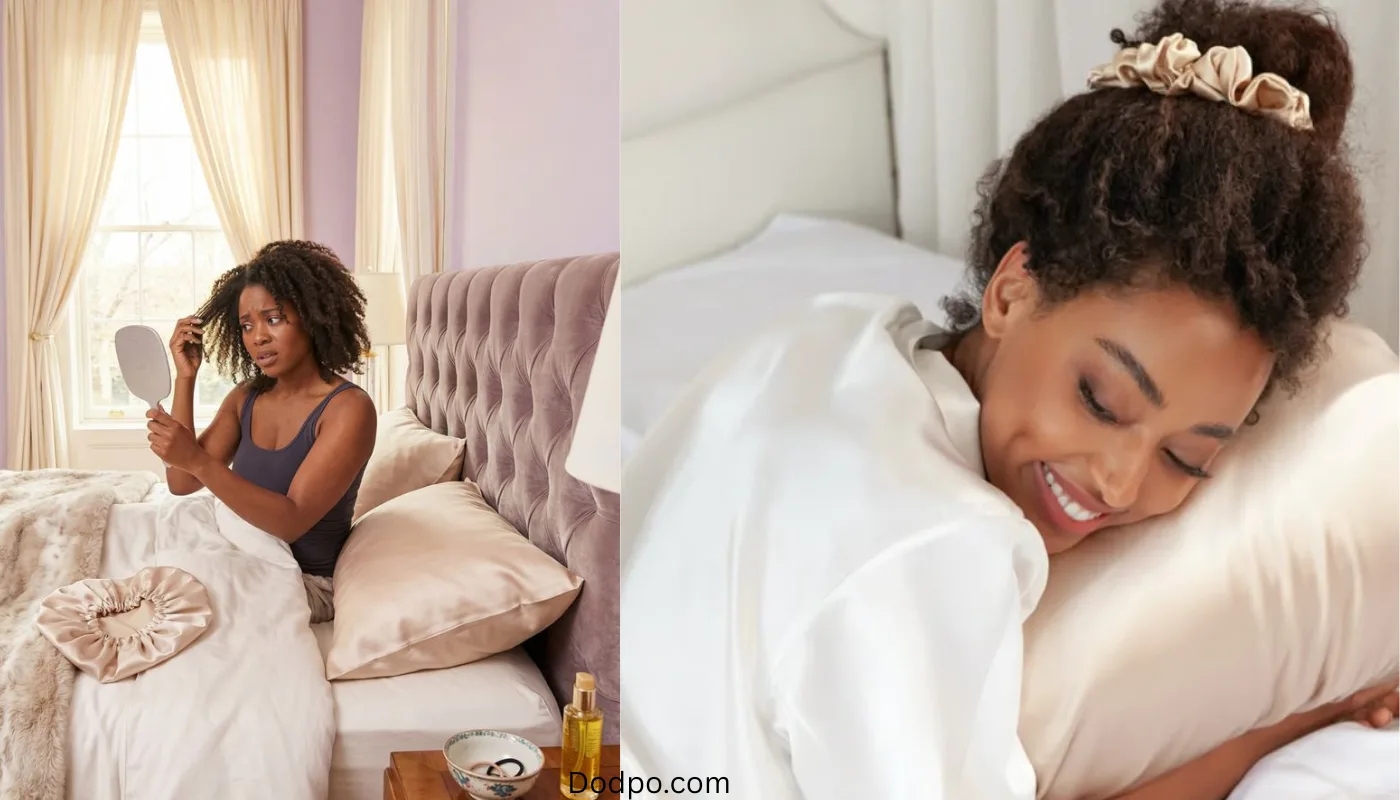
Are silk pillowcases enough to protect my roots? Honestly? Not quite. While a silk pillowcase protects the length of your locs from friction, it is not enough to protect your roots from frizz if you toss and turn. To fully protect your roots, the secret is a 100% Mulberry silk pillowcase paired with a loose “Pineapple” bun, to take the weight off your scalp while you sleep.
Introduction: The “No Bonnet” Movement
For a long time, wearing a satin bonnet at night felt like the only “right” way to protect your locs. It was the rule everyone followed. But lately, more people are quietly stepping away from it and for good reason.
Between tight elastic leaving marks on your forehead, bonnets slipping off halfway through the night, and the struggle of sleeping hot, bonnet fatigue is very real.
That’s why more loc wearers are asking a simple, honest question: how to sleep with locs without a bonnet, and still wake up with healthy roots.
Of course, going bonnet-free doesn’t mean you can just lay your locs on any pillow and hope for the best. Sleeping with unprotected locs can lead to two common problems: lint and tension.
Regular cotton pillowcases grab onto your hair, leaving behind tiny fibers that get stuck in your locs. On top of that, the weight of your locs can pull at your roots while you toss and turn, which may lead to discomfort or thinning over time.

This is where another big question comes in: are silk pillowcases enough to protect my roots? The short answer is that they help, but they’re not the full solution on their own.
The good news is that you don’t have to choose between comfort and healthy locs. With the right setup, it’s possible to sleep without a bonnet and still protect your hair.
In this guide, we’ll walk through how to create a bonnet-free nighttime routine that reduces friction, supports your roots, and actually feels good to sleep in, starting with why your pillowcase choice is only part of the picture.
The Best Alternatives to the Traditional Bonnet
Choosing to skip the bonnet doesn’t mean leaving your locs unprotected. It just means protecting them differently.
More people are leaning into what can be called “open-air protection” i.e simple methods that reduce friction without trapping heat or squeezing your hairline.
See now: Best Lint-Free Towels for Locs in 2026 (No More White Lint)
If you love the idea of sleeping cooler and more comfortably, these bonnet alternatives can help you do that while still caring for your locs.
Here are some of the best, breathable options that actually work.
1. The 100% Mulberry Silk Pillowcase (Your Base Layer)
If you’re sleeping without a bonnet, your pillowcase becomes your first line of defense, there’s no way around it.
A silk pillowcase helps because it doesn’t pull moisture from your hair or grab onto your locs the way cotton does.
Instead, your locs glide smoothly across the surface, which reduces frizz, dryness, and lint buildup at the roots.
For the best results, look for a 22-momme Mulberry silk pillowcase. It’s thick enough to handle the weight of locs but still breathable enough to keep you cool through the night.
2. The Loc Pineapple (Sleeping Without the Pressure)

The “loc pineapple” is a simple, no-pressure style that works surprisingly well. You flip your head forward and loosely gather your locs at the very top of your head using a silk or satin scrunchie.
This works because you’re no longer laying on your locs. When your hair isn’t trapped between your head and the pillow, there’s less pulling at the roots and less friction overall. It’s especially helpful if you wake up with sore roots or flattened locs.
The key here is loose, not tight. The goal is comfort, not control.
3. The Silk Loc Tube or Loc Sock (The In-Between Option)
If you have longer locs and don’t love the feeling of your hair moving around all night, a silk loc tube is a great middle ground.
It’s an open-ended sleeve made from silk or bamboo fabric that your locs slide into.
Because it’s open at the top, heat can escape from your scalp, which makes it much cooler than a traditional bonnet. At the same time, it keeps your locs together and protected from friction and lint.
This option is perfect if you want structure without feeling wrapped up.
4. Loose “Sleep Braids” (Low Effort, High Reward)
Another simple option is dividing your locs into two to four large, loose braids before bed.
This reduces how much your locs rub against each other, which is one of the main causes of frizz and fuzz around the roots.
It also makes your locs easier to manage at night and gives you a soft, stretched look in the morning, no heat required.
Read more: 5 Best Protective Styles for Locs During Gym Workouts: No More Post-Gym Odor
Just remember: loose braids are key. Tight braiding can create tension you’re trying to avoid.
5. Bamboo Lyocell Wraps (Cool, Clean, and Breathable)
If you tend to sweat at night or deal with an itchy scalp, bamboo lyocell wraps are worth trying. This fabric is incredibly breathable, moisture-wicking, and gentle on the scalp.
Bamboo wraps feel lighter than silk and help keep your scalp dry while still reducing friction on your locs.
They’re also naturally antimicrobial, which is a bonus if scalp sensitivity is an issue for you.
Sleeping without a bonnet doesn’t have to mean sacrificing healthy roots. With the right combination of fabrics and styles, you can stay cool, comfortable, and confident, while still protecting your locs every night.
Addressing the Root Question: Is a Pillowcase Enough?
When people talk about sleeping without a bonnet, the focus is almost always on friction.
We hear a lot about silk pillowcases and how smooth they are and yes, that part matters. But there’s another issue that often gets overlooked, and it’s usually where bonnet-free routines fall apart: tension.
So let’s answer the question honestly: is a silk pillowcase enough to protect your roots?
The short, realistic answer is no, not on its own.
To understand why, it helps to look at what actually happens to your locs while you sleep.
1. Friction vs. Tension: What’s Really Affecting Your Roots
A good silk pillowcase does an amazing job at reducing friction. Because the fabric is smooth, your locs can slide instead of snag.
This helps prevent frizz, reduces lint, and keeps your hair from feeling dry and fuzzy in the morning. For that reason alone, silk pillowcases are a solid upgrade.
But here’s the part they can’t fix: tension.
As locs mature, they get heavier. When you sleep with your hair completely loose, that weight shifts every time you turn your head.
Check out: Loc Longevity Treatments: How to Keep Locs Healthy for 10+ Years Without Thinning
Over time, all that pulling, especially at the crown and hairline can stress your roots. Even the softest silk can’t stop that tugging.
2. Why Roots and Edges Need Extra Support
Your roots and edges are the most delicate parts of your hair. Without a bonnet or scarf, they’re exposed all night.
While silk is gentler than cotton, eight hours of constant contact can still add up, especially if your hair is fine or your edges are already sensitive.
This is how some people end up with thinning around the temples or crown, even though they’re “doing everything right” with a silk pillowcase.
The Real Solution is Balance; Not Bonnet vs. No Bonnet
If you want to sleep without a bonnet, the goal isn’t to do nothing, it’s to replace compression with low tension.
A loose pineapple at the top of your head works well because it takes the weight off your roots and keeps your locs resting upward instead of pulling sideways.
If your locs are shorter, two to four loose braids can help keep everything moving in the same direction, reducing stress at the scalp.
The Bottom Line: Silk pillowcases are great for controlling frizz and reducing lint but they don’t protect your roots by themselves.
Pairing your pillowcase with a simple, low-tension style is what truly keeps your locs healthy.
Think of it this way; The silk protects your hair while the style protects your roots.
Keeping Lint Away Without a Cover
Sleeping without a bonnet means your locs are out in the open, and that’s not necessarily a bad thing.
It just means you have to be a little more intentional. Even with a silk pillowcase, lint can still find its way into your hair if you’re not careful.
Instead of trying to block every little fiber, the smarter approach is to reduce lint before it ever reaches your locs.
Read now: What Causes Lint in Locs? The Real Reasons & Proven Solutions in 2026
Here’s how to do that without turning bedtime into a long routine.
1. The Pre-Sleep Check (30 Seconds Is Enough)
Before getting into bed, take half a minute to prep your locs.
– Shake it out: Gently shake or fluff your locs with your hands. This helps loosen any fibers your hair may have picked up from clothes, couches, or scarves during the day.
– Light mist only: Follow up with a very light spray of water or a water-based leave-in. Dry locs create more static, and static attracts lint. Slightly hydrated locs are less likely to grab onto dust or loose fibers floating around your room.
No soaking, just enough to calm the hair.
2. Check Your Bedding (Yes, It Matters)
Your pillowcase might be silk, but your sheets and blankets still come into contact with your hair while you sleep.
– Skip lint-heavy fabrics: Flannel, fleece, and some polyester blankets shed a lot. If your locs brush against them at night, lint is almost guaranteed.
– Choose low-shed bedding instead: Bamboo lyocell or high-thread-count percale cotton are much better options. They’re smoother, tightly woven, and shed far less than fuzzy or plush fabrics.
3. Wash Your Pillowcase Weekly
A silk pillowcase only works if it’s clean.
Because silk doesn’t absorb oils, your scalp oils sit on the surface of the fabric. Over time, that oil can attract dust, pet hair, and tiny fibers which then get pressed right back into your locs.
Check out: What Is Clear-Coding Dating? The 2026 Guide to Radical Honesty & Boundaries
Quick care tip: Wash your silk pillowcase once a week, using a gentle detergent. A mesh laundry bag helps protect the fabric and keeps the surface smooth.
FAQ: Your Nighttime Loc Questions
1. Will my locs flatten if I don’t wear a bonnet?
Not usually. Locs tend to flatten only if they’re damp or if you stay in one position all night. If your locs are dry and you use a pineapple or loose braids, they stay lifted and round because they aren’t being pressed under your head.
2. Is it okay to sleep with wet locs on a silk pillowcase?
No. Sleeping with wet locs; covered or uncovered, can lead to mildew and odor. Wet hair is also weaker and more likely to stretch or break. Always make sure your locs are fully dry before going to bed.
3. How do I stop my locs from tangling at the roots overnight?
Roots tangle when individual locs rub against each other for hours. If you’re not wearing a bonnet, use loose braids or a pineapple to keep locs separated. That simple step prevents locs from joining while you sleep.
Conclusion: Finding Your Nighttime Freedom
Skipping the bonnet isn’t about doing less, it’s about doing what works for you. For many people, sleeping without a cover means better airflow, less heat, and more comfort through the night.
The key is balance. A silk pillowcase protects your locs from friction, while a low-tension style like a pineapple or loose braids protects your roots.
When you combine the two, you don’t need a bonnet to maintain healthy locs, you just need a routine that supports both your hair and your comfort.
Nighttime care should feel easy, not restrictive. When your routine works with your body, sticking to it becomes natural.