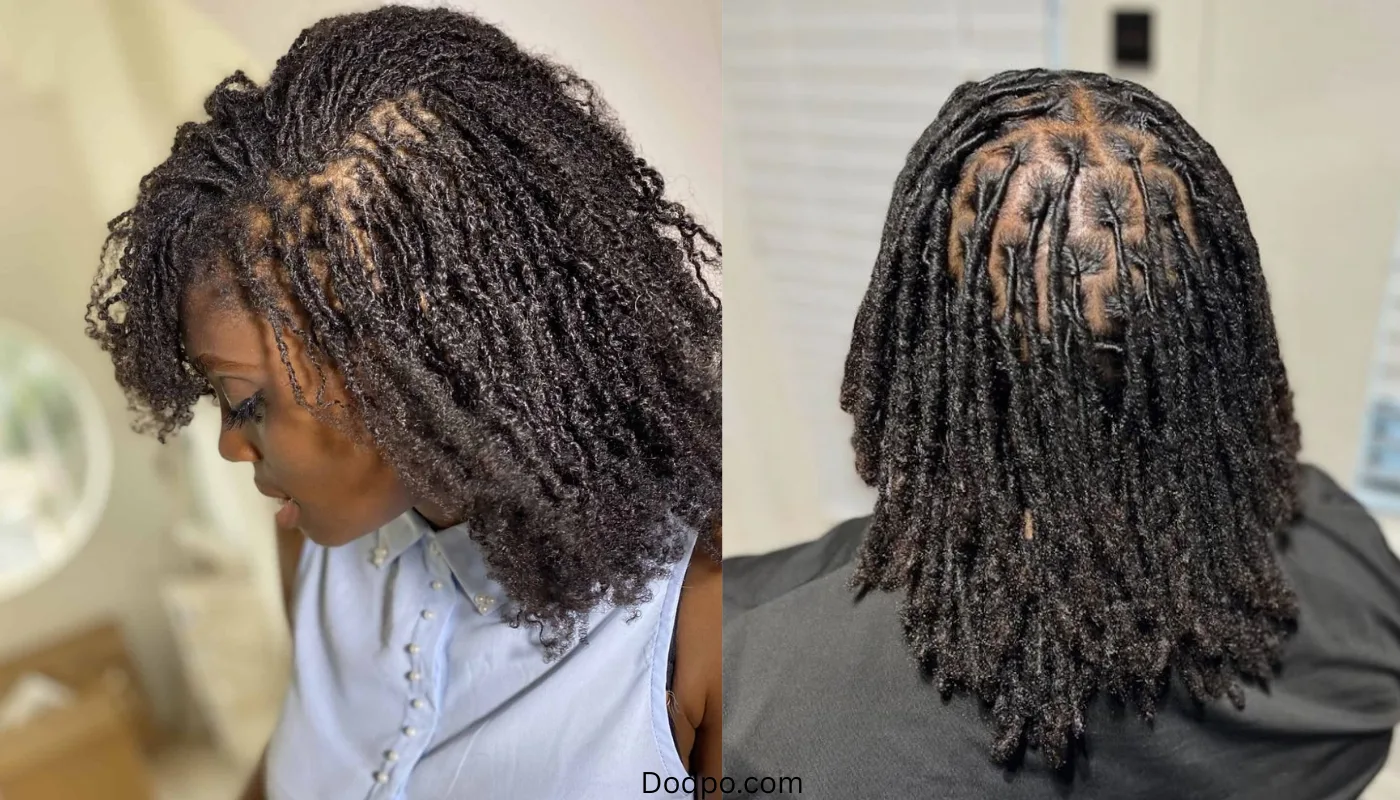
Interlocking vs. palm rolling for thin hair is a common debate among people seeking healthier loc maintenance options. If you have thin or fine hair, it is essential to select the appropriate loc maintenance method.
Thin hair is more fragile, more susceptible to breakage, and more easily affected by tension at the roots.
The most common loc maintenance techniques are interlocking and palm rolling, but they react quite differently on fine hair.

Knowing how each method works, along with its pros and cons, can help you care for your locs for a long time and prevent thinning or stress.
Interlocking and Its Impact on Thin Hair
When comparing interlocking vs. palm rolling for thin hair, tension and long-term growth should be top priorities. Interlocking, or latching, is a technique of loc maintenance that brings the new growth at the root of a loc.
The interlocking process involves pulling the tip of the loc through the base of the new growth, either with a specialized tool or with the fingers.
This way, a firm, woven structure is created, locking the hair in place at the scalp.
Interlocking, as opposed to palm rolling, does not merely rely on the matted hair subjected to friction and time for the loc formation, but rather binds the hair together physically.
Thus, the roots remain tight and well-defined for a longer duration. Interlocking is usually used for microlocs, sisterlocks, and traditional locs, especially for those who like their hair to look neat and are willing to wait longer between maintenance sessions.
The practice is appreciated for its sturdiness; it is also known for being hard for the loop to come undone.
After the process ends, the root remains securely in place even after washing, sweating, or daily manipulation. But the power of this technique means it must be done with precision, especially for people with thin or fine hair.
How Interlocking Affects Thin Hair

1. Provides Strong Root Hold
Interlocking is a technique that tightly binds new hair growth, helping thin hair that tends to unravel.
Fine hair often fails to hold its shape at the roots, and interlocking helps keep the parts neat and the locs well-defined.
This will give the locs a fuller, more even look, especially when they are just forming.
2. Less Frequent Maintenance
The reason interlocked roots usually stay tight for a longer period is that thin-haired individuals do not need to retighten as often.
This might lead to reduced overall manipulation, which is considered very important for delicate hair.
Less frequent maintenance can also help reduce unnecessary stress caused by constant handling.
3. Increases Pressure At The Root
One of the main issues with thin hair is tension. Interlocking exerts pressure on the hair shaft at specific points, particularly near the scalp.
Check out: Hidden Undercut With Locs: The Bold, Low-Maintenance Style Everyone Wants
The weak strands are unable to withstand the repeated tension, gradually loosening the loc at the root if not controlled properly.
4. May Produce Thinning Or Weak Spots
Thinning of hair at the base may happen when interlocking is done very tightly, very often, or always in the same direction.
It can take quite a while for this to happen, but initially weak areas will form along the loc, with uneven thickness and some spots more susceptible to breakage.
The situation worsens when maintenance schedules are too aggressive.
What Is Palm Rolling And How Does It Work for Thin Hair

Palm rolling is a customary hair-care method for dreadlocks in which the new growth is guided to blend with the existing lock by rolling it between the hands.
The technique not only smooths the strands that are somewhat loose but also gives the loc a shape and applies a gentle pull that eventually leads to the matted hair locking over time.
Interlocking is different from palm rolling in that the latter does not entail pulling the dreadlock through itself, nor is it tied at the root.
This technique relies on repeating the palm-rolling action over time. Through constant palm rolling, the hair is made to grow in one direction, and this slow process of the loc’s maturation is controlled.
Since it utilizes the hair’s natural locking process, palm rolling becomes the method of choice for traditional locs and is often recommended for those who want a softer, more natural appearance.
Usually, palm rolling is done with light products or natural oils to minimize friction while promoting scalp health.
The idea is to use gentle manipulation to create the desired structure without stressing the hair or scalp.
How Palm Rolling Works For Thin Hair
1. Distributes Tension Evenly
Palm rolling applies the tension over the length of the loc rather than at the root. This evenness in thin hair helps reduce stress and the risk of root thinning or breakage, making it a lesser problem in the long run.
2. Supports Natural Thickening
As locs go through their natural phase of maturity, thin hair usually looks thicker. The method of palm-rolling allows the hair to gradually condense and lock, helping locs get thicker over time.
The natural process can provide strength and density, but without forcing the hair into tight patterns.
3. Minimises the Chance of Traction Damage
Since palm rolling does not involve pulling or securing the hair tightly at the scalp, it is the least likely to cause traction-related problems.
Therefore, it can be considered a safer option for those with fine hair, sensitive scalps, or a history of hair loss at the roots.
4. Promotes Healthy Scalp Circulation
The gentle rolling motion stimulates the scalp without causing excessive tension.
This leads to improved blood flow, which in turn supports healthier hair growth, especially for thin hair, which needs to be strong under optimal conditions.
Interlocking Vs. Palm Rolling For Thin Hair Growth And Thickness

The main point of difference lies in control rather than flexibility. Interlocking provides structure and longevity, while palm-rolling allows thin hair to grow with less restriction.
1. Root Tension And Hair Stress
Interlocking helps to secure the root by pulling the loc through itself, resulting in a strong grip at the scalp.
In the case of thin hair, the localized tension might interfere with the natural process of hair thickening if performed too often.
On the other hand, palm rolling applies pressure to the loc’s entire length, keeping the root area mobile and less stressed, which in turn leads to healthier growth over the long term.
2. Natural Expansion And Fullness
Palm rolling permits thin hair to naturally expand as the loc develops. Since the roots are not tightly secured, the hair has room to slowly swell and pack down, which can make the locs look fuller over time.
Excessive interlocking can limit this expansion and result in thin locs or spots near the roots.
Read also: Loc Parting Patterns 2026: Most Popular Shapes & Styles Right Now
3. Long-Term Thickness Development
Thin hair usually benefits from the slow and steady maturation accompanied by appropriate methods.
Palm rolling is one method that promotes this process by allowing the hair to lock naturally, potentially increasing overall thickness.
Interlocking may occasionally support growth, but only when it is not done too frequently, and proper intervals between sessions are observed to avoid weakening the hair shaft.
4. Risk Of Weak Points
If interlocking is repeatedly done at the same angles, it can create stress points along the loc, mostly at the root area.
Thin hair is more prone to these weak points, which can lead to hair loss or breakage.
Palm rolling, on the other hand, does not cause knotting at the root and thus the likelihood of forming structural weaknesses over time is minimized.
5. Visual Neatness Versus Hair Health
Interlocking offers a cleaner, more tightly controlled look for a longer time, which is a choice for many.
On the other hand, palm rolling gives a softer, less rigid appearance during the period between maintenance appointments.
For thin hair, prioritizing health over constant neatness often results in stronger, fuller locs in the long run.
Which Method Is Better For Thin Hair Long-Term?
For most people with thin hair, palm rolling seems like the safer long-term option. It supports scalp health, reduces the risk of tension-related damage, and allows the locs to develop at their own pace.
Interlocking is still an option, albeit it should be mainly for particular instances, such as the upkeep of particular regions such as the crown, or for the occasional retightening instead of being the main method used.
Here are some factors to consider
1. Palm Rolling As A Primary Method
For most individuals with fine hair, palm rolling is considered the safer option over the long term.
It encourages the natural thickening process, lessens the pull on the hair, and supports the overall health of the scalp, all of which contribute to the strengthening of locs over time.
2. Interlocking As A Secondary Method
Interlocking may still be beneficial for thin hair when used selectively.
A lot of people apply it only to certain parts of the head, like the top or temples, or during periods when they need extra hold, rather than using it all the time.
3. Hybrid Method For Balance
Using palm rolling for routine maintenance and interlocking occasionally for added support can give you the best of both worlds.
This method gives you that tidiness without sacrificing the long-term evenness and thickness of fine hair.
Read also: 10 Common Loc Mistakes to Avoid That Cause Thinning & Breakage
4. Long-Term Hair Goals Are Critical
Ultimately, the best method will all depend on whether your main concern is looks, convenience, or hair health.
However, those who are patient with their hair will definitely be rewarded, especially with thin hair, as routines characterized by flexibility, low tension, and patience work best for them, making palm rolling the most preferred method for long-term loc care.
Final Words
Interlocking vs. palm rolling for thin hair comes down to balancing neatness, maintenance frequency, and hair health. Thin hair is in need of gentle handling, consistency, and patience.
Even though interlocking and palm rolling could be used interchangeably, their effects on thin hair are extremely different.
Palm rolling allows for flexibility and natural growth, making it the best method for thickness and strength. Interlocking offers durability and shape, but it must be done with care to prevent long-term damage.
The ultimate decision boils down to your hair texture, lifestyle, and maintenance targets.
Having a talk with a renowned loc technician who specializes in thin hair can make a huge difference in the method that prolongs the life of your locs and keeps them healthy, strong, and, over time, full.
Frequently Asked Questions
1. Is Interlocking Better Than Palm Rolling?
Interlocking is not necessarily superior to palm rolling; it is just a different technique. Interlocking holds hair tightly at the roots and helps locs stay neat longer, which can be an advantage for those who want to style low and have hair that tends to unravel.
Conversely, palm rolling is gentler and lets the hair take its time locking. When it comes to long-term hair health, especially for thin or fine hair, palm rolling is often considered the safer and more flexible method.
2. Is Interlocking Good For Fine Hair?
Interlocking is fine for fine hair, though it has to be done very carefully and only once in a while.
Fine hair is very delicate and can be easily damaged by tension; hence, tight or repeated interlocking can eventually lead to thinning at the roots.
When used in moderation and with the right technique, interlocking can manage unraveling as well.
But many people with fine hair prefer palm rolling because it puts less stress on the scalp and also promotes natural thickening.
3. What Are The Disadvantages Of Interlocking Dreadlocks?
The major downside of interlocking is the tension that is concentrated at the root. If this continues for a long time, there may be points of weakness, thinning of locs, or traction-related scalp problems, especially in thin or fine hair.
Interlocking can also restrict locs’ natural growth, making them look slender rather than robust. Incorrect interlocking can result in holes, stiffness, or uneven locking patterns that are hard to fix.