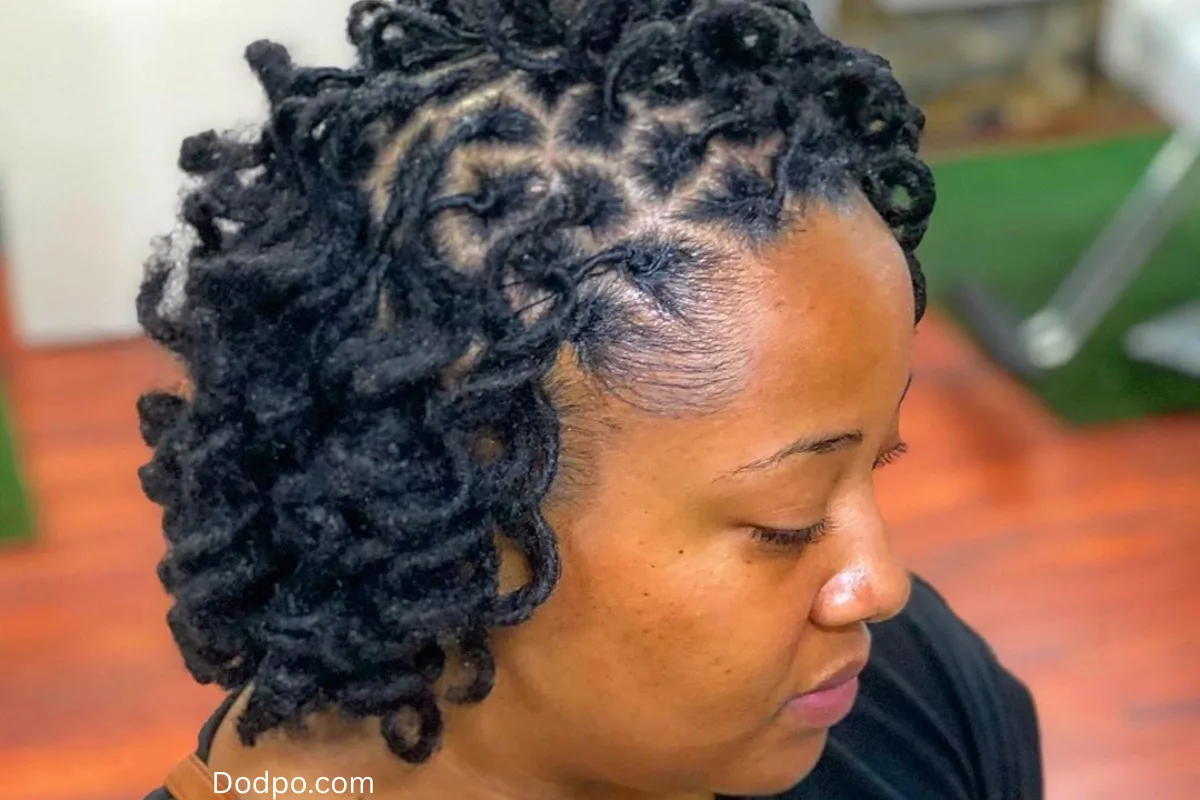
Loc-safe heatless curls are ways of styling hair that produce curls, waves, or textures in locs without exposing them to heat tools that roll, blow, or straighten.
The methods focus on the very slow but gentle, moisturizing, and time-consuming shaping of the locs; therefore, they are best for the healthy hair and scalp alike while also changing your look.
These methods of curling without heat are a necessity for people with locs because continuous heat is a major factor in weakening locs ‘silhouettes, causing dryness, and eventually thinning hair.
But on the other hand, if one avoids heat, the hair will be beautifully styled, not loose or undefined.
Reasons Why Loc Wearers Go for Heatless Curls

1. Keeps Hair Healthy And Strong
One of the main factors influencing loc wearers’ choice of heatless curls is the long-term health of their hair.
Heat-styling tools can draw moisture from locs, leaving them dry and prone to breakage or thinning. This is why locs rely heavily on retained moisture to stay strong, and why heat is avoided.
Heatless curling allows hair to retain its natural oils and hydration, resulting in stronger, healthier hair.
2. Moisture Retention And Dryness Prevention
The loc-safe heatless curls act as a moisture magnet, attracting moisture into the hair shaft and preventing it from evaporating due to heat exposure.
Moisturizing locs allows them to be flexible instead of rigid, which cuts down on frizz and breakage.
This is particularly helpful for those with dry scalp or for those whose locs feel rough after heat styling.
3. Offers Styling Versatility Without Commitment
Living with heatless curls gives loc owners the option to temporarily change their appearance or try a different style. The method used plays a big part in getting loose waves, tight spirals, or soft volume.
The versatility of heatless curls makes them suitable for everyday, professional, and special-occasion use, such as weddings, birthdays, or photo shoots.
When the curls are gone, locs will naturally go back to their original shape.
4. Safe For All Stages Of The Loc Journey
Heatless curls are safe for both starter locs and mature ones. Another significant benefit of this is that.

Newer locs lack strength and may easily loosen or become damaged by heat. They also risk damaging developing locs, so heatless methods are used to avoid this.
Maturing locs also reap the benefits, as they maintain the pattern established by the technique rather than thinning.
5. Low Risk And Scalp Friendly
The use of heat in curling can cause common scalp problems, including burns, strain, and even accidental damage.
This makes heatless curling an excellent solution for those with delicate scalps or those who suffer from irritation.
Without heat, there is also no risk of altering the natural curl pattern in the locs.
6. Promotes Long-Term Loc Maintenance
Since heatless curls do not put stress on your scalp and hair, they tend to support loc maintenance and longevity.
Gradually, this results in locs that are fuller, healthier, and more uniformly thick. For many people with locs, heatless curls are a frequent styling choice compatible with low-manipulation hair care routines.
Common Loc-Safe Heatless Curl Methods
1. Flexi Rods And Perm Rods
Flexi rods and perm rods are the most favored heatless curl makers for locs. The whole thing starts with a slight dampening of the locs, then the hair wraps around the rods from the roots to the tips.
The rods are held in place, and the setting process can last from several hours to overnight.
This leads to curls that are not only uniform but also well-defined, with quite a bit of bounce.
Moreover, this whole thing is a sure shot for medium to long locs, and it is particularly good for special occasions where a polished, consistent curl pattern is utmost.

2. Braiding Or Banding The Locs
A very straightforward, tool-free method of creating soft waves and, thus, a naturally looking texture is braiding or banding.
The locs are parted into sections and either braided, or after this, bands are put along the length of each loc.
See now: The Anti-Party Guide: 10 Low-Stakes Bachelorette Party Ideas for Introverts (2026)
The locs are staying banded for longer and longer periods, making the waves increasingly pronounced.
The technique of being gentle to the scalp is everyday styling. It is also the case that the different loc thicknesses can use this technique, and it is a great option for those who choose to manipulate their locs lightly.

3. Pipe Cleaners And Soft Curl Formers
Pipe cleaners and soft curl formers are not only flexible but also lightweight, making them very comfortable for overnight wear.
The locs are wrapped around the tool and bent into place, so they can keep their shape while drying. This method offers versatility; the curl size can be adjusted according to how tightly locs are wrapped.
Because these tools are soft, they do not put a lot of tension on the roots and hence are perfect for sensitive scalps or newer locs.

4. Bantu Knots And Twists
Bantu knots and twists are mainly dependent on moisture and gentle shaping rather than on tools. The locs are made moist, twisted into small knots or coils, and then dried completely before untying.
The mentioned process gives natural-looking curls with defined volume. The outcome is soft and easygoing rather than too uniform.
This makes it ideal for daily wear or for styled hair with texture. It also suits people who avoid hair accessories or want to sleep comfortably without tools.

How To Prepare Locs For Heatless Curls
1. Start With Clean Or Refreshed Locs
Ready-to-bundle locs for heatless curls start by making sure the hair is either clean or lightly refreshed.
The extra buildup from oils, creams, or lint can also make locs heavy, and that would be the end of their movement.
Fresh locs will not only shape better but will also set evenly. In case a full wash is not necessary, the light scalp and loc refresh will still be beneficial.
2. Apply A Lightweight Loc-Safe moisturizer.
A small amount of loc-safe moisturizer or curl care cream will be very effective when used properly, as it will also add slip, making the curl definition more visible.
Read also: The Ultimate Galentini Martini Making Party Guide for a Perfect Bestie Bash in 2026
A light product must be used to prevent any build-up or excessive stiffness. The moistening process will make the locs more flexible during curling, resulting in better hold and less frizz after the curls are let loose.
3. Maintain Slight Dampness For Best Hold
The locs should be somewhat wet during curling, not dripping wet, and not completely dry. Too much water can cause uneven drying and frizz, while dry locs may not retain the curl shape.
A light mist of water or leave-in spray provides the ideal moisture balance for long-lasting curls.
4. Handle Locs Gently During Wrapping
Handle locs gently to prepare for heatless curls. Wrapping tools or twisting should not pull at the roots, especially with sensitive scalps or starter locs.
Less tension prevents discomfort, thinning, and hairline stress, yet allows curls to form well.
Things To Avoid When Creating Heatless Curls
1. Using Heavy Or Excessive Products
When you apply too much product or use heavy oils, butters, or creams, locs get weighed down, and curls do not set properly. Product overload often leads to buildup, dullness, and limp results rather than defined curls.
Heatless curls are best achieved with lightweight, loc-safe products that support moisture without weighing hair down.
2. Wrapping Locs Too Tightly
It is a common misconception that tighter wrapping yields stronger curls, but actually, it often does more harm than good.
The resulting scalp discomfort, soreness, and root stress are just a few of the problems that may arise from excessive tension.
Eventually, this may lead to thinning or breaking, particularly around the hairline. Gentle wrapping allows curls to develop naturally while simultaneously caring for the scalp.
3. Over-Manipulating The Curls After Setting
As soon as curls have formed and the tools have been removed, one should refrain from touching them excessively.
Continual favourite forth, pulling, or separating the curls can result in frizz and diminish the visibility of the curls.
The more the curls are disturbed, the shorter their life span becomes. Petering out the curls naturally helps maintain the shape and softness.
Check out: Relationship Vision Board Ideas to Attract the Love You Deserve
4. Removing Curling Tools Too Early
Removing curl formers before the locs are dry can flatten curls early. Moist locs must fully dry to keep their form. More patience in setting leads to longer-lasting, defined results.
Final Words
Loc-safe heatless curls are a healthy and flexible way to style locs that do not suffer from loss of strength or moisture.
They give loc wearers a variety of styles, textures, and softness options while also shielding the scalp and hair from heat damage.
With proper planning and using gentle techniques, heatless curls can become a favorite styling option at any point in the loc journey.
FAQs About Loc-Safe Heatless Curls
1. What Is The Most Effective Heatless Curl Method?
The most effective heatless curl method varies according to the preferred curl pattern and loc thickness.
Flexi rods and perm rods are deemed the most reliable methods as they produce nice, strong curls that are very long-lasting. For a more natural, loose wave appearance, braiding, banding, or bantu knots work just as well.
The main point is to work on slightly damp locs and use lightweight, loc-safe products that provide hold without buildup.
2. What Are The Disadvantages Of Heatless Curls?
Although heatless curls are better for locs’ health, they still take more time and patience. Making the curls may take a few hours or overnight, which is not good for those who would like to style quickly.
Some ways may also be uncomfortable to sleep in if the tools are large or wrapped incorrectly. Additionally, results can vary depending on hair density, moisture level, and technique.
3. How To Lock In Heatless Curls?
To lock in heatless curls, the locs must be allowed to dry thoroughly before the curling tools are turned off. A light setting spray, rose water mist, or an aloe-based refresher can help keep curls defined.
After the take-down, it is crucial to manipulate the hair as little as possible. Make sure to sleep with a satin or silk bonnet and keep the locs hydrated without over-applying products to help the curls last longer.
4. Is It Okay To Sleep In Heatless Curls Every Night?
Sleeping in heatless curls from time to time is mostly considered harmless, but night after night may lead to scalp tension or discomfort if the wrap is too tight or the tools are bulky.
To prevent this, alternate the curl methods, wrap the locs loosely, and use soft, flexible tools.
Paying attention to your scalp and giving it rest days are practices that help maintain long-term loc health.
5. How Long Do Heatless Curls Last On Locs
The longevity of heatless curls depends on hair type, loc stage, and moisture. Curls typically last one to five days. Mature locs hold lighter styles longer. Starter locs may lose definition sooner.
To help keep the curls and prevent frizz, a satin or silk bonnet should be worn while sleeping. A light misting of water or a safe refresher spray for locs can make curls more lively between wears.