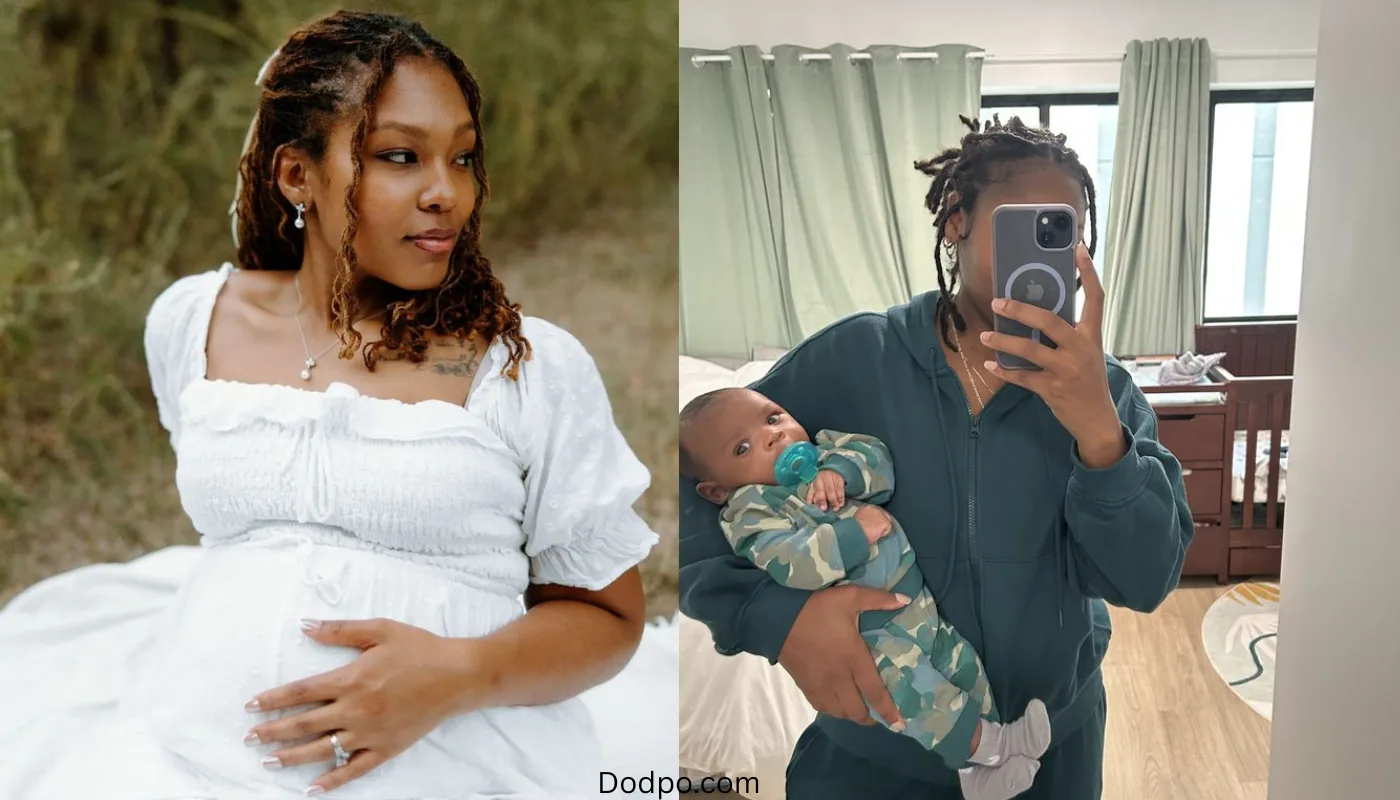
Post-Pregnancy Loc shedding is a common concern for new moms. As soon as the delivery is complete, many women notice more hair than usual, even with their daily maintenance of a healthy loc routine throughout the pregnancy.
Knowing the reasons this is happening and the best way to treat your locs during this time can help you control shedding while still maintaining healthy, strong hair.
Pregnancy causes large hormonal fluctuations, and hair is one of the body parts that often reflects these changes. The surge in estrogen during pregnancy helps prolong the hair growth stage, making the locs appear thicker and fuller.
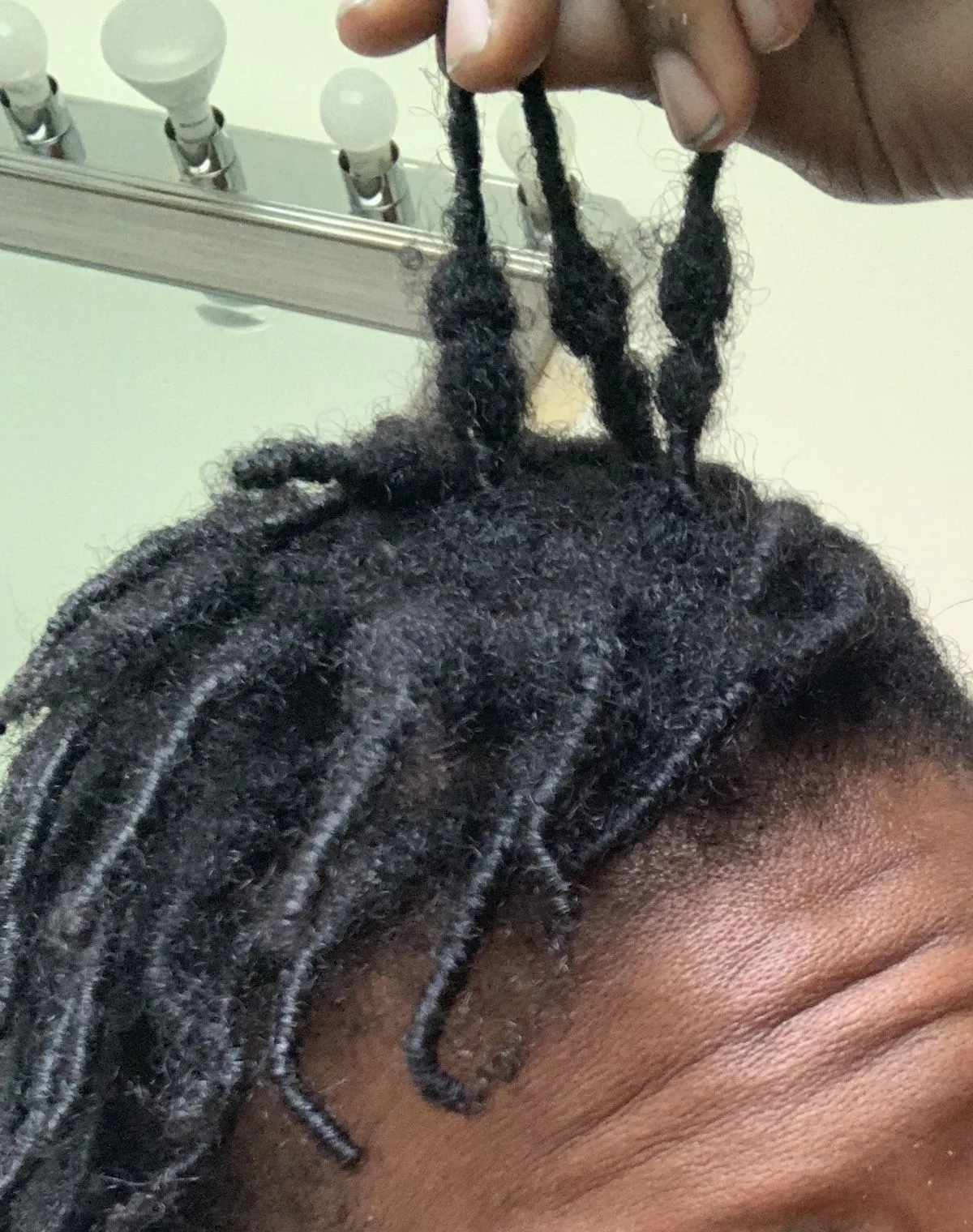
However, very quickly after delivery, estrogen levels drop, and the hair enters a shedding stage called telogen effluvium (shedding due to the end of the hair growth cycle). This is a normal process that might seem alarming, but in most cases, it is temporary.
 Source
Post-pregnancy loc shedding can be managed with patience, gentle care, and proper maintenance.
Once you understand the causes and apply simple strategies, you can significantly reduce stress on your hair, encourage healthy growth, and maintain the quality of your locs.
What Causes Post-Pregnancy Loc Shedding
1. Hormonal Changes
Right after the birth, there is a rapid fall in the levels of estrogen and progesterone, which leads to the shedding of hair that was growing more during pregnancy.
Usually, this transition leads to significant shedding in the first few months postpartum.
2. Stress and Fatigue
The physical and emotional demands of caring for a newborn can lead to hair loss as a side effect.
Stress results in higher cortisol levels, which may negatively impact hair follicles, thereby accelerating temporary hair shedding.
3. Nutritional Deficiencies
During pregnancy and lactation, the body can lose important nutrients, such as iron, zinc, vitamin D, and vitamin B12.
The absence of these nutrients may cause hair to become weak and fall out more.
4. Scalp Sensitivity
One effect of hormonal changes is that the scalp may become more sensitive. Locks that were easy to care for before may now need to be handled more carefully to prevent breaking off.
Related: How to Sleep with Locs Without a Bonnet: 5 Safe Alternatives for 2026
How to Care for Locs Post-Pregnancy
Finding your locs after birth involves discreetly and regularly caring for shedding, dryness, and a sensitive scalp. Below is a complete guide to keeping your locs healthy during this transitional time.
1. Gentle Washing and Conditioning
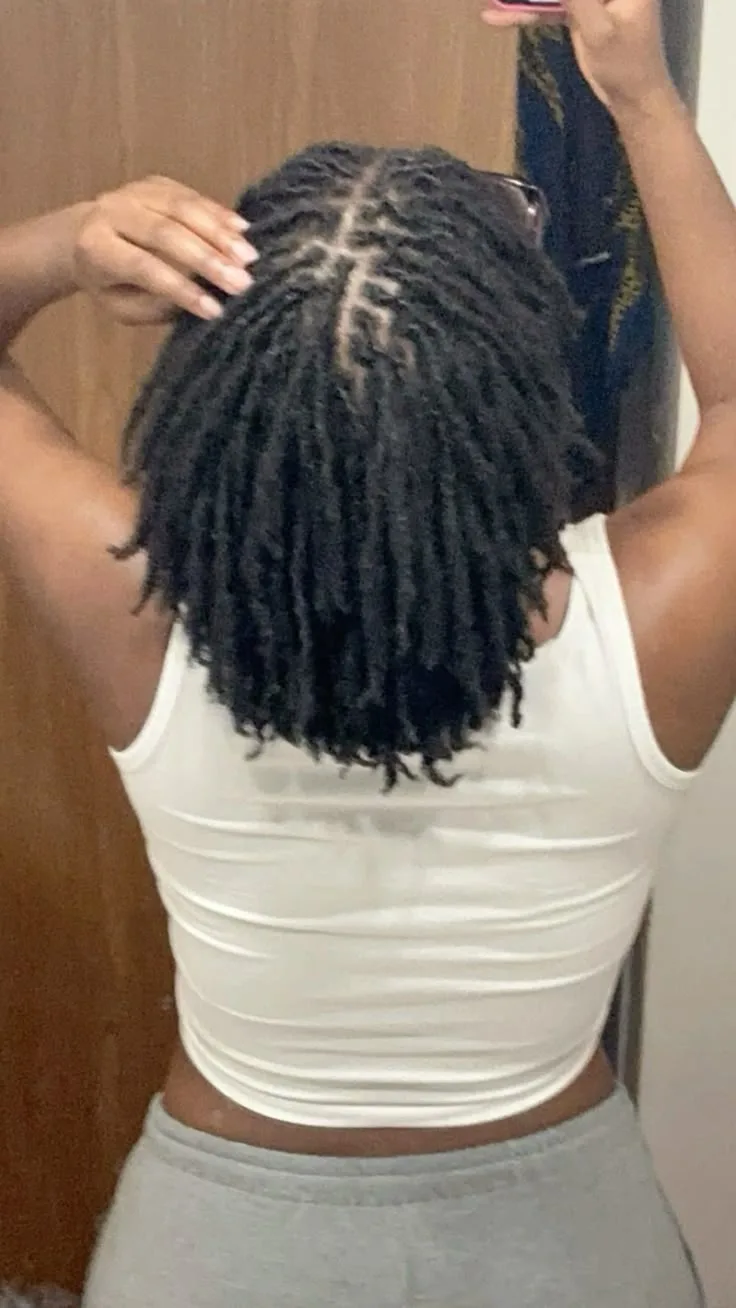
The hair may feel more delicate and more prone to breakage after childbirth. It is important to use mild, residue-free shampoos that are not heavy to cleanse your locs without stripping natural oils.
Do not use such shampoos that contain sulfates, heavy silicones, or strong fragrances, as they can cause locs to dry and irritate the scalp.
While washing, focus on gentle scalp massages,, which will not only improve blood circulation but also stimulate hair follicles and promote healthy hair growth.
Your washing frequency should be once every week or whenever necessary, as over-washing can lead to a loss of essential oils and therefore contribute to brittleness.
2. Moisturize Regularly
Hormonal changes and nutrient demands during breastfeeding can cause post-pregnancy locs to lose moisture more easily.
Natural, lightweight oils like jojoba, argan, or coconut oil, when regularly applied, have a locking effect on moisture while nourishing the scalp.
Start with your roots and scalp, as the shedding can be most noticeable in these areas, and apply a very light layer on the locs to keep them from drying out.
Stay away from heavy creams and similar products, as they can lead to residue buildup and, as a consequence, less glamorous-looking locs.
Keeping locs soft and manageable can also be achieved by refreshing them with hydrating sprays or misting them with a mixture of essential oils and water.
3. Avoid Tight Styles
The ease of wearing your locs in a beautiful or high-maintenance style is almost irresistible; however, tight buns, ponytails, or braids will create unnecessary tension on already weakened hair. The tension may lead to shedding or breakage, particularly at the hairline.
Go for loose hairstyles, low buns, or very simple protective updos to minimize the stress on your roots.
Protective hairdos not only secure hair health but also make day-to-day upkeep easier and at the same time prevent locs from drying out during recovery.
4. Eat a Nutrient-Rich Diet
The hair health after pregnancy is primarily dependent on the diet. Proteins, iron, vitamins A, D, and B-complex, as well as minerals like zinc and magnesium, are the essential nutrients for hair regrowth and their strength.
Make sure you include eggs, green vegetables, fish like salmon, nuts, seeds, and beans in your diet to replenish nutrients lost during pregnancy and lactation.
Drinking plenty of water is also a good habit as it helps not only your scalp and locs but the whole body.
A well-balanced diet yields stronger, less fragile hair and minimizes shedding to a great extent.
The 12-Month Loc Reset: A Post-Pregnancy Growth Timeline
In 2026, we don’t just call it “hair loss”; we call it the “Rest Phase.” Your body has spent nine months focused on creation, and now your scalp needs a moment to reset.
Here is exactly what is happening under your locs month-by-month:
| Phase | Timeframe | What’s Happening | Your 2026 Action Plan |
| The Peak | 0–3 Months | Hair feels thick and lush; the “pregnancy glow” is still active. | Low Tension: Avoid tight styles now to prepare for the coming shift. |
| The Shed | 3–6 Months | Estrogen levels drop. You’ll see “bulbs” at the root and thinning at the temples. | Scalp Care: Use a lightweight Rosemary & Mint oil to keep follicles active. |
| The Gap | 6–9 Months | Shedding slows down, but you may see “gaps” or weakened spots in the loc. | Support: Have your loctician do “crochet repair” on thin spots instead of retwisting. |
| The Sprout | 9–12 Months | New “baby hairs” appear at the hairline. It looks like frizz, but it’s progress! | Hydration: Mist daily with Rosewater to keep new growth soft and manageable. |
| The Reset | 12+ Months | Your growth cycle returns to its unique “normal.” | Victory: Resume your standard maintenance with stronger, healthier roots. |
Protective Styling During Shedding
Post-Pregnancy Loc shedding can affect the strength of your locs, so the key is to keep manipulation and tension to a minimum. Here are some excellent styles:
1. Loose Updos
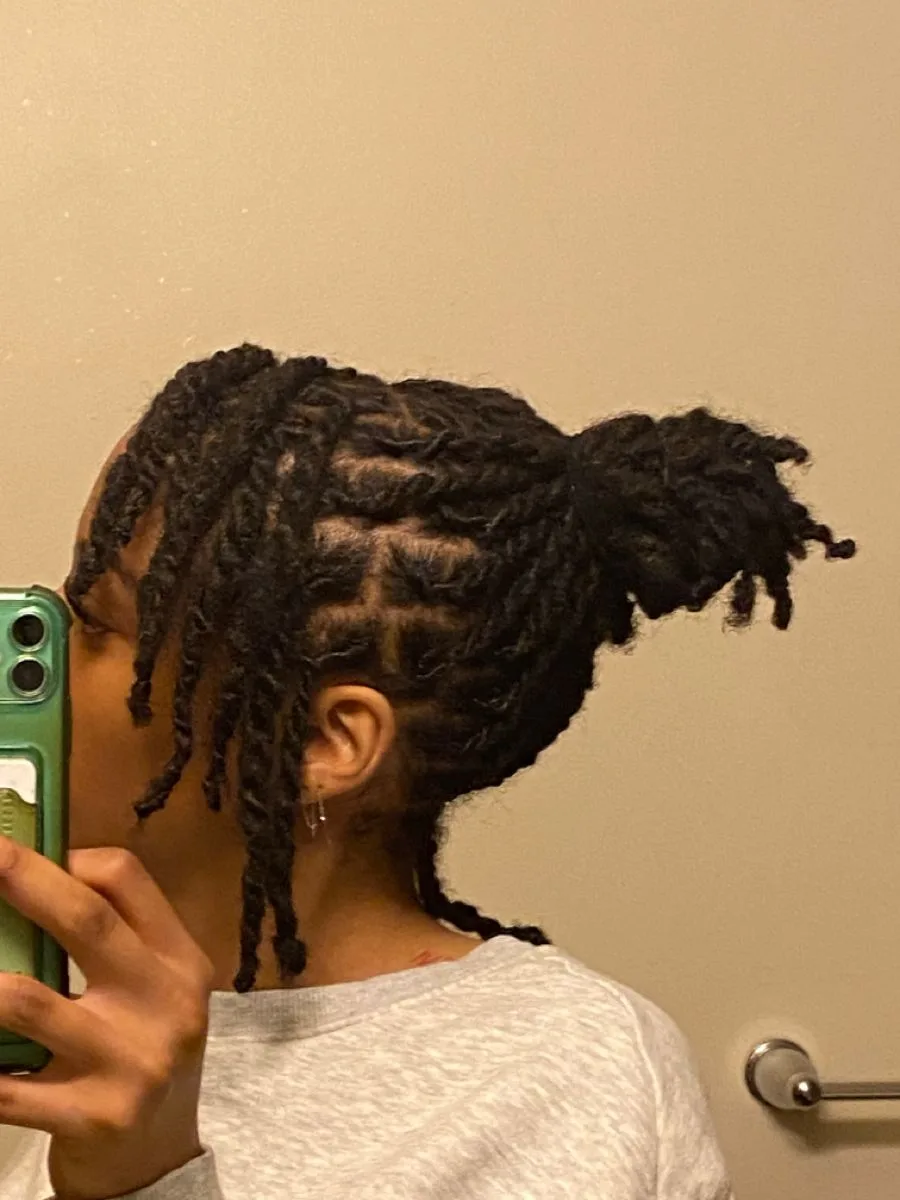
Loose updos can be a styling method that is less harsh on the hair than the tight root-pulling method.
You can style hair so that it’s all in the back or on top of your head, and then softly tie or pin it up with soft hair ties or pins.
This way, you can keep hair off your face, prevent tangling, and look well-groomed simultaneously, without putting pressure on the scalp.
2. Twists or Braid-Outs Over Locs
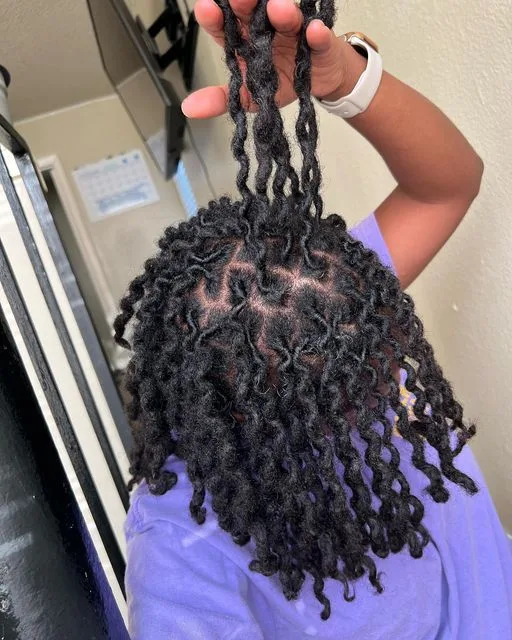
Hair twisting and braiding can be done on top of the existing locs to achieve the very same results of having more texture and variety with the hair, whilst keeping it protected.
These techniques are non-intrusive to the locs, thus preventing the strands to rub against each other, and they even produce soft curls if it’s the case of being undone.
Also, they are low-maintenance and suitable for casual or semi-formal events during the shedding phase.
3. Half-Up, Half-Down Styles
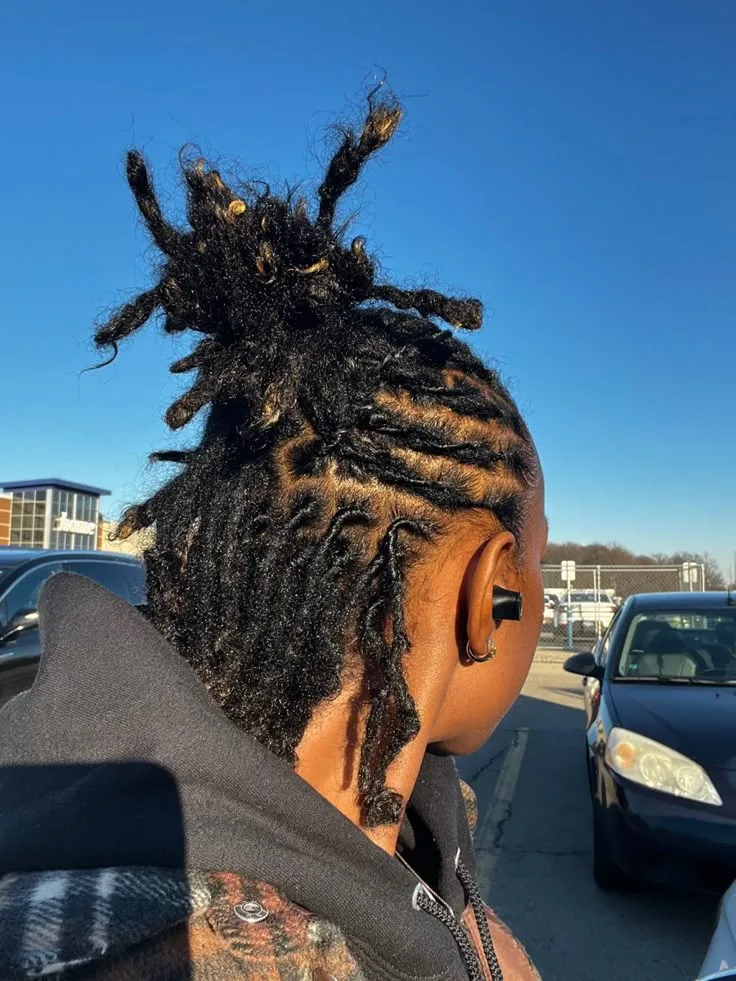
The half-up, half-down hairstyle provides you with the best of both worlds – the tension at the roots is relieved from the part of the locs that are secured, while some length is left free for the hair to move and air to come in.
This hairstyle is versatile, easy to care for, and suitable for both daily and special occasions.
4. Simple Low Buns
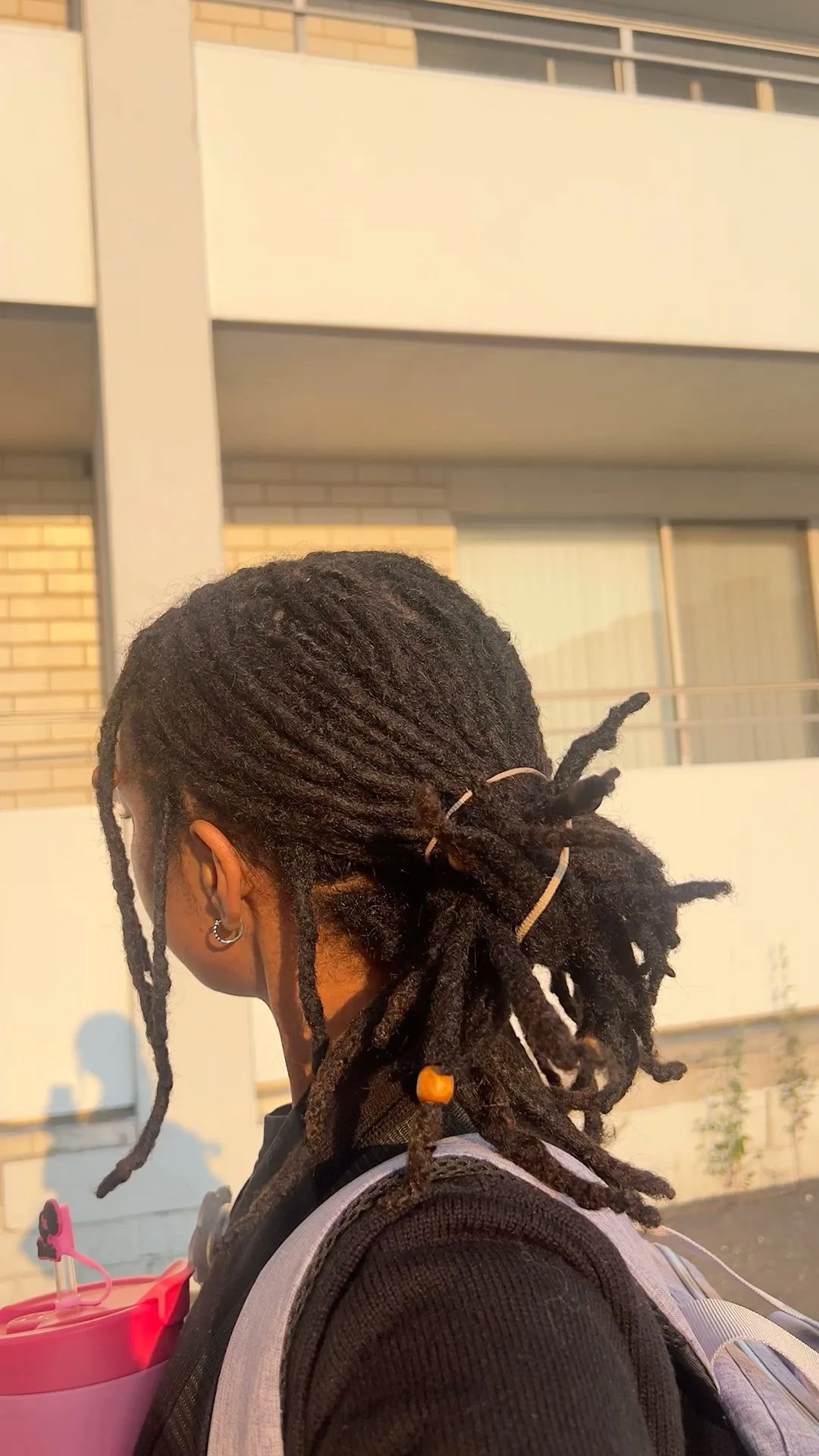
Low buns are simply the best for holding your locs without damaging your hairline. The bun can be low in the middle or a little to the side, but in either case, it is soft, low, and elegant yet protective.
If you want the breakage to be minimized and the style to be comfortable for wearing it long, then go for silk or satin scrunchies.
5. Loose Ponytails
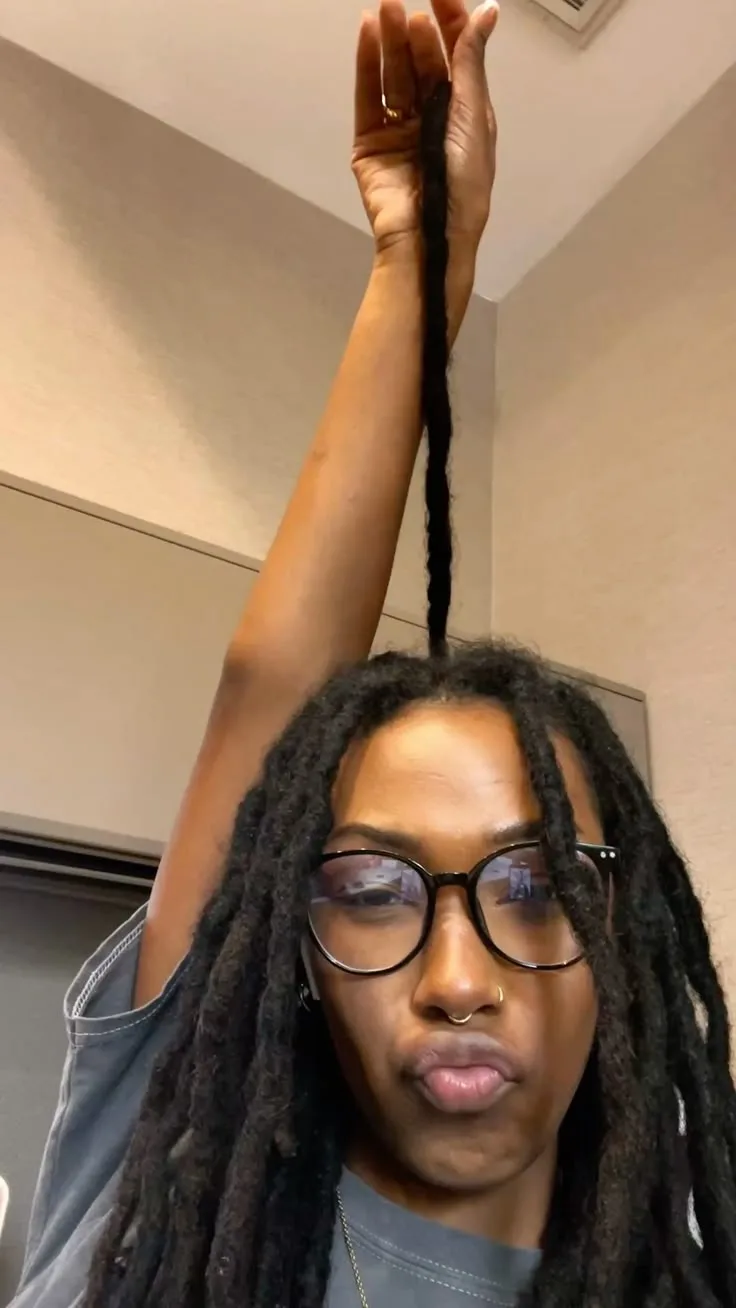
A soft, low ponytail can be used quickly and securely as a daily hairstyle. However, be sure the ponytail is not pulled too tightly; preferably, use fabric-covered elastics or ties to avoid stressing your roots.
The style is practical, allowing hair to be controlled, and it is not harsh on the delicate strands that are slowly falling out during the shedding period.
Signs You Should See a Professional
Loc shedding after giving birth is a common occurrence and usually a temporary condition, but there are signs that suggest a consultation with a trichologist, licensed hairstylist, or hair care expert is warranted.
The earlier you seek help, the better, as it reduces the risk of long-term damage and of your locs becoming unhealthy. The following are the signs you should be attentive to:
1. Excessive Shedding Beyond 12 Months
The majority of the time, postpartum shedding is at its slowest during the 6-12 months period, but if there is still a lot of hair loss after a year, it could mean you have other problems, such as a hormonal imbalance, vitamin deficiency, or scalp disease.
A professional can examine your scalp and hair and offer personalized recommendations based on your situation.
2. Underlying Skin Problems or Hair Loss
The appearance of big bald patches, scalp redness, itchiness, or swelling is a sign that something is wrong and needs to be looked at.
These symptoms could mean alopecia, fungal infections, or other scalp disorders. A consultation with an expert can help you cope with the situation, avoid further hair thinning, and facilitate hair growth.
3. Weak, Thinning Locks and Rapidly Developing Breakage
Treat your locks gently; otherwise, they will break off, giving you an unwelcome surprise when the volume drops noticeably in a short time.
See now: The Introvert’s Galentine: 5 Low-Key Ideas for a Cozy Night In
This indicates the hair may require a strong treatment regimen. Hairdressers and stylists can suggest options such as protective styling, protein treatments, or special products that strengthen locs and restore their integrity.
Final Thoughts
Shedding of post-partum locs may be alarming, but it is a normal process associated with hormonal changes. Gentle care, proper diet, and patience will make your locs bounce back and flourish.
It’s time to concentrate on hydration, scalp care, and protective styling, and remember that shedding is generally temporary. Your locs will eventually regain the strength and the volume they had.
Frequently Asked Questions
1. How Long Does The Hair Shedding Phase Last Postpartum?
Postpartum hair loss generally starts between 2 and 4 months after delivery and it is one of the symptoms of hormonal adjustment.
This period lasts on average 3 to 6 months for women, and by the time the baby is around 1 year, the improvement is considerable.
At times, particularly for breastfeeding moms, moms under pressure, or those with nutrition issues, the shedding may last up to 12 months.
If it stays for more than a year or becomes worse, it could be good to get a professional opinion.
2. What Causes My Locs To Shed?
One of the main reasons for post-partum loc shedding is estrogen hormone fluctuation, particularly the substantial decrease of estrogen levels right after delivery.
While pregnant, the increased estrogen levels cause hair to get longer and thicker as it stays in the growth phase for longer.
At the end of pregnancy, all of the retained hair starts to fall out at once.
As for the ones with locs, the shedding might also be affected by:
- Roots that are no longer strong due to hormonal changes
- Lack of vitamins and minerals after giving birth or during the breastfeeding period
- Scalp that is either too dry or has too much product buildup
- Hair that is pulled too tightly or routinely styled
This type of shedding is normally short-lived and is not an indication that your locs are dying or sick.
3. What Is The Best Treatment For Postpartum Hair Loss?
The most effective treatment for postpartum hair loss is supportive care with no aggressive measures taken. Some of the effective methods are:
- Keeping a gentle wash routine using residue-free products
- Regularly moisturizing the scalp with light oils
- Not using tight styles that put pressure on the roots
- Eating a well-balanced and nutrient-rich diet to promote hair regrowth
- Doing low-manipulation styling consistently
Prenatal vitamins are one of the supplements that may be beneficial but must be taken under medical supervision only.
Along with the right treatment, patience will also be required, as the body needs time to readjust after childbirth.
4. What Does Loc Shedding Look Like?
Loc shedding is usually seen as the presence of hair strands detached from the root, minor thinning at the scalp, or the loss of a few hairs during washing or retwisting.
In addition, you may find some locs getting lighter or feeling a bit thinner, particularly near the hairline or at the top of the head.
Normal shedding is not known to create bald spots or lead to great breakage. In case shedding comes with scalp pain, irritation, a very sparse area, or visible gaps in the locs, the situation may call for an expert’s diagnosis.