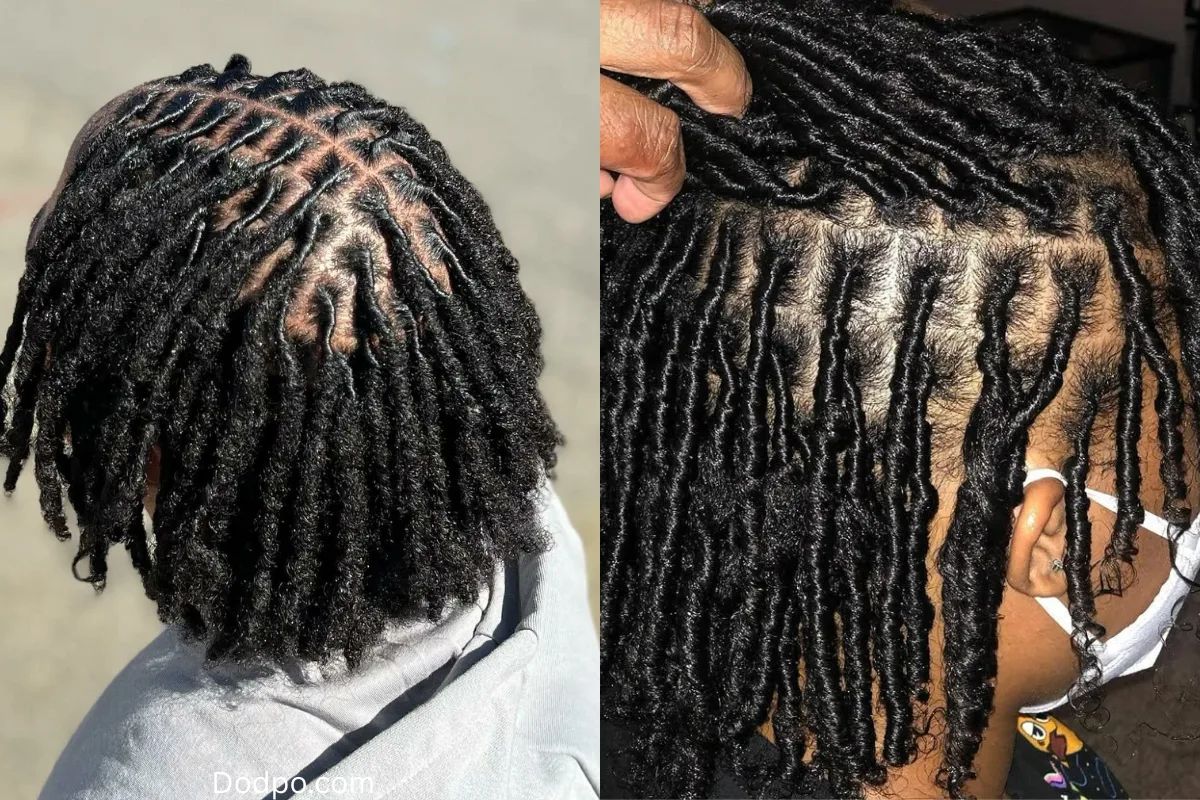
Soft-launch starter locs use a low-maintenance approach to get your loc journey started. They let hair lock slowly and naturally with minimal intervention, unlike methods relying on braiding, twisting, or tight coiling at the root.
This method encourages gradual lock formation, possibly using light twisting, finger coiling, or palm rolling, tailored to your hair texture and preference.
“Soft-launch” is a term for the gradual process of hair being turned into locs. Rather than forcing the hair into a shaped pattern, its nature is allowed to do the magic of intertwining, giving every single strand its chance to lock at the individual’s speed.

This method works best for those who prefer fewer interventions to their hair or who just want to reduce scalp tension and manipulation during the early stages.
What Are Soft-launch Starter Locs?
Soft-launch starter locs are created without heavy braiding, tight twisting, waxing, or heavy product use.
Gentle techniques like finger coiling or light twisting encourage natural locking, and over time, frizzy and tangled hair forms locs.
This method highlights hair’s natural texture and growth, letting each loc form along its own path. At first, locs are softer and less uniform, but with care and patience, they mature into strong, fully formed locs.
Read also; The Professional Edit: How to Style Short Locs for an Interview in 2026
Why People Choose Soft-Launch Starter Locs
1. Gentle On The Scalp
The main reason people choose soft-launch starter locs is their gentleness on the scalp. Tighter methods put constant pressure on roots, while soft-launch locs let hair lock almost without pulling.
Less tension greatly benefits sensitive scalps, thinning edges, or breakage-prone hair. Soft-launch locs minimize root stress, reduce discomfort, and protect delicate scalp areas, supporting healthy long-term growth.
2. Low Manipulation
Soft-launch locs are an effective low-maintenance solution. Not forcing hair into specific patterns means less retwisting and handling, letting locs form naturally at their own pace.
This minimal-manipulation method suits those wanting an easy routine or less risk of damage from frequent styling.
It lets natural texture guide how each loc develops, so hair forms into healthy, structured locs while still “doing its own thing.”
3. Works With Natural Hair Growth Patterns
Another benefit is compatibility with natural hair growth patterns. Each person’s hair has its own curl, direction, and shrinkage rate, and the soft-launch approach works with these rather than imposing an artificial shape.
This suggests that the locs will eventually look less artificial and more like natural ones.
Soft-launch methods reduce stress on the strands, support uniform growth, and eliminate awkward angles or uneven sections that often result from other starter techniques by allowing the hair’s natural pattern to guide the locking process.
Over time, soft-launch locs develop into mature locs that remain balanced, visually harmonious, and natural in both texture and appearance.
Soft-launch starter locs also offer greater styling flexibility. In the early stages, the hair remains loosely bound, allowing you to wear it in loose buns, ponytails, mild twists, or similar styles without disrupting the locking process.
Such flexibility is a major advantage for people who want to look somewhat professional, especially during the early stages of their locs or at special events or casual outings.
Furthermore, it allows users to wait for their locs to mature while staying healthy, as the scalp remains tension-free and gradually strengthens as the locs develop.
The ability to style hair without affecting the starter loc process makes this method extremely attractive to most beginners.
Read also: How to Sleep with Locs Without a Bonnet: 5 Safe Alternatives for 2026
How Soft-Launch Starter Locs Are Installed

1. Preparation
The primary and most significant activity during soft-launch starter loc installation is preparation. Thoroughly cleansing (washing) and detangling (removing knots or tangles) the hair is the beginning.
This step ensures that no heavy product residue, dirt, or excess oil remains on the hair, which could otherwise interfere with the locking process or cause scalp irritation.
Detangling plays an equally important role, as it allows you to separate the hair into clean sections and prevents knots from disrupting proper loc formation.
Preparation is the foundation for a successful soft-launch loc process, ensuring each strand can lock effectively and making subsequent steps smoother.
2. Sectioning
The next step, sectioning, involves dividing the scalp into equal, manageable divisions for each loc.
Section size determines the final thickness and density of the locs: smaller sections mean thinner locs, while larger ones produce thicker, fuller locs.
Careful, neat parting is very important, as it determines the locs’ position on the scalp and the uniformity of their aging over time.
Sectioning also supports scalp health during the initial stages of loc development by improving airflow and facilitating easier access to the scalp.
The partitioning style can be personalized according to one’s liking, head shape, and hair type, thus providing each individual with a unique starter loc experience.
3. Light Twisting or Finger Coiling
After the hair has been sectioned, each section is carefully twisted or finger-coiled at the root. The intention is not to have hard or perfectly equal locs, but to let the fibers join together like that as per their nature.
This initial turning or coiling allows the hair to begin forming a structure while still allowing it to lock naturally as it progresses.
Soft-launch locs stay loose and gentle at the roots, avoiding tension common in tightly braided or twisted methods.
This helps prevent breakage and discomfort, as initial tightness may cause pain or slow locking. This approach accommodates all hair types, especially fine or sensitive hair.
Read also: 5 Best Protective Styles for Locs During Gym Workouts: No More Post-Gym Odor
4. Moisturizing and Maintenance
Scalp health care is absolutely necessary during the initial period of soft-launch locs. Lightweight, loc-safe serums (moisturizing liquids) or moisturizers are used to prevent dryness, flaking, and irritation.
Both hair and scalp need to be kept moist; however, heavy products that could lead to buildup or weigh down the forming locs should be avoided.
Regular moisture supports flexibility and reduces brittleness, aiding uniform, strong loc development.
The core is minimal manipulation, let the hair lock naturally by leaving it as undisturbed as possible.
5. Patience Over Retwisting
Patience is probably the most important rule for soft-launch starter locs. These locs are not disturbed much; just occasional palm rolling or light twisting is done to guide the formation.
This counteracts over-manipulation, since too much handling can disconnect the strands, create frizz, or cause uneven locking.
The method’s “soft” side is particularly highlighted in this step; the time, care, and natural hair behavior to lead the locs’ evolution.
The soft-launch locs, being hair that can grow at its natural rate, become healthier, stronger, and more robust, and, at the end of the process, fully formed.
Benefits Of Soft-Launch Starter Locs

1. Mild to the Scalp and Edges
The scalp and hairline are the most beneficial areas for the soft-launch starter locs.
With braid-in or tightly twisted starter locs, you often endure pain and pulling at the roots.
In contrast, soft-launch methods minimize tension and reduce pulling, allowing you to avoid discomfort, scalp irritation, and the risk of traction alopecia, a condition linked to prolonged stress on the hair follicles.
This gentleness is especially beneficial for those who have sensitive scalps, receding hairlines, or delicate hair.
By avoiding tight manipulation, soft-launch starter locs can protect the fragile areas around the hairline and crown, making the whole loc journey easier and more comfortable.
2. Low Maintenance During Initial Stages
Compared to other starter methods, soft-launch starter locs need way less daily care. Since the hair is not put into strict braids or twists, there is very little need for frequent retwisting or constant manipulation.
This characteristic of little care attracts particularly those people who have no time or who take the no-intervention hair care way. Furthermore, frizz would be reduced, and the locs would form more evenly over time.
By avoiding constant disturbance of the hair, those wearing locs can focus on slow growth and natural locking rather than constant styling and maintenance.
3. Natural Locking Patterns are Encouraged
One more main benefit of soft-launch starter locs is that they recognize the hair’s natural curl pattern, its shrinkage, and growth direction.
This method, which enables the strands to intertwine organically, does not force the hair into a rigid structure.
This leads to the locs developing along the hair’s natural lines, resulting in a more natural and uniform look as they mature.
The natural locking process usually yields locs that feel fuller, healthier, and more in line with the scalp’s shape.
This is a great advantage, especially for hair types that do not tolerate tight twists or braids well.
Who Should Choose Soft-Launch Starter Locs?

Soft-launch starter locs are perfect for:
- Persons whose scalp is sensitive or whose hair is weak and prone to breakage.
- Individuals who prefer the lowest friction and least interaction with their hair.
- Those who want their hair to have a natural and organic look right from the beginning.
- Hair types that can be easily interlocked without the need for pulling and tight braiding.
This technique is less recommended for those who want a uniform, tightly structured look right after installation.
Read also: Thrifted Sustainable Valentine’s Decor: Zero-Waste Romantic Ideas for 2026
Final Words
Soft-launch starter locs offer a gentle, low-maintenance way to begin your loc journey while prioritizing scalp health and your hair’s natural growth patterns.
This style allows the hair to lock up on its own time, reduces pull and breakage, and, during the early stages, offers more hairstyle options.
They might not mature as quickly as other, more structured methods like braid-in starter locs, but patience, low manipulation, and organic development certainly make soft-launch locs an ideal choice for many beginners.
Frequently Asked Questions On Soft-Launch Starter Locs
1. What Is the Difference Between Soft Locs and Regular Locs?
Soft locs are the locks that are loosest or the ones that have just started to form; they are the softest, most flexible, and perhaps the least twisted or coiled among locs.
Their movement can be free, with slight frizz, and very little retwisting is required. The association with soft-launch or loose-starter techniques is common with soft locs.
Regular locs (or mature locs) are in a completely different category; they are fully locked, very sturdy, and very strong.
Over time, they have hardened their position, taken on a certain shape, and are therefore not easily unshaped. Regular locs are generally the outcome of several months to years of proper care, and the natural locking process has played its part, too.
2. How to Make Starter Locs Softer?
To make starter locs softer, one must provide gentle care, moisture, and protection.
- Moisturize Regularly: Hydrating, non-buildup-making lightweight oils or serums are a must for loc-safe moisture.
- Avoid Heavy Products: Thick waxes and heavy creams make starter locs stiff and slow down the locking process.
- Handle With Care: Limit excessive retwisting and avoid tight styles that strain the roots and cause locs to harden too early.
- Use Palm Rolling or Finger Coiling: Light manipulation techniques like palm rolling help shape the locs while keeping them soft.
- Choose Protective Styling: Wear loose buns or soft wraps to retain moisture and reduce friction that can dry out and stiffen locs.Soft locs adapt easily as the hair grows. Maintaining flexibility in the early stages supports healthy, manageable locs as they mature.