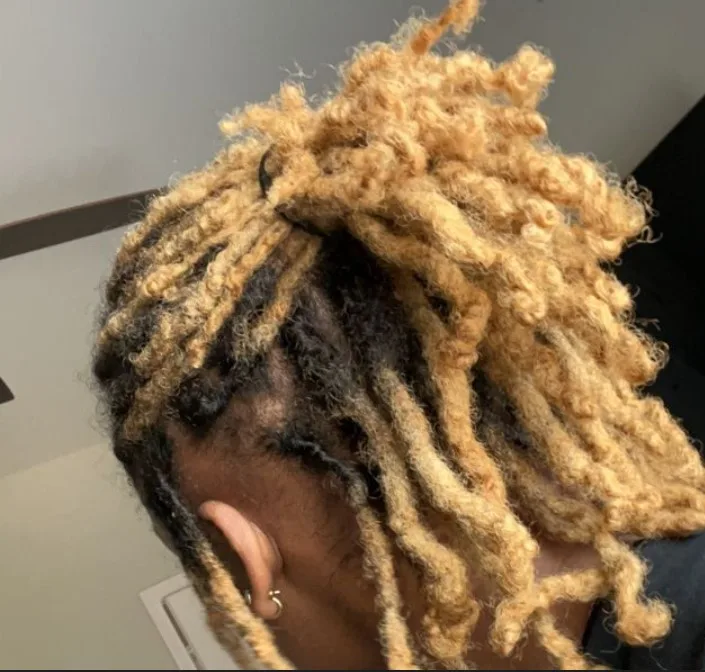
Starting locs on bleached hair can be done, but it takes patience, care, and a gentle approach. Bleaching changes the structure of your hair, making it more fragile and easier to break if it’s not handled properly.
That’s why bleached hair behaves differently during the early stages of loc formation compared to natural hair.
When your hair has been lightened, it reacts more strongly to moisture, tension, and frequent manipulation. This can affect how quickly your locs form and how well they hold. Understanding these changes is the first step to avoiding unnecessary damage and frustration.
The key to successfully starting locs on bleached hair is to go slow and focus on hair health first.
Choosing soft, low-tension starter methods and adjusting your maintenance routine can help protect your strands while allowing your locs to develop naturally and confidently over time.

The appropriate method enables bleached hair to develop into healthy locs, yet the procedure requires maintaining respect for the hair’s boundaries and its future stability.
Can You Start Locs On Bleached Hair?
Yes, locs can be started on bleached hair, but the hair must be honestly assessed before beginning.
Bleached hair that has been overprocessed will develop an overly soft texture, becoming stretchy when wet and breaking with minimal tension.
The hair exhibits signs of weakness, which will prevent it from maintaining its locked state, as it will thin and break. The right approach allows starter locs to begin when hair is strong, elastic, and well-moisturized.
Using low-tension starter methods with maintenance intervals and special treatments for hydration and strength development will lead to better results.
The process of establishing locs on bleached hair depends more on the hair’s health needs and the time required to maintain it than on the likelihood of creating locs.
Challenges of Making Locs on Bleached Hair
The process of establishing locs on bleached hair presents these main difficulties.
1. Increased Breakage Risk
Bleached hair has weakened protein bonds from chemical processing, making it more fragile than natural hair.
The hair thins along locs and breaks at stress points when people apply tension through tight starter methods, regular retwisting, and forceful styling.
The danger of damage rises at the roots and ends because those areas already experience more hair breakage.
2. Slower Or Uneven Locking
Bleaching changes natural curl patterns because it makes hair strands less likely to form coils that would interlock naturally.
Some locs will start to develop, while others will take longer to complete their development due to this procedure.
The locking process requires extra time and effort, as the locs need to be handled with care to prevent excessive handling.

3. Dryness And Moisture Loss
Bleached hair develops increased porosity, which causes it to lose moisture more quickly.
Starter locs need regular hydration to prevent them from becoming brittle and rough to the touch, which makes them easier to come apart.
Dry conditions increase friction between hair strands, leading to more hair breakage over time when people do not handle their hair correctly.
4. Reduced Elasticity
Healthy hair stretches slightly and returns to its original shape. Bleached hair loses its natural elasticity because the chemical process damages its hair structure.
Elasticity loss makes hair more prone to breakage during retwisting and styling, as it becomes more inclined to snap than bend.
5. Higher Risk Of Thinning Locs
The roots of bleached hair become thinner due to its weakened state, making it more challenging to form locs.
The locs will reach their full size, but they will create weak areas that need trimming and strengthening work during their development.
The Best Starter Loc Methods and Tips For Bleached Hair
1. Use Two Strand Twists
Two-strand twists are widely considered one of the safest and most forgiving starter loc methods for bleached hair.
The technique spreads tension across the strand, preventing damage to chemically treated hair by protecting the root. The twists maintain their structure, allowing the hair to move freely without breaking.
Another advantage is maintenance. Two-strand twists can be gently retwisted as needed without excessive pulling, making them ideal for people who want a low-risk method while their hair regains strength.
The twisting process leads to loc formation, creating a strong foundation that requires no additional handling during the gradual locking process.
2. Finger Coils With Minimal Tension

The finger coils require special knowledge and control to achieve good results on bleached hair. The coils should have a loose structure and be kept hydrated with a moisturizing product that slides without causing stiffness, according to these requirements.
The ends of the hair strand will break if over-coiling causes excessive tightness throughout the hair.
The method works best on hair that retains good elasticity after bleaching. Finger coils require patience, as they may unravel more often in the early stages, but when maintained gently and spaced out between retwists, they can mature into healthy locs over time.
3. Braid With Caution
The process of starting locs on bleached hair requires careful selection of braids as the initial method. The process of starting locs on bleached hair requires using medium-sized braids installed loosely.
The practice of tight braiding creates excessive pressure, damaging delicate hair strands and causing hair loss from both roots and weak areas throughout the locs.
The process develops natural locks while protecting the delicate hair shaft from excessive pressure. Braids require more time to fully lock, but gentle handling makes them a suitable choice.
Best Starter Loc Styles For Bleached Hair
1. Two Strand Twist Starter Locs

Two strand twist starter locs are one of the safest styling options for bleached hair. The twists help to maintain equal tension across the entire hair length which protects the fragile hair shafts that have undergone chemical treatment.
The style enables the hair to maintain its natural movement while establishing a sturdy foundation for locs.
The process of retwisting becomes simpler because the technique allows for soft retwisting without creating strong tension which would lead to hair damage.
2. Soft Launch Starter Loc Style

Soft launch starter loc styles are ideal for bleached hair because they prioritize hair health over immediate uniformity.
The style permits hair to develop natural movement which brings hair strands together without artificial methods that create tightness.
Light twisting or minimal root manipulation helps reduce tension which proves particularly useful for maintaining delicate or chemically damaged hair.
The initial stage of development shows a disorganized appearance but the long-term outcomes produce stronger and healthier locs.
3. Loose Finger Coil Starter Locs

When executed with controlled tension and appropriate hydration loose finger coils function as starter locs for bleached hair. The style achieves its best results when using light-weight products which maintain moisture and flexibility while being safe for locs to use.
The coils should not be tightly wound, because tight coils create the risk of snapping at the ends and cause thinning at the roots.
Finger coil starter locs need time and proper treatment to achieve their final form through the development process.
4. Medium Sized Braided Starter Locs

Braided starter loc styles can work on bleached hair when installed loosely and in medium-sized sections. The approach decreases root tension while it protects the head from damage because the roots are already weak.
Leaving the ends slightly loose rather than tightly braided encourages natural locking and minimizes stress on fragile tips.
The hair takes more time to develop complete maturity with braided locs but proper styling and handling can lead to healthy locs.
5. Larger Starter Loc

Larger starter loc styles are often recommended for bleached hair because they provide extra strength and durability during the locking process. The method requires less maintenance because larger sections keep individual strands intact.
The hairstyle enables users to cut off damaged parts while their locs continue to grow which maintains their original thickness and length.
6. Minimal Manipulation Starter Loc

Bleached hair benefits from styles which need. The hair requires time to recover from chemical processing when people keep their locs basic without frequent styling.
Protective styling together with low-tension updos and gentle maintenance practices results in better loc development which decreases the chances of thinning or shedding.
Final Words
The process of creating locs requires proper treatment because of the protective nature of bleached hair.
The locking process requires hair protection through strength and moisture maintenance combined with low manipulation techniques to safeguard chemically treated hair.
The development of healthy locs over time stems from proper starter methods and ongoing maintenance of bleached hair.
Frequently Asked Questions About Starting Locs On Bleached Hair
1. Can I Dye My Hair Before Starting Locs
Yes, you can dye your hair before starting locs, but the condition of your hair matters more than the color itself.
Semi-permanent or low-lift dyes cause less structural damage than bleaching because they are safer to use.
You should postpone the loc process until your hair has completely recovered its moisture and elasticity through deep conditioning and strengthening treatments after you color your hair.
2. Can You Start Dreadlocks With Damaged Hair
Mildly damaged hair allows people to start dreadlocks, but people with severely damaged hair will find it difficult to maintain their dreadlocks.
The hair becomes more vulnerable to thinning and breakage when locs begin, due to its tendency to break, excessive stretchiness, and wet-snap ability.
The most effective way to achieve long-lasting locs starts with hair health restoration or trimming damaged areas.
3. Should I Bleach My Hair Before Locking It
The practice of bleaching hair before locking hair requires special permission because it should not be done except in emergencies.
Hair that needs to be locked must undergo bleaching before the process, as bleaching damages hair strands.
Many locticians recommend that people first create their locs and let them grow before proceeding to lighten their hair with professional assistance.
4. Is Bleach Bad For Locs
Locs can be treated with bleach because of their compatibility with the process, though this increases the risk of hair becoming dry, thin, and prone to breaking.
Bleached locs need extra hydration and require special care, and people must avoid touching their hair frequently.
Applying bleach to hair requires proper maintenance, as it weakens and shortens locs’ lifespan during their initial development.