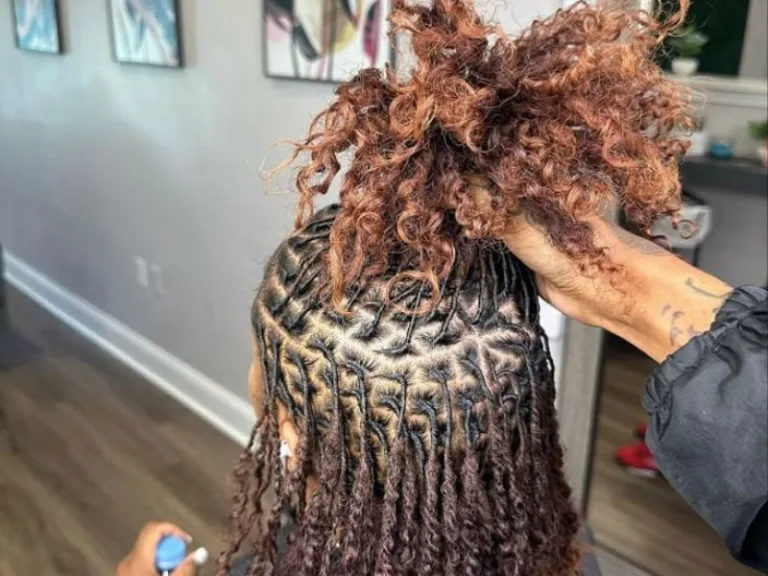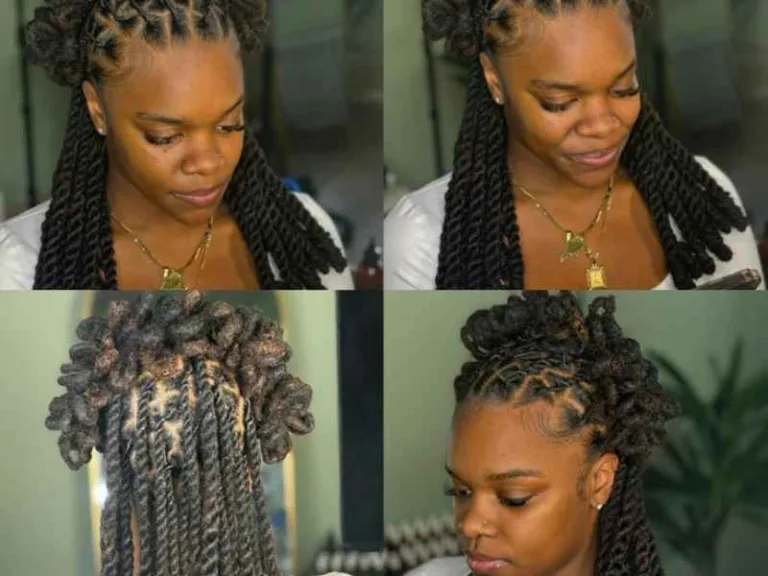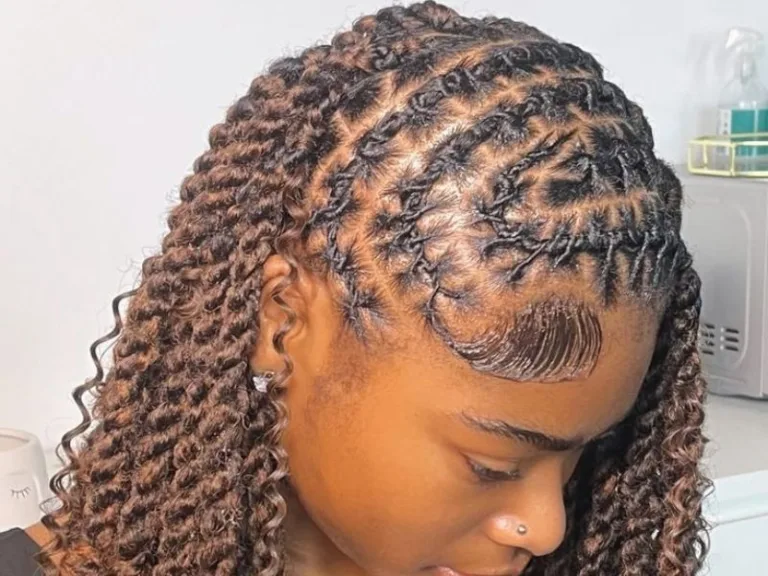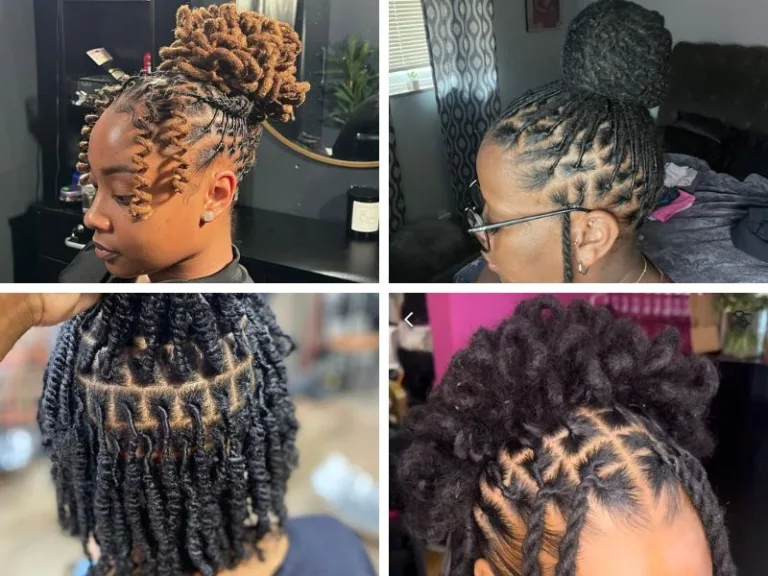
Learn How to Fix Thinning Locs at the Crown and Bring Your Locs Back to Life.
The crown of your head takes on a lot.
Every high puff, every tight updo, every ponytail you’ve pulled together on a rushed morning, it all lands there.
So when you start noticing that your locs at the crown look noticeably slimmer, softer at the base, or just less full than they used to be, that feeling of dread is completely understandable.
Here’s the thing, though: thinning locs at the crown are almost never a sign that your locs are dying.
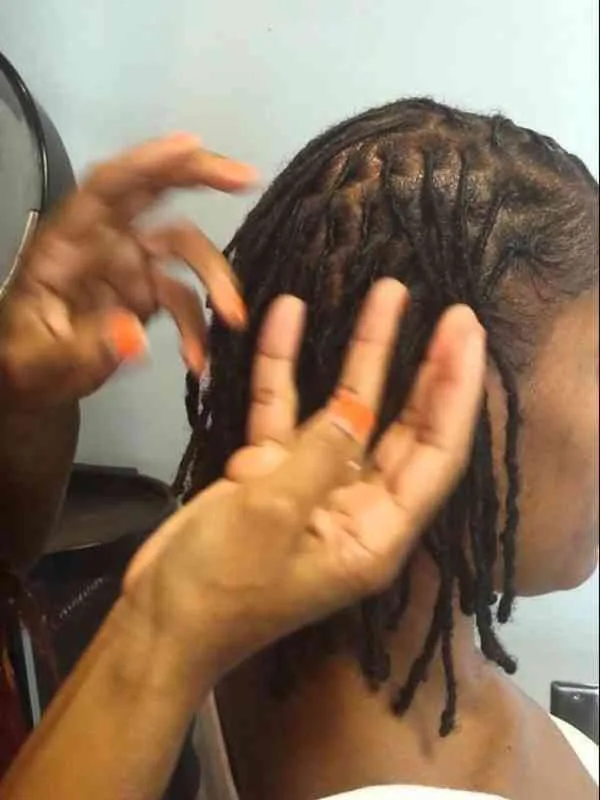
They’re a sign that something in your routine needs to change. And the earlier you catch it, the easier it is to turn around.
Even if the thinning is subtle or has gotten to a point you can no longer ignore.
This guide will walk you through exactly what’s causing it. What you need to stop doing immediately, and the practical steps that will help your locs, and your scalp, recover.
Below you will see How to Fix Thinning Locs at the Crown And How To Bring Your Locs Back :
How to Fix Thinning Locs at the Crown And How To Bring Your Locs Back
Why the Crown Is So Vulnerable in the First Place
The crown is the most mechanically stressed area of the head for most loc wearers.
It’s the anchor point for the styles people reach for most, buns, top knots, puffs, and updos all pull tension directly from that zone.

Unlike the back or sides of the head, which tend to rest more freely, the crown is almost always involved whenever your locs are gathered up and secured.
That persistent tension, repeated over weeks and months, gradually weakens the roots.
On top of that. The crown tends to receive less moisture than other parts of the head during a typical maintenance routine.
People focus on the edges, the length, the sides, but the very top of the head often gets a cursory once-over and nothing more.
This article dives into:
- How I Prevented Thinning and Hair Loss in My Locs (And You Can Too)
- Exosome Therapy for Loc Thinning: A New Approach to Scalp Renewal
Dry roots in a high-tension area are a particularly damaging combination. Because dry hair is far more likely to break than hair that’s been properly hydrated.
So while the crown may look fine from the outside for a while. The weakness is building internally long before it becomes visible.
The Most Common Causes of Crown Thinning
Over-retwisting is one of the most frequently overlooked culprits.
When locs are retightened too often, every week or every two weeks without adequate rest. The base of each loc is placed under repeated stress before new growth has had enough time to strengthen and anchor.

The root thins over time not because the hair is falling out, but because it’s being weakened faster than it can recover.
A healthy retwist schedule for most people is every four to eight weeks, depending on how quickly the hair grows.
Tight styling is the second major cause, and it works in tandem with retwisting.
Every time the crown locs are pulled into a bun or secured in a style that creates upward or sideways tension. The roots experience strain.
A single tight style isn’t damaging.
But a tight style worn for days at a time, on top of regular retwisting, on top of insufficient moisture, that combination compounds quickly.
Traction alopecia. A form of hair loss caused specifically by repeated tension on the follicles, can result from exactly this pattern if it continues long enough.
Dryness and product neglect round out the main causes.
Locs need water-based moisture regularly to stay supple and strong. When the crown is habitually underfed.
Whether because it’s always covered by a style or simply overlooked. The roots become brittle.
Brittle roots under tension don’t just thin; they break.
And unlike shedding, which is a natural part of the hair cycle. Breakage at the root is a structural problem that needs to be actively addressed.
What to Stop Doing Immediately
The first thing to stop is any style that pulls from the crown.
This means tight top knots, high buns, and any updo that requires significant tension to hold in place.
It doesn’t mean you can never wear your locs up again, it means your crown needs a period of rest where the roots are not being stressed.
Loose styles, freehanging locs, or low-tension options that don’t anchor at the crown are fine.
Anything that requires a strong elastic, heavy clips, or sustained upward pull on those specific locs should be set aside for now.
Stop retwisting the crown on the same schedule as the rest of your head.
This sounds counterintuitive, because uneven retwisting can feel messy, but the thinning locs need to be handled on a gentler, more infrequent schedule until the roots have had time to regain some strength.

When you do retwist the crown, the pressure applied should be lighter and the manipulation shorter than you’d apply elsewhere.
Inform your loctician if you have one, and make sure they’re aware of the issue so they can adjust their technique accordingly.
Also stop applying any heavy creams, butters, or thick oils directly to the crown scalp area.
While it may feel like you’re moisturizing, dense products can clog the follicles, add unwanted weight to already fragile roots, and create buildup that further weakens the base.
Lightweight, water-based products are what the area needs right now, not layers of product that sit on top of the scalp without actually penetrating.
How to Actively Treat the Thinning
Begin with consistent scalp care focused specifically on the crown.
A gentle scalp massage with a lightweight oil, jojoba, peppermint diluted in a carrier, or tea tree diluted appropriately, done two to three times per week will stimulate blood circulation in the area.
Improved circulation brings more nutrients to the follicles, which supports stronger regrowth.
The massage should be light and circular, never digging or dragging.
You are coaxing the scalp, not working out a knot.
Hydrate the crown locs properly and regularly.
This means misting the area with water or a water-based spray every few days and following with a very light oil to seal the moisture in.
The goal is to keep the hair at the root pliable rather than dry and stiff.

Pay attention to this step even on the days when you’re not doing a full maintenance session, a quick mist over the crown before bed takes thirty seconds and makes a real difference over time.
If the thinning has progressed to the point where individual locs at the crown look significantly thinner than their neighbours, you have the option of combining them.
Merging two thinner locs creates one stronger, thicker loc and removes the weak individual strands from the equation.
This Post explains
- The Ultimate Guide to Professional Loc Steam Treatments at Home: Restore, Hydrate, and Elevate Your Routine
- From Sweat to Sleek: How to Transition Loc Styles from Gym to Boardroom
- 10 Common Loc Mistakes to Avoid That Cause Thinning & Breakage
This should ideally be done by a professional loctician who can assess the locs and perform the merge cleanly without causing additional breakage.
It’s a simple fix when done correctly, and the result is a much more uniform, healthier-looking crown.
The Role of Nutrition and Internal Health
Crown thinning doesn’t always trace back to external causes alone.
Sometimes the hair is telling you something about what’s happening internally.
Deficiencies in iron, zinc, biotin, and protein are all associated with hair thinning and increased shedding, and locs are not immune to this.
If you’ve been under prolonged stress, recently changed your diet significantly, experienced illness, or gone through a postpartum phase, internal factors may be contributing to what you’re seeing at the crown.

A simple blood panel can identify even if any nutritional deficiencies are at play.
In the meantime, prioritising a diet rich in leafy greens, lean proteins, nuts, seeds, and adequate hydration supports hair health from the inside out.
If biotin or a hair-specific supplement has been recommended by a healthcare provider for your situation. That’s worth exploring.
But food-first is always the smarter approach. Because it addresses the whole system rather than patching a single gap.
Setting Realistic Expectations for Recovery
Recovery at the crown takes patience, and the timeline depends largely on. How long the thinning has been developing and how consistently you apply the changes.
Most people begin to notice improvement, stronger-feeling roots, less visible thinning, new growth that feels fuller, within six to twelve weeks of genuinely adjusting their routine.
But that requires actually doing the things: lightening the retwist schedule. Avoiding tight styles. Moisturising consistently. And giving the scalp regular attention.
What won’t help is oscillating.

A week of good care followed by three tight buns in a row. And a heavy product session sets the progress back.
The crown needs sustained gentleness over time, not sporadic care between periods of the same habits that caused the problem.
Treat this the way you’d treat any recovery process, with consistency, even when the results aren’t immediately visible.
The root system is rebuilding, and that work happens below the surface long before you can see it.
If you are looking to understand 35 Loc Styles for Interviews: Professional, Polished, and Powerfully You
Bad Ideas to Avoid When Dealing with Crown Thinning
Trying to disguise thinning locs by retwisting them more tightly so they look neater.
It feels logical in the moment, neat roots look less thin, but the added tension accelerates exactly the damage you’re trying to fix.
You are worsening the problem every time you do this.
Applying heavy wax or loc butter to the crown to give the area the appearance of more volume.
These products coat the outside of the loc, and the scalp without addressing anything structurally. And they build up over time in a way that makes the follicle environment worse, not better.
The loc may look temporarily fuller, but the root is no healthier.
Waiting too long to see a professional because you’re hoping the problem resolves on its own. Minor thinning does respond to at-home care and routine adjustments.
But if the thinning is significant, if individual locs feel paper-thin at the base, or if you can see scalp in areas where locs used to sit close together, a loctician’s assessment is the right next step.
The sooner the cause is identified and a repair strategy is in place, the more of your locs you protect.
In Conclusion
Thinning locs at the crown are one of those problems that rewards attentiveness that’s why a solutionwas provided on How to Fix Thinning Locs at the Crown And How To Bring Your Locs Back .
The people who catch it early, adjust their habits, and give the area consistent care almost always recover well.
The people who ignore it or try to style their way around it often find themselves dealing with something much harder to reverse six months later.
Your locs are strong. They’ve survived a lot already.
Give the crown what it’s been missing, rest from tension, genuine moisture, lighter hands at retwist time, and a little dedicated scalp care, and it will respond. Not overnight, but it will respond.
And the version of your crown you’ll see on the other side of this will be worth the patience.
You learned How to Fix Thinning Locs at the Crown And How To Bring Your Locs Back.