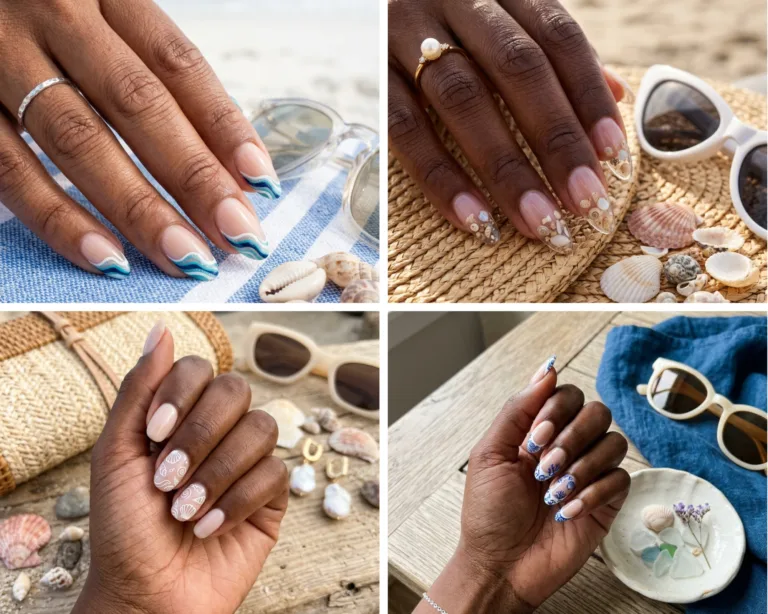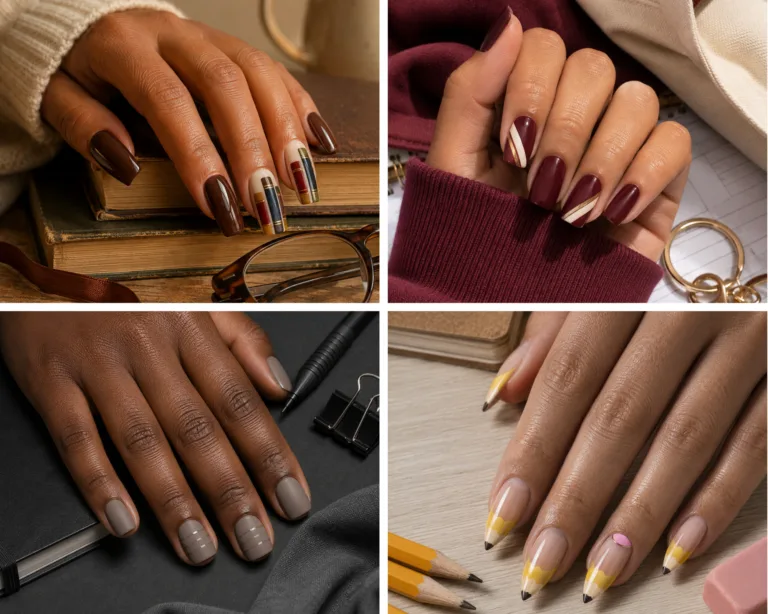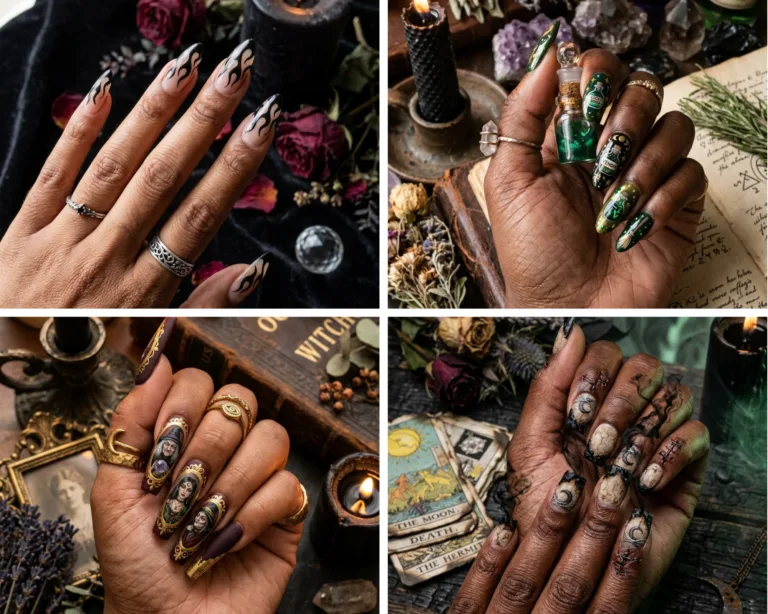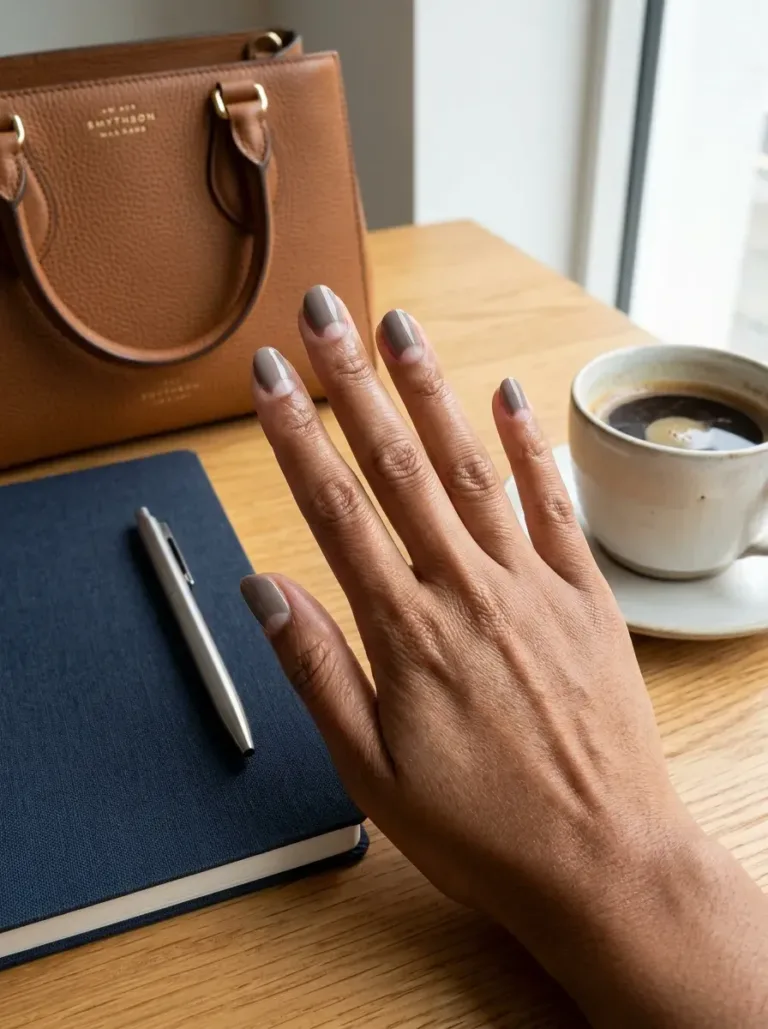
When you want a manicure that looks polished but still survives typing, cooking, school runs, gym sessions, or a strict workplace, short nails make a lot of sense.
The challenge is keeping them intentional rather than simply trimmed down. Shape, finish, contrast, and placement matter more when there is less nail space to work with.
A micro French line can sharpen a square tip, while sheer pink, chrome, velvet cat-eye, tortoiseshell, florals, or negative-space details can make short nails feel stylish without adding length.
Some designs lean quiet and expensive; others bring color or playful art. The best choice depends on how much upkeep you want and where you plan to wear it. Start with the classic: micro French tips.
1. Micro French Tips on Short Square Nails
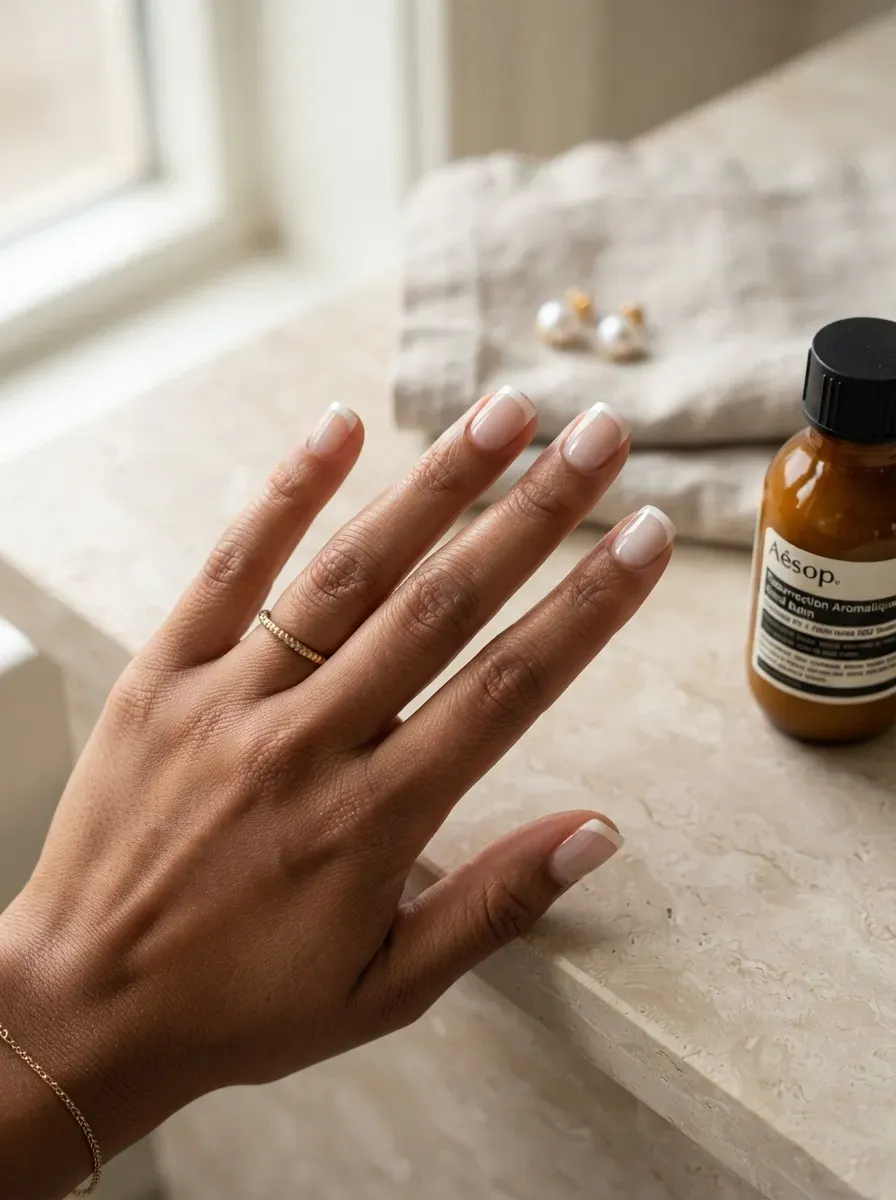
Micro French tips work particularly well on short nails because the narrow white line defines the free edge without visually cutting the nail plate in half. A sheer pink or beige base keeps everything light.
Square tips make the line easiest to control, although a soft squoval works too. Keep the white edge under two millimeters for the most balanced result.
2. Milky Nude Squoval Nails
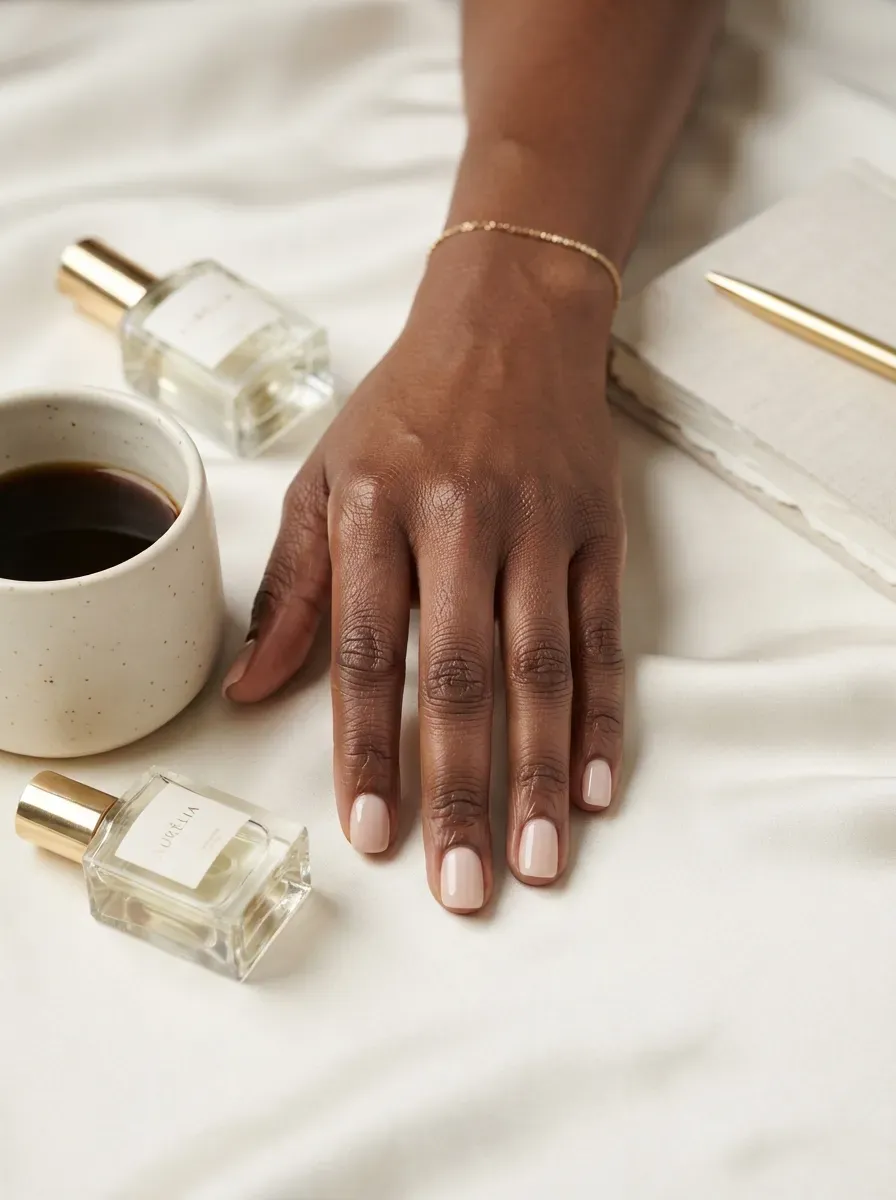
Milky nude polish softens the contrast between the nail plate and free edge, which can make short nails appear slightly longer. The squoval shape prevents the corners from looking bulky while remaining practical for everyday wear.
Two thin translucent coats usually look more dimensional than one opaque layer. Choose a nude with enough warmth or coolness to complement your undertone rather than masking it.
Read now 4th of July Ideas for Long-Distance Couples That Make the Distance Disappear
3. Glazed Pearl Chrome Short Nails
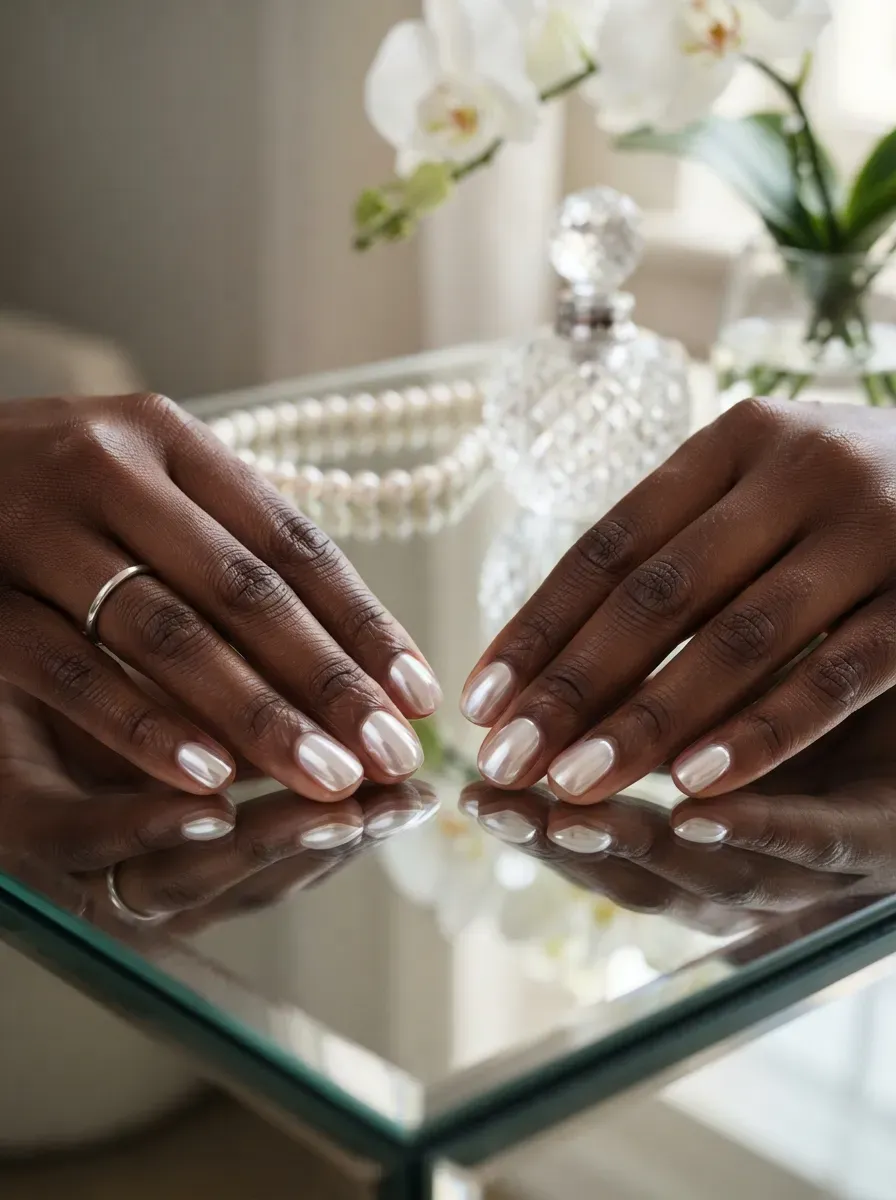
Pearl chrome gives short nails dimension without relying on length or detailed artwork. The effect looks best over a sheer milky base because the chrome powder catches light while the natural nail still shows underneath.
Rounded edges keep the reflection smooth rather than fragmented. Seal the free edge carefully with gel top coat because chrome tends to show tip wear faster than cream polish.
4. Cherry Red Short Oval Nails
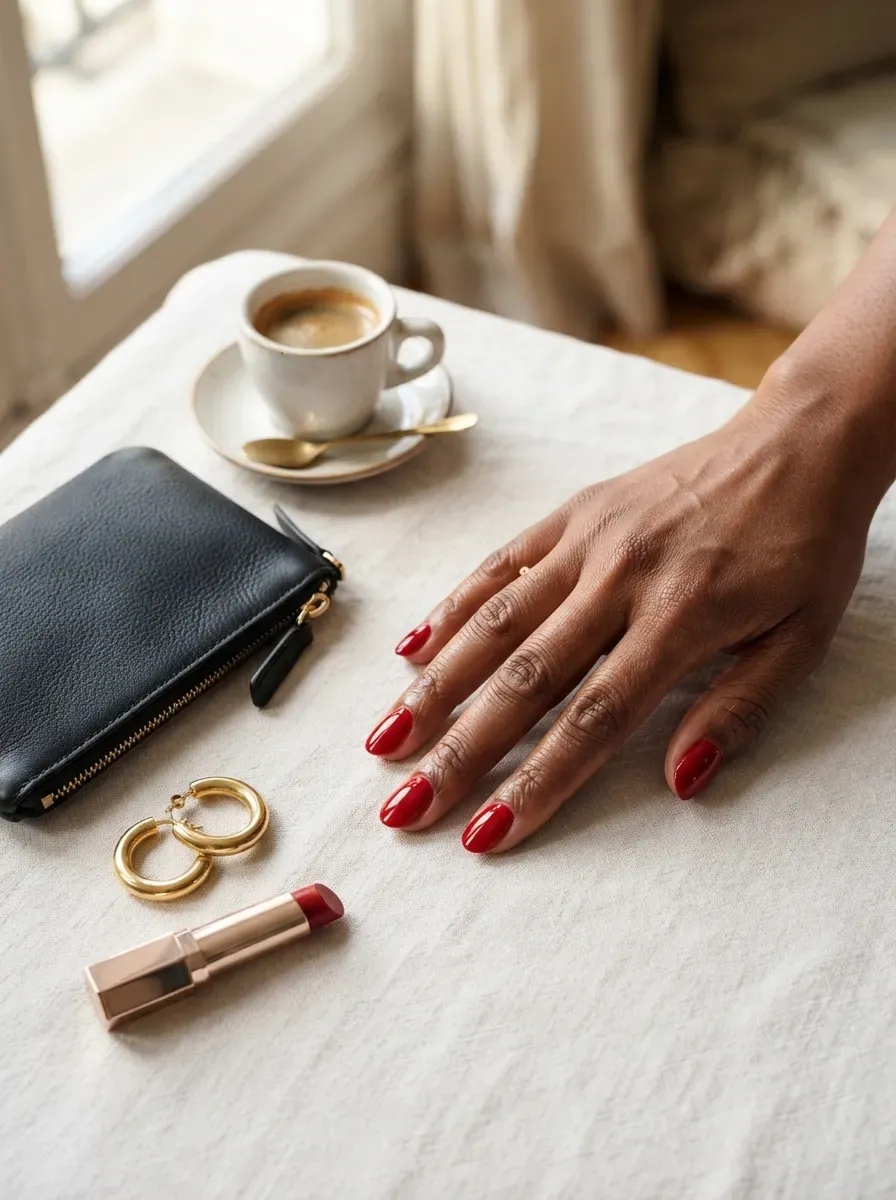
A saturated cherry red can make very short nails look deliberate rather than unfinished because the strong color creates a crisp visual boundary. Short oval shaping keeps traditional red from feeling severe and makes minor corner wear less obvious.
Cooler reds flatter many neutral and cool undertones, while tomato-leaning reds suit warmer skin beautifully. Cap the free edge with every coat to reduce early chipping.
5. Chocolate Brown French Tips

Chocolate tips offer softer contrast than white French lines, especially on warm or deeper skin tones. Because brown visually recedes more than stark white, it lets a short nail plate remain the focus instead of emphasizing limited length.
A translucent caramel or pink-beige base adds warmth underneath. Ask for a curved smile line rather than a straight band if your nail beds are naturally wide.
See also European Summer Baches: 20 Dreamy Ideas for the Ultimate Girls Trip
6. Navy Negative-Space Half Moons
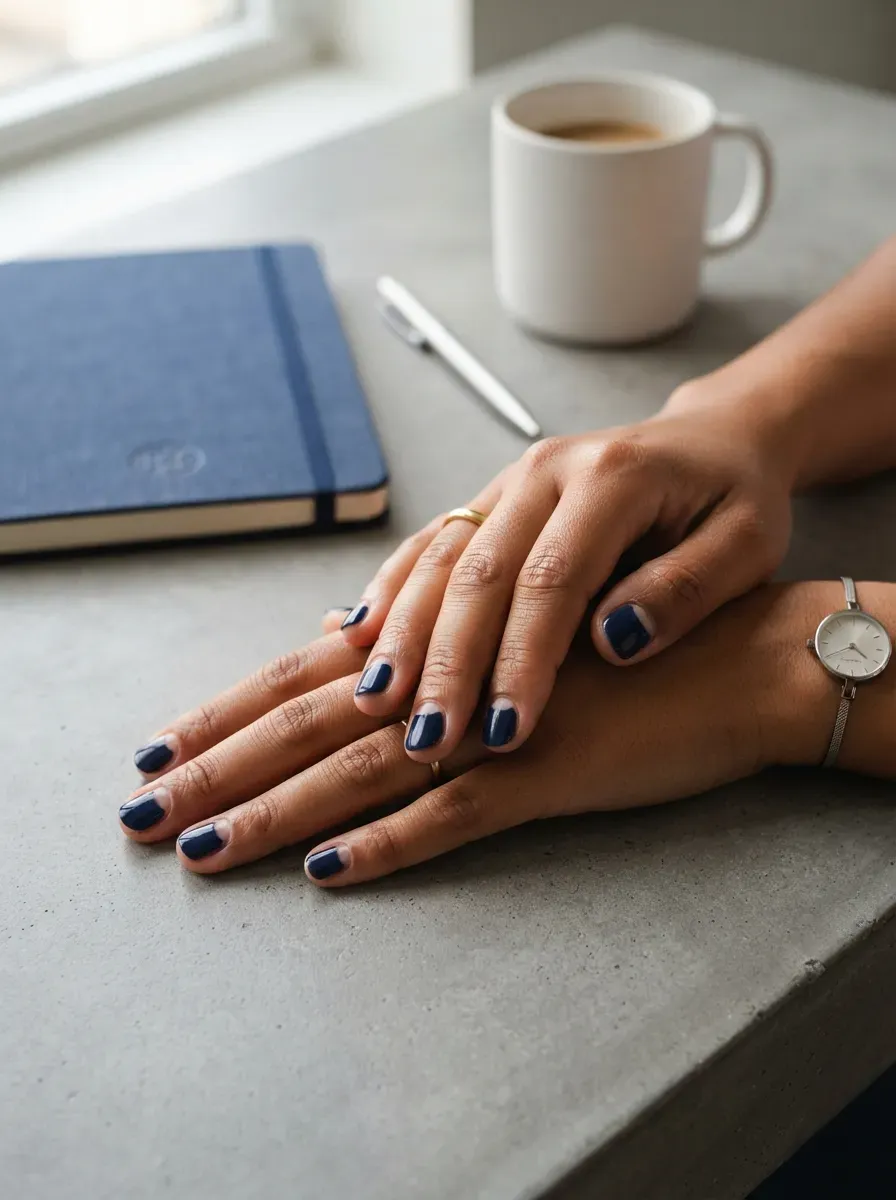
Negative-space half moons leave a sliver of natural nail visible near the cuticle, making dark navy feel less heavy on short nails. The bare section also disguises early grow-out better than solid color painted directly to the cuticle.
Navy gives almost the drama of black with slightly more softness. Use a fine liner brush to keep each curved opening proportionate to the nail width.
7. Burgundy Velvet Cat-Eye Nails
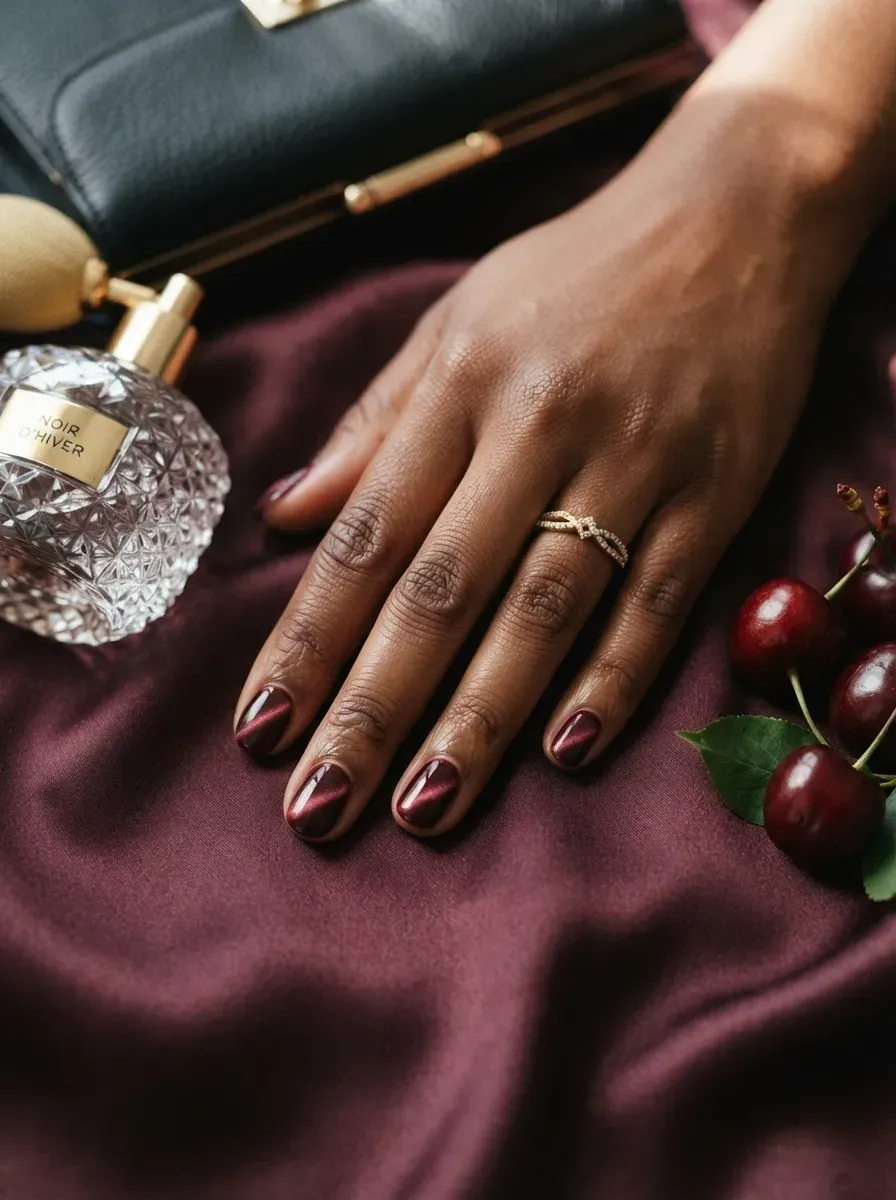
Velvet cat-eye gel uses magnetic pigment to create a moving band of light, giving short nails depth that flat burgundy cannot. The effect is especially flattering on rounded or oval tips because the shimmer follows the curved silhouette.
Dark wine shades also hide minor staining around the free edge. Hold the magnet consistently before curing each nail so the reflective pattern stays cohesive.
8. Sheer Pink High-Gloss Nails
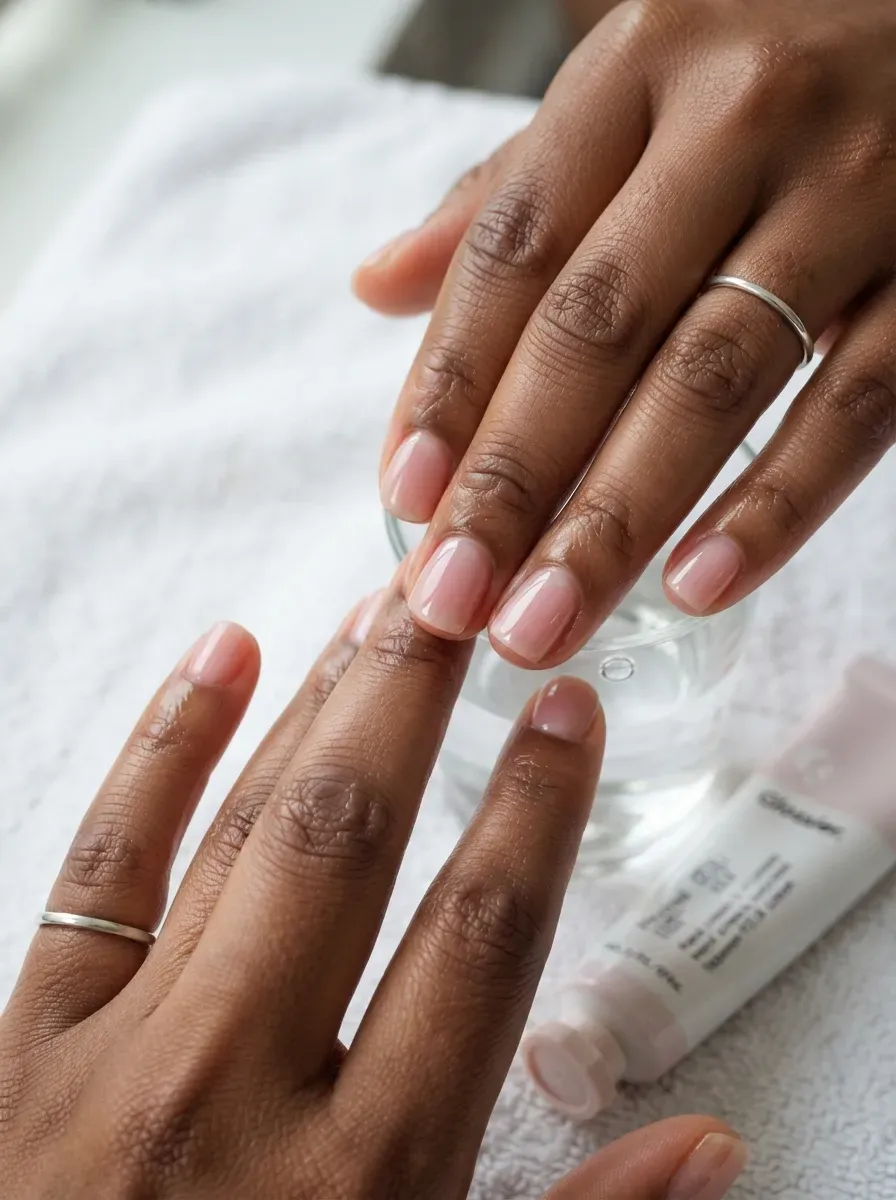
Sheer pink is useful when you want short nails to look groomed without obvious color. Translucency allows the natural nail line to remain visible, while a high-gloss top coat smooths minor surface irregularities.
Pink with a neutral base suits the widest range of undertones. If your nails have ridges, use one thin ridge-filling base coat first rather than compensating with several thick polish layers.
Read more She’s Tying the Knot Bachelorette Theme: The Ultimate Chic & Playful Party Guide
9. Soft Brown Aura Nails
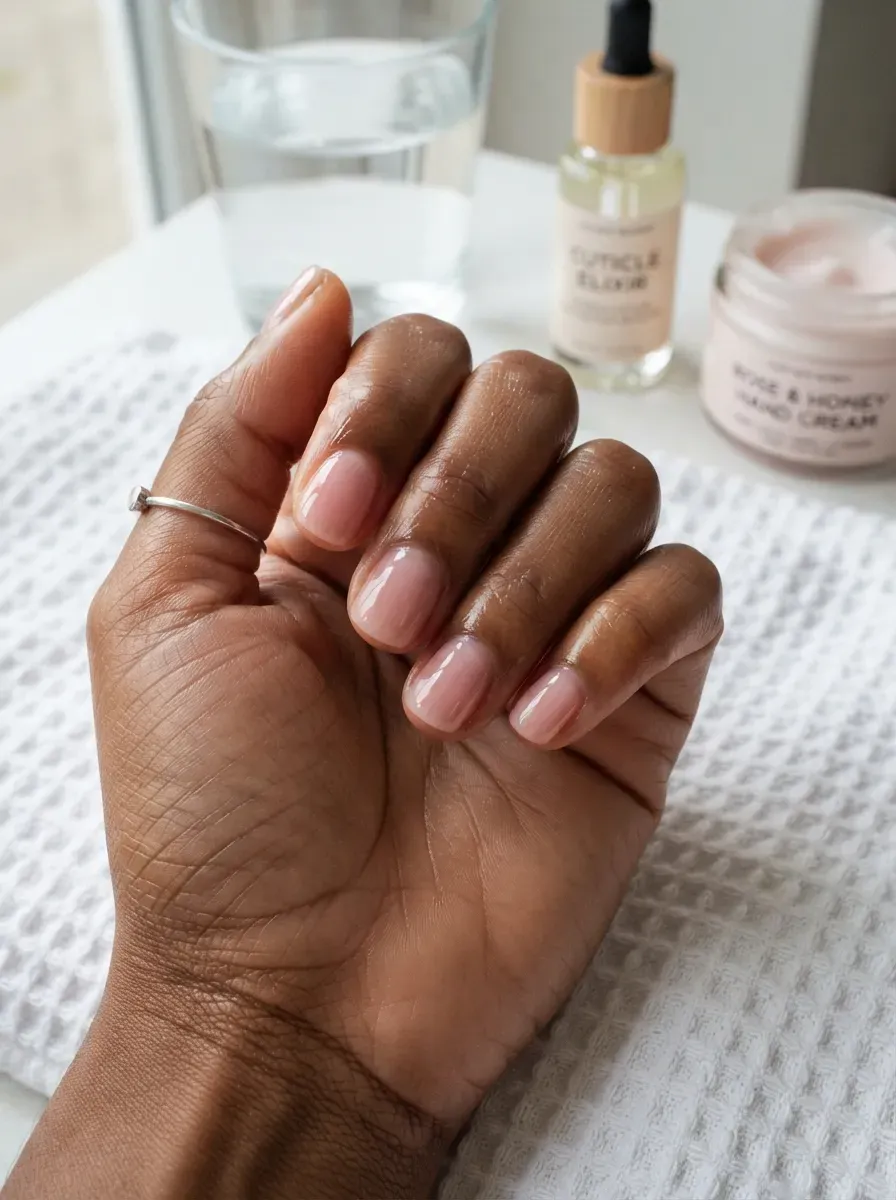
Aura shading concentrates deeper pigment in the center while leaving the edges lighter, creating dimension without crowding a short nail plate. Cocoa brown over beige is particularly wearable because the transition stays tonal rather than graphic.
Airbrushing gives the softest fade, though a sponge can achieve a similar effect. Keep the darkest area compact so the design does not visually widen the nails.
10. Tiny Daisy Accent Nails
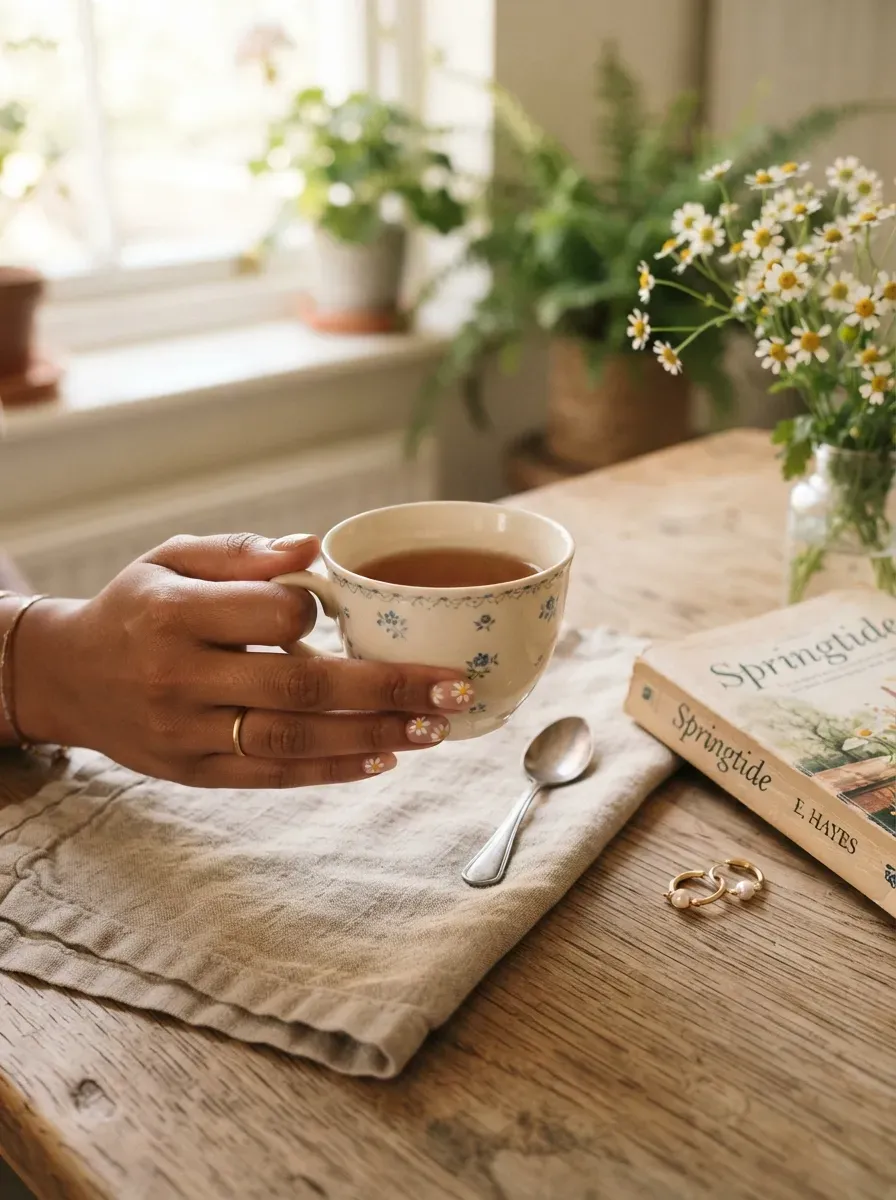
Tiny daisies give short nails recognizable nail art without filling every bit of available space. Leaving several nails mostly nude prevents small nail beds from becoming visually busy.
Five-dot petals made with a dotting tool create cleaner flowers than trying to paint miniature brushstrokes. Place flowers slightly off-center rather than identically on every nail, then seal them beneath a leveling top coat.
11. Fine Black Line Art Nails
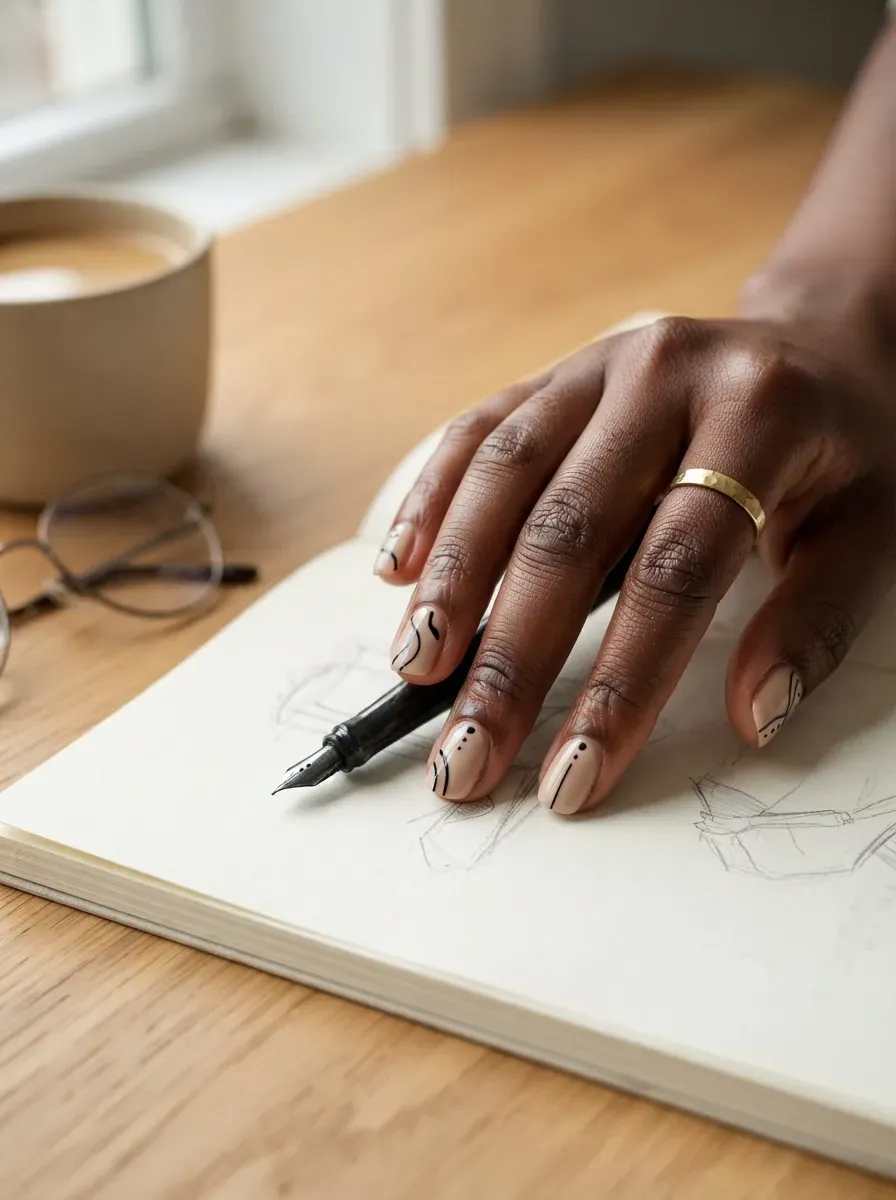
Fine black lines create contrast while using very little surface area, which is why abstract line art translates well to short nails. A beige or milky base prevents the black details from reading too harshly.
Thin curves can also visually elongate a wider nail when they run vertically. Use highly pigmented gel paint so one fine stroke gives enough opacity without creating raised artwork.
See now Brat Bride Bachelorette Aesthetic: The Bold Party Theme Modern Brides Are Obsessed With
12. Icy Blue Chrome Tips
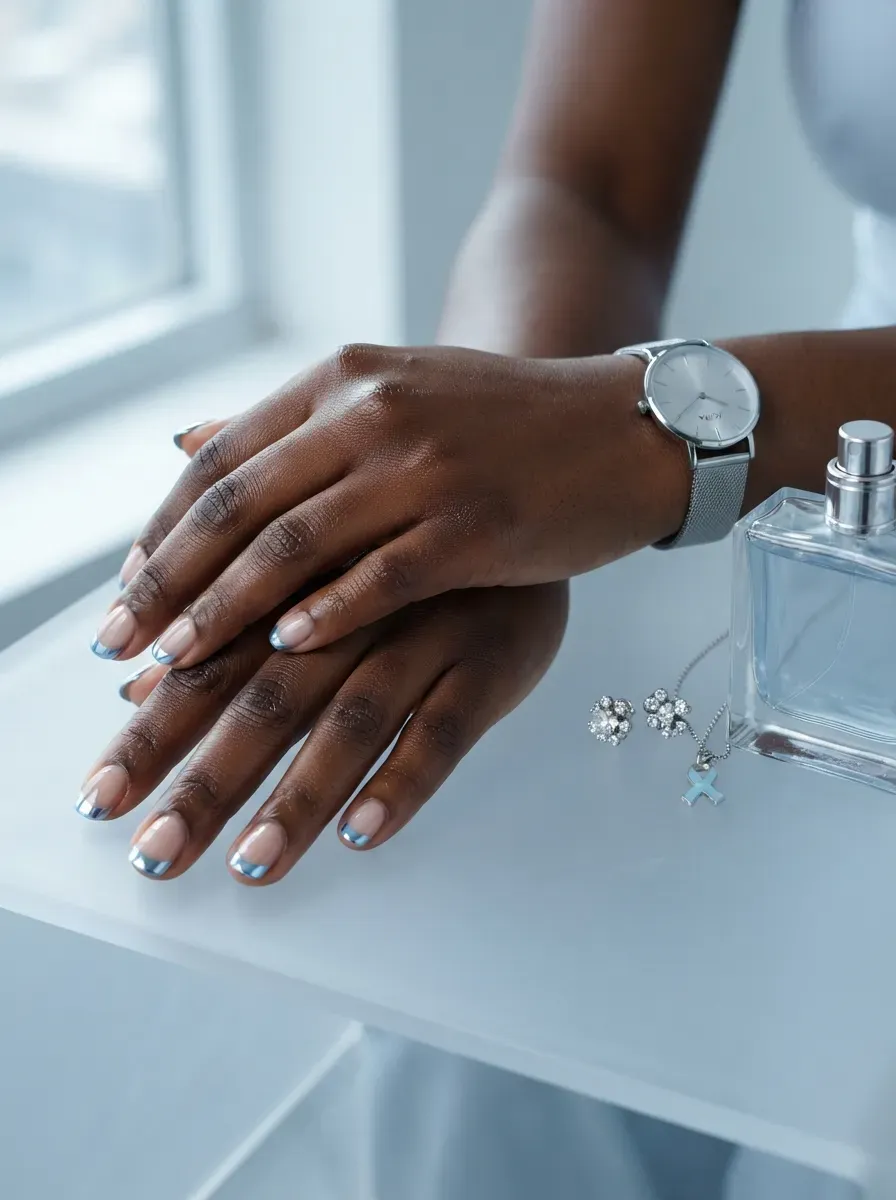
Icy blue chrome at the tips gives short nails a reflective accent without covering the whole nail in metallic pigment. A transparent pink base provides enough contrast for the blue to register cleanly.
Short rounded tips soften the futuristic finish and make it easier to wear casually. Apply no-wipe top coat only where the chrome belongs if you want the tip boundary especially crisp.
13. Deep Burgundy Short Squoval Nails
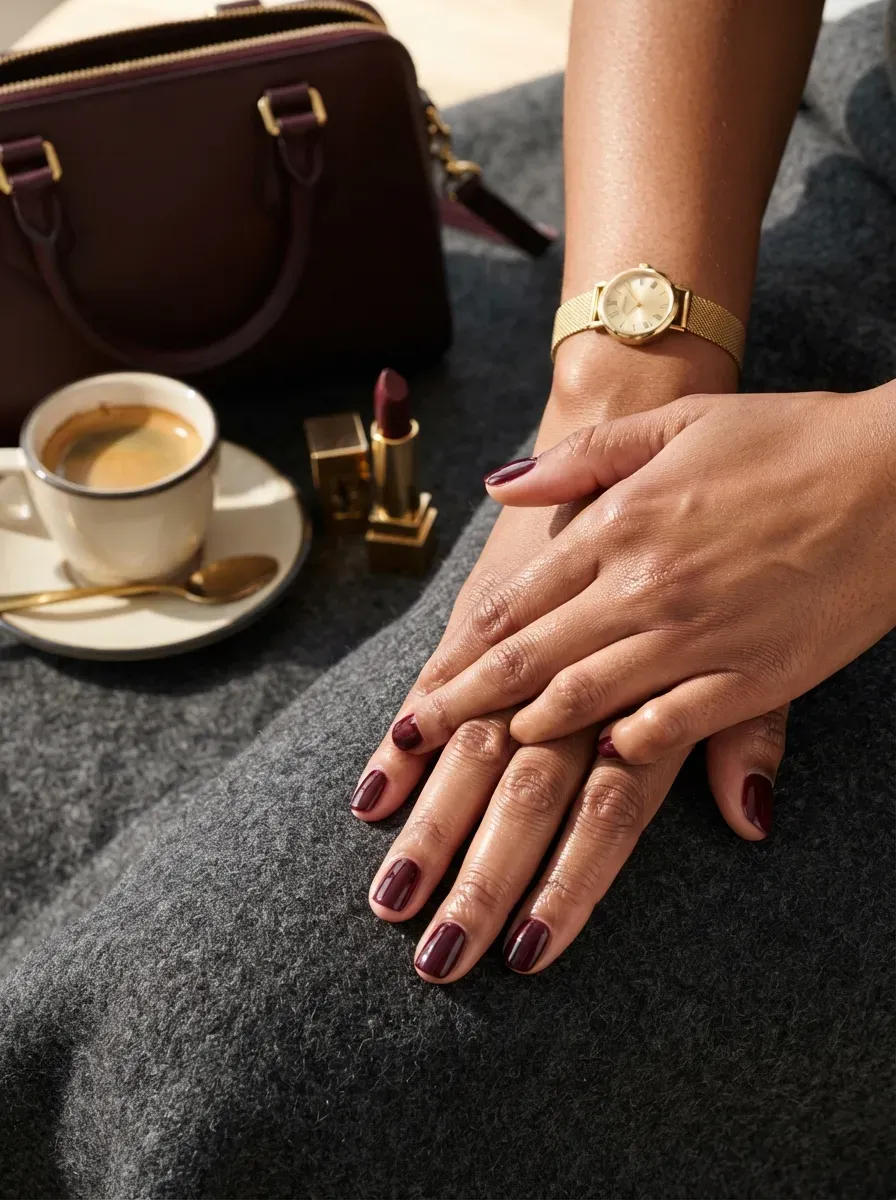
Deep burgundy brings definition to short nails while feeling slightly softer than black. A squoval shape suits this depth because rounded corners keep the dark color from making the fingertips look boxy.
Two thin coats usually produce better depth and smoother curing than one heavy coat. Run a clean-up brush around the sidewalls before top coat because dark polish makes uneven edges particularly noticeable.
14. Nude Nails with Fine Gold Foil
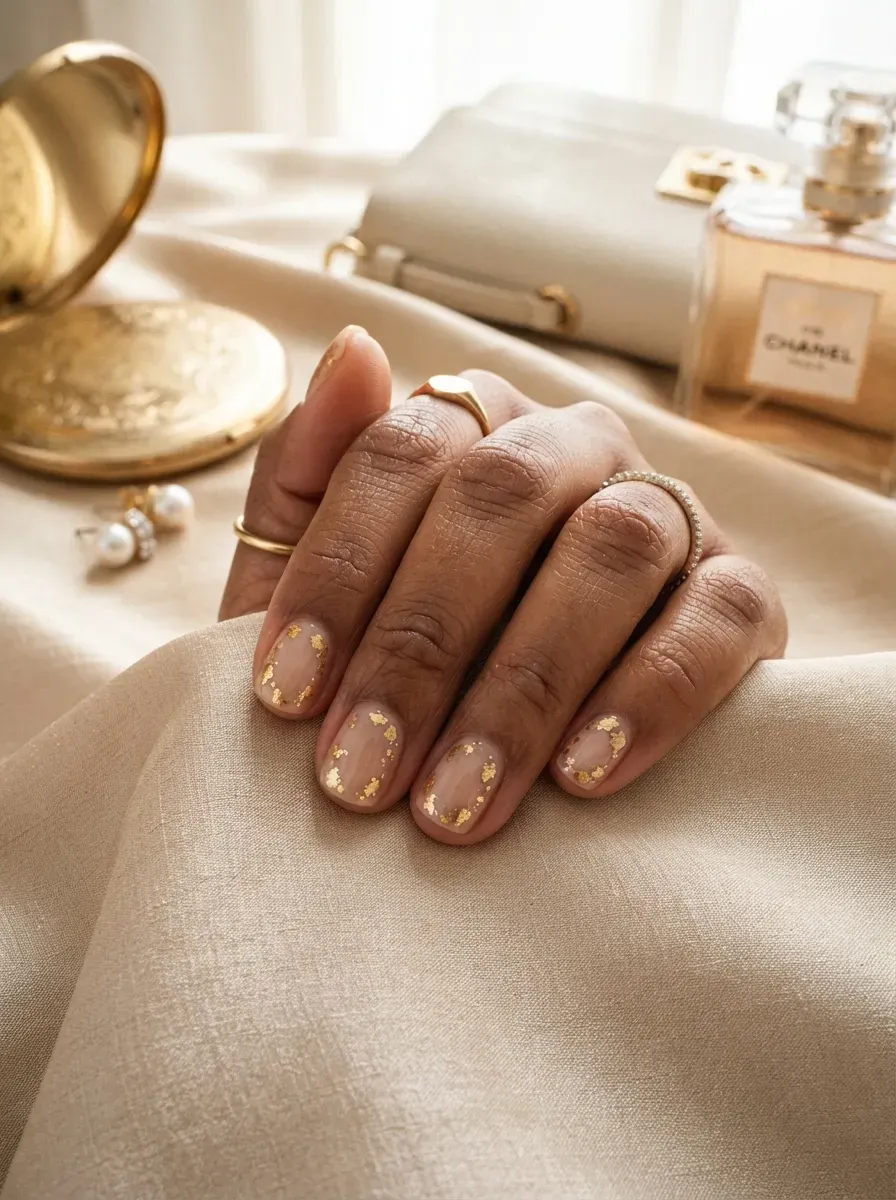
Gold foil adds texture to nude short nails without requiring precise miniature drawing. Irregular pieces look more refined than covering the entire nail because flashes of metal appear only as the hand moves.
Warm gold is particularly flattering against caramel, olive, and deeper golden undertones. Press foil flat before top coat, since raised corners can catch hair even after the manicure appears fully sealed.
Read also 16 FunHaus Party Theme Ideas That Turn Any Celebration Into the Greatest Show
15. Mini Checkerboard Accent Nails

Checkerboard art can overwhelm short nails when every nail carries a full grid, so concentrating the pattern on one or two accents keeps it readable. Small black and cream squares create definition without needing extra length.
A solid cream manicure on the remaining fingers gives the eye somewhere to rest. Use striping gel for the grid because ordinary polish often spreads before the squares are finished.
16. Matte Olive Short Rounded Nails
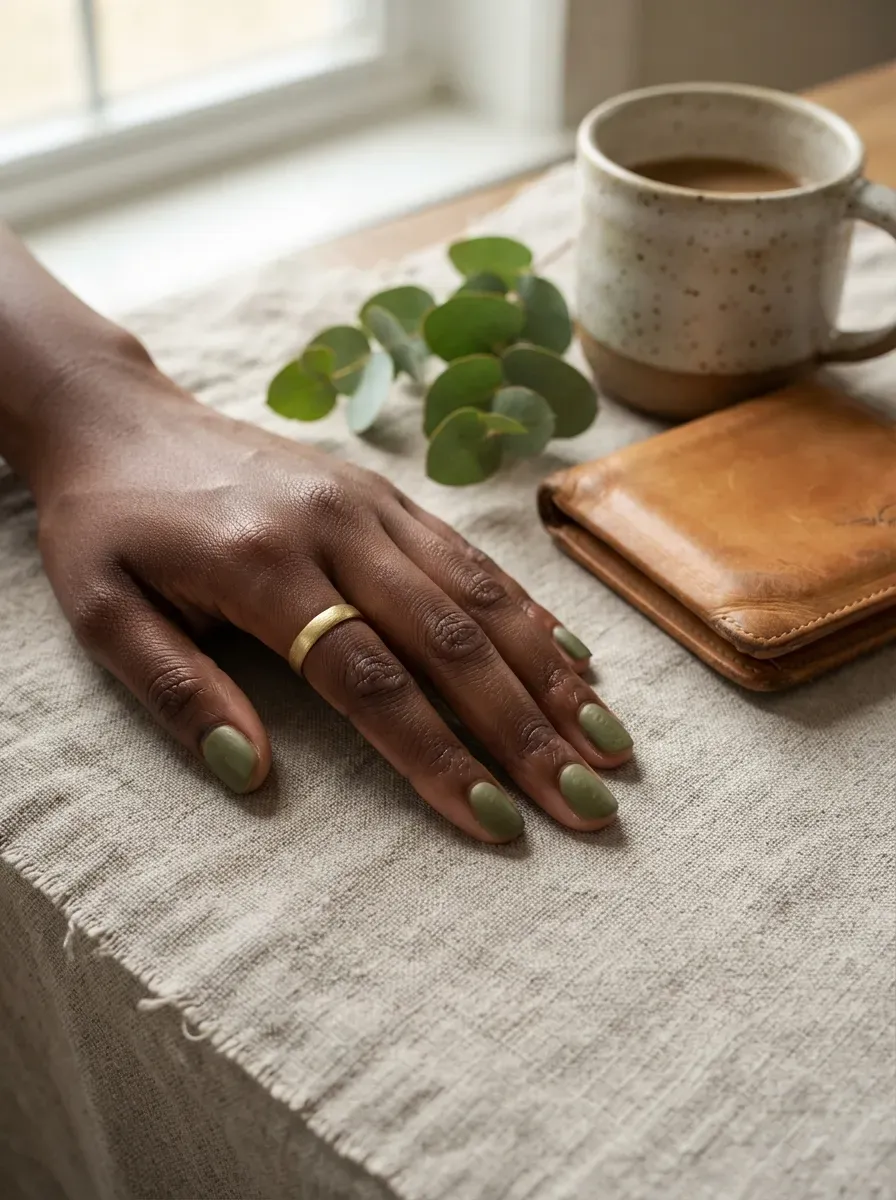
Matte olive feels rich on short nails because the muted finish reduces glare and lets the shape read clearly. Rounded tips keep earthy green from looking heavy, especially when the nails barely extend beyond the fingertip.
Olive tends to harmonize naturally with golden and warm undertones. Matte top coat shows hand cream and oil quickly, so wipe the nail surface gently with alcohol when the finish starts looking shiny.
17. Coral Jelly Short Nails
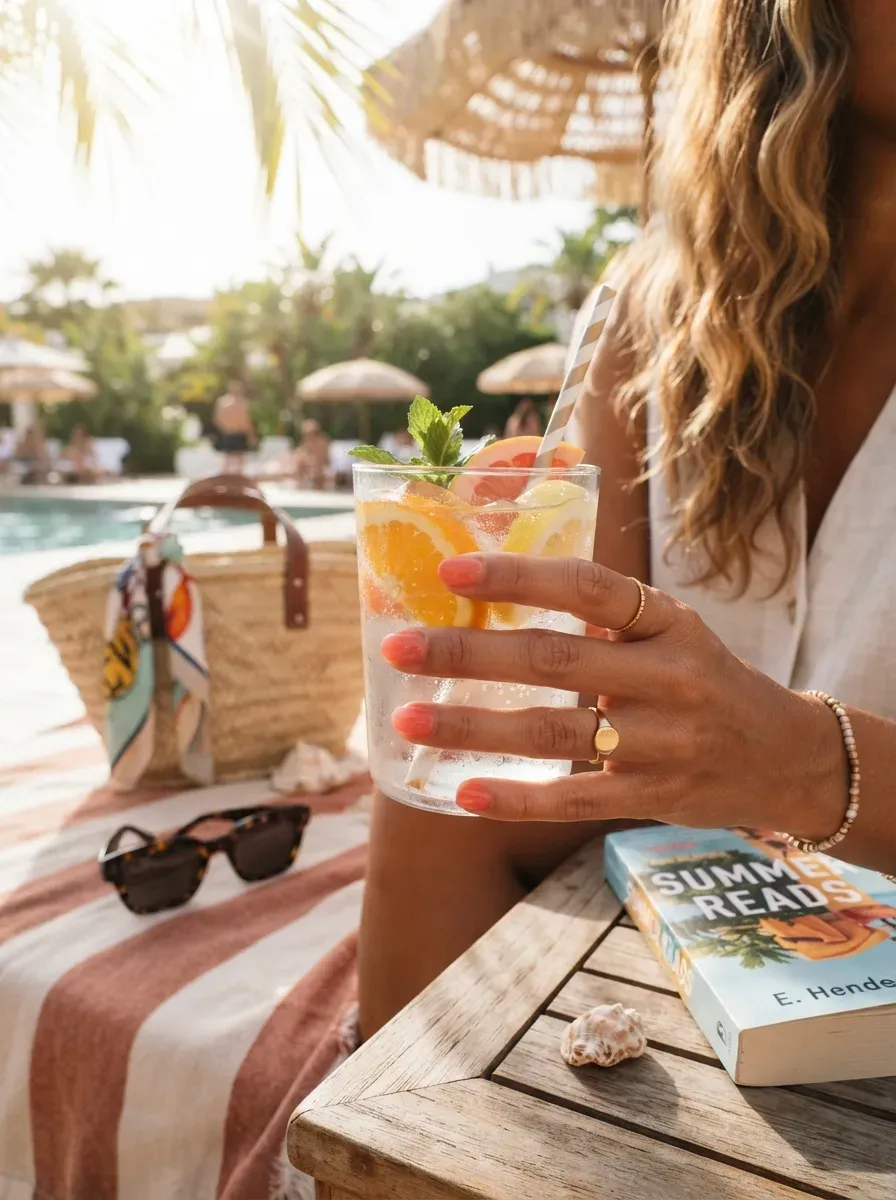
Coral jelly polish gives short nails a juicy wash of color while keeping the natural nail visible underneath. That translucency makes bright coral easier to wear than a dense neon cream, particularly when you want summer color without a loud manicure.
Warm coral wakes up golden undertones beautifully. Apply three very thin coats instead of two thick ones so the finish stays glassy rather than bulky.
See now 60 is the New 30: 17 Silver Sisterlocks That Prove Beauty Only Gets Better with Age!
18. Espresso Micro French Nails
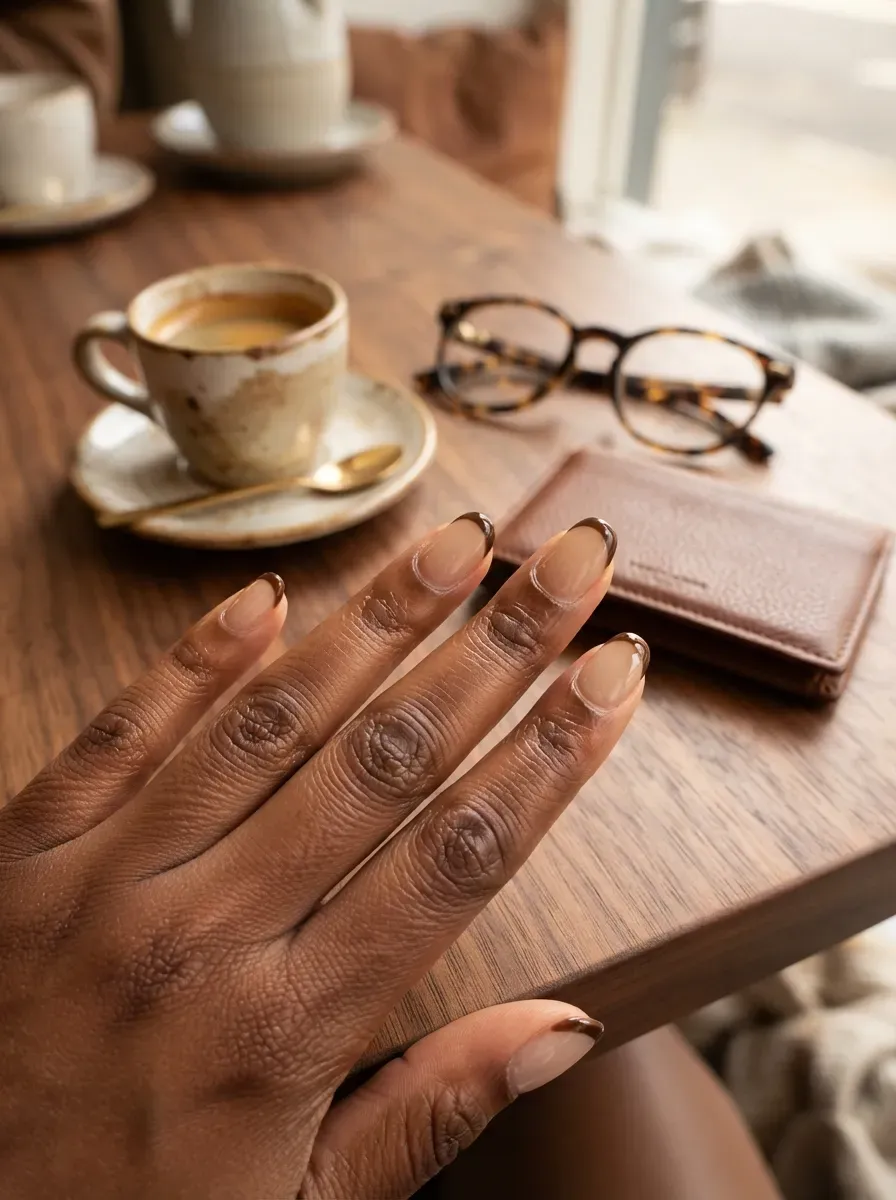
Espresso micro tips give the familiar French manicure a deeper, warmer edge. Keeping the brown line narrow is important on short nails because a thick band shortens the visible nail bed. A beige base with slight transparency blends naturally into most everyday wardrobes.
If your nails vary in length, adjust the tip thickness individually rather than forcing identical measurements that expose the difference.
19. Lavender Ribbon Swirl Nails
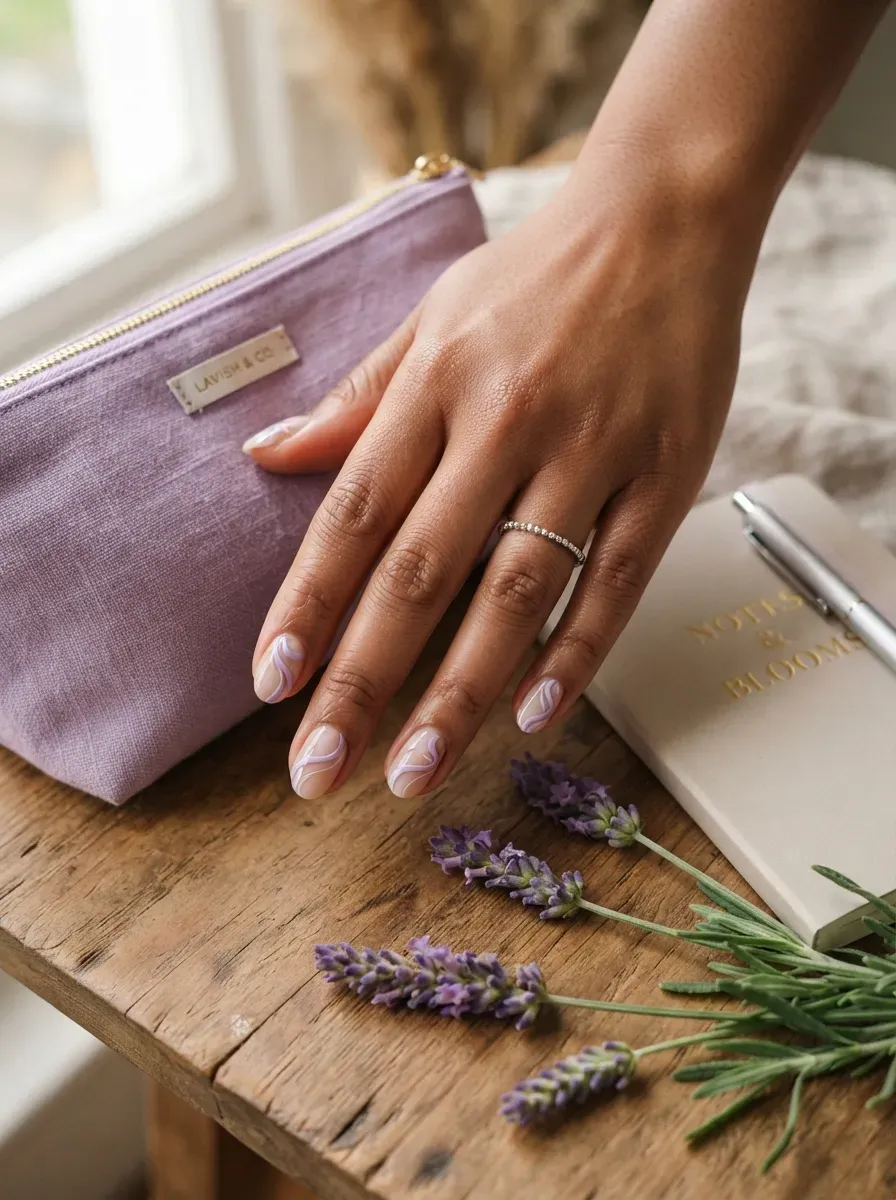
Lavender ribbon swirls curve lengthwise across the nail, creating movement without demanding a large canvas. Leaving sections of the nude base exposed keeps the pattern from visually shortening the fingers.
Muted lavender reads softer than saturated purple and works especially well with neutral undertones. Paint the thinnest curves first, then add one slightly wider ribbon so the pattern has variation instead of looking mechanically striped.
Check out 20 Summer Nail Colors That Flatter Medium Skin Tones
20. Blush Ombré Short Nails
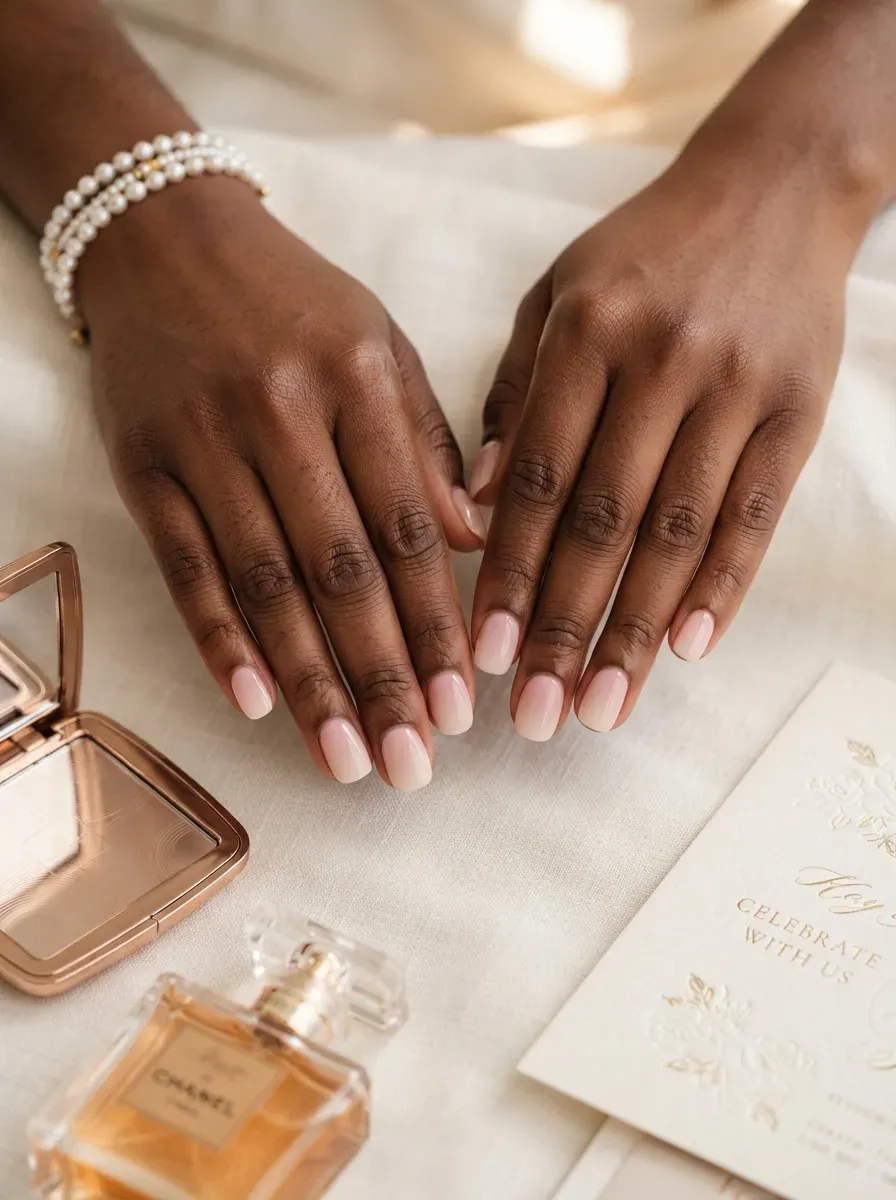
Blush ombré fades pink into a milky nude base, softening the visible free edge and creating a longer-looking nail plate. The vertical color transition is especially useful on short, slightly wider nails because there is no hard horizontal line.
Sponge application gives a diffused result, while airbrushing looks even smoother. Choose neighboring pink and nude tones so the blend remains seamless at close range.
21. Metallic Silver Micro Tips
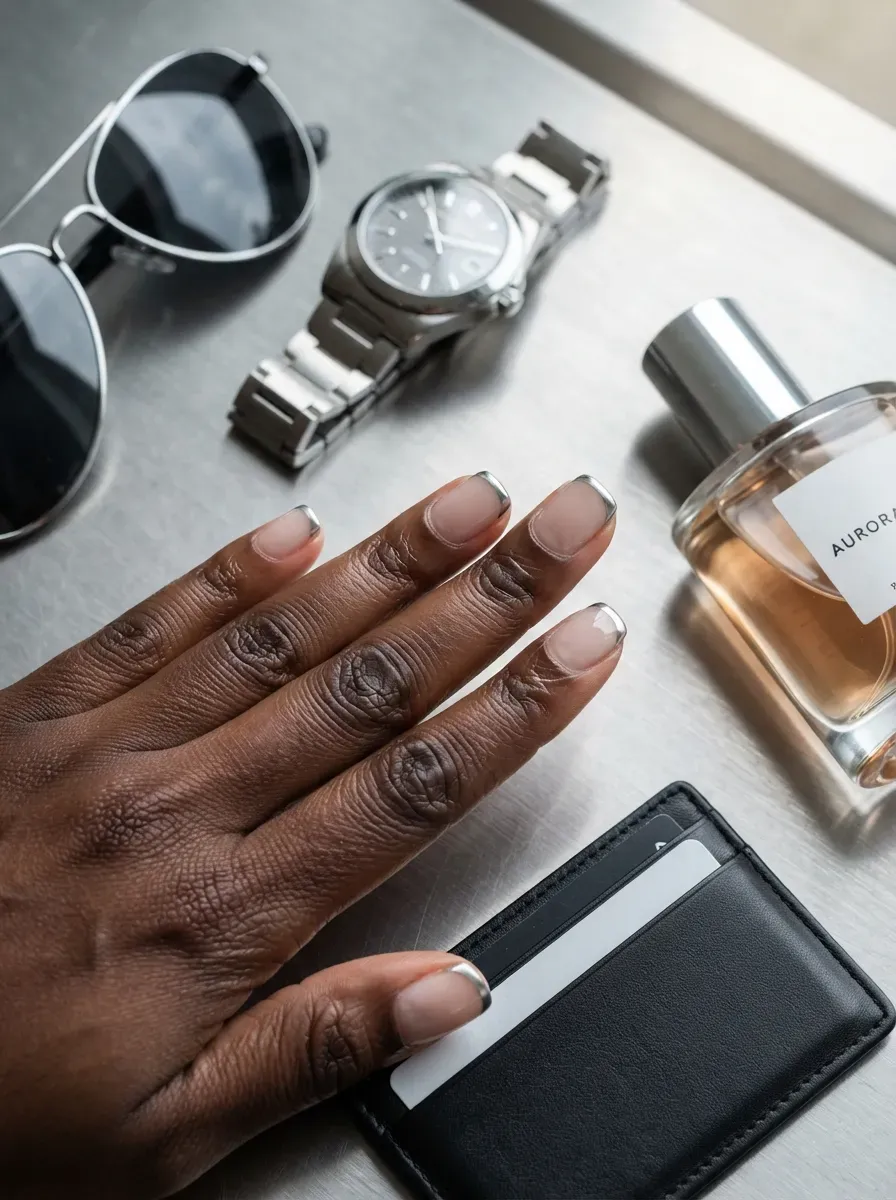
Metallic silver tips make short nails feel sharper without committing to full chrome. The reflective edge catches enough light to define the shape while a nearly clear base leaves maximum visible nail space.
Cool silver works particularly well with neutral, pink, and cool undertones. Use metallic gel paint rather than chunky glitter polish when the goal is a genuinely fine line with a smooth sealed edge.
See now 25 Back-to-School Nails to Start the Year Right
22. Cocoa Polka-Dot Accent Nails
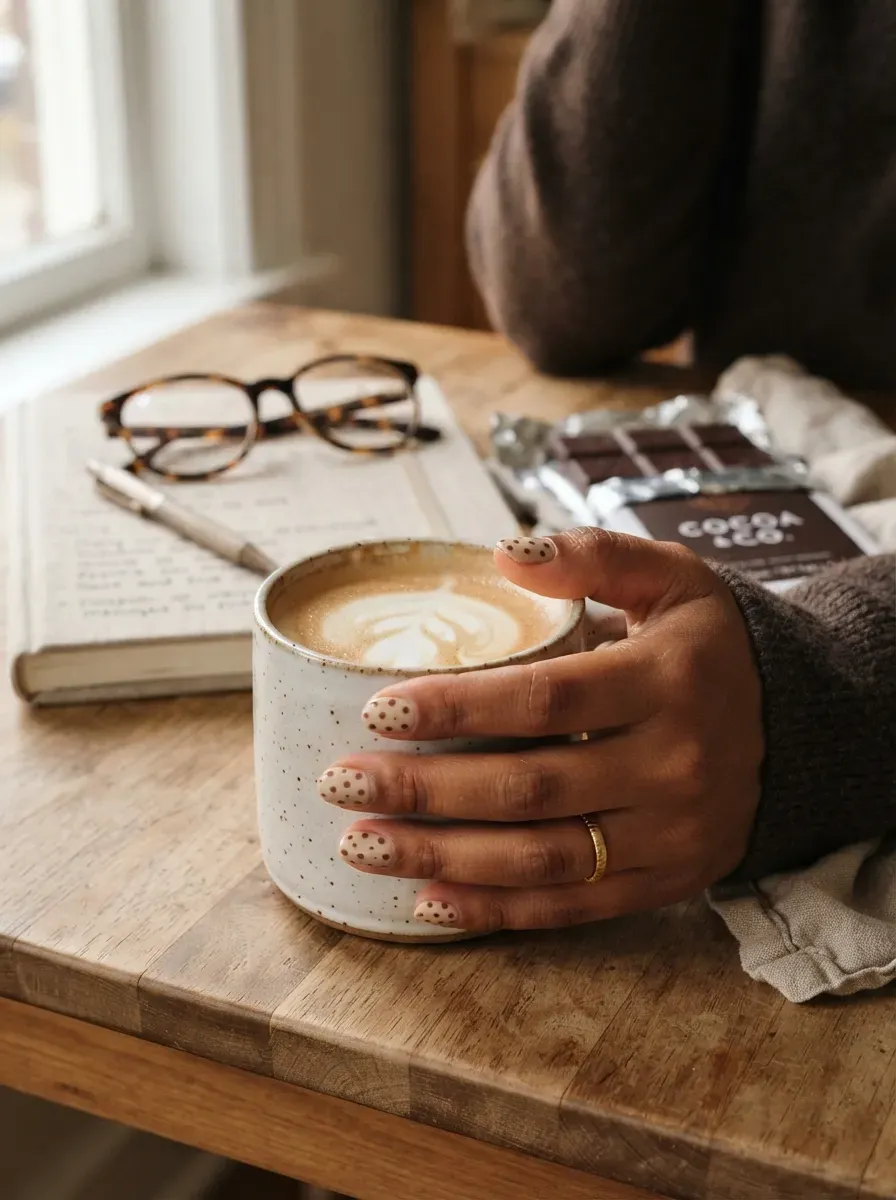
Small cocoa dots add pattern without requiring the precision or visual space of complex artwork. Cream underneath keeps the contrast gentle, while irregular dot placement feels more modern than evenly spaced rows.
Short rounded nails suit the playful design because there are no sharp corners competing with the circles. Make each dot with one straight press of a dotting tool rather than swirling it into shape.
23. Emerald Negative-Space Half Tips
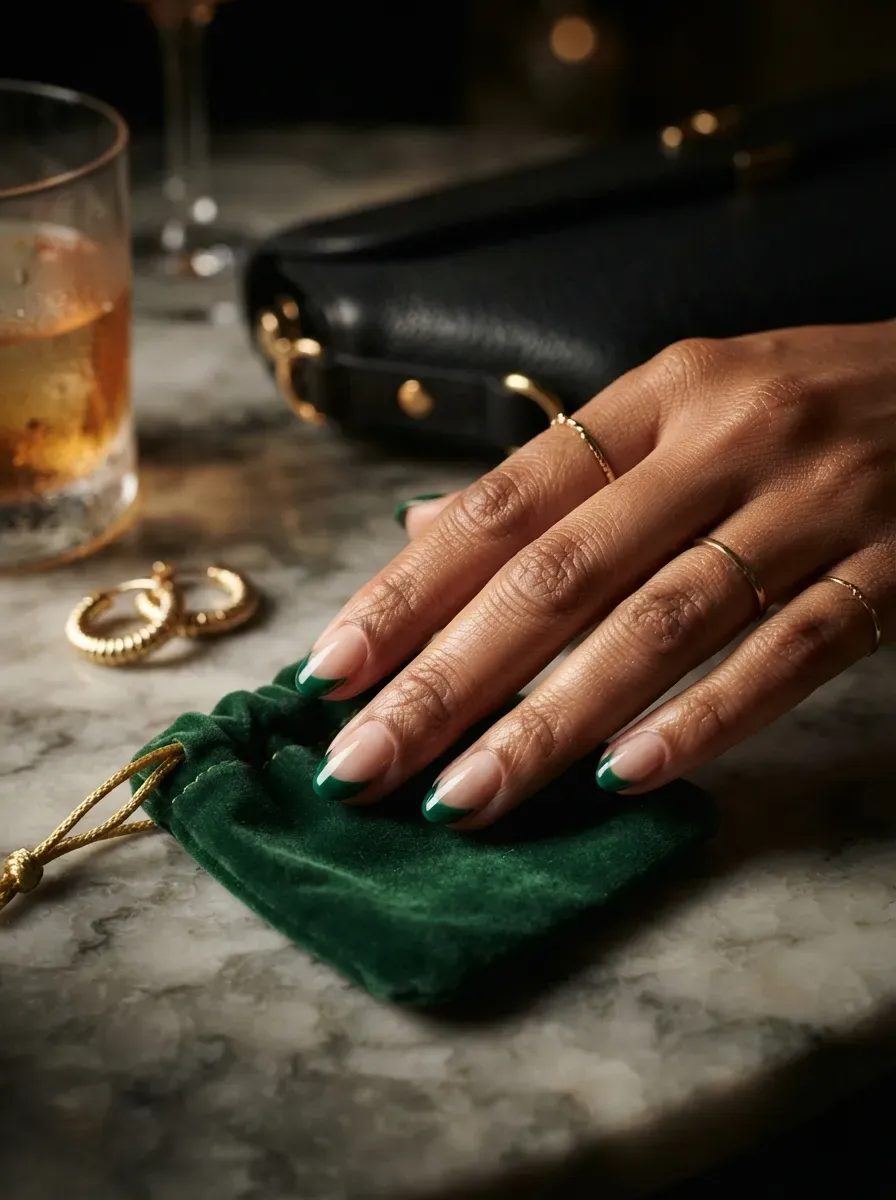
Emerald half tips use asymmetry to make a compact nail surface feel more spacious. Instead of painting the entire free edge, color sweeps across one side while the remaining area stays nude. Deep green provides drama without the heaviness of a fully covered nail.
Keep the diagonal edge moving in the same direction across all fingers so the manicure reads intentional rather than randomly blocked.
24. White Pearl Chrome Short Nails
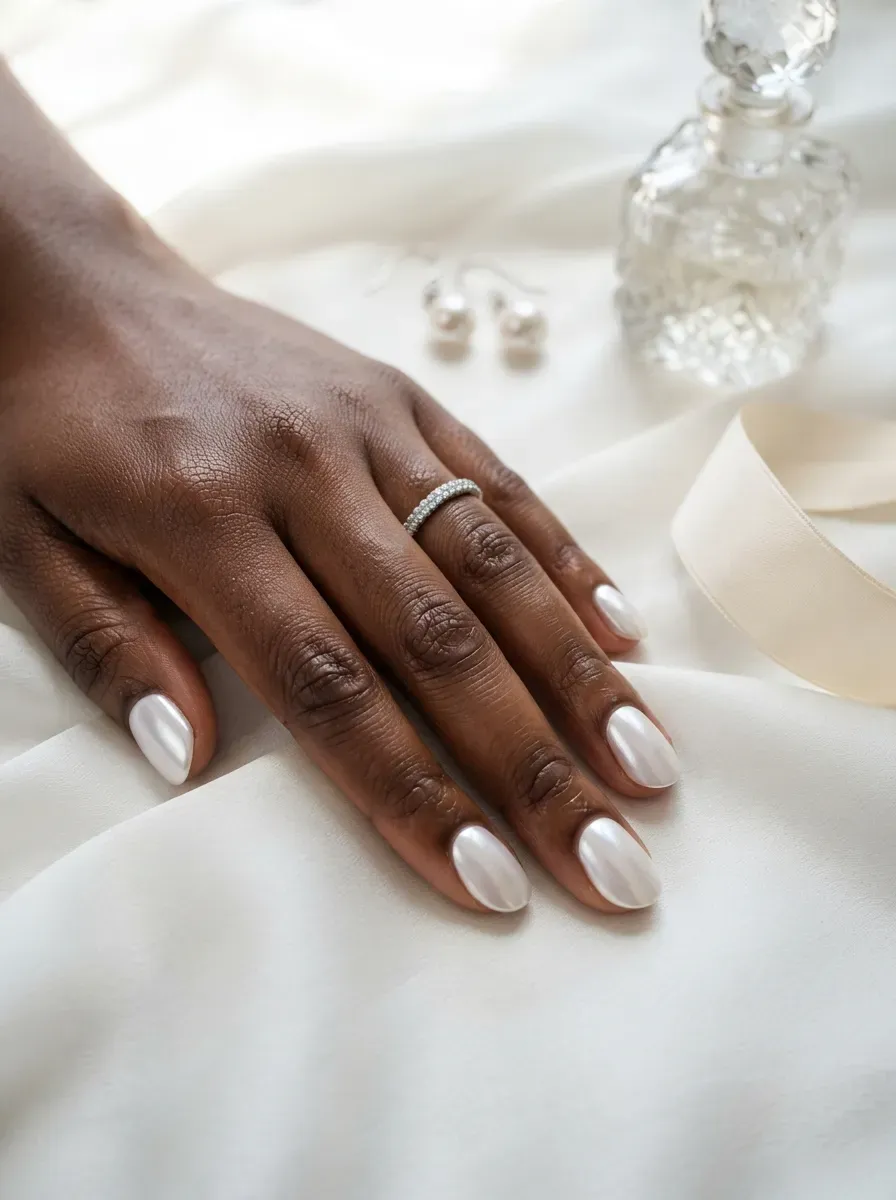
White pearl chrome gives short nails a bridal or occasion-ready finish without relying on crystals or elaborate art. Unlike opaque white, the pearlescent surface reflects surrounding tones and feels softer against the skin.
A short oval shape also prevents bright white from widening the nail visually. Apply chrome over an off-white or milky base rather than stark white when you want a more dimensional glow.
Read more Minimalist Loc Accessories for the Office Every Professional Woman Needs
25. Denim Blue Short Square Nails
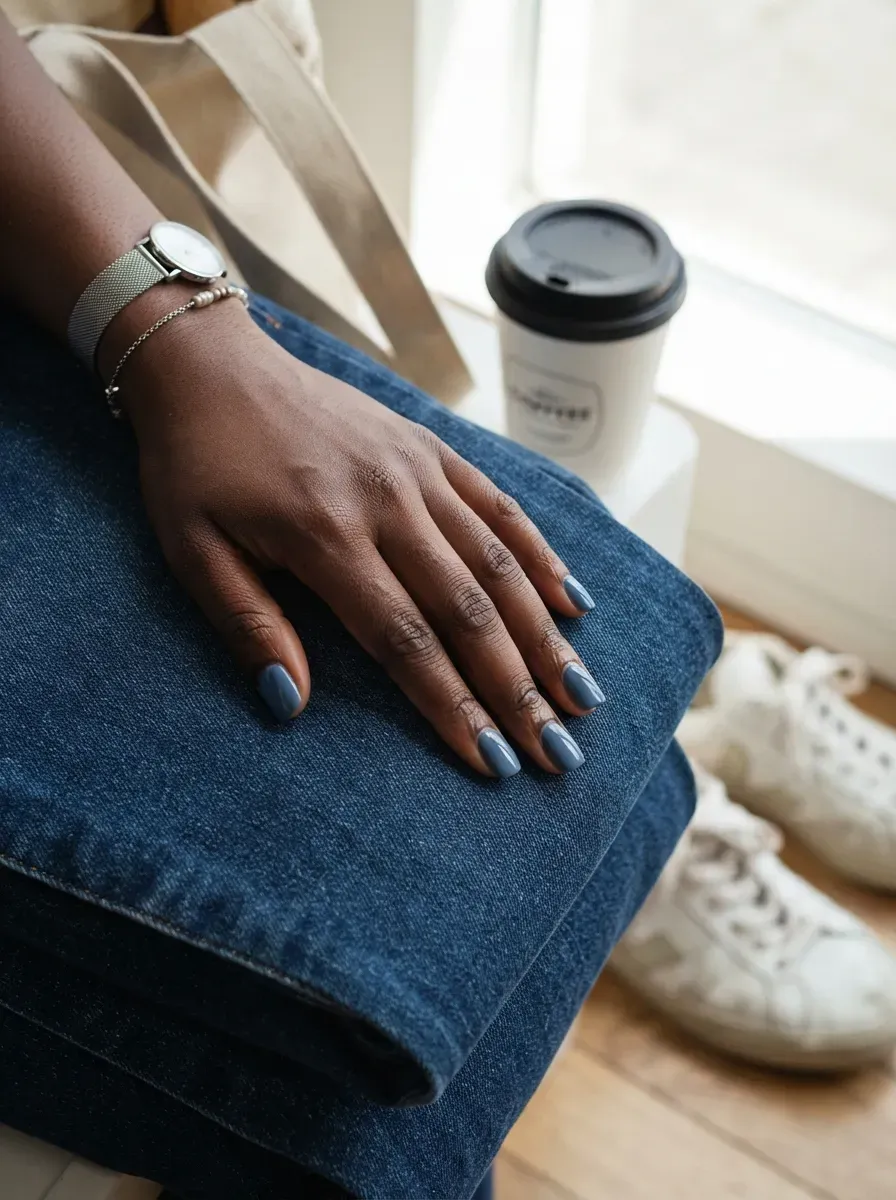
Denim blue sits between bright cobalt and smoky navy, giving short nails noticeable color without dominating an outfit. Square shaping strengthens the casual, clean effect, particularly when the free edge is already naturally straight.
Muted blue tends to sit comfortably against both warm and neutral wardrobes. Use two thin coats and let the first settle fully, since dusty blue formulas can show streaks when overworked.
26. Classic Opaque Red Squoval Nails
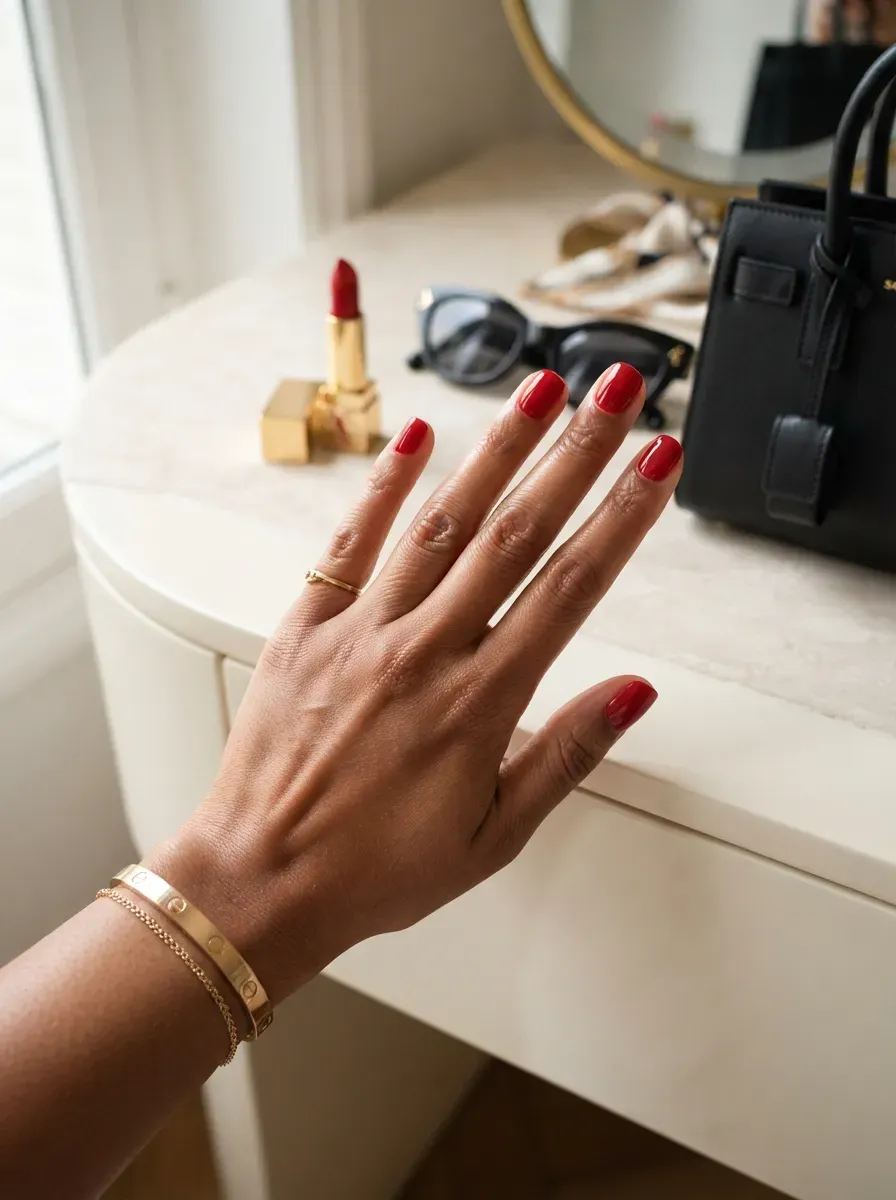
Opaque red makes a short squoval manicure look purposeful because the saturated pigment sharply defines the nail silhouette. The softened corners prevent the bold shade from appearing too rigid and reduce corner chips during daily wear.
Mid-tone neutral red is also easier to coordinate than orange or blue-heavy variations. Leave a hairline gap around the cuticle rather than flooding it, especially when using highly pigmented lacquer.
27. Tortoiseshell French Tip Nails
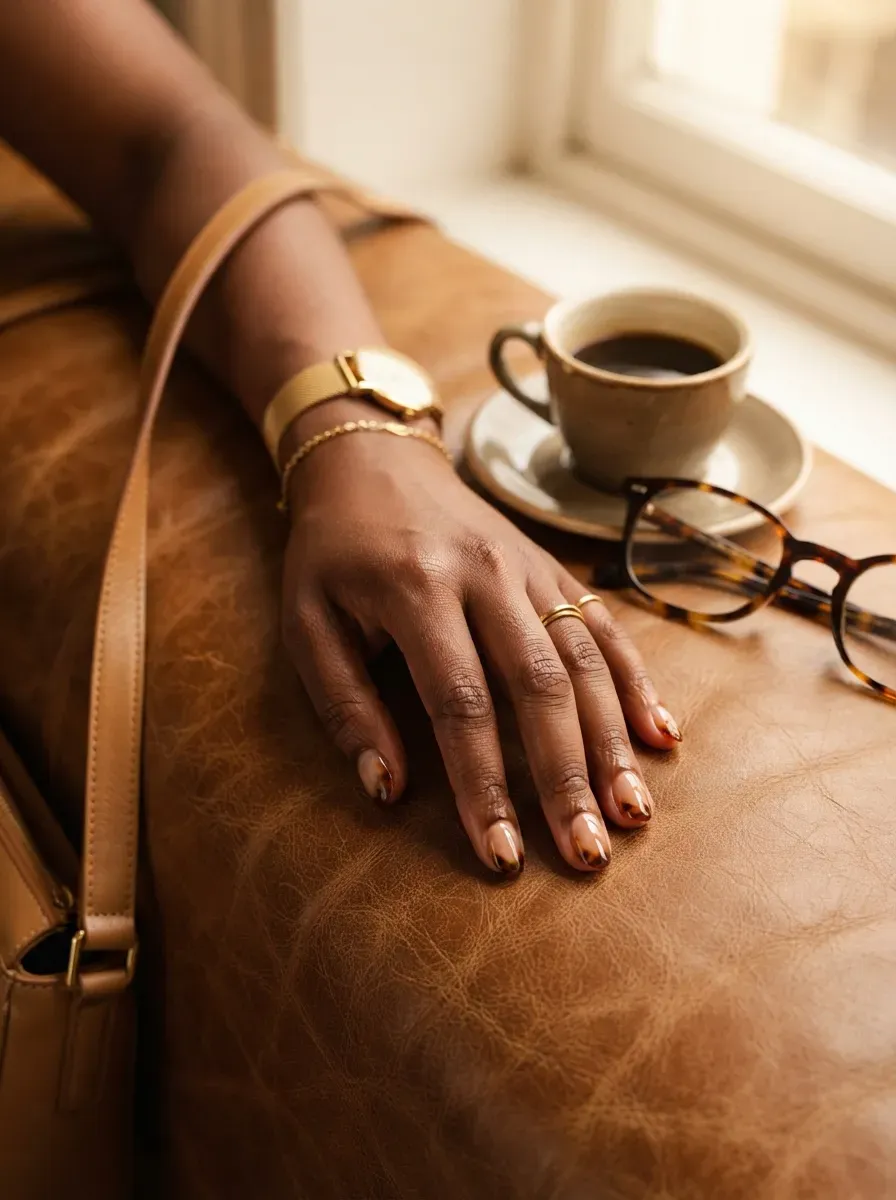
Tortoiseshell tips layer translucent amber, brown, and black rather than using one flat color, so even a narrow French edge has visible depth. Keeping the pattern only at the tips prevents short nails from feeling crowded.
The warm palette pairs especially well with gold jewelry and earthy clothing. Build the amber layers thinly and cure between them so the darker spots appear suspended rather than muddy.
28. Mini Botanical Floral Nails
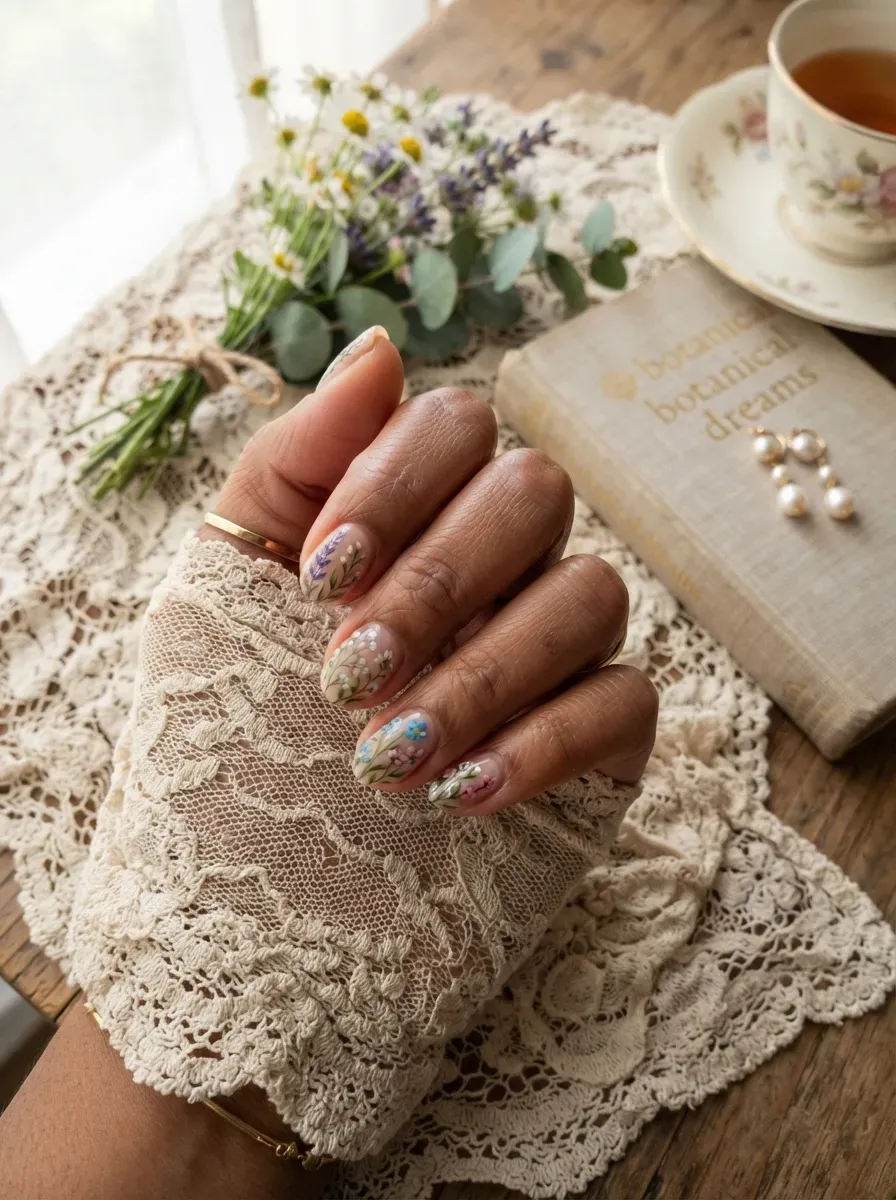
Mini botanical details work best on short nails when stems follow the length of the nail rather than spreading sideways. A sheer base gives tiny leaves and petals breathing room, making the art look delicate instead of crowded.
Fine greenery also disguises minor growth near the cuticle. Limit each nail to one small botanical cluster and vary its placement slightly for a hand-painted effect.
29. Champagne Shimmer Short Nails
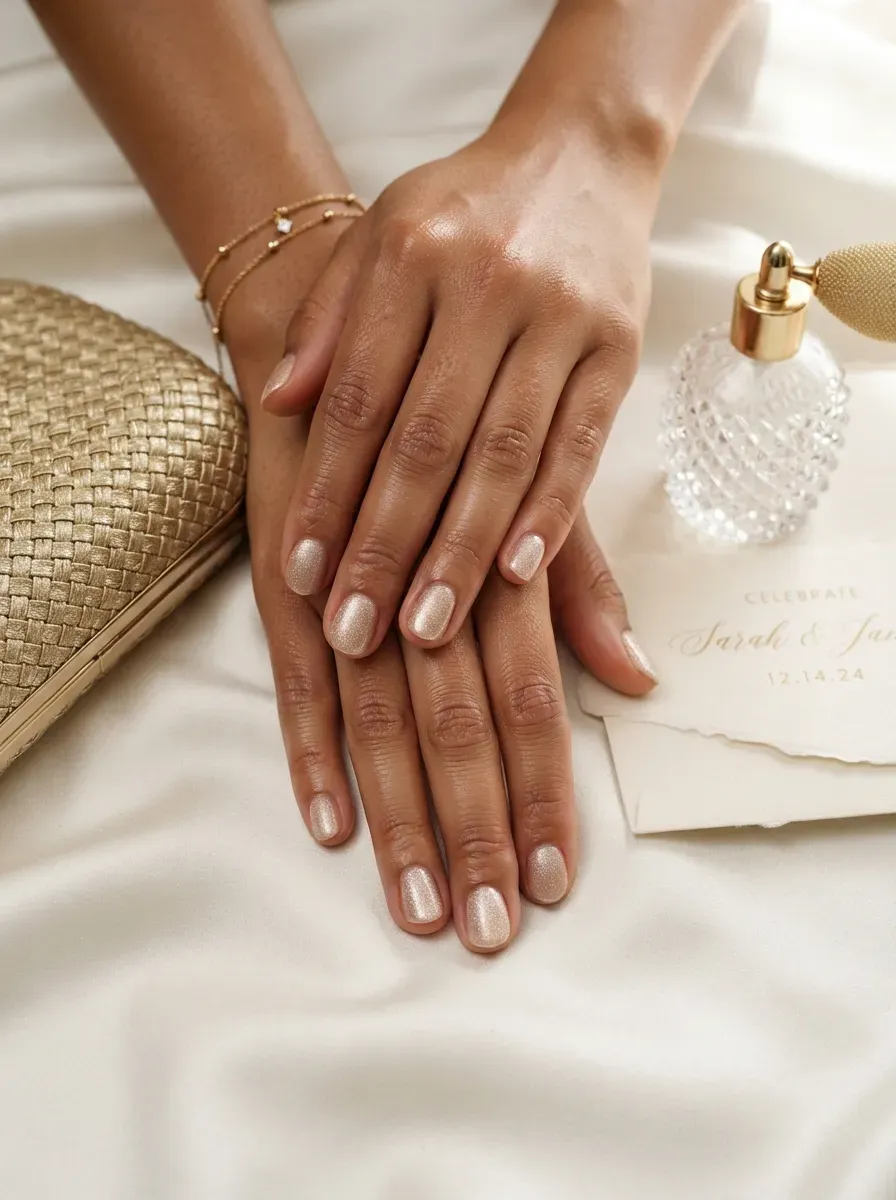
Champagne shimmer gives short nails light-catching movement while remaining softer than chunky glitter.
Fine particles create an almost satin reflection, so the manicure works for weddings, dinners, and office events without feeling overly decorated. Warm champagne is especially flattering on golden and olive undertones.
Look for micro-shimmer suspended in a translucent base, since dense glitter can make very short nails appear visually thicker.
30. Minimal Crystal Accent Short Nails
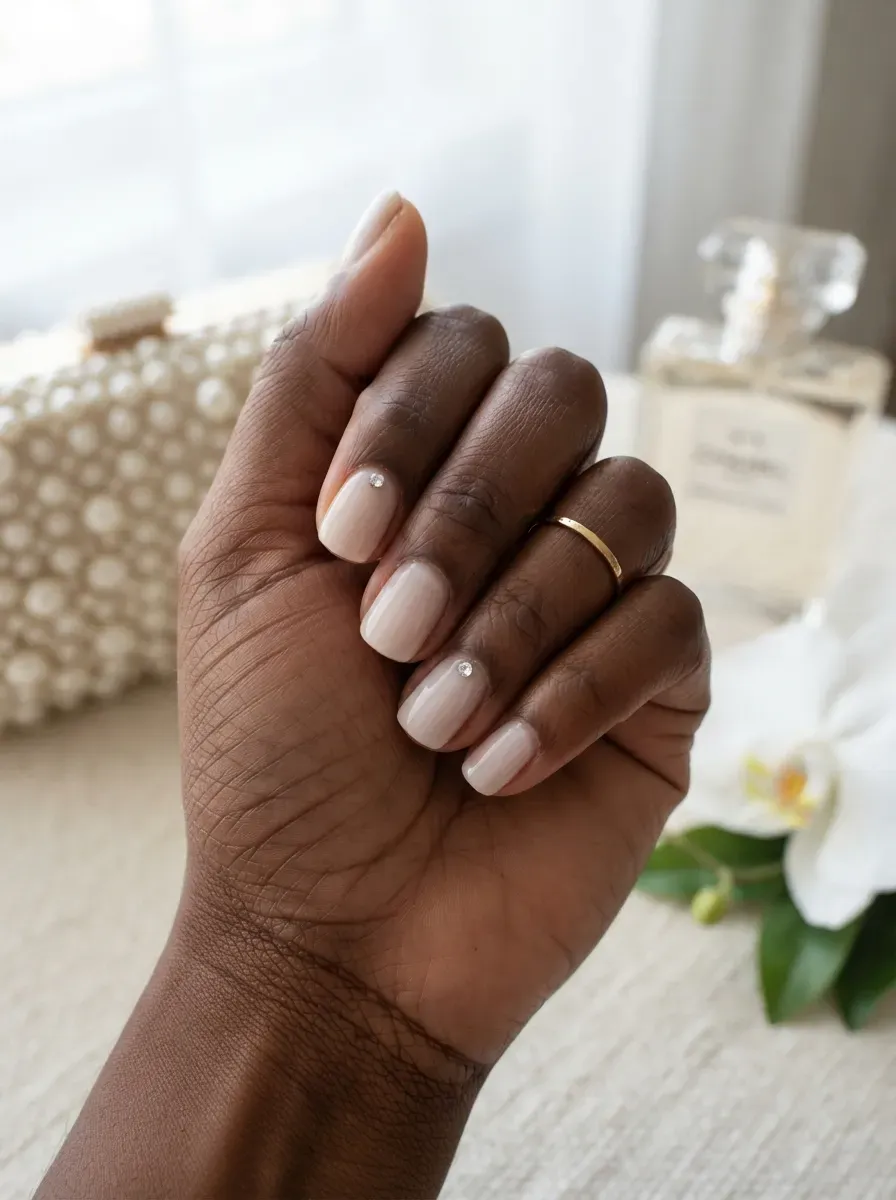
Tiny crystals work on short nails when they are treated as punctuation rather than full decoration. One stone near the cuticle preserves most of the visible nail plate and catches light without competing with the nail shape.
A milky nude background keeps the placement sophisticated. Set each crystal into builder gel and seal around its base, but avoid covering the top facets with top coat.
Shape Matters More When Your Nails Are Short
When there is only a small amount of free edge, a few millimeters of filing can completely change how short nails read. Square nails give the strongest, cleanest outline and are useful when your natural sidewalls grow fairly straight.
The tradeoff is that sharp corners catch more easily, particularly if you type frequently or work with your hands.
Squoval nails soften those corners while keeping enough of the square structure to make polish look crisp. They are one of the easiest shapes to maintain at home because small differences between individual nails are less obvious.
Rounded nails are particularly useful when the nail plate is naturally wide. Removing the corners visually narrows the tip and reduces snagging.
Short oval nails require a little more free edge because the sidewalls need enough length to taper without weakening the nail.
Avoid aggressively filing the sides simply to create a narrower appearance. That removes structural support exactly where short natural nails often split. Shape the free edge instead, then let polish placement and vertical details create the illusion of extra length.
How to Keep Short Nail Art from Looking Crowded
The biggest design mistake on short nails is trying to shrink a long-extension design without changing its proportions. A pattern that looks airy across a two-centimeter acrylic tip may become dense and unreadable when squeezed onto a natural nail.
Negative space solves much of that problem. Leaving some of the nail sheer allows French lines, flowers, swirls, foil, and geometric details to remain distinct. The same principle applies to contrast. One narrow black curve often has more impact than four competing lines.
Scale also matters. French tips should become thinner as the nail gets shorter. Crystals need to be smaller, florals need fewer petals, and tortoiseshell patches need enough separation for the translucent layers to show.
Ask your nail tech to look at the whole hand before repeating a motif identically. Nail plates naturally differ in width, so forcing the same artwork onto every finger can distort the design. Slightly adjusting placement from nail to nail usually creates a more balanced finished manicure.
Gel, Regular Polish, or Builder Gel for Short Nails?
Regular polish is often enough if your short nails are healthy and you enjoy changing color frequently.
It removes easily, keeps the nail thin and natural-looking, and works beautifully for cream colors, sheer pinks, shimmer, and simple French styles. Tip wear may appear sooner, especially with dark shades.
Gel polish makes more sense for chrome, cat-eye, layered tortoiseshell, fine line art, and designs that need curing between steps. Its harder surface also protects detailed artwork from smudging. Removal matters, though. Peeling gel from the nail takes surface layers with it and can leave naturally short nails noticeably weaker.
Builder gel is useful when flexibility or breakage is the real problem. A thin structured overlay adds reinforcement without requiring extensions, giving short nails enough strength to maintain a consistent shape.
Whichever system you choose, thickness should stay controlled. Short nails quickly look bulky when several heavy base, color, art, and top-coat layers accumulate. Thin application with proper curing usually wears better than simply adding more product.
The Small Details That Make a Short Manicure Last Longer
Short nails are practical, but they are not automatically chip-proof. Because the fingertips remain close to the free edge, typing, opening containers, cleaning, and washing dishes repeatedly put pressure on the polish.
Preparation has a bigger effect on longevity than adding another top coat. The nail plate should be free from lotion and cuticle residue before base coat goes on. Product touching the skin or cuticle can lift early, while overly aggressive buffing weakens the natural nail underneath.
Capping the free edge is useful with conventional polish and many gel systems, particularly with reds, dark browns, navy, and chrome where wear is obvious. Keep that sealed edge thin; a bulky ridge at the tip can chip rather than protect the manicure.
Cuticle oil belongs in the maintenance routine after the manicure is complete. Regular oil helps the surrounding skin and nail remain flexible instead of dry and brittle.
Wear gloves for prolonged cleaning or soaking, and use the side of your finger rather than your nail whenever you are tempted to pry something open.
Choosing a Short Nail Color That Works with Your Skin Tone
Undertone matters more than following a rigid light-skin or dark-skin color rule. Two people with similarly deep complexions can wear the same nude completely differently if one has golden undertones and the other leans cool or neutral.
Warm undertones usually sit comfortably beside caramel nude, chocolate, olive, coral, warm red, champagne, and amber tortoiseshell.
Cooler undertones can make blue-red, burgundy, icy chrome, cool pink, lavender, navy, and silver particularly striking. Neutral undertones have considerable flexibility and can often move between both groups.
Contrast changes the mood as much as undertone. A nude close to your skin tone visually extends the fingers, while opaque red, navy, emerald, or white creates a sharper boundary and makes short nails more noticeable.
Test sheer shades with one coat before committing. Natural nail color shows through translucent polish, so the same bottle can look pinker, browner, or milkier from one person to another. That small test is especially worthwhile with nude and milky manicures.
Choosing the Right Short Nail Idea for You
Start with how much nail you actually have. Very short nails usually look strongest with sheer polish, micro French tips, simple chrome, or tiny accents, while a little extra free edge gives ombré, tortoiseshell, swirls, and half-tip designs more room.
Next, decide how much color you want: milky nude and champagne stay restrained, while cherry red, emerald, coral, and burgundy make the manicure more noticeable. Consider the occasion too. Office weeks may suit quiet gloss or line art; celebrations can carry chrome, foil, shimmer, or crystals.
Finally, match the detail level to your maintenance tolerance. If low upkeep matters most, choose a solid shade, sheer finish, or design with intentional negative space.