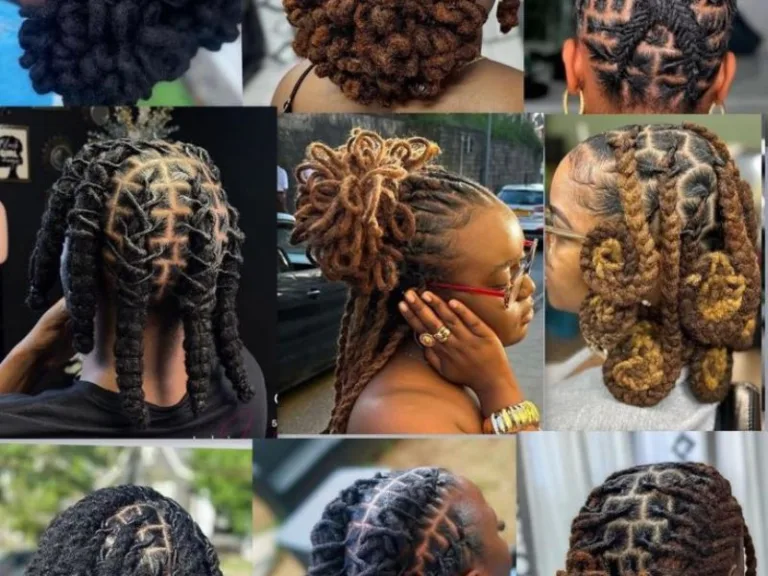
This Post Will Show You The Best Grid Patterns for Small DIY Locs (And How to Choose the Right One for Your Hair).
Most people spend weeks researching which method to use for their starter locs. Two-strand twists or comb coils. Short hair or long hair.
DIY or loctician.
And then they sit down to actually install their locs and realise they never thought carefully about the one decision that shapes everything else: how to section the hair underneath.
The grid pattern you use before you install a single loc determines how your locs will look for the next several years.
It controls how thick they grow, how full the overall head appears, how visible your scalp is between each loc.
How easily you can style them into updos and protective styles, and how clean the installation looks once it is done.
For small locs specifically, where the sections are narrow and the stakes of uneven parting are higher. Choosing the right grid pattern is not a minor detail.
It is the foundation.

This guide covers every major Best Grid Patterns for Small DIY Locs. What makes each one work. Which hair types and goals they suit best. How to execute them cleanly at home. And the mistakes that ruin an otherwise good installation.
Even if you are starting your loc journey for the first time or you have been researching for months and are finally ready to begin.
Understanding grid patterns is the step most beginners skip and almost everyone wishes they had taken more seriously.
When people talk about starting small locs, most of the conversation centres on technique, which twist method to use, what product to apply, how long to leave them alone.
The grid pattern tends to get mentioned briefly and then skipped over, treated as a simple prep step rather than a genuine design decision.
That is a mistake, and it is one that shows up in the locs for years. The grid pattern is the blueprint your locs grow from.
Each section you create on your scalp becomes the permanent home of one loc.
Even if your sections are square, triangular, or diamond-shaped – determines how the locs distribute weight across your head.
How much scalp is visible between them, and how naturally full or structured the overall styes looks.
For small locs in particular, these decisions carry extra weight. Because the sections are narrow, small inconsistencies in sizing become more visible over time.

Because there are more locs on the head, the pattern created by their arrangement is more prominent.
A well-executed brick layout on a head of small locs looks dramatically different from a rushed square grid on the same hair.
And because small locs take longer to install and maintain. You want to be certain the foundation is something you are happy to live with before the first twist goes in.
A good grid pattern creates uniform loc sizes. Distributes tension evenly across the scalp. Minimises visible parting lines. And gives you the styling flexibility you will want as the locs mature.
A poor grid pattern creates locs that vary in thickness, leaves thin or bald-looking gaps between rows, places too much tension on the edges and crown, and limits what you can do with the hair once it grows.
Here’s a closer look at The Ultimate Guide to Professional Loc Steam Treatments at Home: Restore, Hydrate, and Elevate Your Routine
The technique you choose for installation can be adjusted over time. The grid you start with is much harder to change.
What Makes a Grid The Best Grid Patterns for Small DIY Locs
Not every grid pattern that works well for traditional or large locs translates cleanly to small locs.
The narrower the sections. The more the pattern itself becomes visible. And the more any inconsistency in sizing or spacing stands out.
Small locs also sit closer together across the scalp. Which means the choice of pattern has a more direct effect on fullness, scalp coverage, and how the locs fall once they have length.
For small locs, the most important quality in a grid pattern is consistency. Every section should be as close to the same size as possible.
The spacing between sections should be even. The rows should be straight or follow the natural contour of the head without drifting.
This level of consistency is harder to achieve at home than it sounds, which is why preparation, the right tools, and a slow. Deliberate process matter so much for DIY small loc installations.
The second quality to look for is scalp coverage.

Because small sections are narrow. The space between rows can create visible parting lines that look like gaps in the hair when the locs are young and have no volume yet.
The right grid pattern minimises these gaps by distributing sections in a way that reduces how much bare scalp shows between rows.
This becomes less of a concern as the locs mature and thicken, but in the first six to twelve months it significantly affects how the hair looks.
The third quality is scalp health.
Grid patterns that place tension at the same point repeatedly. Through sections that are too small, hairline sections that are too tight, or crown sections that carry too much weight. Cause thinning over time.
A well-designed grid distributes the load of each loc evenly, with sections that are appropriately sized for the density and fragility of the hair in each zone.
Best Grid Patterns for Small DIY Locs (And How to Choose the Right One for Your Hair)
1. The Square Grid Pattern
What It Is and How It Works
The square grid is the most widely used parting pattern for locs, and the one most people picture when they imagine sectioned natural hair.
It is created by parting the hair into straight horizontal rows across the head, then dividing each row into sections with straight vertical parts, creating a pattern of equal squares across the entire scalp.
Each square becomes the base of one loc.
For small locs, the square grid produces a clean, structured, and intentional look.
When executed well. The rows are neat and the locs fall in organised columns that give the style a polished quality even in the early starter phase.
It is the pattern most commonly used by professional locticians for small and medium locs precisely because the structure is clear.
The sections are easy to follow during retwisting. And the overall result looks deliberate.
You may enjoy reading 35 PowerPoint Night Date Ideas for Two (Fun, Romantic & Hilarious)

Who It Works Best For
The square grid works best for people with medium to thick hair density.
Where the width of each section is wide enough that the parting lines do not create overly visible gaps between rows.
For someone with thick 4c natural hair starting small locs with sections roughly the size of a pencil eraser. The square grid creates a full. Even installation with minimal scalp exposure between rows.
It is also the best choice for anyone who prioritises easy maintenance and styling versatility. Because every section follows a consistent horizontal and vertical logic.
Retwisting is straightforward. You always know exactly where one loc ends and the next begins.
For more insight 10 Dreadlock Edge Control Tips for Corporate Women: Stay Sleek Without Losing Your Style
Updos, buns, and half-up styles all sit more neatly on a square grid because the locs hang in organised rows rather than an offset or irregular arrangement.
The Honest Limitations
The square grid has one significant visual limitation for small locs: visible parting lines.
Because every row runs in the same direction and every column is perfectly aligned. The grid pattern becomes visible from above. Especially in the first year when the locs are still young and have not yet thickened enough to cover the rows.
On fine or low-density hair, this can create a look that reads as sparse or scalp-heavy in certain lighting.
On thick hair it is rarely a problem, but it is worth knowing before you commit.
2. The Brick-Lay Pattern
What It Is and How It Works
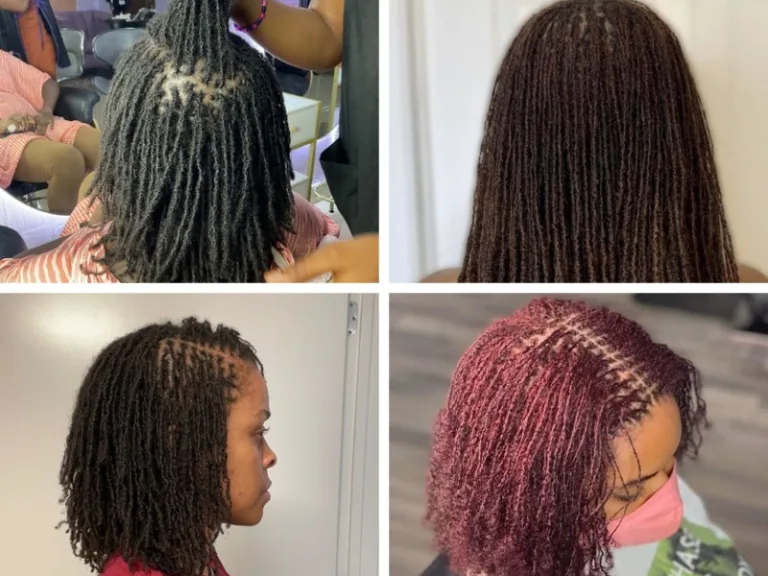
The brick-lay pattern. Sometimes called an offset or staggered grid – is created by parting the hair into horizontal rows just like a square grid. But then shifting every alternate row sideways by half a section width.
The result looks exactly like the surface of a brick wall: each section in one row sits directly over the gap between two sections in the row below it.
This offset arrangement changes the visual dynamics of the finished installation significantly.
Because no two adjacent rows are aligned, the parting lines between rows are broken up rather than running continuously from one side of the head to the other.
The eye reads this as fullness rather than gaps, because there is always a loc positioned above a space rather than another space.
For small locs. This translates to a head of hair that looks noticeably denser and more voluminous than the same hair sectioned in a square grid.
Why the Brick-Lay Is the Best All-Round Pattern for Small DIY Locs
The brick-lay pattern is widely considered the superior choice for small locs, and the reasons are practical as well as aesthetic.
The staggered arrangement reduces scalp visibility more effectively than any other structured pattern, which matters most during the starter and budding phases when the locs are thin and close to the scalp.
The fuller appearance it creates means the hair looks more like a finished style even before the locs have matured.
Which makes the patience required during the early months considerably easier to sustain.
From a scalp health standpoint, the brick-lay pattern also distributes tension more evenly than the square grid.
Because no two adjacent sections are directly above one another. The pulling direction of each loc is slightly different, meaning no single line of the scalp carries a continuous row of tension.
This is a meaningful advantage for people with fine hair, sensitive edges, or a history of traction-related thinning.
For DIY installation, the brick-lay pattern is only marginally harder to execute than a square grid. The first row is parted exactly like a square grid.
Once you understand this offset logic, the execution is very manageable at home. Especially if you mark the midpoint of your sections before you begin each new row.
You may be interested in reading 20 Short Nail Ideas That Prove You Don’t Need Length to Look Stunning

Where the Brick-Lay Has Limitations
The brick-lay pattern creates slightly more complexity at the hairline and nape, where the offset rows meet the edge of the scalp and sections may need to be slightly adjusted to avoid partial or very small locs at the perimeter.
This is a cosmetic issue rather than a structural one and is easily managed by sizing the sections nearest the hairline slightly differently.
If you are looking to understand 35 Loc Styles for Interviews: Professional, Polished, and Powerfully You
But it is worth anticipating before you start rather than discovering it midway through installation.
3. The Diamond Pattern
What It Is and How It Works
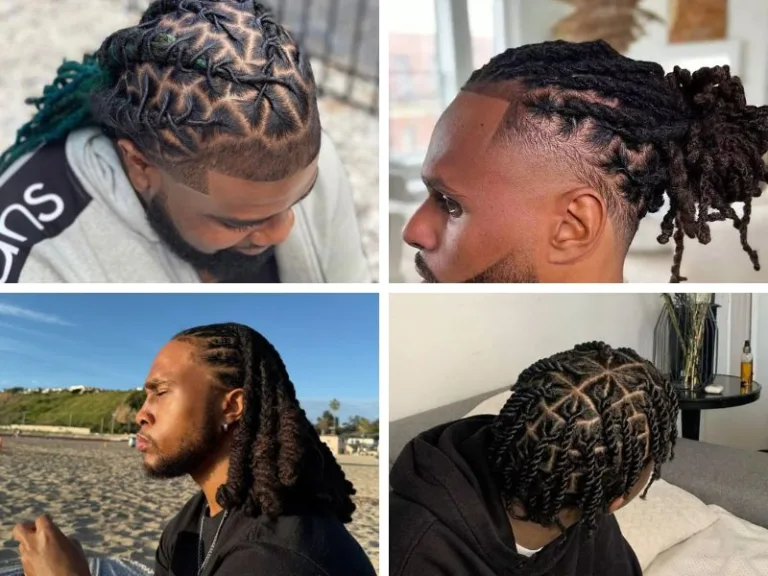
The diamond pattern sections the hair using diagonal parts rather than strictly horizontal and vertical lines.
Creating a series of diamond shapes across the scalp. Each point of the diamond becomes a parting intersection, and each diamond shape becomes the section of one loc.
The result is a parting pattern that sits at forty-five-degree angles to the natural axis of the head rather than running straight across it.
Visually, the diamond pattern is the most distinctive and intentional-looking of all the structured grid options.
When the locs are installed on a diamond grid, they fall in a slightly different direction than locs on a square or brick grid, creating a unique movement and drape to the style.
For people who want their small locs to look as detailed and carefully designed as possible from installation day.
The diamond pattern delivers that quality in a way that common patterns do not.

The Real-World Considerations
The diamond pattern is the most technically demanding of the common grid patterns and is generally not recommended for a first DIY installation.
The diagonal parting lines are significantly harder to keep straight and consistent than horizontal rows, and because the sections meet at points rather than flat edges.
Even small inconsistencies in the angle of your parts create locs that are noticeably irregular in shape.
On a head of small locs where there are many more sections to keep consistent, these inconsistencies multiply quickly.
If you are set on the diamond pattern and comfortable with your parting skills.
Executing it section by section from the crown outward produces cleaner results than trying to create full diagonal rows across the head at once.
Many people who love the diamond look choose to have the initial installation done by a professional and then maintain it themselves going forward. Which gives them the precision of the pattern without the risk of an uneven DIY start.
You may enjoy reading Loc Parting Patterns 2026: Most Popular Shapes & Styles Right Now
4. The Triangle Pattern
What It Is and How It Works
The triangle pattern sections the hair into triangular shapes rather than squares or diamonds, creating a parting grid where three lines meet at each intersection rather than four.
The sections are arranged so that rows alternate between sections that taper to a point at the top and sections that are wider at the top and narrow toward the base.
The triangle pattern is less common than the square or brick-lay for small locs but has a loyal following among people who want something that sits between the clean structure of a grid and the organic look of freeform.
The triangular sections create a slightly less uniform distribution of locs across the head. Which gives the finished style a natural quality without sacrificing the organisation of a structured pattern.

Who It Works Best For
The triangle pattern works particularly well for people with naturally round or oblong head shapes. Because the angular sections tend to complement the contour of the scalp more naturally than straight horizontal rows.
It also suits people who plan to wear their small locs in styles that emphasise the parts. Like pulled-back styles where the root is visible. Because the triangular sections create a more interesting visual structure at the base than a simple square grid.
The most important thing to maintain is consistent section sizing. Because triangular sections that vary in size produce locs that vary in thickness.
And this inconsistency is harder to disguise with the triangle pattern than with an offset brick-lay where the staggering provides natural visual coverage.
How to Execute Any Best Grid Patterns for Small DIY Locs Cleanly at Home
1. Start With Completely Clean, Product-Free Hair
A grid pattern executed on hair that has product residue or buildup is harder to part cleanly because the strands do not separate as crisply.
Wash with a clarifying shampoo on installation day, skip the conditioner. And allow the hair to air dry to damp before you begin parting.
Damp hair parts cleanly and holds sections without the fly-aways that dry hair creates during a long installation.
2. Tools That Actually Matter

A rat-tail comb is non-negotiable. The pointed metal tail creates precise parting lines that a regular comb or your fingers simply cannot replicate.
A large supply of sectioning clips holds completed rows cleanly out of the way as you work.
A spray bottle of plain water keeps hair pliable throughout a long installation without adding product.
Two mirrors. One mounted and one handheld. Let you see every angle of your parting in real time. Which is the only way to catch drift and inconsistency before it becomes a permanent problem.
3. Work Back to Front, Bottom to Top
Begin your grid at the nape of the neck and work upward toward the crown, completing each full row before moving to the next.
Starting at the back serves two purposes.
First. The nape section is the hardest part of a DIY install because it is the area you see least clearly and control least easily. Doing it while your attention and energy are highest produces better results.
Second, building the grid upward means you are always adding new rows to an already-established reference pattern. Which makes it easier to maintain consistency in size and spacing as you move across the head.
Hairline locs are the most visible and also the most vulnerable to tension damage. With the full grid established.
You can size the perimeter sections more accurately to align with the established pattern rather than guessing at the start.

4. Measure Your Sections Consistently
The most common reason small locs end up uneven in size is that sections are estimated by eye rather than measured.
Decide on your section size before you start. A section roughly the width of a pencil for very small locs. The width of your pinky fingernail for small-to-medium. And use that measurement as a consistent reference throughout the installation.
You may also like How to Fix Thinning Locs at the Crown and Bring Your Locs Back to Life
Some people use a small piece of card cut to their target section width as a physical guide.
Others use the width of the rat-tail comb handle. Whatever reference you choose, apply it to every section on the head without exception.
Which Best Grid Patterns for Small DIY Locs Works Best for Different Hair Types
1. Thick, Dense Type 4c Hair
Thick, dense natural hair is the most forgiving canvas for DIY grid parting. Because the sections have enough body to hold their shape during installation and enough density to cover parting lines once the locs begin to form.
Both the square grid and the brick-lay work well on thick 4c hair.
The square grid produces a very clean, structured installation that maintains its polished look throughout the loc journey.
The brick-lay creates a fuller, more organic appearance that many people with thick hair. Prefer because it gives the locs more natural movement and makes the style look less grid-like once the locs have length.
2. Fine or Low-Density Natural Hair
Fine or low-density natural hair benefits most from the brick-lay pattern because the staggered offset arrangement is the most effective way to reduce scalp visibility.
On fine hair, a square grid creates more prominent parting lines that look thin and sparse in the early months when the locs are still establishing themselves.
The brick-lay breaks up these lines visually and creates the impression of more coverage. Which makes a meaningful difference to how the style looks during the starter and budding phases.
Sections on fine hair should also be kept slightly larger than they would be on thick hair to ensure each loc has enough strand density to form a healthy. Well-compacted structure.
3. Medium Density Type 4a and 4b Hair
Medium density hair has the most flexibility in terms of grid choice and is the hair type most likely to produce good results from any of the patterns discussed in this guide.
The brick-lay pattern is still the strongest all-round recommendation because of its scalp coverage and tension distribution advantages.
But a well-executed square grid on medium density hair looks excellent and is significantly easier to install cleanly at home.
People with medium density hair doing their first DIY installation tend to get better results starting with the square grid.
Then switching to a brick-lay for subsequent installs once they have developed confidence and consistency.

4. Short Hair Under 4 Inches
Short hair requires a tighter. More deliberate grid pattern because shorter sections are more vulnerable to unraveling and have less strand weight to hold the shape of each part.
The square grid tends to work better on very short hair than the brick-lay. Simply because it is easier to execute cleanly when the sections are small and the hair does not have much length to work with.
Section sizes for short hair should be slightly larger than they would be for longer hair to give each loc enough strands to grip and hold the formation.
For more insight How to Start Sisterlocks on Natural Hair: A Beginner’s Step-by-Step Guide
As the hair grows. The grid can be refined during subsequent maintenance sessions.
Final Words
The Best Grid Patterns for Small DIY Locs you choose for your small locs is one of the few decisions you make at the very beginning of your loc journey that will still be visible and relevant years down the line.
It deserves real thought. Food preparation. And the patience to execute it well rather than quickly.
The difference between a carefully planned brick-lay and a rushed square grid is not subtle.
it is the difference between a style that looks deliberate from day one and a style that always has something slightly off about it that is hard to name.
Choose your pattern based on your hair type. Your honest assessment of your parting skills. And the look you actually want to live with.
Not the look that is trending or the pattern someone else recommended without knowing your hair.
Test it before you commit. Prepare your tools. Work slowly, especially at the back. And once the grid is in, protect it and maintain it with the same care you gave to installing it.
The locs that come from a well-laid grid are different in quality from locs that were started without one.
You will feel that difference the first time you sit down to retwist and everything is exactly where you expected it to be.
That is the reward for doing this part right.
This Post Showed You Best Grid Patterns for Small DIY Locs (And How to Choose the Right One for Your Hair).