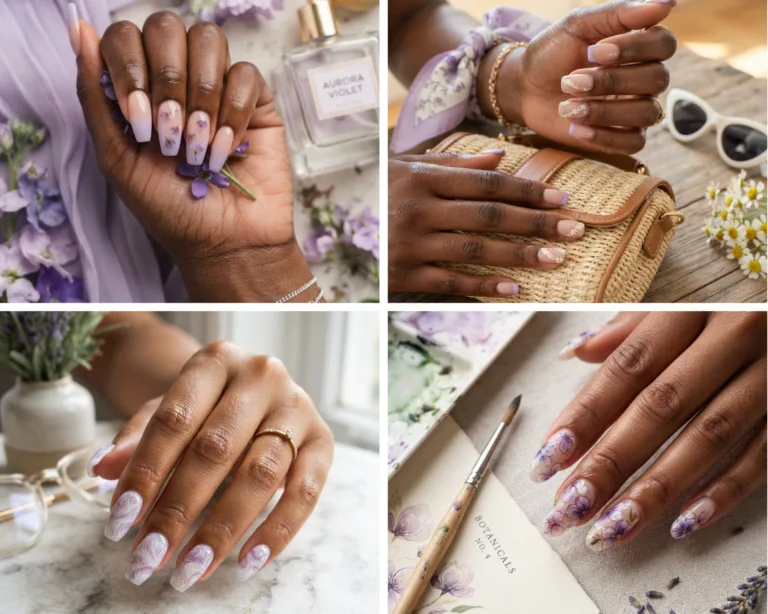
There is always a moment when plain polish starts feeling a little too simple, but heavy nail art feels like more than you want to wear. Rose designs sit beautifully in that middle ground.
A tiny painted bloom can soften a nude manicure, while deep red roses, porcelain-blue petals, vintage florals, watercolor washes, and delicate rose vines can completely change the mood without covering every inch of the nail.
The key is choosing artwork that still shows brush movement and variation rather than looking like a printed sticker. Some styles suit short natural nails; others have room to unfold across almond or oval shapes.
If you want the most wearable place to begin, start with softly painted miniature roses over a sheer nude base.
1. Miniature Roses on a Sheer Nude Base
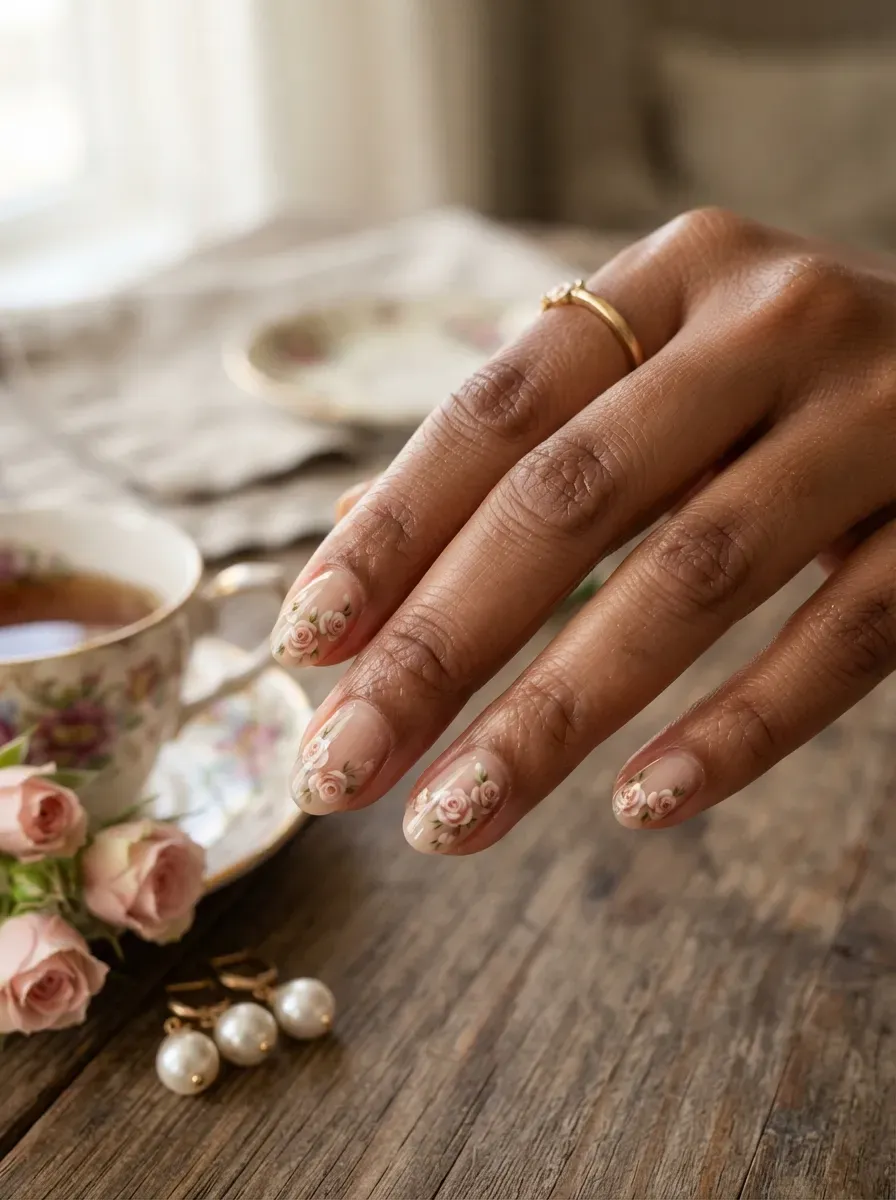
Miniature roses work because the artwork stays small enough to leave plenty of sheer nail visible. Soft pink petals painted with two or three tonal shades create depth without needing complicated detail.
Short oval nails give the flowers a gentle frame. Keep most blooms below one-third of the nail width so the manicure remains airy rather than crowded.
S ALSO 20 Coral Nail Ideas That Pop on Warm Skin Tones
2. Vintage Tea Rose Nail Art
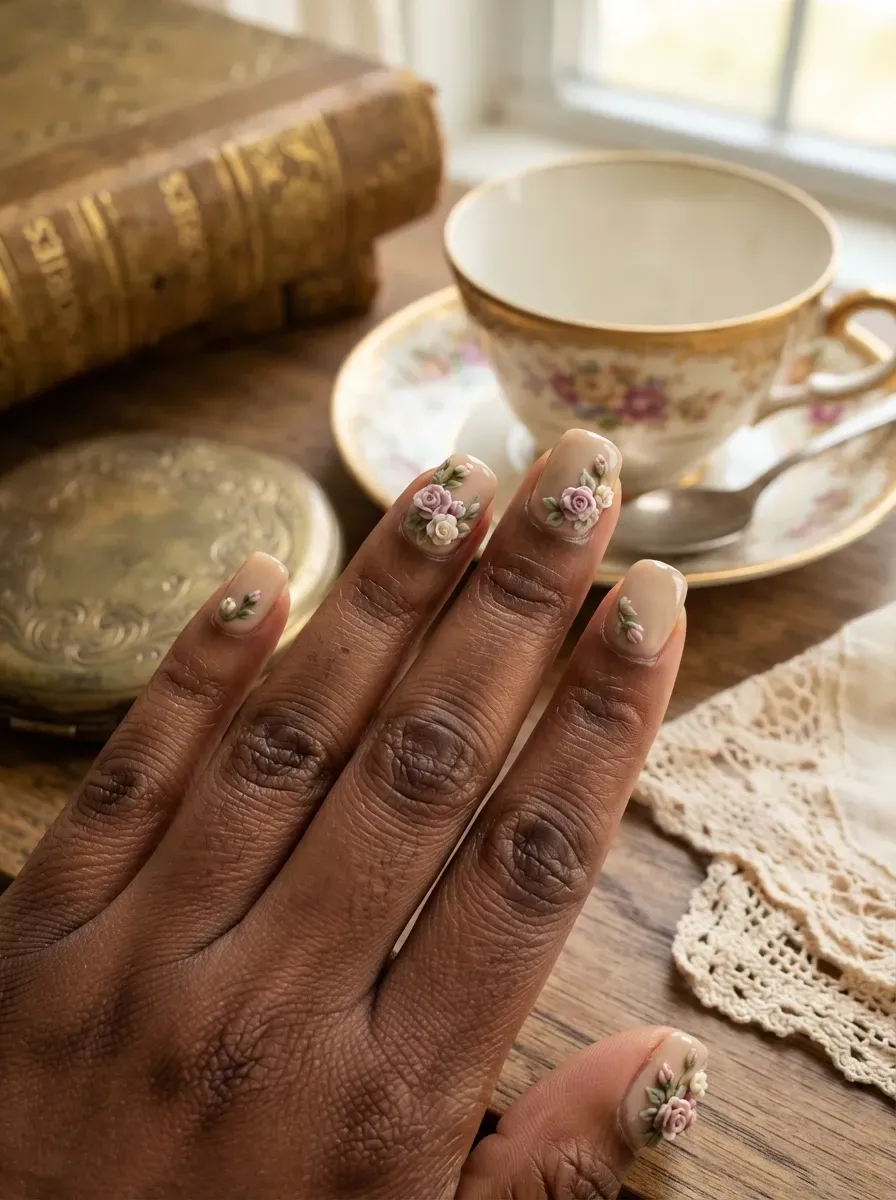
Vintage tea roses rely on muted color rather than sharp outlines, which keeps floral nail art from feeling childish. Dusty pink, cream, and muted green sit beautifully over beige or parchment-toned polish.
Irregular petal placement makes the flowers appear brushed on rather than stamped. Add the deepest rose tone only near the flower centers to preserve the faded antique effect.
3. Red Rose Accent Nails
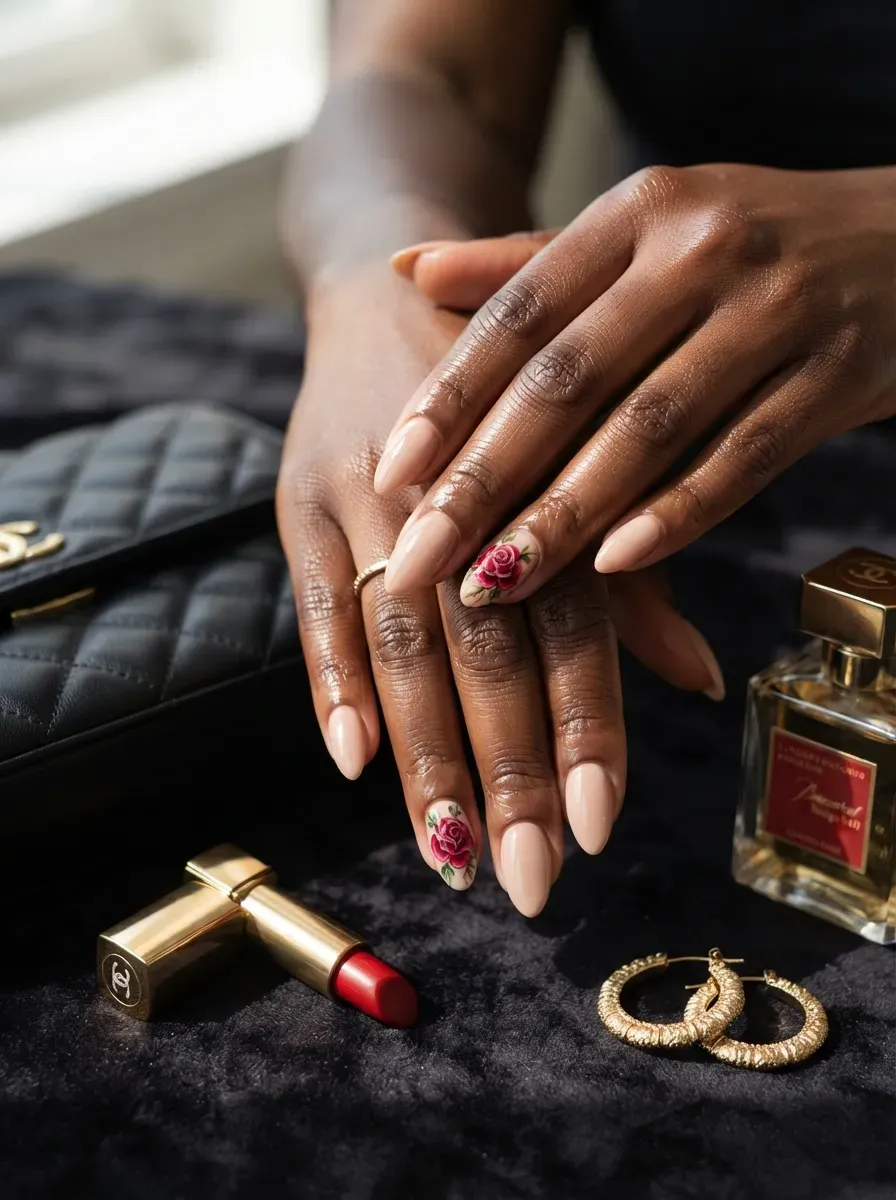
A single crimson rose has more visual impact when the surrounding nails stay almost bare. Layering dark red at the petal folds and brighter scarlet along the edges gives the flower believable dimension.
Nude polish keeps the finished manicure sophisticated rather than theatrical. Place the largest bloom on the ring finger and use smaller leaves so the rose remains the clear focal point.
Check out Open House Dreaming Date: The Romantic Trend New Couples Are Loving Right Now
4. Watercolor Rose Nails
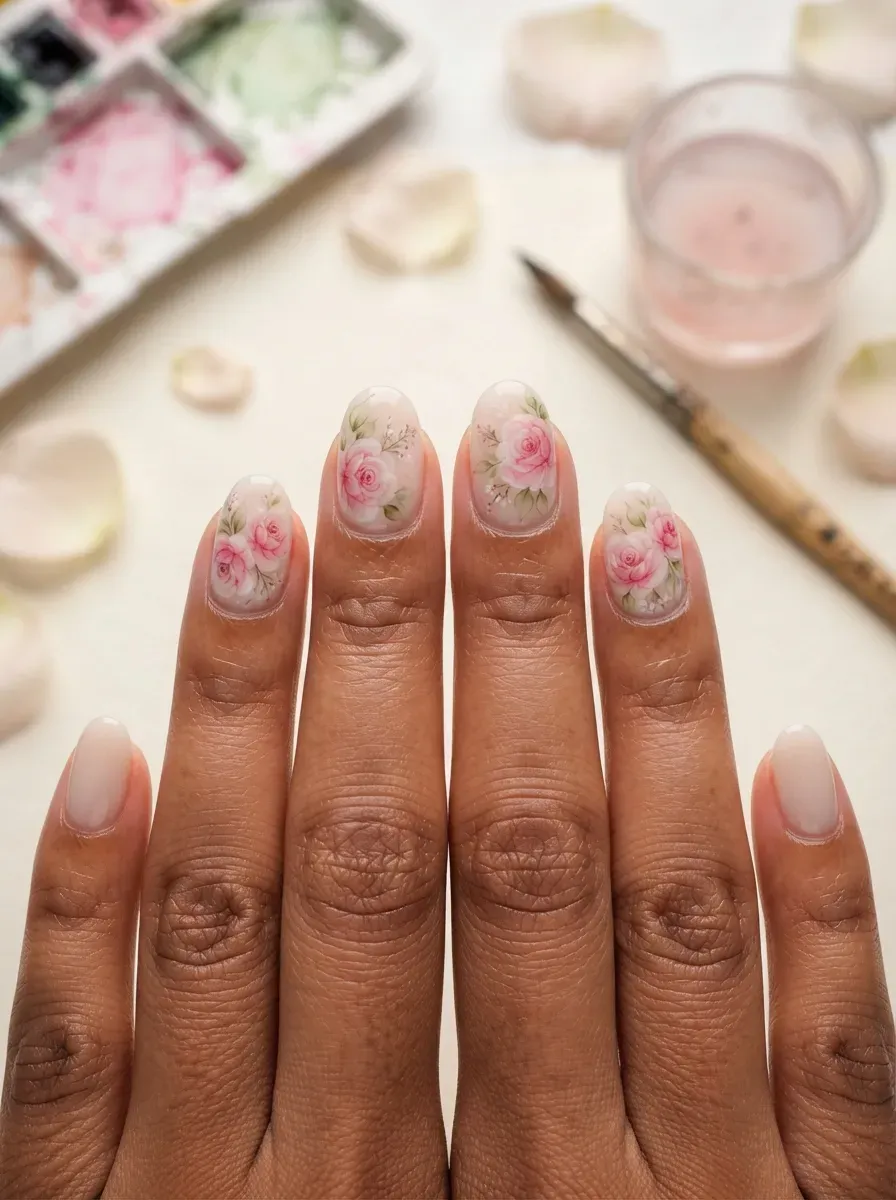
Watercolor roses use translucent layers instead of hard petal outlines, allowing each flower to look softly washed onto the nail. Milky white underneath makes pale pink and mauve pigments visible without becoming harsh.
Slightly blurred edges are part of the charm. Build the flowers with diluted gel color in thin passes, curing between layers so the shades do not muddy together.
5. French Tips with Tiny Rose Clusters
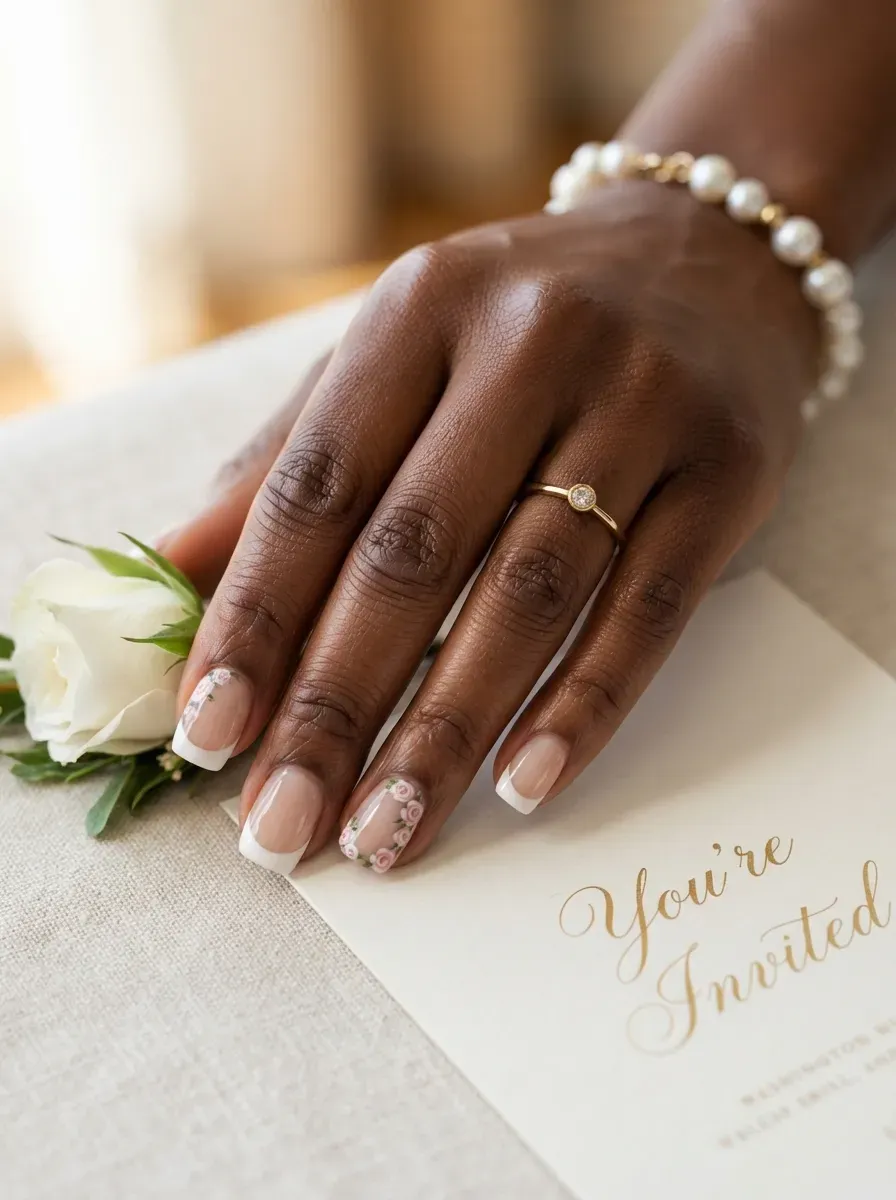
Tiny rose clusters soften a classic French manicure without hiding the crisp tip line. Painting the flowers near one sidewall creates balance and leaves enough negative space for short nails to breathe.
Blush roses feel especially natural beside a sheer pink base. Keep the leaves narrow and slightly darker than the petals so they remain visible without taking over the design.
6. Black Outline Rose Nails
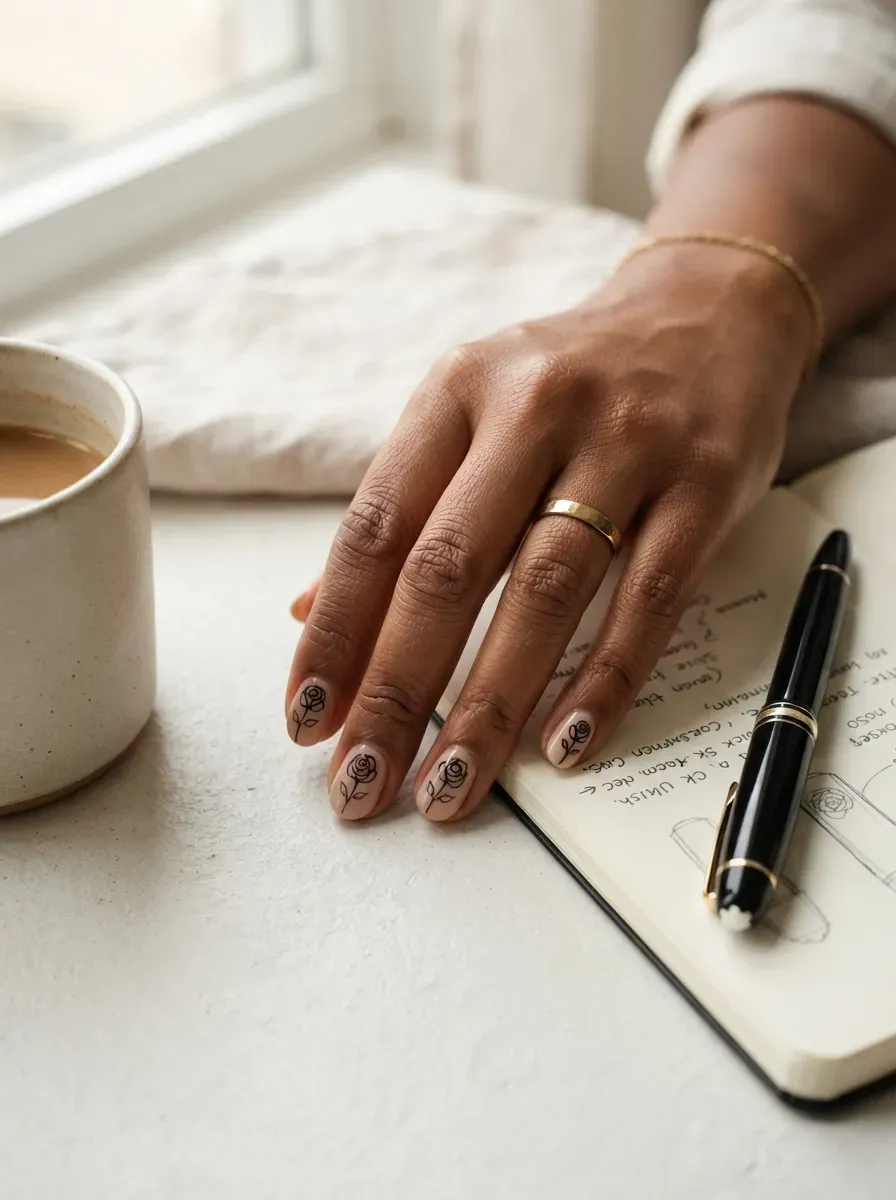
Black outline roses strip the flower down to curved petals and looping line work, giving floral nails a cleaner, more graphic mood. A nude base prevents the design from becoming too busy even when several nails carry artwork.
Fine gel paint gives the best control. Use one continuous thin line where possible because repeatedly tracing the same petal usually makes the design look heavy.
Read now Brat Bride Bachelorette Aesthetic: The Bold Party Theme Modern Brides Are Obsessed With
7. Blue Porcelain Rose Nails
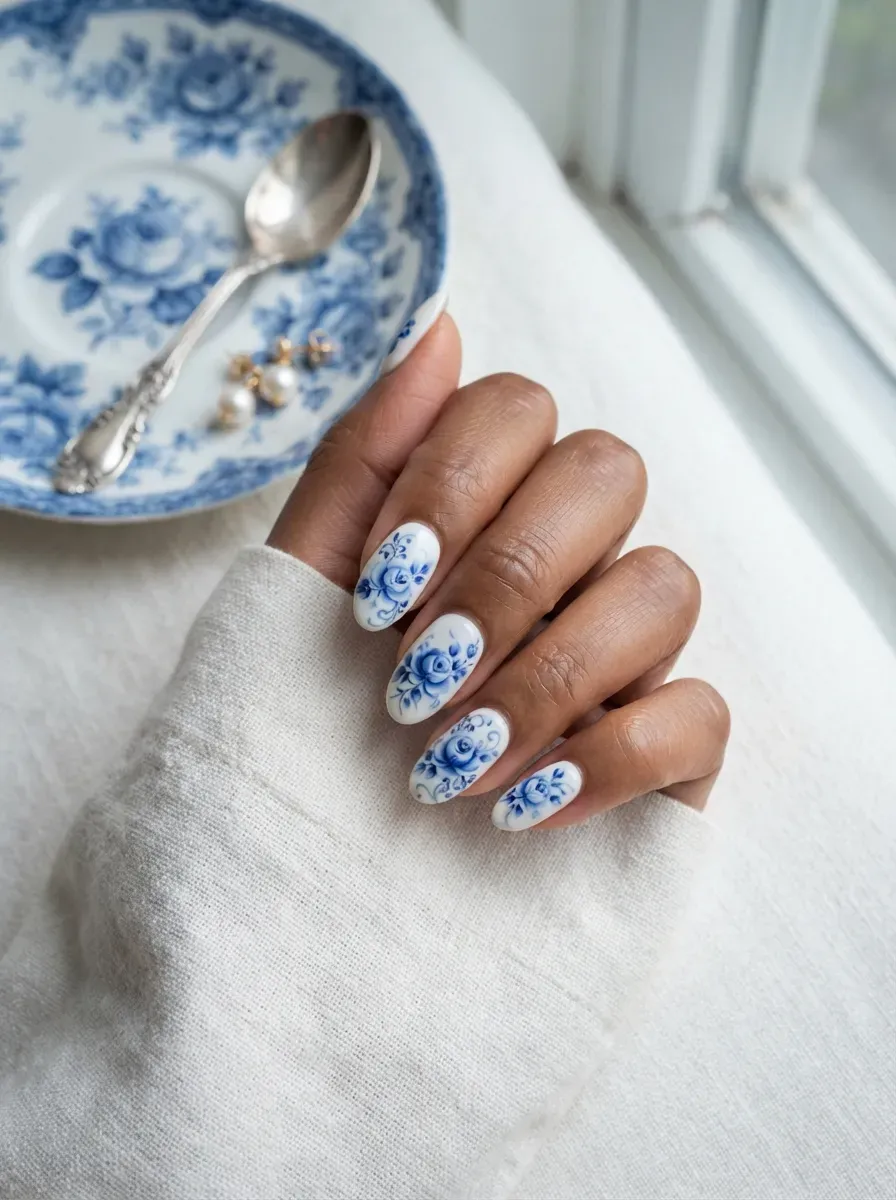
Blue porcelain roses borrow their look from painted china, using cobalt shading against a clean white background. Darker pigment near the centers gives the petals shape, while paler blue strokes soften the outer edges.
Oval nails provide enough room for the motif without requiring extensions. Thin the blue gel slightly so individual brush marks remain visible instead of becoming solid blocks of color.
8. Burgundy Roses on Milky Pink Nails
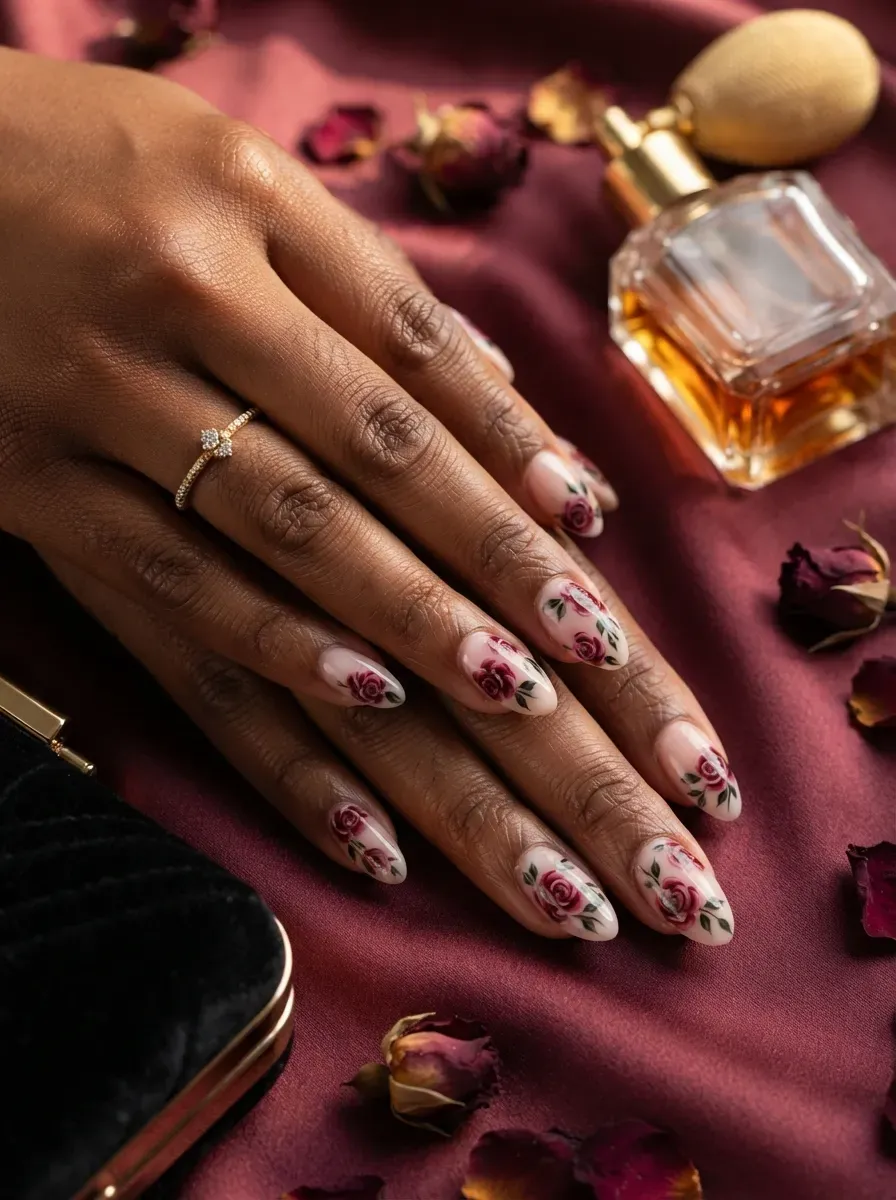
Burgundy roses bring a moodier edge to floral nail art without turning the manicure completely dark. A milky pink base provides enough contrast for wine-toned petals while keeping the overall finish soft.
Deep green leaves make the flowers read more realistically. Reserve nearly black burgundy for the innermost folds, since using it across every petal can flatten the rose.
9. One-Stroke Painted Rose Nails
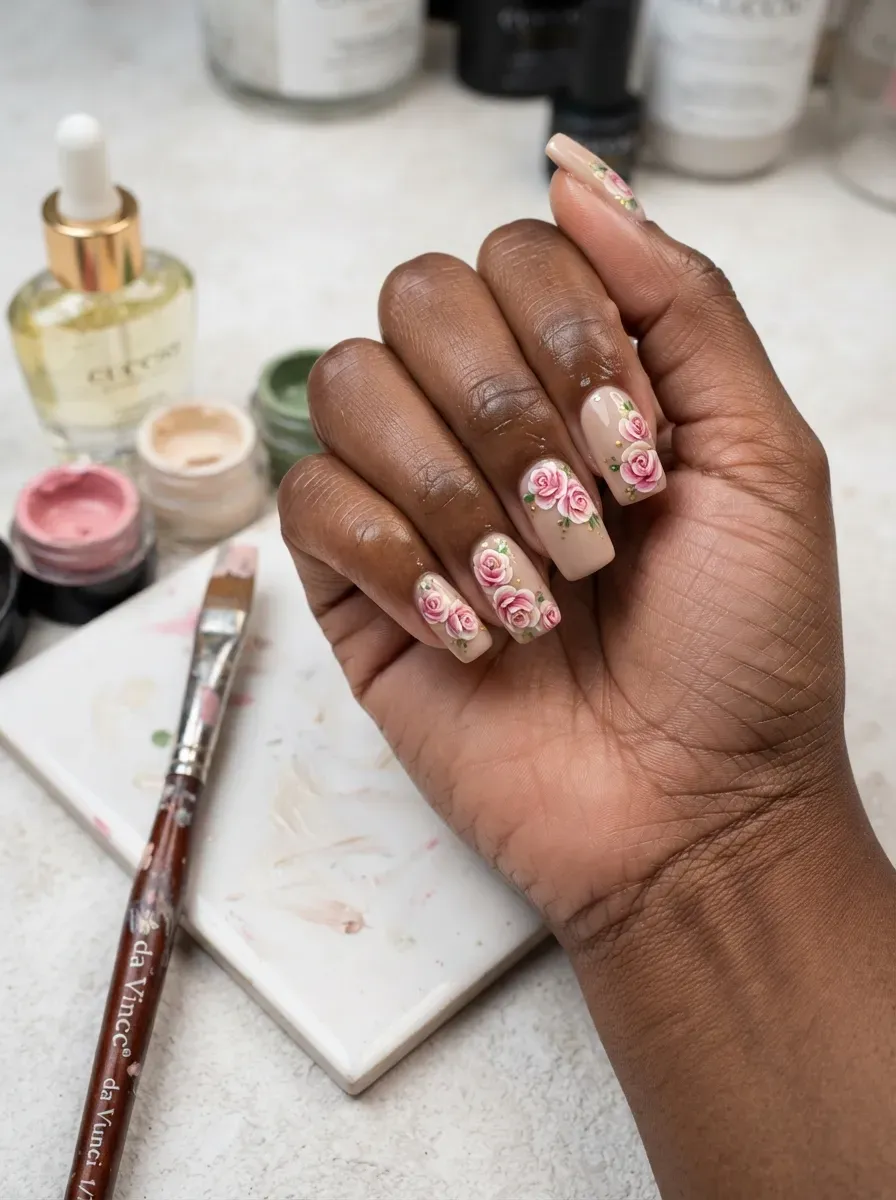
One-stroke roses are created by loading two colors onto opposite sides of a flat brush, producing highlight and shadow at the same time. The technique creates fuller petals quickly, but it needs enough nail space for the curved strokes to open.
Medium square nails suit it well. Wipe and reload the brush between petals so the cream and pink remain distinct.
See more European Summer Baches: 20 Dreamy Ideas for the Ultimate Girls Trip
10. Rose Vine Nail Art
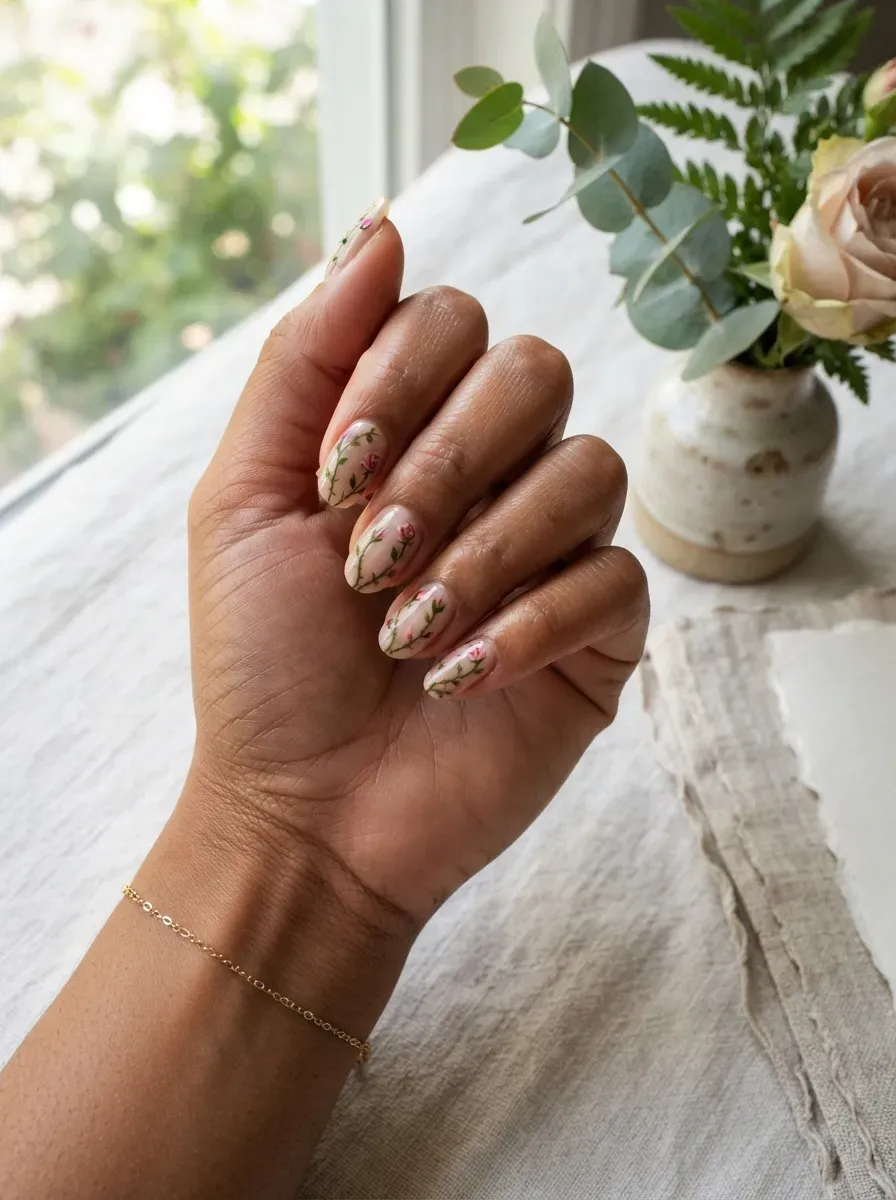
Rose vines suit shorter nails because the artwork follows the length of the nail rather than spreading horizontally. Fine stems guide the eye upward, while tiny flowers add color without using much surface area.
A sheer base keeps the design delicate. Paint the vine first, then place the blooms along it so the final composition feels connected instead of randomly scattered.
11. Dusty Rose Monochrome Florals
Monochrome floral art keeps the base and roses within the same color family, creating texture through contrast rather than obvious color changes. Dusty rose works especially well because deeper mauve can define the petals without looking stark.
The result feels understated even with multiple flowers. Choose a matte or satin background if you want the glossy painted petals to show more clearly.
12. White Roses on a Clear Base
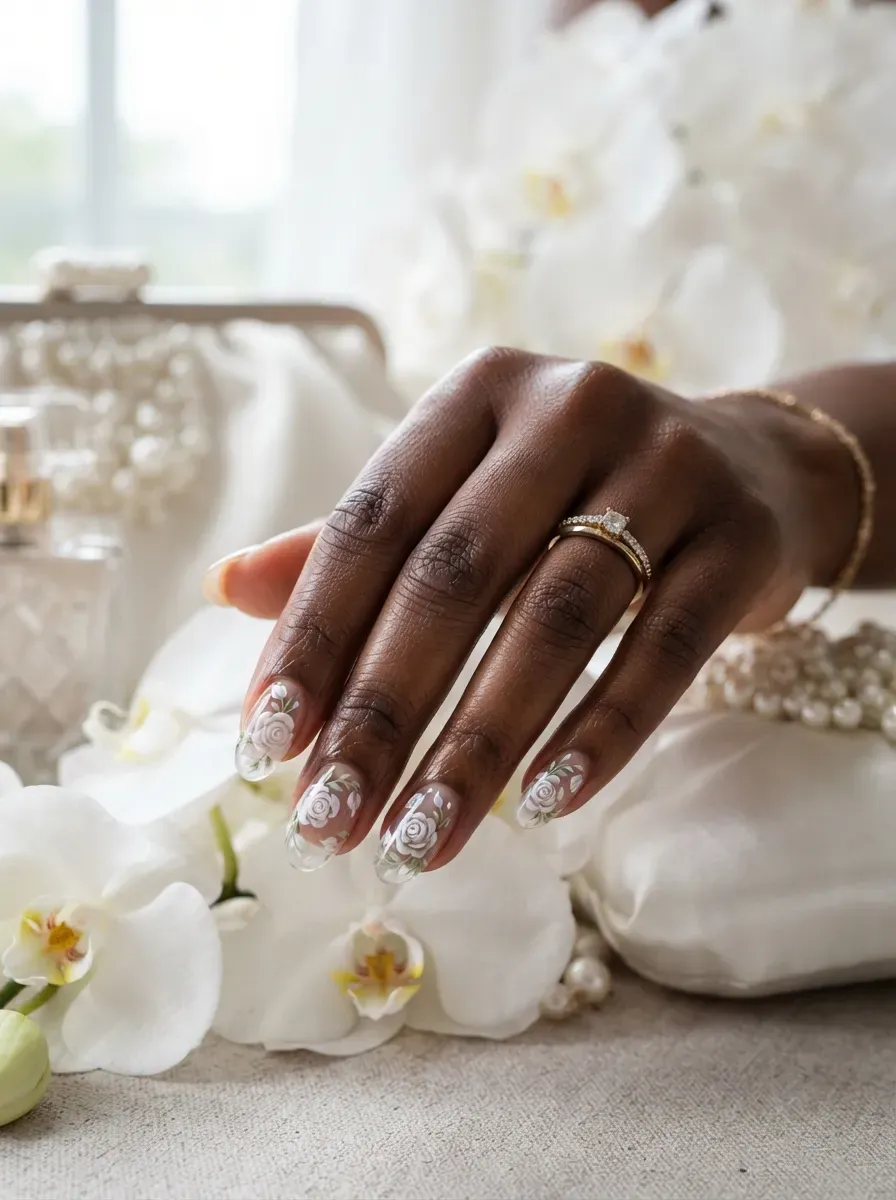
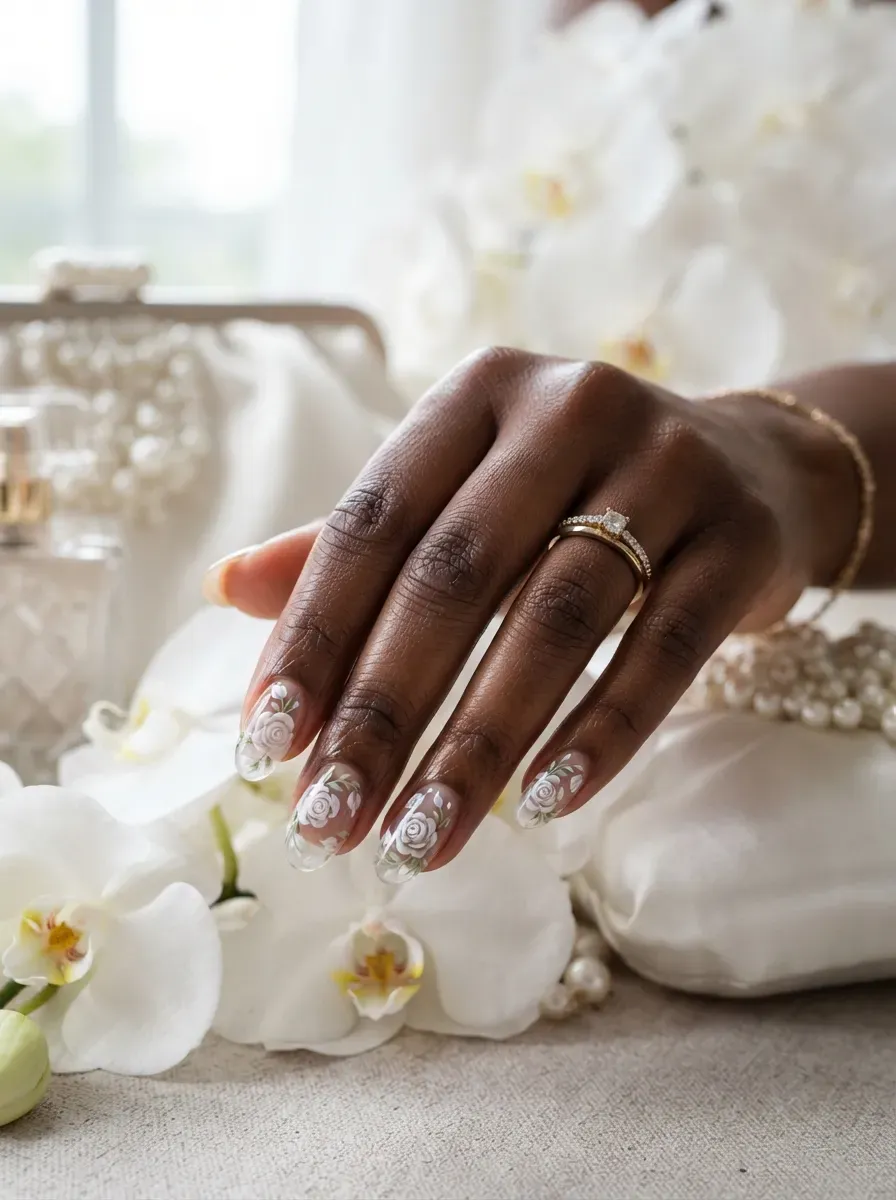
White roses over a clear base feel lighter than painting the entire nail white first. The transparent areas separate individual petals and make detailed flowers easier to read, particularly on medium-length oval nails.
White gel paint needs strong pigmentation to stay crisp. Paint the innermost petals slightly thicker than the outer ones so the flower gains depth without needing gray shading.
13. Rose Garden Accent Nails
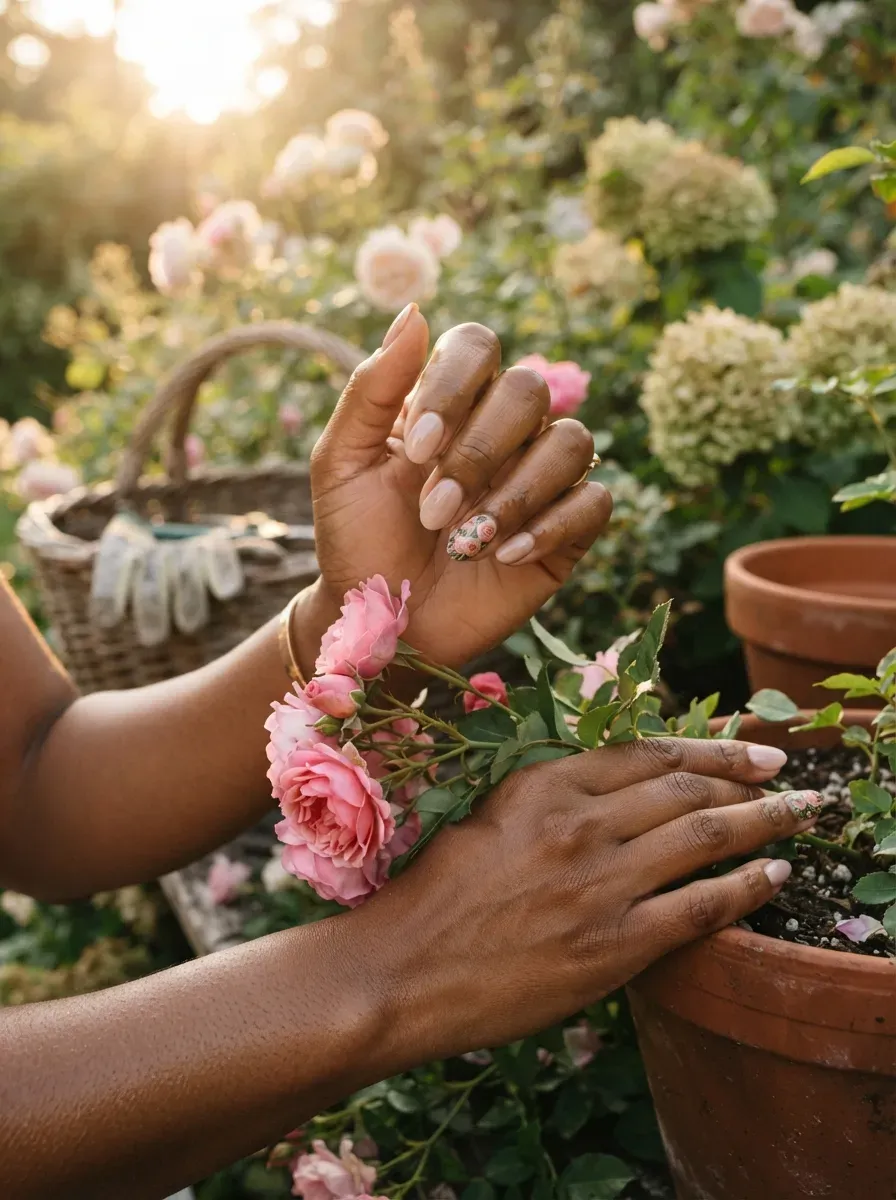
A rose garden accent packs several miniature blooms onto one or two nails while leaving the rest of the manicure quiet. Varying flower size prevents the cluster from resembling a repeating pattern, and tiny leaves fill awkward gaps naturally.
Neutral surrounding nails provide visual rest. Paint larger roses first, then use the smallest flowers only where the composition needs balance.
Read more How to Transition From Loose Natural Hair to Corporate Locs — Without Regret
14. Chrome-Lined Rose Petals
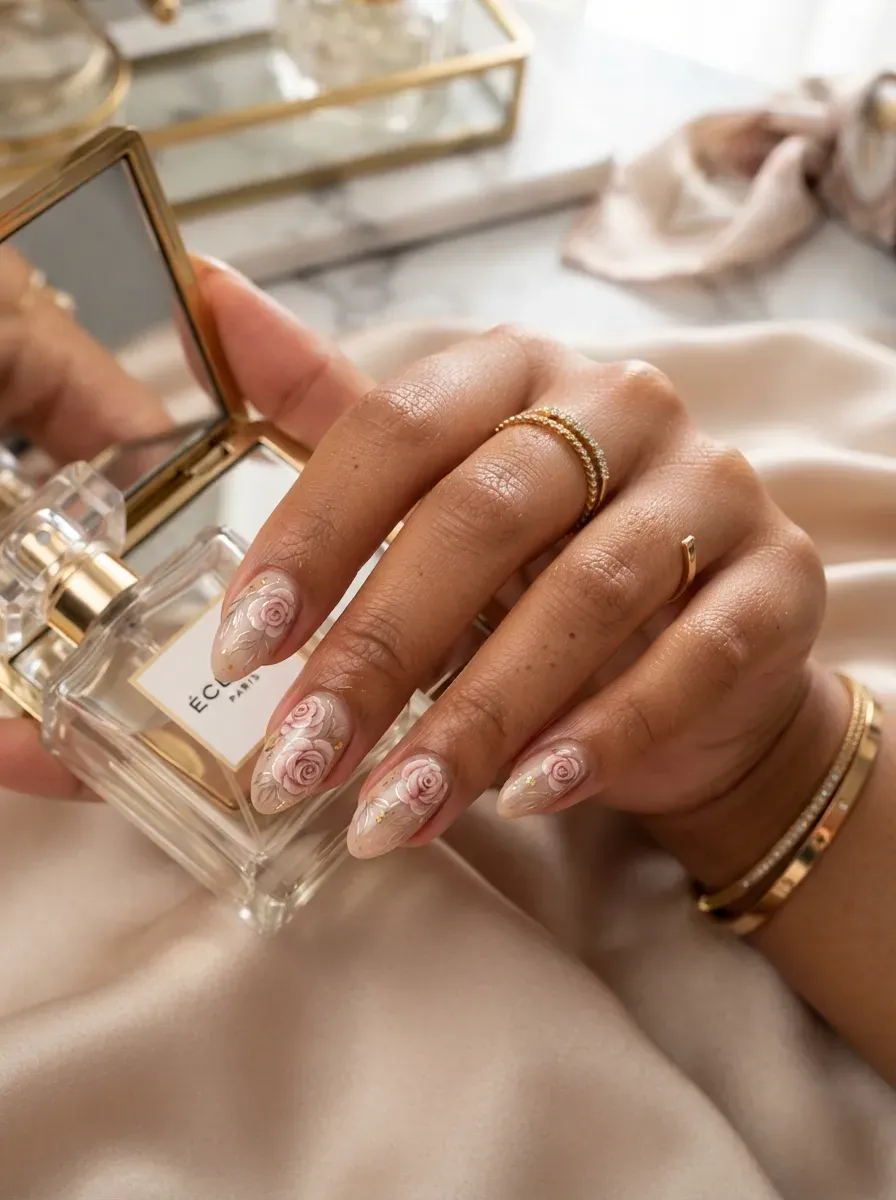
Chrome lining adds a reflective edge to otherwise soft painted roses, creating contrast between traditional floral art and a modern metallic finish. Champagne chrome works more gently than bright silver over blush petals.
The technique looks strongest on one or two feature nails. Apply chrome only over cured no-wipe line work so stray powder does not settle across the painted flower.
15. Peach Roses with Sage Leaves
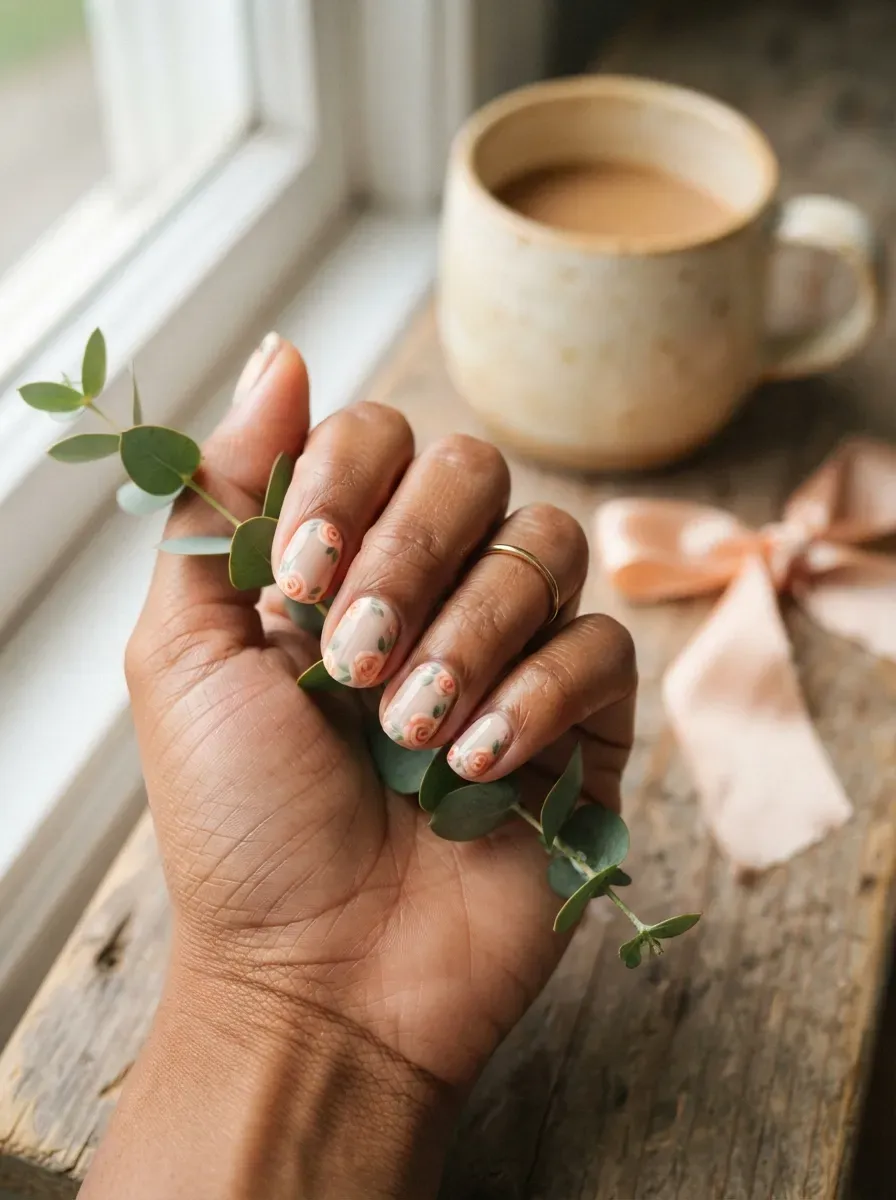
Peach roses paired with sage leaves create warm floral nail art without the sweetness of conventional pink. Muted green controls the brightness and works especially well with golden or olive undertones.
Keeping the base creamy rather than stark white softens the whole palette. Mix a drop of beige into bright peach gel if the flowers look too orange against your skin.
16. Dark Rose French Tip Art
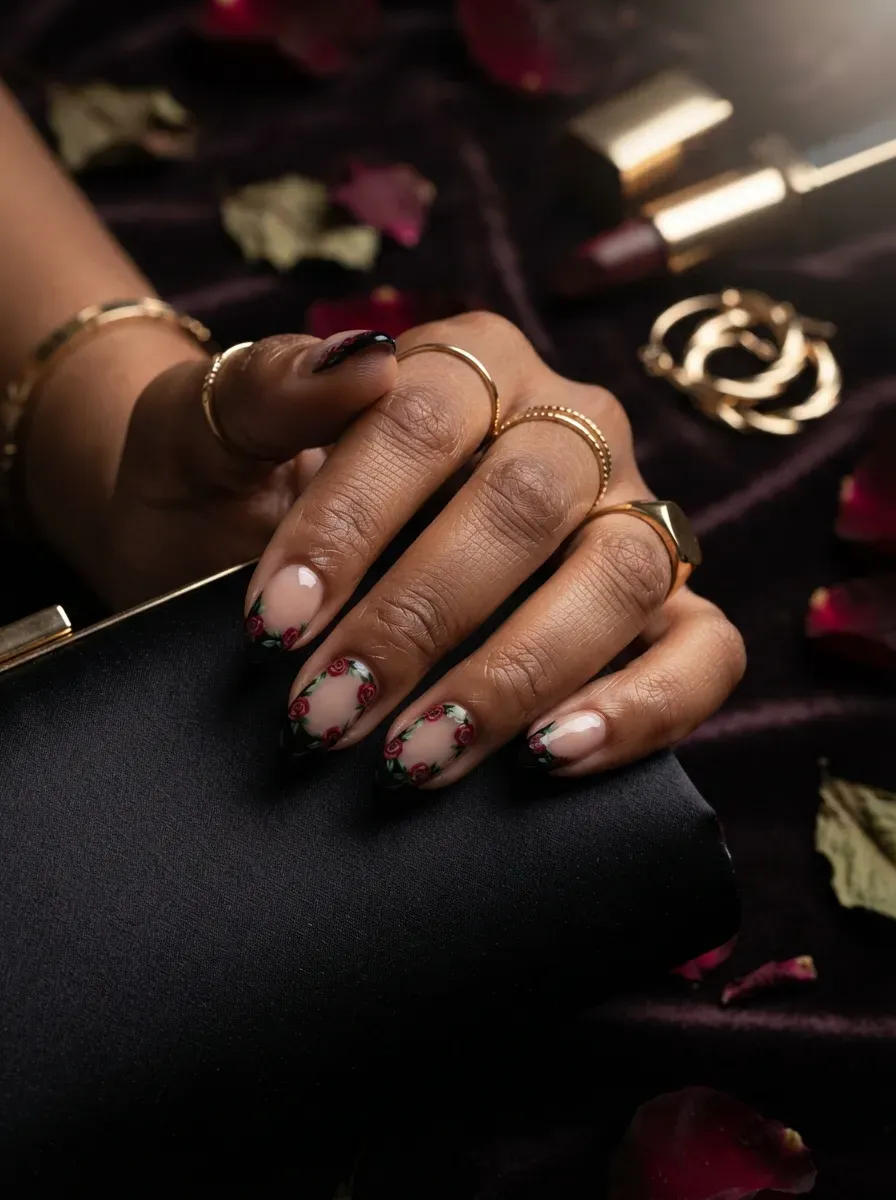
Dark rose French art keeps the drama concentrated at the free edge, leaving the nail bed relatively open. Black tips give deep red petals enough contrast to remain visible, while the floral detail softens an otherwise severe manicure.
Almond shapes suit the curved composition especially well. Paint the roses after establishing the French line so the flowers can overlap its boundary naturally.
17. Blush Rosebud Nail Art
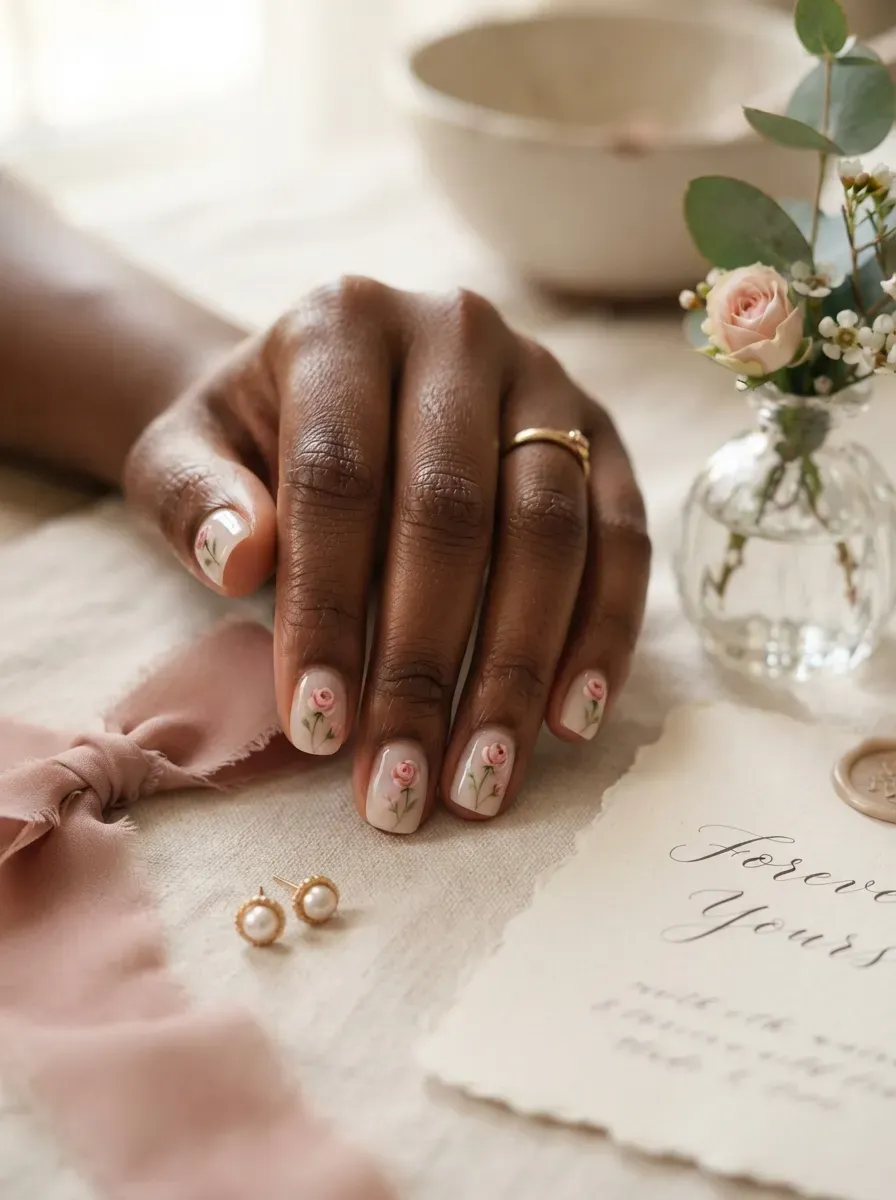
Rosebuds are easier to scale down than fully opened flowers, which makes them especially useful on very short nails. Two curved petal strokes can suggest a bud without overcrowding the nail, while a thin green stem gives it direction.
A glossy nude base keeps everything fresh. Use an ultra-fine liner brush for the stems because thick greenery can overpower such small flowers.
Check out 25 Back-to-School Nails to Start the Year Right
18. Mauve Roses with Gold Leaf Accents
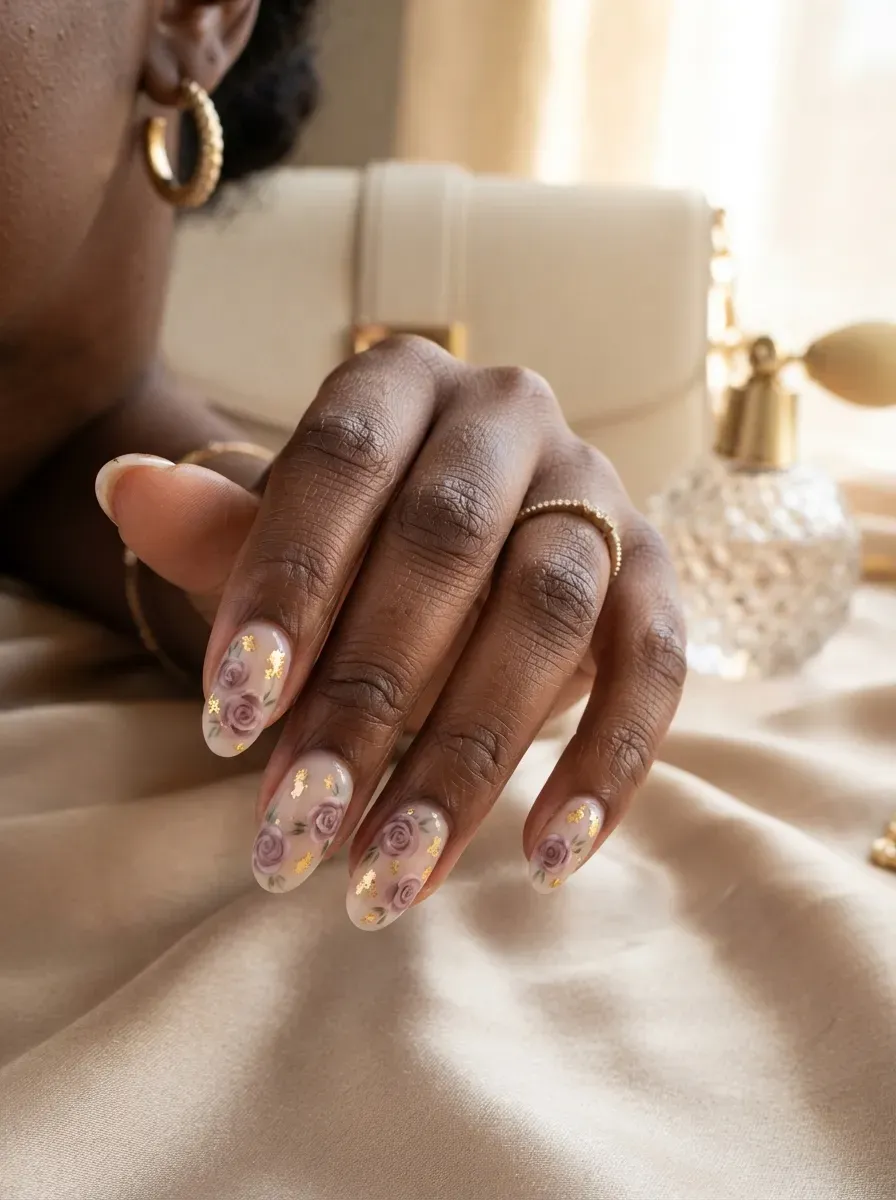
Mauve roses already have a vintage softness, and tiny pieces of gold leaf add just enough light to make them occasion-ready. Keeping the metallic detail between flowers rather than on every petal prevents the design from becoming flashy.
Milky nude creates a clean background. Press each foil fragment completely flat before top coat so no sharp edge catches hair or fabric.
19. Abstract Rose Brushstroke Nails
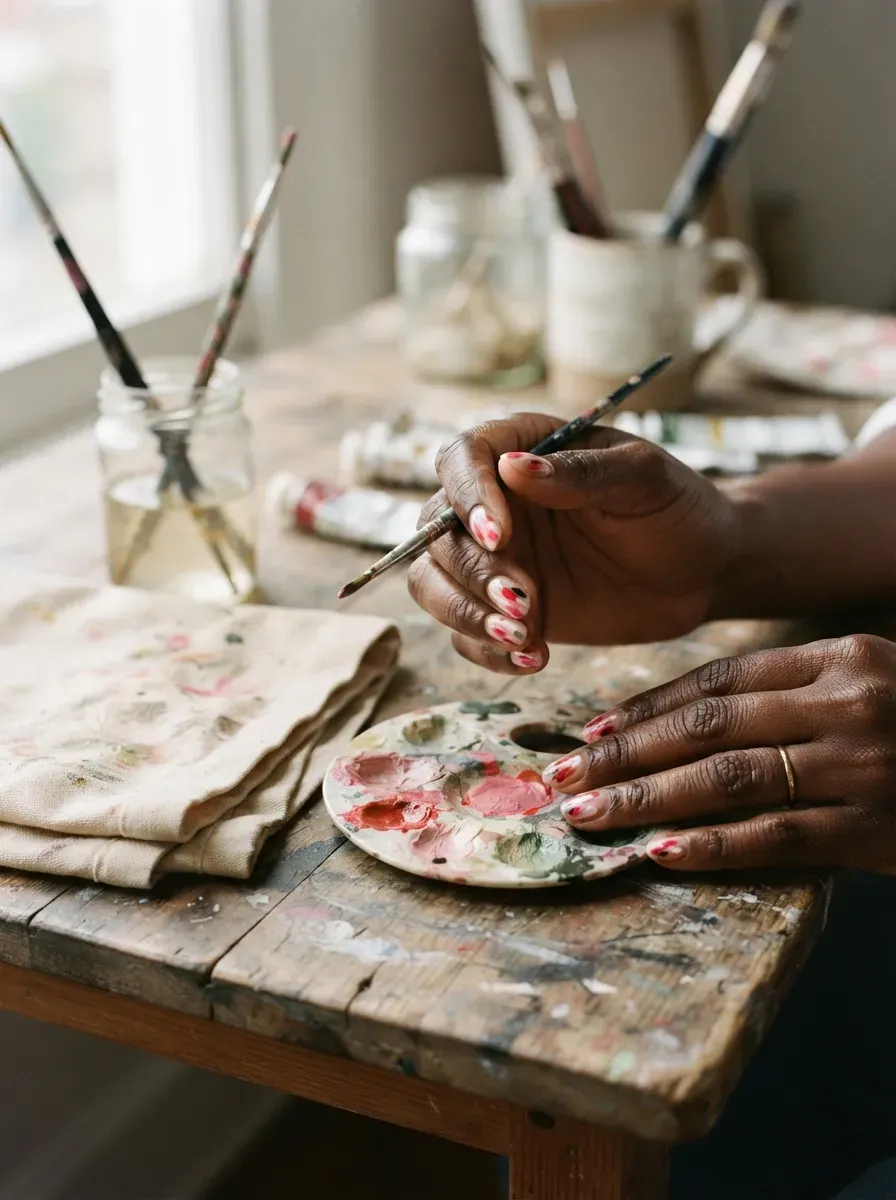
Abstract roses depend on suggestion rather than realistic outlines, using curved brushstrokes and color placement to imply petals. That looseness works well on short nails because every flower does not need enough room for detailed anatomy.
Mixing pink, red, and cream creates instant dimension. Stop painting while some base color remains visible; filling every gap usually destroys the spontaneous brush-painted effect.
20. Romantic Full-Hand Painted Rose Manicure
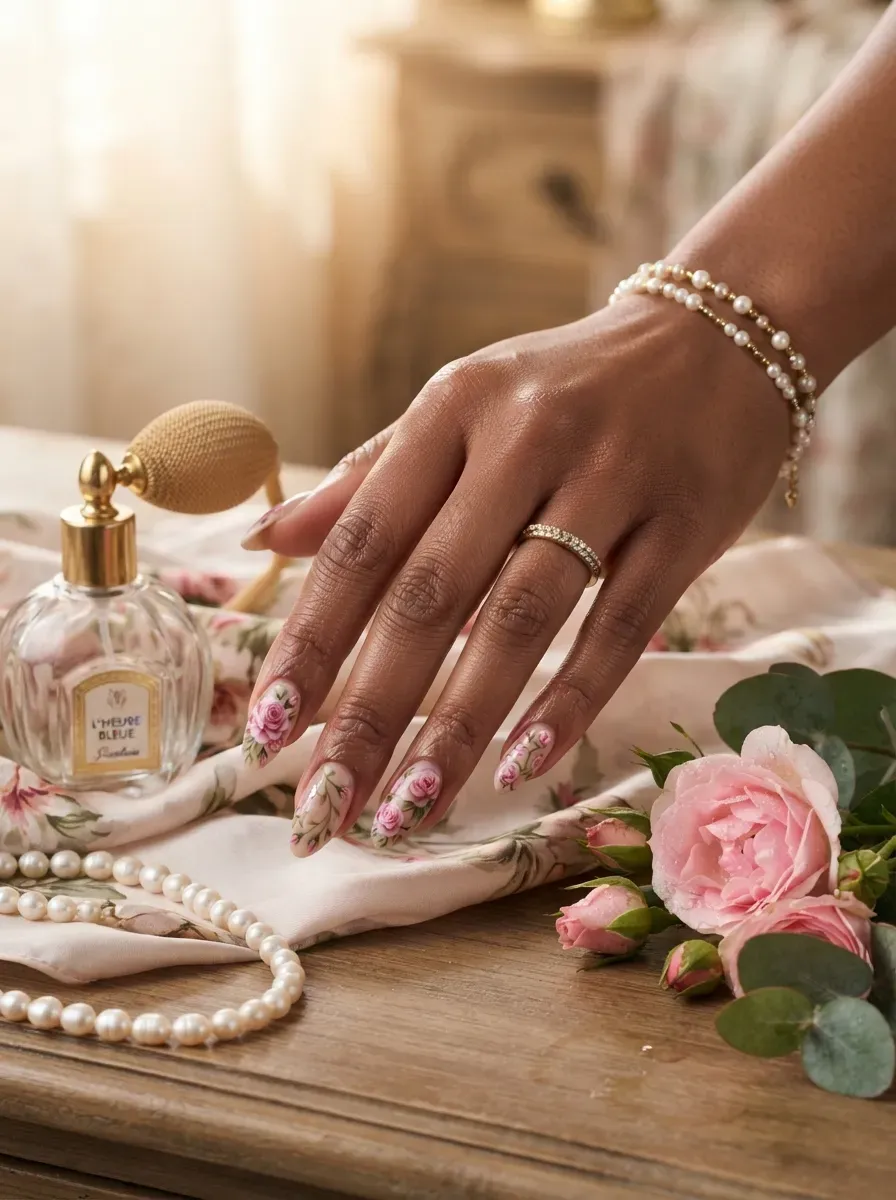
A full-hand rose manicure works when each nail contributes to one larger composition rather than repeating the same flower five times. Mixing open roses, buds, leaves, and partial blooms keeps the artwork natural and genuinely hand-painted.
Medium almond nails provide enough surface for variation. Plan the arrangement across the entire hand before painting so adjacent nails do not accidentally repeat identical placements.
Read more 17 Sustainable Father’s Day Gift Wrapping Ideas That Are Thoughtful, Stylish & Zero-Waste
How Nail Techs Make Painted Roses Look Dimensional
Convincing rose nail art is rarely made from one flat pink circle with lines drawn over it. Depth comes from value changes: a darker shade sits inside the folded center, a mid-tone builds the main petal body, and a lighter color catches the outer edges. Even very small flowers benefit from this three-level approach.
Gel paint is particularly useful because its pigmentation stays visible in thin strokes. Standard gel polish can work, but highly fluid formulas may spread before the petal shape is cured. A small round detail brush handles miniature blooms, while a short flat brush is better for one-stroke roses.
Brush pressure matters too. Pressing slightly creates the broad outer portion of a petal; lifting the brush narrows the stroke naturally. That movement is what makes a flower look painted rather than outlined.
Cure complex flowers in stages instead of completing the entire rose while every layer is wet. Separating the deepest shadows, middle petals, and highlights keeps the colors clean and preserves the individual brush marks that make hand-painted roses convincing.
Choosing Rose Designs for Short and Long Nails
Rose artwork should change scale with the nail rather than simply being squeezed onto a smaller surface.
Very short nails are strongest with rosebuds, micro florals, narrow vines, single accent flowers, and tiny clusters placed near the cuticle or sidewall. These designs leave enough exposed base for the nail to remain visually balanced.
Medium oval and almond nails give open roses more room to develop. Watercolor flowers, vintage tea roses, French-tip florals, and porcelain designs become easier to read because each petal can have visible separation.
Longer nails support elaborate compositions, including several blooms, trailing leaves, or full-hand garden designs. More space does not automatically mean more art, though. Filling every available area can make even beautifully painted roses look like patterned wallpaper.
Pay attention to nail width as well as length. A narrow nail can carry a vertical rose vine beautifully, whereas a wider plate may suit an off-center bloom surrounded by negative space. Design placement should flatter the natural proportions before extra detail is added.
Why Gel Paint Usually Works Better for Detailed Roses
Traditional nail lacquer is useful for many manicures, but complicated rose artwork exposes its limitations quickly. Polish begins drying while you work, which makes blending petals difficult and can cause fine lines to drag.
Gel paint stays workable until cured, giving the artist time to shape curves, add highlights, and correct small mistakes.
Pigmentation is another advantage. A concentrated gel paint can produce an opaque petal with one thin stroke rather than several bulky layers. That matters on floral manicures because excessive product builds uneven texture underneath the top coat.
For watercolor roses, thinner translucent gel colors can be more appropriate than dense art paint. Each layer should remain sheer enough for previous shading to show through. One-stroke flowers need a thicker formula that stays separated when two colors are loaded onto the same brush.
Do not assume thicker is always better. Raised petals may look impressive initially but can make sealing difficult. The most durable hand-painted roses usually have controlled, relatively flat layers that can be completely encapsulated under a smooth top coat.
Sealing Rose Nail Art Without Losing the Brushwork
The top coat is where beautiful floral work can accidentally lose its character. A very thick layer can make delicate brush marks appear blurred beneath excessive shine, while too little product may leave raised petals vulnerable to wear.
Allow every gel-art layer to cure fully before sealing. If the rose contains foil, chrome, or thicker painted details, inspect the surface from the side rather than only from above. Any edge that remains exposed can become a snag point.
Apply top coat with a floating motion instead of pressing the brush heavily into the design. That prevents the bristles from dragging pigment or leaving grooves over dimensional artwork. Cap the free edge as well, particularly on floral French styles where artwork reaches close to the tip.
Matte top coat changes the look substantially. It can make vintage and porcelain roses feel almost illustrated, while gloss intensifies watercolor, chrome, and deep red designs. When unsure, test the finish on one nail first; top-coat choice can alter the color depth more than many clients expect.
What to Ask for at the Salon Before a Detailed Rose Manicure
Hand-painted rose art takes longer than applying stickers, decals, or stamped patterns, especially when each nail has a different composition. Show your nail artist reference images before the appointment rather than once the base color is already cured.
That allows enough time to be scheduled and confirms whether the artist is comfortable with miniature floral painting.
Ask what technique will be used. One-stroke roses look different from watercolor petals, line-art flowers, or layered realistic blooms, even when the colors are similar. Clarifying that point prevents a technically good manicure from feeling unlike the image you saved.
It is also worth discussing how many nails actually need artwork. Two detailed accent nails can sometimes look more refined than ten heavily painted ones and usually reduce both appointment time and cost.
Bring the conversation back to your natural nail dimensions. A skilled artist should adapt flower size and placement rather than copying a long almond reference literally onto short square nails. That adjustment is often what separates custom-looking rose nail art from a design that feels cramped.
Choosing Your Rose Nail Art Design
Start with nail length. Very short nails suit rosebuds, fine vines, tiny clusters, and single accents, while medium or longer shapes give watercolor roses and layered petals more room.
Then decide how much color you want. Blush, cream, and dusty rose stay soft, while crimson, burgundy, cobalt, and black create stronger contrast.
Weddings and formal events can carry pearl, chrome, or gold details; everyday manicures may feel easier in nude floral styles. Consider detail level and maintenance too, since elaborate hand painting takes more salon time and careful sealing.
For a romantic mood, choose soft roses. For vintage character, try tea roses. If you want something more modern, black line art or abstract rose brushstrokes create a cleaner, less traditional finish.