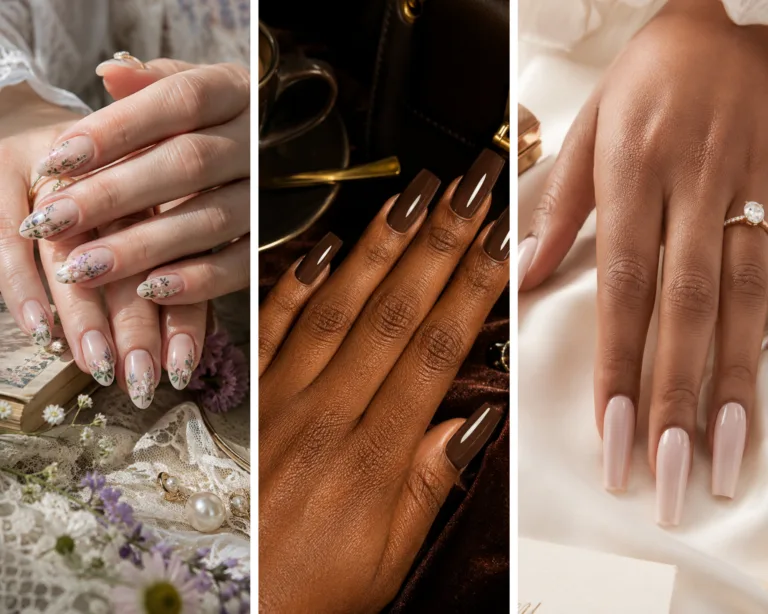
Choosing a floral manicure can get surprisingly complicated once you move beyond a simple flower accent.
You might want lavender without making the nails feel overly pastel, or florals that look delicate without becoming too busy for work, weddings, or everyday wear.
Lavender floral nail ideas solve that balance beautifully because the shade can lean soft, cool, dusty, milky, or almost purple depending on the finish and surrounding colors.
From tiny hand-painted blossoms and raised gel petals to French tips, watercolor flowers, chrome accents, and sheer botanical designs, there is plenty of room to adjust the detail level.
Start with one of the simplest combinations: soft lavender paired with barely-there daisies.
1. Sheer Lavender Almond Nails With Tiny Daisies
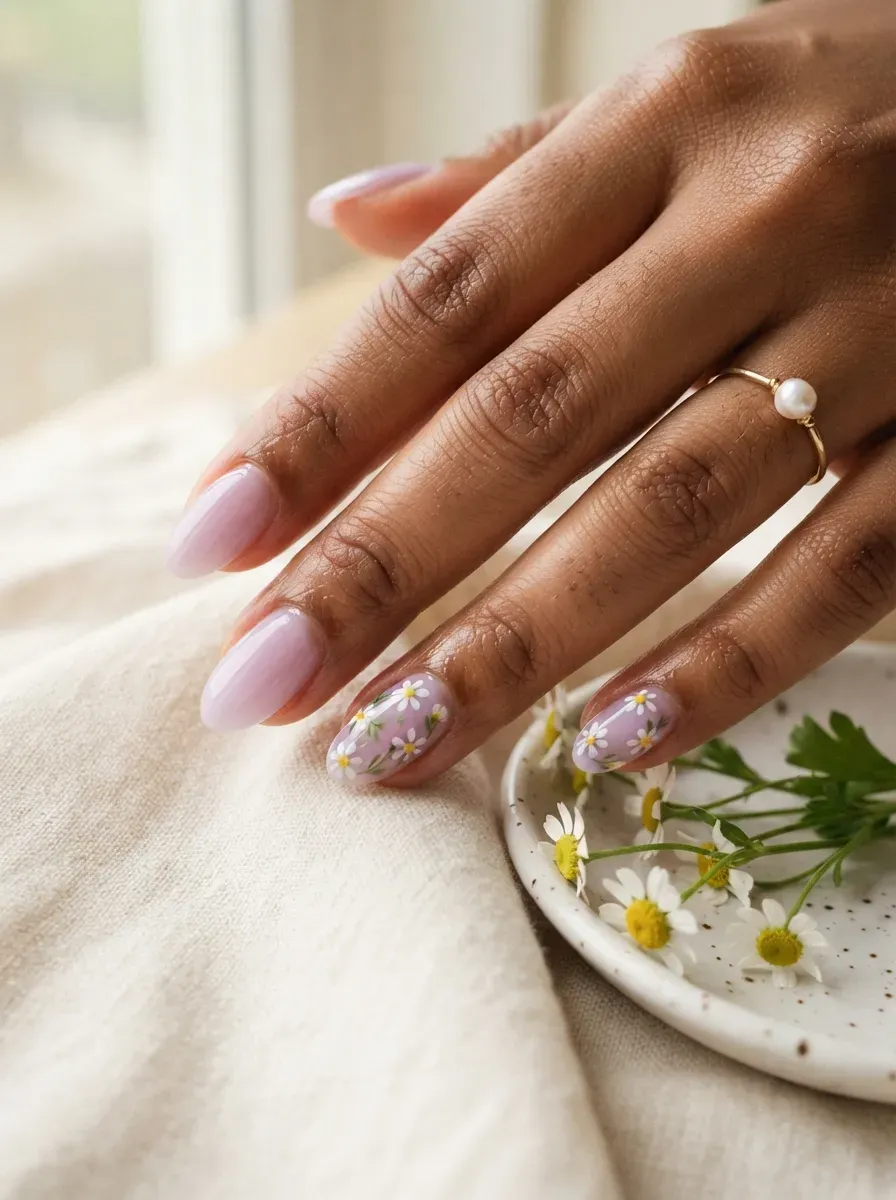
A translucent lavender base keeps the manicure light while tiny white daisies add enough detail to make the floral theme obvious.
Almond shaping gives the petals visual breathing room without requiring extra length. Keeping most flowers on two nails also makes growth less noticeable.
Ask for very thin petal strokes, since oversized daisies can overwhelm a sheer base.
Save this post 25 Back-to-School Nails to Start the Year Right
2. Lavender French Tips With Floral Accent Nails

Lavender French tips give floral nails structure before any artwork is added.
Painting miniature blooms on only the middle and ring fingers keeps the design readable, especially on shorter nails. A sheer nude base also softens the contrast between natural growth and the manicure.
Request matching lavender in the tips and flowers so the set stays visually cohesive.
3. Milky White Nails With Lavender Sprigs
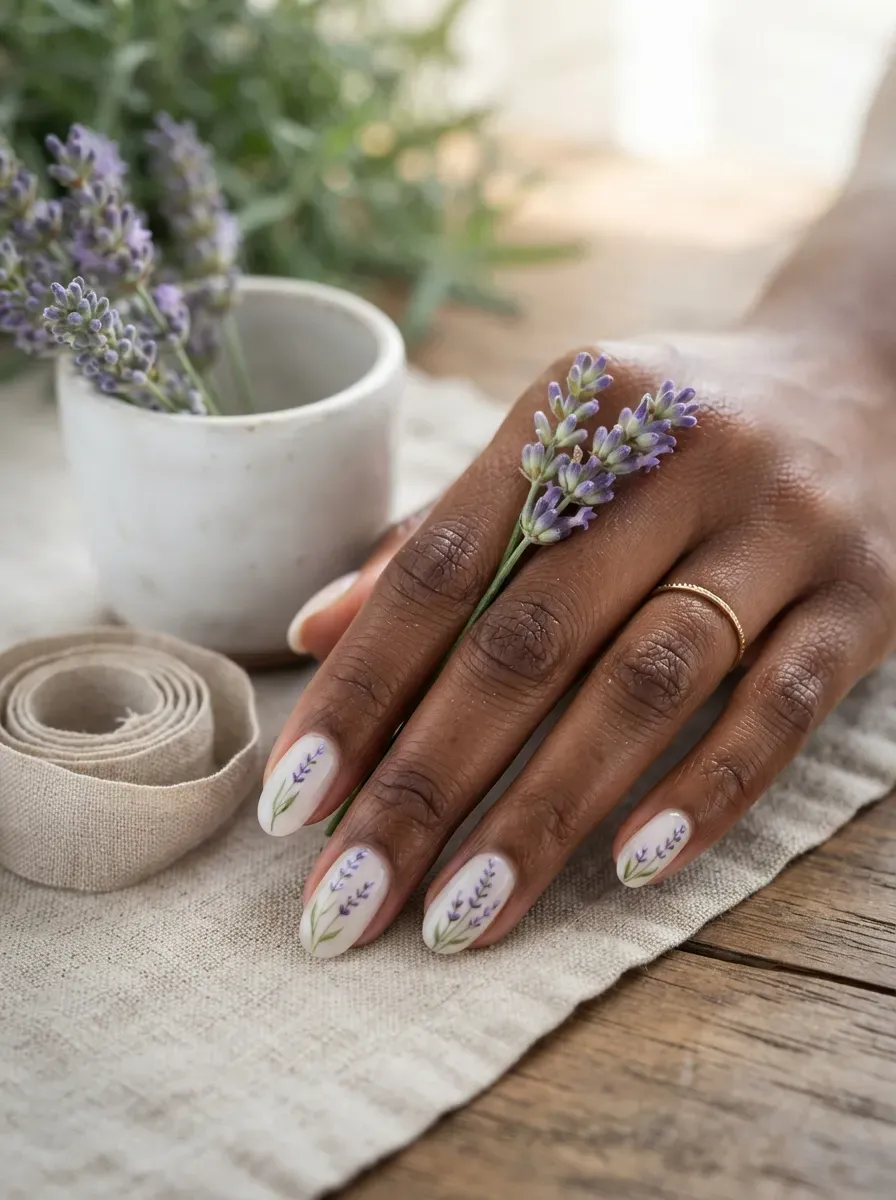
Milky white creates a clean background for detailed lavender sprigs because the stems remain visible without looking harsh.
Vertical botanical artwork also visually lengthens oval nails, making this useful on medium lengths. Sparse placement is important; too many stems can resemble a printed pattern.
Choose a translucent white rather than opaque correction-fluid white to preserve softness.
4. Pressed-Flower Lavender Jelly Nails

Encapsulated dried flowers create depth that painted art cannot quite mimic.
A lavender jelly base lets light pass through the manicure, so individual petals appear suspended rather than sitting flat on top. This technique works best with thin botanical pieces because bulky flowers create uneven structure.
Have the flowers completely sealed beneath builder gel before the final shaping.
5. Lavender Chrome Nails With White Blossoms
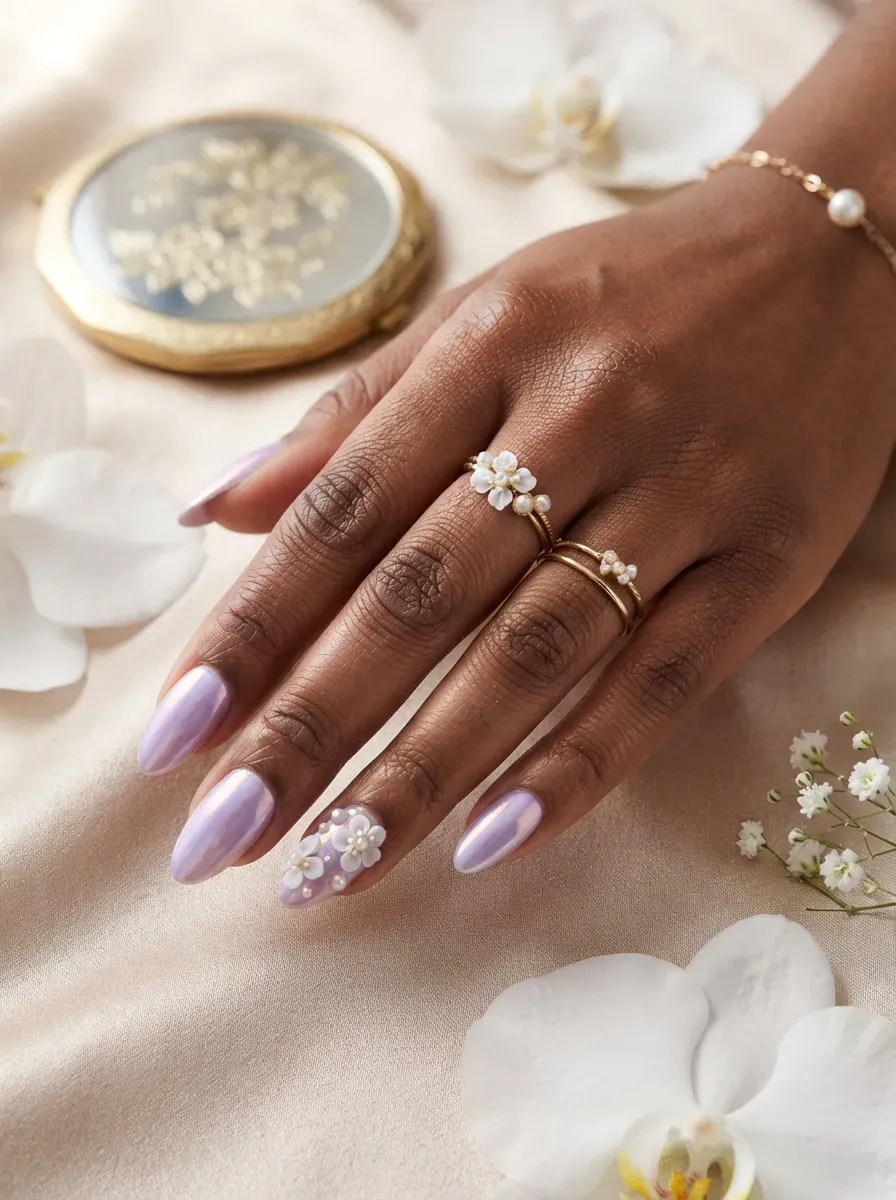
Pearlescent chrome changes lavender from soft pastel to reflective lilac, while small white blossoms stop the metallic finish from feeling overly futuristic.
Because chrome already draws attention, floral placement should stay restrained. Almond nails suit this combination by creating an uninterrupted reflective surface.
Protect the chrome carefully around flower details with a fully capped top coat, especially along the free edge.
Check out How to Remove Lint from Locs Without Causing Damage: A Gentle Care Guide for Healthy, Clean Locs
6. Short Lavender Nails With Corner Florals

Corner florals leave most of a short nail visually open, which prevents small nail beds from feeling crowded.
A creamy lavender base gives tiny white and violet blossoms enough contrast without requiring heavy outlines. Rounded shaping keeps the look practical for everyday wear.
Position flowers near different corners rather than repeating identical placement on every finger for a more natural composition.
7. Lavender Ombre Nails With Floating Petals
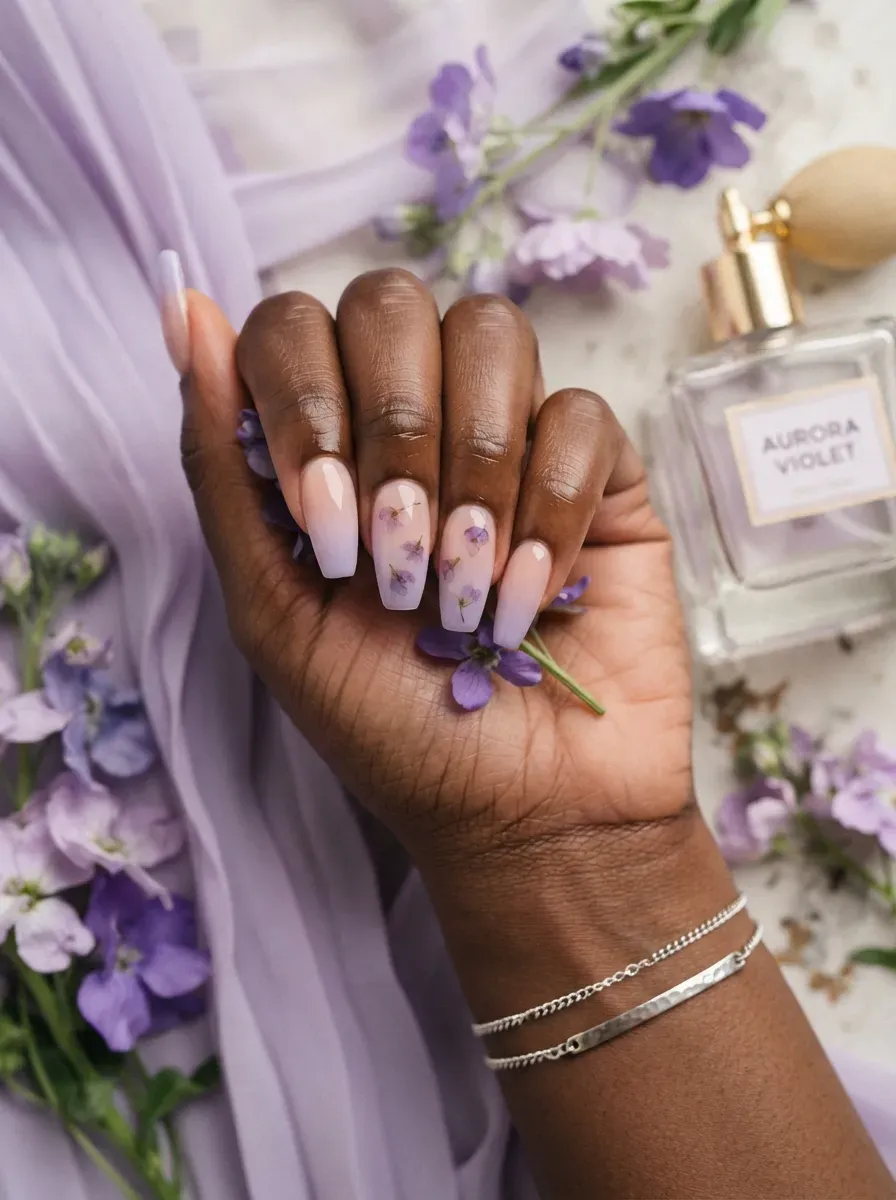
A nude-to-lavender ombre gives floral details a built-in sense of movement, especially when translucent petals are scattered through the fade.
Coffin nails provide extra room for the gradient without forcing the flowers into the center. Keep the petals semi-transparent so they blend into the ombre rather than covering it.
A sponge or airbrush fade should be completely smooth before floral work begins.
8. Matte Lavender Nails With Glossy Flowers

Using the same lavender shade in matte and gloss makes floral art visible through texture instead of extra color.
The effect feels understated from a distance but becomes more detailed as light moves across the nails. Square shapes give the glossy blooms a broad surface.
Apply the matte top coat first, then paint the flowers with no-wipe glossy gel to preserve the contrast.
9. Micro Lavender Florals on Nude Nails
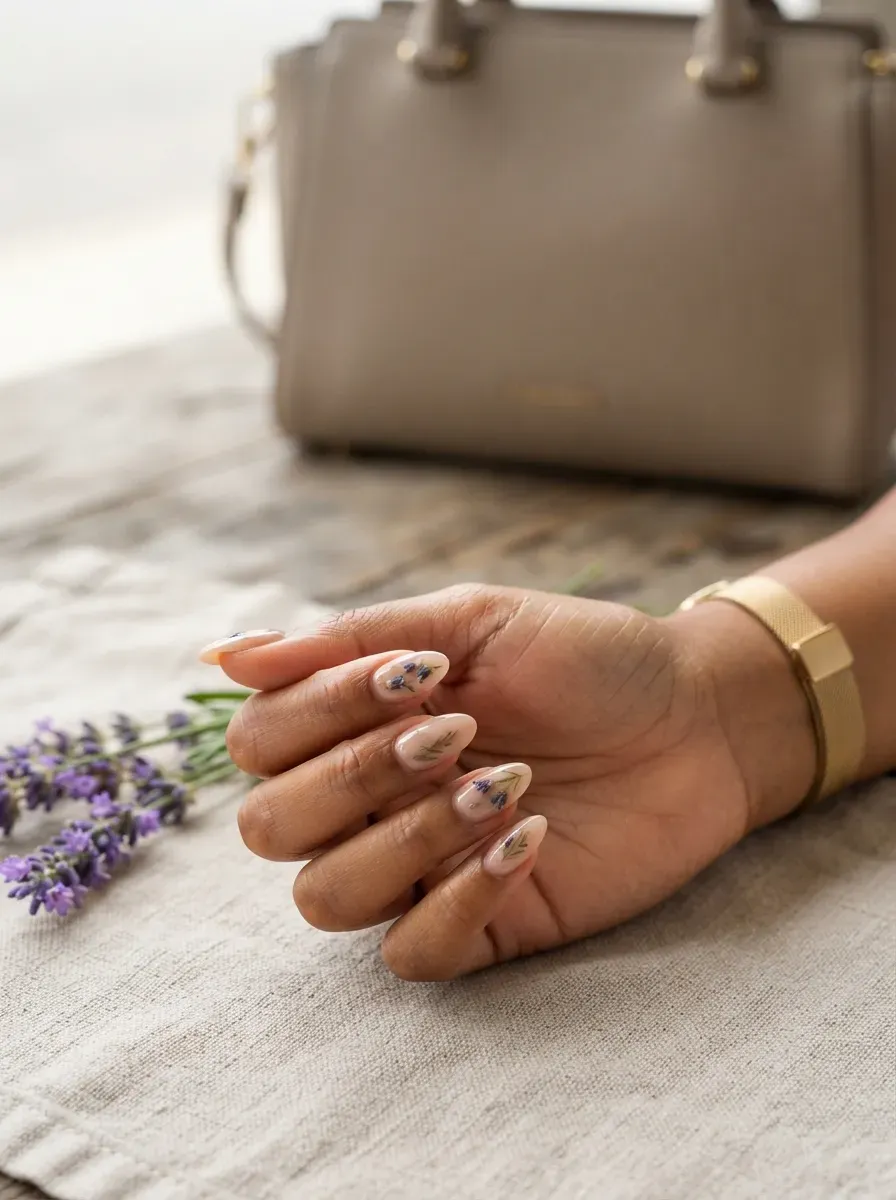
Micro florals work well when you want botanical detail without covering the natural-looking base.
Tiny lavender blossoms scattered over sheer nude polish read almost like embroidery, particularly on almond nails. Leaving generous blank space around each flower keeps the design sophisticated.
Ask your nail artist to use a liner brush rather than a dotting tool if you want distinct petals instead of simple dots.
See more 40 Short September Nails Ideas for the Perfect Early-Fall Manicure
10. Lavender Aura Nails With Daisy Details
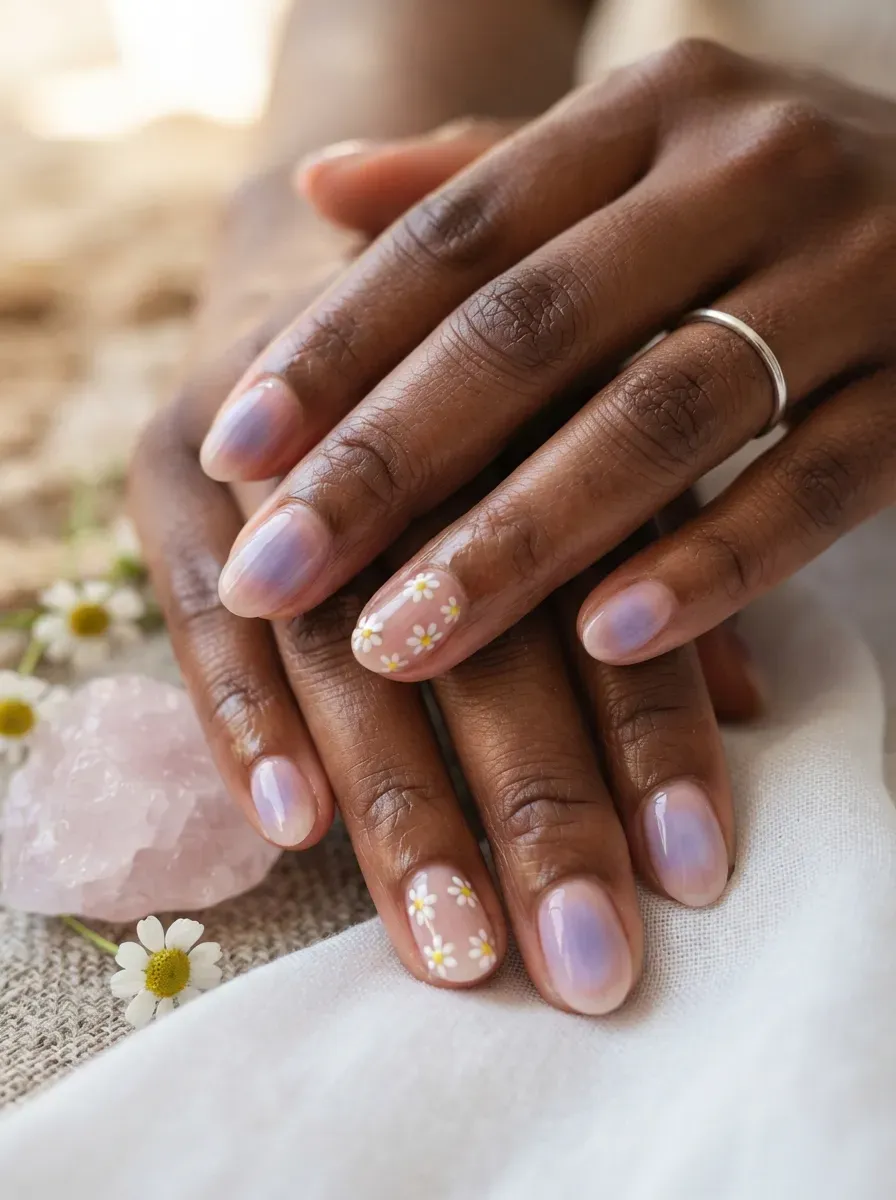
Aura shading creates a hazy lavender center that naturally pulls attention toward the middle of each nail.
Tiny daisies can then sit partially inside the blurred color without hiding the gradient. Oval nails support the circular movement particularly well.
Keep the flower centers small and crisp; oversized daisies can erase the soft airbrushed effect that makes aura nails distinctive.
11. Purple Watercolor Floral Nails
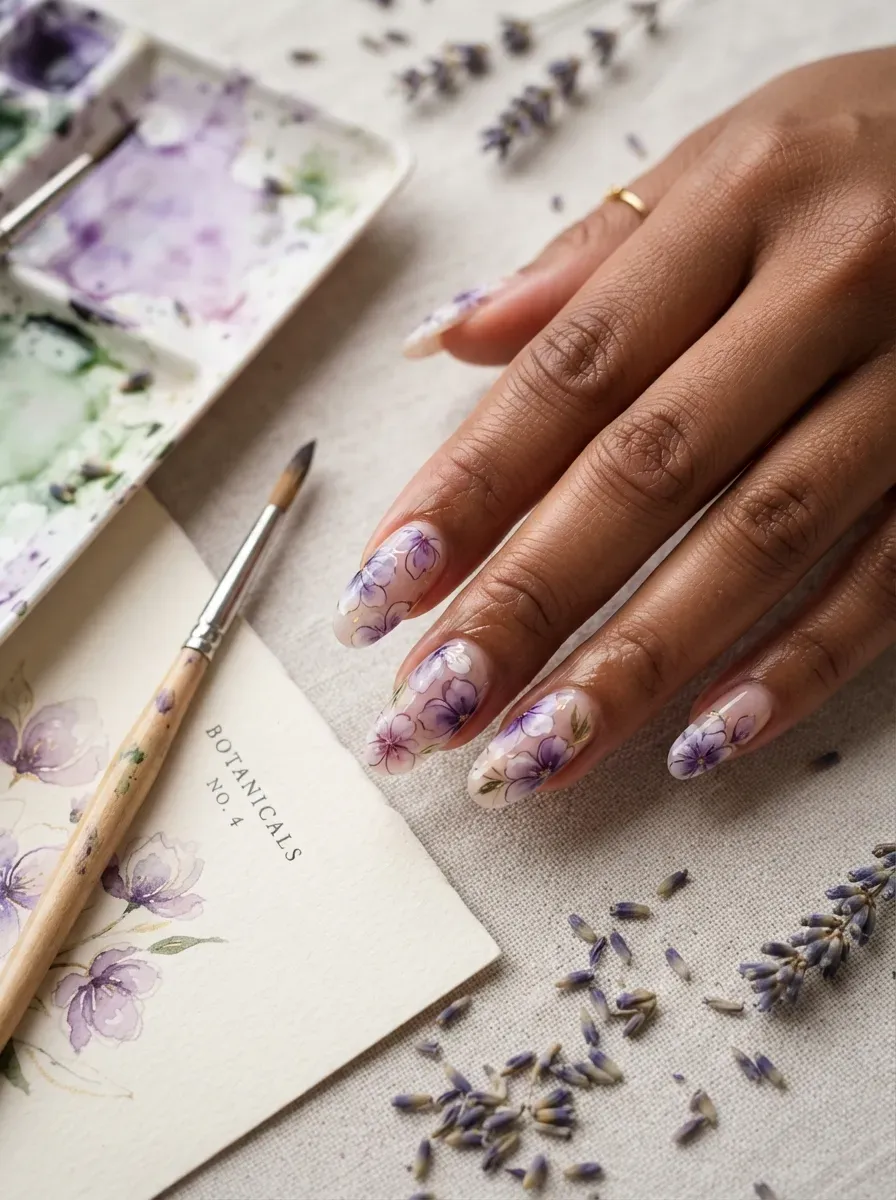
Watercolor florals rely on translucent layers rather than sharp outlines, giving lavender and deeper purple tones a soft painted effect.
Sheer blush underneath keeps the artwork airy and allows overlapping petals to remain visible. Longer oval nails provide enough space for irregular washes.
Cure each diluted color layer separately so the petals stay dimensional instead of blending into one purple patch.
12. Lavender Reverse French With Botanical Cuticles

Reverse French placement moves lavender toward the cuticle instead of the tip, creating an unusual frame for miniature flowers.
This layout works especially well on short almond nails because it leaves the free edge uncluttered. Botanical accents can follow the curved line naturally.
Leave a narrow gap between gel and skin so the detailed cuticle design grows out more cleanly.
13. Lilac French Tips With Daisy Chains
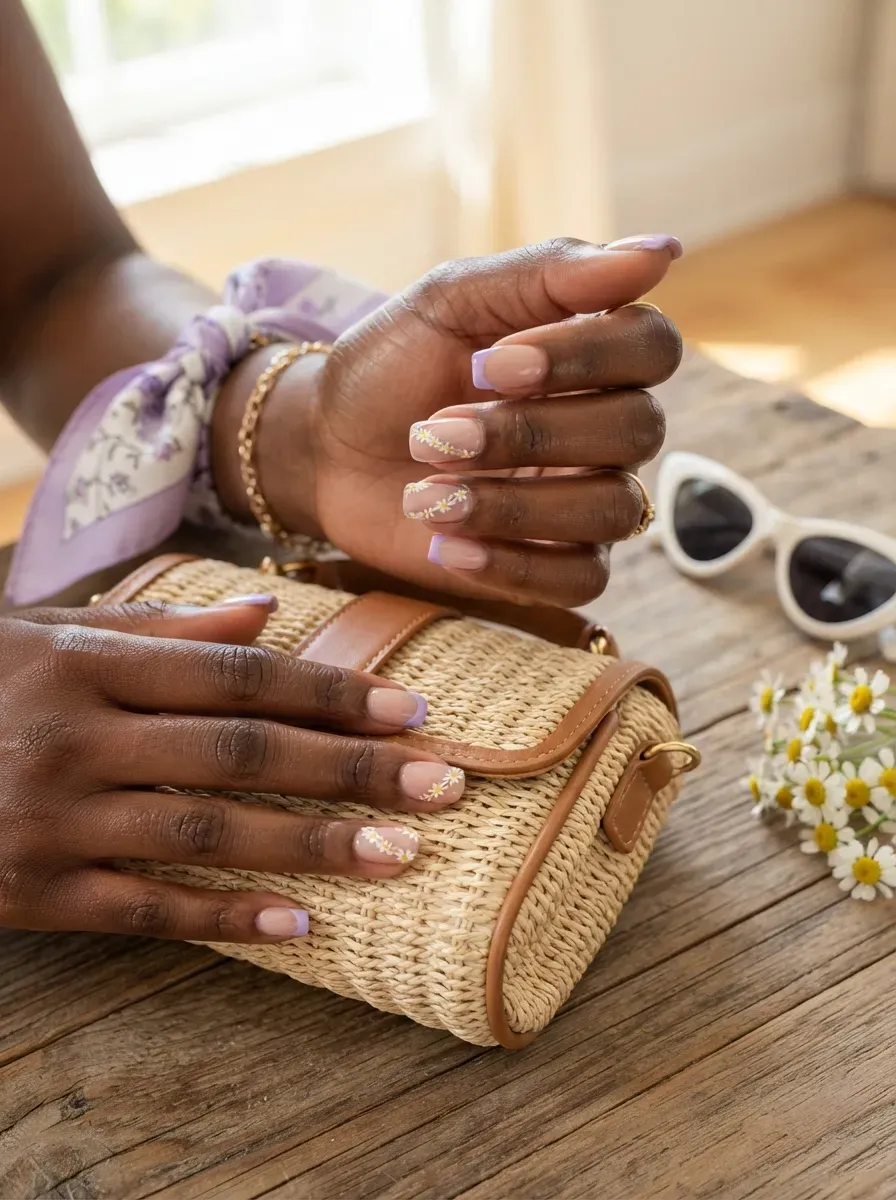
A daisy chain gives French tips a more playful structure than isolated flowers.
Lilac edges create a defined frame, while the diagonal floral line breaks up the symmetry across one or two accent nails. Medium square nails give both elements enough width to stay distinct.
Keep the daisy chain slightly irregular so it resembles hand-painted botanical art rather than a sticker strip.
14. Lavender Negative-Space Floral Nails
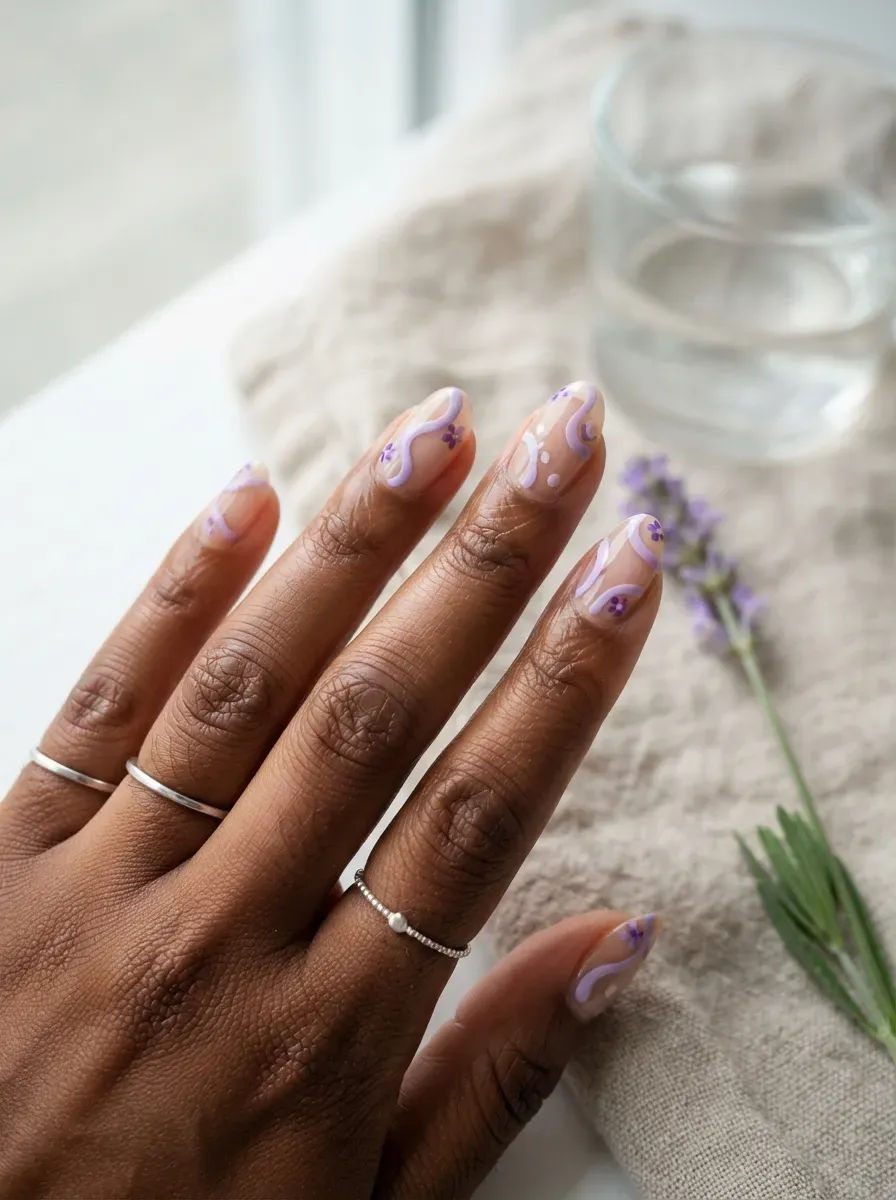
Negative space makes floral nails feel lighter because some of the natural nail remains intentionally exposed.
Curved lavender sections can frame tiny flowers without coating the entire surface. Almond nails make those open areas appear elongated rather than unfinished.
Use a clear or lightly tinted base beneath the artwork, since visible staining or uneven natural color becomes more obvious in negative-space designs.
Read on Fall French Tip Nail Colors to Try Instead of White
15. Raised 3D Lavender Petal Nails

Sculpted gel petals turn a lavender manicure into true textured nail art.
Because raised flowers already add volume, limiting them to one or two nails keeps the set wearable and prevents snagging. Long tapered square nails provide enough surface for layered petals and pearl centers.
Keep the 3D flowers away from sidewalls and tips if you regularly work with your hands.
16. Lavender Floral Half-Moon Nails

Half-moon placement concentrates the floral art near the base of the nail, leaving lavender polish to dominate the rest.
The small unpainted crescent also disguises early regrowth better than color taken directly to the cuticle. Oval nails keep the curved detail balanced.
Match the half-moon curve to the natural cuticle line instead of forcing identical arcs onto every finger.
17. Dusty Lavender Nails With Wildflower Art
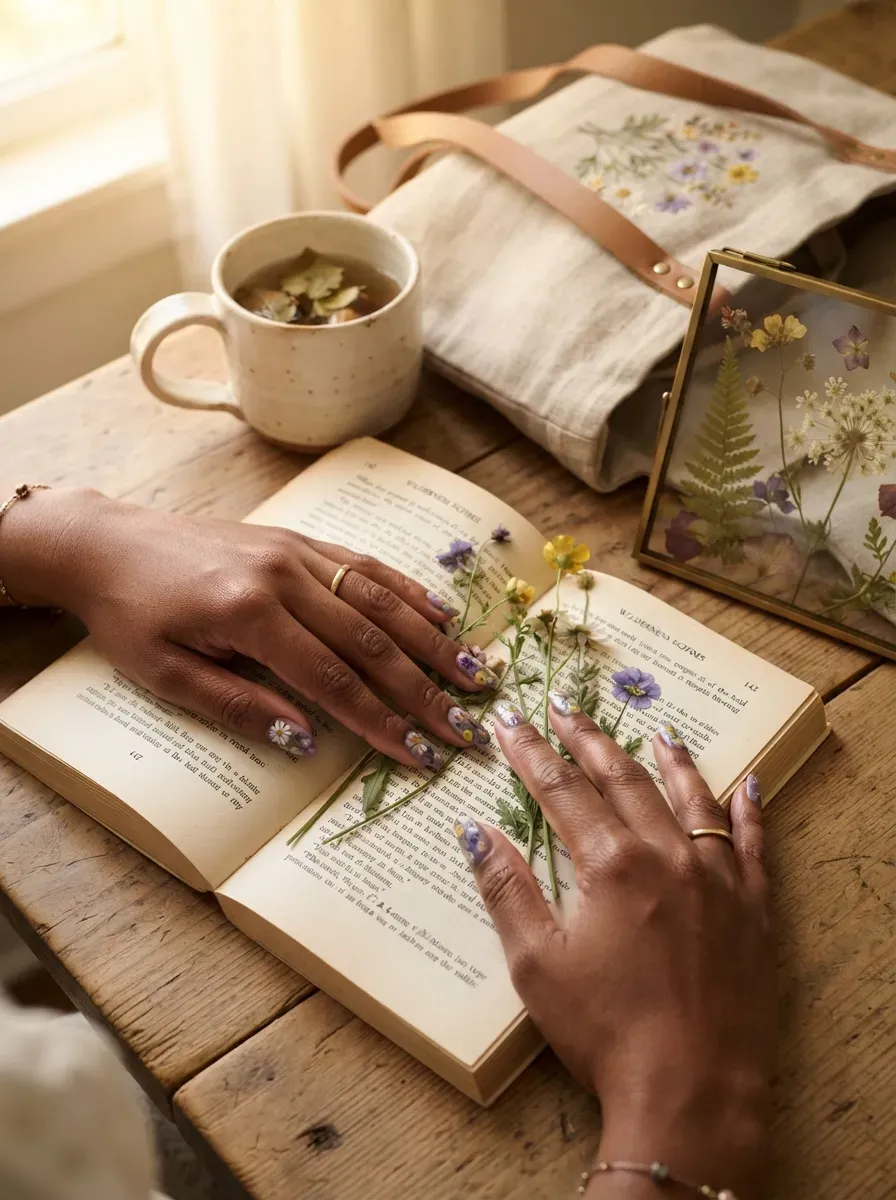
Dusty lavender has enough gray in it to make multicolored wildflowers feel mature rather than sugary.
Fine stems in sage, cream, muted yellow, and violet introduce variation while keeping the base dominant. Almond nails provide a natural canvas for vertical botanical arrangements.
Ask for different flower heights on each nail; identical stem placement can make hand-painted wildflowers look stamped.
18. Lavender Cat-Eye Nails With Floral Silhouettes

Magnetic cat-eye polish creates a shifting band of lavender light, so floral silhouettes need to stay simple enough not to compete with the reflection.
Dark violet stems and petals add definition while remaining in the same color family. Longer oval nails show the magnetic effect clearly.
Set the magnet before painting flowers; adjusting it afterward can disturb detailed artwork.
See also Natural French Tip Nail Ideas That Look Effortless
19. White French Nails With Lavender Flower Tips

Classic white French tips become more decorative when tiny lavender blossoms overlap the edge rather than sitting in the center of the nail.
The flowers soften the graphic white line while preserving a formal finish. Almond shaping keeps the clusters graceful.
Place floral accents on alternating tips so the manicure does not become visually heavy when viewed with rings or formal accessories.
20. Lavender Floral Stiletto Nails With Vines
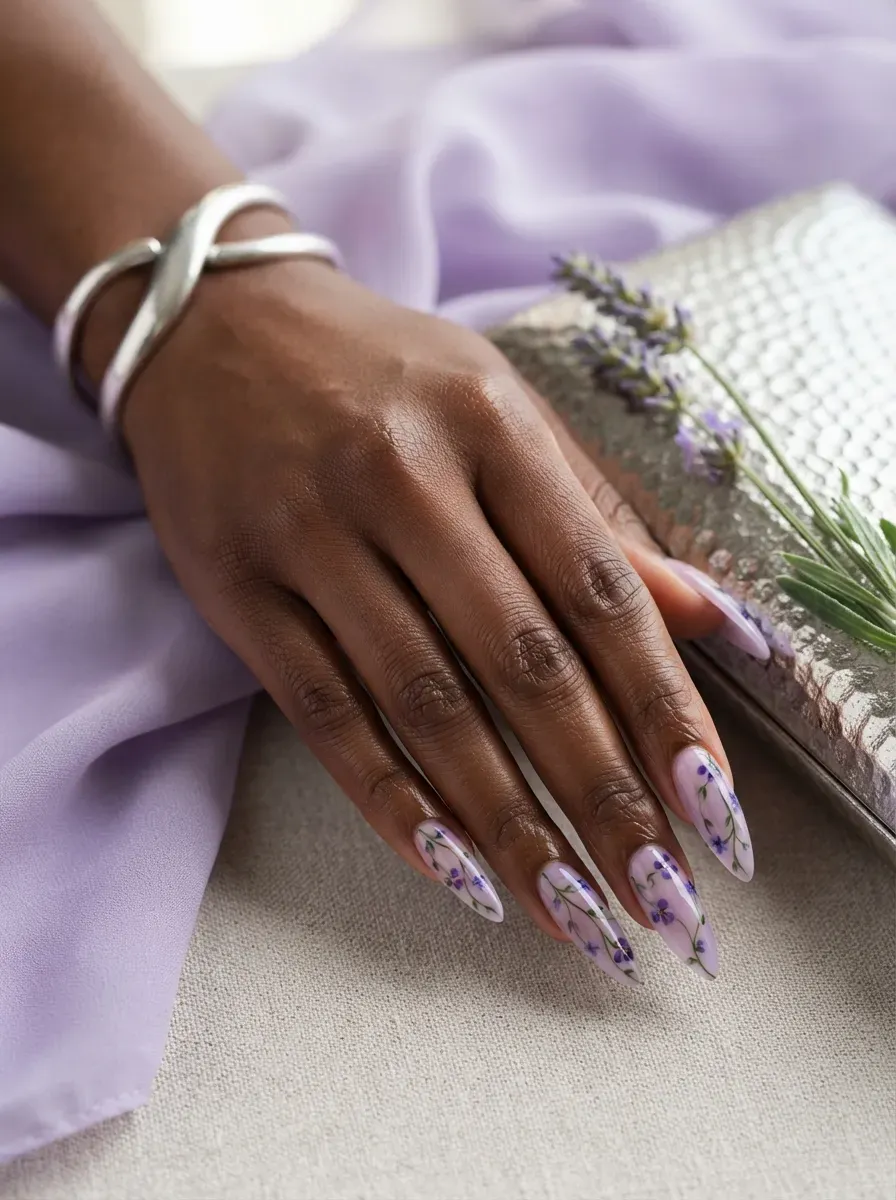
Long stiletto nails naturally emphasize vertical artwork, making trailing vines especially effective.
A translucent lavender base keeps the pointed shape from appearing visually heavy, while fine green stems guide the eye from cuticle to tip. Small flowers work better than large blooms on this silhouette.
Reinforce the apex properly before detailed art, since long pointed nails need structural support first.
21. Lavender Marble Nails With Floral Line Art
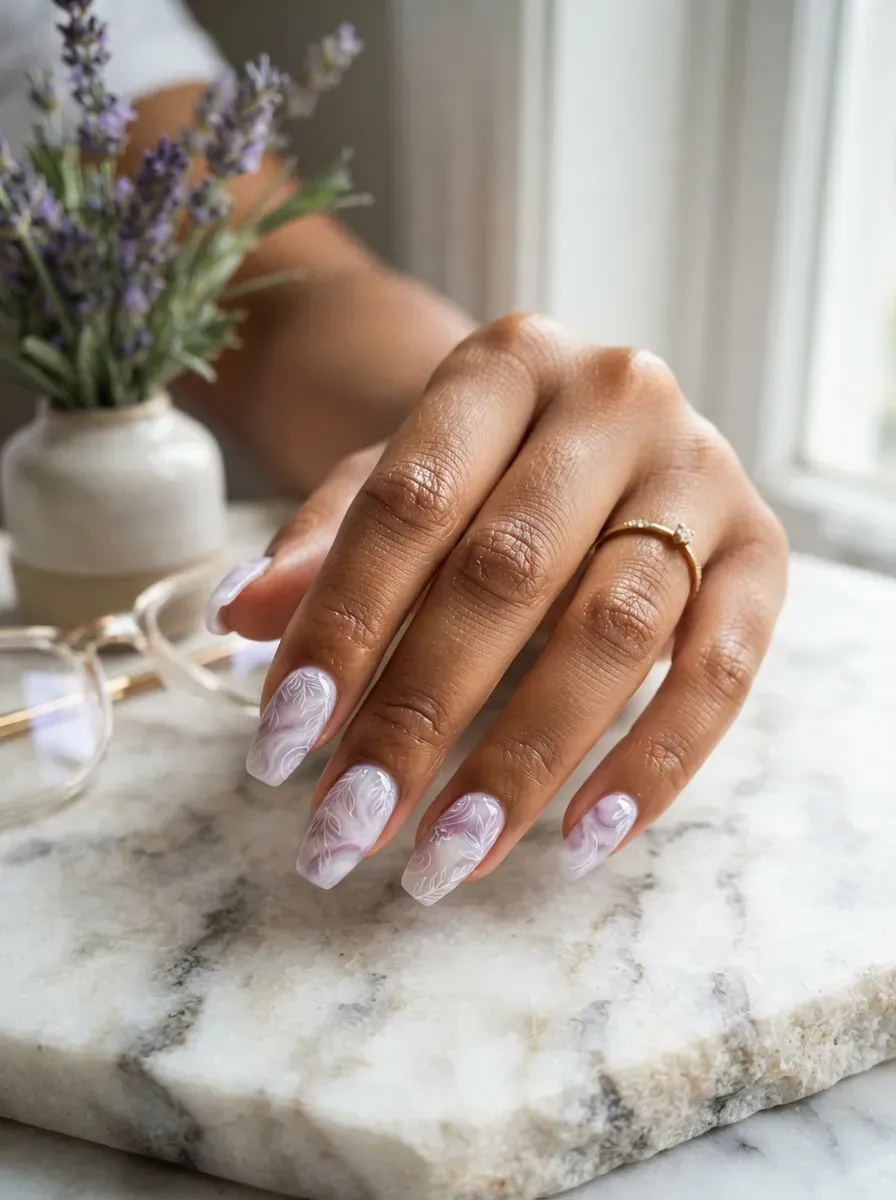
Lavender marble provides movement beneath simple botanical line drawings, creating detail without relying on several bright colors.
White floral outlines remain visible over the purple veining but still feel delicate. Coffin nails offer room for the marble to vary naturally from finger to finger.
Keep the marble pattern loose; too many thin veins can compete with the floral lines layered above.
22. Lavender Glitter Nails With Floral Cutouts

Fine glitter can make lavender floral nails feel celebratory without relying on rhinestones.
Clear flower-shaped cutouts interrupt the sparkle and give the design a more graphic structure. Almond nails keep the negative-space blossoms from looking blocky.
Use fine shimmer rather than chunky glitter around the cutouts, because large particles make clean floral edges much harder to achieve.
23. Soft Lilac Nails With Tulip Art

Tulips give lavender nails a recognizable floral motif without the roundness of daisies or roses.
Their elongated petals complement oval nails particularly well, and soft pink or violet tulips sit naturally over lilac polish. Limiting the artwork to two fingers keeps the stems distinct.
Request slender green lines with visible gaps between leaves so the design does not turn visually muddy.
Save for later Neutral September Nails: 40+ Chic Ideas for the Summer-to-Fall Transition
24. Lavender French Fade With Floral Foil
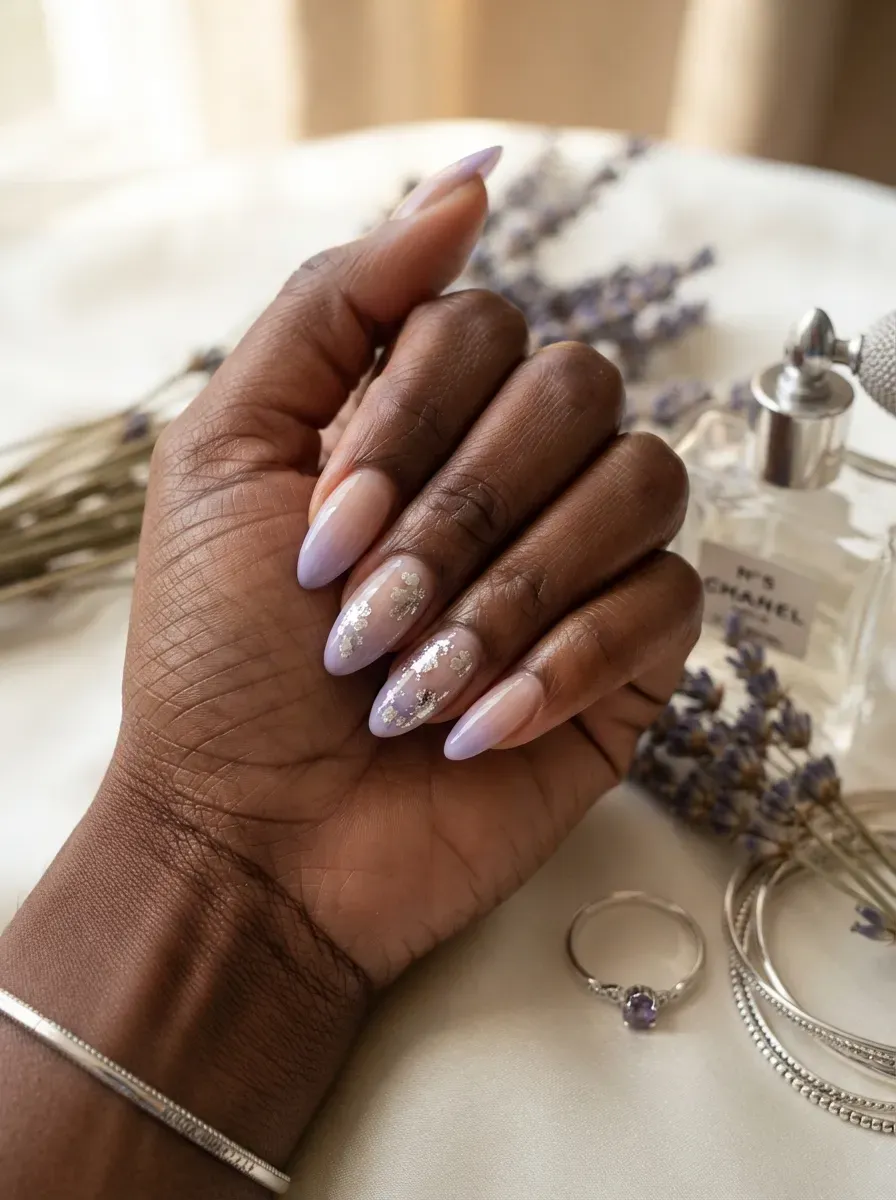
A lavender French fade gives metallic floral foil a softer setting than full opaque polish.
Irregular silver fragments catch light around the blossoms without creating the bulk of gems or charms. Long almond nails make the gradient transition easy to see.
Press foil into a thin tacky layer and seal the edges carefully, since exposed foil corners tend to lift first.
25. Lavender Roses on Short Square Nails
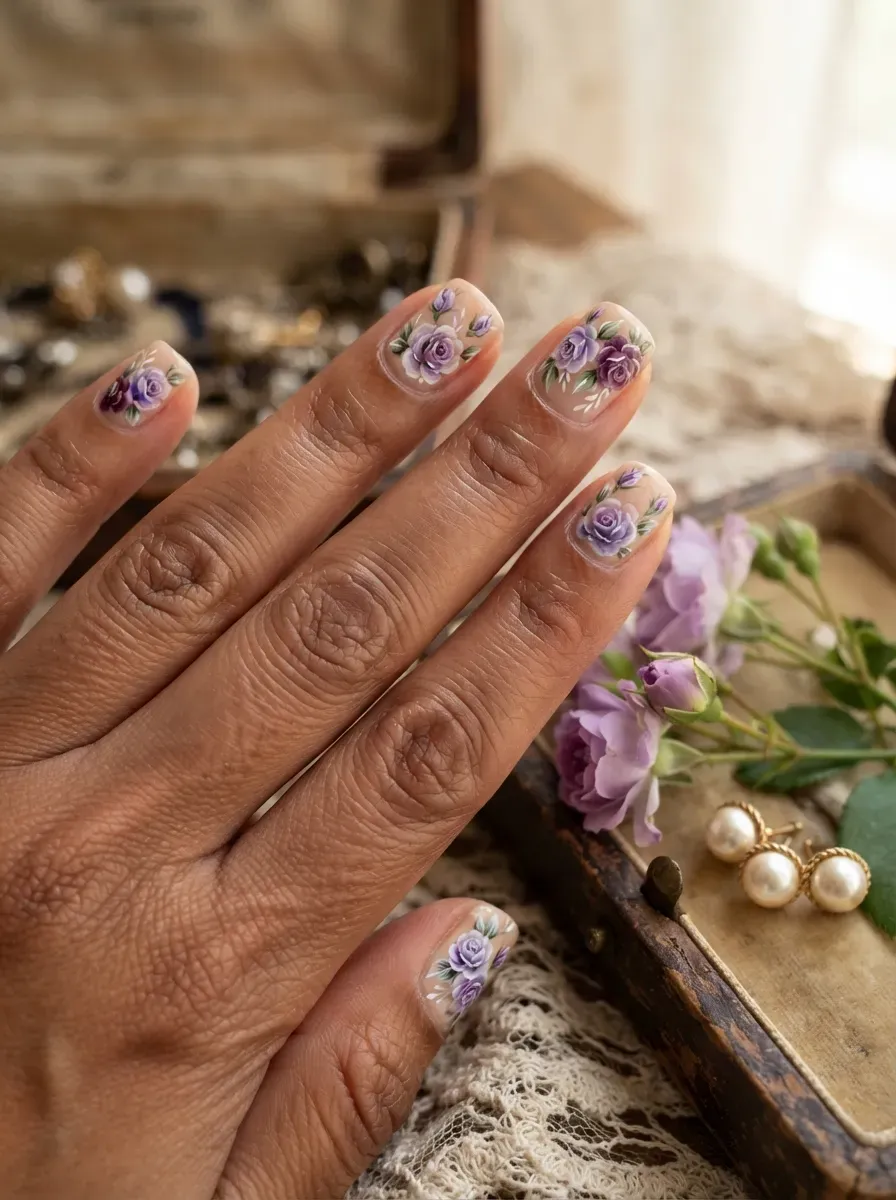
Roses can work on short square nails when the petals are painted compactly instead of trying to reproduce large layered blooms.
A nude base gives lavender petals enough separation from the surrounding nail. Darker purple centers add depth without extra bulk.
Place the largest rose slightly off-center and keep nearby leaves minimal so the short surface still has visible breathing room.
26. Lavender Floral Nails With Gold Leaf

Gold leaf warms up cool lavender and makes white floral details appear richer without changing the basic palette.
Irregular fragments look more refined than perfectly shaped metallic pieces because they sit naturally between petals and leaves. Almond nails handle the combination without appearing crowded.
Use only tiny flecks near the flowers; large foil patches can distract from the hand-painted botanical work.
27. Pastel Lavender Nails With Baby’s-Breath Florals
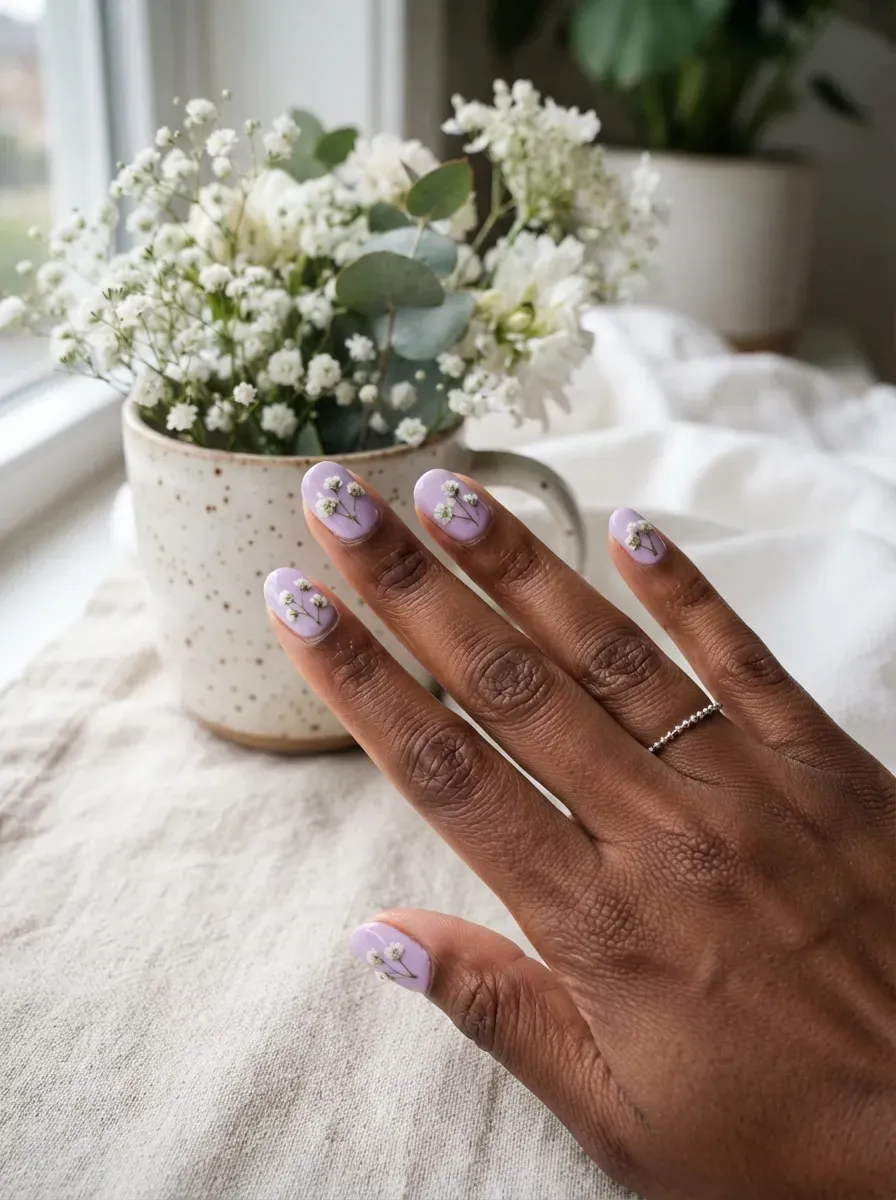
Baby’s-breath flowers create a lighter pattern than full daisies because each bloom is only a few tiny white marks.
Against pastel lavender, the delicate clusters look detailed without making rounded nails feel busy. Fine stems add direction and help separate the blossoms.
Choose an off-white flower color rather than stark white if you want the finished manicure to remain especially soft.
28. Lavender Floral Nails With Pearl Centers
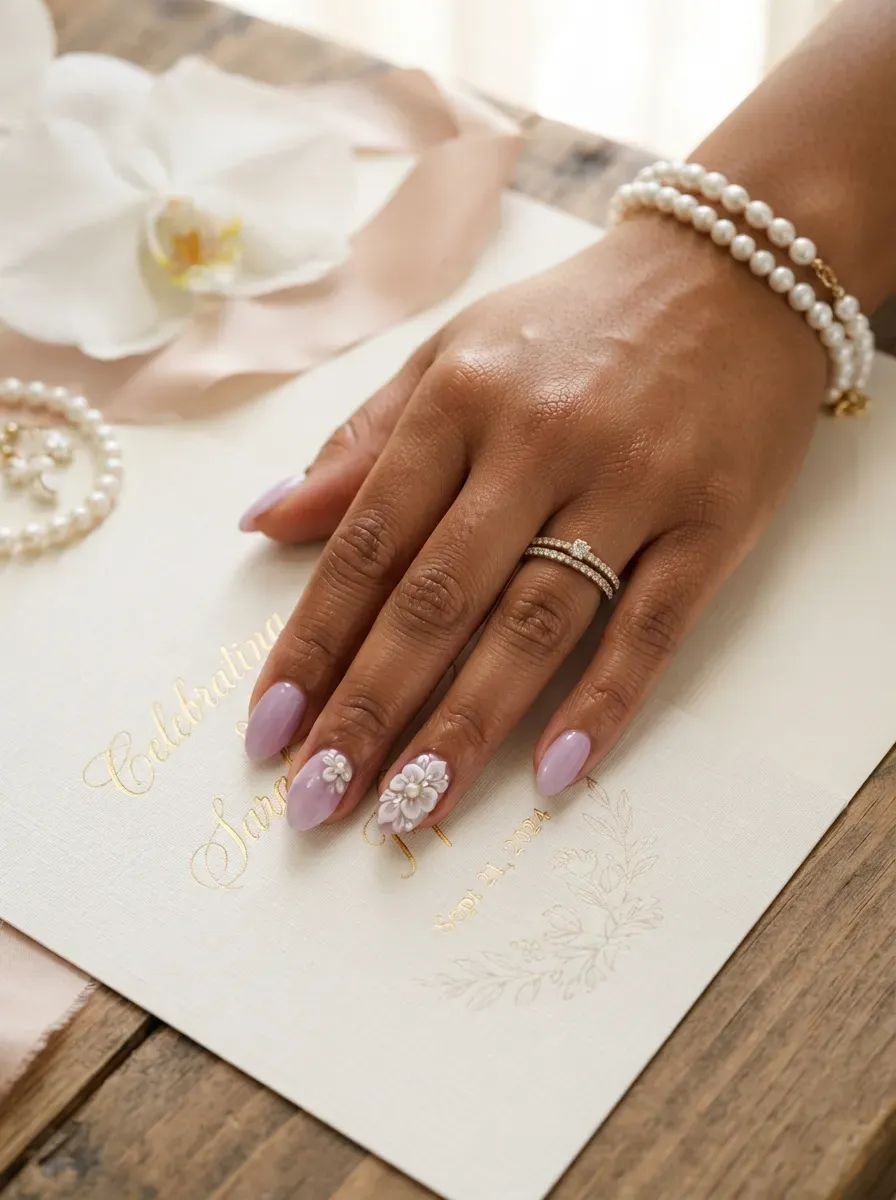
Tiny pearl centers add dimension to floral nails without covering the shape of the petals.
A sheer lavender base keeps the manicure light enough for weddings and dressier events, while white flowers preserve contrast. Almond nails provide a graceful frame for the embellishments.
Secure pearls with thick clear gel around, not over their base so they remain dimensional while reducing premature lifting.
See now Minimalist Loc Accessories for the Office Every Professional Woman Needs
29. Lavender Gingham Nails With Mini Florals
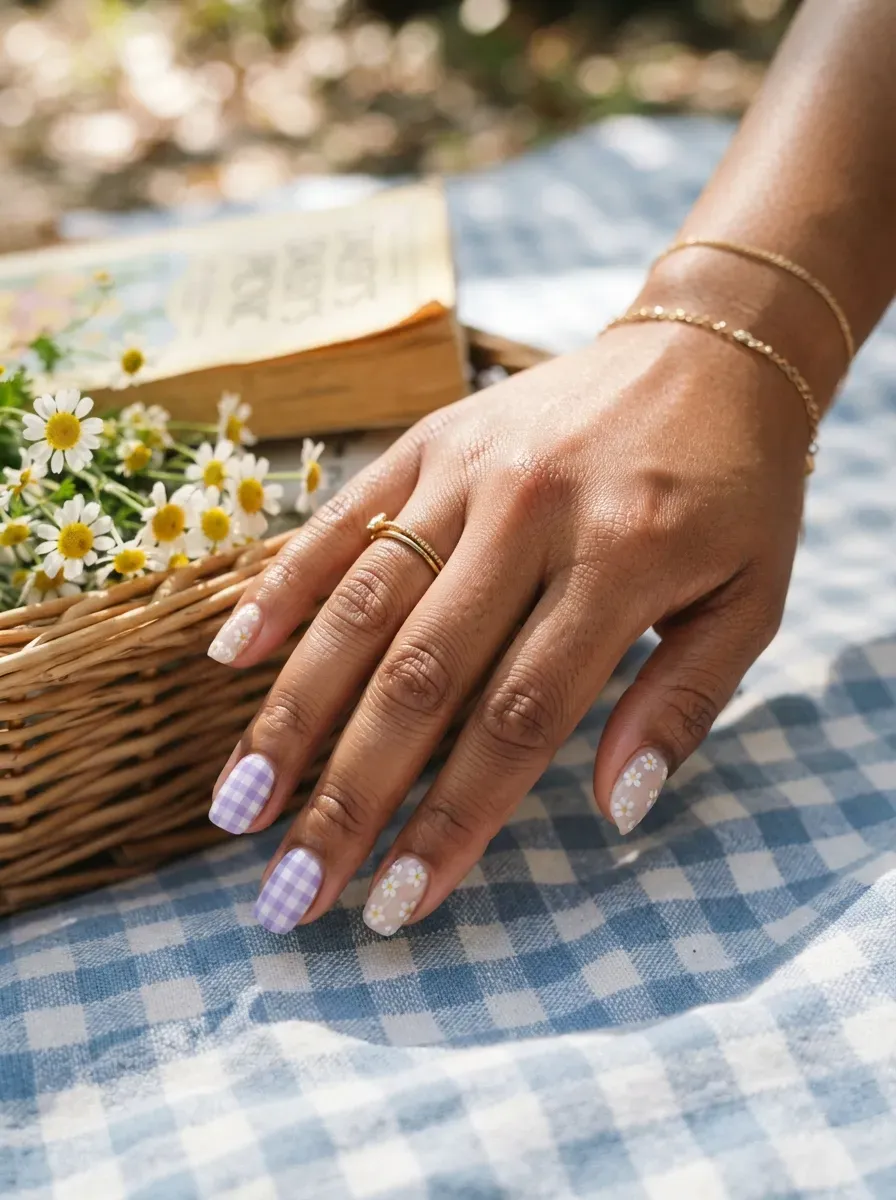
Gingham introduces a geometric pattern that makes tiny florals feel more playful rather than purely romantic.
Alternating checked nails with small white blossoms prevents either motif from dominating. Squoval nails suit the grid because the straighter free edge echoes the pattern.
Keep gingham lines thin and slightly translucent; thick opaque stripes can make the manicure look heavier than the floral accents.
30. Lavender Botanical Nails With Sage Leaves
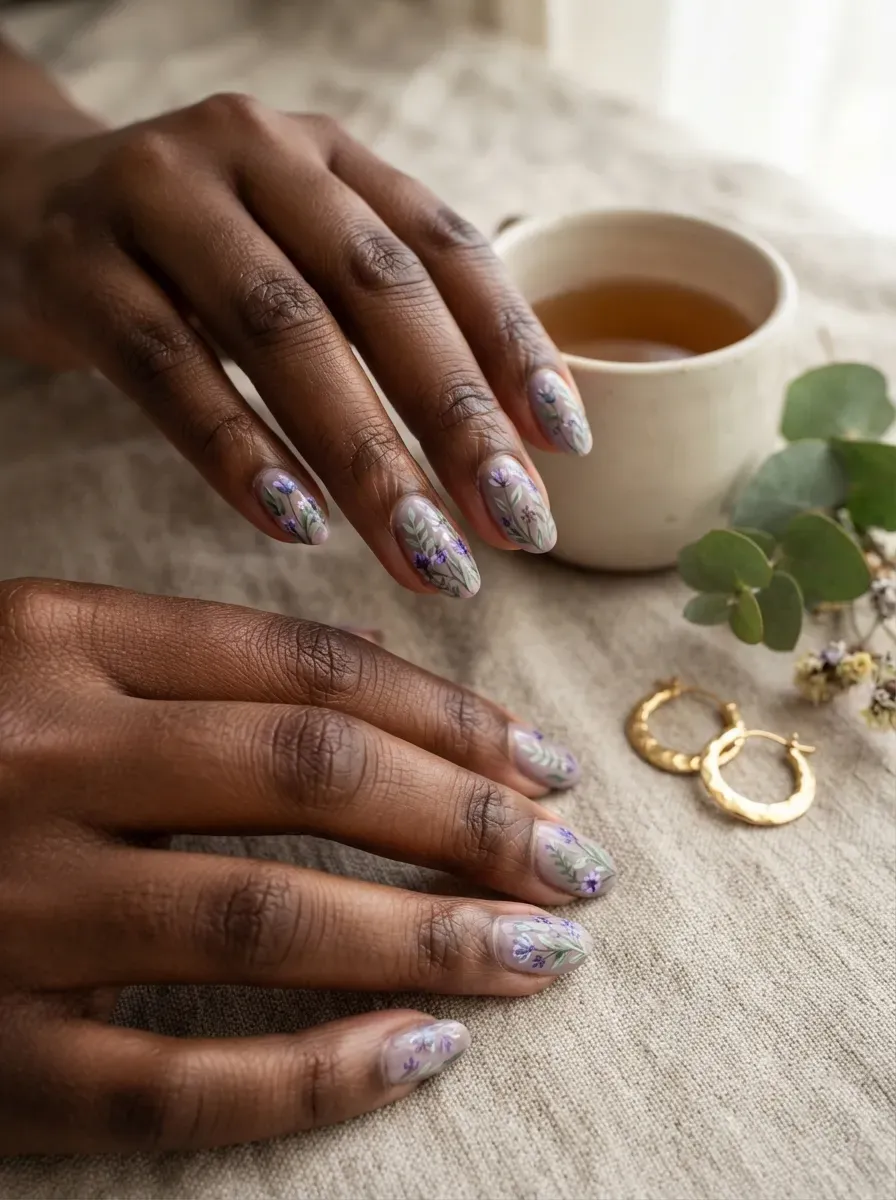
Sage leaves mute lavender’s sweetness and give floral nail art a more earthy color story.
Loose botanical clusters work especially well on oval nails because the curved shape complements natural stems. Using two subdued colors also makes the design easier to coordinate with neutral clothing.
Mix warm and cool greens sparingly; one consistent sage tone will keep the set from becoming visually scattered.
31. Lavender Blossom French Outline Nails

An outline French uses only a thin lavender border, leaving the center of the tip transparent.
Small blossoms placed near the sidewall connect the floral art directly to that line instead of floating separately. Almond shapes make the narrow outline especially graceful.
Keep the French line consistent in thickness, because uneven outlining becomes more noticeable when most of the nail remains sheer.
32. Lavender Lace Floral Nails

Lace-inspired flowers use fine lines, dots, and curved petal shapes rather than solid blocks of color.
A translucent lavender base lets those white details stay delicate even when several motifs share one nail. Longer oval nails give the pattern room to breathe.
Keep some sections completely sheer or undecorated so the lace effect looks intricate rather than dense.
33. Lavender Floral Nails With Silver Stars
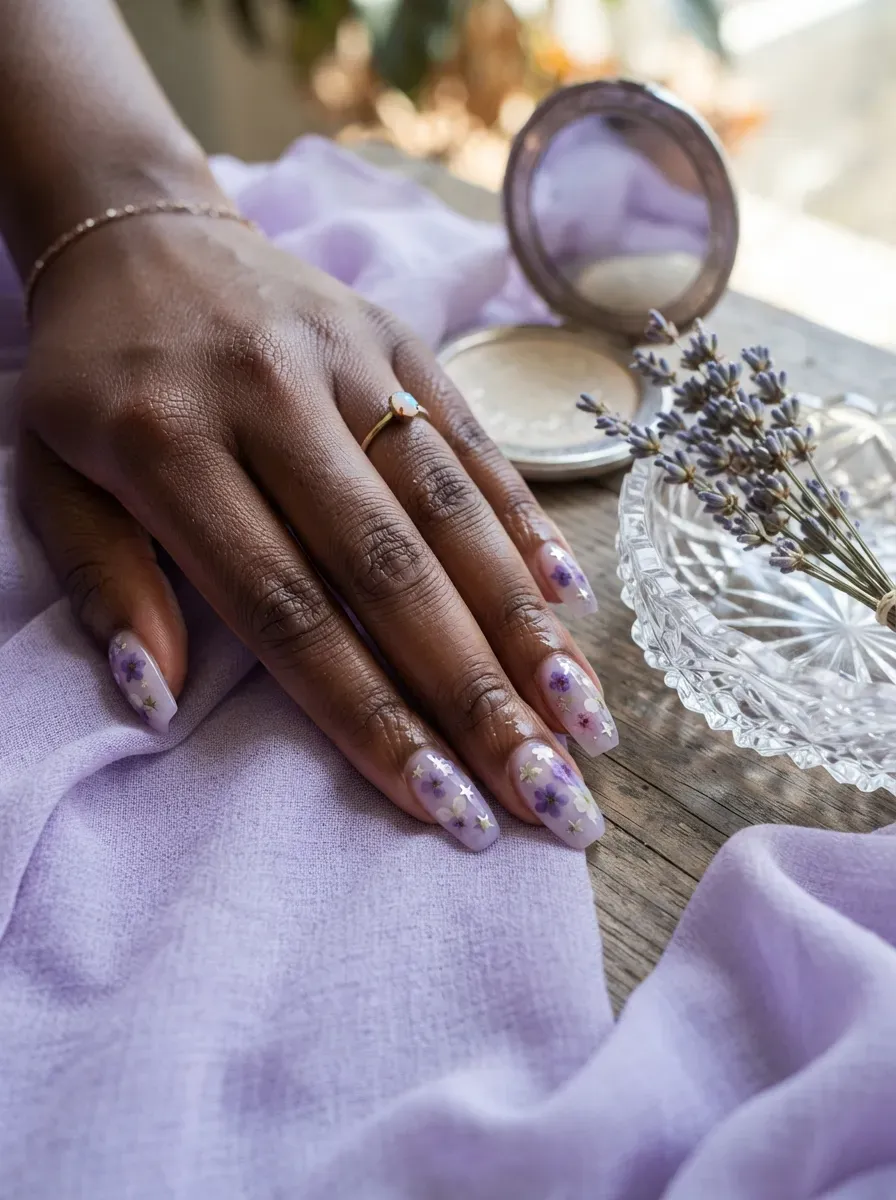
Tiny silver stars introduce a celestial detail without turning the manicure into a completely different theme.
Lavender and violet flowers keep the botanical focus, while metallic accents fill selected gaps between blossoms. Coffin nails provide enough area to separate both motifs.
Use stars sparingly near the outer edges rather than placing them directly over petals, where the shapes can become difficult to distinguish.
See more Modern and Chic Christmas Nails Ideas for Women to Elevate Your Festive Style
34. Lavender Garden Nails With Butterfly Accents

Butterflies work best as supporting details rather than the centerpiece of a floral manicure.
A sheer lavender base, small garden flowers, and fine green foliage create the setting, while one or two butterflies provide movement. Long almond nails offer enough space for the miniature scene.
Keep butterfly wings simple and small so they remain readable without overpowering the botanical elements beneath them.
35. Deep Lavender Floral Nails With Plum Blooms
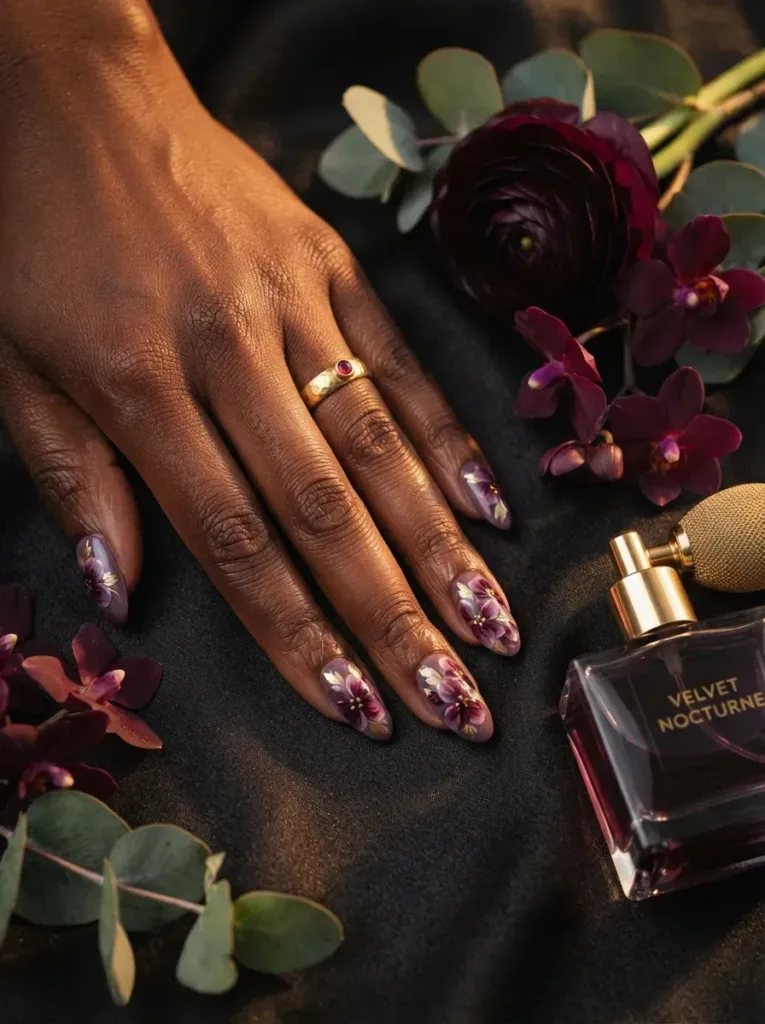
Deep lavender proves floral manicures do not have to stay pale or springlike.
Plum blossoms layered over the darker base create tonal depth, while tiny metallic leaves separate individual petals. Medium almond nails keep the rich colors elegant instead of overly dramatic.
Use a slightly lighter purple for the outer petals so the floral shapes remain visible against the deep background.
Choosing the Right Lavender for Your Skin Undertone
Lavender can look noticeably different once it is placed against skin, so choosing the undertone matters more than simply picking the palest or darkest bottle.
Cool lavenders containing a little blue tend to look crisp against cool or neutral undertones. On warmer complexions, dusty lavender, mauve-lavender, lilac with a touch of pink, or purple balanced with warm gold details often creates a smoother transition.
Depth matters too. A very pale pastel can produce strong contrast on deep skin, which is striking when that is the intention. Medium and rich lavender shades usually feel more blended and saturated, especially when paired with burgundy, plum, gold, or sage.
Sheer bases are the easiest option when you are uncertain. They allow some natural nail color to show through, reducing the risk that lavender looks chalky.
For hand-painted florals, remember that the base and artwork need enough contrast to remain visible. If both are purple, vary their value: pair pale lavender with plum flowers or deep lavender with lilac petals rather than using nearly identical shades.
Continue reading Long French Tip Nail Designs That Turn Heads
How to Keep Detailed Floral Nail Art From Looking Too Busy
Floral manicures become crowded when every nail contains the same amount of detail.
A better approach is to establish one or two focal nails, then simplify the rest of the set. For example, a fully painted lavender rose can sit on the ring finger while neighboring nails use French tips, micro blossoms, or plain lavender polish.
Scale is just as important as quantity. Short nails usually benefit from corner flowers, tiny daisies, half-moon botanicals, or one small stem because these arrangements preserve visible background.
Longer almond, coffin, and stiletto nails can carry vines, watercolor washes, layered roses, or multiple flowers without losing definition.
Color restraint also helps. Lavender already gives the manicure a clear identity, so adding six unrelated flower colors is rarely necessary. White, plum, sage, soft pink, or muted yellow are easier supporting shades.
Before curing hand-painted gel, look at the whole hand rather than inspecting each nail individually. If all five fingers compete equally for attention, remove one or two details before curing.
The manicure should read as one coordinated set, not five miniature paintings fighting for space.
Making Raised Flowers, Pearls, and Foil Last Longer
Dimensional floral details need different care from flat painted art.
Sculpted gel petals, pearls, and metallic foil all create edges that can catch on hair, clothing, and bags if they are not properly sealed. Placement makes the biggest difference.
Raised elements survive better when they sit closer to the center of the nail rather than directly along sidewalls or the free edge.
Pearls and small embellishments should be anchored with a thicker clear gel around their base. Completely burying them under top coat can flatten their appearance, while leaving the base exposed increases the chance of lifting.
Sculpted flowers need adequate curing between layers so soft gel is not trapped underneath overlapping petals.
Foil requires a different approach. Press it flat, smooth raised corners, then cap the entire nail carefully.
Daily habits matter as well. Avoid using long decorated nails to pry open packaging or scrape labels.
Cuticle oil will not secure embellishments, but keeping the surrounding skin and nail flexible helps reduce unnecessary stress around the enhancement as it grows.
Which Nail Shape Works Best for Lavender Florals?
Almond and oval nails are the most forgiving shapes for botanical artwork because their curved edges naturally follow petals, vines, and stems.
They also offer useful length without the corners of square or coffin nails, making them easier to wear when floral art is already visually detailed.
Short round and squoval nails work well with micro florals, corner blossoms, tiny daisies, and narrow French designs.
Rather than shrinking an elaborate long-nail design onto a small surface, simplify the placement. One flower with two leaves often looks more intentional than five miniature blooms squeezed together.
Coffin and tapered square shapes provide broad surfaces for ombre, chrome, marble, encapsulated flowers, and 3D art. Their wider middle area allows different techniques to sit beside each other without losing clarity.
Stiletto nails favor artwork that follows the length of the nail. Vines, tapered stems, and scattered petals emphasize the pointed silhouette better than wide flowers across the tip.
Choose shape before deciding artwork placement. A design planned around the actual nail silhouette almost always looks cleaner than artwork adapted after shaping is finished.
What to Ask for at the Salon When You Want Hand-Painted Florals
Bring a reference that shows more than the flower itself.
Your nail artist needs to see the base opacity, nail shape, flower size, placement, finish, and how many fingers carry detailed art. Saying “lavender floral nails” can describe dozens of completely different manicures.
Be specific about whether you want flat gel painting, encapsulated dried flowers, stickers, decals, 3D gel petals, or hand-painted artwork. These techniques require different appointment times and produce different textures.
Detailed miniature flowers usually take longer than simple dot-petal daisies, while sculpted flowers add another level of work.
Ask for a color comparison before the manicure begins if you are unsure about lavender undertones. Seeing two or three swatches beside your skin is more useful than judging the bottle alone.
For intricate designs, decide which elements matter most. If you need to reduce salon time or cost, keep full floral art on two accent nails and use lavender polish or French tips elsewhere.
That preserves the concept without requiring detailed painting on every finger.
Lavender florals can shift from barely-there to dramatic simply by changing the base, length, and amount of artwork.
Short nails usually look cleanest with micro flowers, corner details, or French accents, while longer shapes can handle vines, watercolor petals, chrome, and layered 3D work.
Pale or sheer lavender creates a lighter mood; plum and deep lavender feel richer. For weddings or work, keep the flowers sparse and the finish polished.
If low maintenance matters most, avoid raised embellishments and choose designs with visible nude space near the cuticle.
The best choice is the one that matches both your preferred mood and how realistically you use your hands each day.