Learn How to Remove Lint from Locs Without Causing Damage: A Gentle Care Guide for Healthy, Clean Locs.
You are checking your locs in the mirror one morning. Everything looks good.
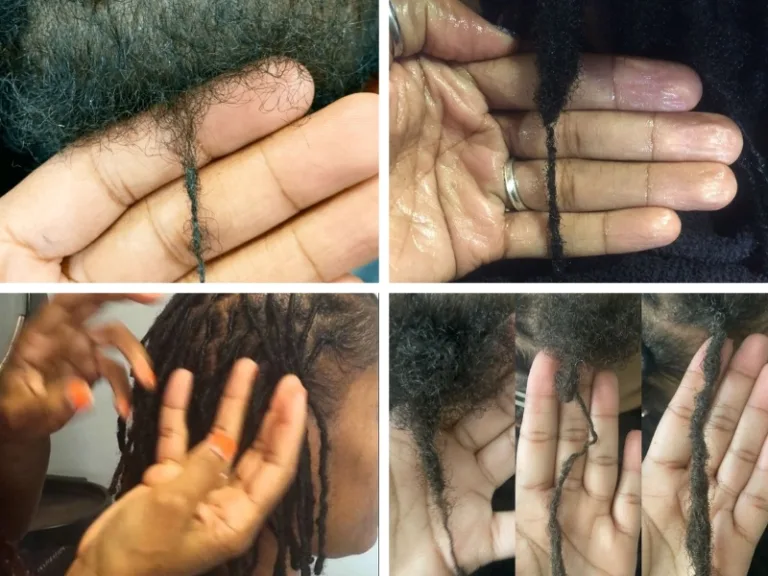
Then you tilt your head slightly, and there it is – a cluster of grey-white fibres sitting inside the strand. Not dirt. Not buildup. But Lint.
Lint is one of the most common problems loc wearers face. It does not mean your hair is unhealthy.
It does not mean you are doing something wrong. It simply means your locs are doing what locs do – moving through the world, brushing against fabric, and trapping fibres along the way.

The question is not whether lint will appear. The question is how to deal with it without weakening or damaging your locs in the process.
This guide walks you through exactly that. You will learn what causes lint, how to tell surface lint from embedded lint, How to Remove Lint from Locs Without Causing Damage and which removal methods are actually safe to use.
You will also learn which approaches cause more damage than the lint itself, and how to prevent the problem from getting worse.
Whether your locs are new or fully mature, this guide How to Remove Lint from Locs Without Causing Damage gives you the information to manage lint with confidence.
How to Remove Lint from Locs Without Causing Damage: A Gentle Care Guide for Healthy, Clean Locs
1. What Lint Actually Is and Why It Gets Into Locs
How Locs Trap Fibres
Locs are not smooth like straight hair.
They are textured, compressed, and full of small gaps where fibres can enter and settle.
Every time your locs brush against fabric, tiny threads break free and cling to the surface. Over time, some of those threads work their way inside the strand.
This process is natural and happens to every loc wearer. Dark locs make the lint more visible because white or grey fibres contrast sharply against them.
Lighter locs have the same amount of lint – it is just harder to see. Regardless of loc colour, the trapping mechanism is the same.
The Role of Fabric in Lint Problems
Cotton is the most common source of lint in locs.
Pillowcases, towels, scarves, and clothing all shed cotton fibres during normal use. Fleece and wool are also high-shedding materials.

Every night you sleep on a cotton pillowcase, your locs collect fibres from it.
The problem compounds because cotton is everywhere.
Most people sleep on it, dry their hair with it, and wear it daily.
Switching even one of these habits makes a noticeable difference. We will cover that in the prevention section later in this article.
How Product Buildup Makes Lint Worse
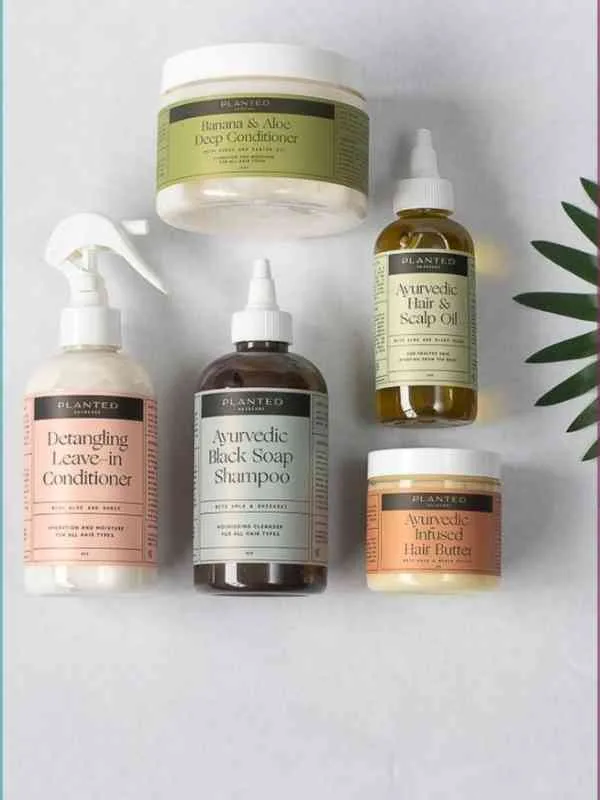
Heavy products leave a sticky film on the strands.
That film acts like glue for lint. Waxes, thick butters, and heavy gels are the main culprits.
They do not rinse cleanly, so they build up over repeated use.
Once product buildup coats the inside of a loc, lint sticks to it and embeds faster. It also becomes harder to flush out during washing.
This is why locticians consistently advise against heavy products. The lint problem they create is difficult to reverse without an intensive detox or significant manipulation.
You may be interested in reading How to Style Mid-Length Locs for Business Travel Without Losing Your Composure
2. Surface Lint vs Embedded Lint
Not all lint is the same.
The distinction between surface lint and embedded lint affects which removal method you should use and how much patience the process will require.
Surface lint sits on the outside of the loc.
You can usually see it without close inspection. It feels like fuzz on the outer layer of the strand. Surface lint is much easier to remove.
A good clarifying wash or a gentle brushing session on mature locs is often enough to clear it.
Embedded lint has worked its way inside the loc.
It sits within the matted hair rather than on top of it.
You may notice discolouration along a section of the loc, or a stiffness that does not resolve after washing.

Embedded lint is harder to remove and requires a more targeted approach.
For more insight How to Style Mid-Length Locs for Business Travel Without Losing Your Composure
It is also the type that attracts the most panic, because it looks like the loc is permanently changed. In many cases it can be managed – but not with aggressive methods.
Pro Tip: Check your locs weekly in good lighting. Catching lint early, while it is still on the surface, saves you from the far harder work of removing embedded lint later.
3. The Clarifying Wash
Why Washing Is Always the First Step
Before trying any other removal method, wash your locs with a clarifying shampoo.
This is the gentlest and most effective starting point for most lint situations.
Clarifying shampoos break down the product residue and buildup that holds lint inside the loc.
Once that residue is loosened, the lint has less to grip onto.
A clarifying wash also prepares your locs for any follow-up method you use. It is harder to remove lint from dirty locs than from clean ones.
If you go straight to tweezers or steam without washing first, you are working against yourself.

How to Clarify Your Locs Properly
Use a residue-free clarifying shampoo.
Apply it directly to the scalp and locs. Massage thoroughly, working product through each loc from root to tip. Do not rush this step.
Rinse with strong water pressure. Good water pressure helps flush loosened fibres out of the strand as you rinse. Repeat the shampoo if necessary.
Follow with a light moisture treatment on the ends only, avoiding any heavy conditioner that could create new buildup.
Here’s a closer look at From Sweat to Sleek: How to Transition Loc Styles from Gym to Boardroom
Pro Tip: Clarify every four to six weeks as part of your regular loc maintenance. This prevents the buildup cycle that makes lint harder to remove over time.
4. The Apple Cider Vinegar Rinse
How It Helps With Lint
An apple cider vinegar rinse is one of the most widely used loc detox methods. ACV is mildly acidic.
It breaks down mineral deposits, product buildup, and the sticky residue that traps lint inside the strand.
It does not dissolve the lint itself. What it does is loosen the environment around the lint, making fibres easier to release during and after the soak.
For surface lint and lightly embedded lint, an ACV rinse combined with a clarifying wash often produces visible results in a single session.
How to Do an ACV Rinse
Mix one part apple cider vinegar with three to four parts warm water. Pour the mixture into a basin large enough to submerge your locs.
Soak for fifteen to twenty minutes. Gently squeeze each loc during the soak. Do not scrub or rub.
After soaking, rinse thoroughly with clean water.
If you are looking to understand 10 Dreadlock Edge Control Tips for Corporate Women: Stay Sleek Without Losing Your Style
Follow with a clarifying shampoo to remove any vinegar residue and whatever has been loosened during the soak.
Allow your locs to air dry fully before covering or tying them.
Pro Tip: Do not use an ACV rinse on colour-treated locs without diluting further. ACV can lift colour and affect tone. Use a ratio of one part ACV to five parts water if your locs are coloured
5. Steaming Your Locs
Why Steam Works for Embedded Lint
Steam is one of the most underused tools in loc care. It works by opening the hair cuticle temporarily.
When the cuticle opens, trapped fibres have more room to loosen and shift.
This makes steaming particularly effective for embedded lint that has been sitting inside the loc for some time.
Steam does not yank or pull at the loc structure. It works with the hair rather than against it.
For this reason, it causes far less damage than manual extraction methods when dealing with deeply embedded lint.

How to Steam Your Locs at Home
Use a handheld hair steamer or sit under a hooded steamer with damp locs. Apply steam for ten to fifteen minutes per section.
Keep the steamer moving – do not concentrate heat on one spot for too long.
After steaming, follow immediately with palm rolling or gentle compression along each loc. This helps the loosened fibres move toward the surface.
This article dives into The Ultimate Guide to Professional Loc Steam Treatments at Home: Restore, Hydrate, and Elevate Your Routine
Finish with a clarifying wash to flush out whatever has been released. Moisturise the ends lightly after the session to replace any moisture lost during steaming.
6. Manual Lint Removal
When Manual Removal Is Appropriate
Manual removal is appropriate for visible, accessible lint that has not fully embedded itself inside the loc.
If you can see the fibre clearly and reach it without digging into the strand, careful manual removal is a reasonable option.
It is not appropriate for deeply embedded lint, for fragile or thin locs, or for starter locs that have not yet fully formed.
Patience is the deciding factor here. If you find yourself getting frustrated and pulling harder, stop.
Aggressive manual removal causes far more damage than the lint itself. It thins the loc at the removal point, weakens the internal structure, and can create breakage that is very difficult to reverse.
Using Tweezers Safely
Use curved or fine-tipped tweezers, not eyebrow tweezers. Work under strong natural or artificial lighting.
Hold the loc steady with one hand while you work with the other.
Grip the visible fibre at the surface and pull slowly in the direction the fibre is lying.
Do not dig into the loc to reach fibres you cannot clearly see.

Work on one section at a time. After removing visible lint from a section, stop and assess before continuing.
If the loc starts to look thin or disturbed at the extraction point, leave it and move to another method. Speed has no place in this process.
Using a Crochet Hook for Mature Locs
A fine crochet hook can be used on fully mature locs to reach fibres that are just below the surface.
Insert the hook gently at the edge of the fibre, not into the body of the loc. Use small, controlled movements to ease the fibre toward the surface.
This method requires experience and confidence with the tool. If you are new to loc care, practise on a small section in an inconspicuous area first.
Crochet hook removal should never be used on starter locs or locs that are still in the budding phase.
The internal structure of a maturing loc is still forming. Any significant manipulation at this stage disrupts that process and can damage the loc permanently.
7. Palm Rolling After Lint Removal

Once you have removed lint through any method, palm rolling helps restore the shape and smoothness of the loc surface.
It compresses the outer layer back down and closes any small gaps that formed during the removal process.
Palm roll on clean, damp locs.
Place the loc between your palms and roll it in one direction with moderate pressure.
Do not roll back and forth – unidirectional rolling helps the loc maintain its coil pattern. Work from root to tip on each loc you treated.
This Post explains How to Fix Thinning Locs at the Crown and Bring Your Locs Back to Life
This step matters especially after steam sessions or ACV soaks, where the cuticle has been opened.
Closing the cuticle back down through palm rolling locks in moisture and prevents the newly cleaned loc from trapping new fibres immediately after treatment.
8. Trimming as a Last Resort
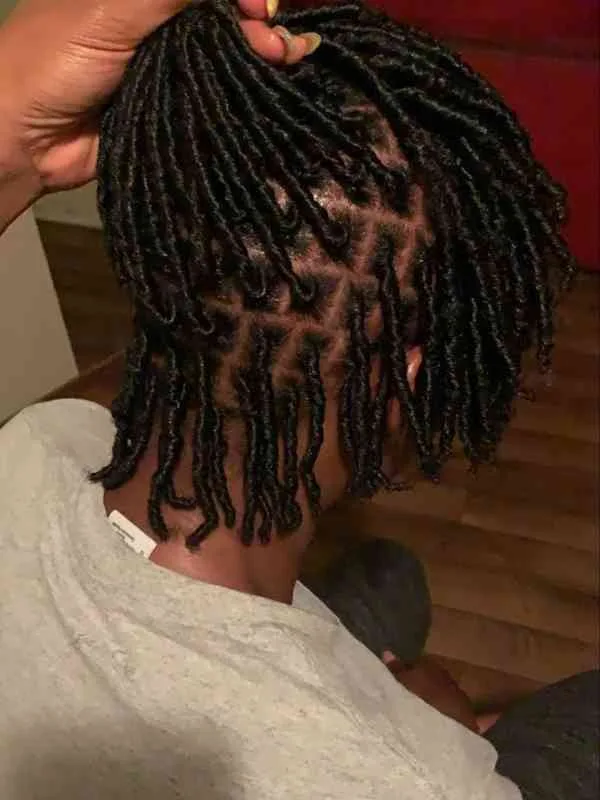
Some lint becomes so deeply embedded that no external method can remove it.
This happens most often at the ends of locs, where fibres have been compressing and locking in over months or years.
When lint at the tip cannot be released through washing, steaming, or careful manual work, trimming is the healthiest remaining option.
Trimming is not failure. It is a practical decision about the long-term health of the loc.
Leaving a lint-heavy end that cannot be cleaned does not protect the loc – it just allows the problem to continue sitting there.
A clean trim removes the affected section and gives the loc a fresh end to work from.
Trim minimally.
Cut only far enough to remove the lint-affected area. If the embedded lint extends further than you initially thought, reassess before cutting more.
Have a professional loctician handle this if you are uncertain about how much to trim or if the affected area is large.
A skilled loctician can assess the extent of the problem and trim strategically rather than by guesswork.
9. Bad Ideas When Trying to Remove Lint from Locs

Picking aggressively at the loc with pins, needles, or a rat-tail comb.
These tools create tiny tears in the fibre structure of the loc.
The damage is not always visible immediately. It shows up weeks later as thinning, frizzing, or weakened sections that break under normal handling.
The lint may come out in the short term. The damage it leaves behind lasts far longer.
Applying heavy products to mask or cover the lint.
Thick gels, waxes, and butters make lint look less visible temporarily.
What they actually do is trap it more deeply inside the loc and create new layers of buildup around it.
The next time you try to remove the lint, it is harder to access and more firmly attached than before.
Over-washing in an attempt to flush lint out. Washing every few days does not remove embedded lint.
It does strip your scalp of its natural oils and dry out your locs. Dry locs have more exposed cuticle, which means they trap new lint faster than healthy, moisturised locs.
You end up with drier locs and just as much lint.
Using a brush on starter or maturing locs.
Brushing is only appropriate for fully mature locs and only with a soft boar bristle brush.
Using a brush on locs that are still forming disrupts the internal matting process that creates the loc structure.
It also drags lint deeper into the strand rather than lifting it away.
Trying to remove embedded lint at the root. Root sections of locs carry the most tension and are the most vulnerable to thinning. Picking or manipulating the root area to remove lint causes traction damage.
This kind of thinning compounds with every retwist session and can lead to permanent root weakness over time.
You may enjoy reading 10 Step-by-Step Barrel Twist Styles for Short Office Locs That Look Elegant and Professional
10. How to Prevent Lint from Getting Into Your Locs
Switch Your Sleeping Setup
Replace cotton pillowcases with satin or silk ones.
Cotton sheds fibres throughout the night. Satin and silk do not.
A satin pillowcase is the single most effective change you can make to reduce overnight lint accumulation. Alternatively, wear a satin bonnet every night before bed.
If your bonnet slips off during sleep, use a satin scarf tied loosely at the nape instead.
The goal is to keep your locs from making direct contact with cotton bedding for the six to eight hours you sleep.
This one change consistently reduces lint faster than any removal method.
Change How You Dry Your Hair
Most people dry their locs with a cotton towel. Cotton terry cloth sheds significantly during use.
Switch to a microfibre towel or a plain dark T-shirt to dry your locs after washing.
These materials absorb water effectively and shed almost nothing onto the hair.
Squeeze gently rather than rubbing.
You may also like How to Start Locs Yourself at Home Without a Loctician: A Simple, Confident Beginner’s Guide
Rubbing a towel against locs creates friction that drags loose fibres into the strand. Gentle squeezing removes moisture without the mechanical contact that transfers lint.

Keep Your Locs Hydrated
Dry locs have more open cuticles.
More open cuticles mean more places for lint to enter and grip.
Keeping your locs consistently moisturised reduces their vulnerability to lint significantly.
Use a water-based spray every few days and apply a lightweight oil to the ends when needed.
Avoid heavy creams and butters as daily moisturisers.
They feel hydrating but leave residue that attracts lint faster than dry locs do. Light hydration consistently is more protective than heavy product applied occasionally.
Keep Your Locs Hydrated
Keeping your locs hydrated isn’t just about softness, it’s also a quiet form of protection. Because when locs become dry, their cuticles tend to open up more; and as a result, those tiny openings create more space for lint to settle in and cling.
So, by contrast, consistent moisture helps keep the cuticle layer smoother and less vulnerable. For that reason, using a water-based spray every few days can make a noticeable difference.
Then, when your ends begin to feel dry, a light oil can be added sparingly to seal things in without buildup.
However, it’s important to be mindful of what you use daily. While heavy creams and butters may feel rich at first, they often leave behind residue; and over time, that residue can actually attract lint faster than dryness alone.
In the end, gentle, regular hydration works far better than occasional heavy product use.
Here’s a complete guide on The Ultimate Guide to Professional Loc Steam Treatments at Home: Restore, Hydrate, and Elevate Your Routine
Final Words On How to Remove Lint from Locs Without Causing Damage
How to Remove Lint from Locs Without Causing Damage in your locs is not a sign of failure. It is not evidence of neglect or poor hygiene.
It is a natural result of wearing textured, matted hair that moves through a world full of fabric.
Every loc wearer deals with it at some point.
The difference between a lint problem that stays manageable and one that gets out of hand usually comes down to two things: how early you catch it and how carefully you respond to it.
Surface lint caught early is a ten-minute clarifying wash. Embedded lint ignored for months becomes a trimming decision.
Checking your locs regularly and acting gently when you find lint keeps you firmly in the first category.
Remove carefully. Prevent consistently.
Accept that minor lint is part of having locs, and give your hair the gentle, attentive care it takes to keep it healthy at every stage of the journey.
You have Learnt How to Remove Lint from Locs Without Causing Damage: A Gentle Care Guide for Healthy, Clean Locs.