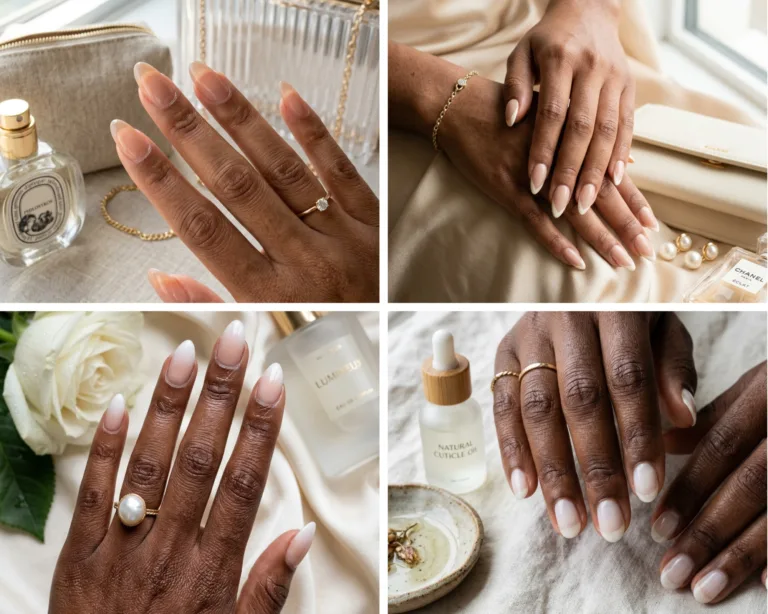
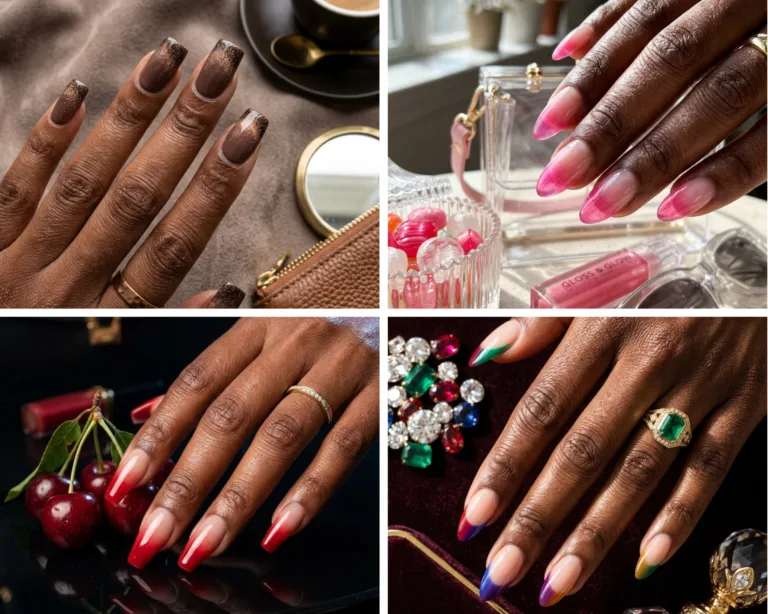
There is a point when a delicate French manicure simply does not feel bold enough. Maybe you want more contrast, a stronger shape, or a nail design that actually shows up from across the room. That is where the deep French tip earns its place.
Instead of keeping color close to the free edge, the smile line curves farther down the sidewalls, creating more space for rich pigment, chrome, magnetic shimmer, florals, or graphic detail.
Almond and coffin nails carry the look beautifully, but softer square and oval shapes can work when the proportions are handled carefully. White stays timeless, while burgundy, black, chocolate, jewel tones, and metallic finishes make the structure feel much more dramatic.
Start with the version that defines the technique most clearly.
1. Classic White Deep French Tips
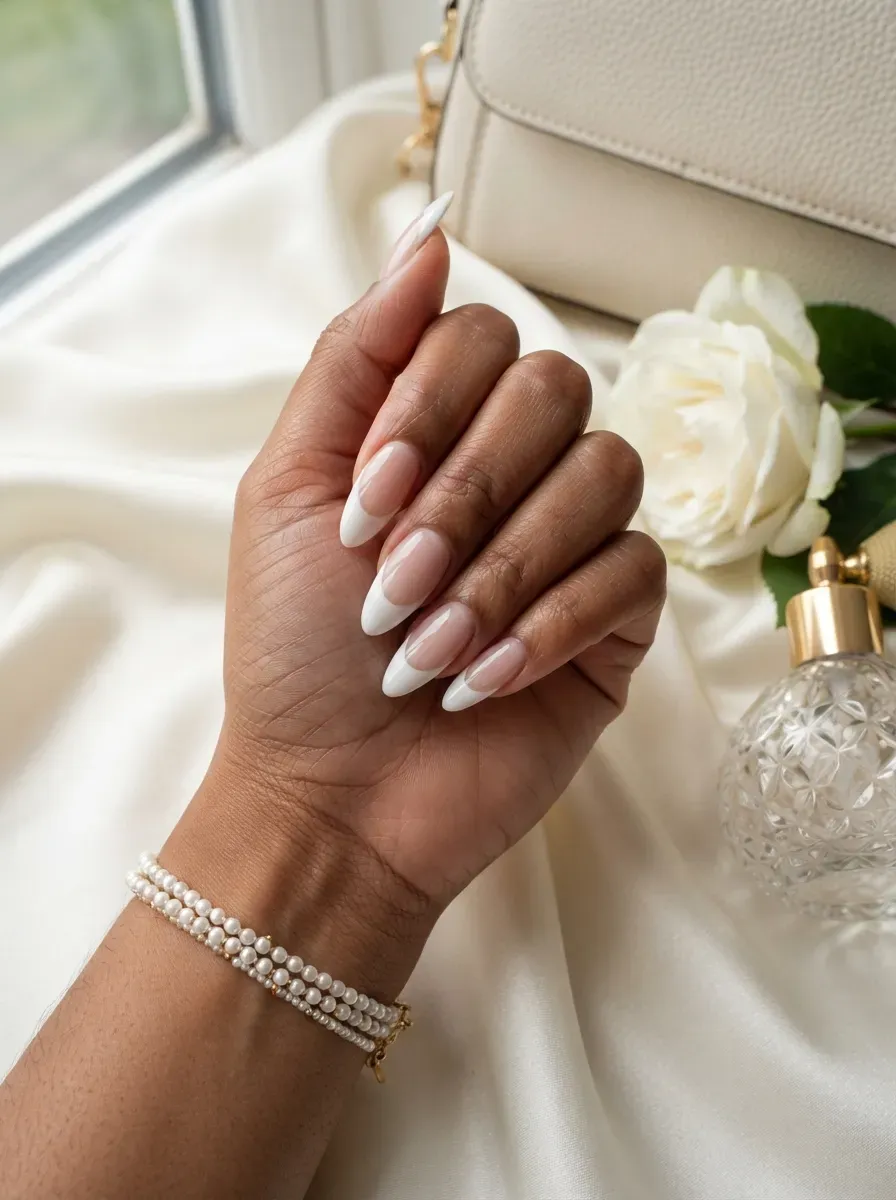
Classic white becomes much more dramatic when the smile line starts lower along the sidewalls instead of sitting only at the free edge. The deeper curve visually narrows almond nails while creating a cleaner, more elongated silhouette.
Balance matters with this technique. Keep the base sheer and the white opaque, then map both side points before painting so the depth matches across every finger.
Pin for later 35+ Thick French Tip Nail Designs for Bold, Statement Nails
2. Soft Ivory Deep French Tips
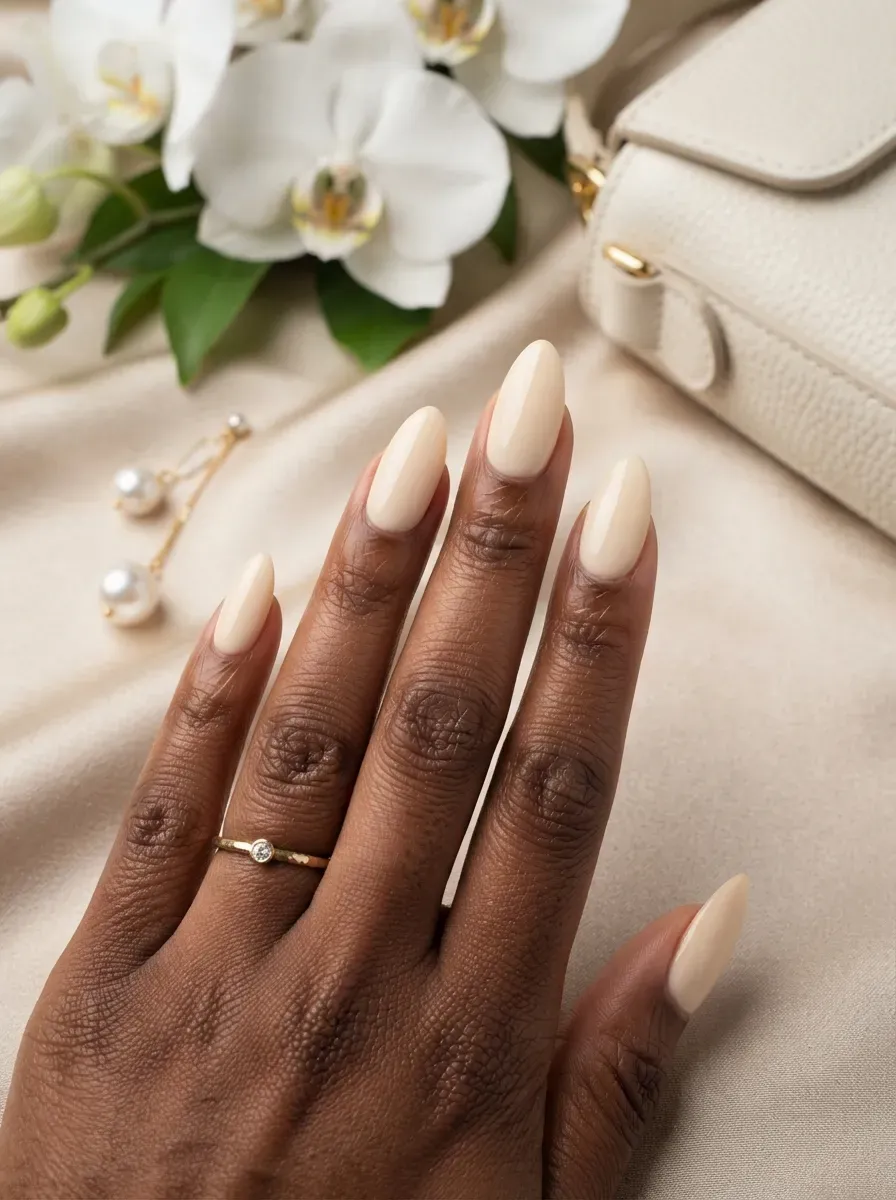
Ivory softens the visual contrast of a deep French tip while preserving the exaggerated curve. The warmer white often looks especially harmonious against golden and deep skin tones because it avoids the stark blue cast of some bright whites.
Use a creamy ivory with full coverage in one or two thin coats. A translucent formula can look uneven where the deeper side sections overlap the nude base.
3. Milky White Deep French Tips
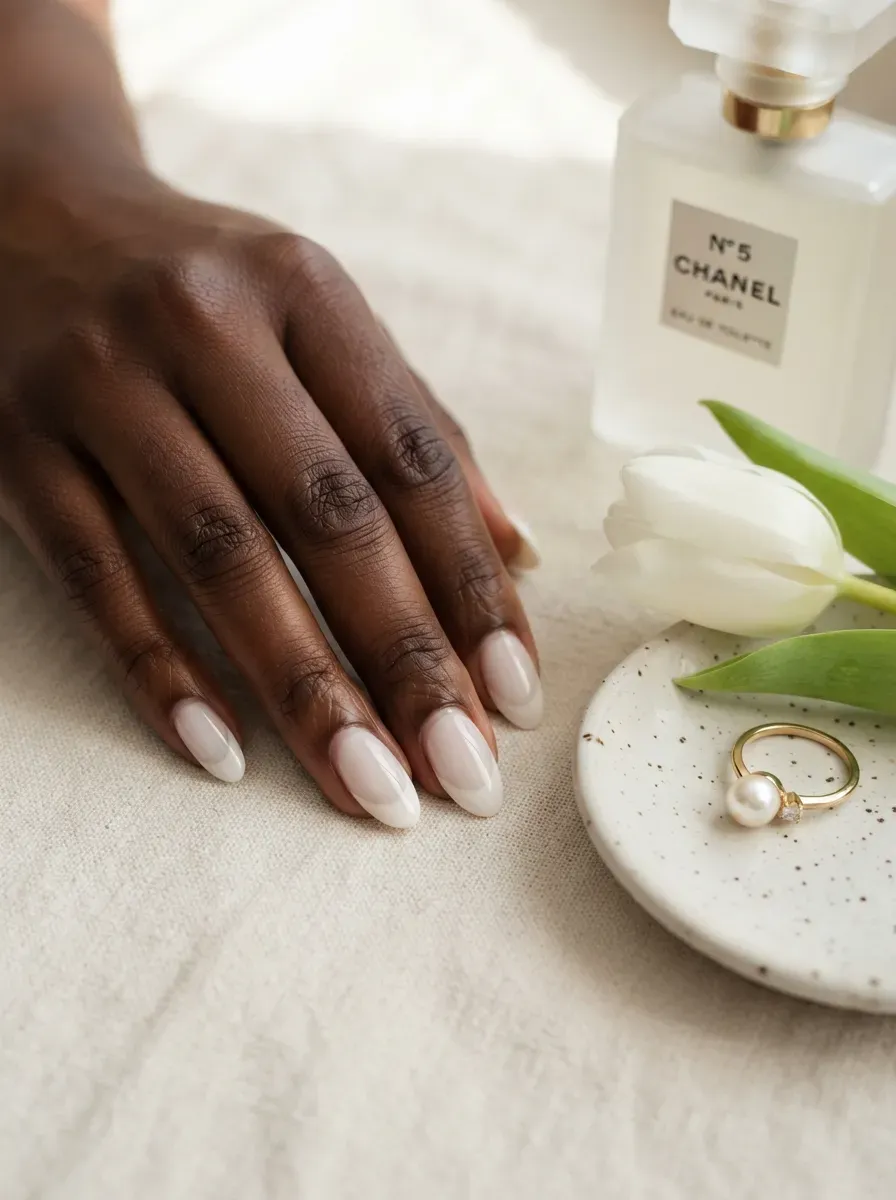
Milky white creates a softer version of the deep French structure because the pigment remains slightly translucent. The curve is still obvious, but the finished edge blends more gently into a sheer pink or beige base.
This version works well when bright white feels too graphic. Apply the milk color in several thin passes rather than one heavy layer so the deeper side sections do not become cloudy.
4. Blush Pink Deep French Tips
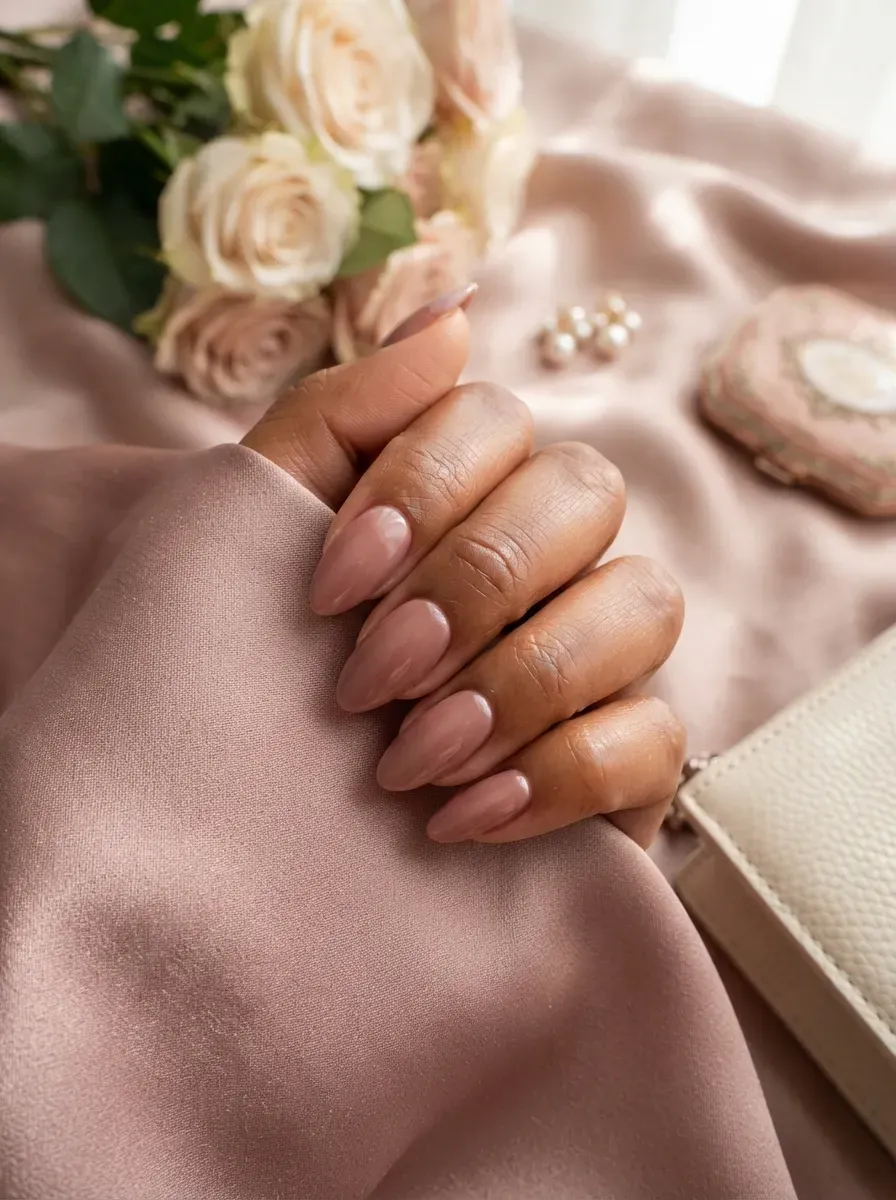
Blush pink keeps the dramatic architecture of a deep French tip but tones down the color contrast. The shade follows the curve beautifully on almond nails and works especially well with sheer beige or milky bases.
Choose a blush with enough pigment to separate from the nail bed. If the tip and base are too close, the deeper shape disappears from normal viewing distance.
See more 15 Thoughtful Relationship Building Activities That Strengthen Connection in Meaningful Ways
5. Baby Pink Deep French Tips
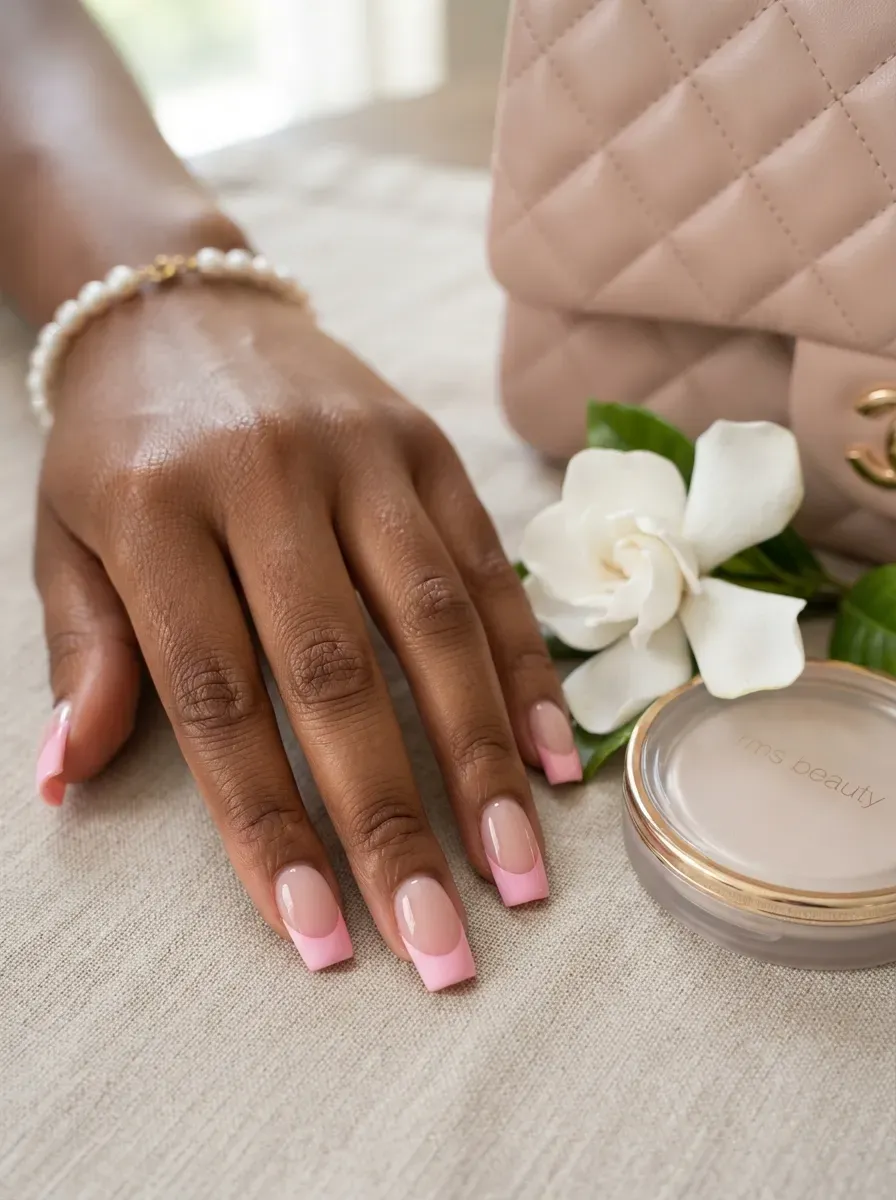
Baby pink makes a deep French tip more playful while still preserving a clean manicure structure. On tapered square nails, the curved sidewalls soften the stronger free edge and keep the shape from looking too blocky.
Use a creamy pink with controlled opacity. Pale pink often streaks when painted too thickly, so two thin layers give a smoother result around the curved sides.
6. Cherry Red Deep French Tips
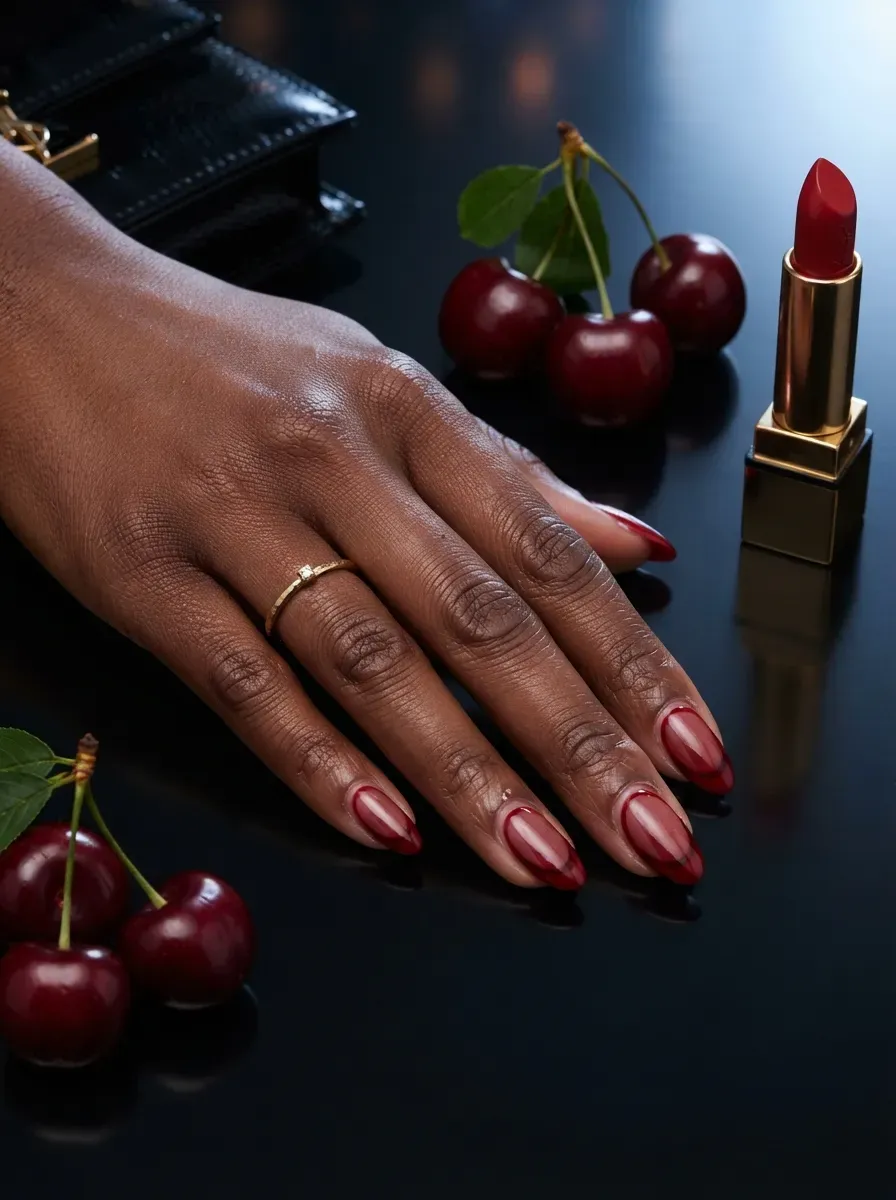
Cherry red makes a deep French tip impossible to miss. The strong pigment emphasizes the curve and gives almond nails a sharp, almost sculpted appearance without covering the entire nail bed.
A neutral sheer base keeps the red clean. Cap the free edge carefully with top coat because bright red shows even small chips quickly, especially when the tip occupies a larger painted area.
7. Burgundy Deep French Tips
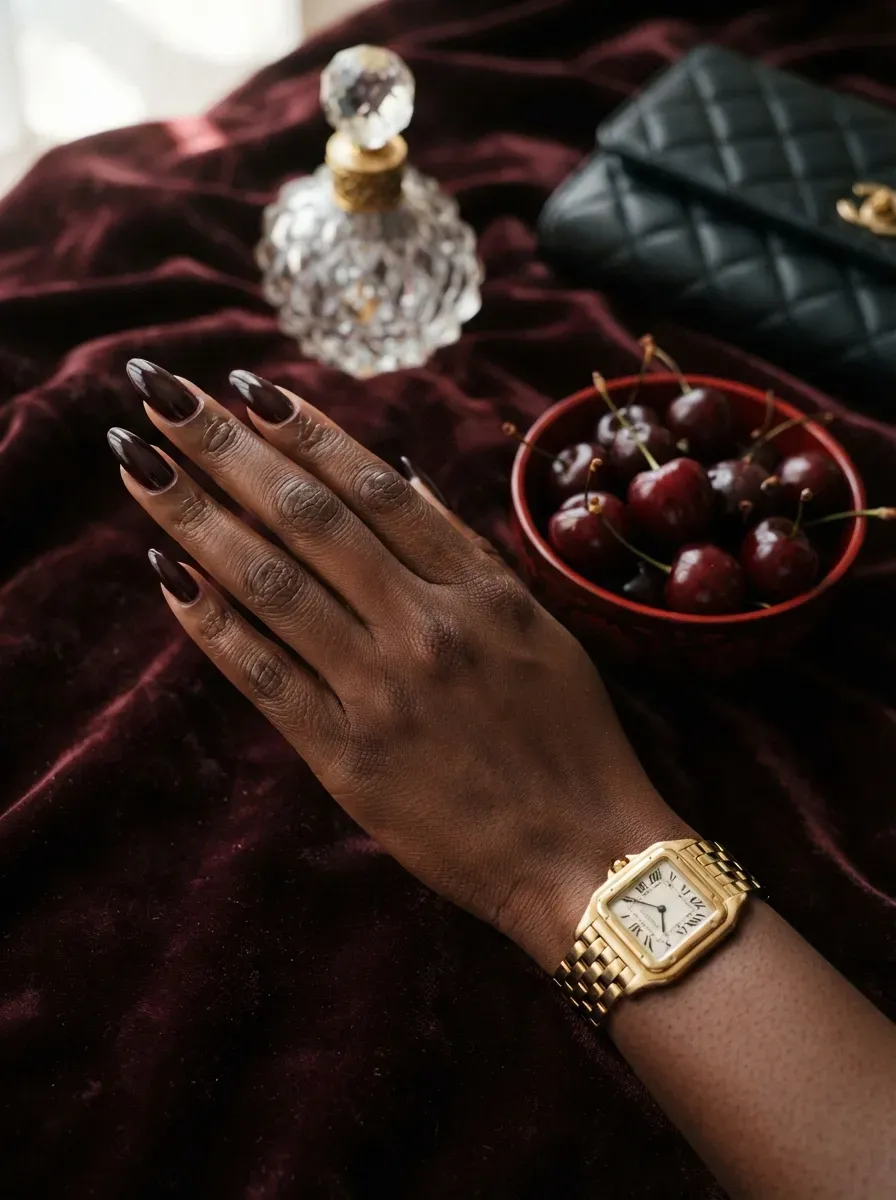
Burgundy gives the deep French structure more weight than bright red because the wine tone sits closer to black. The color sharpens long almond nails while remaining polished enough for formal events and evening wear.
Pair burgundy with a beige or neutral pink base rather than something overly cool. Apply a stain resistant base coat first if you are working directly over natural nails.
8. Oxblood Deep French Tips
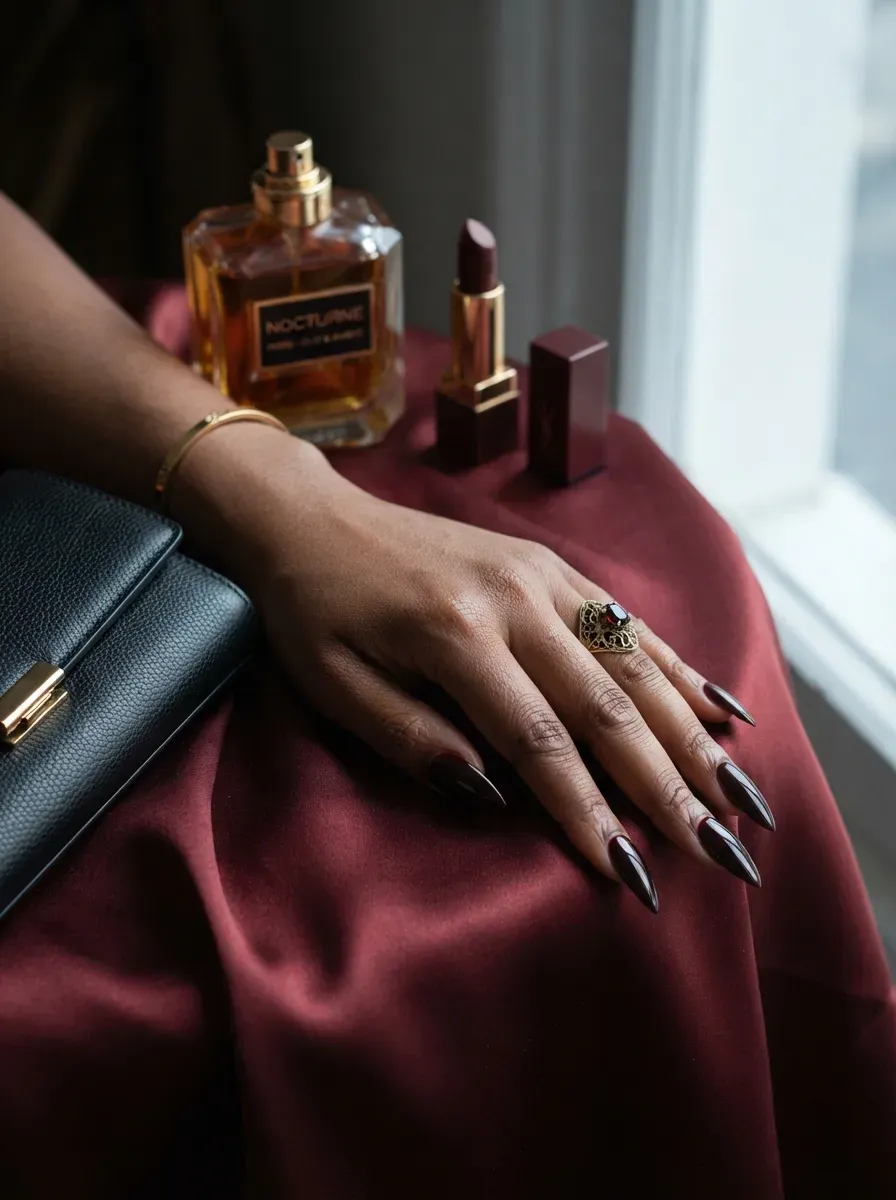
Oxblood sits deeper and browner than burgundy, giving a dramatic French manicure almost the same intensity as black. The color works especially well on stiletto and long almond shapes because the dark curve exaggerates the taper.
Keep the base very sheer so the color does not make the entire nail feel heavy. Thin coats also cure more reliably with such dense pigment.
9. Chocolate Brown Deep French Tips
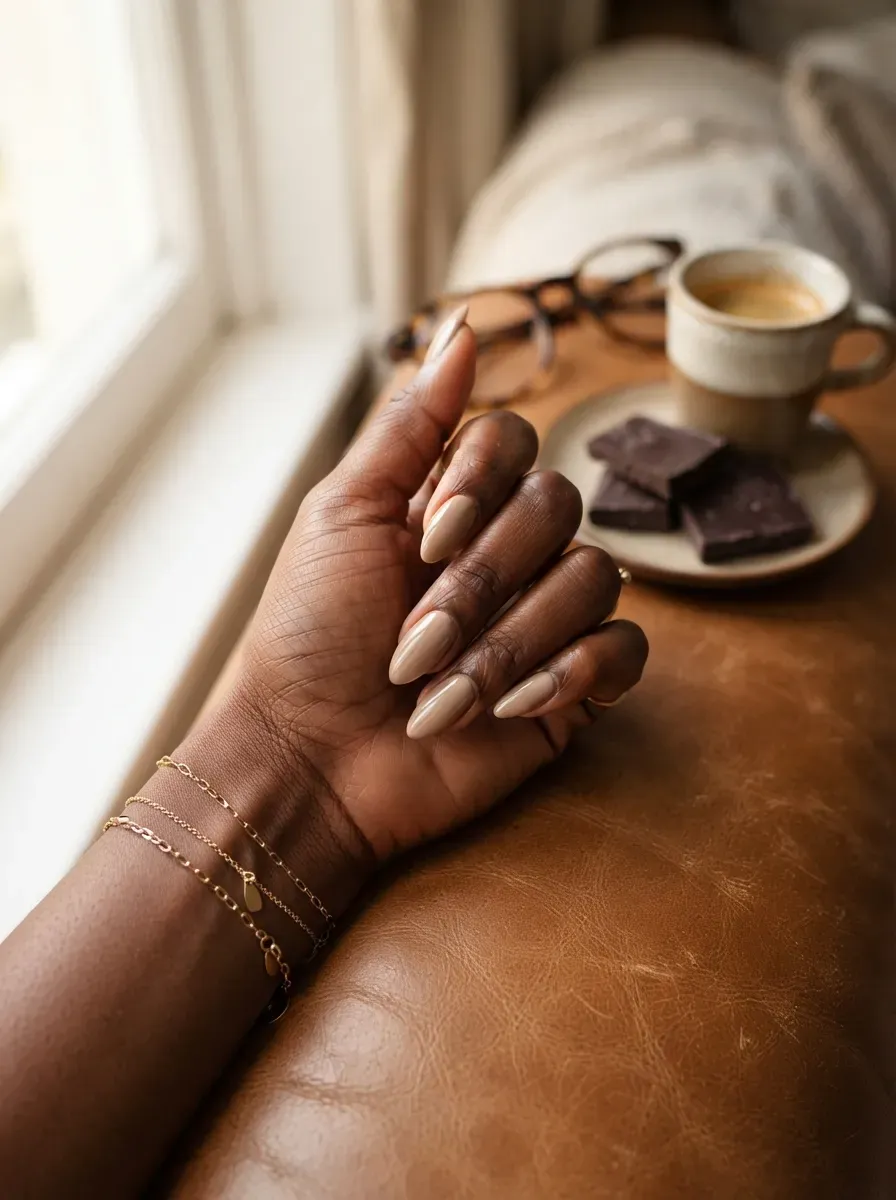
Chocolate brown gives a deep French tip dramatic shape without the severity of black. The warm neutral pairs naturally with beige, cream, gold, denim, and autumn clothing while still creating enough contrast to show the deep curve.
A caramel tinted base makes the color look especially cohesive. Use a high gloss top coat if you want the brown to appear richer rather than flat.
See also 30+ Burgundy September Nails for Early Fall
10. Espresso Deep French Tips
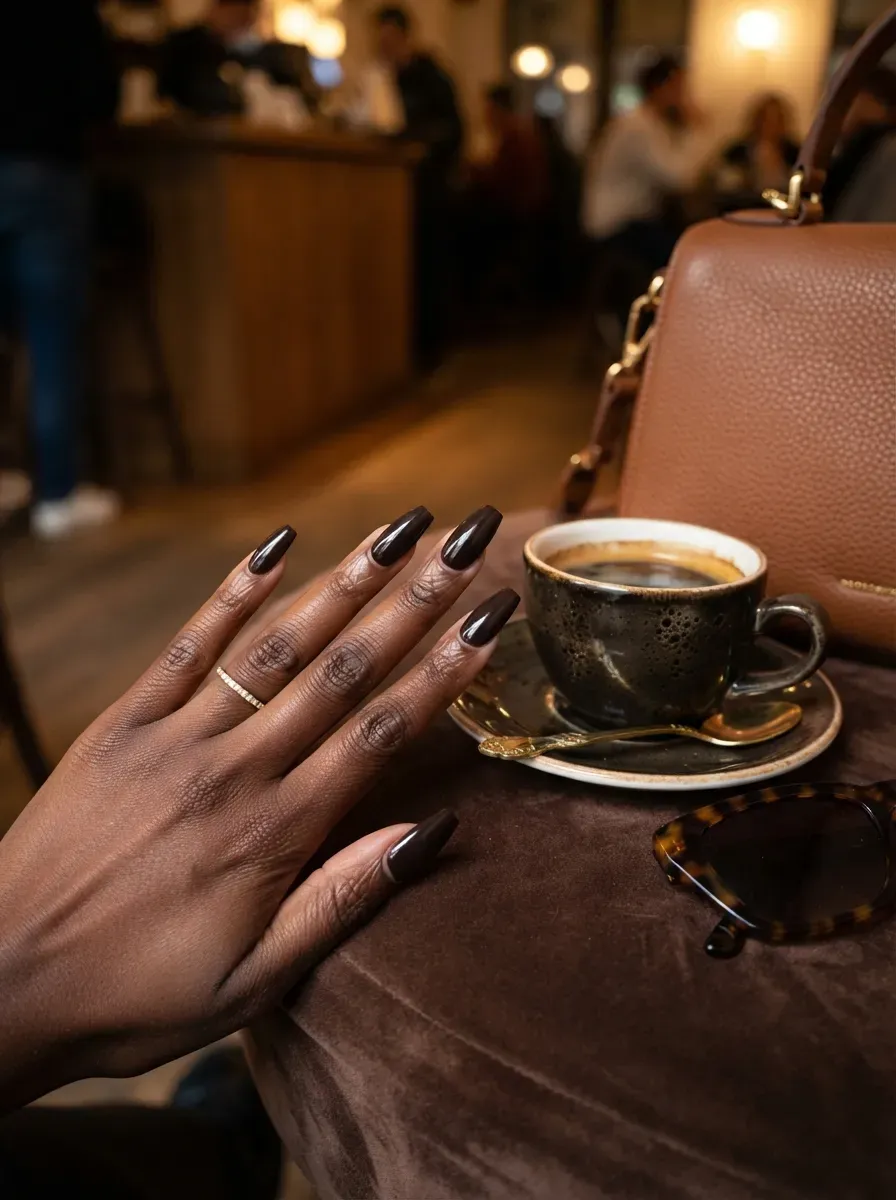
Espresso is dark enough to make the deep smile line feel graphic while retaining a warmer finish than true black. On coffin nails, the rounded curve contrasts with the straight free edge and adds visual balance.
Use an opaque espresso gel in thin layers. Highly pigmented brown can wrinkle under the lamp when applied too heavily, particularly where the curve extends farther down the sides.
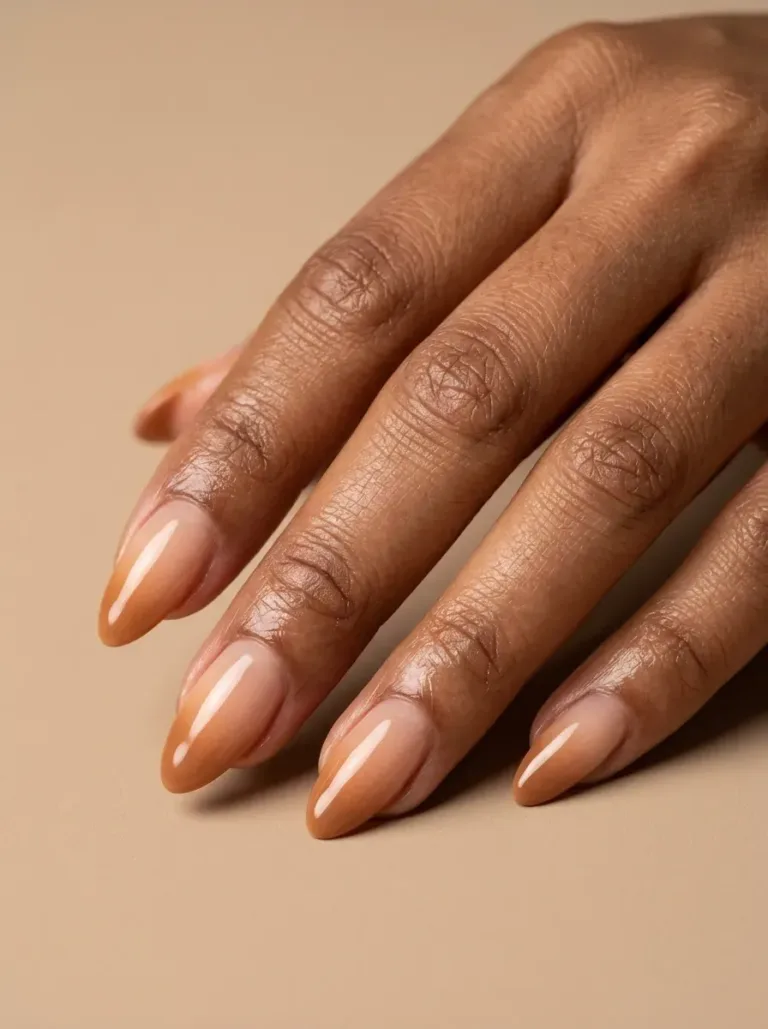
11. Caramel Deep French Tips
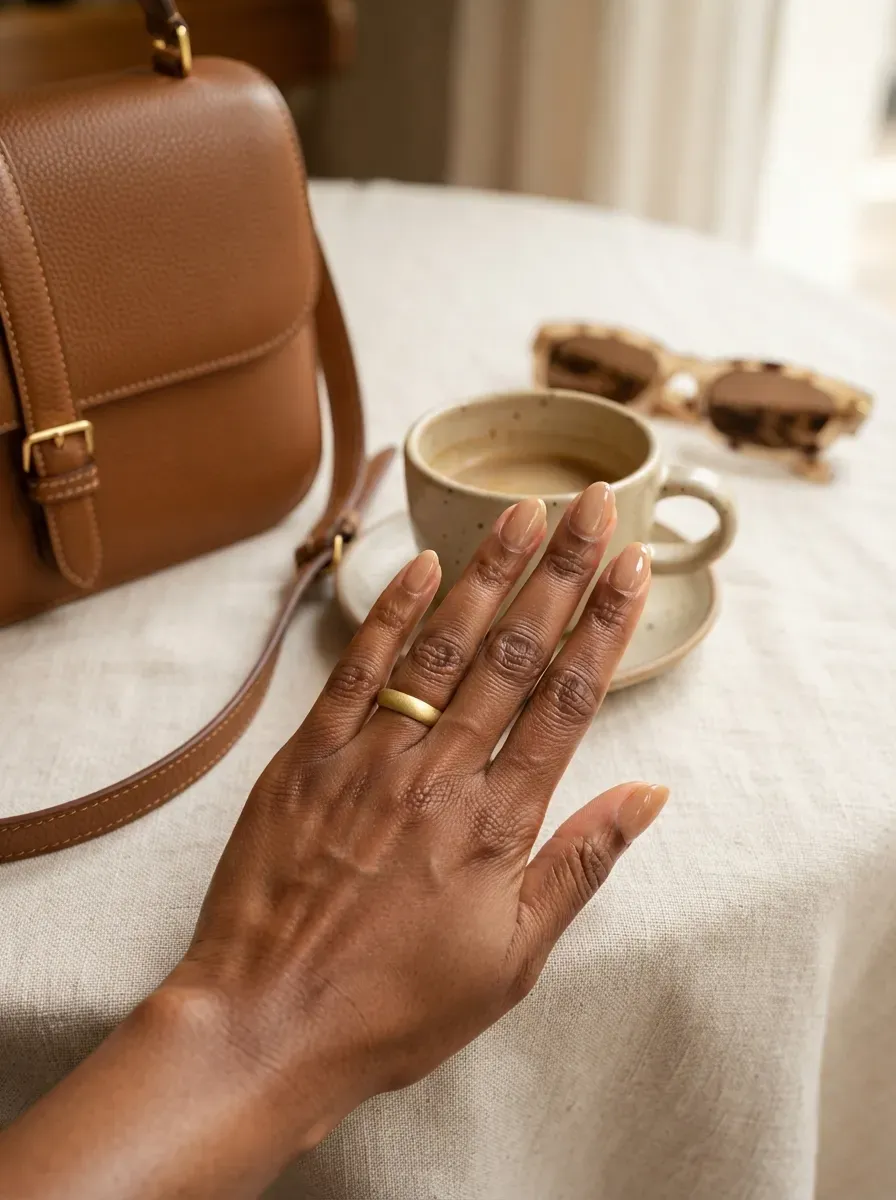
Caramel is a softer way to wear the deep French shape. The warm brown beige tone keeps the manicure tonal while the exaggerated curve provides the drama.
This style works well on medium oval and almond nails where a very dark shade might feel too strong. Make sure the caramel is at least two shades deeper than the base so the smile line remains visible.
12. Jet Black Deep French Tips
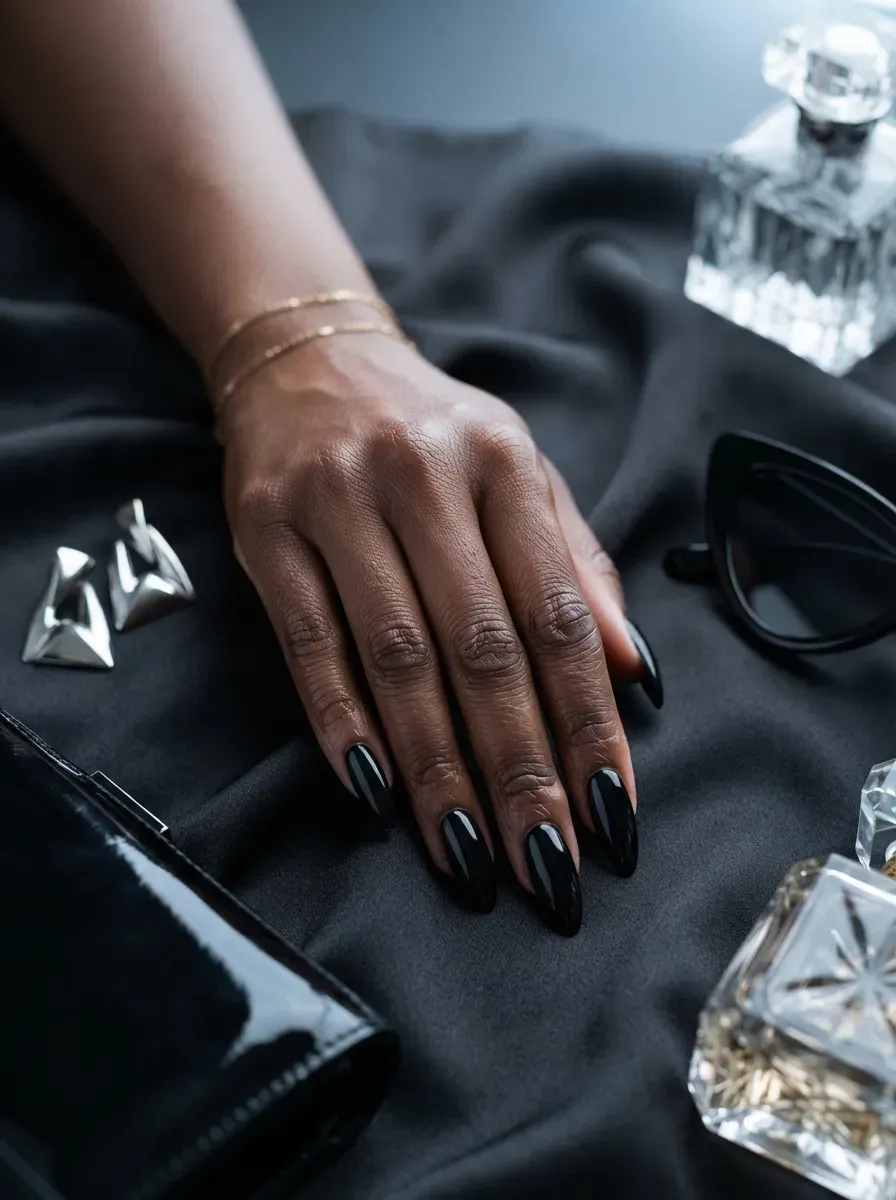
Black is the strongest way to emphasize a deep French tip because every curve, sidewall, and thickness difference becomes visible. The contrast makes long almond and stiletto shapes look especially sculpted.
Shape the nails completely before painting. Black highlights even small filing differences, so correcting the silhouette after color is applied can disturb the edge and expose uneven sections.
13. Navy Deep French Tips
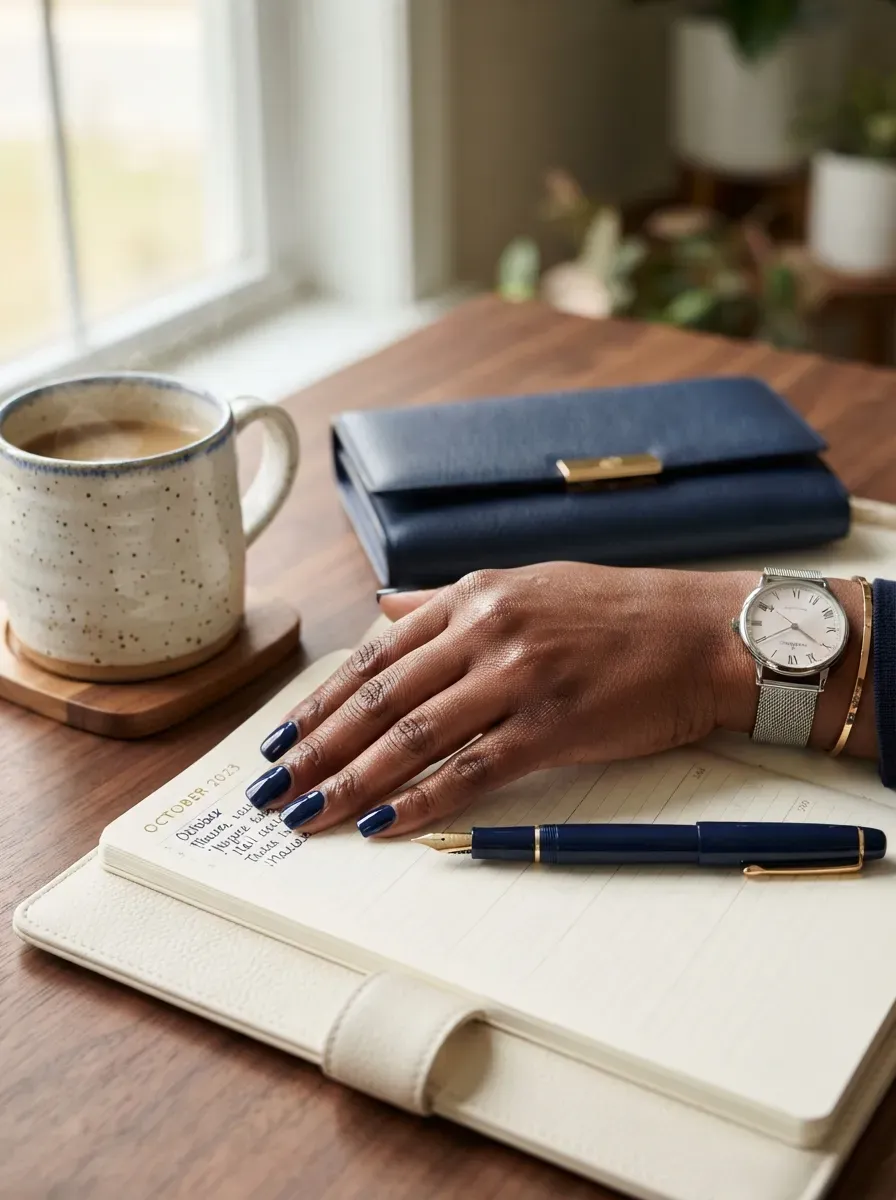
Navy offers nearly the same depth as black while adding a cooler blue undertone. The shade works surprisingly well with deep French curves because the color stays formal even when the shape is bold.
Square and tapered square nails give the manicure a strong graphic finish. Use two thin navy coats rather than one thick layer to prevent patchiness around the side curves.
Read more How to Start Locs Yourself at Home Without a Loctician: A Simple, Confident Beginner’s Guide
14. Cobalt Blue Deep French Tips
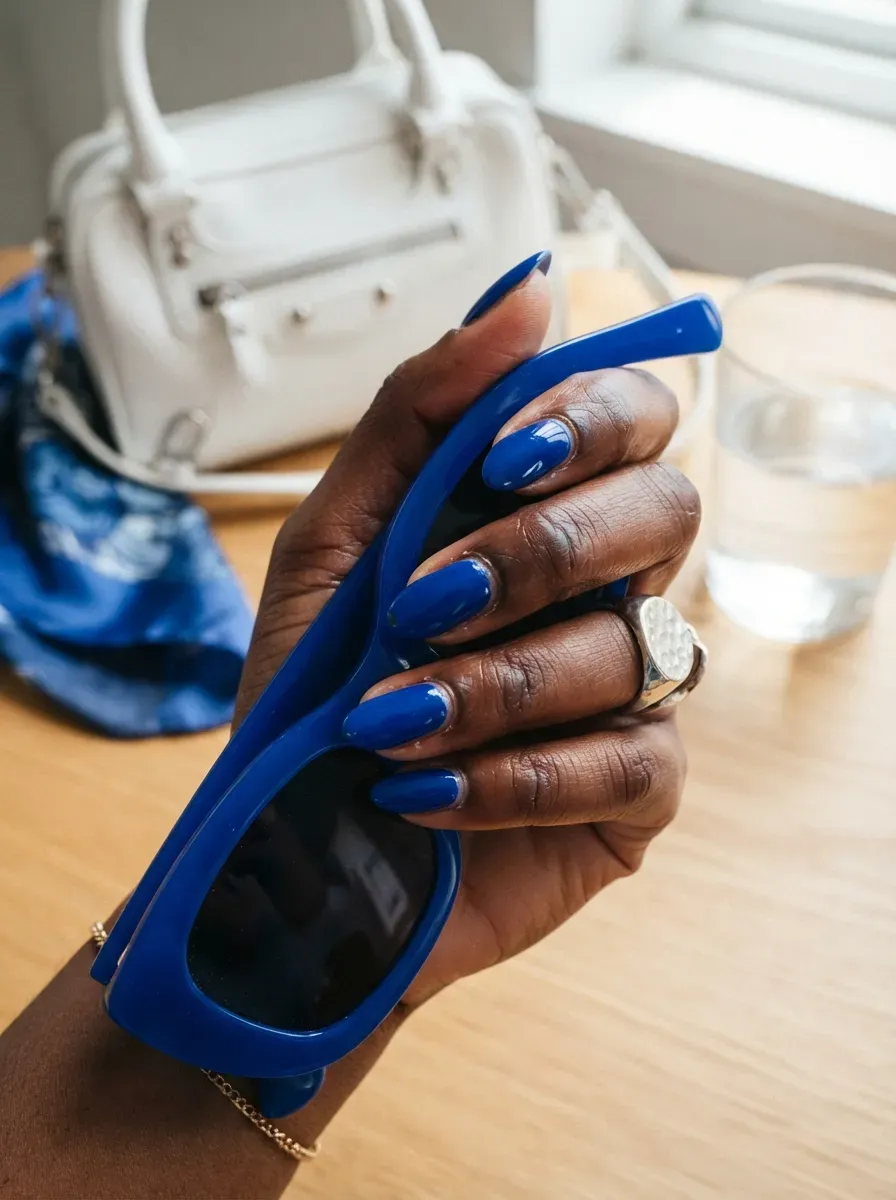
Cobalt blue makes the enlarged French area feel intentional and high contrast without relying on black or red. Its saturation stays visible even where the painted section narrows along the sidewalls.
A sheer neutral base gives cobalt the cleanest backdrop. If the blue gel is slightly translucent, apply a thin white layer underneath rather than building multiple thick blue coats.
15. Forest Green Deep French Tips
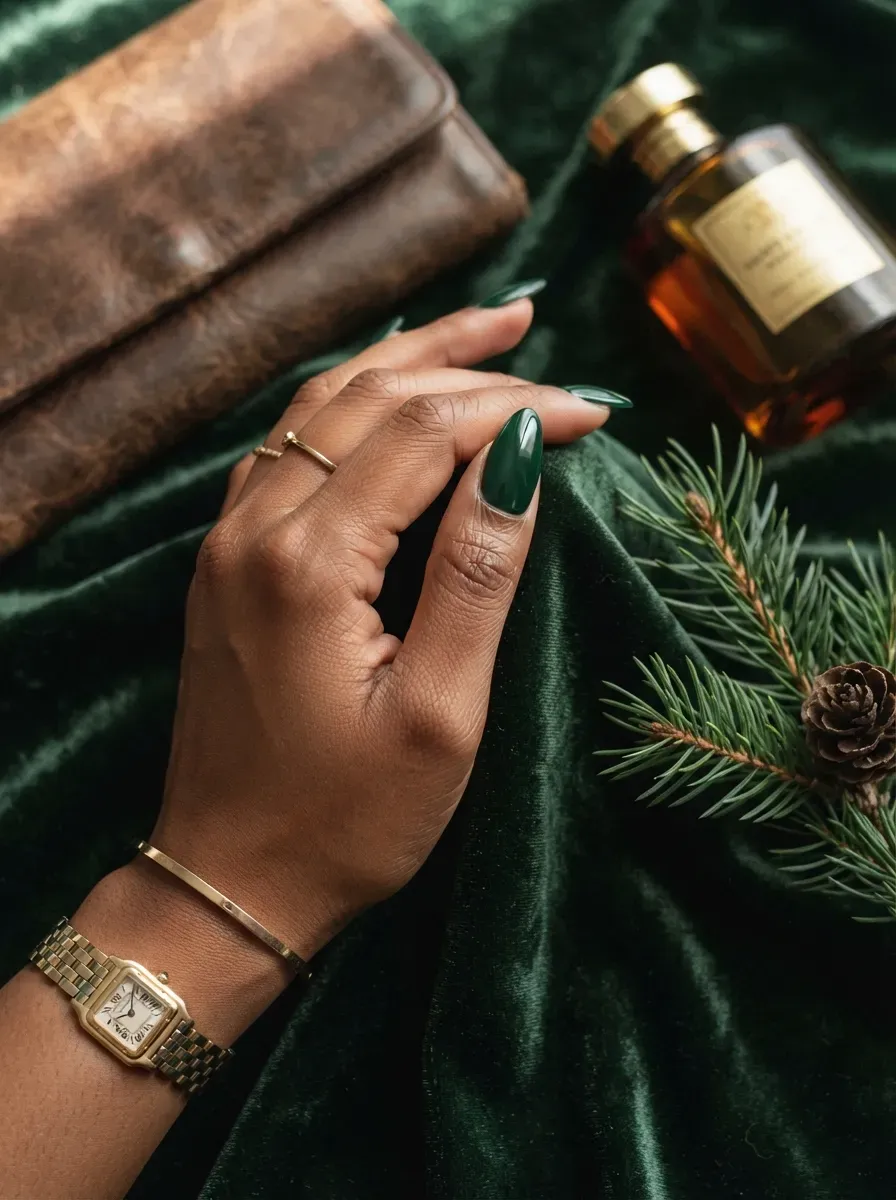
Forest green gives deep French tips the richness of a dark neutral while keeping enough color to feel distinctive. It pairs especially well with almond nails, where the low side curves exaggerate length.
Gold jewelry brings out the warmer side of deep green. Apply the gel in thin layers because very pigmented greens can shrink slightly at the edges if the coat is too thick.
16. Olive Green Deep French Tips
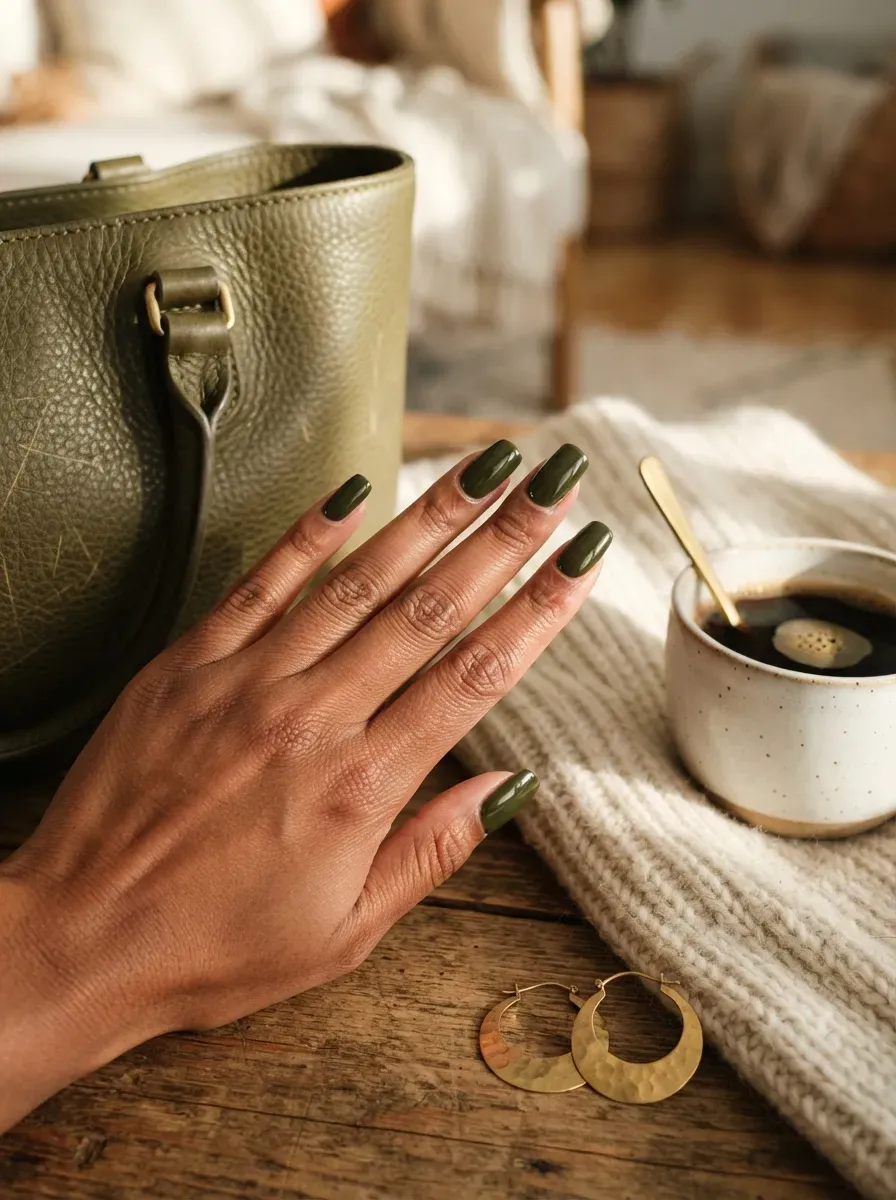
Olive softens the intensity of a deep French tip because its brown undertone behaves almost like a neutral. The exaggerated smile line remains visible, but the color feels easier to pair with everyday clothing than bright green.
Warm beige bases suit olive best. Avoid cool gray nudes because they can make the green appear muddy once the deep painted area becomes larger.
17. Emerald Cat Eye Deep French Tips
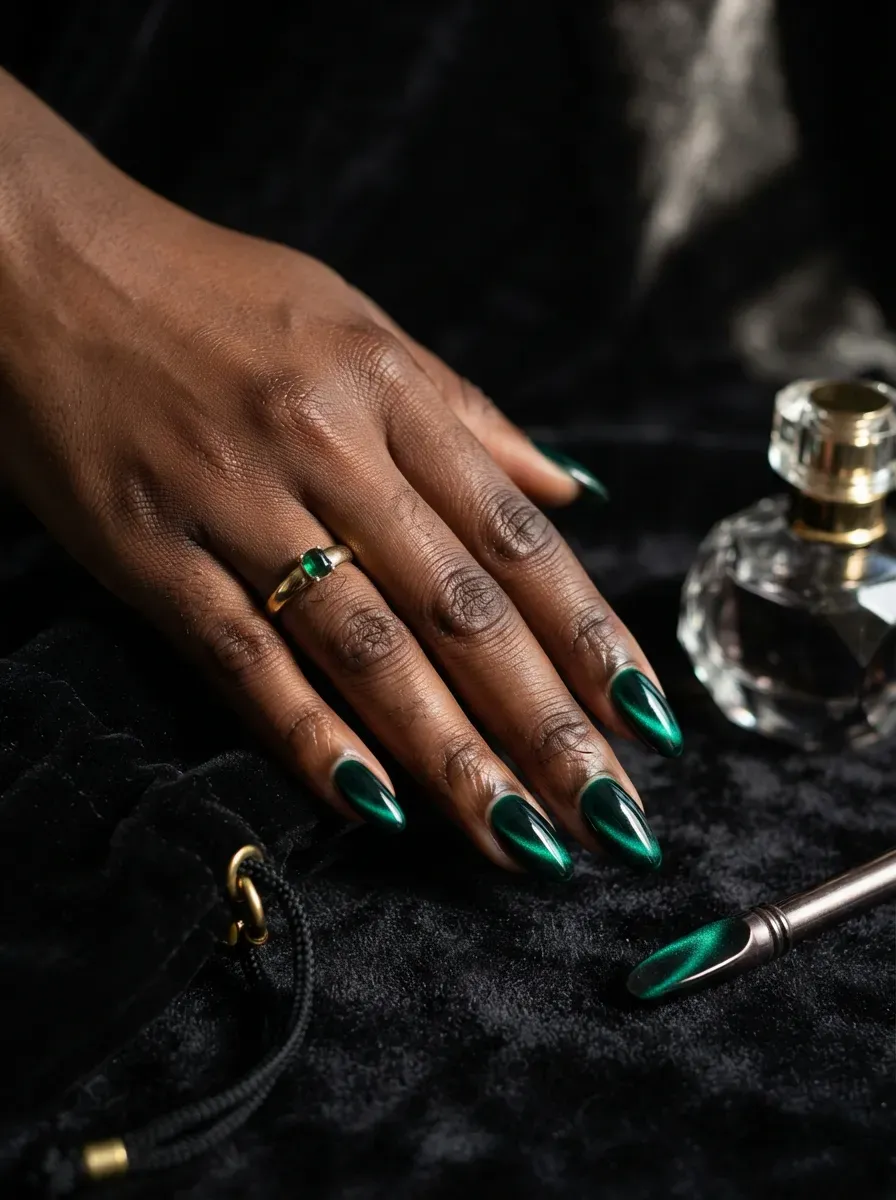
Cat eye polish gives a deep French tip extra dimension because the larger painted area provides room for magnetic particles to move. Emerald is especially effective because the reflective stripe can shift from bright green to nearly black.
Magnetize each nail individually before curing. Position the brightest reflection closer to the center of the tip so the deep side curves remain visible rather than disappearing into shadow.
18. Sage Green Deep French Tips
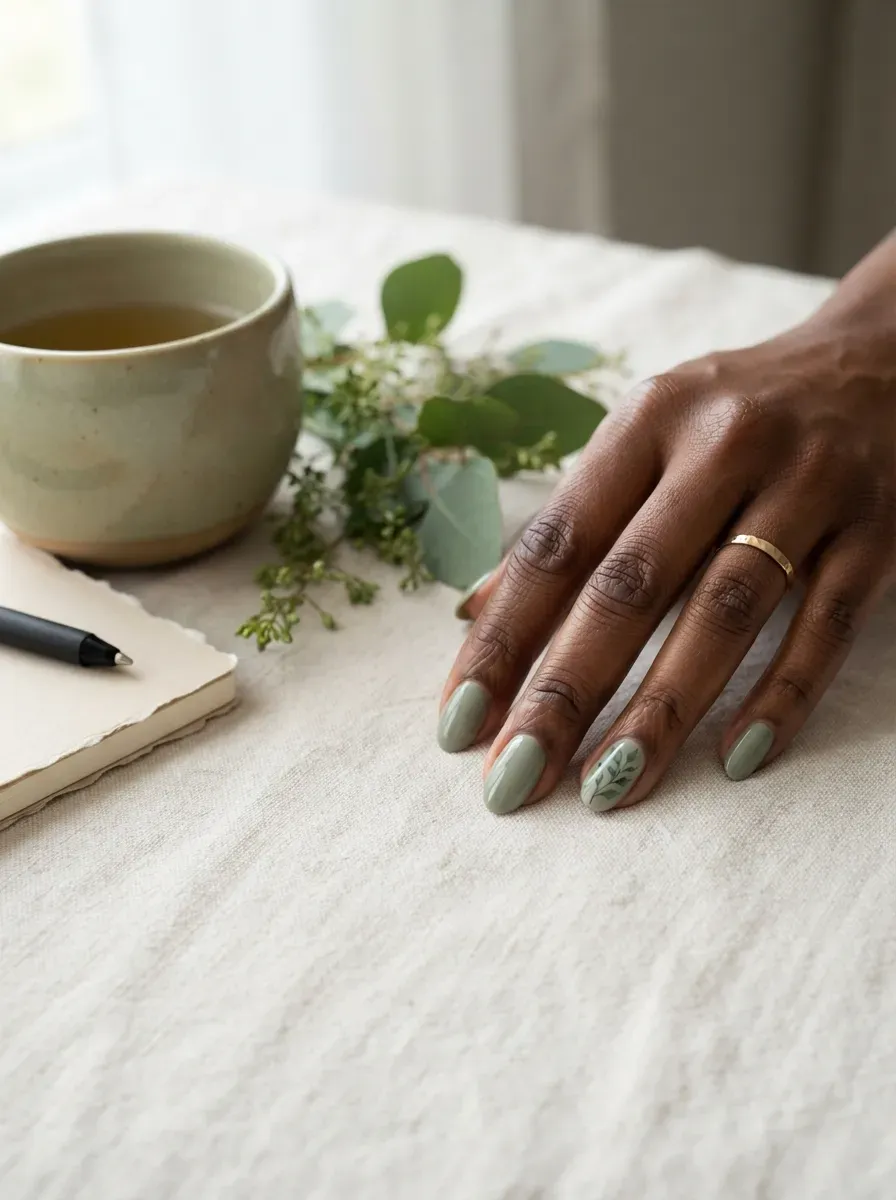
Sage makes a deep French tip feel softer because the muted green does not create the same visual weight as forest or emerald. The wider colored area is still dramatic, but the tone remains calm and wearable.
Use a warm beige base to keep sage from looking gray. Medium oval nails carry the deeper curve well without requiring the length of a sculpted almond set.
19. Plum Deep French Tips
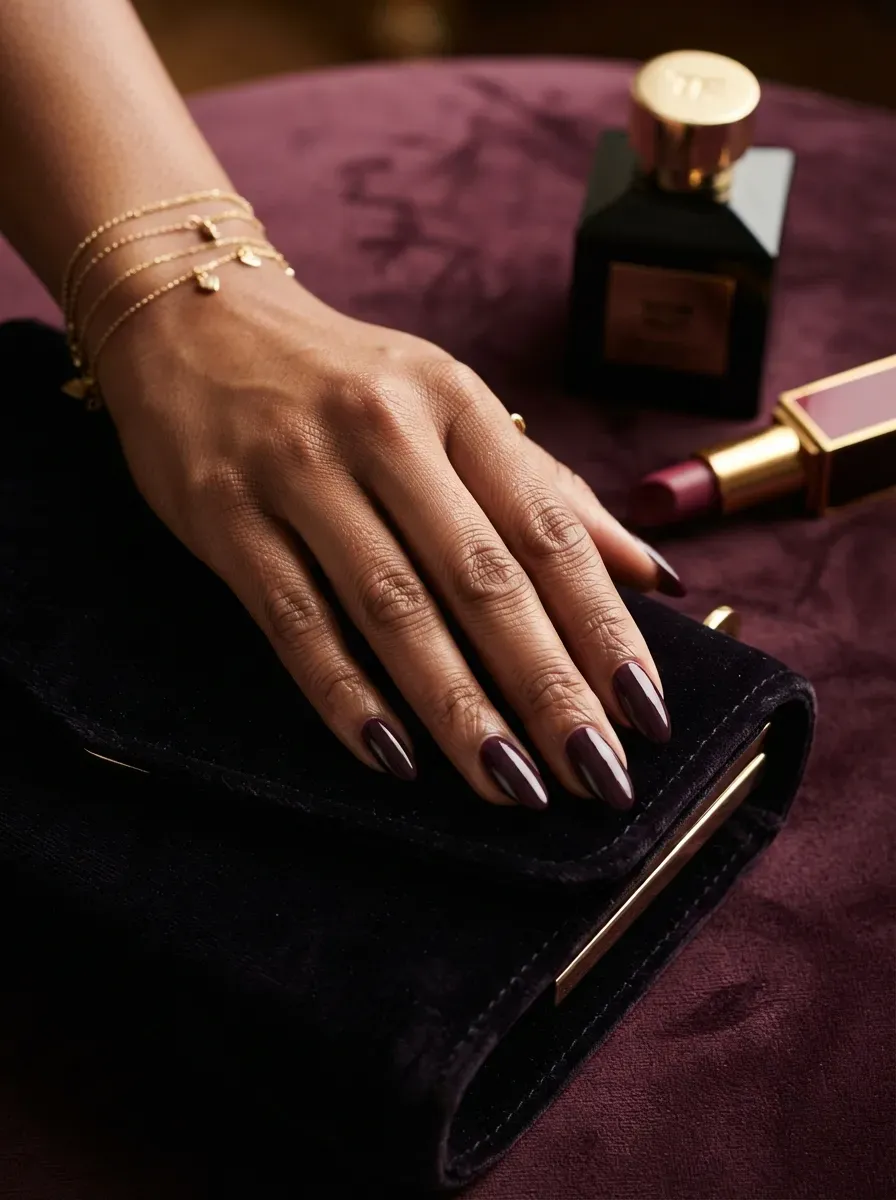
Plum sits between purple, berry, and brown, giving deep French tips rich color without becoming overly bright. It looks particularly strong on almond nails because the dark curve reinforces the taper.
A sheer beige base lets the plum remain the focal point. Choose a cream polish with full coverage, since streakiness becomes obvious when the French area extends deep along the sidewalls.
20. Aubergine Deep French Tips
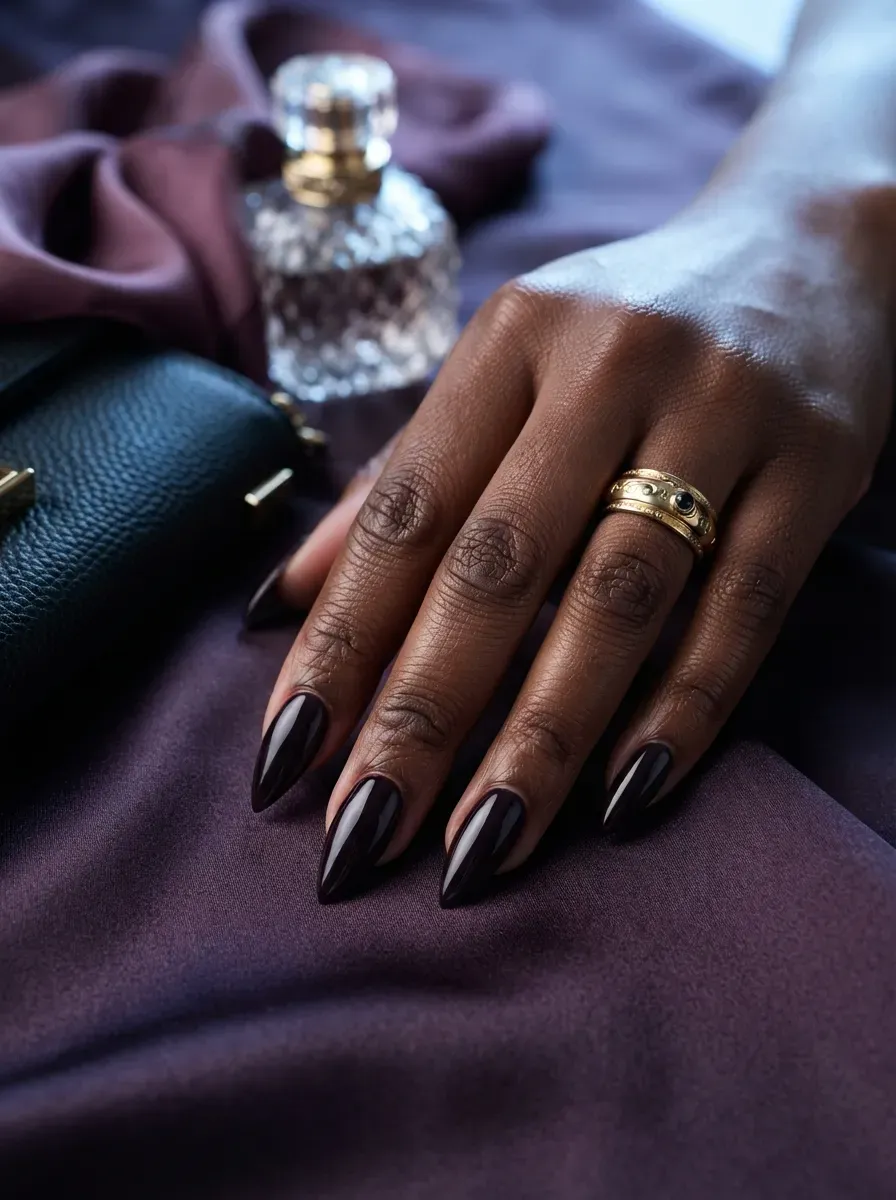
Aubergine gives deep French tips near black intensity with a purple undertone that becomes visible in direct light. The color suits dramatic stiletto and long almond nails because it makes the low smile line feel even more sculptural.
Keep the nude base translucent so the dark tip does not dominate the entire nail. Cure thin layers fully to avoid wrinkling in densely pigmented areas.
Check out 20 Nail Design Ideas Anyone Can Do, Zero Skill Needed
21. Lavender Deep French Tips
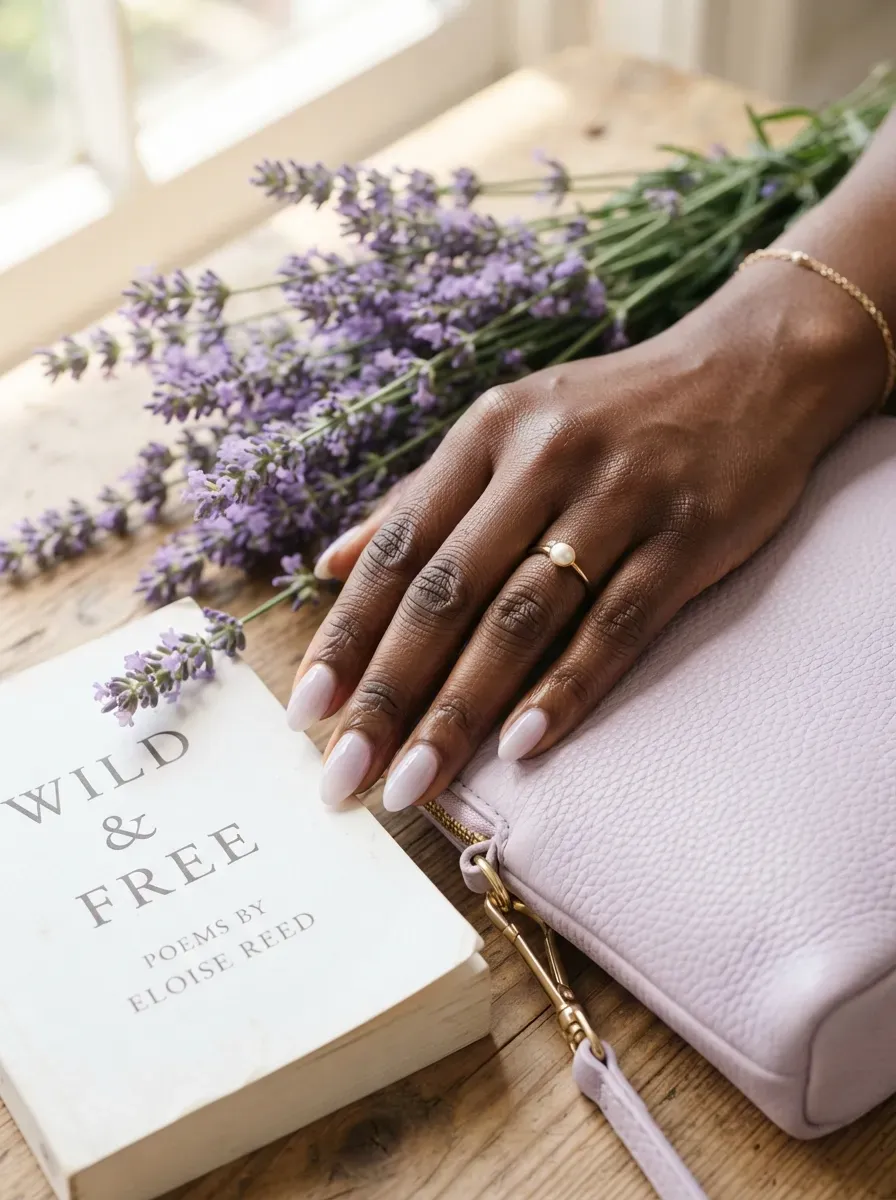
Lavender shows how a deep French tip can be dramatic through shape rather than dark color. The wide pastel section creates strong visual structure, while the muted purple keeps the manicure light.
Choose a dusty lavender rather than an extremely pale lilac if you want the curve to remain visible. A neutral nude base also prevents the purple from picking up an unintended pink cast.
22. Burnt Orange Deep French Tips
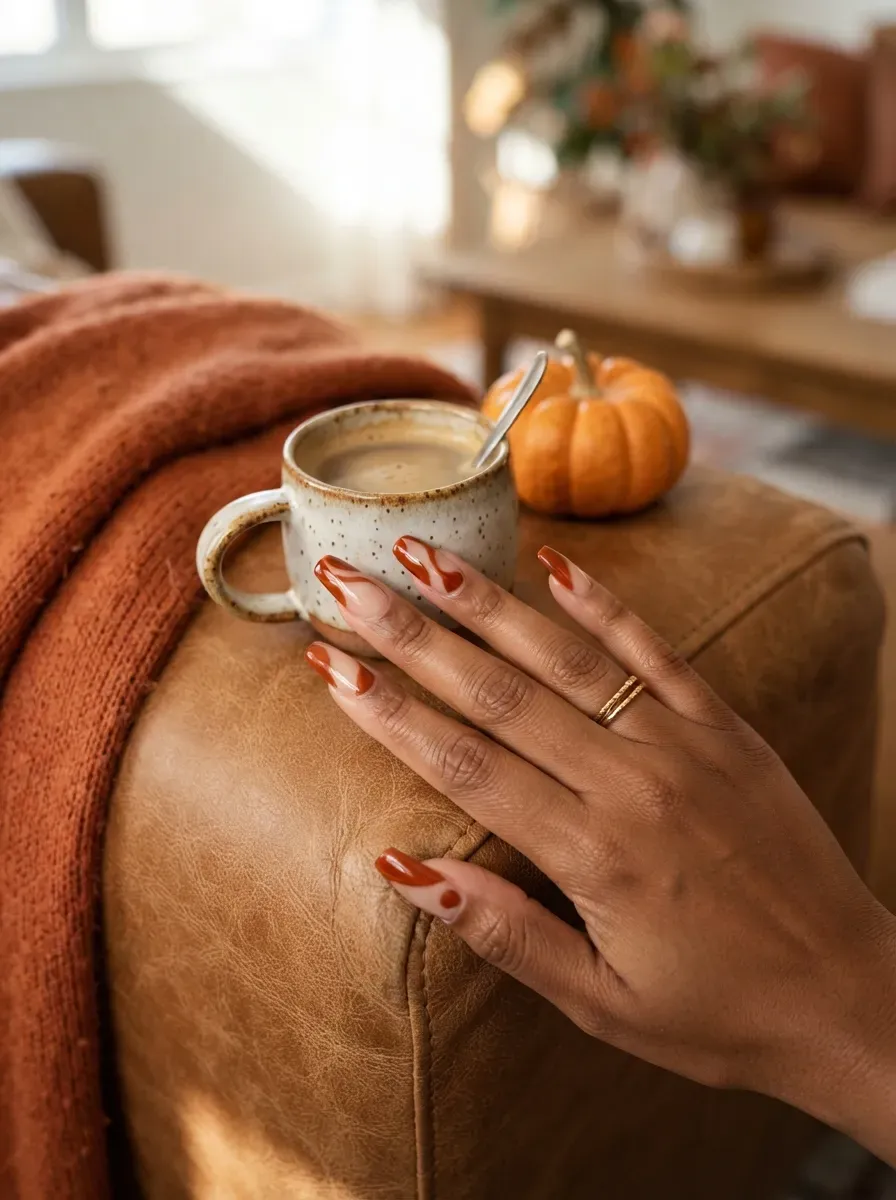
Burnt orange has enough brown in it to make a deep French tip feel rich rather than bright. The expanded painted area lets the rust tone become a real part of the manicure without requiring full coverage.
Coffin and almond nails handle the shade especially well. Use a beige base instead of pink so the burnt orange remains warm rather than shifting toward coral.
23. Terracotta Deep French Tips
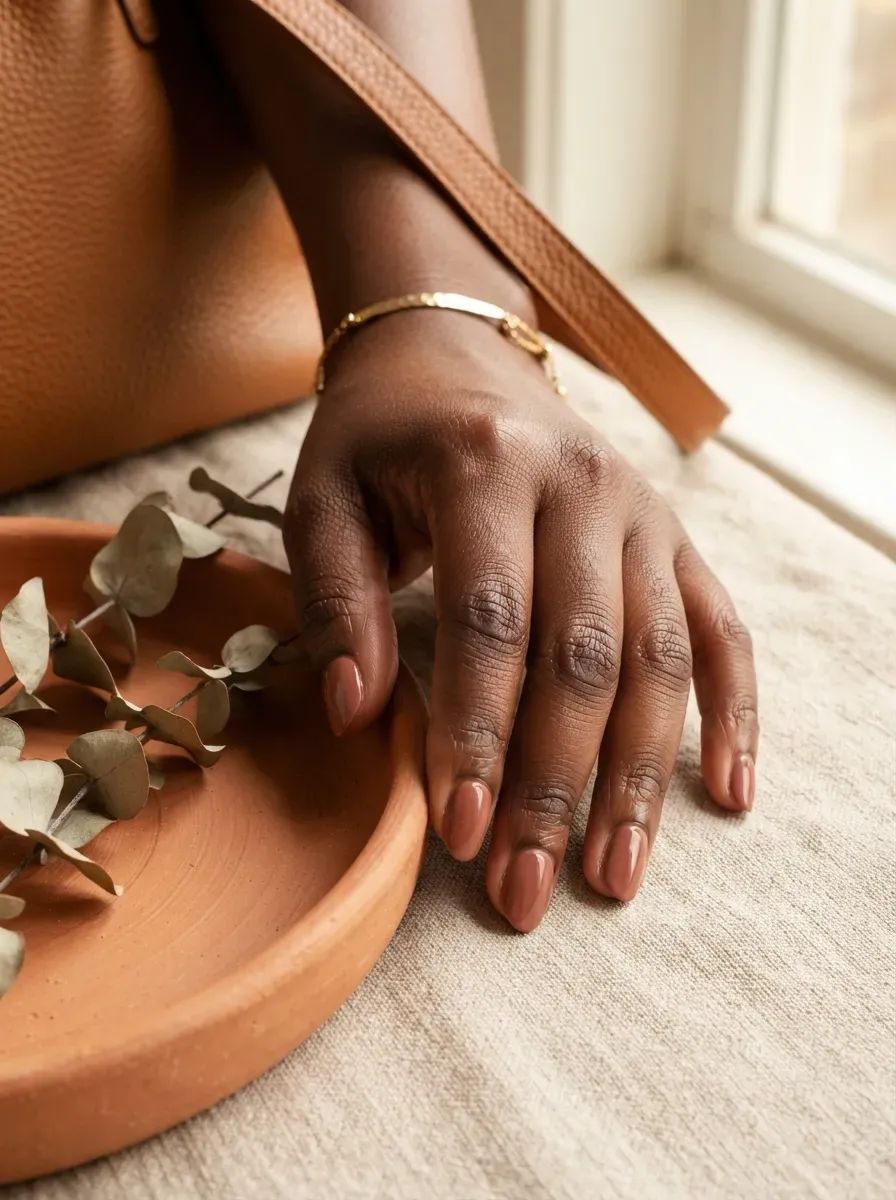
Terracotta combines rust, brown, and muted orange, making it easier to wear than a brighter pumpkin shade. A deep French placement gives the color enough room to show its earthy undertone.
Medium oval nails keep the manicure softer than a long coffin shape. Pair terracotta with a sheer caramel or beige base so the two shades belong to the same warm family.
24. Mustard Deep French Tips
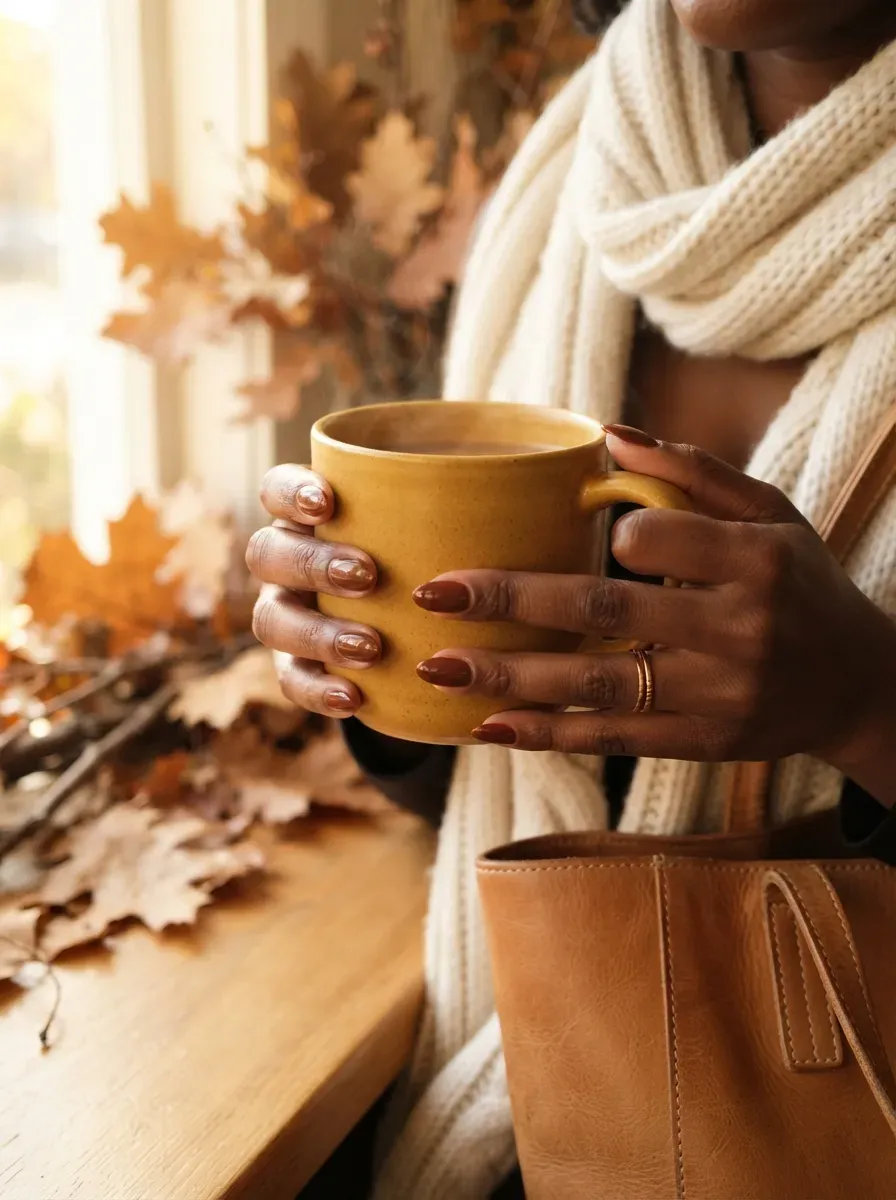
Mustard is bold enough to make the deeper smile line obvious, but its brown undertone keeps the effect grounded. The color looks especially striking against deep skin and neutral nude bases.
Because mustard can visually widen the painted area, keep the central tip slightly narrower than the side curves. That proportion preserves the elongated shape rather than making the nail look top heavy.
25. Gold Chrome Deep French Tips
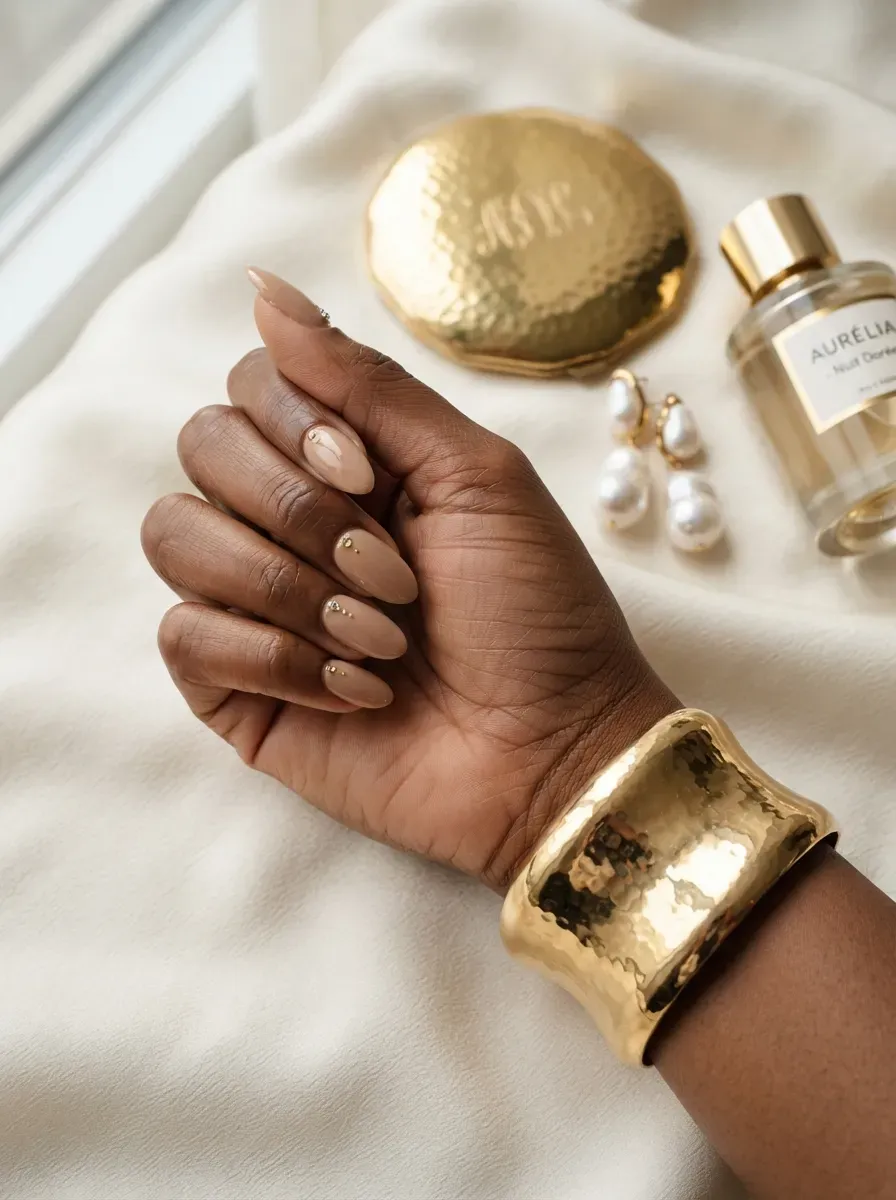
Gold chrome turns the deep French area into a reflective frame around the nail bed. The larger painted section catches more light than a micro chrome tip, so the metallic effect becomes part of the overall silhouette.
Smooth preparation is essential because chrome exaggerates ridges. Rub the powder over a fully cured compatible base, then seal the entire curved edge carefully to prevent early wear.
Read now How to Preserve Mother’s Day Flowers in Resin and Turn Them Into Beautiful Lasting Keepsakes
26. Silver Chrome Deep French Tips
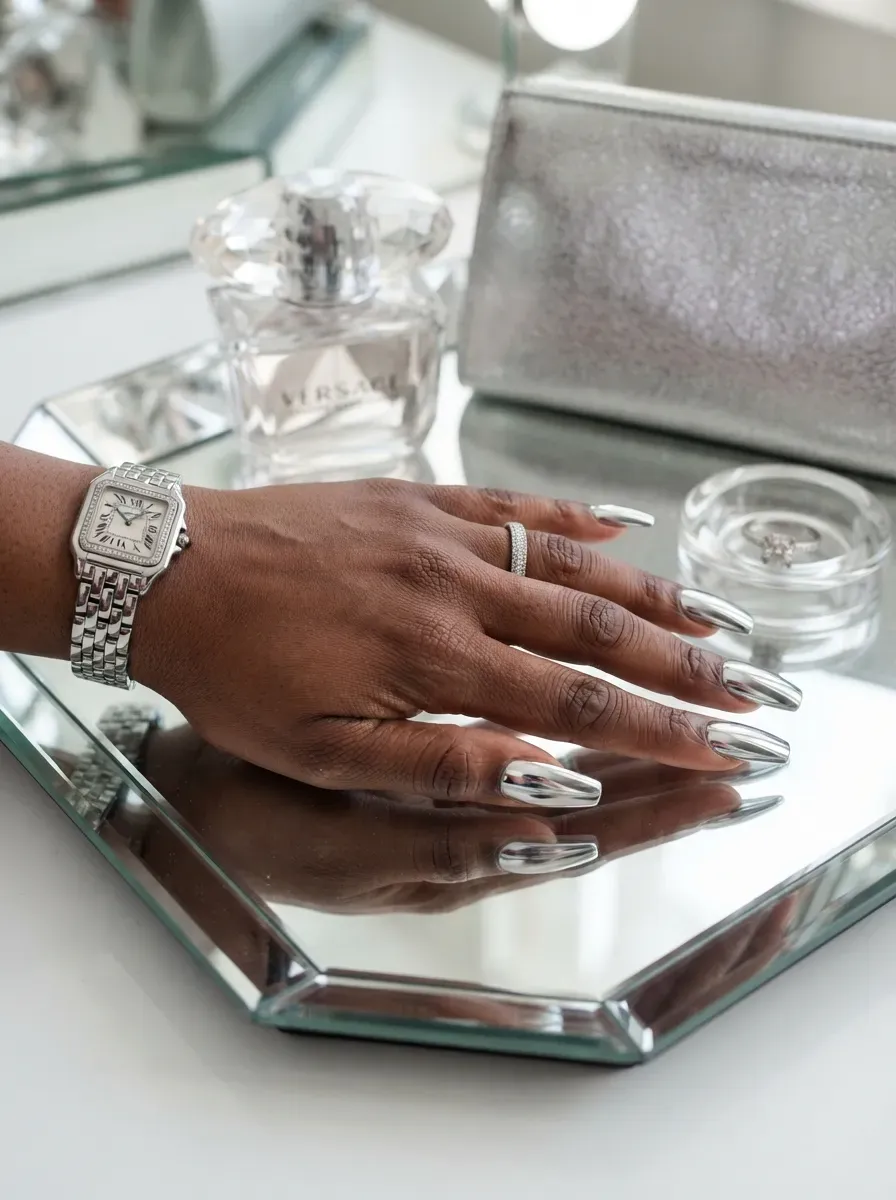
Silver chrome makes a deep French tip feel more architectural because the reflective frame emphasizes every curve. Coffin and almond shapes both carry the larger metallic area well, especially when the nude center stays completely clean.
A smooth black or silver gel base strengthens the mirror effect. Seal the free edge and side curves thoroughly because exposed chrome can wear away faster than regular gel color.
27. Champagne Chrome Deep French Tips
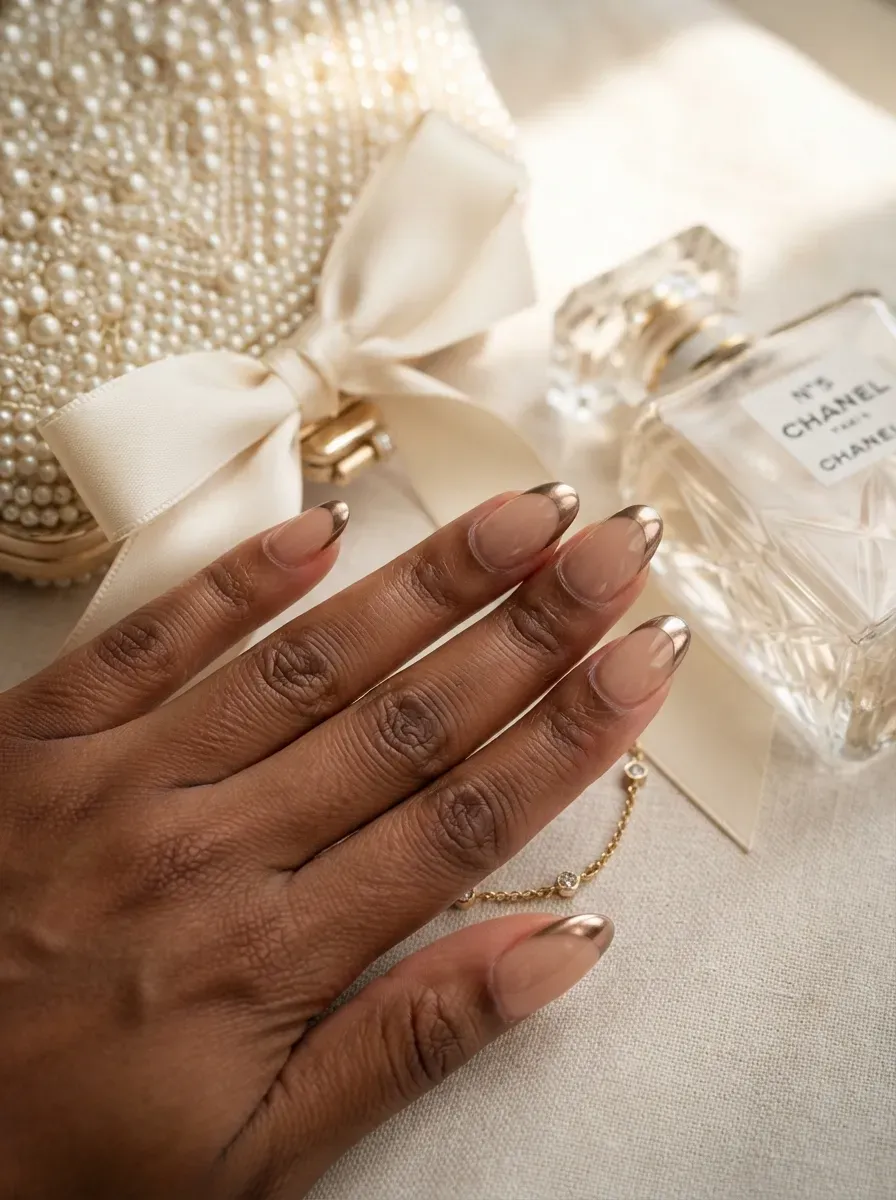
Champagne chrome gives the deep French structure a softer metallic glow than yellow gold or silver. The warm beige reflection works especially well with neutral clothing, wedding looks, and golden jewelry.
A sheer beige base keeps the manicure cohesive. Avoid cool pink underneath if you want the chrome to stay warm, because the larger deep tip area makes undertone differences more obvious.
28. Pearl Chrome Deep French Tips
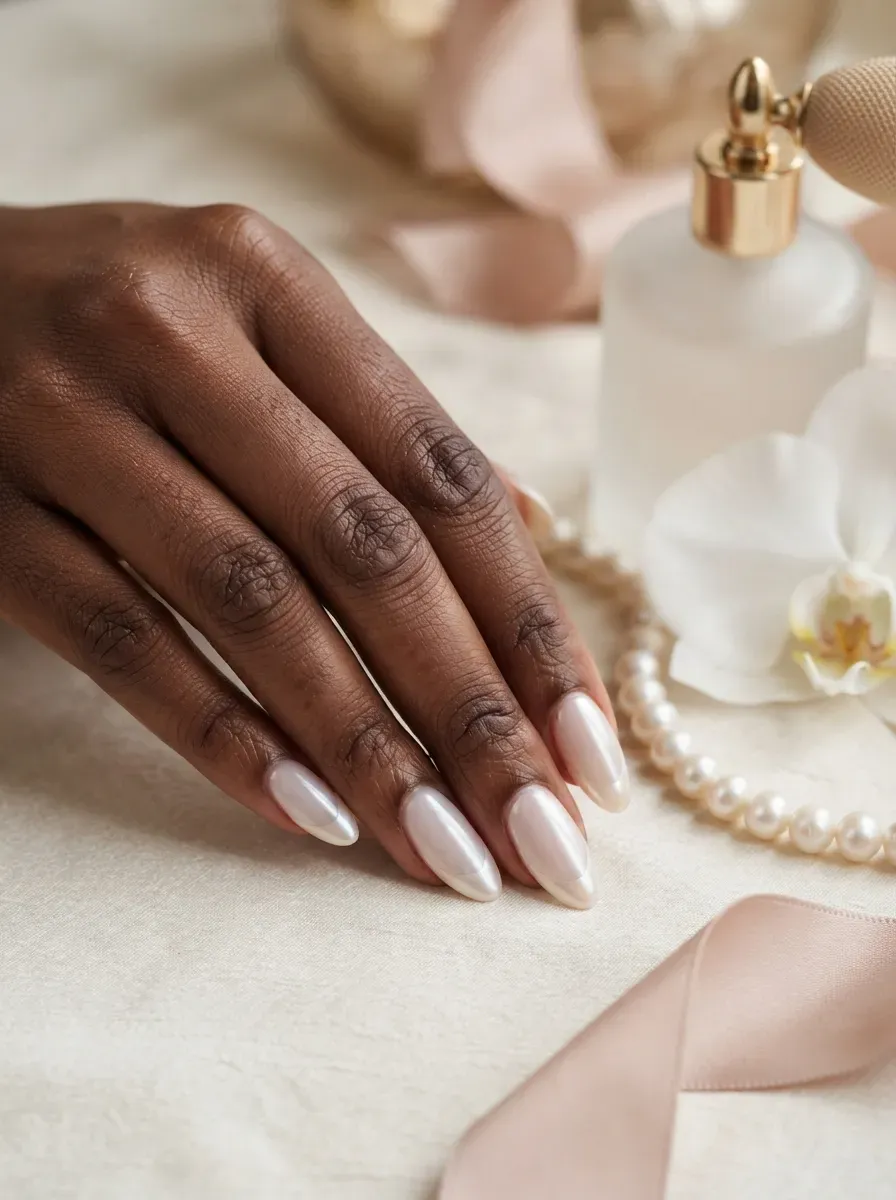
Pearl chrome softens the drama of a deep French tip by replacing mirror reflection with a diffused glow. The curved area still frames the nail strongly, but the finish remains delicate.
This works particularly well over milky or sheer pink bases. Use a small amount of powder and buff evenly, because uneven pressure can leave the deeper side curves brighter than the center.
29. Glazed Deep French Tips
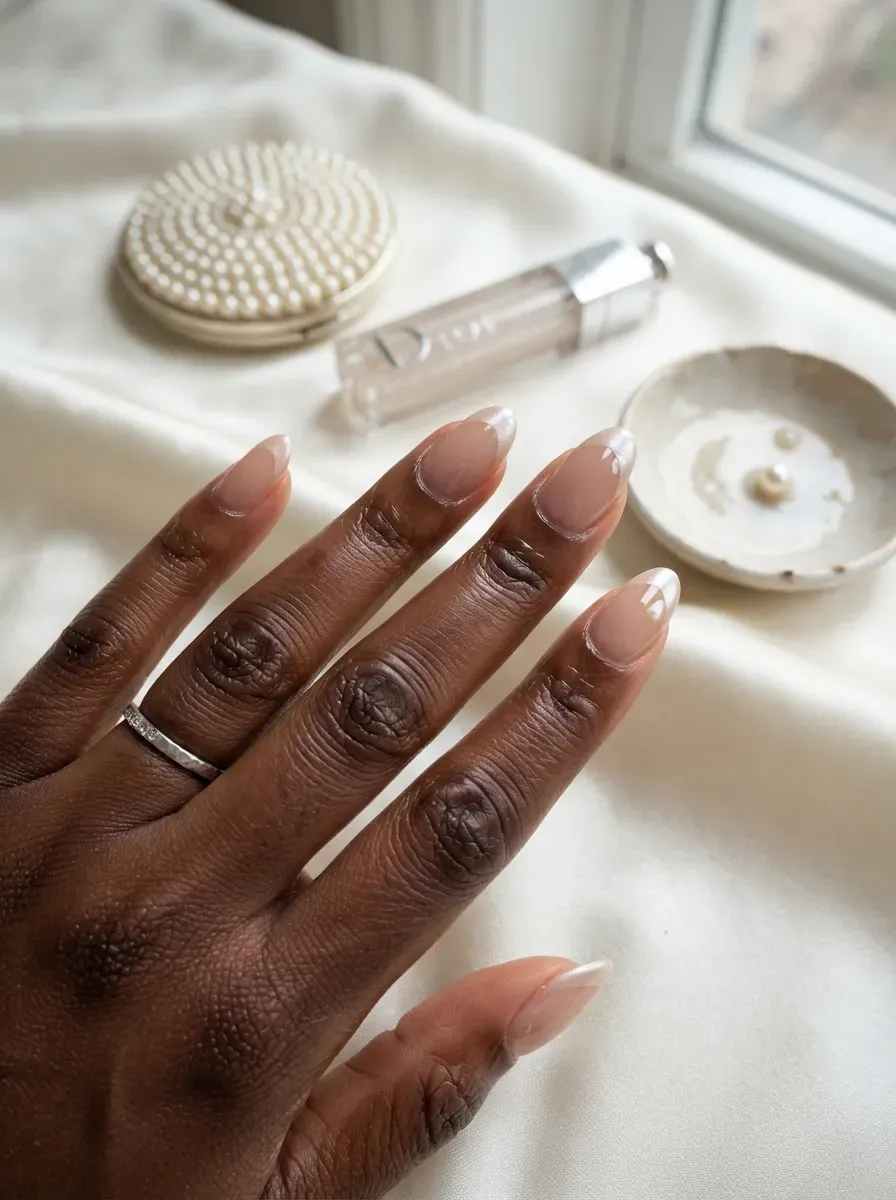
A glazed deep French uses soft pearlescent reflection rather than solid metallic color. The finish allows the exaggerated shape to show without making the painted area look too heavy.
It works especially well when the base remains translucent. Apply glaze in a thin layer over the finished tip and stop once the light shift becomes visible. Too much powder removes the delicate effect.
30. Burgundy Cat Eye Deep French Tips
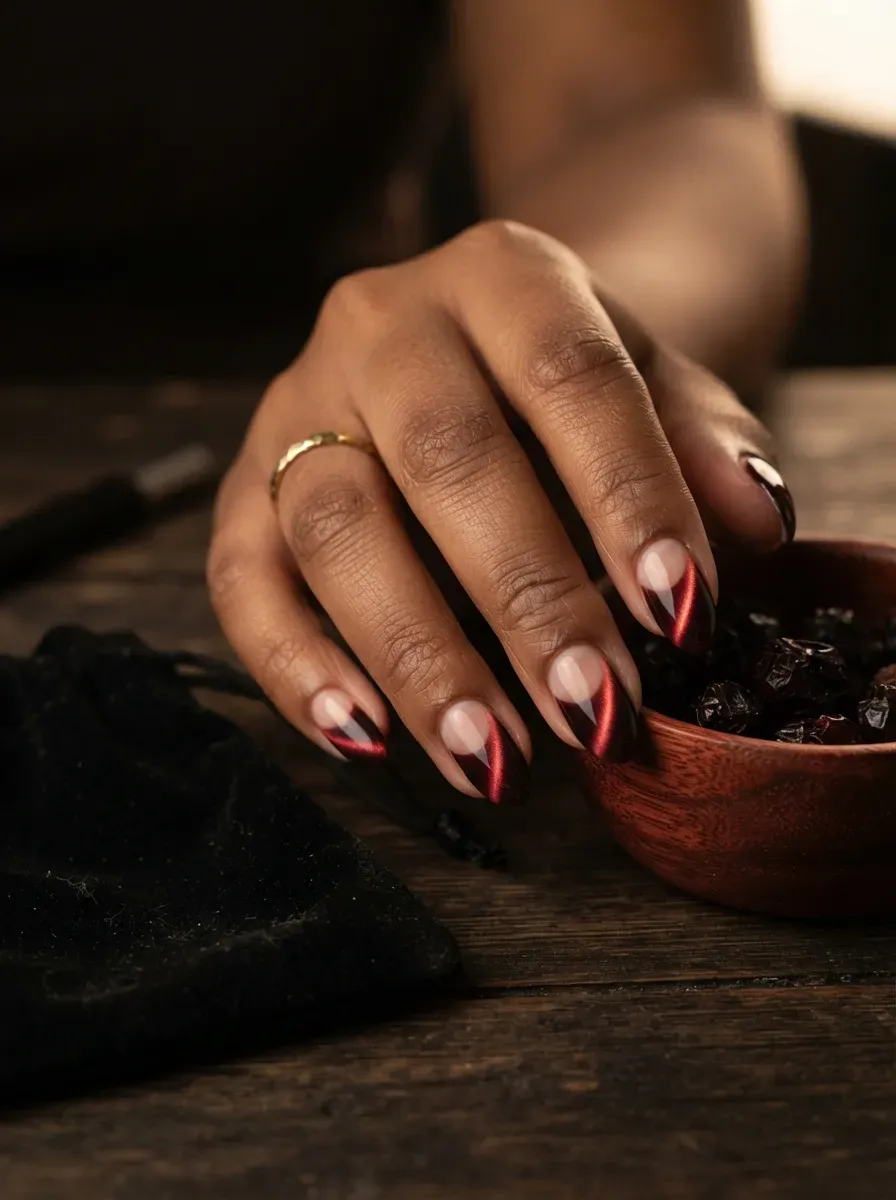
Burgundy cat eye polish gives the deep French shape both color and movement. The wider tip area lets the magnetic stripe travel through the curve instead of appearing as a tiny flash at the free edge.
Place the brightest reflection slightly off center for more depth. Magnetize and cure one nail at a time so the particles do not spread before the design is locked in.
31. Cocoa Velvet Magnetic Deep French Tips
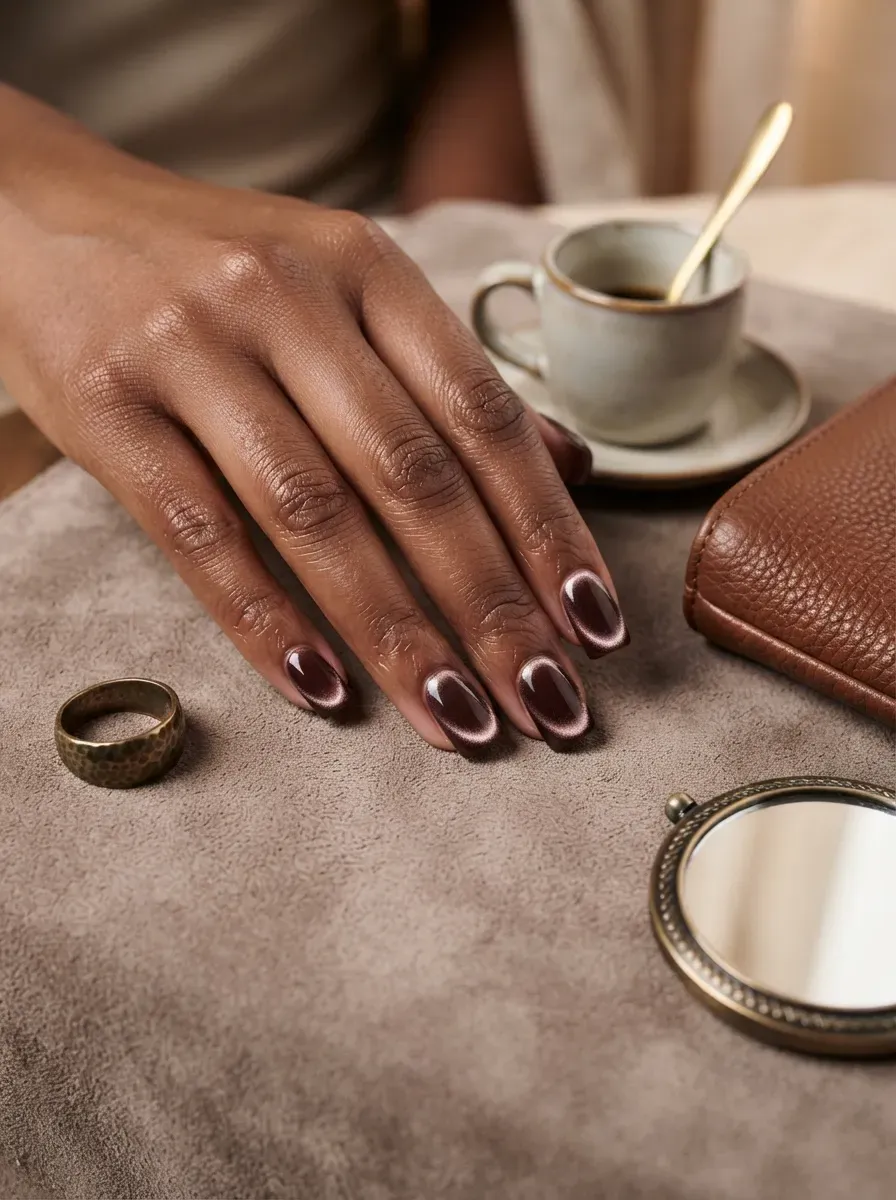
Velvet magnetic brown gives a deep French tip a soft, fabric like shimmer rather than a sharp cat eye stripe. The larger painted area makes the magnetic effect more visible while the cocoa shade keeps the look grounded.
Move a wide magnet around the tip from several angles before curing. Flash cure immediately once the reflection looks evenly distributed across the curve.
See now 30 Romantic Picnic Date Ideas for Couples: A Soft Escape from the World
32. Cherry Jelly Deep French Tips
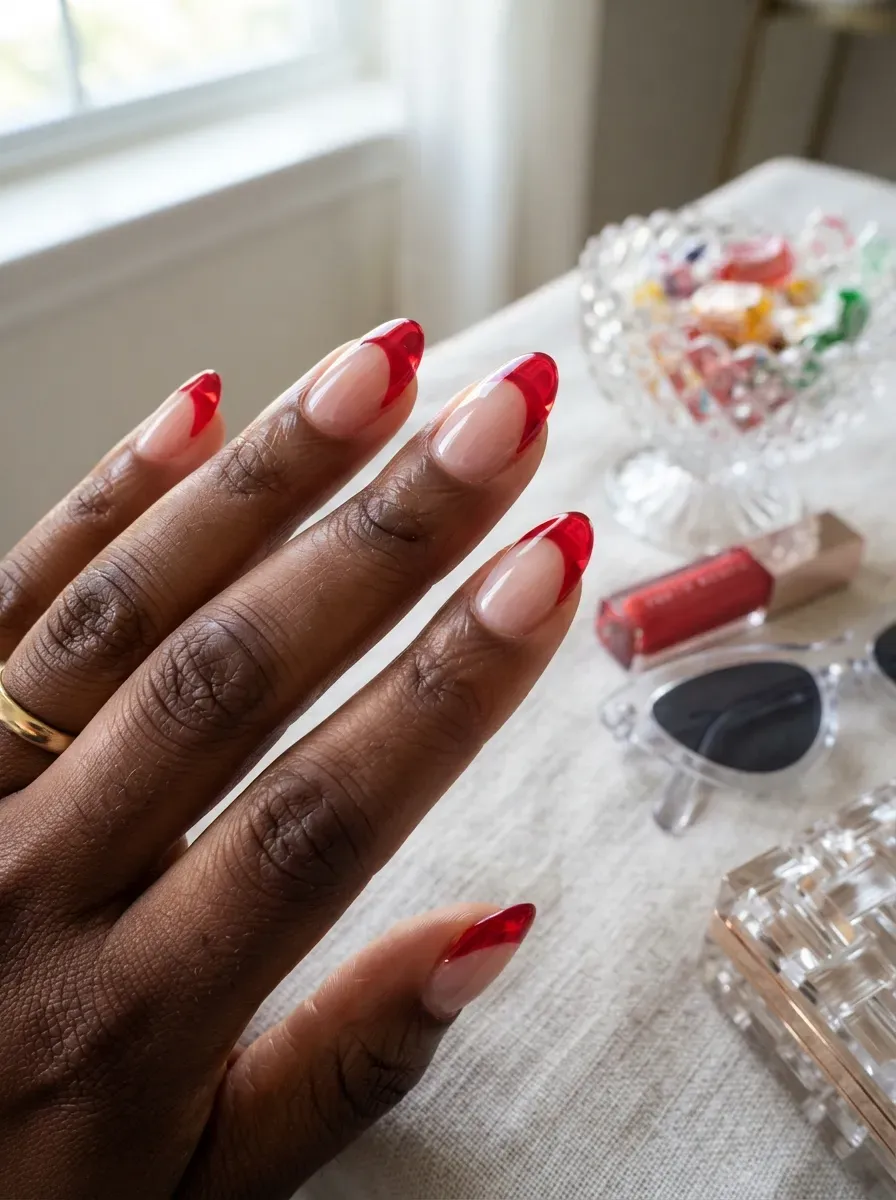
Cherry jelly gives a deep French tip saturated color without making the larger painted area fully opaque. Light can still pass through clear extensions, which makes the deep curve look glossy and dimensional.
Apply several very thin layers to build color slowly. A heavy jelly coat tends to streak and can cure unevenly where the side curves become deeper.
33. Amber Jelly Deep French Tips
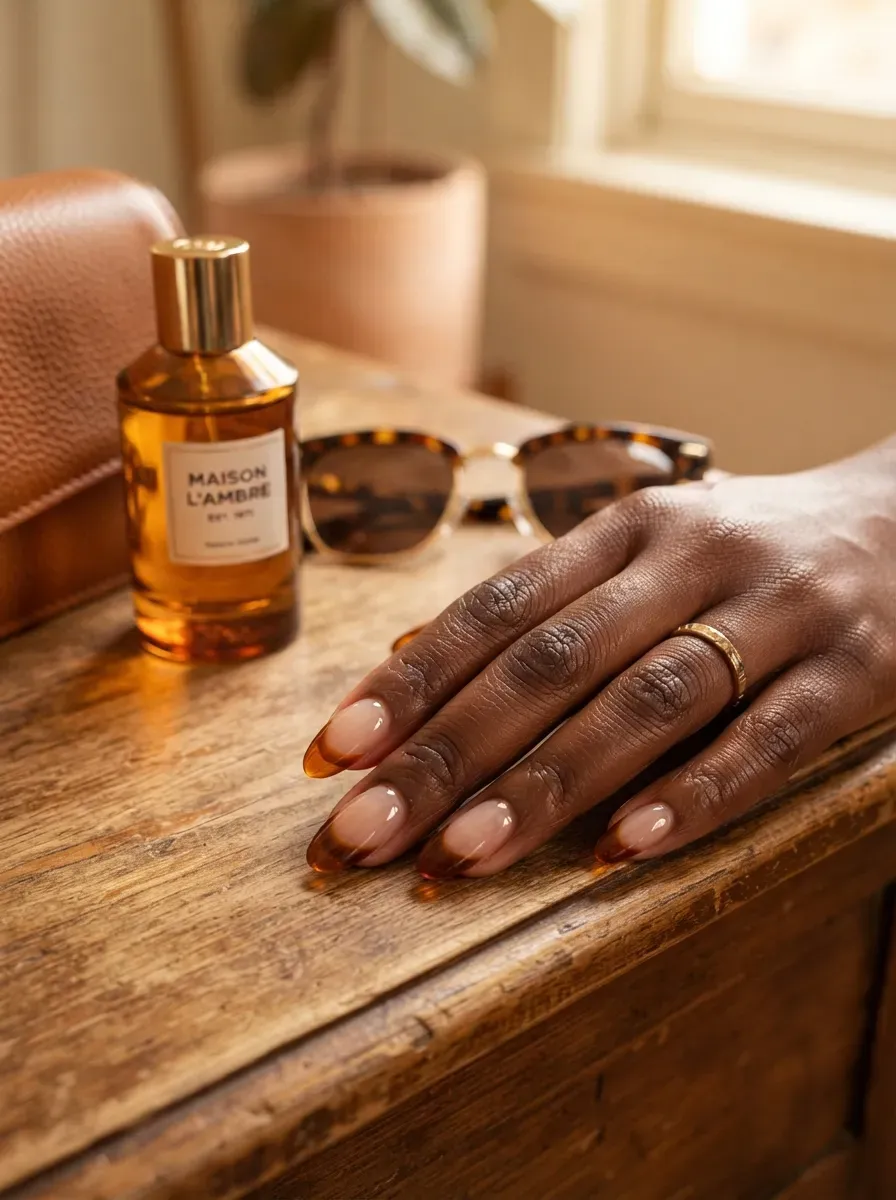
Amber jelly makes the deep French curve look almost like polished resin. The translucent brown orange tone has enough warmth to feel dramatic while still letting clear extensions show through.
The underside of the tip needs to be spotless because the larger transparent area exposes imperfections easily. Build depth with thin amber layers instead of trying to create full saturation in one application.
34. Tortoiseshell Deep French Tips
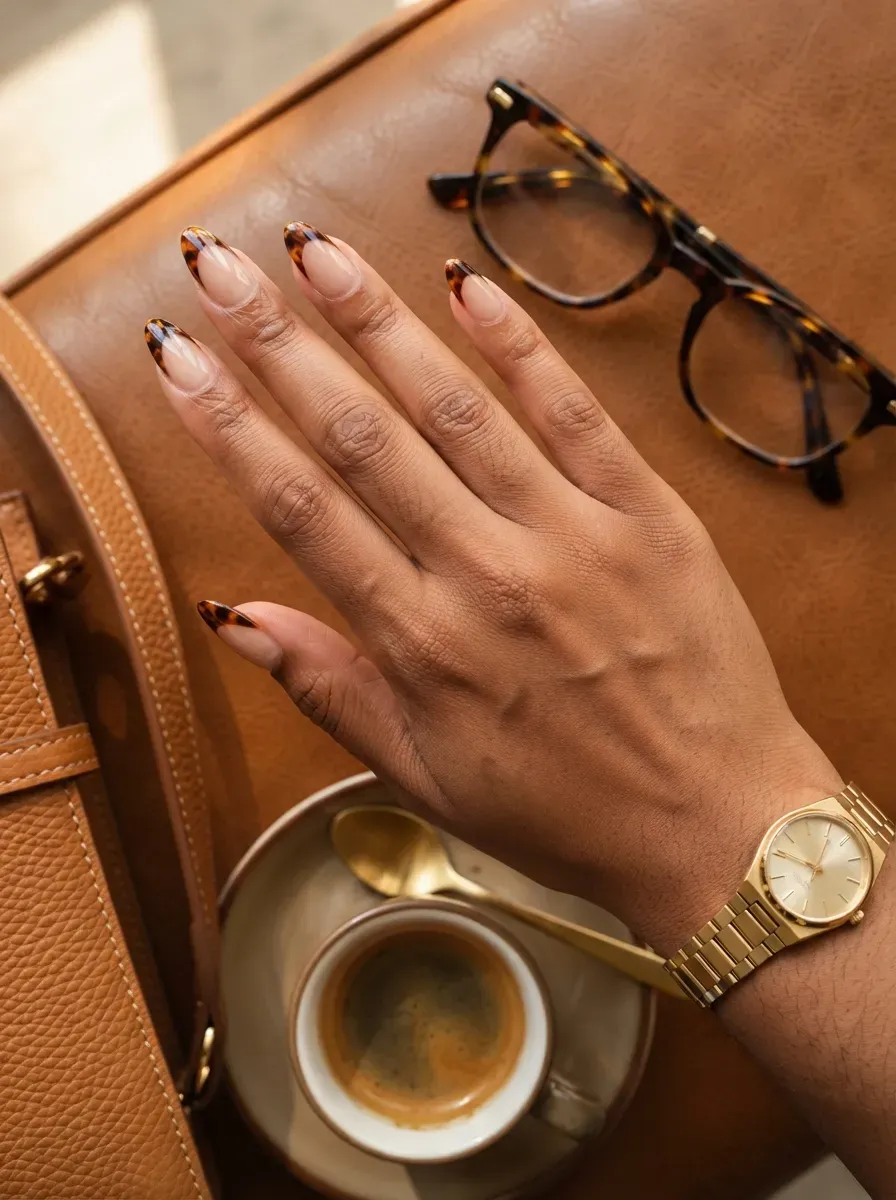
Deep French placement gives tortoiseshell more room to develop than a micro tip. Layers of amber, caramel, chocolate, and dark brown can build visible depth while leaving the nude center clear.
Irregularity is essential. Avoid evenly spaced dark spots, which can turn the pattern into leopard print. Cure translucent layers separately to create the convincing stacked effect of real tortoiseshell.
35. Leopard Deep French Tips
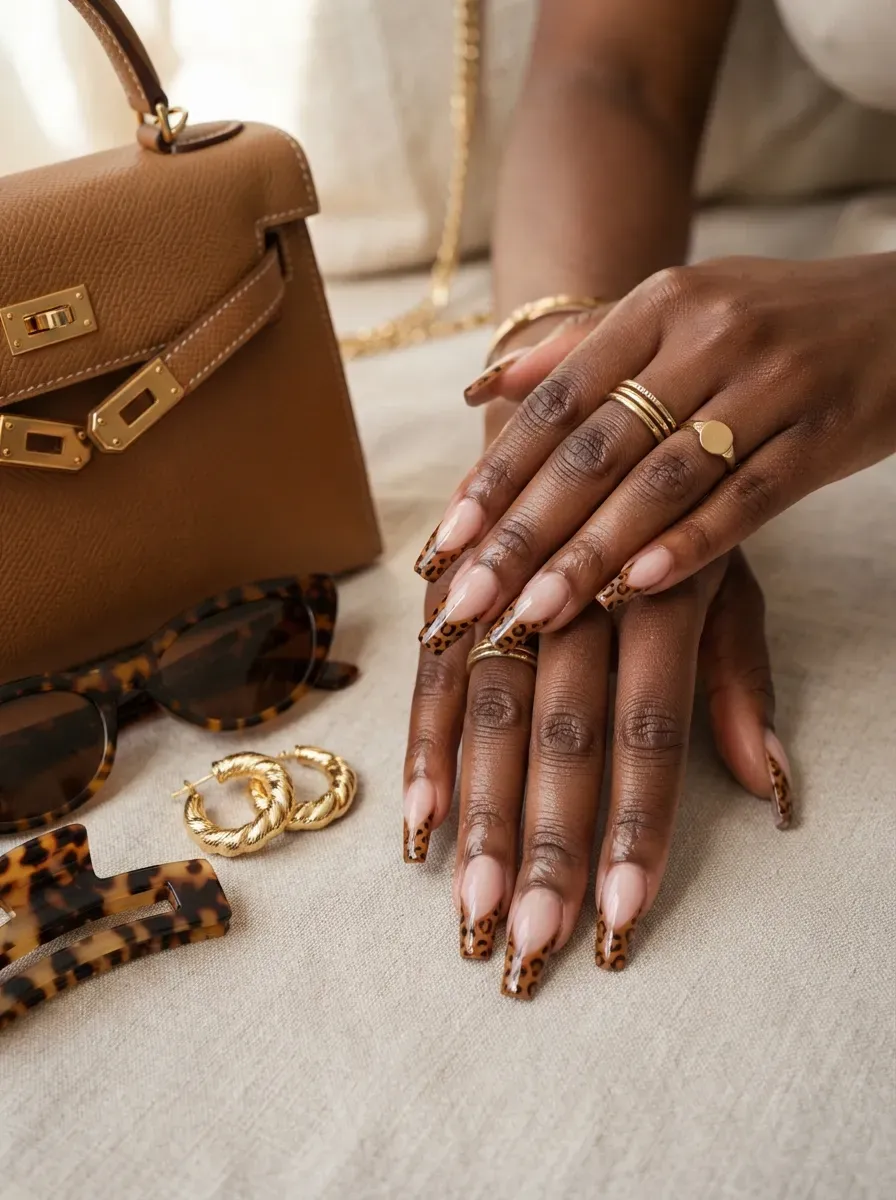
Leopard print becomes easier to read when the French area is deeper because there is enough room for irregular spots and outlines. Keeping the pattern inside the curved tip prevents the design from covering the entire nail.
Use caramel as the base, then add small espresso outlines with uneven spacing. A sheer beige nail bed keeps the animal print visually contained.
36. Floral Deep French Tips
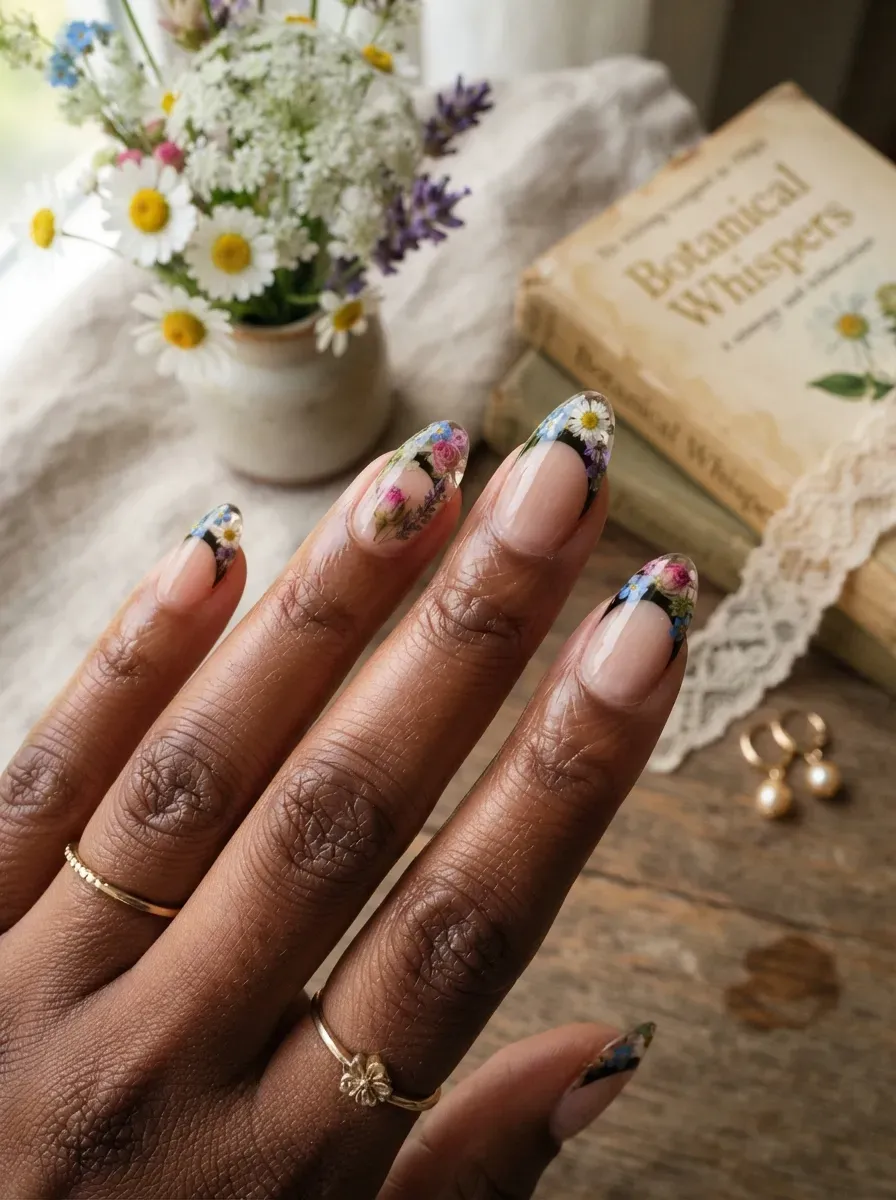
A deeper French section gives miniature floral art enough space to feel intentional rather than cramped. Tiny daisies, petals, and leaves can follow the smile line while the nude center prevents the design from becoming too busy.
Use flowers of different sizes rather than repeating identical motifs. Seal the painted area with a smooth top coat so raised petal details do not catch.
See more 20 Summer Nail Colors That Flatter Fair Skin
37. Lace Deep French Tips
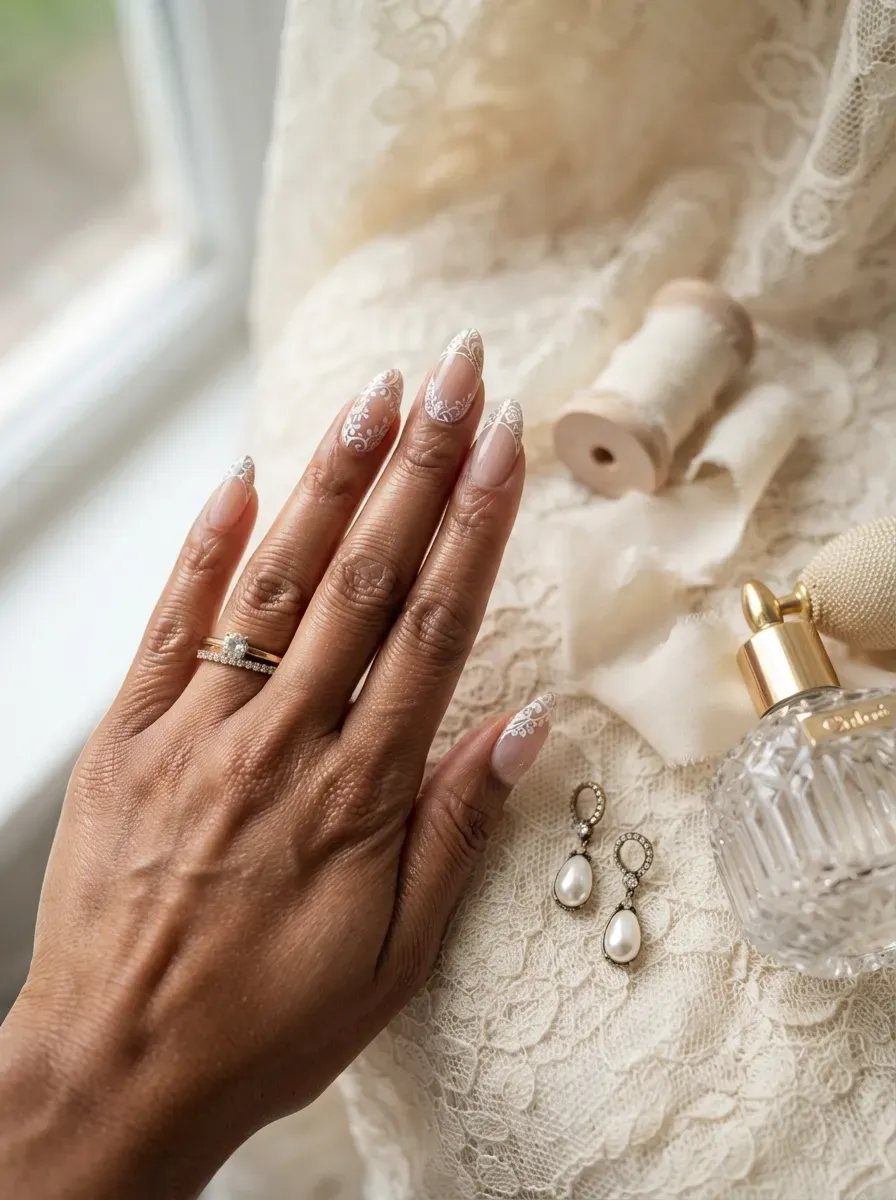
Lace works beautifully with a deep French tip because the enlarged edge gives scallops, loops, and negative spaces enough room to read clearly. The nude center still keeps the manicure from feeling fully covered.
Fine gel paint is important here. Thick white polish can make delicate lace lines merge after top coat, so use the thinnest brush possible for internal details.
38. Crystal Outline Deep French Tips
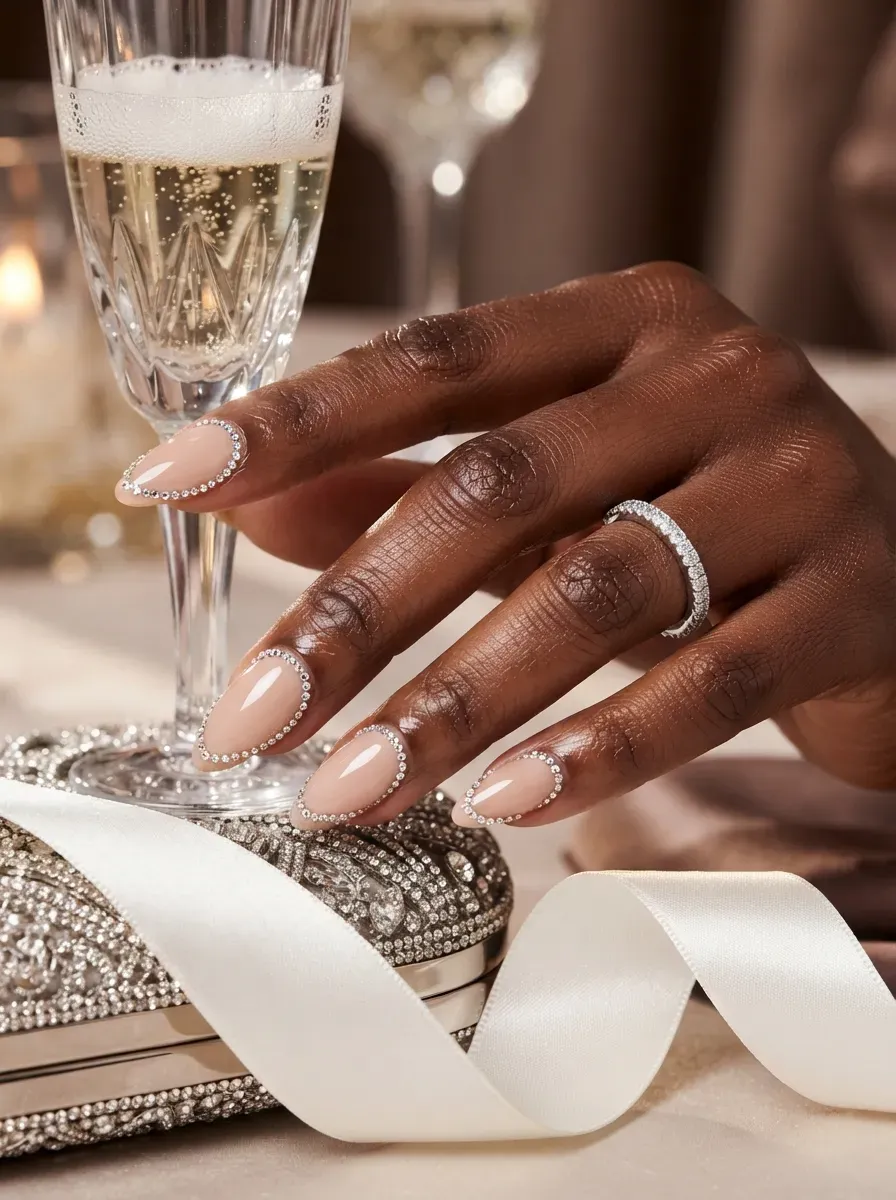
Crystal outlines emphasize the deep curve instead of filling it with color. The stones trace the smile line itself, which makes the exaggerated shape visible while leaving the center of the nail relatively bare.
Use micro crystals rather than large rhinestones so the curve stays smooth. Secure them with gem gel and avoid placing stones too close to the free edge where impact is greatest.
39. Pearl Outline Deep French Tips
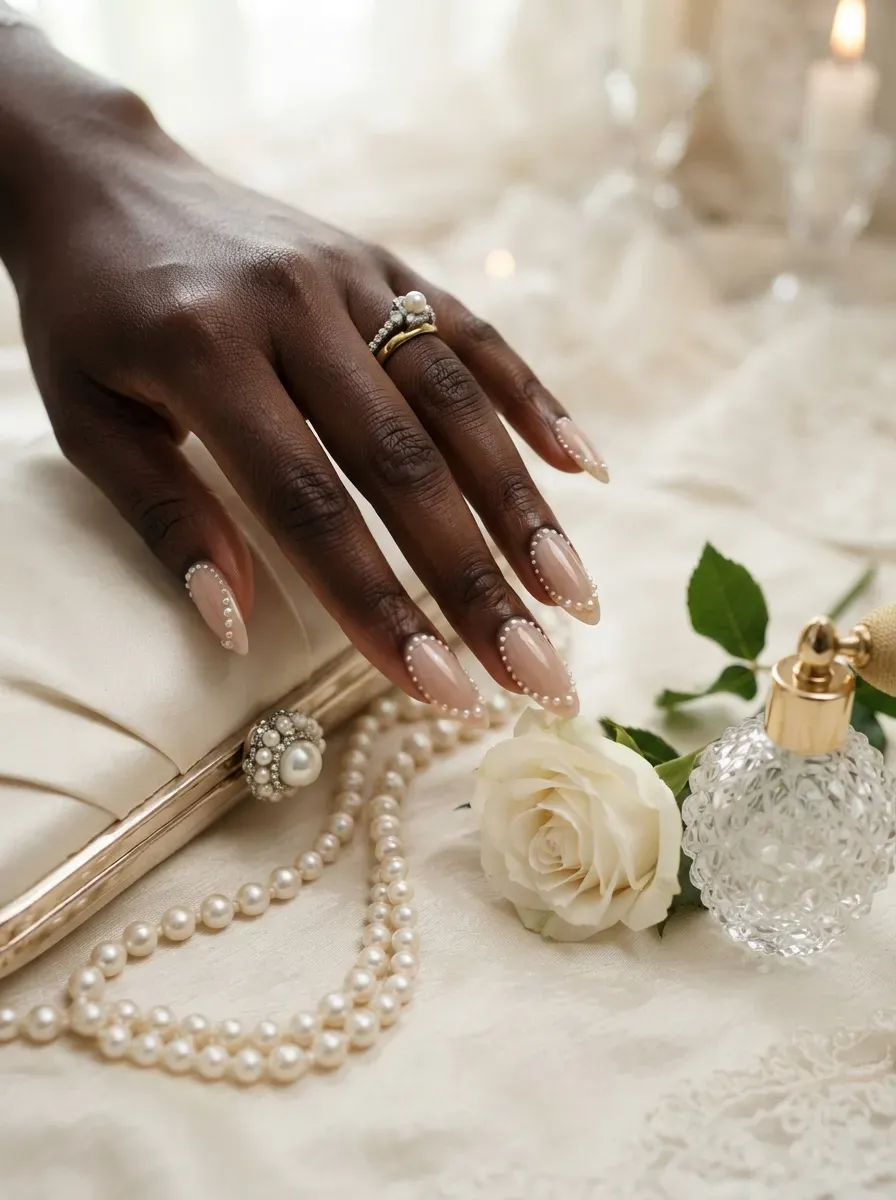
Pearls give the deep smile line a softer dimensional effect than crystals. Small flat back pearls can follow the curve closely without creating too much height, making the design especially suited to bridal and formal manicures.
Use pearls on selected nails if you want the set to stay balanced. Seal around their bases with gem gel while keeping the pearl surface uncovered.
40. Double Deep French Tips
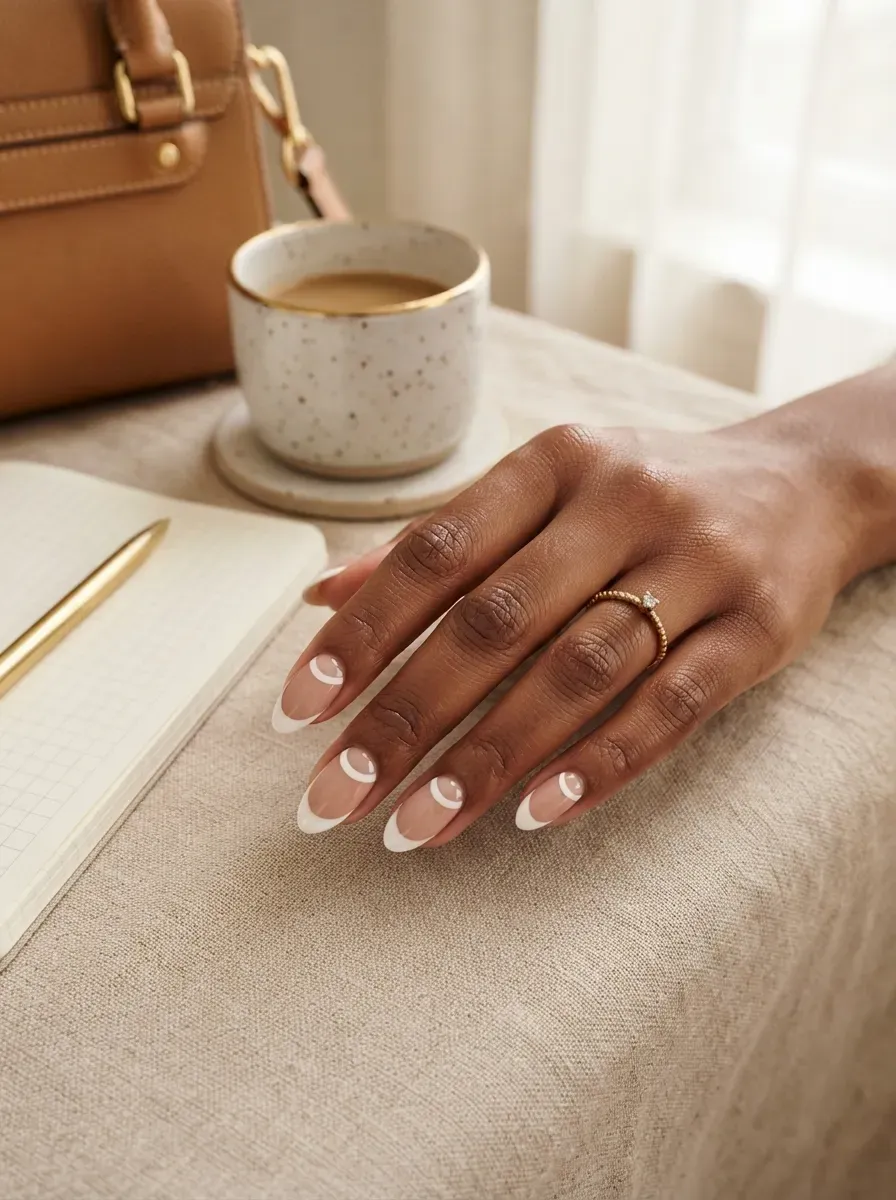
A double deep French uses two curves that follow the same exaggerated smile line. The second line adds dimension without filling the space between them, so the manicure stays graphic rather than bulky.
Medium to long almond nails provide enough room for both lines. Keep the gap consistent across each nail, since uneven spacing is more noticeable than slight differences in line thickness.
41. V Shaped Deep French Tips
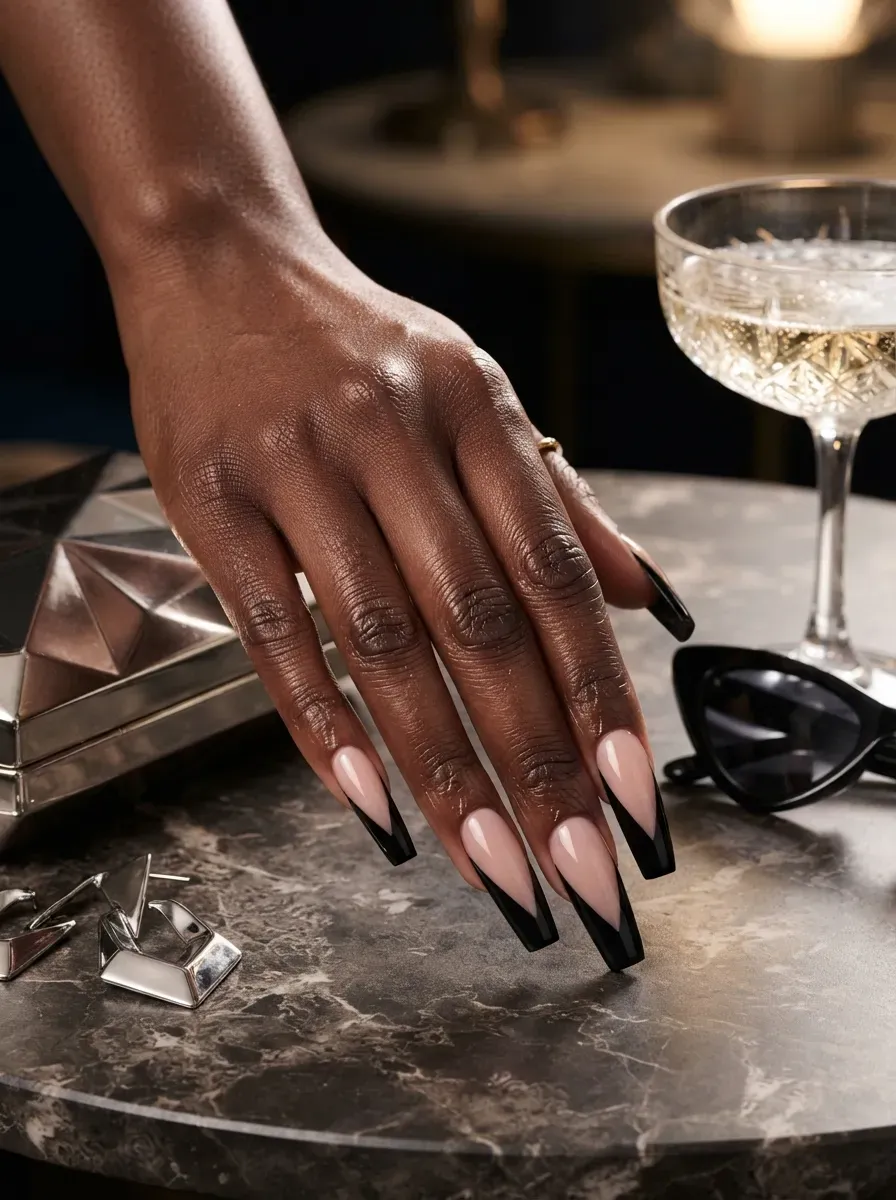
A V shaped deep French replaces the rounded smile line with two long diagonal sections that meet near the center of the nail. The geometry exaggerates length and works especially well on coffin and tapered square shapes.
Mark the center point before painting either side. Even a small shift becomes obvious because the deep V naturally directs the eye toward the middle.
Check out Seasonal Party Themes for Couples That Turn Every Season Into a Celebration
42. Side Swept Deep French Tips
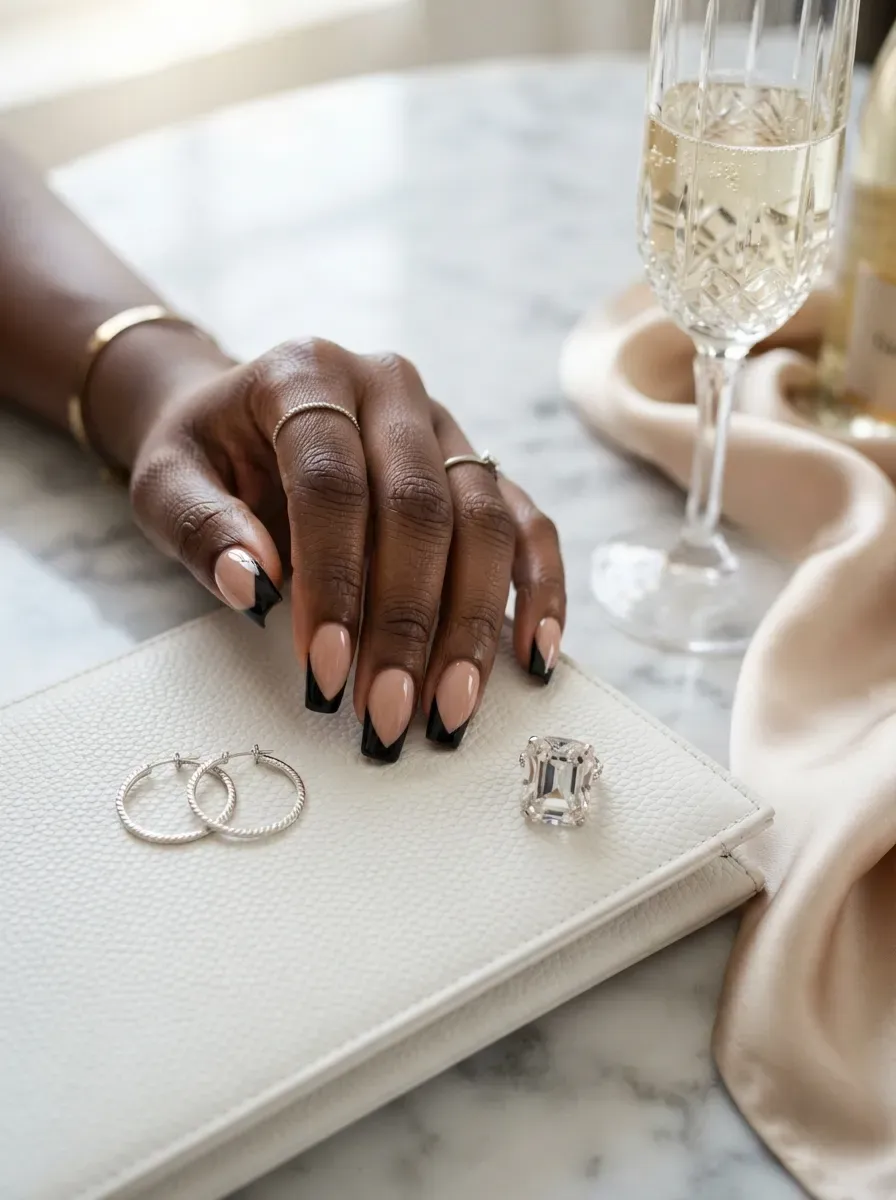
A side swept deep French pulls the colored area farther down one side of the nail while leaving the opposite side lighter. The asymmetry creates movement and can visually lengthen square shapes that would otherwise look wide.
Use a long liner brush for the first boundary line, then fill the outer section afterward. Mapping the curve first keeps the design cleaner.
43. Negative Space Deep French Tips
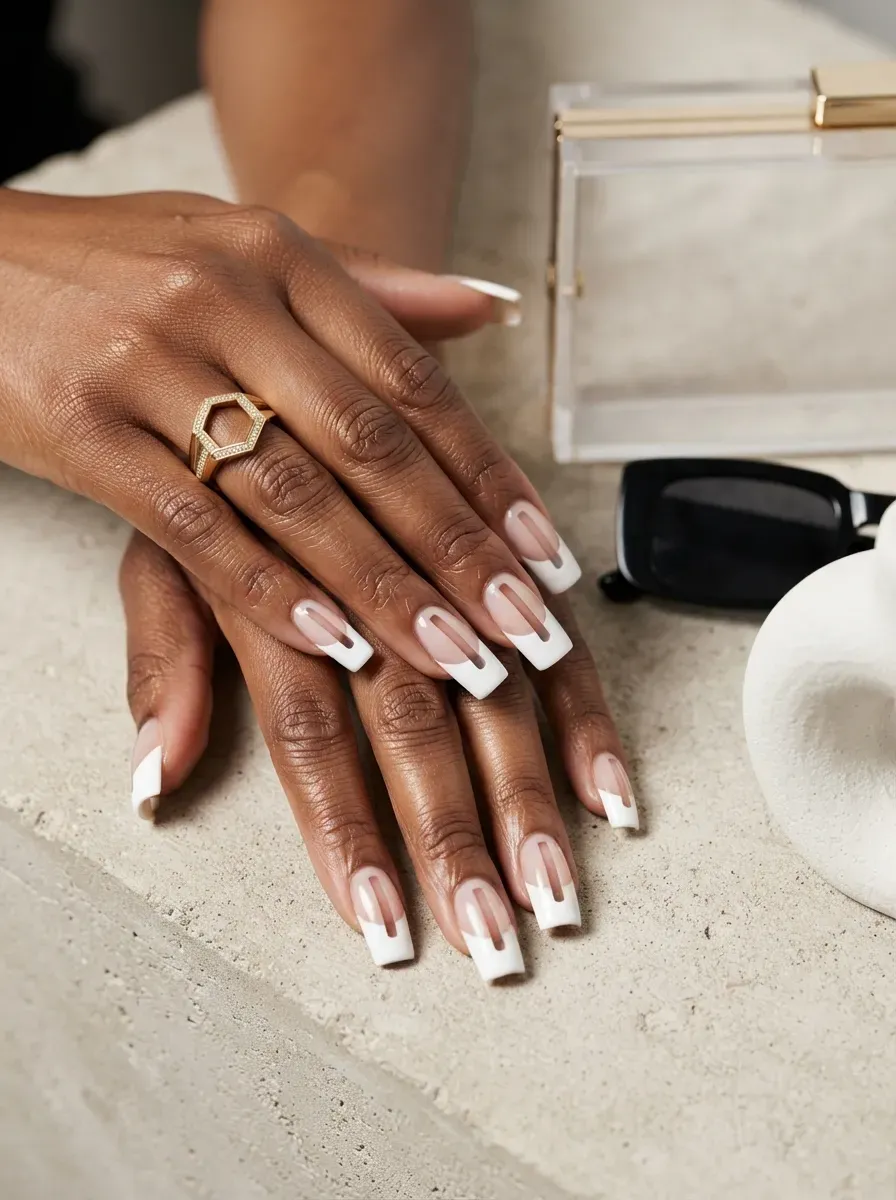
Negative space keeps a deep French tip from looking too solid by carving narrow clear sections through the painted area. The design can use lines, notches, or small geometric breaks while preserving the overall deep curve.
Paint the main tip first and cure it. Then use base color to carve the negative space back out, which usually creates cleaner edges than leaving gaps initially.
44. Mismatched Jewel Tone Deep French Tips
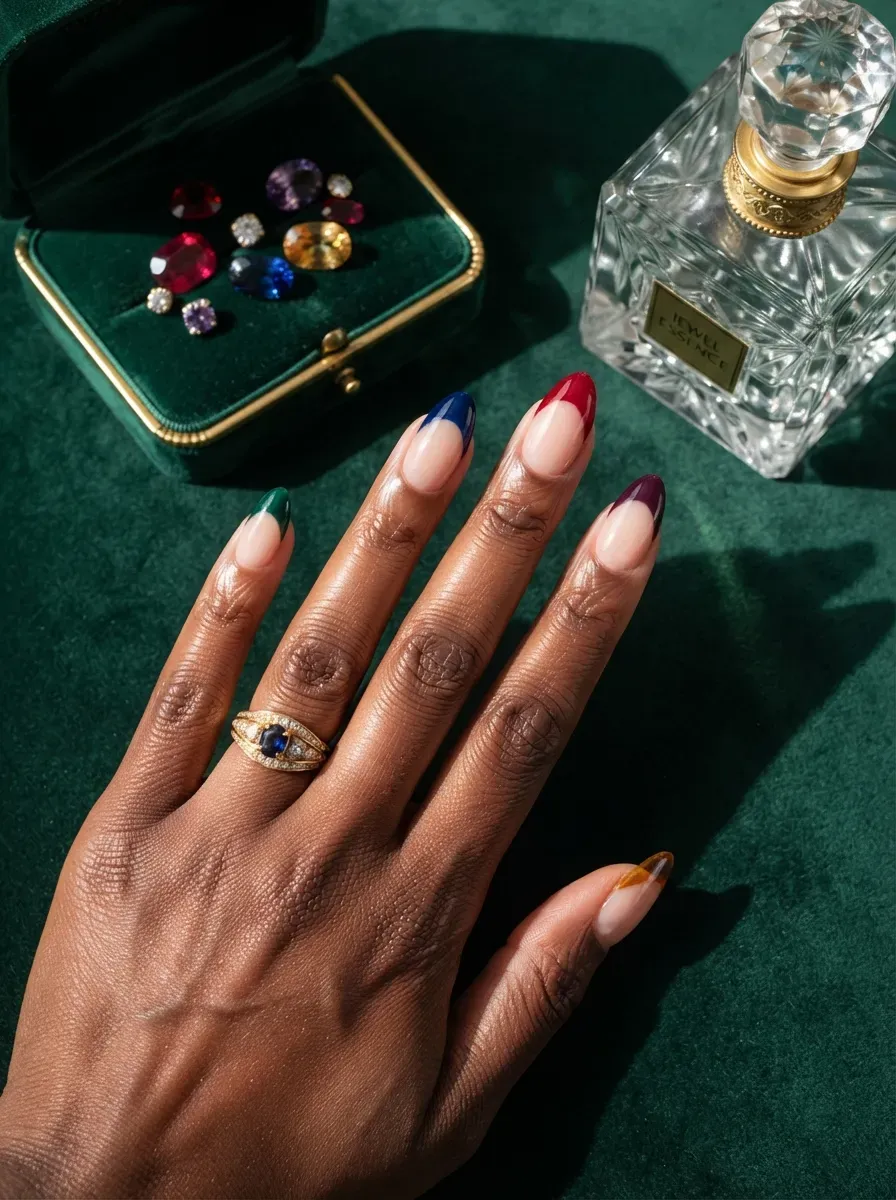
Mismatched jewel tones turn the deep French structure into the consistent element while each nail carries a different color. Emerald, ruby, sapphire, plum, and amber work together because they share similar depth and saturation.
Keep the smile line identical across the set. When the shape stays consistent, multiple colors look intentional rather than random.
45. Aura Deep French Tips
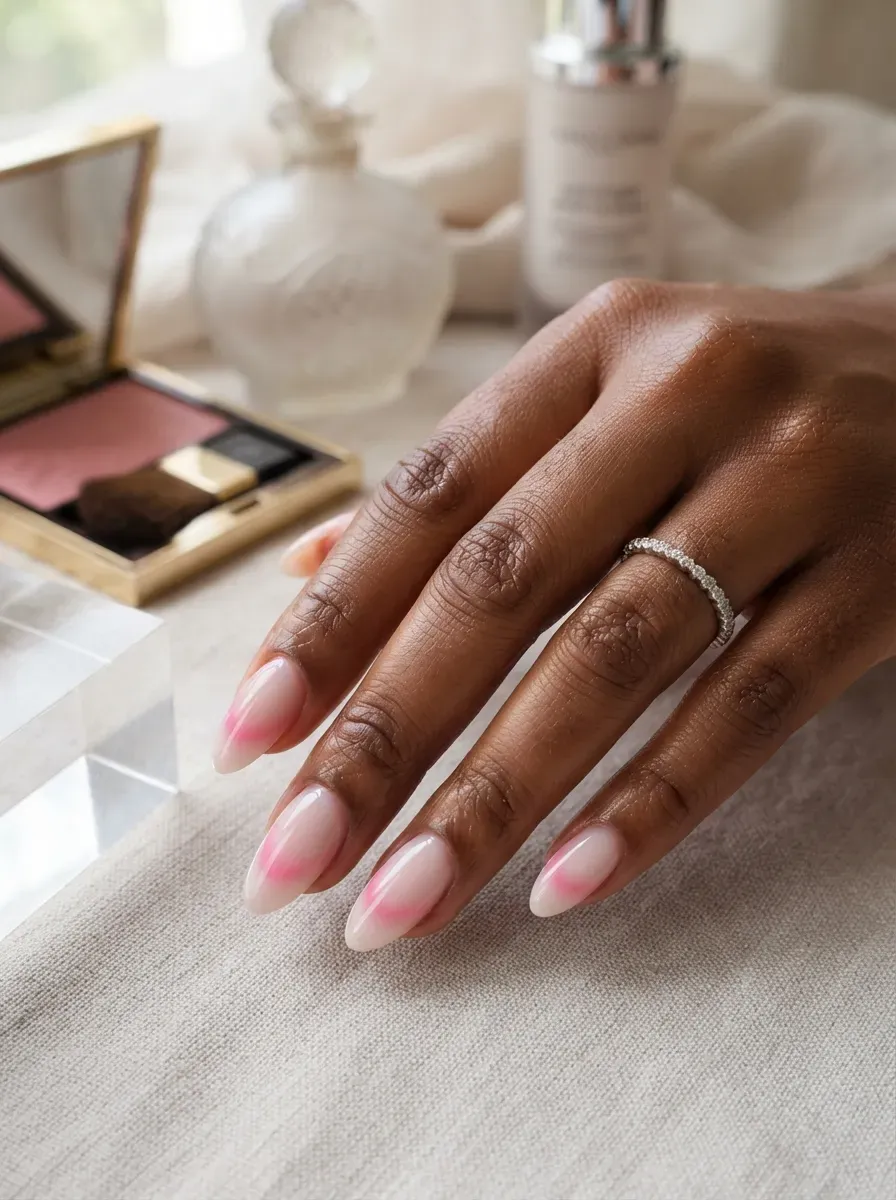
Aura color softens the boundary of a deep French tip by fading pigment inward rather than stopping at a hard line. The larger tip area makes the gradient easier to see and gives the manicure a hazy, dimensional finish.
Build the aura in thin layers with an airbrush or sponge. Keep the strongest pigment near the free edge so the deep curve remains readable.
Continue reading 40 Short September Nails Ideas for the Perfect Early-Fall Manicure
46. Ombré Deep French Tips
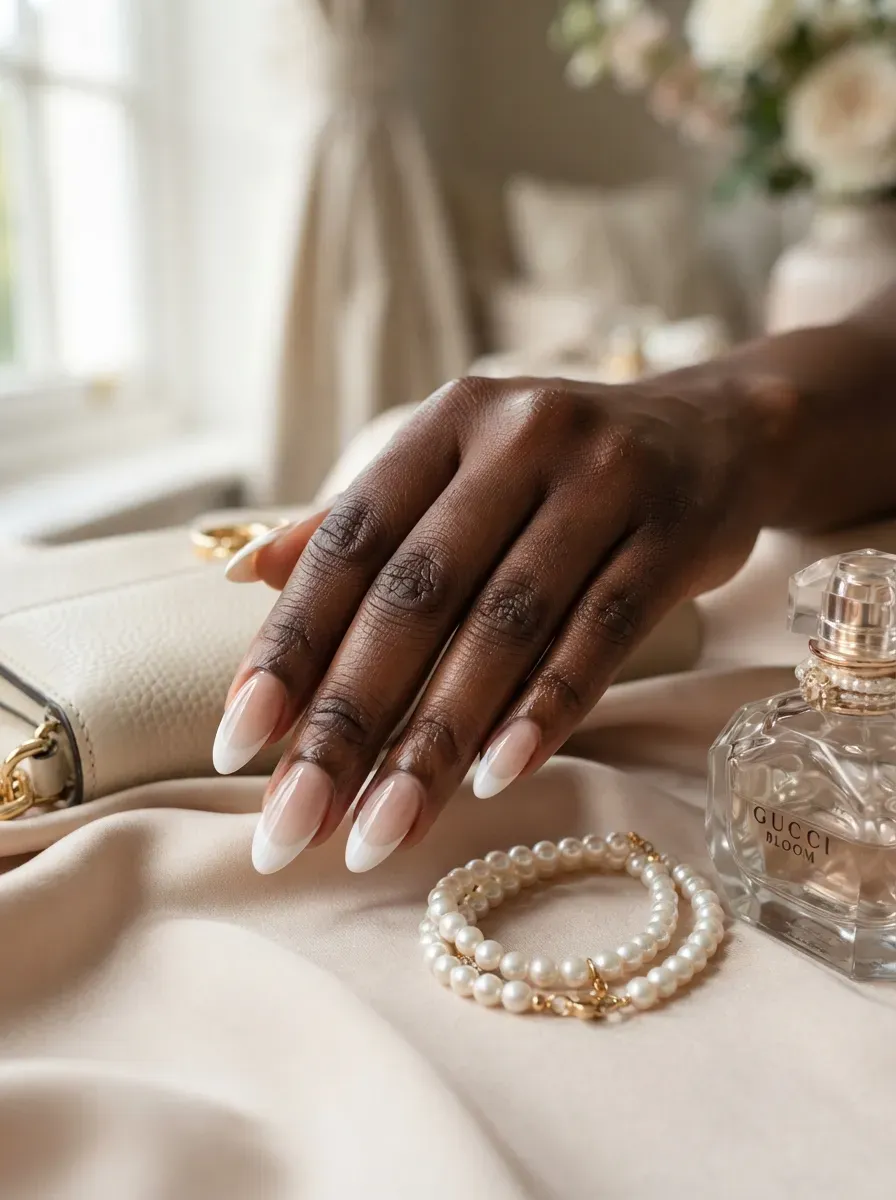
Ombré deep French tips combine an exaggerated smile line with a softened color transition. Instead of filling the entire tip with one flat shade, the color fades as it approaches the center of the nail.
The technique works best on medium to long lengths where the gradient has enough room to develop. Keep the strongest color concentrated near the outer edge for definition.
Why Nail Length Changes How a Deep French Tip Looks
A deep French tip uses more of the nail plate than a traditional French manicure, so nail length changes the proportions quickly.
Short nails can carry the look, but the curve needs restraint. If the side points extend too close to the cuticle, very little nude space remains and the manicure begins to look like partial full coverage rather than French.
Medium almond and oval nails usually provide the easiest proportions. There is enough length to bring the smile line lower while still preserving a clear center.
Long almond, coffin, and stiletto shapes allow the most dramatic curves. The extra length supports deeper sidewalls, metallic finishes, patterns, and layered techniques without making the nail bed disappear.
Tip width should also change across the hand. The thumb can carry more painted area than the pinky while still looking balanced.
Before curing, view all five nails together from arm’s length. A curve that looks elegant in a macro view can feel much heavier once you see the entire hand.
How to Map a Deep Smile Line Without Making It Uneven
The most common mistake with deep French tips is starting the curve freehand without first deciding where both sides should end.
Begin by marking the highest central point of the free edge, then identify matching side points on the left and right. Those three reference points create the basic structure.
A long liner brush helps connect them smoothly. Instead of forcing your wrist around the curve, keep the brush relatively stable and rotate the finger underneath it. That movement produces cleaner arcs and reduces wobbling.
Symmetry matters more as the French area gets deeper because small differences become easier to see. Check the curve from several angles before curing.
Do not assume every natural nail has identical sidewalls. One nail may require a slightly adjusted curve to look visually balanced even if the measured depth is different.
For dark shades such as black, oxblood, navy, or forest green, perfect the outline before filling the tip. Correcting a thin guide line is much easier than reshaping a fully painted area.
Choosing the Right Base Under a Dramatic French Tip
A larger French tip places more color beside the nude base, which makes undertone mismatches easier to notice.
Warm browns, caramel, burnt orange, terracotta, olive, bronze, and gold usually pair smoothly with beige, peach beige, caramel, or neutral milky bases.
Cooler colors such as navy, lavender, plum, silver, and some burgundies can work with blush or neutral pink, although the base should still remain sheer enough to preserve negative space.
Black and white are flexible, but even they change character depending on the base. Bright white over a cool pink looks crisp and traditional, while ivory over beige feels softer.
Deep skin tones can carry very translucent bases beautifully because the contrast between natural skin and the painted tip remains strong. An opaque pale nude may create an unnecessary light band around the cuticle.
Test one nail before committing to the full set.
The right base should even the natural nail bed without competing with the dramatic curve around it.
How to Keep Deep French Tips From Chipping
A deep French design covers more surface area than a micro tip, but the free edge still receives the most impact.
Preparation is essential. Remove surface oils, refine the shape, and clear dust completely before applying base gel. Product touching the skin or cuticle can encourage lifting long before the tip color itself wears away.
Dark shades need thin layers. Black, burgundy, navy, forest green, and aubergine contain dense pigment, so heavy coats may cure unevenly or wrinkle.
The final color layer should wrap lightly around the free edge. This helps reduce wear where the nail makes contact with phones, bags, drawers, and other hard surfaces.
Chrome needs additional sealing around the entire perimeter because powder can wear away faster than cream gel.
Crystals, pearls, and dimensional details require gem gel around their bases instead of relying only on top coat.
At home, use gloves for prolonged cleaning and avoid using the nail tips to scrape labels or open containers.
Choosing a Deep French Tip That Fits Your Style
Start with nail length and shape.
Medium almond nails are the easiest canvas because deep curves can extend naturally without consuming the entire nail bed. Long coffin and stiletto shapes can handle stronger color, chrome, patterns, magnetic finishes, and embellishment.
If you want drama through shape rather than color, choose white, ivory, blush, lavender, or sage. Black, oxblood, espresso, forest green, navy, and aubergine create much stronger contrast.
Consider detail level next. A solid cream tip is easier to maintain than tortoiseshell, florals, chrome, magnetic polish, pearls, or crystals.
For work or events with a formal dress code, chocolate, navy, burgundy, champagne, and clean white can keep the exaggerated curve polished. Jewel tones, animal prints, aura effects, and metallics create a more fashion driven mood.
The best deep French tip should look intentional on your actual nail length, not simply copy the proportions of a reference photo.