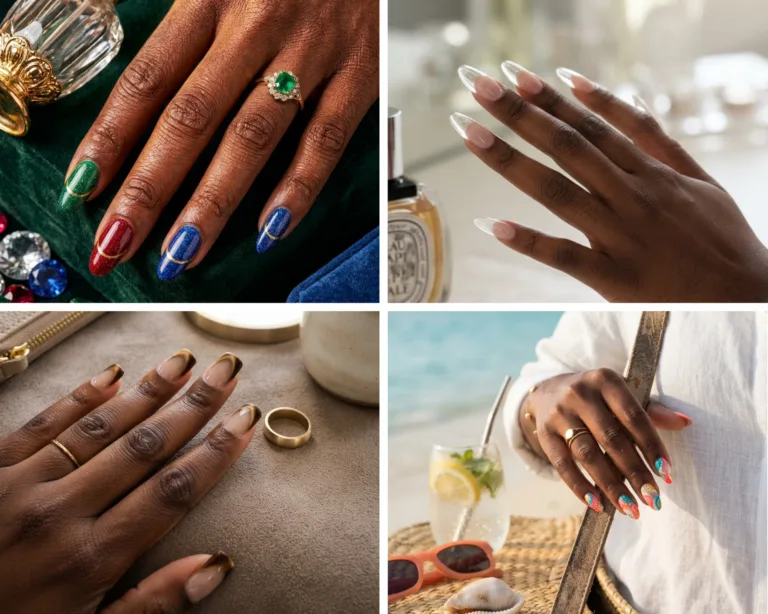
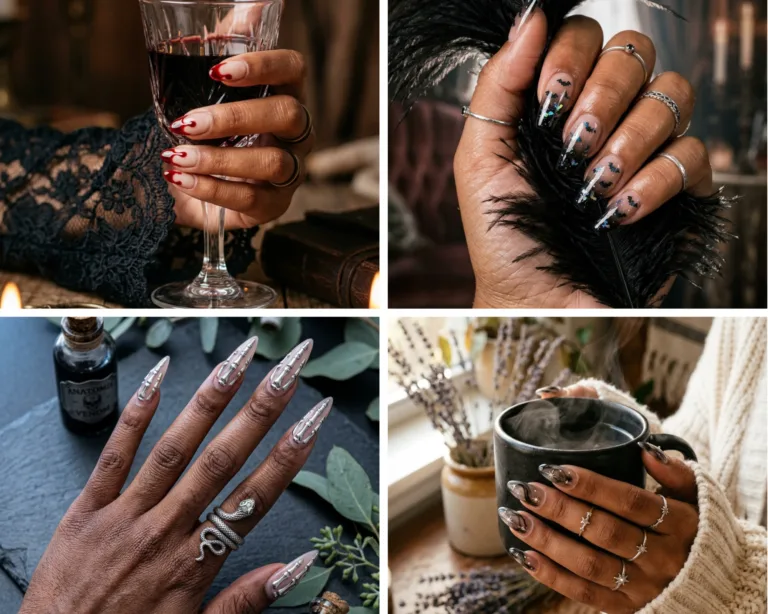
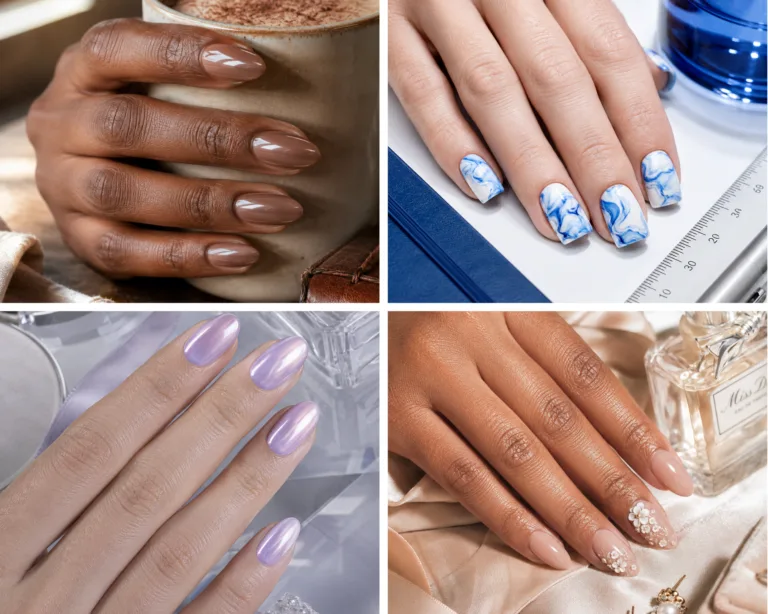
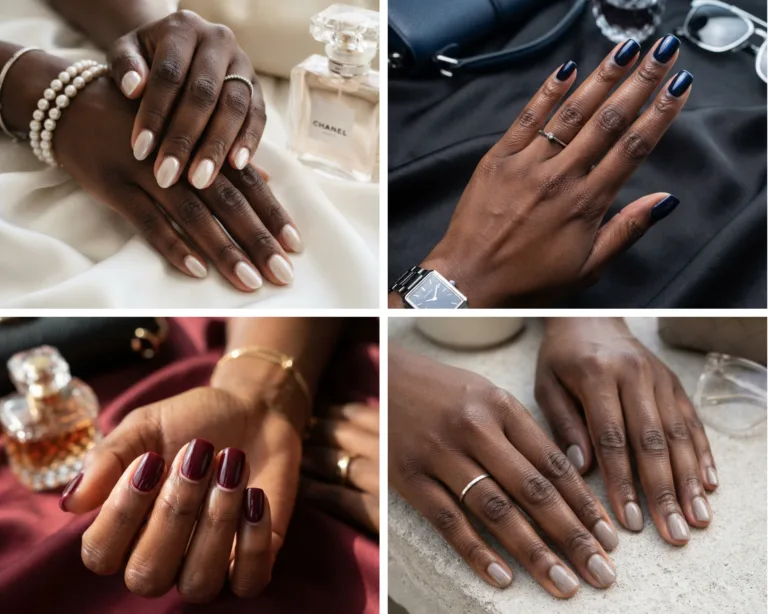
Sometimes a crisp French line feels a little too sharp, especially when you want a manicure that looks soft rather than graphic.
An ombré french tip keeps the familiar light edge but blends it gradually into the base, so there is no obvious stopping point. That fade can stay classic with nude and white, or shift into blush, chocolate, lavender, chrome, jelly, and even deeper seasonal colors.
The technique works across short natural nails and long extensions, although the length changes how much room the gradient has to develop. Finish matters too. A glossy cream fade looks different from pearl chrome or magnetic shimmer.
The classic nude to white blend is still the easiest place to begin.
1. Classic Nude to White Ombré French Tips

The classic nude to white fade removes the hard smile line and lets the white soften gradually into a sheer beige or pink base. That transition makes the manicure look smoother as it grows and works especially well on medium almond nails.
Keep most of the white concentrated near the free edge. Blending it too far toward the cuticle can make the entire nail look cloudy.
Save for later Neutral September Nails: 40+ Chic Ideas for the Summer-to-Fall Transition
2. Sheer Pink Ombré French Tips

A sheer pink base adds a little brightness to the nail bed while preserving the soft fade at the edge. The result feels cleaner than an opaque pink and white manicure because some natural nail tone remains visible underneath.
Choose a blush that matches your undertone rather than relying on bottle color. Cool pinks and warm rosy nudes can look very different once they become translucent.
3. Milky White Ombré French Tips

Milky white creates a cloudy, diffused French fade instead of a bright opaque edge. It suits softer manicures where you want the tip to remain visible without creating strong contrast.
Apply the milky color in thin layers. A heavy coat can eliminate the gradient and make the entire extension look white, especially on shorter nails where there is less space for the transition.
4. Baby Boomer Pink and White Fade
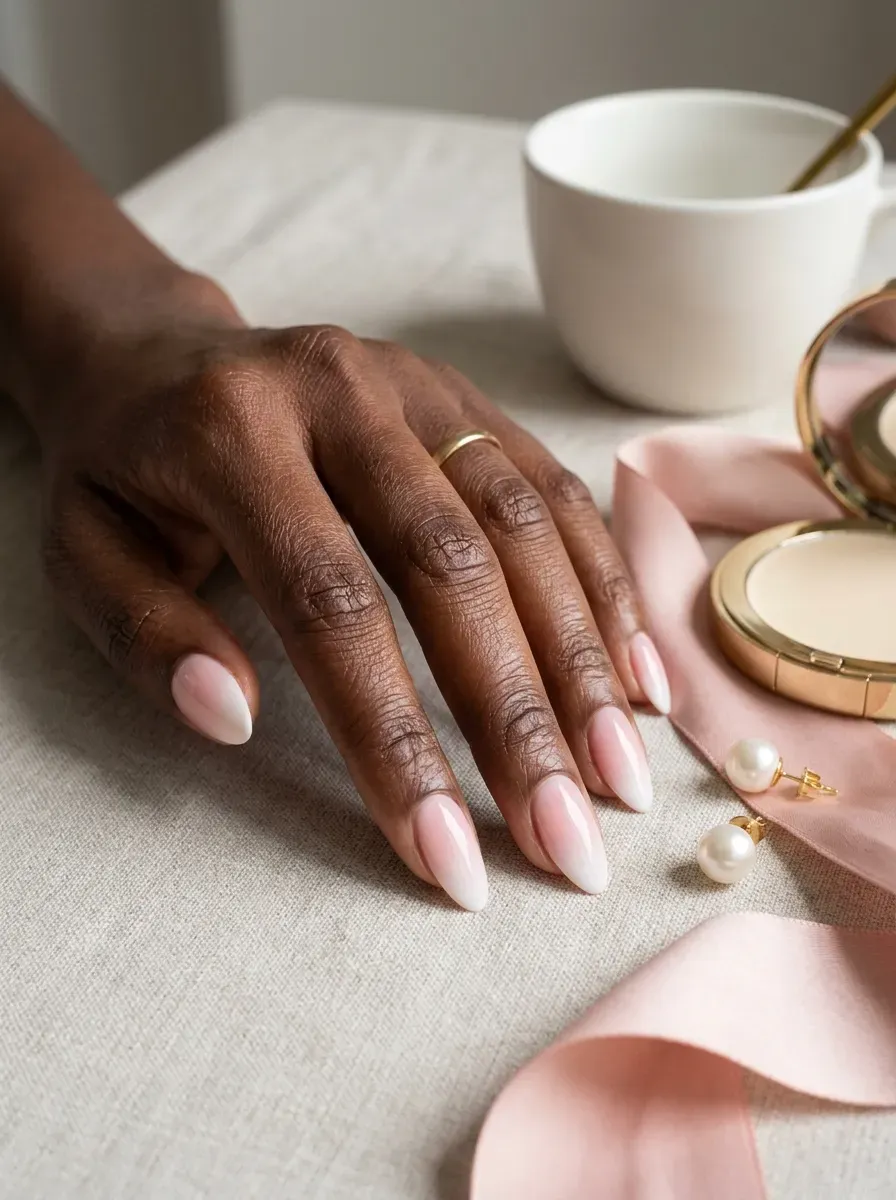
Baby boomer nails use a more visible pink base than a classic nude fade while still blending softly into white. The technique is especially useful when the natural nail bed has uneven color because the pink creates a smoother foundation.
Choose a translucent blush rather than a heavy opaque pink if you want the manicure to stay light. The more coverage underneath, the less natural the gradient appears.
Check out How to Hide Starter Loc Frizz for Interviews (Without Damaging Your Locs)
5. Short Round Ombré French Tips

Short nails can carry an ombré French tip as long as the fade remains shallow. Concentrating the white very close to the free edge preserves more visible nail bed and prevents the manicure from looking stubby.
A sponge or soft blending brush works better than a deep airbrushed gradient at this length. Keep the strongest white within the last few millimeters of the nail.
6. Soft Square Ombré French Tips
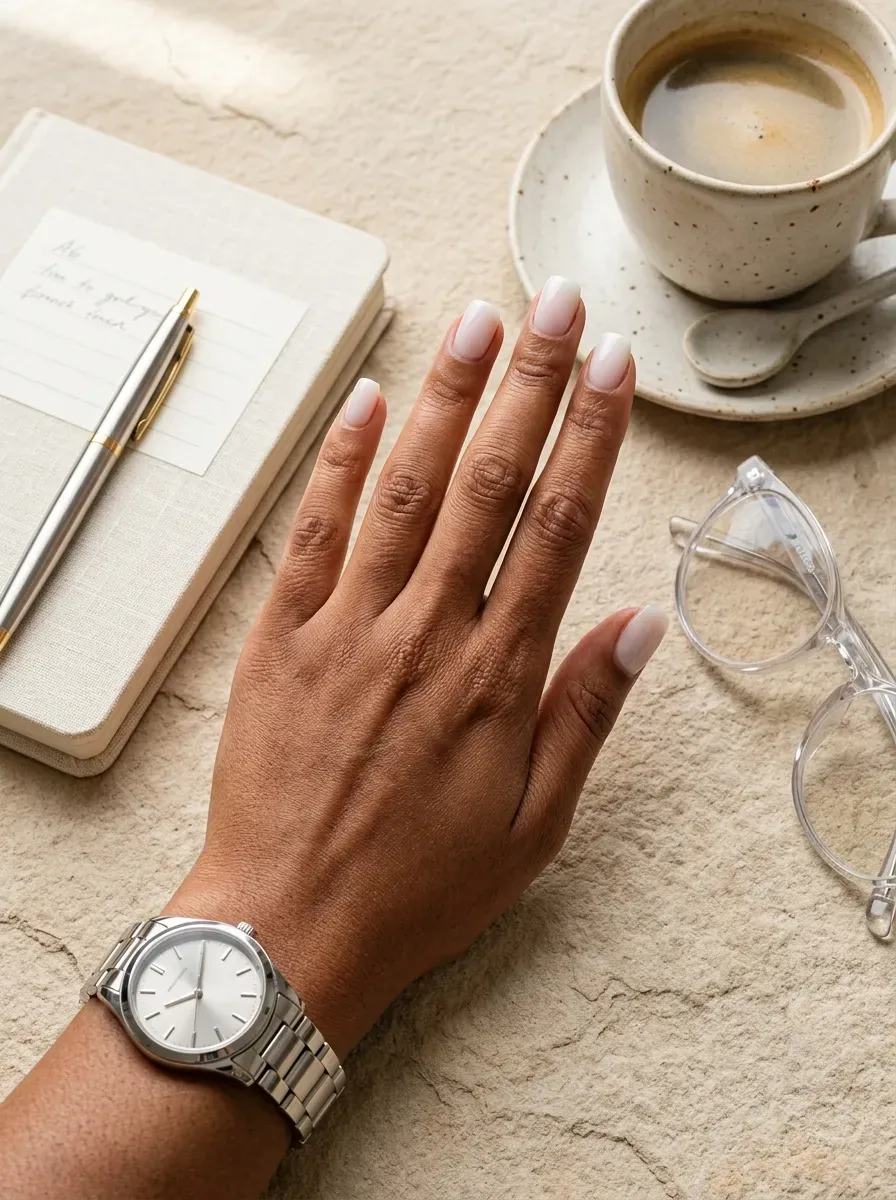
Soft square nails give ombré French tips a clean base because the straight edge creates structure while the gradient softens the overall finish. The combination works well when a classic square French line feels too rigid.
Keep the fade slightly narrower near the corners. Too much white across the entire width can make the nail look broader than it actually is.
7. Long Almond Ombré French Tips

Long almond nails give the gradient more room to stretch, which creates an especially smooth transition between the white tip and nude base. The taper also makes the fade look elongated rather than blocky.
Keep the brightest white concentrated at the point. Gradually soften it toward the sidewalls so the ombré reinforces the almond shape instead of widening the free edge.
8. Coffin Ombré French Tips

Coffin nails make the soft gradient more noticeable because the tapered sides end in a clear straight edge. The fade helps balance the stronger shape and keeps long extensions from looking too severe.
Avoid making the white completely opaque across the full tip width. Let some nude remain visible near the sidewalls so the coffin silhouette stays refined rather than top heavy.
9. Stiletto Ombré French Tips
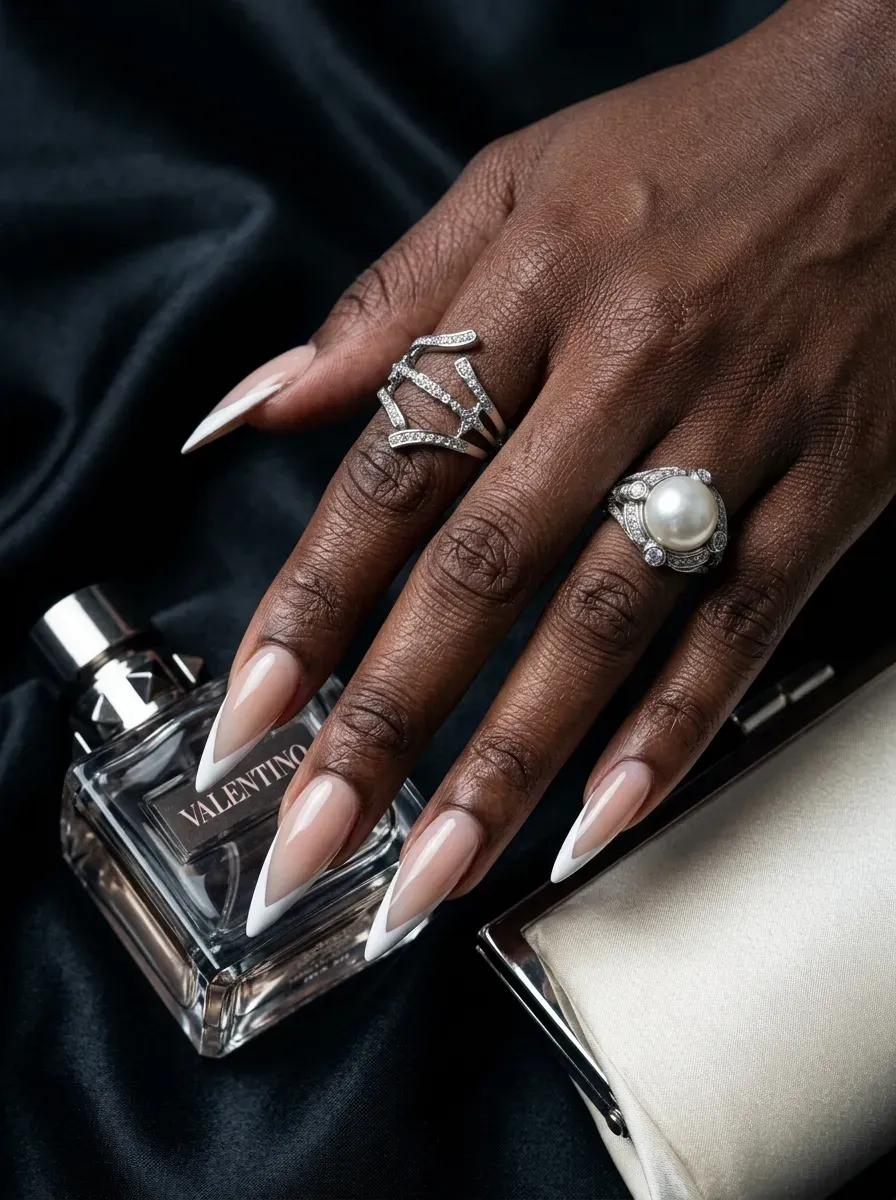
A stiletto shape naturally pulls the ombré toward a narrow point, which makes the fade appear even longer. White should be strongest at the tip and disappear gradually toward the nail bed.
This style relies heavily on structure. Keep the sidewalls strong rather than filing them paper thin, especially if the gradient is built over long gel or acrylic extensions.
Read now 16 Red, White, and Blue Charcuterie Board Ideas That Feel Festive, Thoughtful, and Beautiful
10. Ivory Ombré French Tips

Ivory creates a warmer ombré than bright white, which can look especially harmonious on golden and deep skin tones. The fade still reads as French, but the transition feels less stark.
Pair ivory with a beige or peach beige base rather than a cool pink. That keeps the entire gradient within the same warm undertone family and prevents the tip from looking yellow beside the nail bed.
11. Beige Ombré French Tips
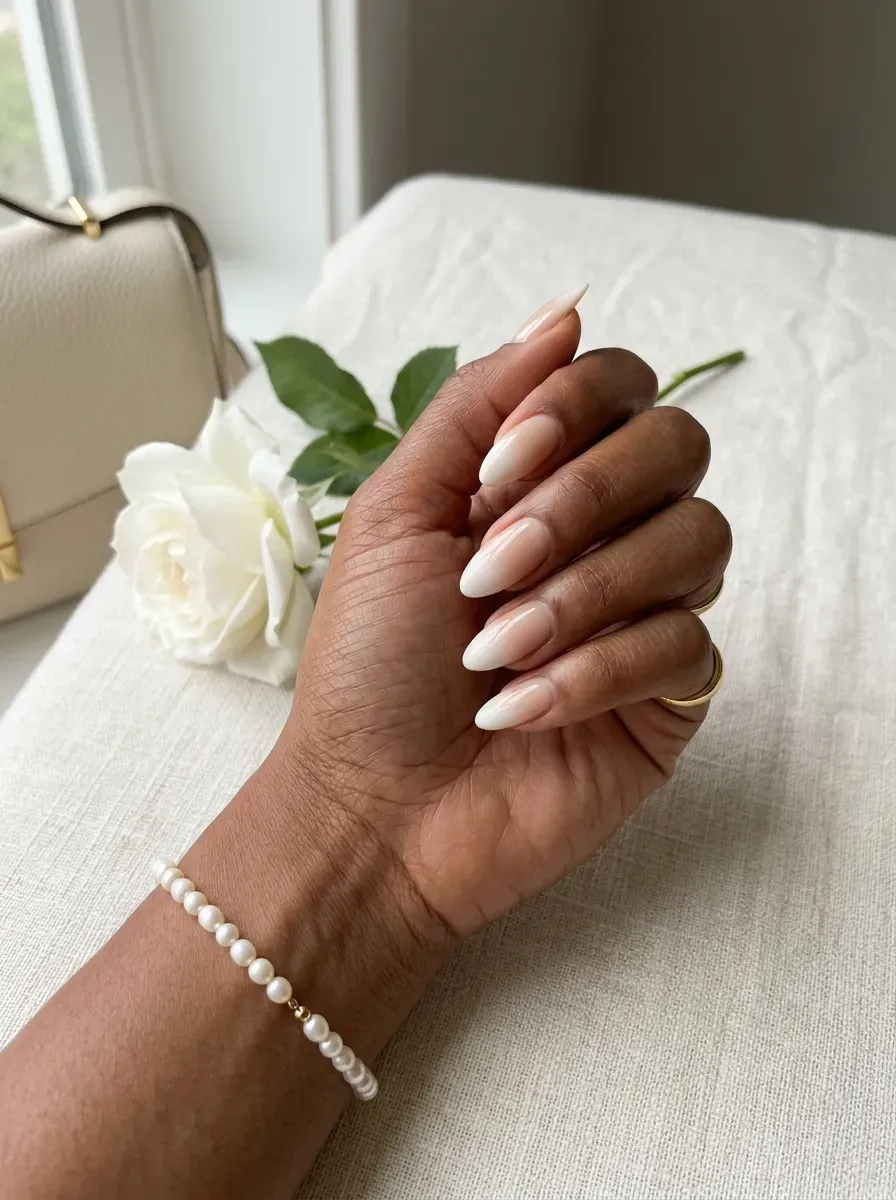
Beige ombré French tips use tonal contrast instead of white, which gives the manicure a quieter, more natural finish. The free edge remains slightly deeper or lighter than the base but fades rather than stopping sharply.
Choose two beige shades with enough separation to remain visible after top coat. If they are nearly identical in the bottle, the gradient may disappear completely once blended.
12. Caramel Ombré French Tips
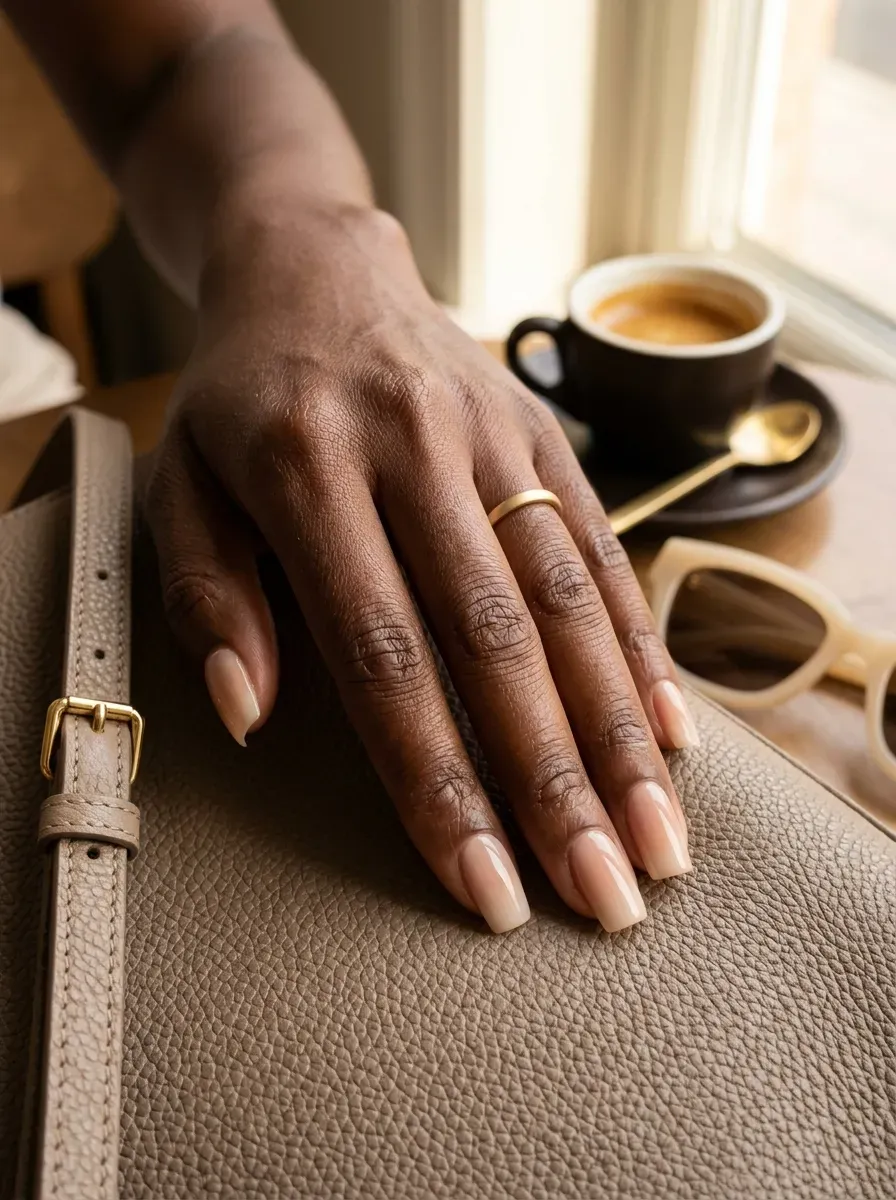
Caramel gives an ombré French tip more warmth and depth than beige without turning it into a dark manicure. The shade looks especially seamless on medium and deep skin tones because it echoes natural golden and brown undertones.
Blend caramel over a lighter beige base. Keep the deepest color near the edge so the design still reads as a French variation rather than a full gradient manicure.
13. Latte Ombré French Tips
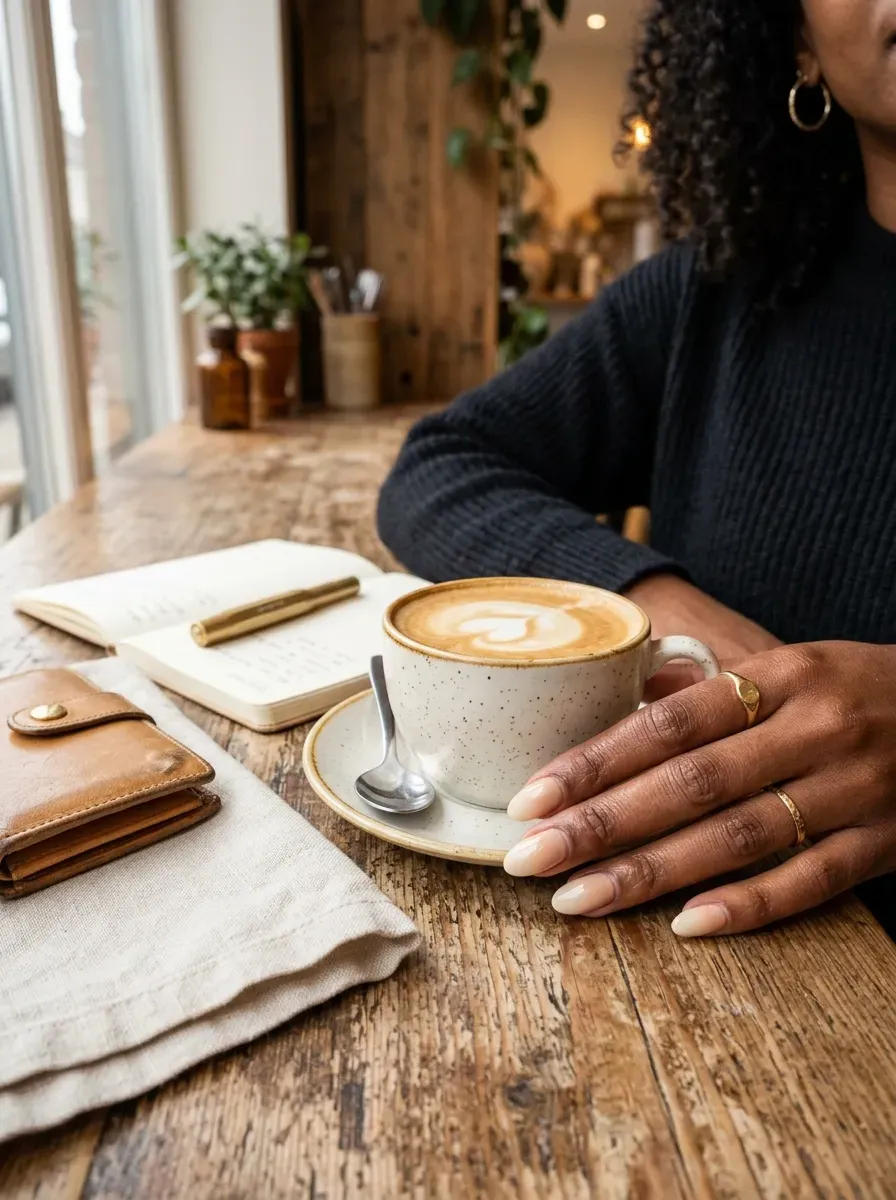
Latte ombré sits between beige and light brown, creating a warm neutral fade that feels softer than caramel. It works beautifully when you want a manicure that blends with cream, camel, taupe, and gold accessories.
Use a sheer nude base rather than opaque beige. That small amount of transparency helps the creamy gradient look layered instead of flat.
Read on 20 Coral Nail Ideas That Pop on Warm Skin Tones
14. Chocolate Brown Ombré French Tips
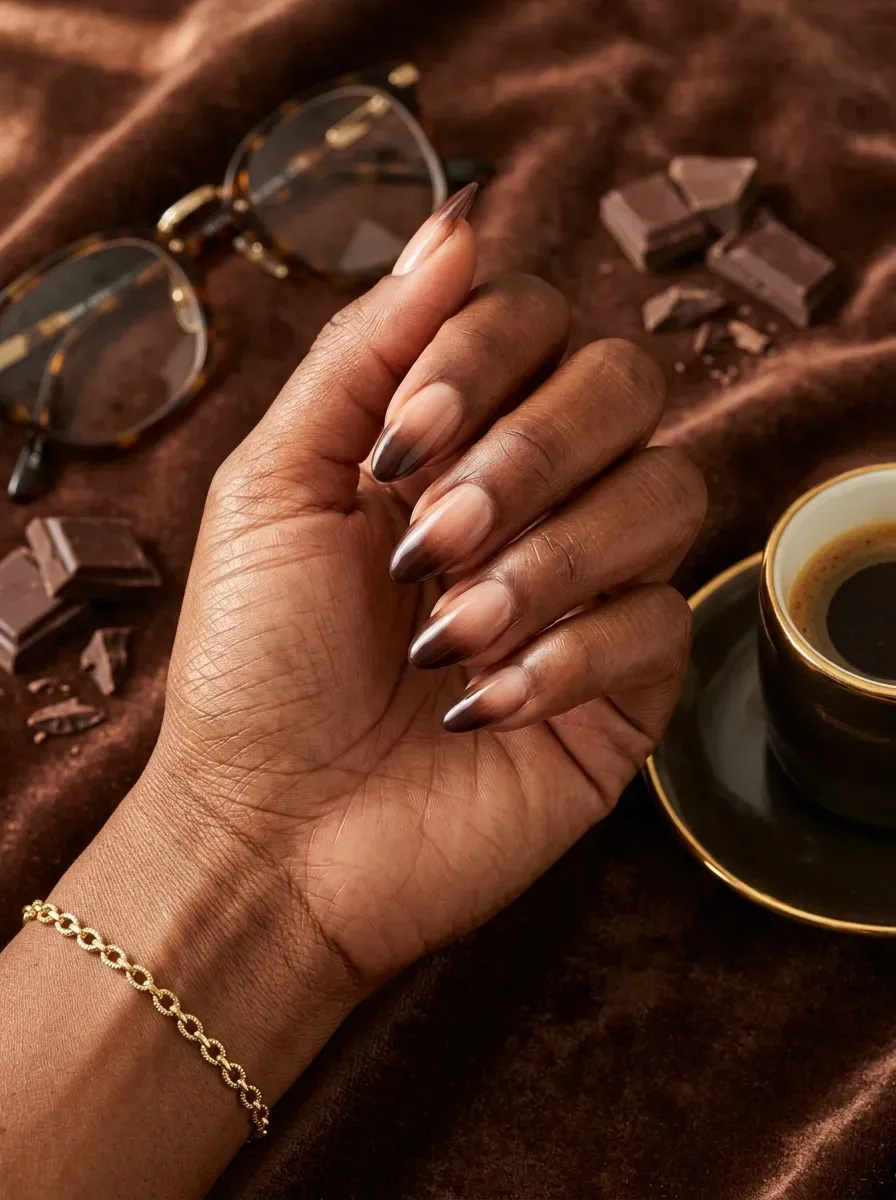
Chocolate brown softens beautifully when blended into a warm nude base. The dark edge provides definition, while the fade prevents the manicure from looking as graphic as a solid brown French tip.
This works especially well on almond and oval nails. Use a sponge or soft airbrush in several thin layers so the brown does not become muddy where it meets the base.
15. Espresso Ombré French Tips
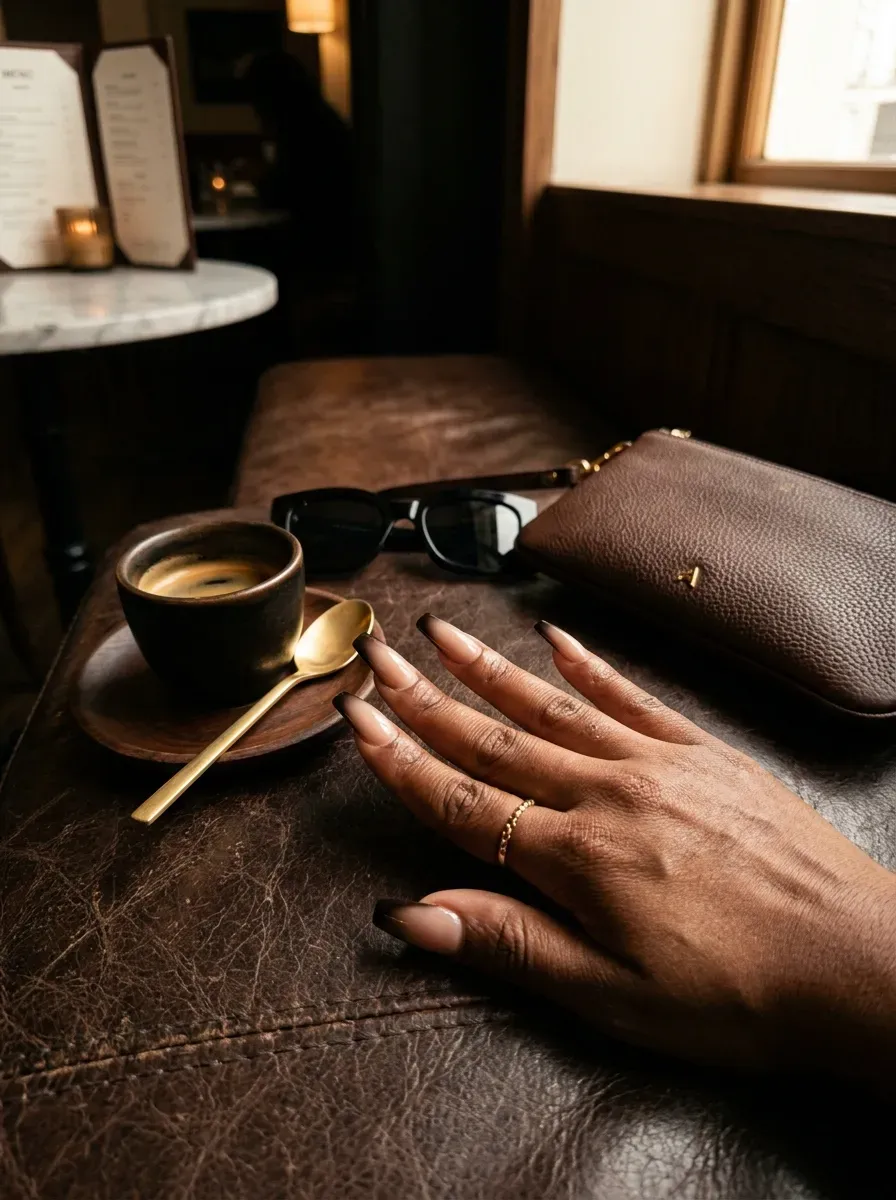
Espresso creates a much stronger gradient than beige or caramel, but blending the edge keeps the dark color from feeling harsh. It works particularly well on longer coffin nails where there is enough room for the transition to develop.
Start with very little dark pigment and build slowly. Espresso becomes opaque quickly, and too much color at once can eliminate the soft middle section.
16. Black Ombré French Tips
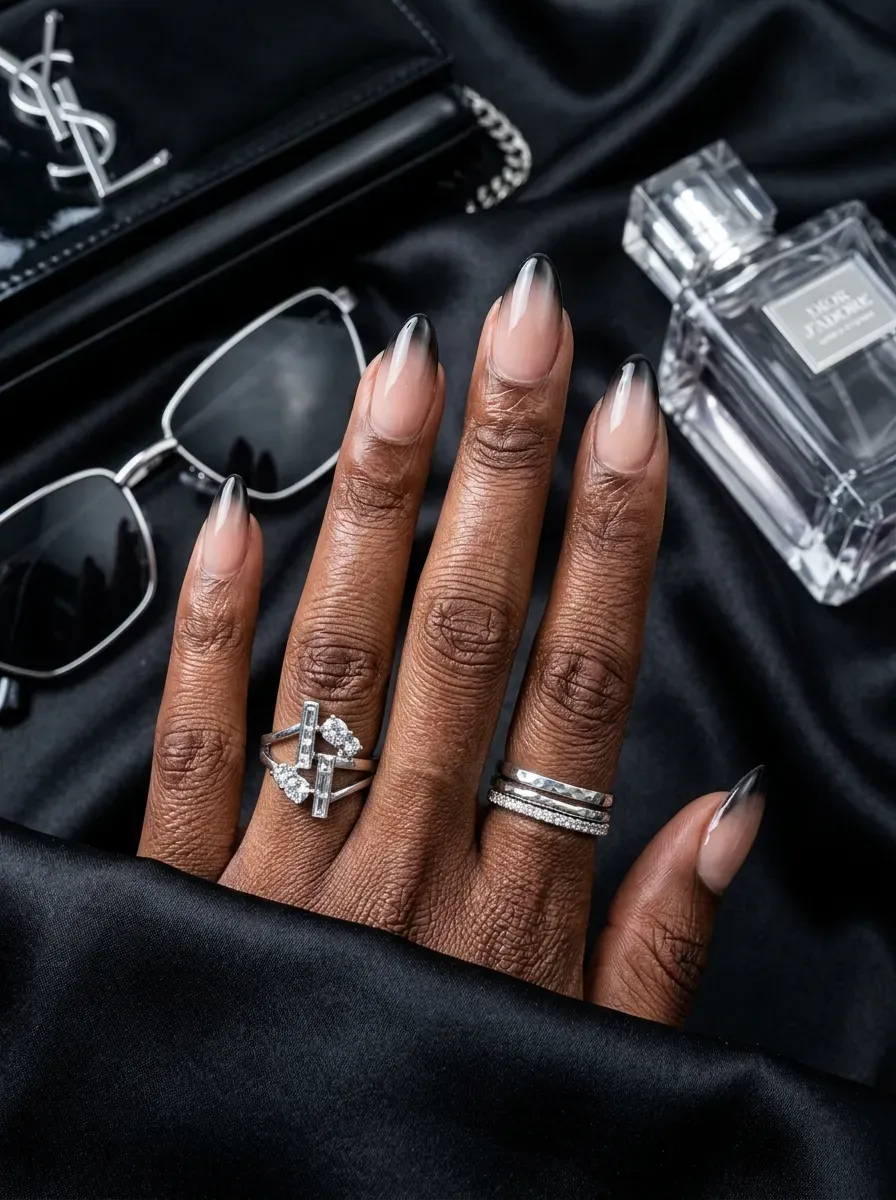
Black ombré gives French tips a smoky effect instead of a sharp dark border. The fade can look dramatic without covering the whole nail, particularly on medium and long almond shapes.
Use a very light hand when blending black because the pigment spreads quickly. Build several transparent layers and keep the deepest shade at the extreme edge to preserve the nude center.
17. Charcoal Ombré French Tips
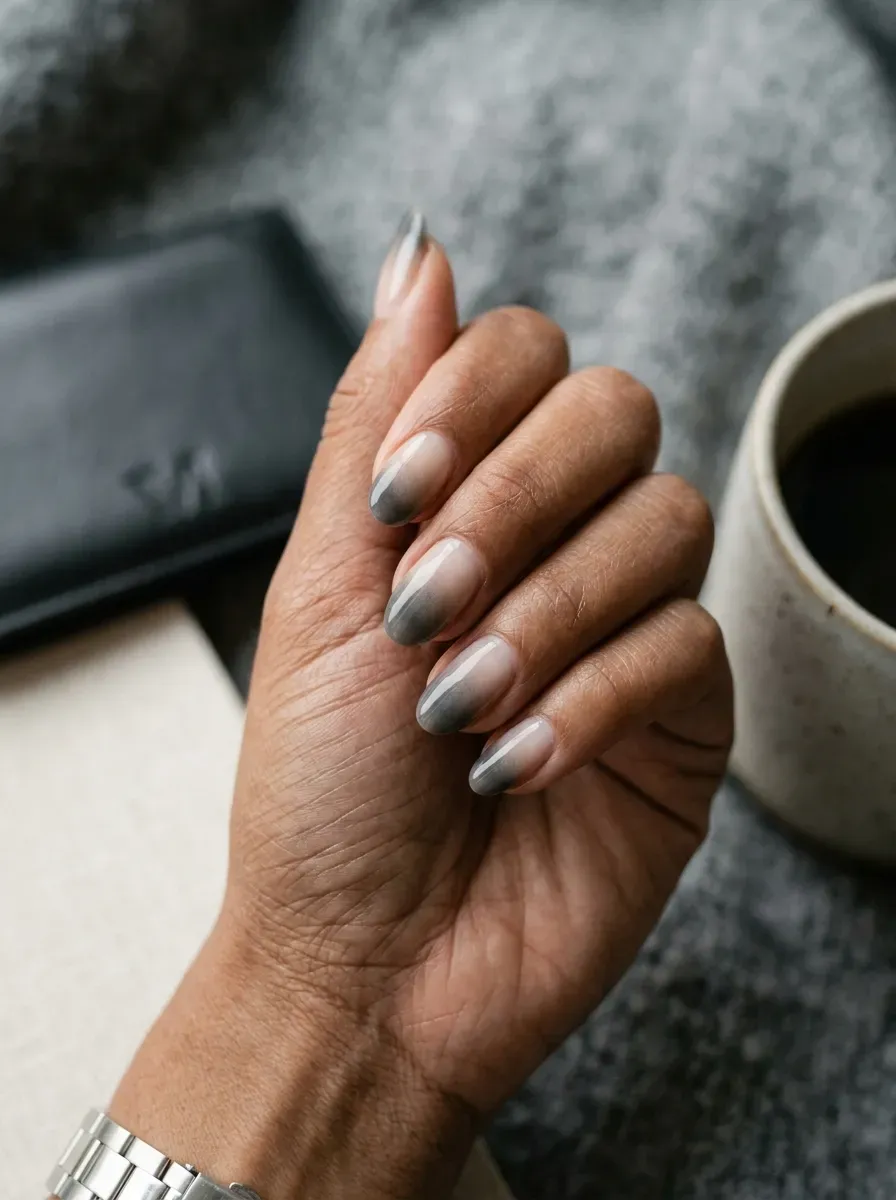
Charcoal creates a softer dark gradient than black because the gray pigment has less visual weight. It suits cool neutral wardrobes and looks especially polished with silver jewelry.
Keep the nail bed sheer rather than opaque. That transparency helps charcoal look intentionally smoky. A high gloss top coat also prevents the gray edge from reading like faded black polish.
18. Burgundy Ombré French Tips

Burgundy ombré gives the free edge rich wine color while the fade prevents the manicure from becoming too heavy. The effect looks especially sophisticated on almond nails because the darker pigment naturally follows the taper.
Use a neutral beige base rather than bright pink. Wine shades already contain red, and an overly rosy foundation can blur the separation between the two colors.
See also How to Style Mid-Length Locs for Business Travel Without Losing Your Composure
19. Cherry Red Ombré French Tips
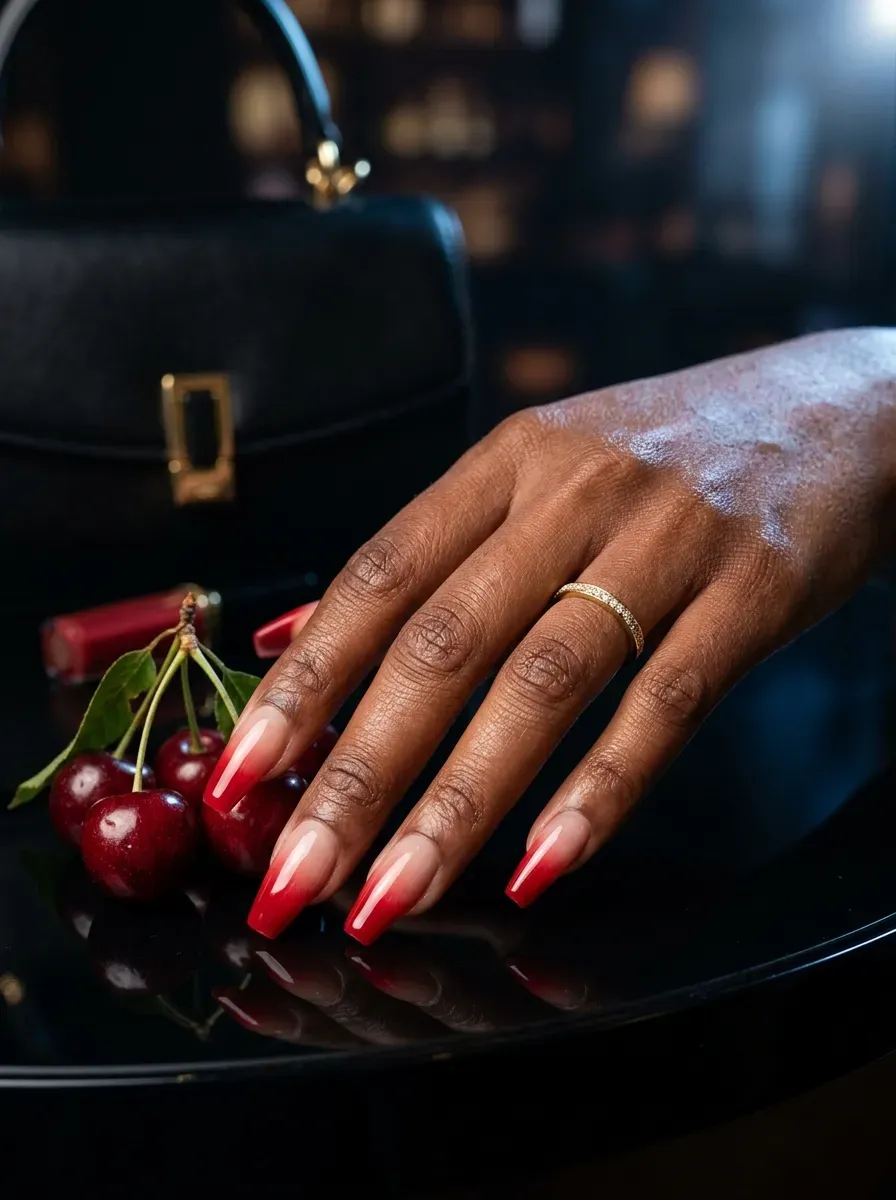
Cherry red feels softer when airbrushed or sponged into a nude base rather than painted as a solid band. The gradient keeps the strong color wearable while still allowing the edge to stand out.
Build the red slowly. Bright pigment can travel farther than expected during blending, so start near the free edge and expand upward only after checking the saturation.
20. Berry Ombré French Tips
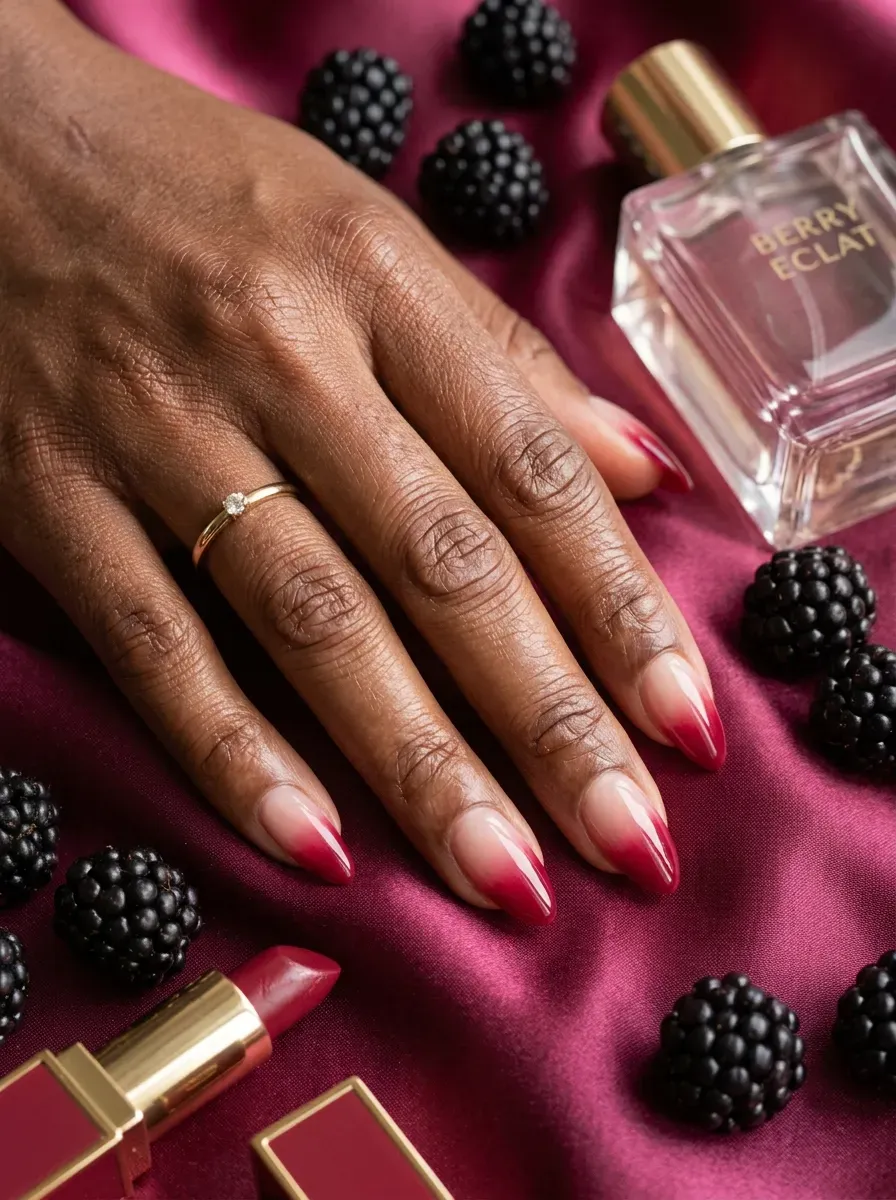
Berry sits between red and purple, creating an ombré that feels richer than pink without reaching the darkness of plum. The color photographs beautifully against sheer nude because the transition remains visible even at medium intensity.
Keep the fade shorter on small nail beds. Bringing berry too far upward can overwhelm the nude space and make the design look like full color coverage.
21. Plum Ombré French Tips
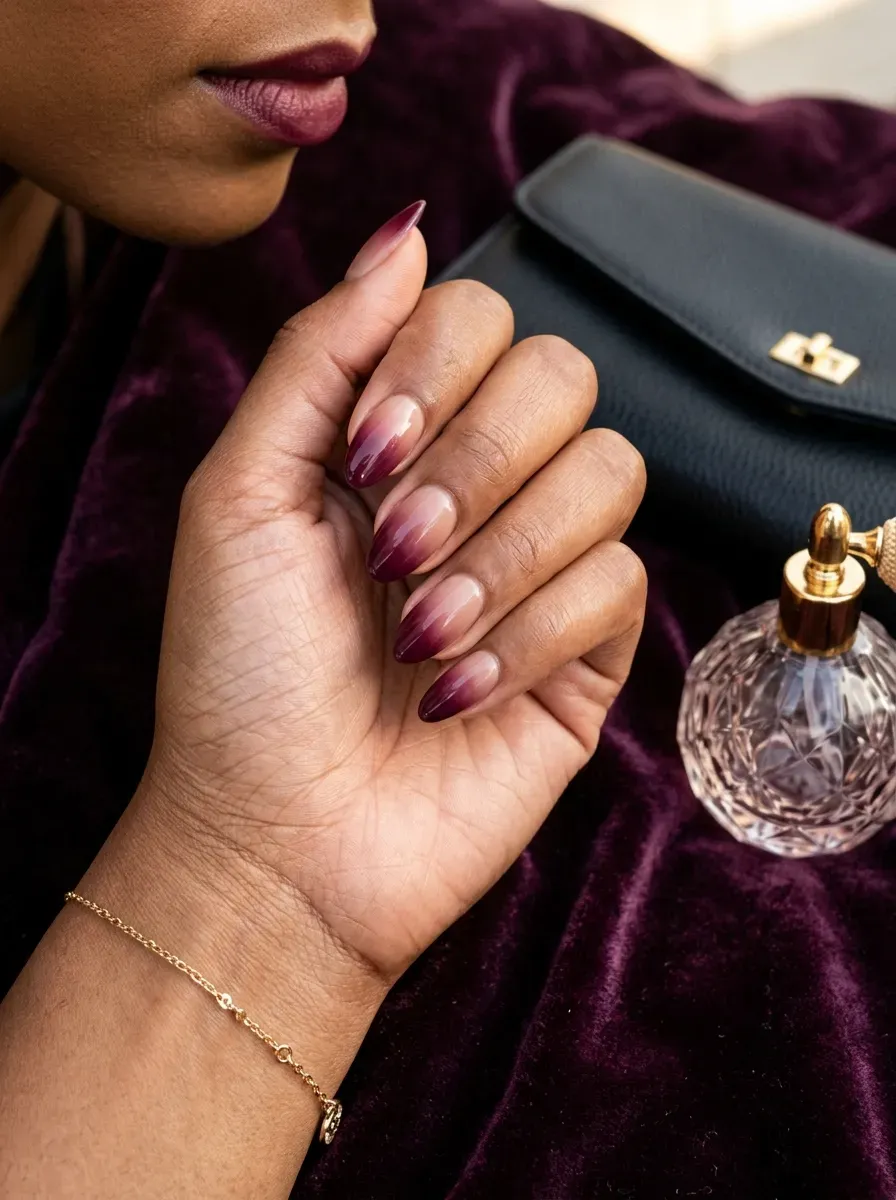
Plum gives an ombré French tip a moody purple brown edge that still feels softer than black. It works well for evening manicures and cooler seasons without requiring full nail coverage.
A beige or neutral pink base keeps the fade clean. Use a cream plum with strong pigment, then thin it slightly for blending rather than applying an already sheer formula in multiple streaky layers.
22. Lavender Ombré French Tips
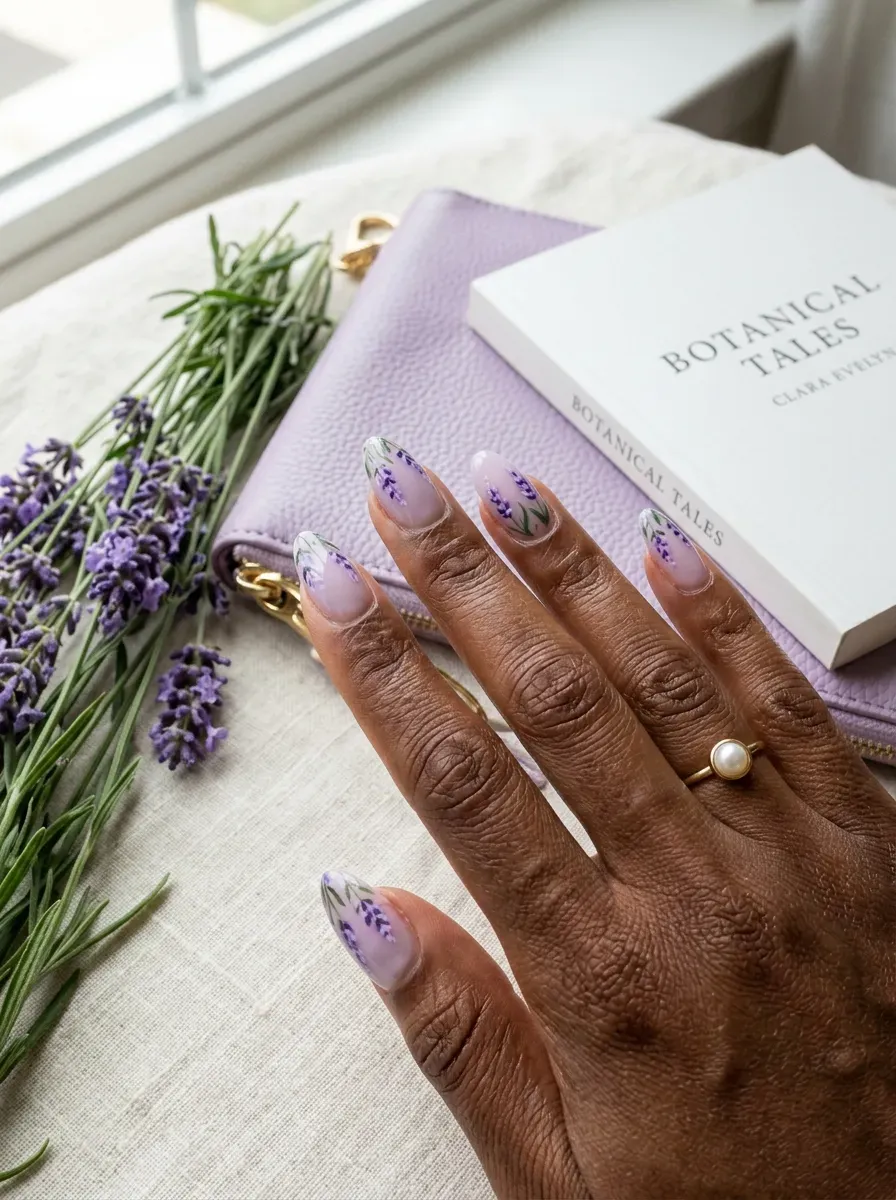
Lavender makes the gradient feel light even when the color reaches farther into the nail. Dusty purple works better than an extremely pale pastel because enough pigment remains visible during blending.
Use a neutral base to preserve the true lavender tone. A very pink foundation can shift the fade toward mauve, especially where the two colors overlap through the middle section.
23. Dusty Blue Ombré French Tips

Dusty blue creates a cooler ombré without the brightness of cobalt or baby blue. The gray undertone helps it blend gradually into neutral beige, making the transition look soft rather than icy.
Short and medium nails suit this color particularly well. Keep the fade concentrated toward the edge so enough nude remains visible to balance the cool tone.
Check out 15 Summer Nail Ideas for Busy Moms
24. Cobalt Blue Ombré French Tips

Cobalt blue brings much stronger saturation to an ombré French tip, but the gradual fade keeps the color from looking like a solid block. Long almond nails give the transition enough room to remain smooth.
Start with a tiny amount of pigment. Cobalt can become opaque quickly, so several light passes create a cleaner gradient than trying to blend one heavily loaded layer.
25. Navy Ombré French Tips
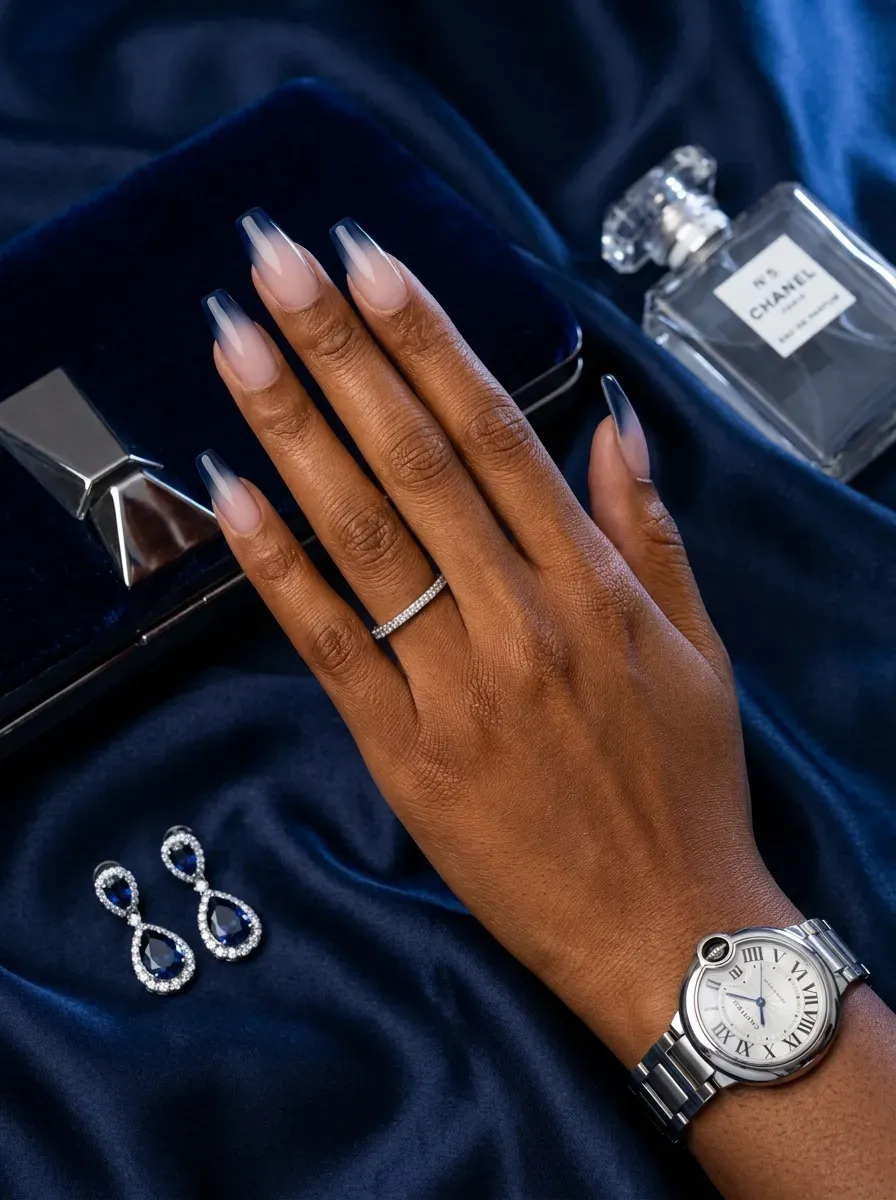
Navy ombré has the depth of black but retains a blue undertone that becomes more visible through the faded middle. The technique works especially well on coffin nails where the dark edge contrasts with a clear straight free line.
Apply the color in thin layers. Dense navy gel can cure unevenly when it gathers near the corners, particularly on wider tips.
26. Sage Green Ombré French Tips

Sage is naturally muted, so it creates one of the softest colored French gradients. The gray green edge melts easily into beige or milky nude and works especially well with gold jewelry and neutral wardrobes.
Use a warm base if your skin has golden undertones. Pairing sage with a cool pink nude can make the middle of the gradient appear gray or slightly muddy.
27. Olive Green Ombré French Tips

Olive creates more depth than sage while remaining easier to wear than forest green. Its brown undertone helps the color fade naturally into beige and caramel bases.
The gradient works especially well on square and almond shapes. Keep the central nude area clear enough to maintain contrast, since a very long olive fade can start to resemble full coverage.
28. Emerald Ombré French Tips
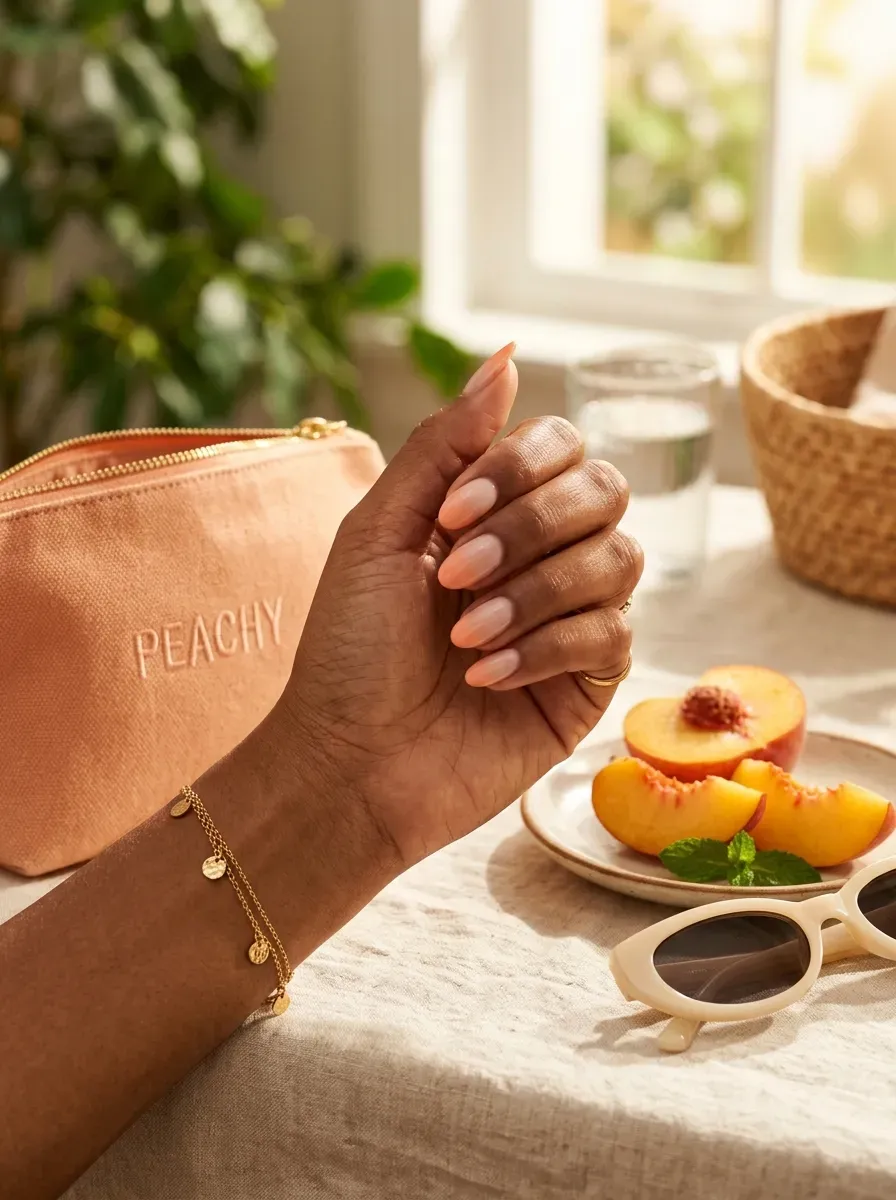
Emerald turns the ombré French tip into a jewel toned statement without covering the full nail. The saturated green looks especially striking against deep skin and a sheer neutral base.
Use an airbrush or sponge to diffuse the inner edge carefully. Emerald can appear patchy if the fade is built with one thick layer rather than several thin applications.
Continue reading 25 Long Nail Ideas Black Women Are Loving Right Now
29. Peach Ombré French Tips
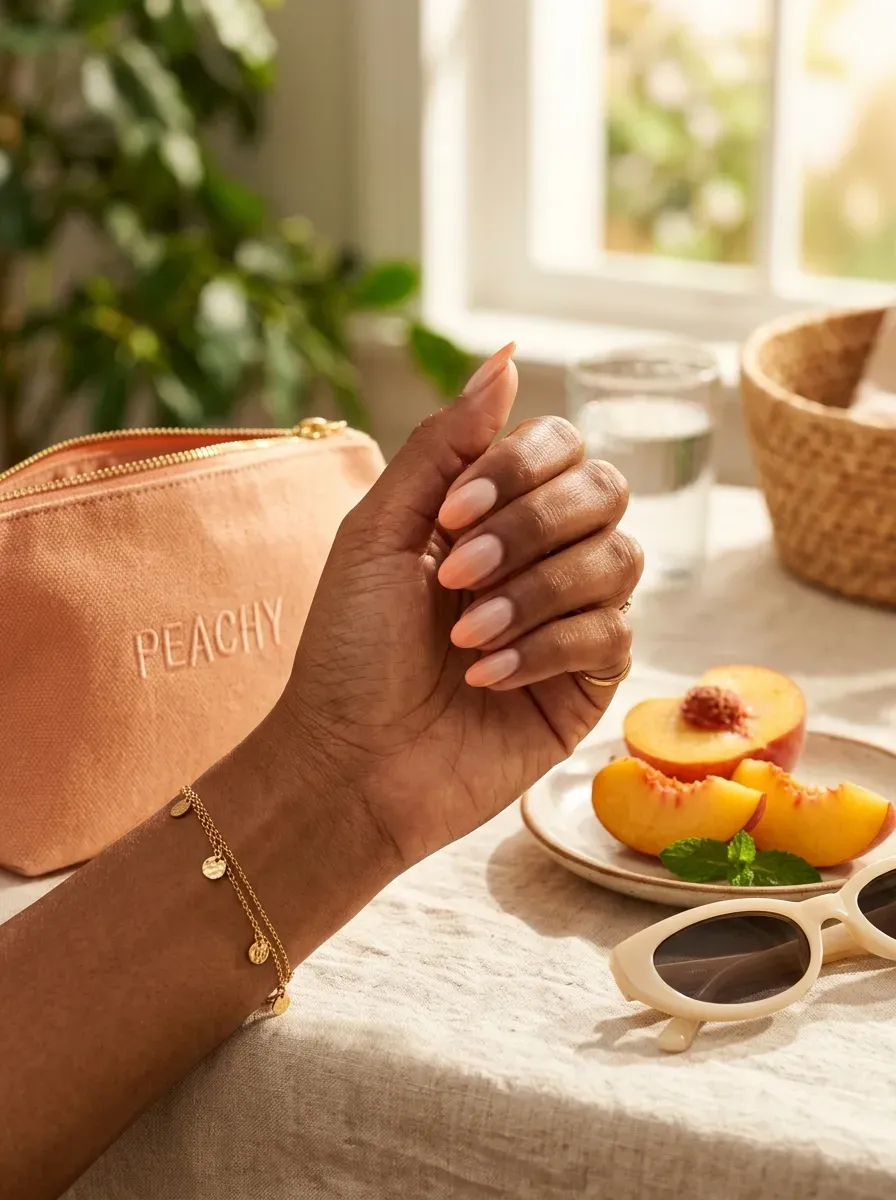
Peach blends smoothly into beige because both shades share warm undertones. The result gives the French edge color without creating a strong boundary, which works particularly well for spring and summer.
Keep the peach creamy rather than neon. A softer formula is easier to diffuse, and a neutral nude base prevents the finished gradient from shifting too far toward pink.
30. Coral Ombré French Tips

Coral adds more energy than peach while the ombré technique prevents the shade from feeling too bright. The blend works especially well on almond nails because the color can concentrate toward the point.
If the coral is translucent, do not compensate with a thick coat. Build opacity gradually or apply a very light white base near the edge before blending the color.
31. Butter Yellow Ombré French Tips

Butter yellow creates a surprisingly soft French gradient because the pale warmth blends easily into beige or milky bases. It gives short nails seasonal color without producing a hard pastel band.
Keep the deepest yellow close to the edge. A wide pale fade can visually shorten the nail plate, especially when the color contains a lot of white pigment.
32. Rose Gold Ombré French Tips

Rose gold ombré blends metallic warmth into the nail instead of creating a sharp chrome border. Fine shimmer particles give the fade enough reflection to stay visible without looking chunky.
Use a fine metallic gel or powder rather than traditional glitter. Larger particles are difficult to diffuse smoothly and can leave a visible ridge where the ombré should look soft.
33. Gold Chrome Ombré French Tips

Gold chrome can be softened by gradually reducing the metallic powder as it moves away from the free edge. The result still catches light strongly but avoids a hard reflective line.
Work with very little powder through the middle of the gradient. Chrome builds quickly, and too much pressure can turn the entire nail reflective instead of preserving the nude center.
34. Silver Chrome Ombré French Tips
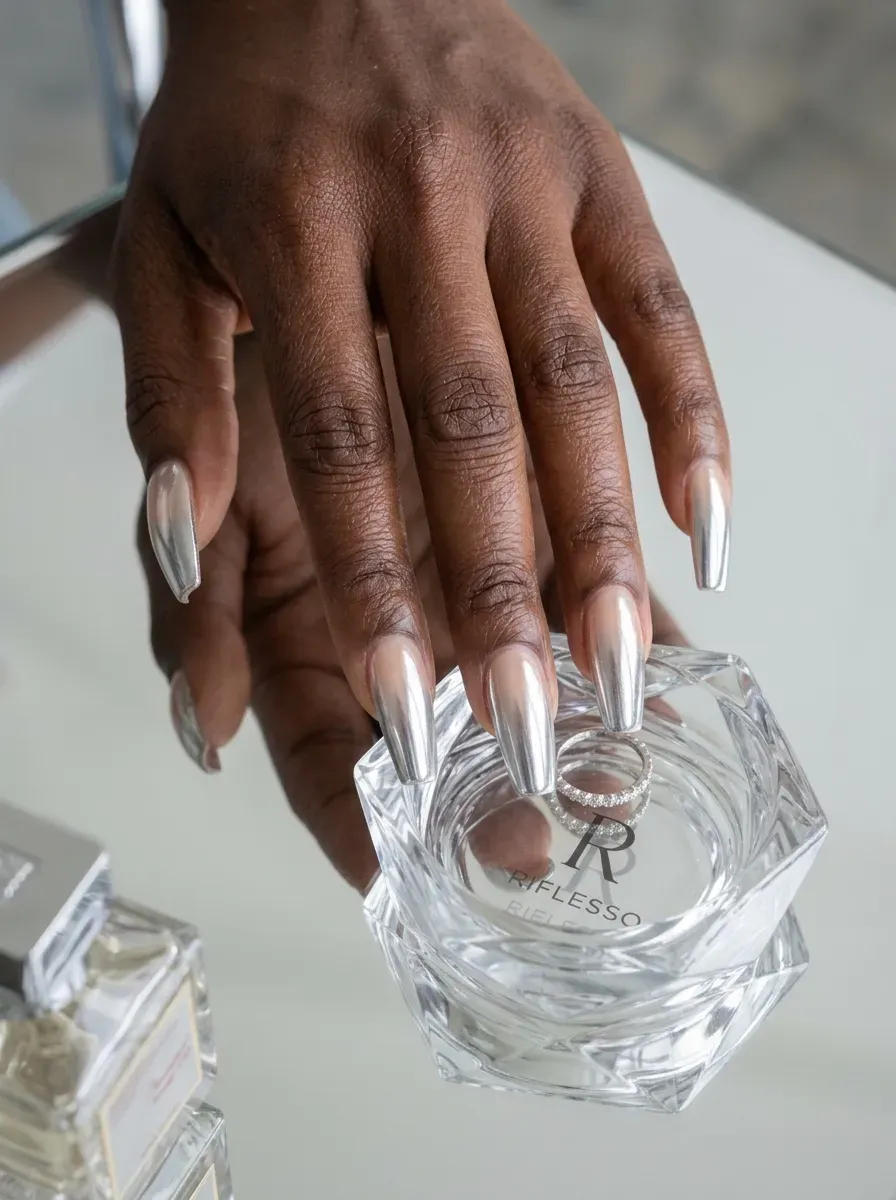
Silver chrome creates a cooler, more futuristic ombré than gold. The effect is strongest on coffin and almond nails where a reflective edge can fade gradually into transparent or nude gel.
Seal the transition carefully after removing loose powder. Metallic residue left on the nude section can blur the fade and make the manicure look dusty rather than intentionally reflective.
See more 30 Short Nail Ideas That Still Look Chic
35. Pearl Chrome Ombré French Tips

Pearl chrome produces a softer gradient than mirror metallic powders because the reflection is diffused rather than sharp. It works beautifully over milky pink or beige bases and suits bridal or minimalist styling.
Apply the pearl powder lightly through the middle of the nail. Leaving some sheer base visible prevents the manicure from becoming a full glazed finish instead of an ombré French.
36. Glazed Ombré French Tips
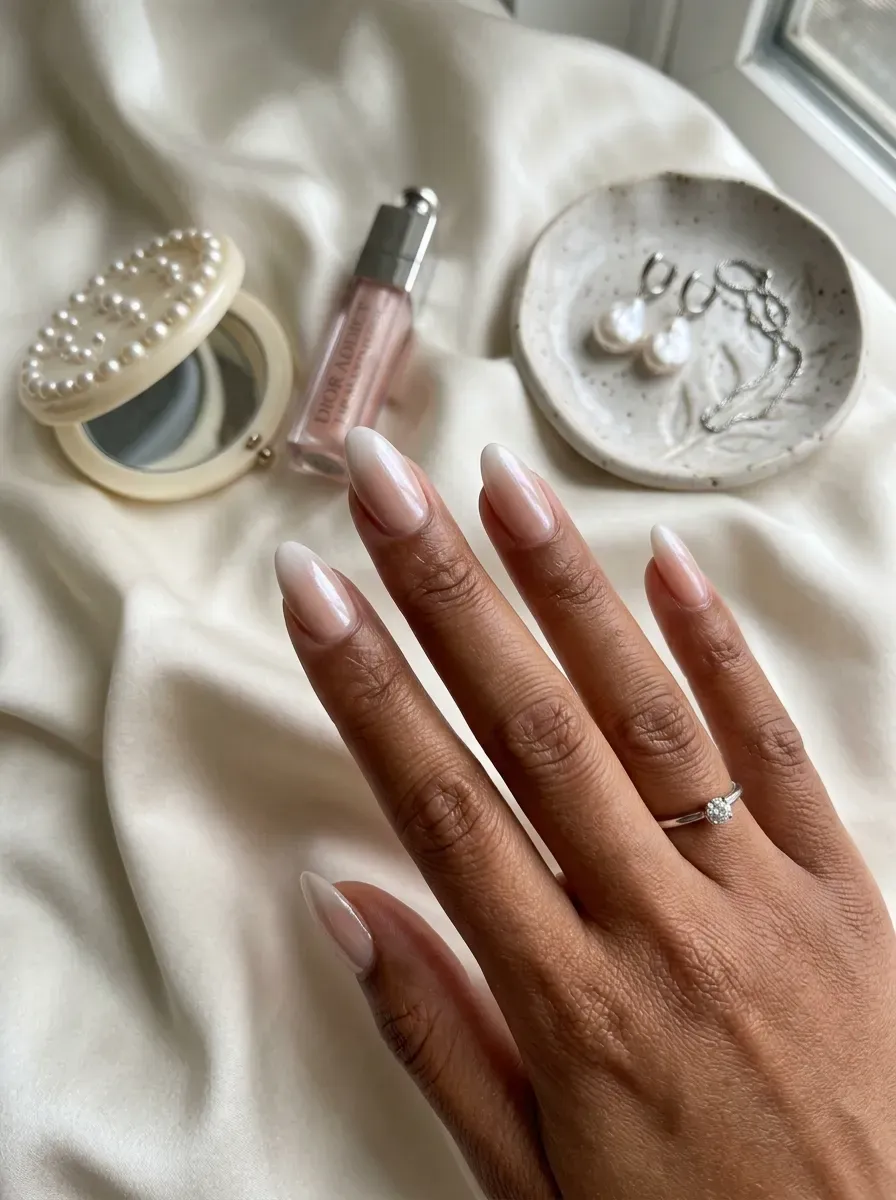
A glazed ombré combines two softening techniques: the white tip is blended into the base, then a light pearly sheen is layered over the finished gradient.
The result catches light without introducing a harsh metallic border. Keep the glaze thin. Too much chrome powder can hide the gradient underneath and turn the manicure into a uniform reflective finish.
37. Cat Eye Ombré French Tips
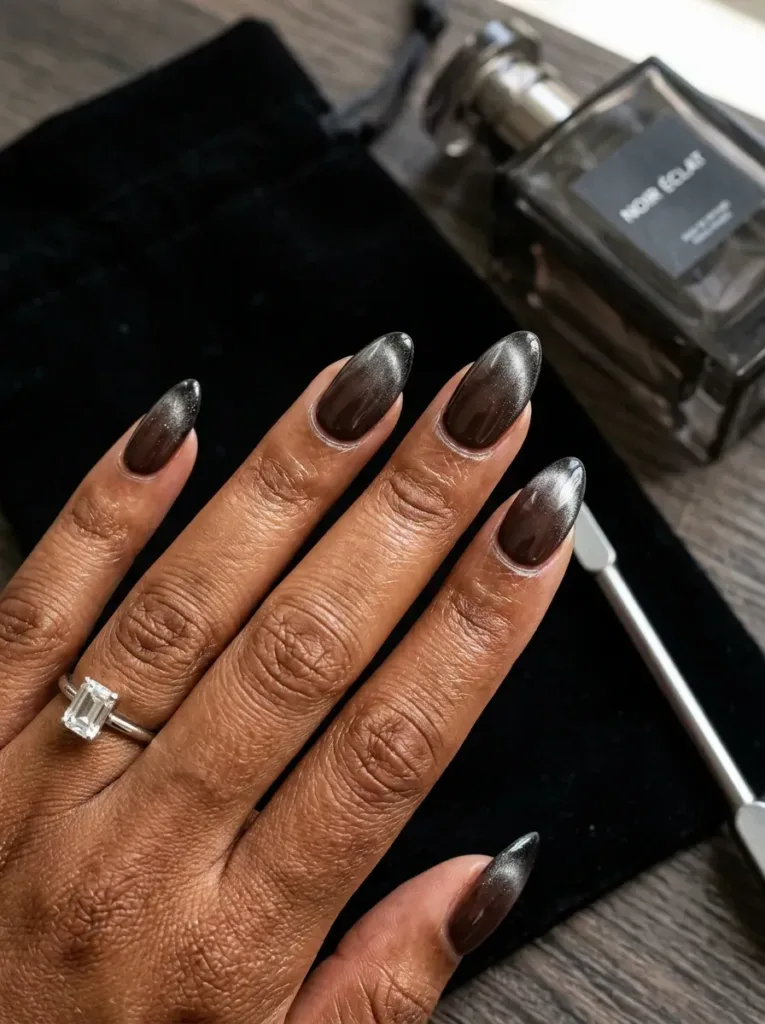
Magnetic polish adds movement to an ombré French because the reflective particles shift while the underlying color gradually fades. Burgundy, cocoa, emerald, and charcoal all work well for this effect.
Blend the color first, then position the magnetic reflection before curing. One nail at a time is safest because the particles can spread again if they sit uncured for too long.
38. Cocoa Velvet Ombré French Tips

Cocoa velvet polish creates a soft brown shimmer that becomes even more dimensional when faded into a nude center. The finish moves gently under light rather than producing a sharp cat eye stripe.
Use a wide magnet after establishing the gradient. Once the particles form an even velvet reflection, flash cure immediately so the shimmer does not flatten before the design is locked in.
39. Pink Jelly Ombré French Tips

Pink jelly creates a translucent ombré that looks especially dimensional on clear extensions. Because the color remains see through, the fade appears layered rather than painted on top.
Work with several very thin coats. Jelly formulas reveal streaks easily, and a thick application can cure unevenly while destroying the transparency that gives the gradient its depth.
40. Amber Jelly Ombré French Tips
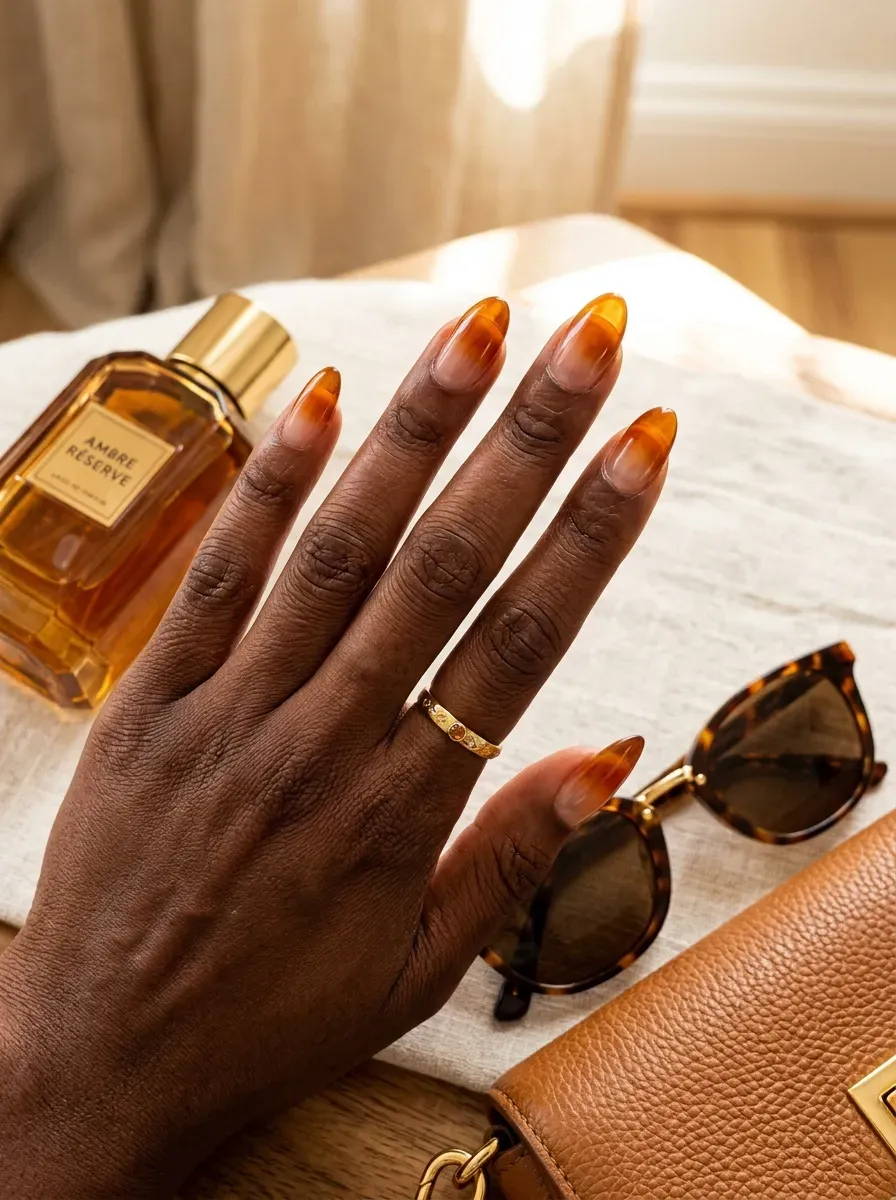
Amber jelly creates a warm brown orange gradient that resembles translucent resin. The effect works best on clear or very sheer extensions where light can pass through the colored free edge.
Keep the underside spotless because transparency makes dust and filing marks visible. Build the amber slowly with thin layers so the center stays clear and the tip retains depth.
41. Mismatched Pastel Ombré French Tips

Mismatched pastel gradients let every nail carry a different shade while the shared ombré technique keeps the set connected. Peach, lavender, butter yellow, sage, and dusty blue create a balanced soft palette.
Keep the fade height consistent across all five fingers. Matching placement matters more than matching color when you want a multicolor set to look cohesive rather than random.
See also 16 FunHaus Party Theme Ideas That Turn Any Celebration Into the Greatest Show
42. Mismatched Jewel Tone Ombré French Tips

Jewel tone gradients create stronger contrast than pastels while the repeated fade keeps the manicure unified. Emerald, ruby, sapphire, plum, and amber all work together because they share similar saturation.
Use one nude base across the entire set. Changing both the base and tip color from nail to nail can make the finished manicure feel visually fragmented.
How Much Nail Length Does an Ombré French Tip Need?
An ombré French tip does not require long nails, but length determines how much room the gradient has to transition.
Very short nails need a shallow fade. White or color should stay close to the free edge so most of the nail bed remains visible. If the gradient reaches too far toward the cuticle, the design can lose its French structure and begin to resemble full ombré coverage.
Medium oval and almond nails provide the easiest working space. There is enough room to blend gradually while still leaving a clear nude area.
Long coffin, almond, and stiletto extensions allow more elaborate fades, including dark colors, jelly finishes, chrome, and magnetic effects.
The strongest pigment should usually remain at the very edge regardless of length.
Look at the nail from arm’s length before curing. A gradient can appear beautifully soft in a macro view but feel too long or too heavy when the entire hand is visible.
The goal is balance, not simply stretching the fade as far as the nail allows.
Sponge, Airbrush, or Brush: Which Blending Method Works Best?
Each blending method creates a slightly different ombré french tip.
A makeup sponge is accessible and works well with regular polish or gel when you need a soft white, pink, or nude gradient. The texture can leave tiny marks, so use minimal product and build several thin layers rather than pressing a heavily loaded sponge onto the nail.
Airbrushing gives the smoothest fade. It is especially useful for bright colors, aura inspired tips, and longer nails where an uneven transition would be easy to see. The main challenge is control. Too much pigment can travel farther up the nail than intended.
A soft blending brush offers more precision with gel. It works particularly well for chocolate, burgundy, navy, and other darker colors because you can feather the inner edge without covering the entire nail.
Whatever method you use, cure thin layers separately.
Trying to create the full gradient in one application usually produces either a visible line or a bulky tip.
Why Some Ombré French Manicures Look Cloudy
Cloudiness usually comes from blending too much white or pale pigment into the center of the nail.
A French ombré should have a visible concentration of color near the free edge and a gradual transition into the base. When white travels almost to the cuticle, the entire nail can lose definition.
Base choice also matters.
An opaque milky base combined with a heavy white gradient can leave very little transparency. Sheer pink, beige, or neutral nude usually gives the fade more depth because some natural nail tone remains visible underneath.
Product thickness can create another problem. Multiple heavy gel layers may soften the color transition but make the nail look bulky from the side.
Use thin layers and let each one settle before curing.
For white fades, start with less pigment than you think you need. It is much easier to add another pass than to remove a gradient that has already traveled too far.
The cleanest ombré French still needs contrast between the edge, transition zone, and nail bed.
How to Keep Dark and Colored Ombré Tips From Looking Muddy
Colored gradients become muddy when the tip shade and base have conflicting undertones.
Warm caramel, chocolate, terracotta, peach, olive, and gold tend to blend most naturally into beige, peach beige, or caramel nude bases.
Cooler shades such as dusty blue, navy, lavender, plum, and silver can pair well with neutral pink or balanced beige.
The blending zone is where undertones mix most visibly. A cool pink base under olive green, for example, can produce a gray middle section instead of a clean transition.
Pigment control matters too.
Dark shades should be applied lightly through the middle of the gradient. Black, burgundy, espresso, and navy can become opaque very quickly, which destroys the soft fade.
Start at the free edge with the deepest concentration, then use a nearly clean brush or sponge to soften only the inner boundary.
If the first blended layer looks slightly too light, leave it. Building depth gradually gives you far more control than correcting a heavy first coat.
Choosing the Ombré French Tip That Fits Your Style
Start with your nail length and how much contrast you want.
Short natural nails usually suit shallow white, blush, beige, butter yellow, or soft pastel fades. Medium almond and oval nails give nude, caramel, lavender, sage, burgundy, and pearl gradients enough room to develop.
Long extensions can carry black, navy, cobalt, emerald, jelly, chrome, and magnetic ombré without crowding the nail.
Think about maintenance next. Classic cream gradients are easier to repair than chrome, jelly, or magnetic finishes. Dark colors also show edge wear faster than milky white and beige.
For work and understated styling, nude to white, latte, ivory, blush, and soft gray stay quiet.
Special occasions can carry jewel tones, metallics, glazed finishes, or multicolor gradients.
The best choice should fit the mood you want as much as the color itself. Soft white reads clean, chocolate feels warm, burgundy looks polished, pastels feel playful, and chrome adds more visible drama.