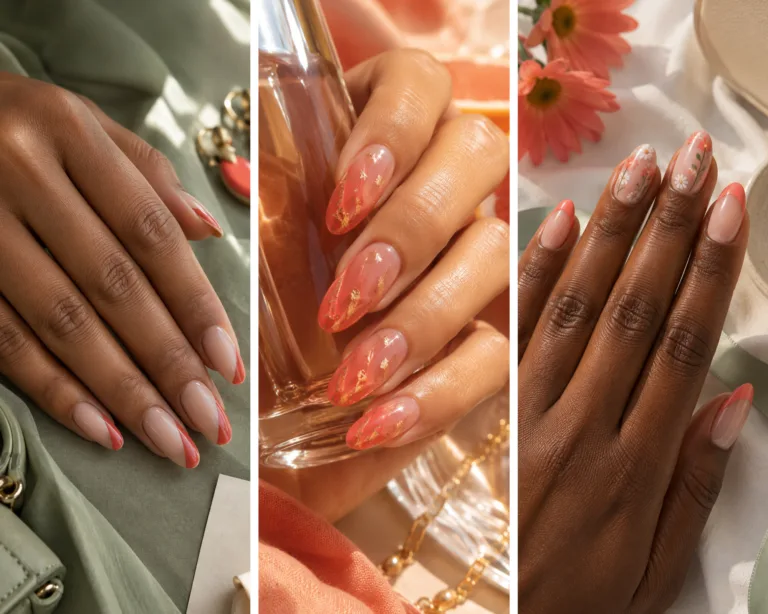
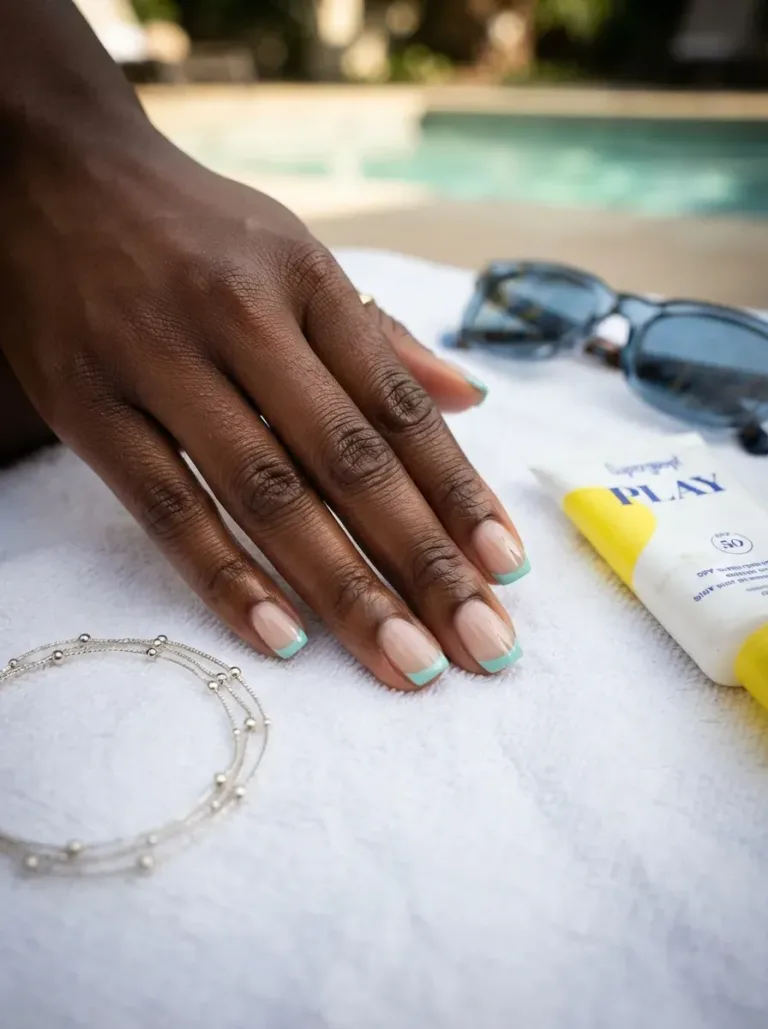
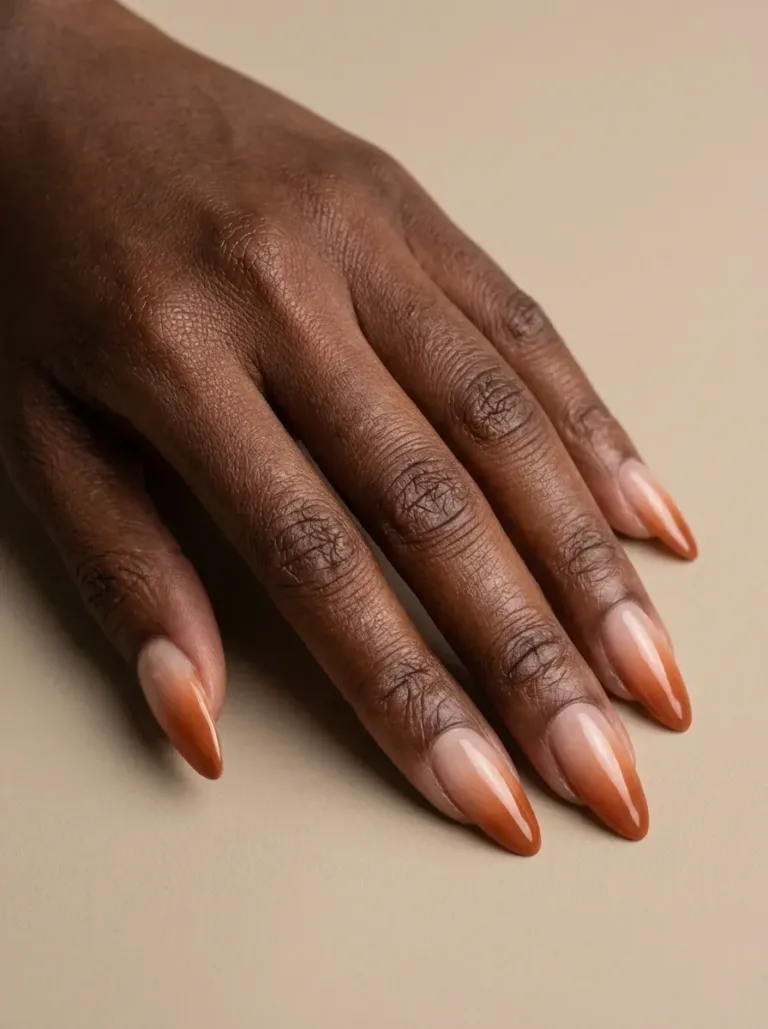
Choosing a French manicure used to mean deciding between white tips and maybe a softer pink base. In 2026, that decision takes a little longer.
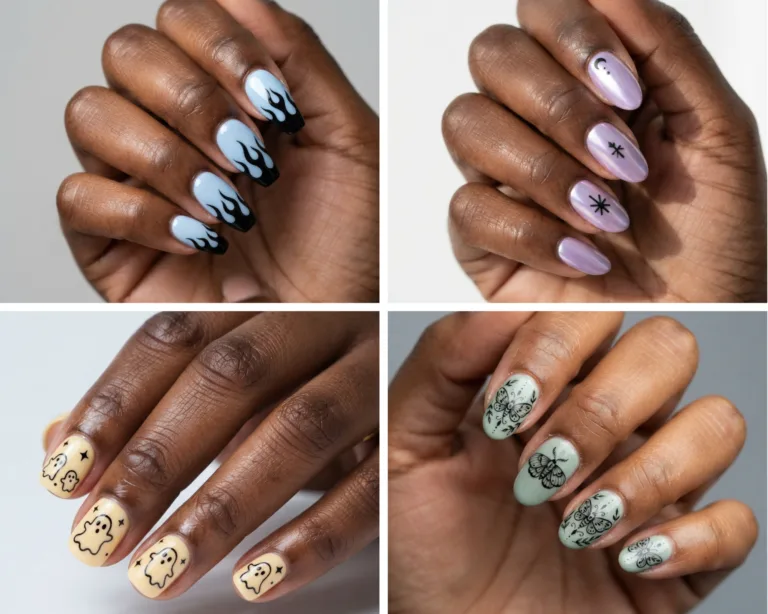
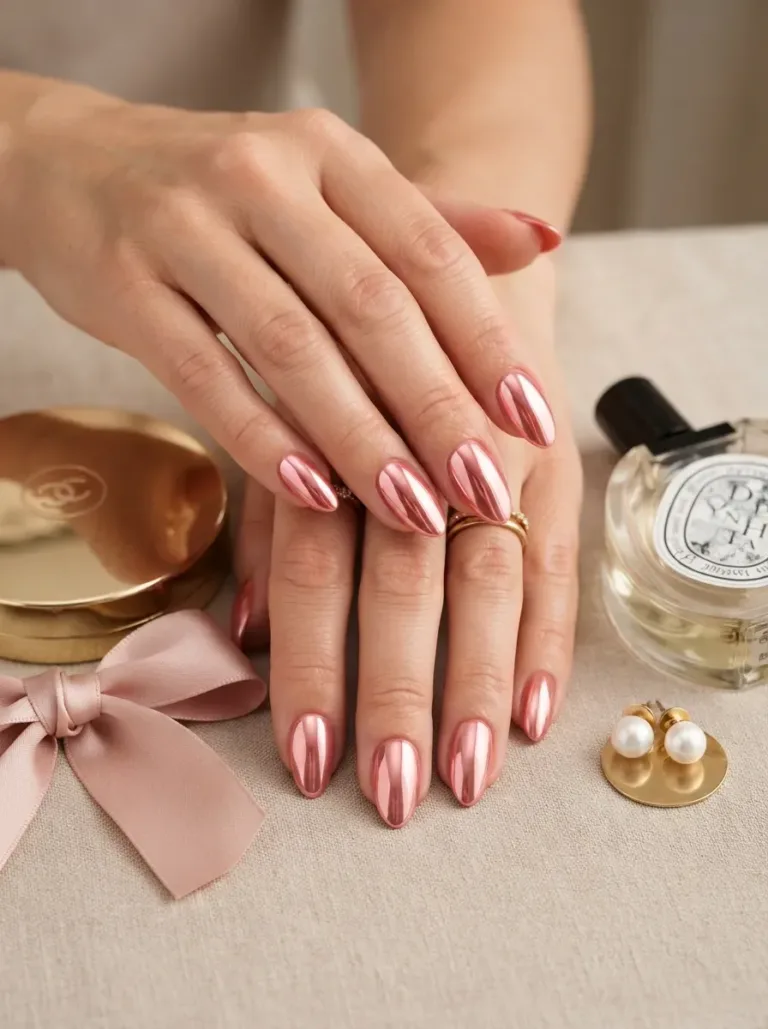
French tips nails are showing up with razor thin edges, rich chocolate tones, translucent jelly finishes, chrome outlines, magnetic polish, and tiny hand painted details that completely change how the manicure reads.
Some versions keep the clean structure that makes a French manicure wearable for work and weddings, while others lean graphic, glossy, or intentionally playful. Nail length matters too. A micro tip can sharpen a short natural nail, while deeper curves give almond and stiletto shapes more drama.
Start with the smallest update of all, a cleaner, finer white edge.
1. Micro White French Tips
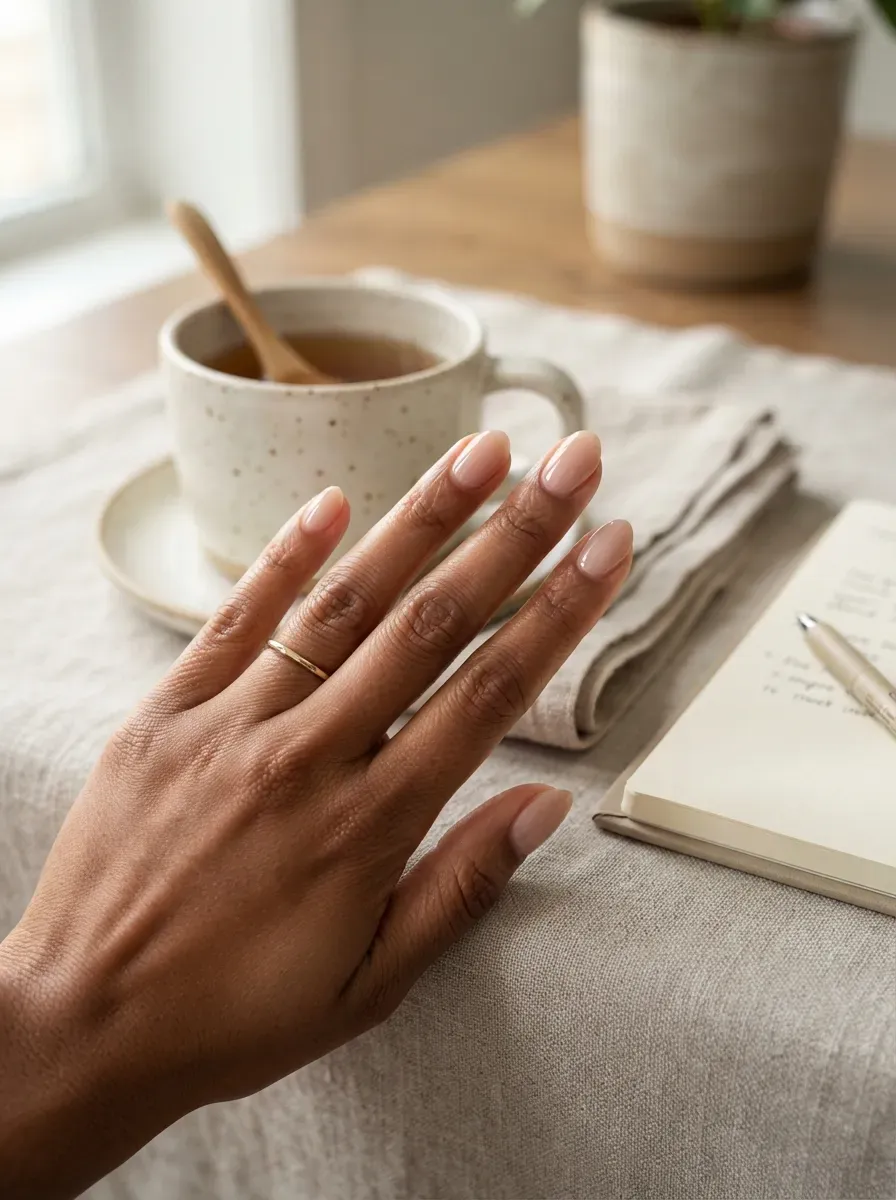
Micro French tips reduce the white edge to a hair thin line, which gives short nails definition without visually shortening the nail plate.
The technique works especially well on squoval, round, and short almond shapes because the crisp border makes the free edge look intentional.
Ask for an opaque white gel rather than layering several coats. A liner brush around 7 to 9 mm gives the cleanest control.
Pin for later 16 FunHaus Party Theme Ideas That Turn Any Celebration Into the Greatest Show
2. Deep Smile Line French Tips

A deeper smile line curves farther down the sidewalls than the traditional straight across French tip, creating a more sculpted effect on almond and oval nails.
That extra depth visually narrows wider nail beds and exaggerates length without requiring an extreme extension.
The curve needs symmetry more than thickness, so technicians often map both side points first. Keep the base sheer to make the architecture stand out.
3. Skinny Side French Tips

Instead of following the entire free edge, a side French traces one corner and sweeps diagonally toward the center.
The asymmetry feels more graphic than a standard tip while leaving plenty of negative space. It can also make short square nails appear slightly longer because the eye follows the diagonal line.
Use a highly pigmented gel so one thin stroke stays crisp rather than bulky.
4. Double Line French Tips
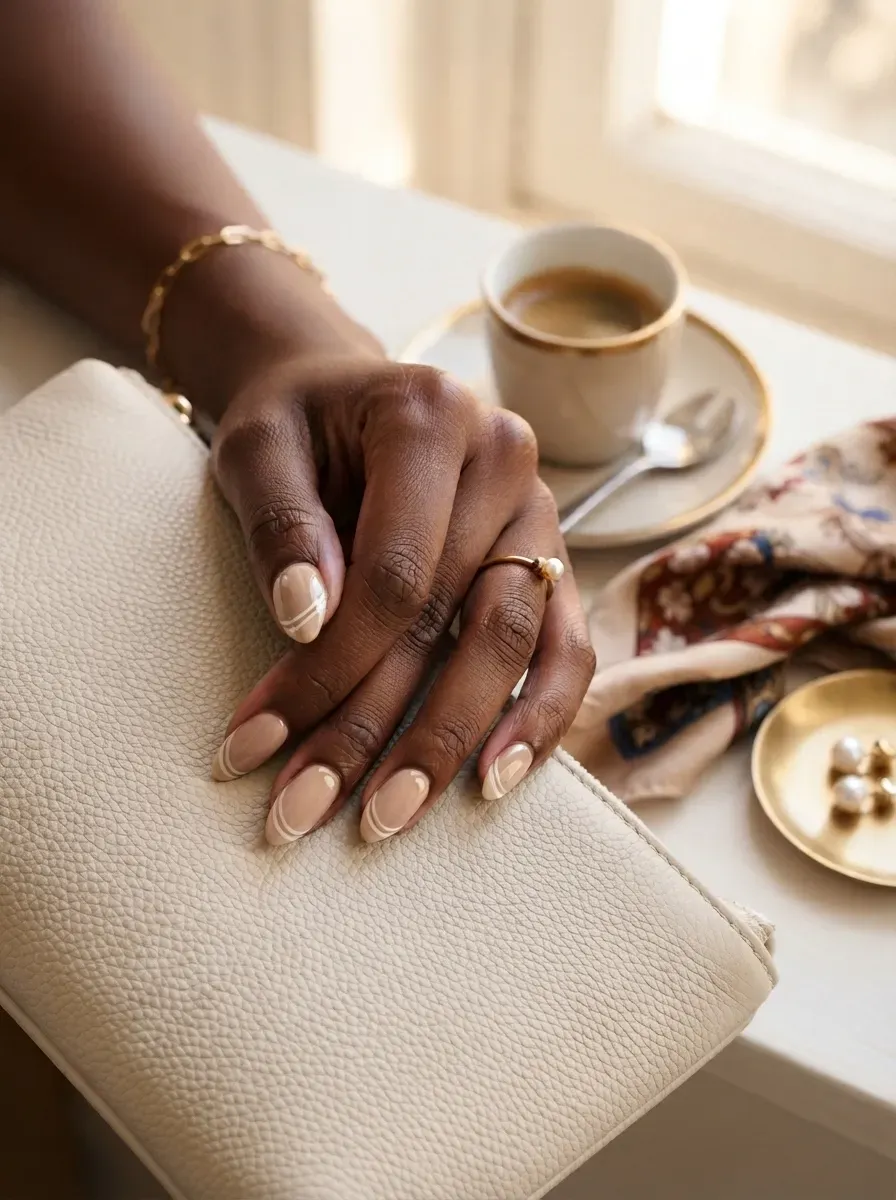
Double French tips place a second fine line just below the first, creating depth without adding bulky nail art.
White on white is subtle, while contrasting shades make the design more graphic. The spacing matters because uneven gaps can make the manicure look accidental rather than precise.
On short nails, keep both lines extremely fine. Medium almond nails can carry a slightly wider separation without losing balance.
See now 25 Back-to-School Nails to Start the Year Right
5. Reverse French Half Moons
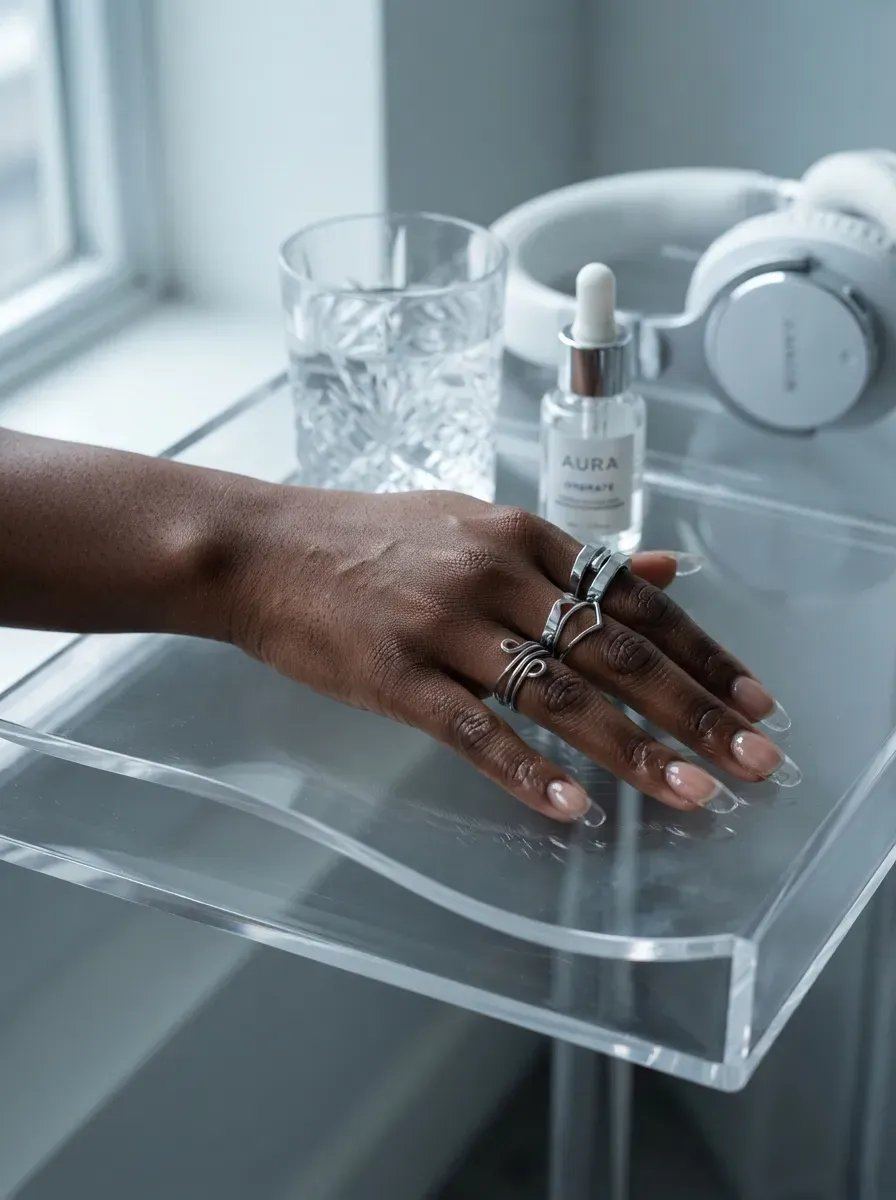
Reverse French nails move the accent from the free edge to the cuticle, usually following the natural half moon at the base of the nail.
The result still feels recognizably French but leaves the tip completely clean. It is useful if your free edges chip quickly because the art sits away from impact zones.
Leave a tiny gap from the cuticle to prevent the gel from flooding during curing.
6. Floating French Tips
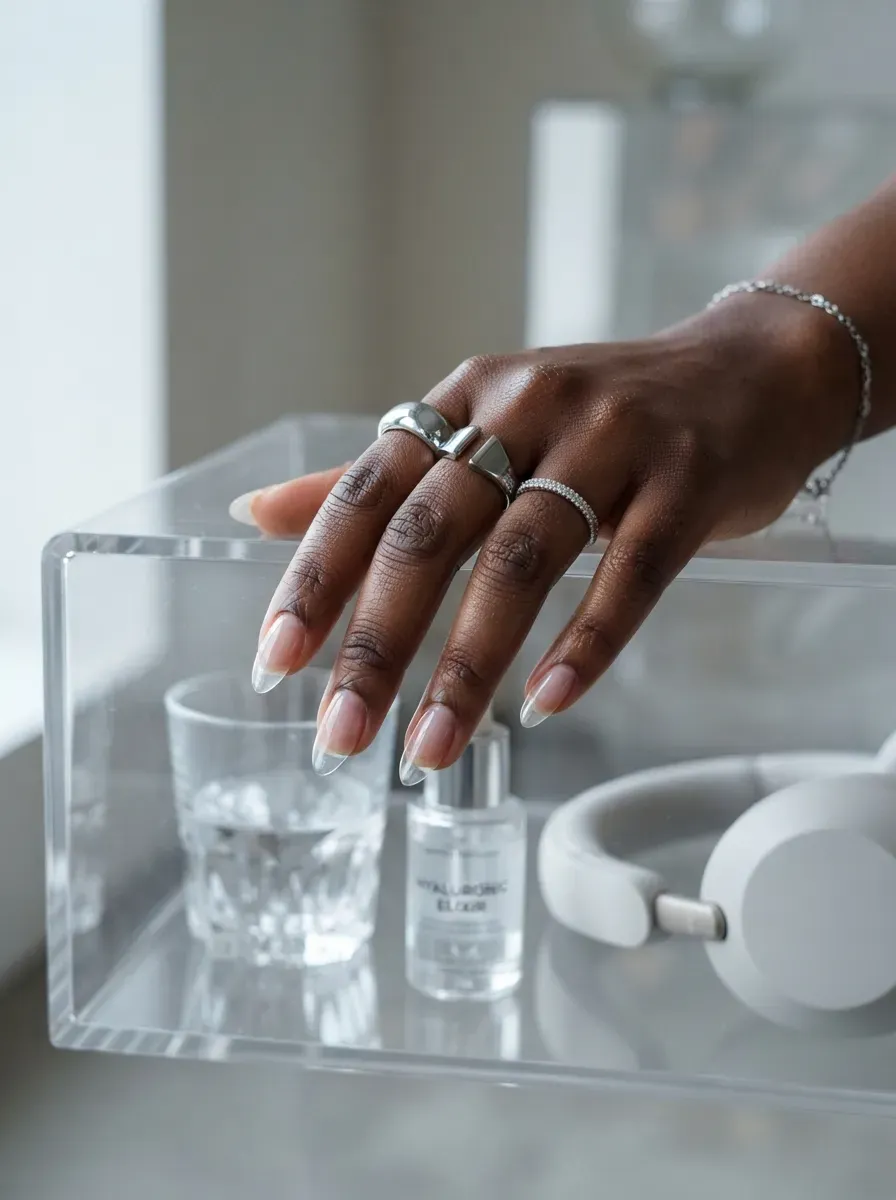
Floating French tips separate the smile line from the actual edge, leaving a strip of clear or nude nail between the painted line and free edge.
That gap creates an airy, almost architectural look. Clear builder gel makes the illusion strongest, though a sheer nude base keeps it more wearable.
Extensions need a clean underside for this style because anything trapped beneath the transparent area becomes noticeable.
7. V Shaped French Tips
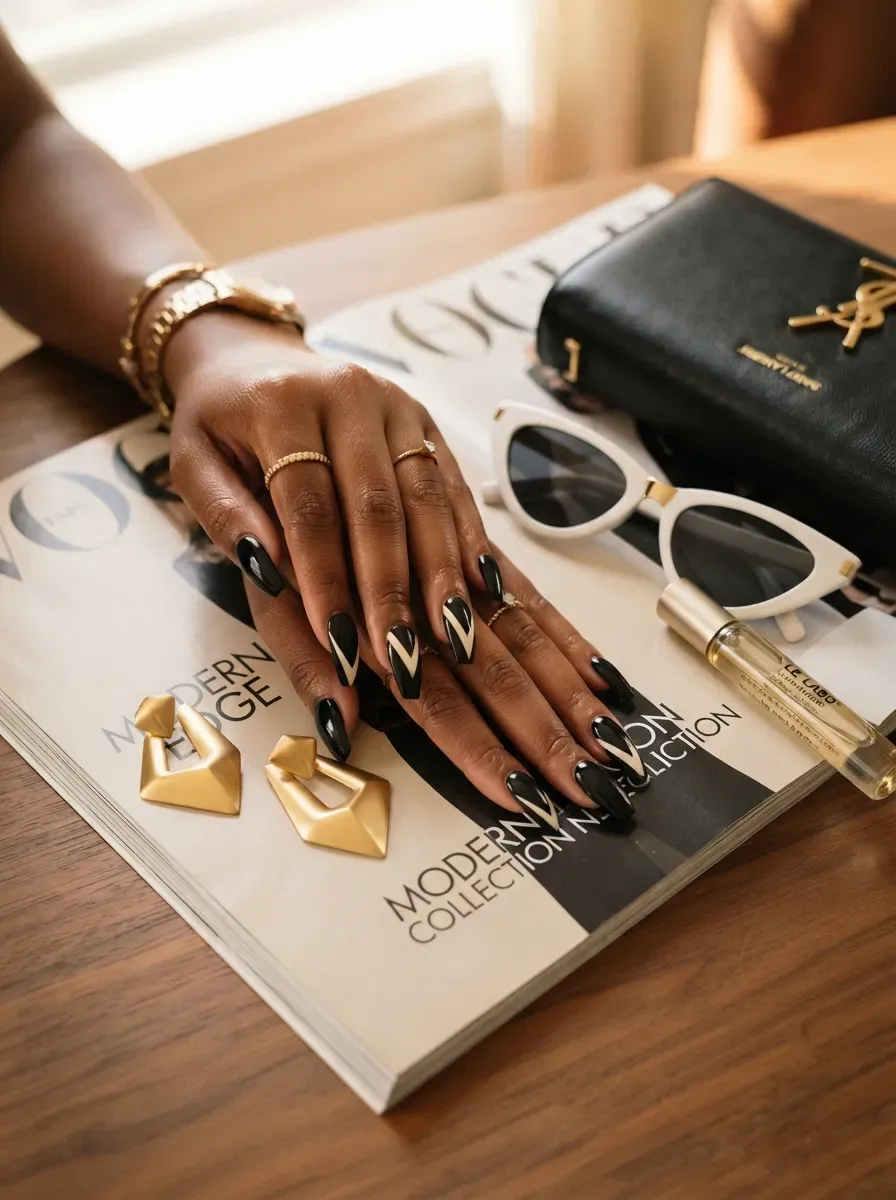
A V French replaces the curved smile line with two diagonal strokes meeting in the center.
The pointed shape visually lengthens square, coffin, and tapered square nails, especially when the V starts deep along the sidewalls. It can be bold or surprisingly minimal depending on line thickness.
Check that each center point sits on the nail’s visual axis because even a small shift is noticeable.
8. Soft Square Classic French Tips
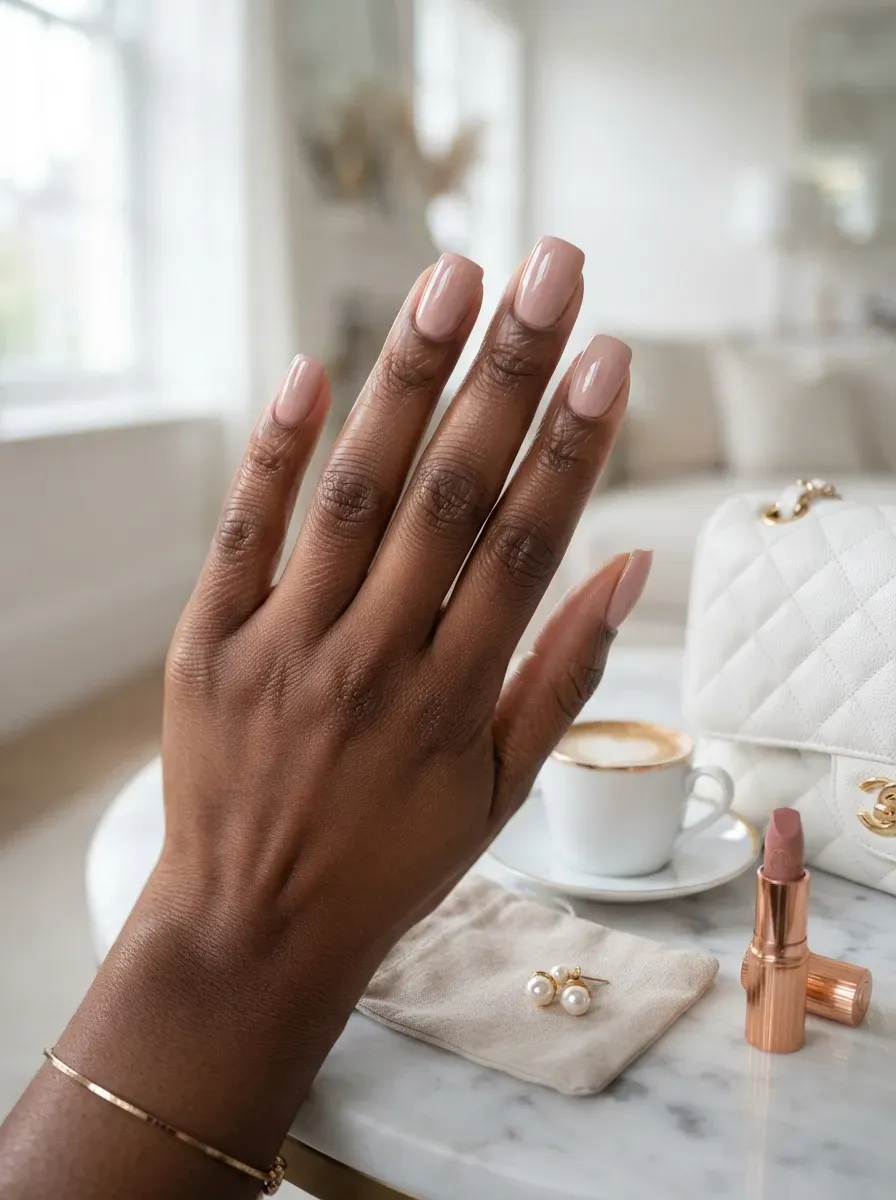
The classic French is returning with softer corners and a more translucent base rather than the thick pink and white acrylic look of earlier decades.
Soft square shaping gives enough width for a clean tip but removes harsh corners that snag easily. Keep the white proportional to the natural free edge.
On medium nails, a tip covering roughly one fifth of the visible plate usually looks balanced.
9. Sculpted Almond French Tips
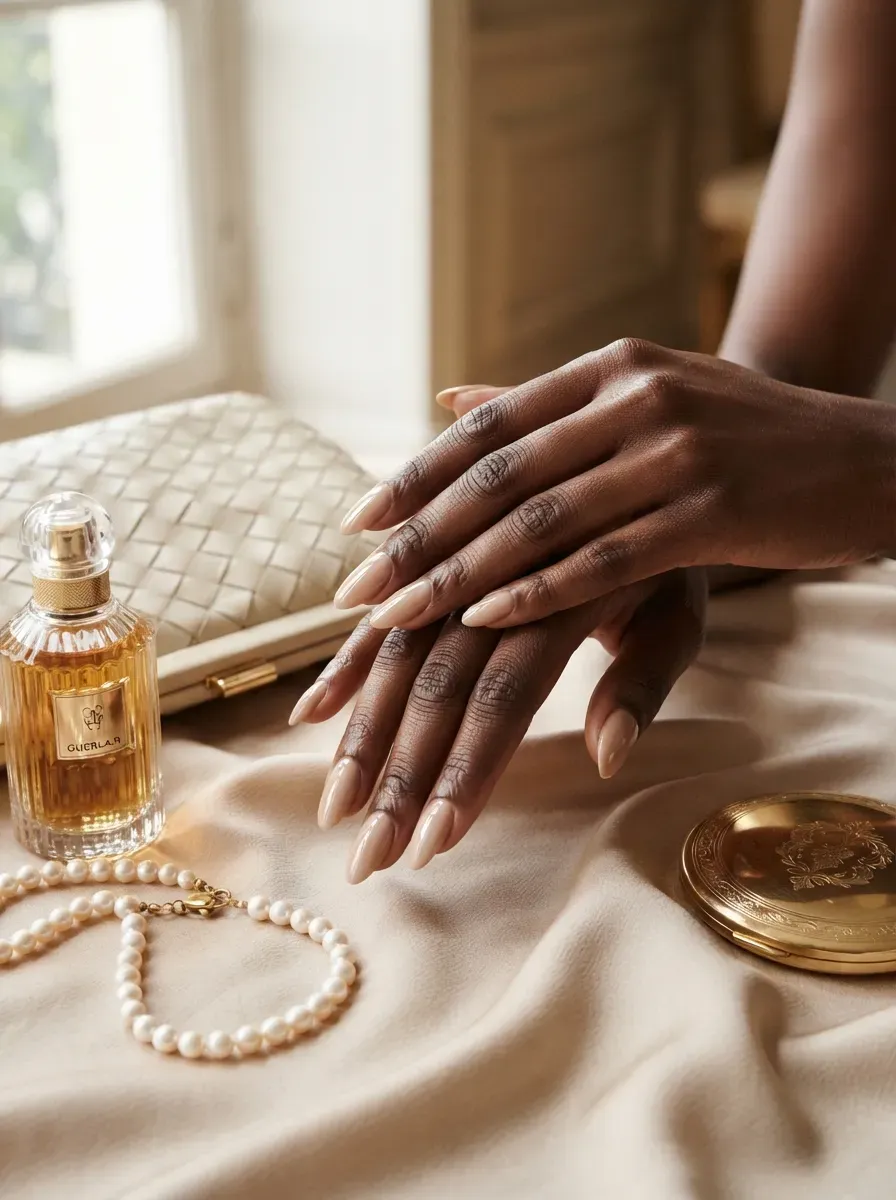
Almond French tips depend on structure as much as color.
The sidewalls taper gradually before meeting a rounded point, allowing the smile line to curve upward without looking heavy. A builder gel overlay can correct uneven natural nails before the French is painted.
Keep the apex centered and avoid filing too narrowly near the stress area, especially if you wear the length past your fingertip.
Read more 12 Couples Bucket List Ideas for Relationships That Go Beyond the Ordinary
10. Short Round French Tips

Short round French tips are especially practical when you keep natural nails trimmed close to the fingertip.
A fine white edge follows the rounded shape and creates definition without needing extensions. The style also grows out more gracefully than a thick tip because the contrast stays small.
File the sidewalls straight before rounding the corners because over rounding can make a short nail look wider.
11. Glass French Tips

Glass French tips use transparent extensions or clear builder gel so the free edge catches light rather than appearing opaque.
The effect is cleaner than glitter and more dimensional than a nude manicure. Any bubbles, dust, or uneven filing show immediately, making application quality important.
Finish underneath the extension as carefully as the top surface, then use a non yellowing top coat to maintain clarity.
12. Milky Base French Tips
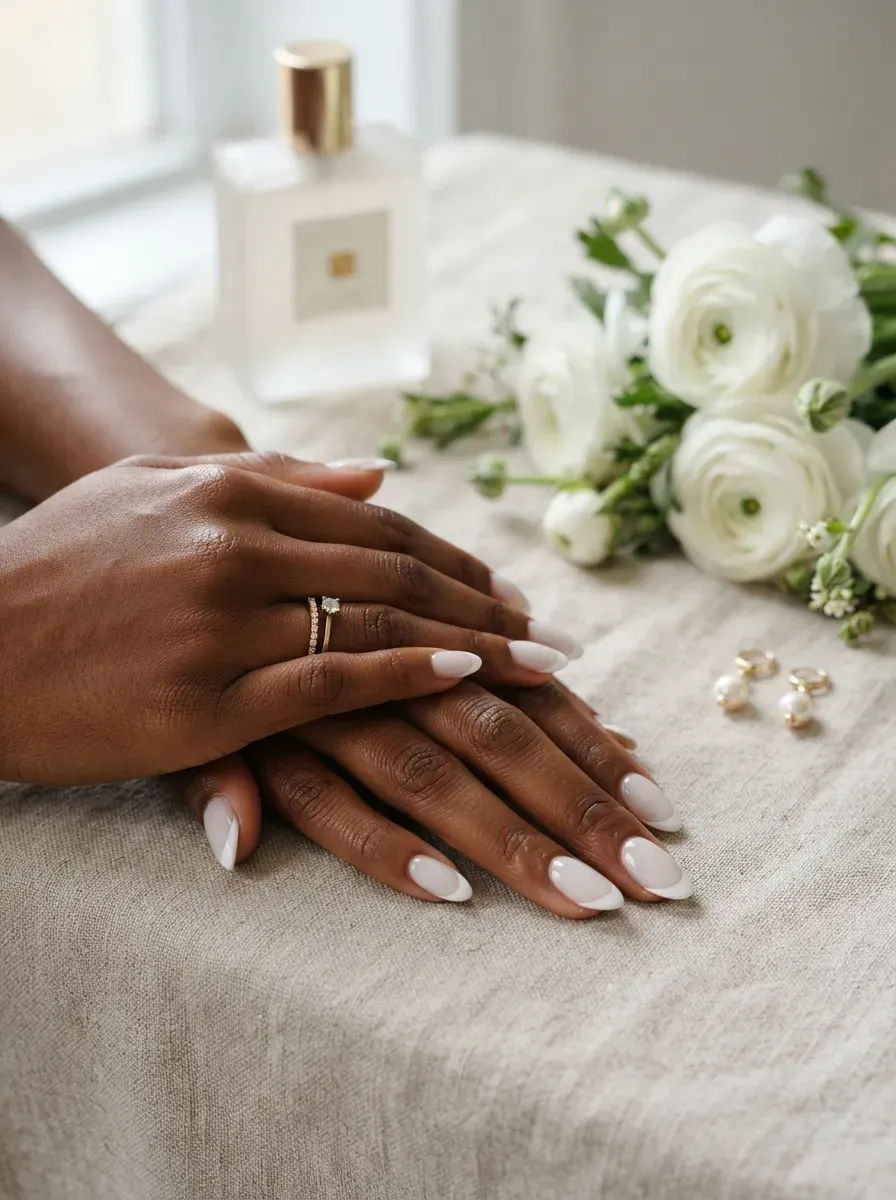
A milky base softens the contrast between natural nail color and bright white tips, which is useful when your nail beds have uneven tone.
Unlike an opaque nude, the translucent white still lets the natural nail show through. One or two thin coats are usually enough.
Choose a milk shade with neutral rather than blue undertones if you want the manicure to remain soft on warmer skin.
13. Nude on Nude Tonal French Tips
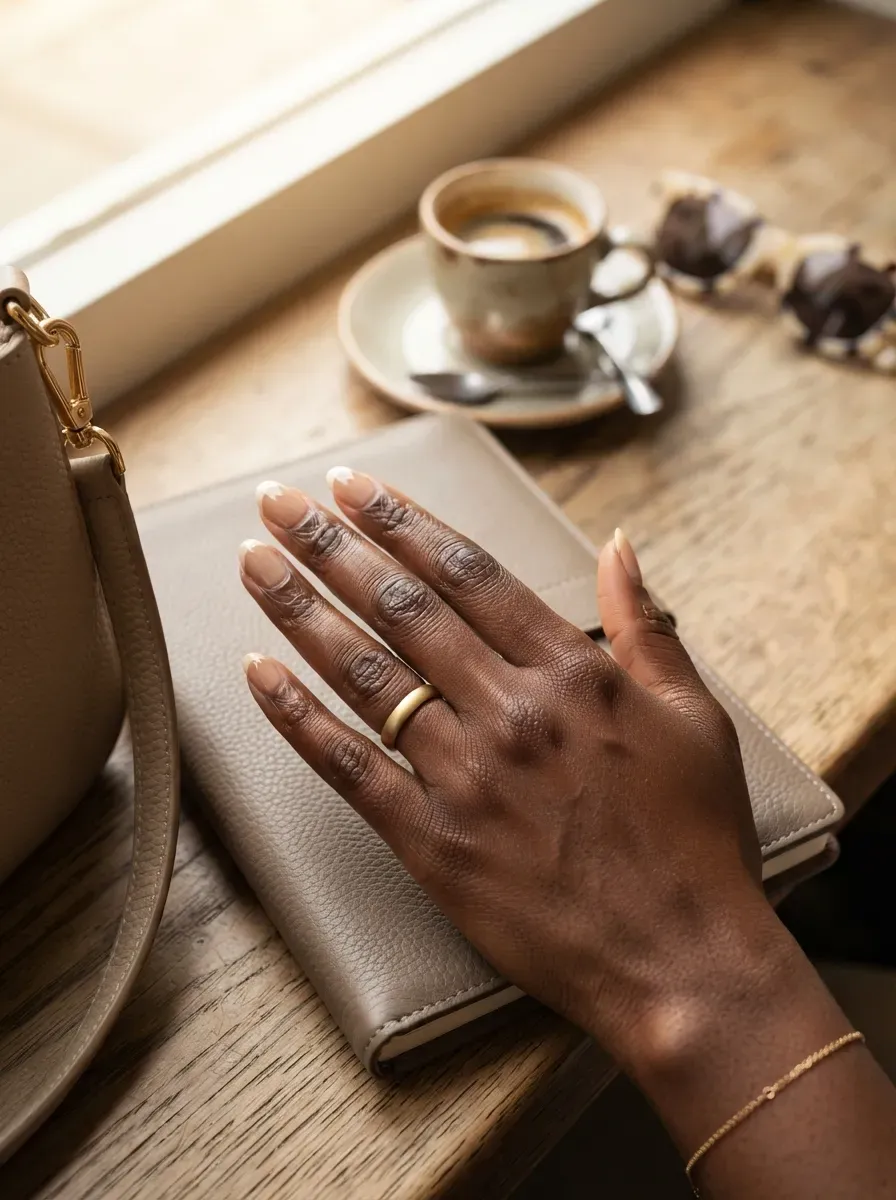
Tonal French tips replace white with a nude shade just one or two steps deeper than the base.
The contrast is deliberately low, giving the nail structure without making the tip the loudest feature. Caramel, beige, cocoa, and rosy beige combinations work across many undertones.
Swatch the two colors side by side first. If they look identical before application, the finished French line may disappear.
14. Baby Pink French Tips
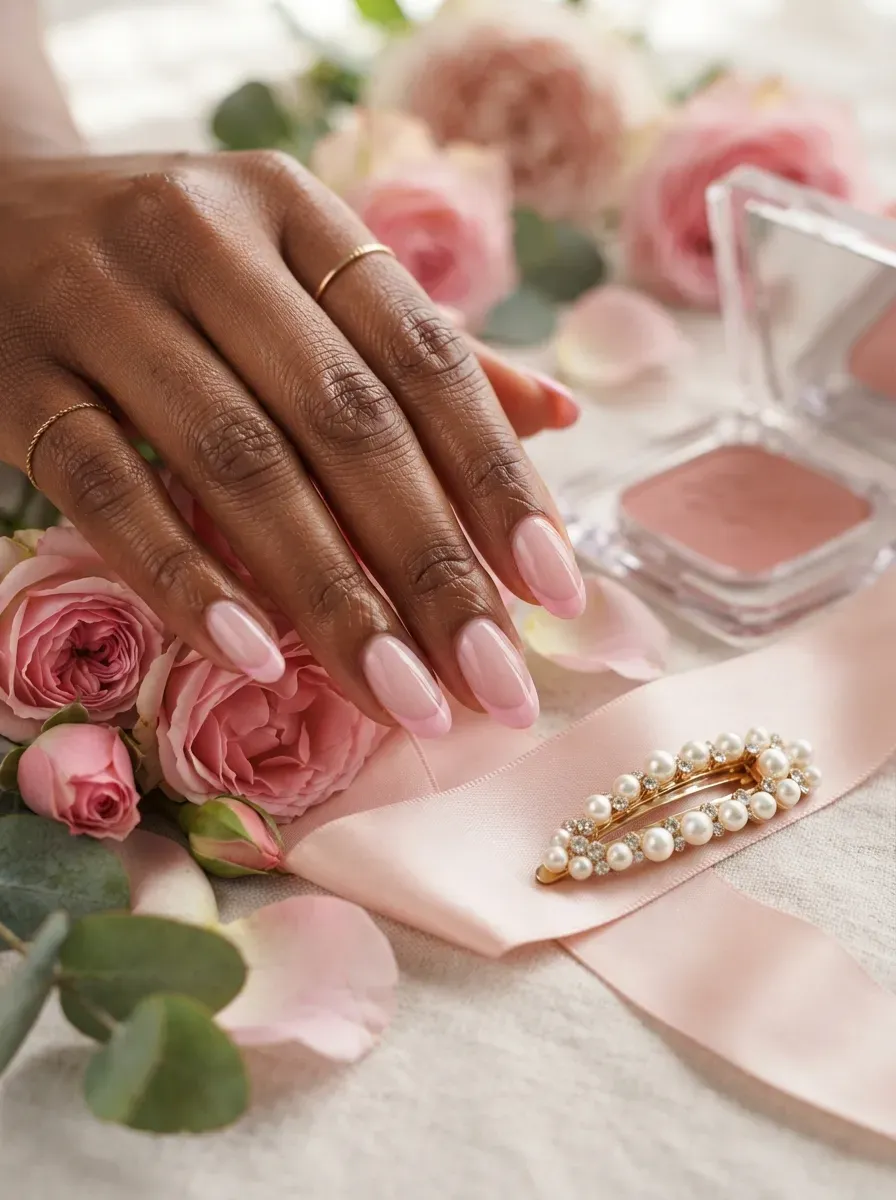
Baby pink tips give the French manicure a softer edge while keeping enough contrast to define the nail.
The shade works nicely over sheer blush, neutral beige, or clear bases depending on how much warmth you want. Creamy pink is easier to see than a translucent jelly pink on short nails.
Use two thin passes rather than one thick coat to keep the tip line smooth.
Check out How to Celebrate Mother’s Day Without Spending Money and Still Make It Truly Special
15. Butter Yellow French Tips

Butter yellow is softer than lemon and warmer than pastel cream, making it an easy color update for French tips.
Against deeper skin tones, the warmth reads bright without becoming fluorescent. On fairer complexions, a slightly muted version avoids looking chalky.
Keep the tip narrow if the color is very pale because a thick band can visually overpower shorter nail beds.
16. Cherry Red French Tips
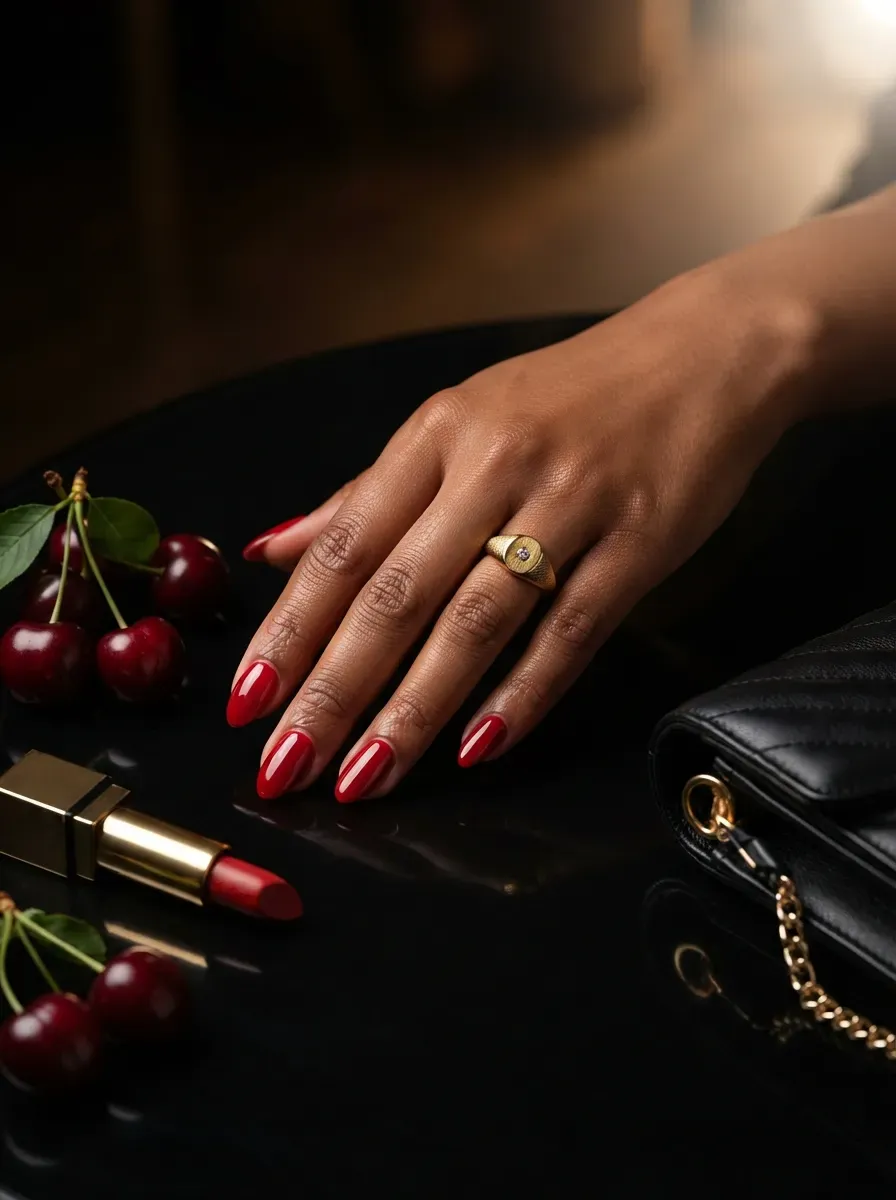
Cherry red tips bring the impact of a red manicure without covering the entire nail.
The clear or nude base keeps the look lighter, while the saturated edge draws attention to almond and square shapes. Blue red cherry shades look crisp, while warmer tomato red versions feel more playful.
Cap the free edge carefully with top coat because chips show faster on bright red than on pale neutrals.
17. Burgundy French Tips

Burgundy French tips deliver a deeper, more polished alternative to bright red.
Wine, merlot, and oxblood shades create enough contrast for the smile line to stay visible even when the tip is very thin. The color pairs particularly well with almond and squoval nails because the darker edge sharpens the silhouette.
Apply a stain resistant base underneath because highly pigmented reds can tint porous natural nails.
18. Chocolate Brown French Tips

Chocolate brown gives French tips a warm neutral quality while still creating clear separation from a sheer base.
Medium cocoa shades are especially flattering when you want a softer alternative to black. Deeper espresso brown tips can make short nails look sharply defined.
For a seamless finish, pair warm brown polish with a beige or caramel tinted base rather than a cool pink nude.
19. Espresso Micro French Tips
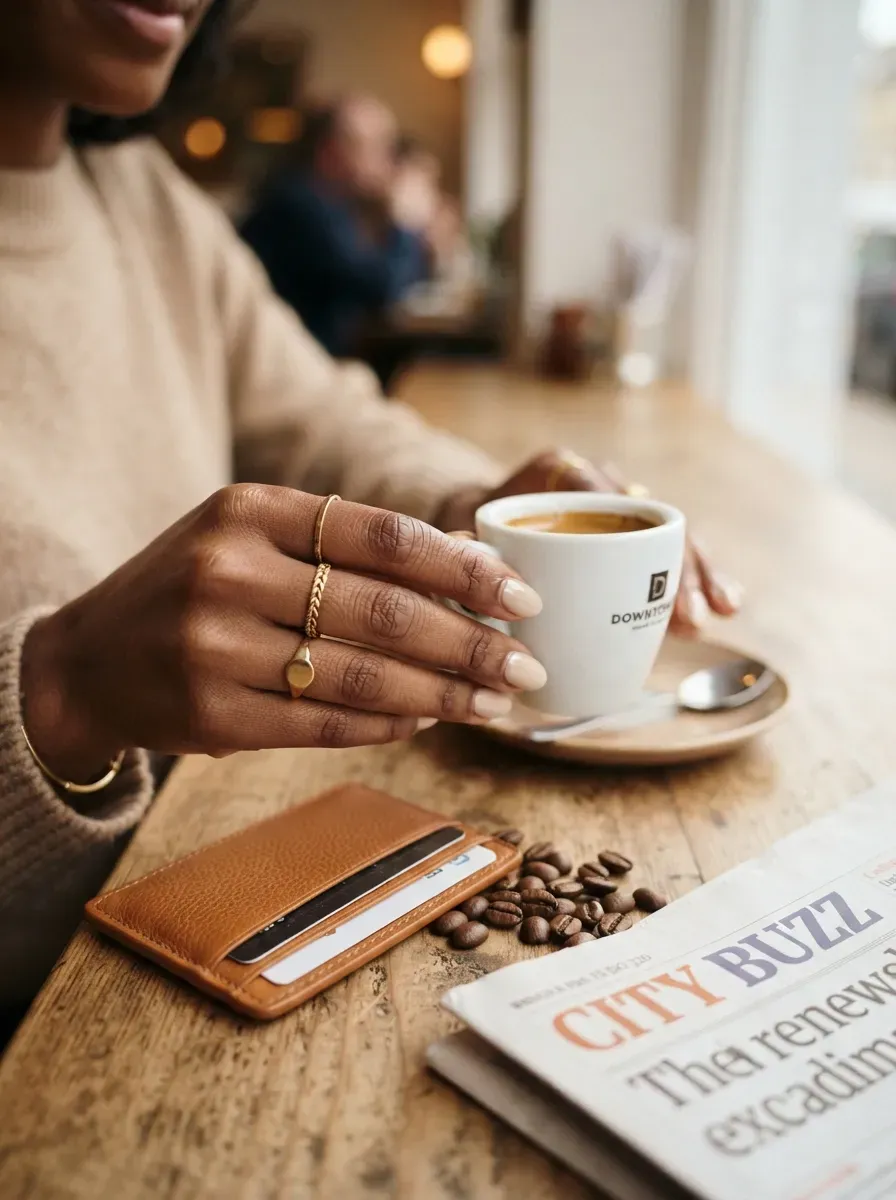
Espresso micro tips combine two flattering ideas, a barely there French line and a near black brown shade.
The result has definition without the starkness of black polish. It works especially well on short oval or rounded nails where a broad dark tip could make the plate appear shorter.
Use a long, flexible liner brush and rotate the finger rather than dragging your wrist around the curve.
Check out 16 Red, White, and Blue Charcuterie Board Ideas That Feel Festive, Thoughtful, and Beautiful
20. Sage Green French Tips
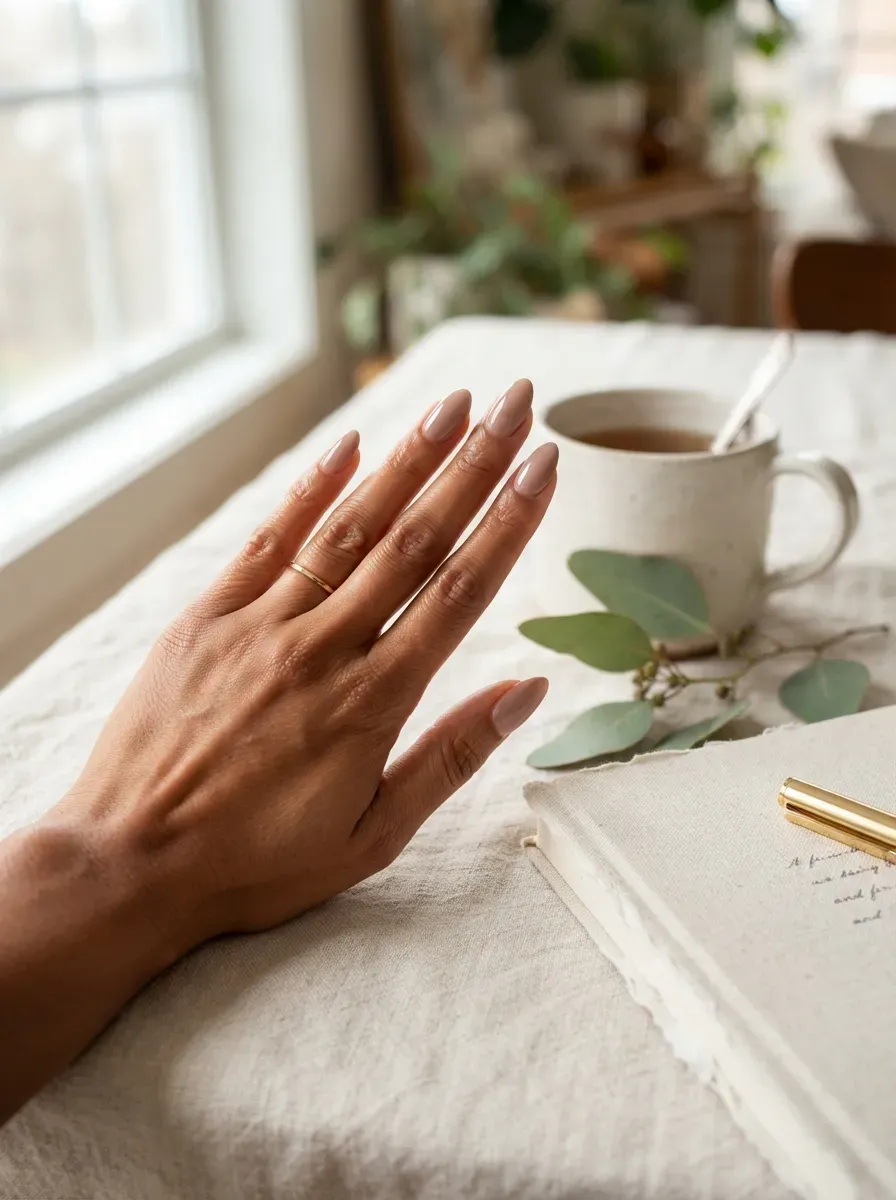
Sage green swaps bright color for a muted, earthy edge that still reads clearly as French.
Its gray undertone makes it easier to pair with cream, denim, camel, and gold jewelry than a vivid green. Warm skin tones often bring out the olive side of sage beautifully.
If your base shade is pink, keep it very sheer so the green does not pick up a muddy cast.
21. Olive French Tips
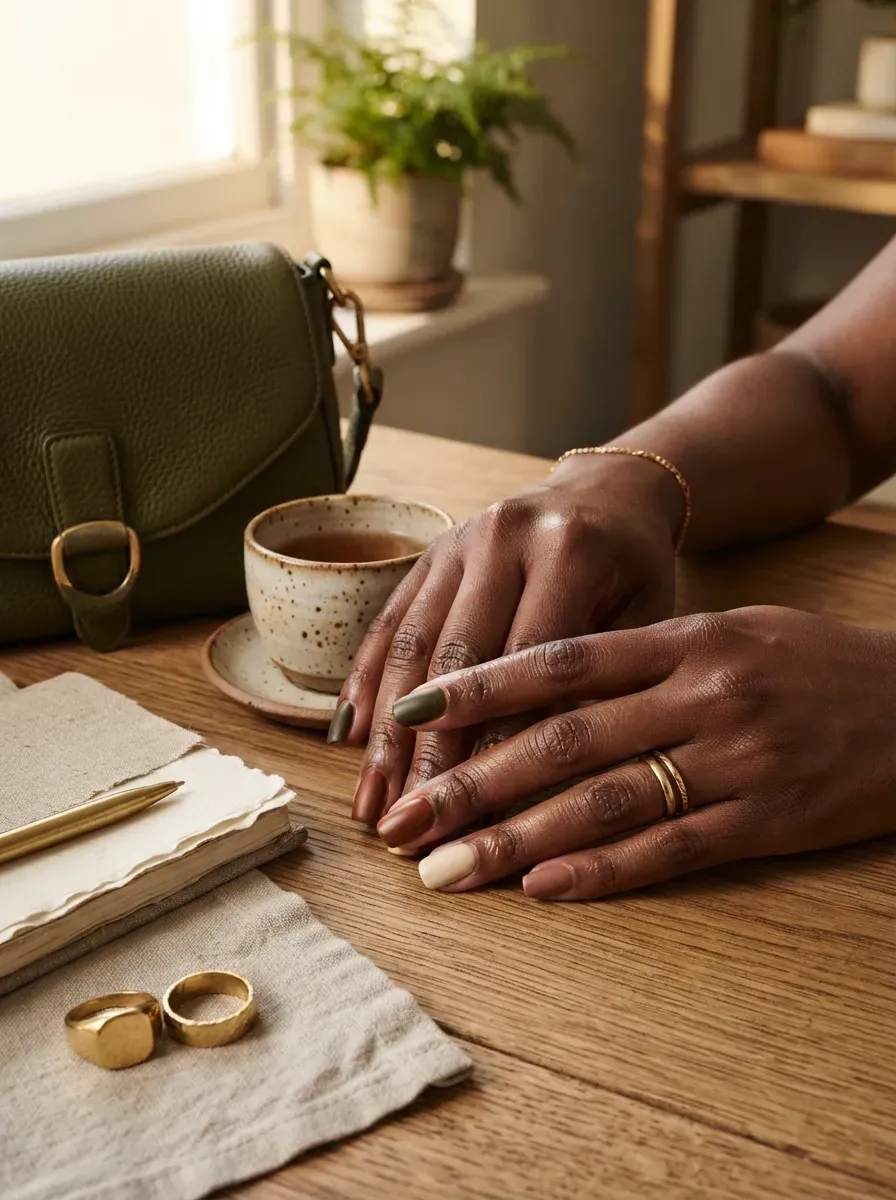
Olive tips are darker and earthier than sage, giving the French structure more weight.
The shade works well when you usually wear neutrals but want something beyond brown, black, or burgundy. It also complements gold hardware and warm autumn fabrics easily.
Choose an olive with enough green pigment to stay distinct from khaki, particularly if your base is a warm beige.
22. Cobalt Blue French Tips
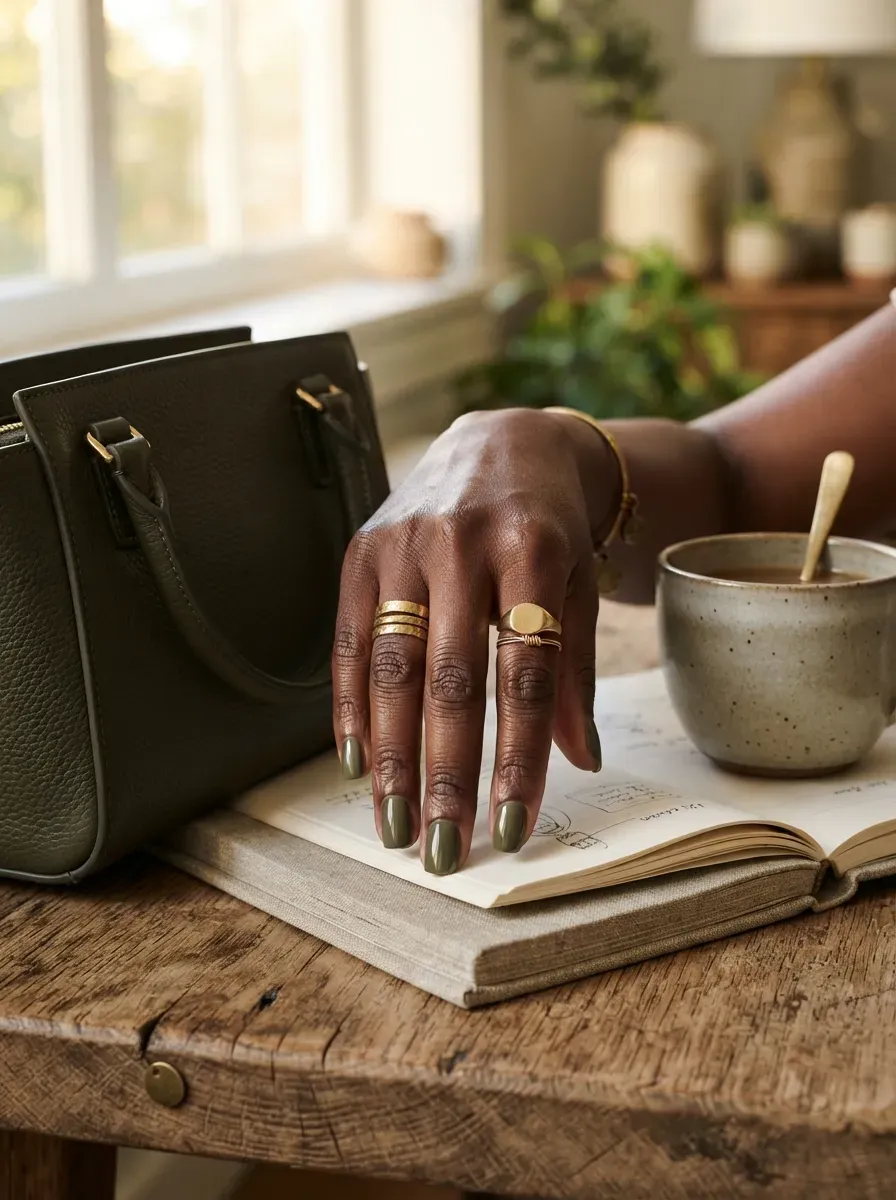
Cobalt blue turns the French edge into the focal point without requiring complicated nail art.
Its high saturation stays visible on very thin tips and looks especially striking against deep skin tones or a clear neutral base. On longer nails, the color can handle a deeper smile line.
Apply a thin white layer beneath sheer cobalt polish if you need the blue to appear fully saturated.
23. Navy French Tips

Navy gives French tips nearly the same graphic definition as black, but the blue undertone makes the result less severe.
It works in professional settings when bright nail art feels too casual, especially on short squoval nails. Glossy navy looks crisp, while a velvet matte top coat gives a softer finish.
Use two thin coats at the edge because navy can appear patchy when applied too heavily.
24. Lavender French Tips
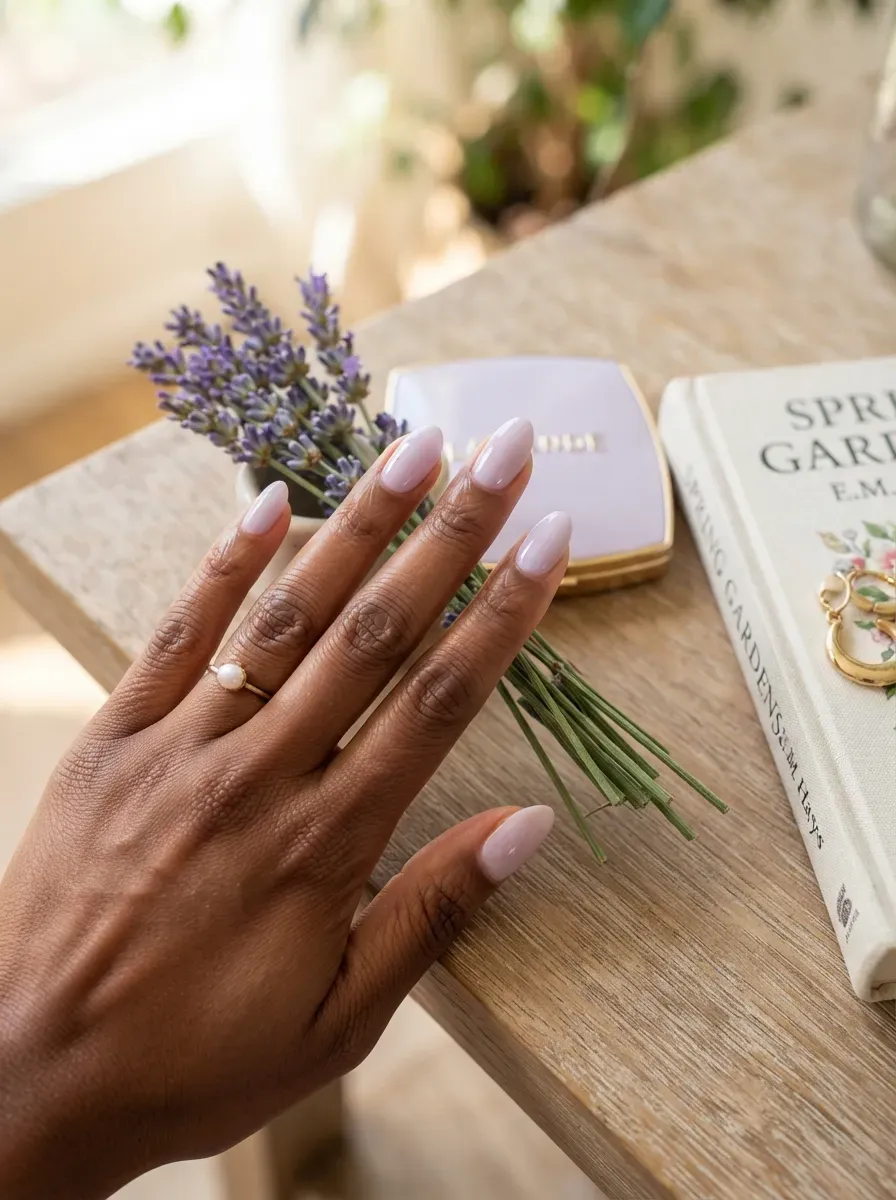
Lavender French tips add color while keeping the manicure light and easy to coordinate.
A dusty lavender reads more sophisticated than a bright purple, while a cool lilac gives a cleaner pastel effect. The shade is especially flattering against neutral and warm brown skin because the contrast stays visible.
If the polish is very pale, float the color on rather than overworking it to avoid streaks.
See also Fall Transition Nail Colors: 40+ Chic Shades to Take You From Summer Into Fall
25. Peach French Tips

Peach French tips sit between nude and coral, making them a useful choice when you want warmth without a very bright manicure.
The color picks up golden undertones in the skin and works particularly well with sheer beige bases. A cream peach creates better definition than a translucent formula.
For short nails, keep the tip narrow so the warm color does not overwhelm the visible nail bed.
26. Coral French Tips
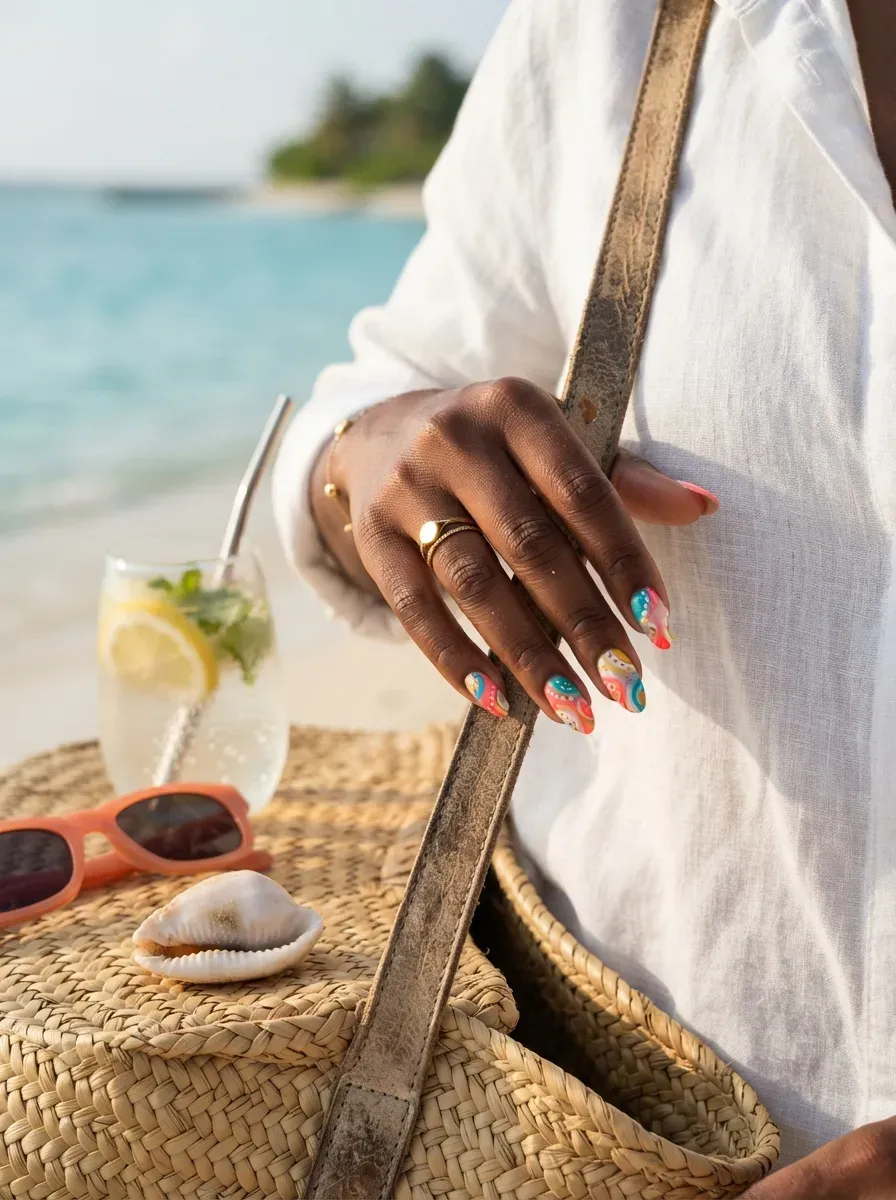
Coral tips bring more energy than peach while remaining softer than neon orange.
Because coral contains both pink and orange, the exact undertone changes how it reads against the skin. Warmer versions tend to glow on golden and deep brown complexions, while pink coral feels cooler.
Apply a white base under neon leaning coral if you want maximum brightness without building a thick edge.
27. Jet Black French Tips
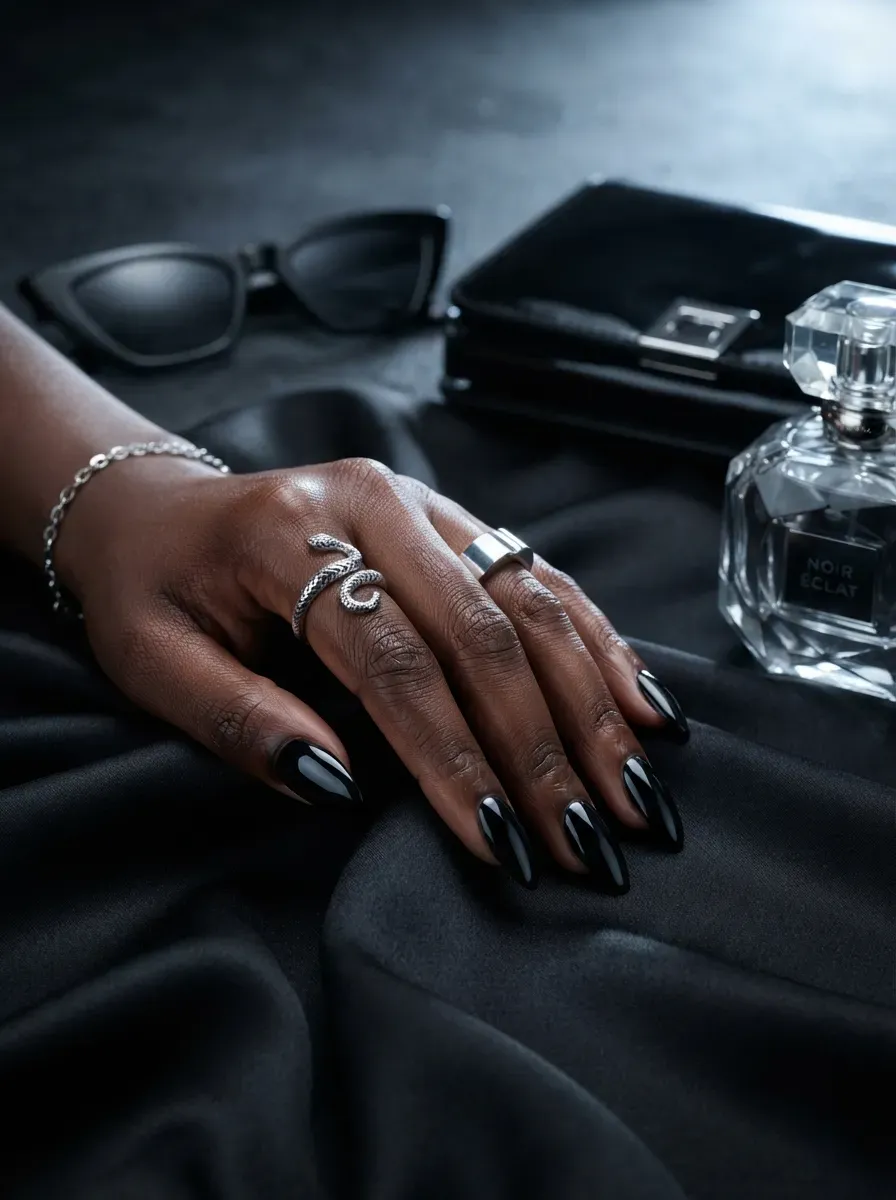
Black French tips create immediate contrast and can make a simple nude manicure feel architectural.
A micro line works on short nails, while longer almond or coffin shapes can carry a deeper black smile line. The finish changes the mood significantly. High gloss feels sharper, while matte feels softer.
Before painting, refine the free edge shape carefully because black highlights every uneven corner and asymmetrical sidewall.
28. Silver Chrome French Tips
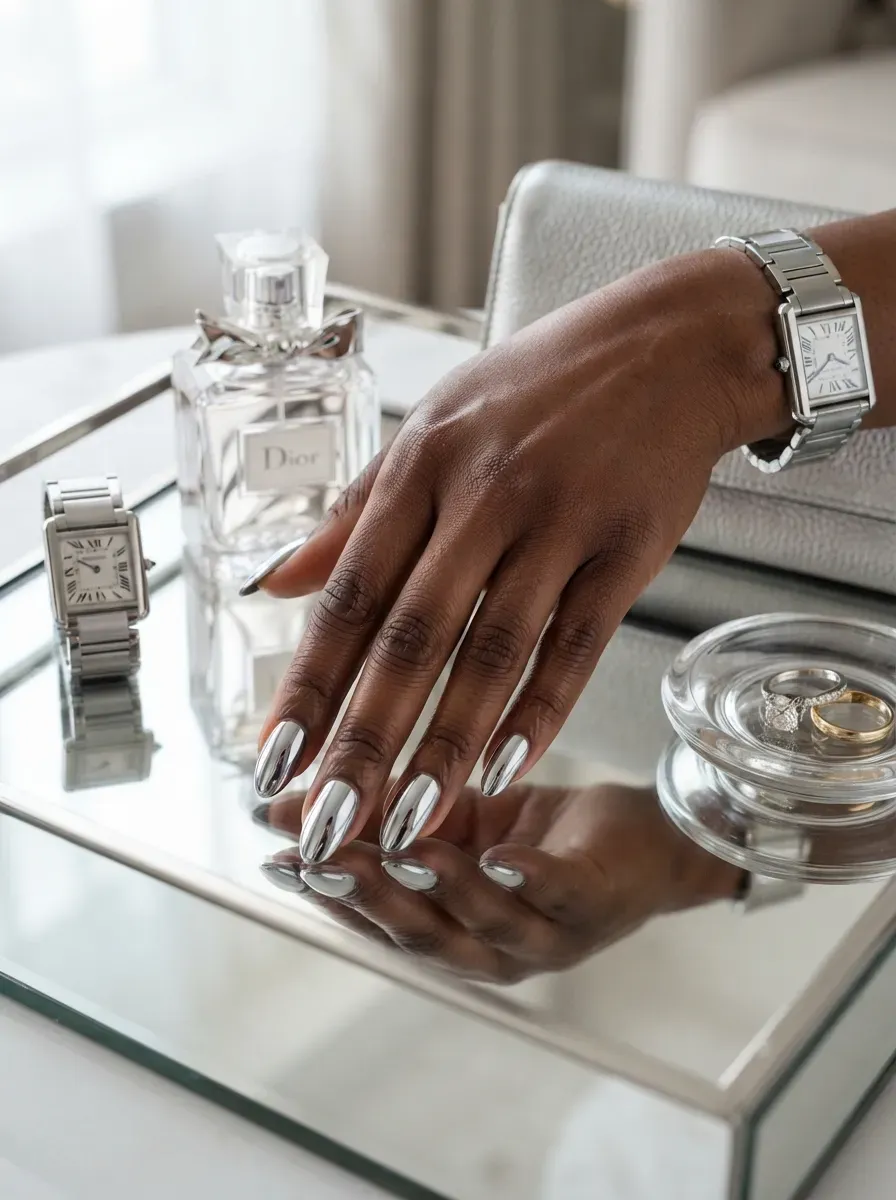
Silver chrome turns the free edge into a reflective strip, so even a narrow French tip catches light from across the room.
The powder needs a smooth, fully cured base because ridges become more obvious once chrome is rubbed over them. A black or no wipe dark gel underneath creates stronger mirror depth.
Seal the tip edge twice because chrome is prone to wearing away first at the free edge.
29. Gold Chrome French Tips

Gold chrome tips behave almost like jewelry, particularly when paired with a translucent nude base.
Warm yellow gold complements golden and deep skin beautifully, while pale champagne chrome feels softer on neutral undertones. The metallic effect looks best when the smile line is smooth and consistent.
Keep chrome powder away from the surrounding base by using a fine silicone applicator rather than rubbing across the whole nail.
30. Pearl Chrome French Tips
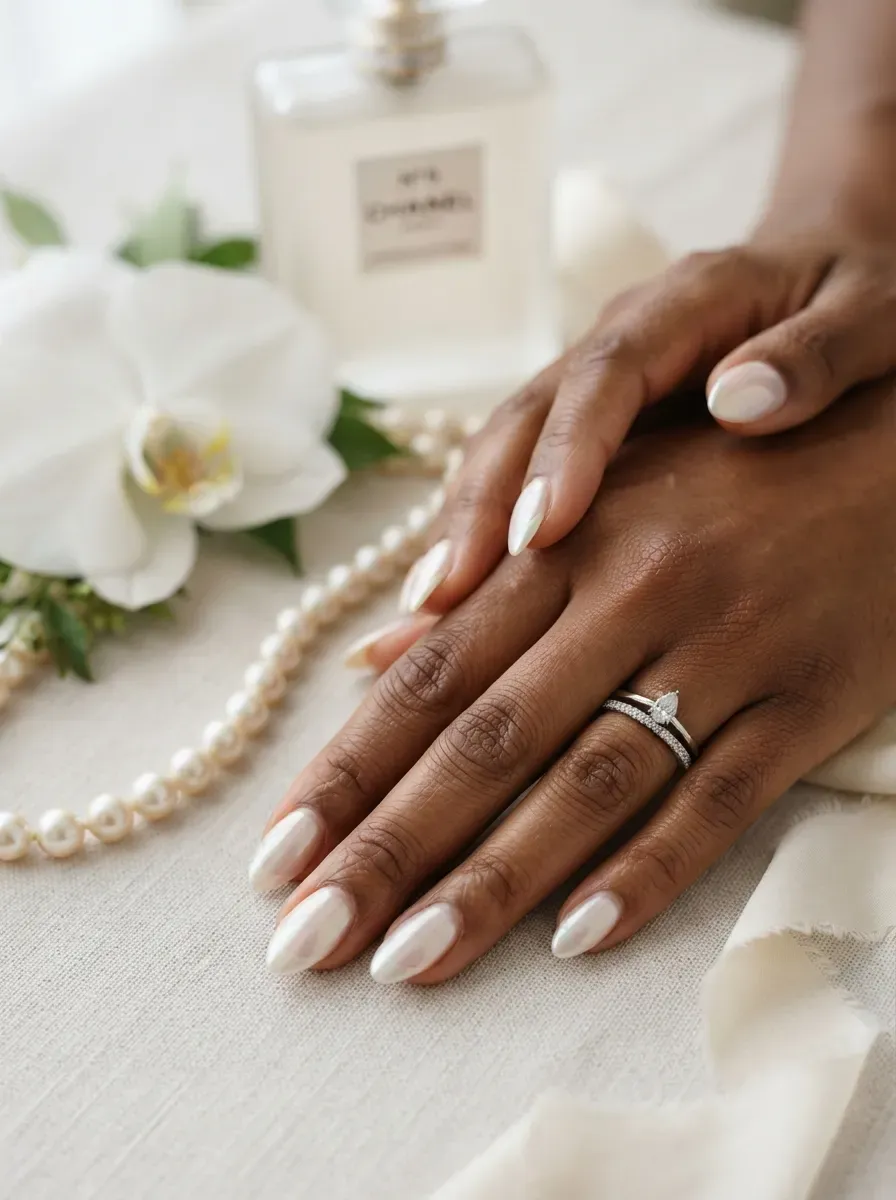
Pearl chrome gives French tips a softer reflective finish than mirror silver.
The powder flashes white, champagne, or pale pink depending on the base underneath, so it works especially well for bridal and minimalist manicures. A milky base keeps the transition subtle.
Apply the chrome only after the tip gel is fully cured, then brush away loose powder before top coat to prevent cloudy edges.
See now 40+ September Nail Colors 2026 to Wear Into Fall
31. Glazed French Tips
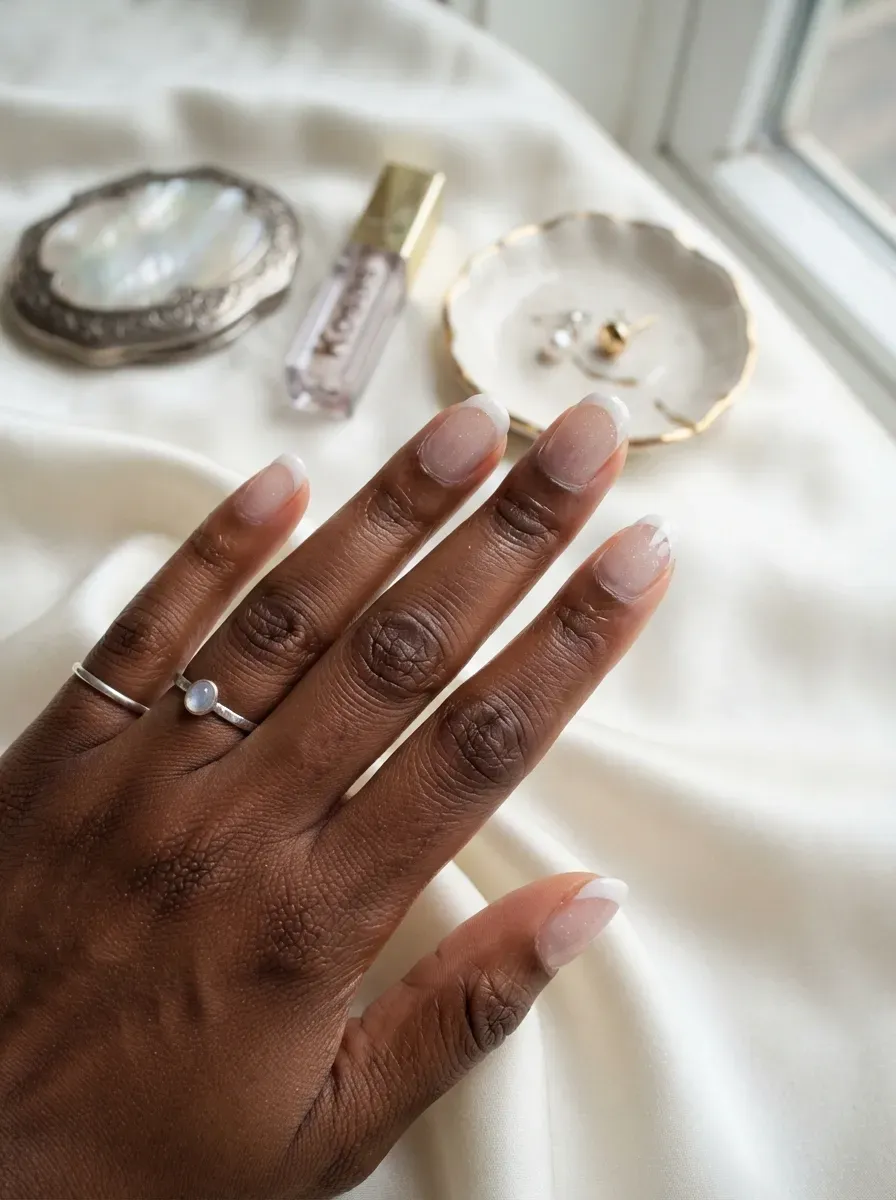
Glazed French tips use a sheer pearlescent layer to soften the boundary between base and tip rather than creating a hard metallic edge.
The effect is luminous, not mirror like, and works especially well over milky pink or beige. A thin chrome glaze over the entire finished manicure can tie both areas together.
Avoid heavy powder application because too much turns a delicate glaze into opaque chrome.
32. Aura French Tips
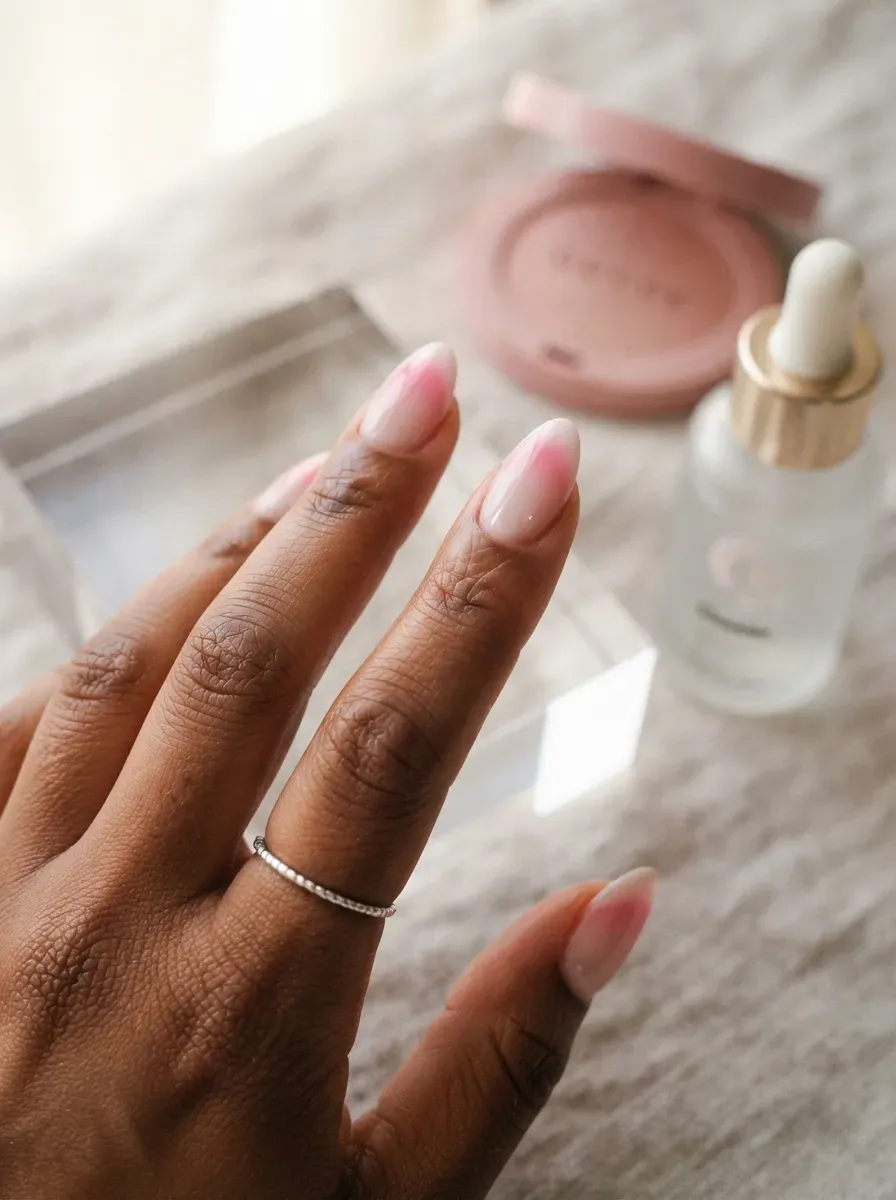
Aura French tips blur color around the edge instead of drawing one hard line.
An airbrush or sponge creates the soft gradient, often with the strongest pigment at the free edge fading toward the center. This makes bold colors easier to wear because there is no abrupt border.
Cure each thin layer separately because building too much pigment at once can leave the gradient thick and uneven.
33. French Fade Ombré Nails
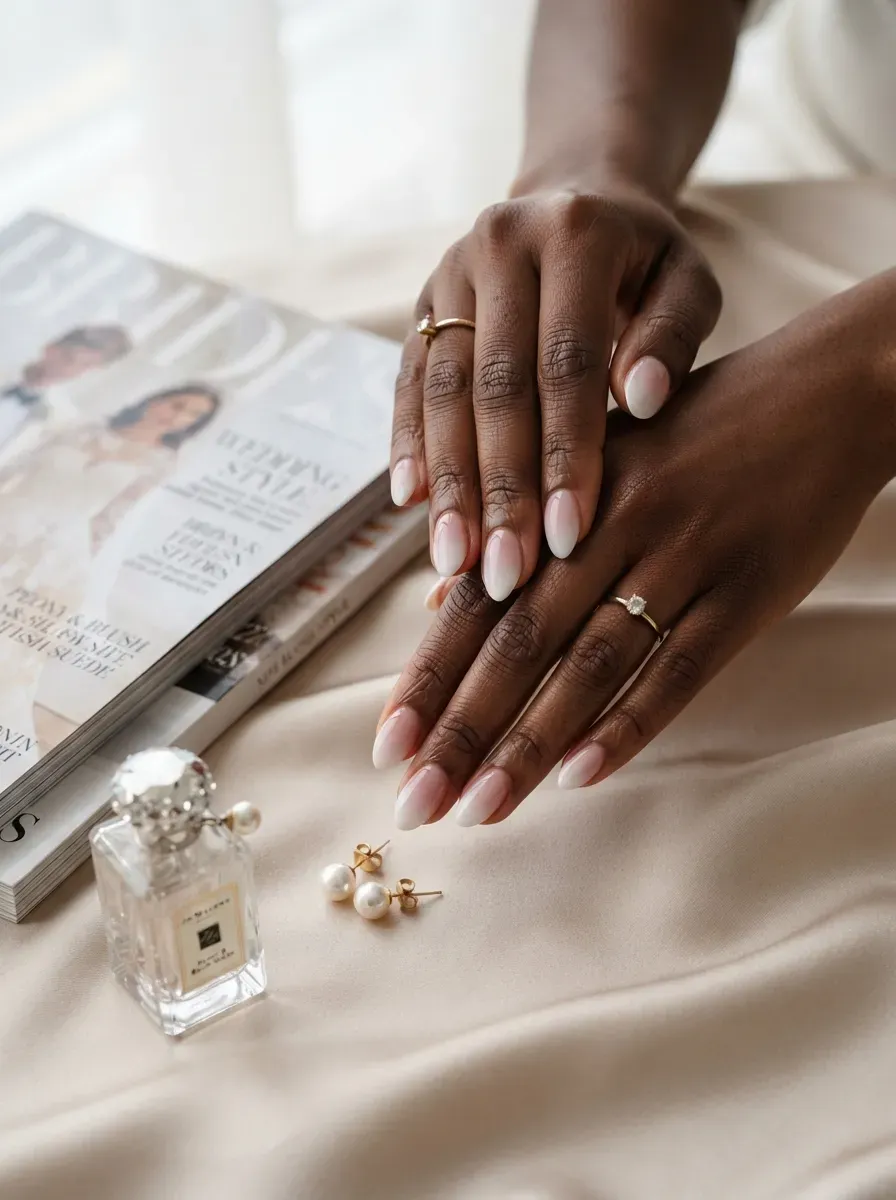
French fade, often called baby boomer ombré, blends the white tip into the pink or nude base until the smile line disappears entirely.
The technique is forgiving on growing nails because there is no sharp border to expose minor shifts in length. Sponge blending works with gel polish, while acrylic technicians can build the fade structurally.
Keep the white concentrated near the edge to avoid a cloudy nail bed.
34. Cat Eye French Tips
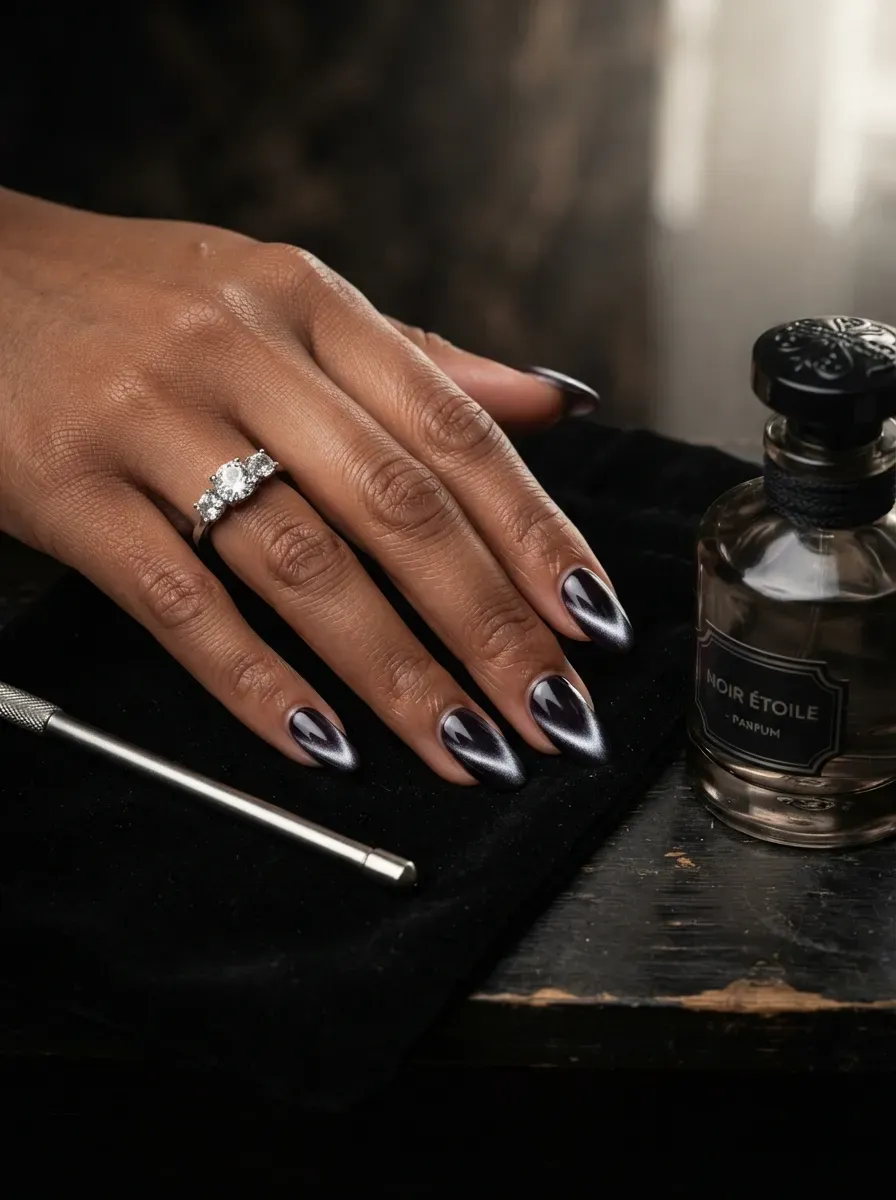
Cat eye French tips concentrate magnetic shimmer only along the free edge, giving the manicure movement without covering the nail bed.
The effect changes as the hand turns, which makes darker colors such as burgundy, emerald, and charcoal especially dramatic.
Magnetize each nail immediately before curing. Hold the magnet close without touching the gel because waiting too long allows the particles to disperse again.
See also Ombré French Tip Nail Ideas for a Soft Gradient Look
35. Velvet Magnetic French Tips
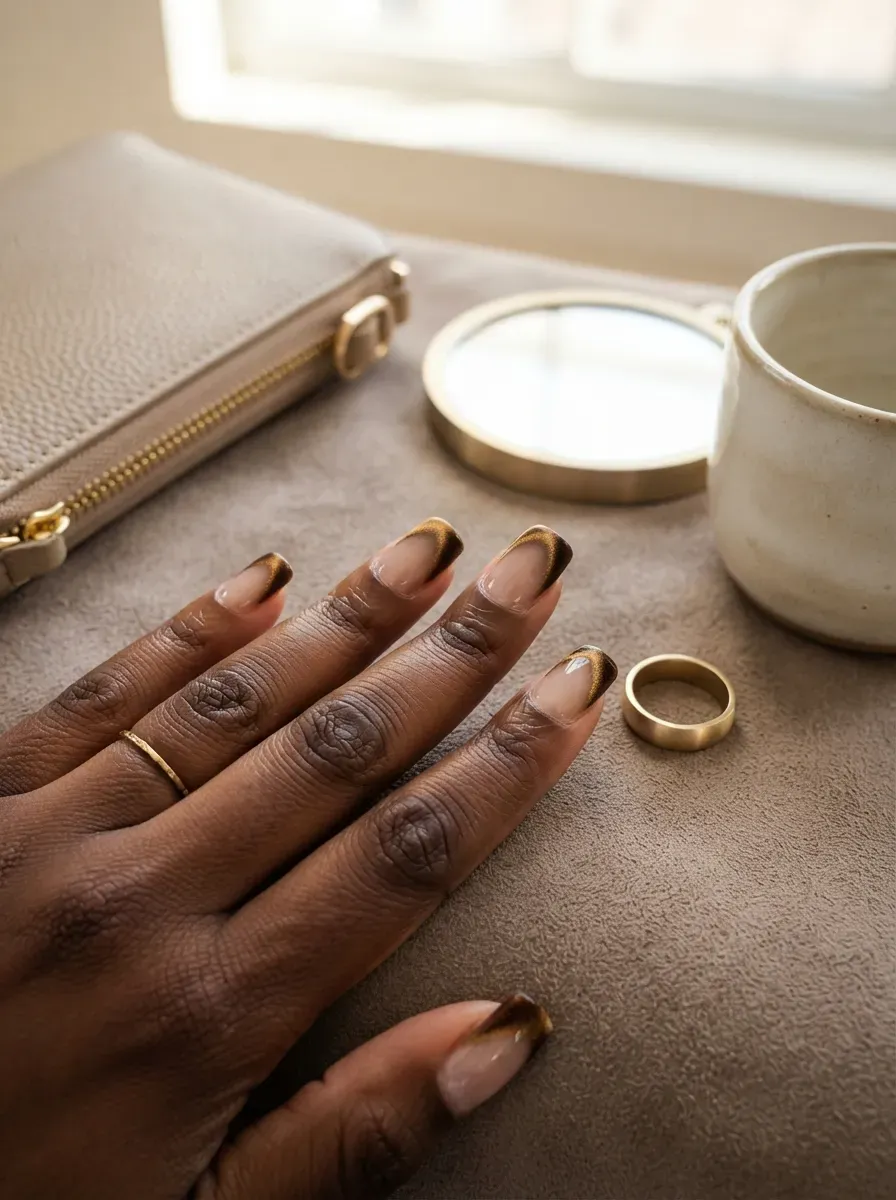
Velvet magnetic polish spreads reflective particles more evenly than a sharp cat eye stripe, producing a plush, fabric like shimmer.
Restricting that effect to French tips keeps the finish sophisticated. Taupe, champagne, rose, and smoky gray are easier to wear than very bright magnetic colors.
Use a wide magnet around the tip from multiple directions, then flash cure immediately once the velvet effect looks even.
36. Tortoiseshell French Tips
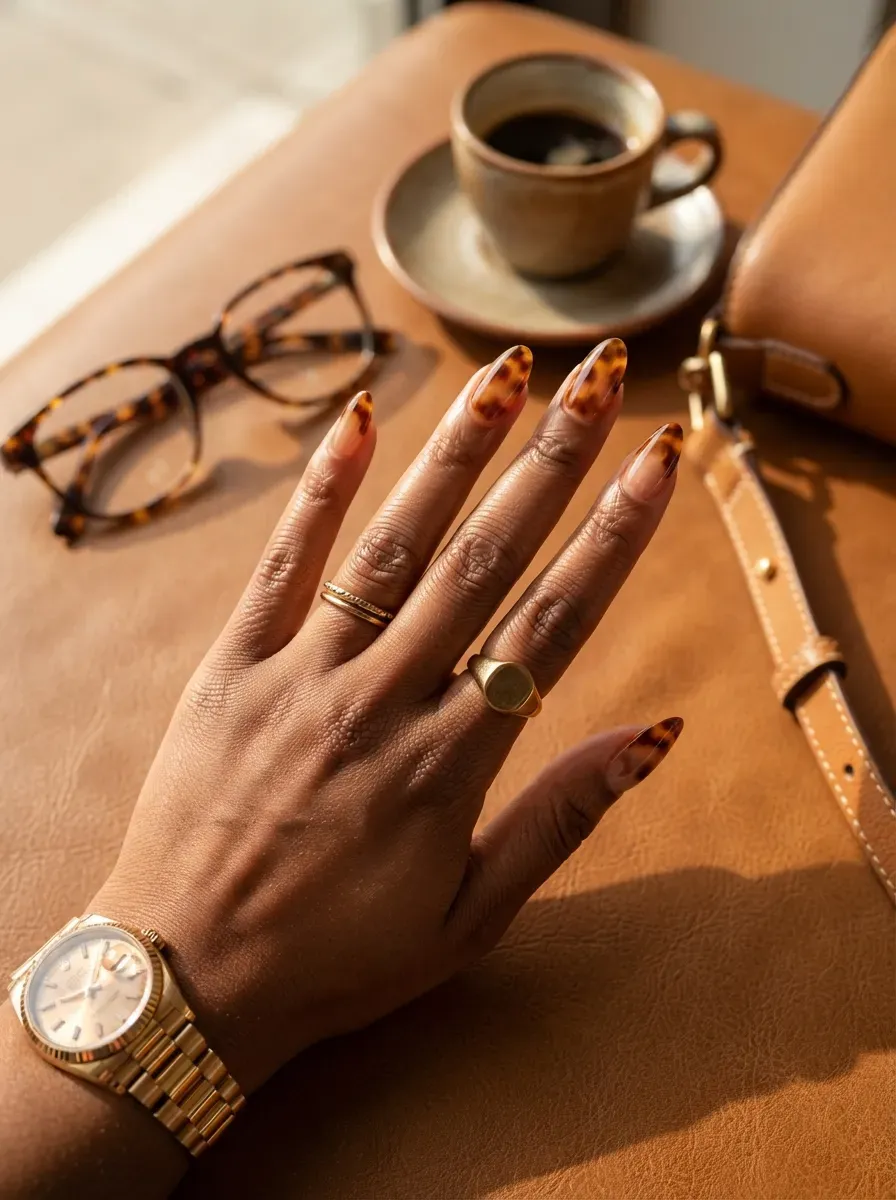
Tortoiseshell French tips layer amber, caramel, and irregular dark brown spots over a translucent base.
Keeping the pattern only at the edge stops the print from feeling heavy, particularly on medium almond nails. The key is irregularity because evenly spaced spots look more like polka dots than tortoiseshell.
Build the design in thin translucent layers and cure between them to create convincing depth.
37. Micro Animal Print French Tips
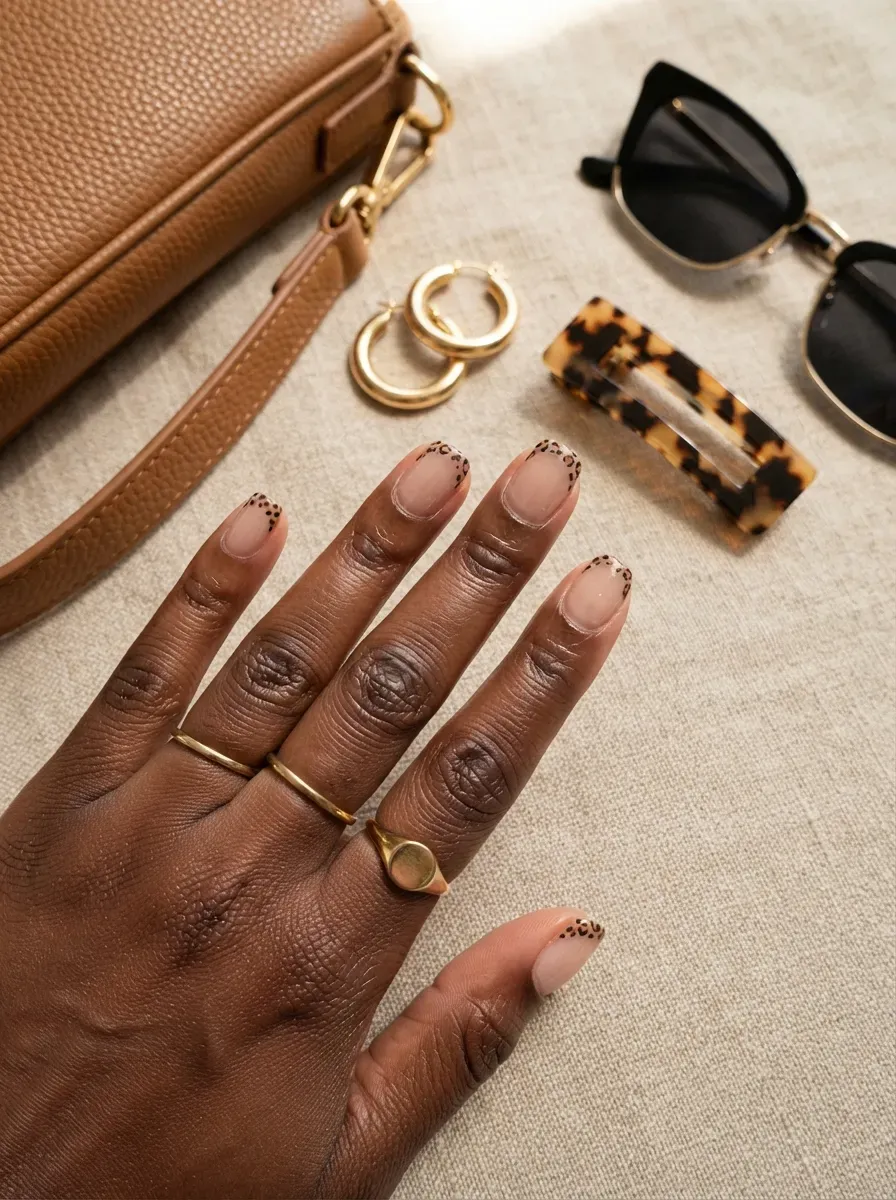
Animal print feels more controlled when it is reduced to a micro French edge.
Leopard spots, zebra stripes, or cow print can sit within just a few millimeters of space and still read clearly. A sheer beige base prevents the design from competing with the nail bed.
Use a dotting tool and very fine brush rather than decals if you want the pattern to fit each nail proportionally.
38. Floral French Tips
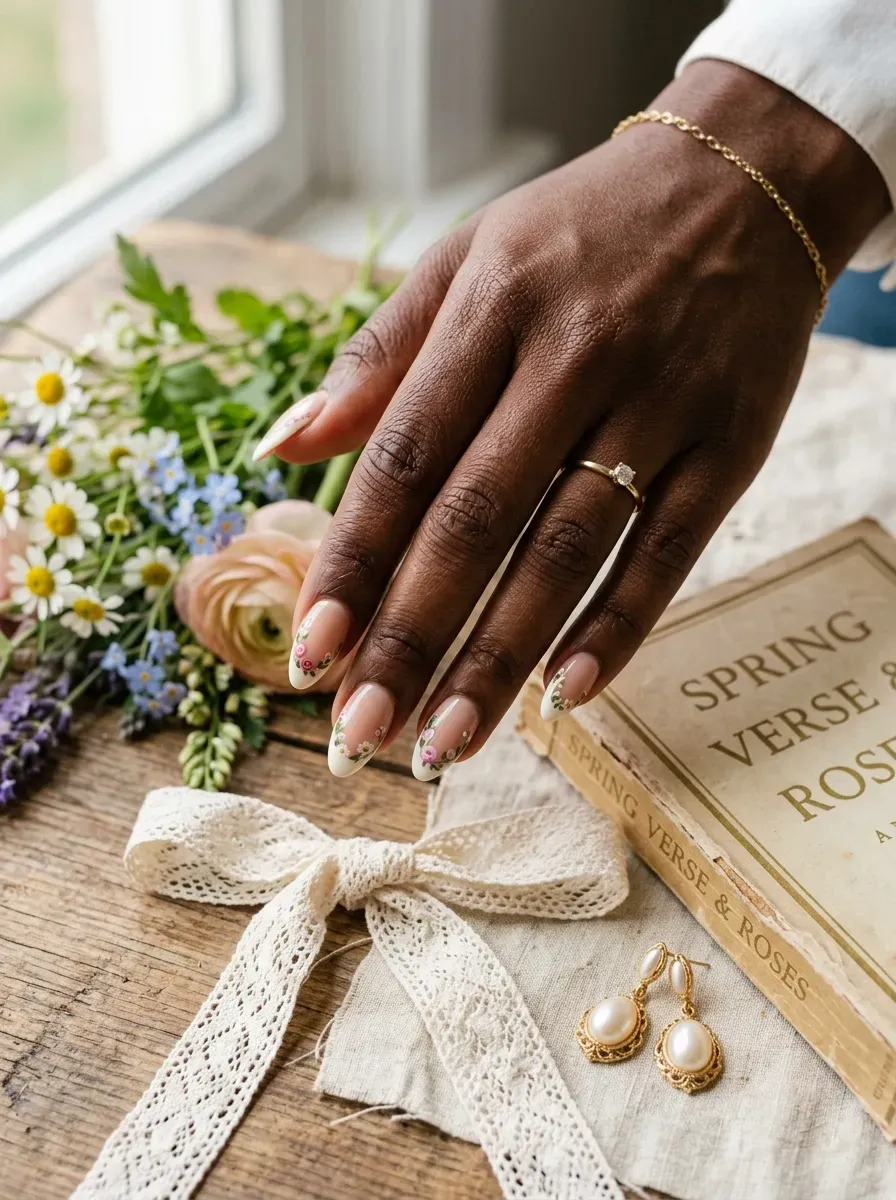
Floral French tips scatter miniature petals or blossoms along the edge rather than filling the entire nail.
Tiny daisies, pressed flower effects, and fine botanical lines work best when enough nude space remains visible. The design suits medium lengths because there is room for detail without requiring an oversized tip.
Seal hand painted flowers with a slightly thicker top coat so raised paint does not catch.
Check out Wedding Nails for Bride: Elegant & Timeless Designs for the Big Day
39. Dotted French Tips
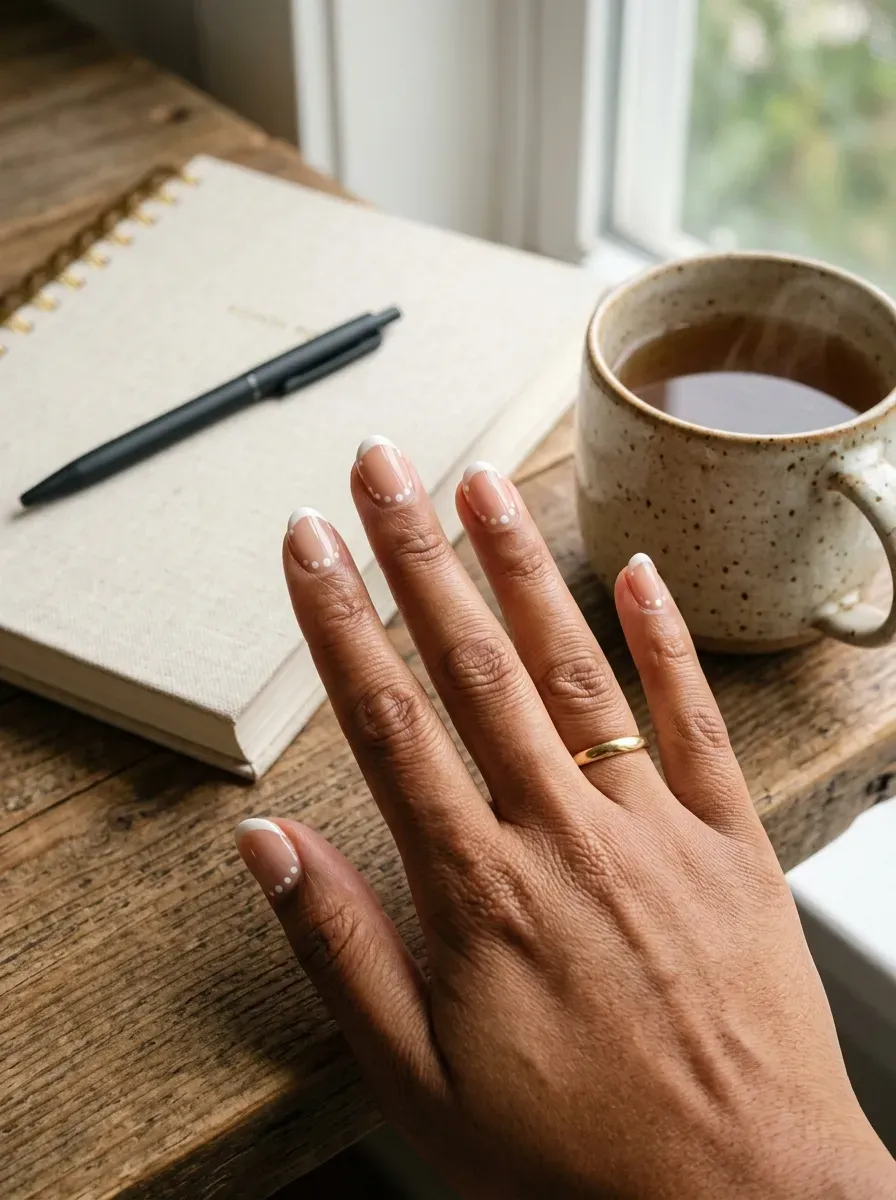
Dotted French tips replace a solid line with a row of tiny dots following the free edge.
The negative space between each mark keeps the design light, even in black or bright color. Dot size should scale with nail length because oversized dots can crowd a short nail quickly.
Dip the tool into fresh polish every one or two marks so the dots do not progressively shrink.
40. Gemstone French Tips
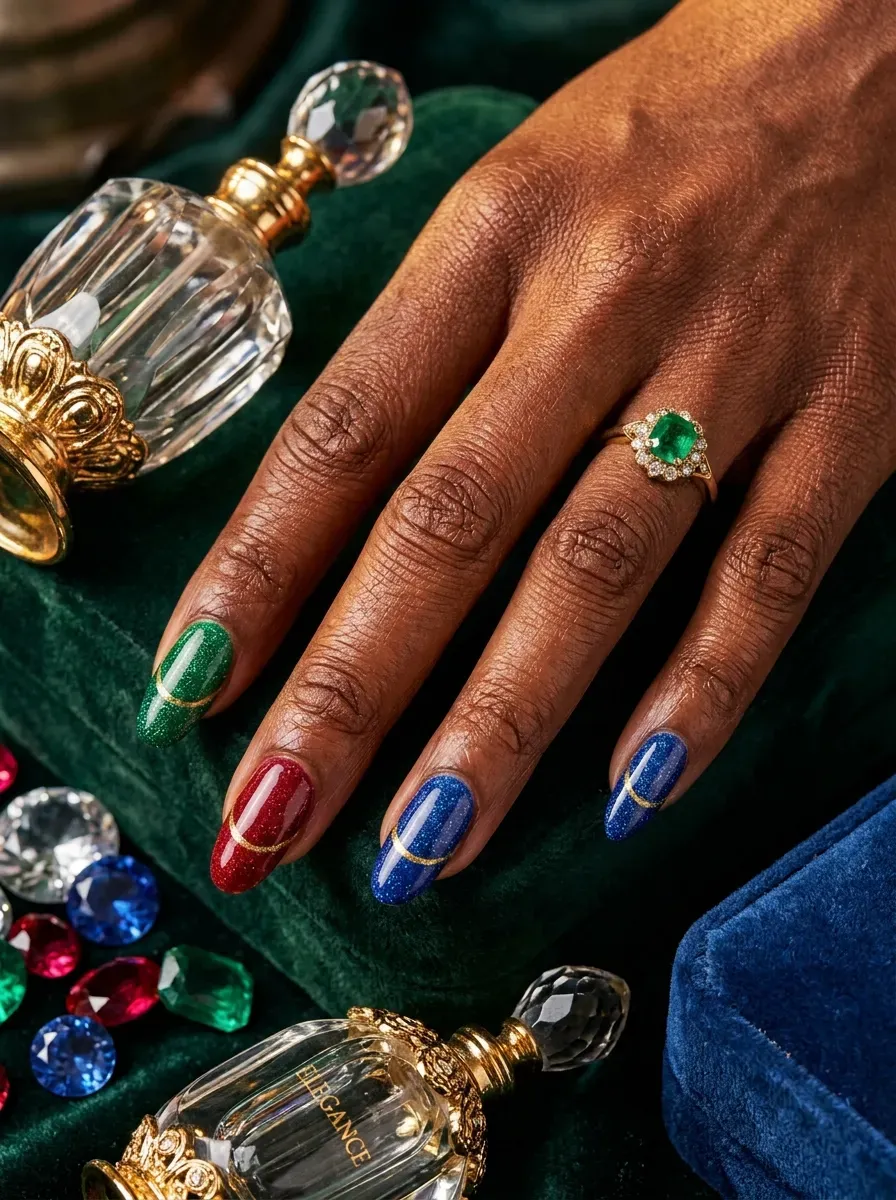
Gemstone French tips use saturated jewel tones such as emerald, ruby, amethyst, and sapphire to give the edge richer color than standard brights.
A glossy top coat deepens those shades and creates the polished look of cut stone. Keep the base neutral so multiple jewel colors can coexist without becoming busy.
If mixing shades, repeat one color on both hands to make the set feel intentional.
41. Rhinestone Outline French Tips
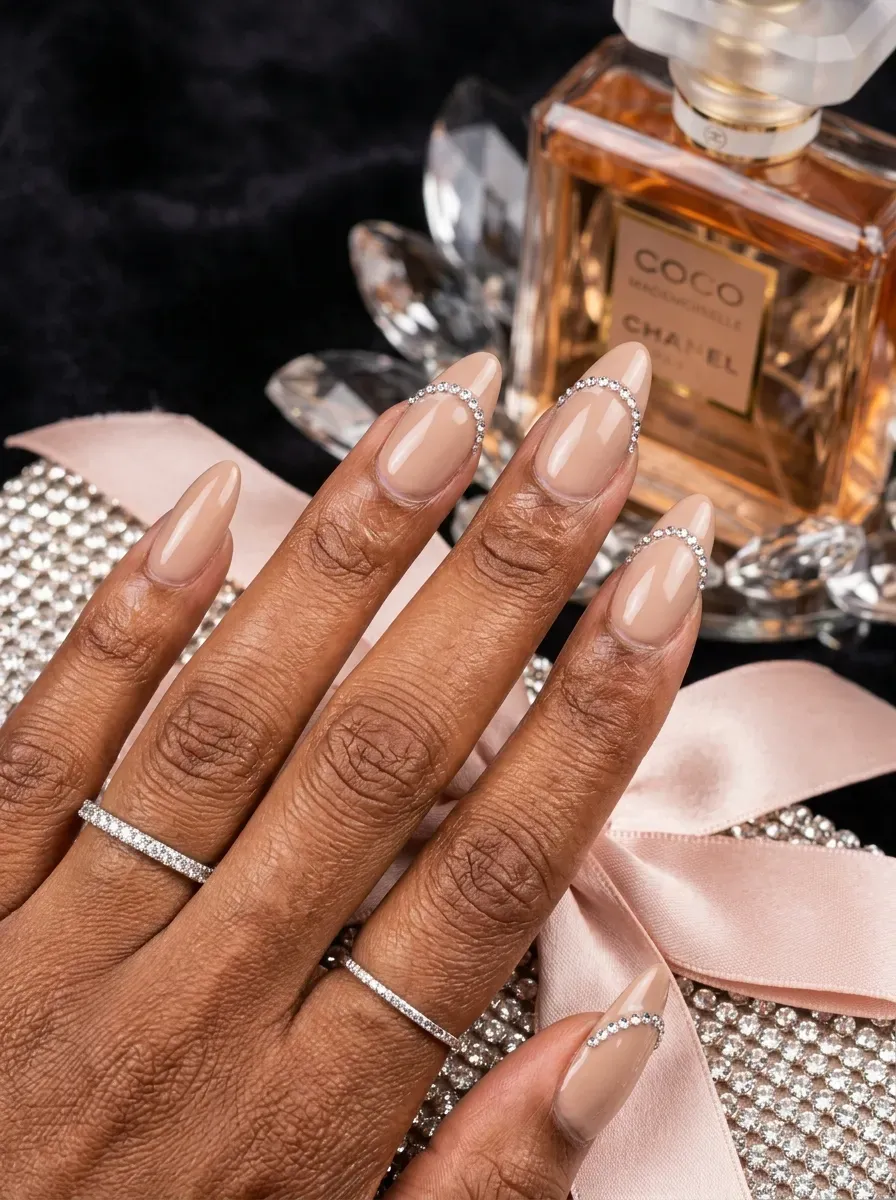
Rhinestone French tips use tiny crystals to outline the smile line rather than covering the entire nail.
The placement creates sparkle while preserving the negative space that makes French manicures elegant. Flat back micro crystals sit more securely than larger stones near the free edge.
Embed them in gem gel and seal around, rather than over, the facets so they keep their shine.
42. Sculpted 3D Chrome French Tips
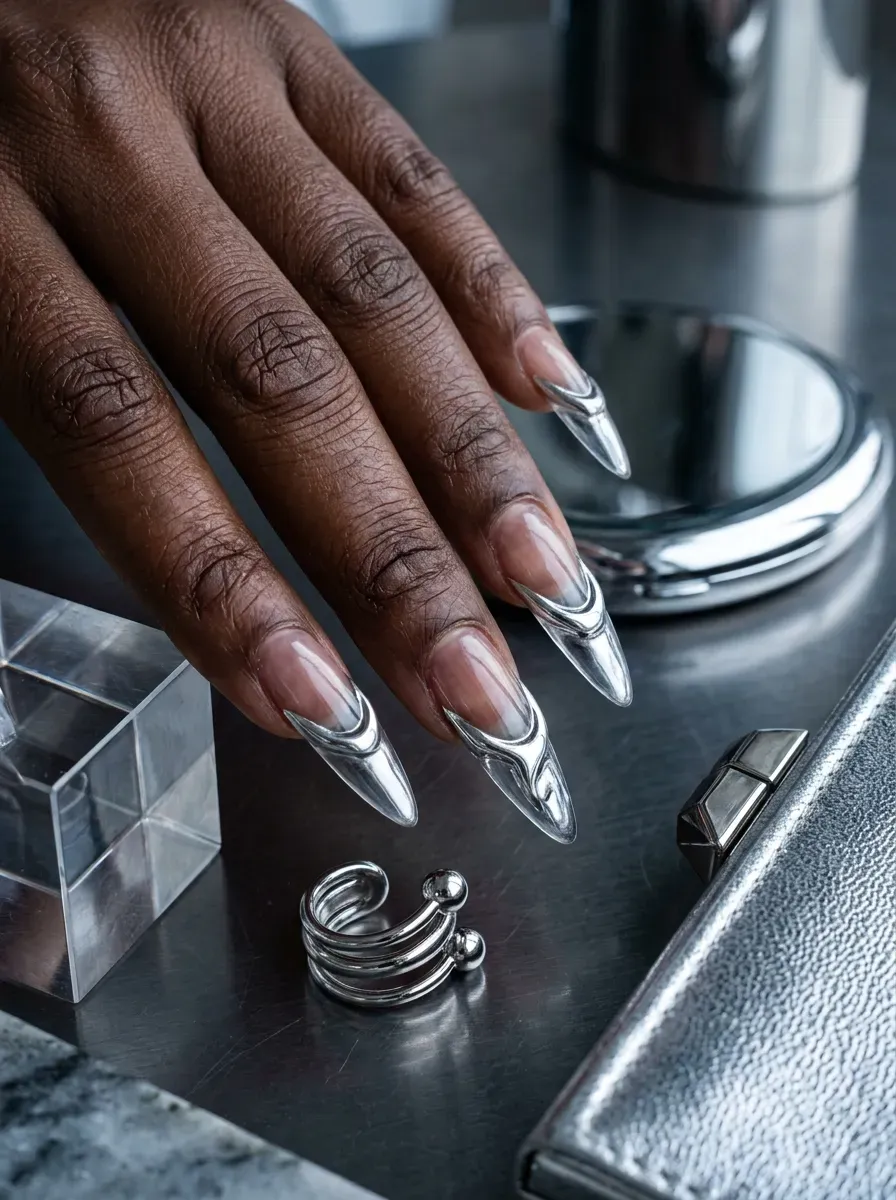
Sculpted chrome French tips build the edge with raised gel before applying metallic powder, giving the line both shine and physical dimension.
The technique works best on medium to long nails where the relief has room to follow the shape cleanly. Thick sculpting can snag on hair or fabric.
Keep the raised line low profile and reinforce the final edge with top gel around its perimeter.
Read on 35 Lavender Floral Nail Ideas for a Dreamy Look
43. Jelly French Tips

Jelly French tips use translucent color so light can pass through the free edge, creating a glossy candy like effect.
Pink, cherry, amber, and blue work especially well on clear extensions. Because jelly polish is transparent, streaks show more easily than they do with cream formulas.
Apply several whisper thin coats and cure between them rather than trying to achieve depth in one layer.
44. Neon Micro French Tips
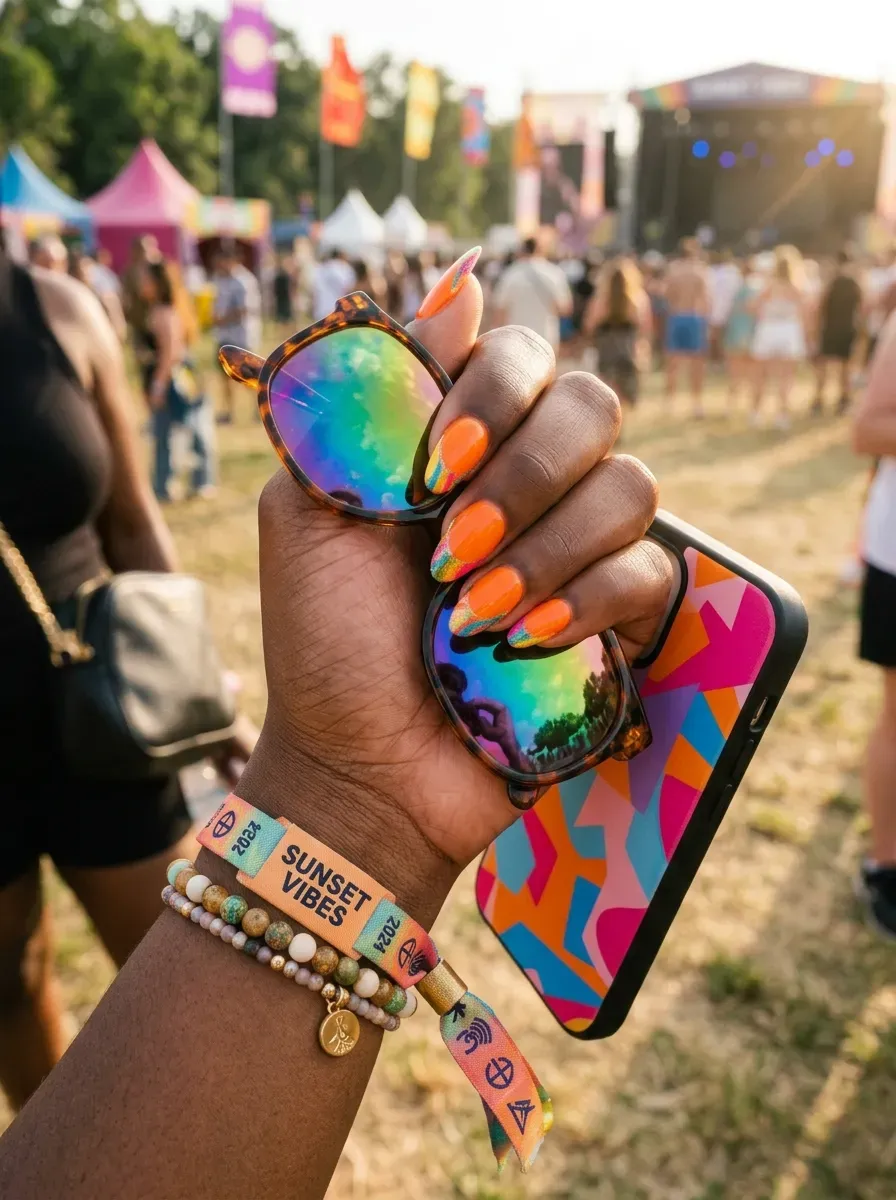
Neon color becomes surprisingly wearable when confined to an ultra thin French tip.
Lime, hot pink, electric orange, and acid yellow provide a clean flash of color without dominating the manicure. The line needs strong opacity to stay vivid at such a small scale.
Paint a fine white tip first when working with semi transparent neon gel, then layer the bright shade over it.
45. Mismatched Color French Tips
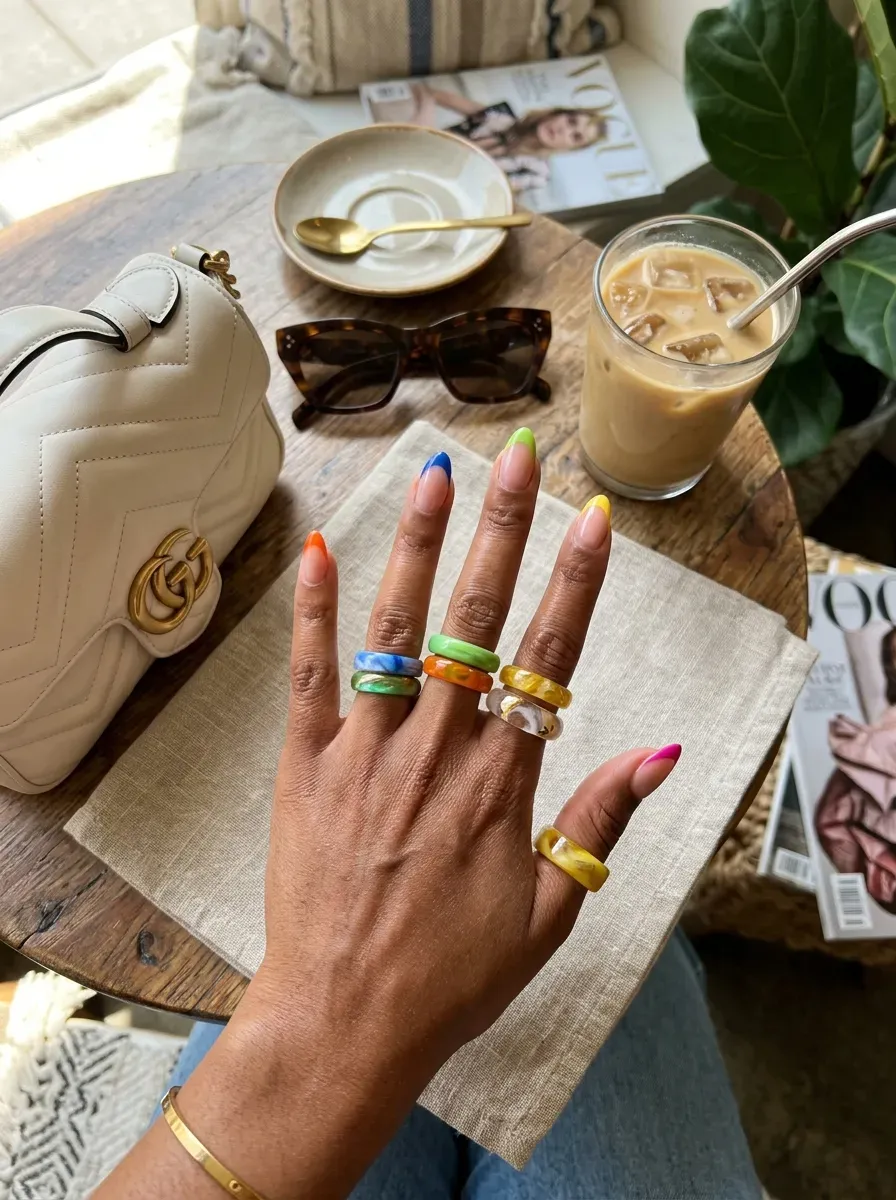
Mismatched French tips assign a different color to each nail while keeping the same base and tip shape.
Repeating the structure is what stops the set from looking random. You can stay within one palette such as pastels, jewel tones, or earth tones, or intentionally contrast brights.
Lay all five bottles beside one another before starting because colors that clash in the bottle usually clash even more once lined up on the hand.
46. Negative Space Cutout French Tips
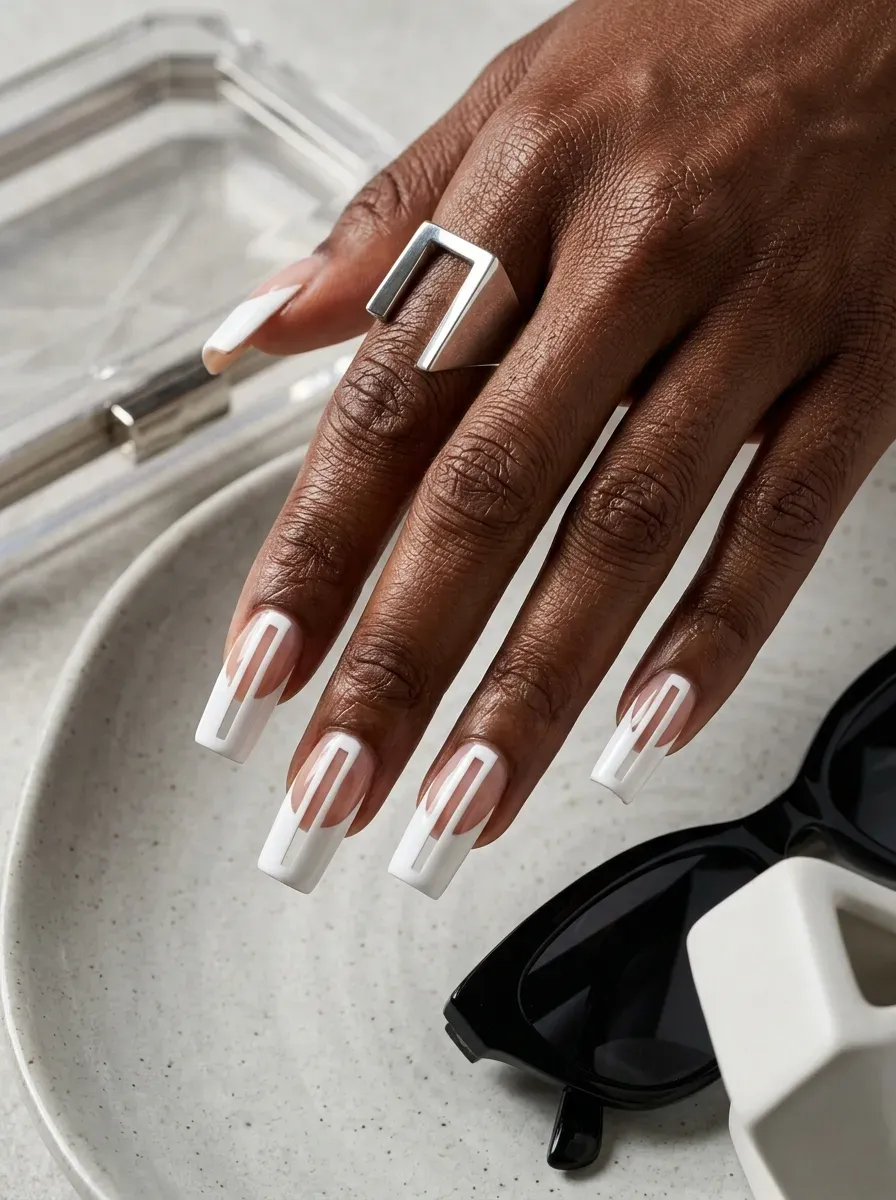
Negative space cutouts remove small sections from an otherwise solid French tip, creating stripes, notches, or geometric breaks.
The technique gives white, black, and colored tips a more architectural feel without adding embellishments. Crisp spacing matters more than complexity.
Paint the full tip first, cure it, then use a fine brush with base color to carve back the cutout before sealing everything with top coat.
Continue reading 30+ Burgundy September Nails for Early Fall
Match the Tip Width to Your Nail Length
The width of a French tip changes the proportions of the whole nail.
On very short natural nails, a thick band can consume too much of the visible nail plate and make the fingers look shorter. Micro tips, skinny side French designs, and fine dotted edges usually preserve more length visually.
Medium nails give you extra flexibility. Classic smile lines, double tips, and colored designs all have enough room to read clearly.
Long almond, coffin, and tapered square nails can support deeper smile lines and heavier techniques such as chrome, gemstones, tortoiseshell, or magnetic polish. Even then, the tip should relate to the shape rather than sitting across it like a stripe.
A curved almond nail generally looks more balanced with a deeper arc, while square nails can carry straighter geometry.
If you are unsure, ask your nail tech to sketch one tip before curing. Looking at a single finished outline against your actual nail length tells you far more than choosing from a reference photo with completely different proportions.
Choose the Base Shade Before You Choose the White
The base underneath French tips is not an afterthought.
Sheer pink, beige, caramel, milky white, and clear bases can make the same tip color look completely different. A cool pink base can turn warm brown or olive tips slightly muddy, while a very opaque nude can remove the fresh translucency that makes a French manicure look clean.
For warm or golden undertones, beige, peach beige, caramel, and neutral milky bases tend to blend naturally. Cooler skin often works well with blush pink or rosy nude.
Deep skin tones can carry both warm and neutral bases beautifully, but an overly pale opaque nude may create unnecessary contrast around the cuticle.
Whenever possible, test the base directly on one nail rather than relying on the bottle color. Natural nail tone shows through sheer polish, which changes the result.
If your nail beds have discoloration or visible ridges, one thin layer of a tinted builder base can even the surface without creating a heavy artificial look.
How to Keep French Tips From Chipping First
The free edge takes more impact than any other part of the nail, which is why French designs often show wear there before the base does.
Chrome powders, dark colors, and highly contrasting tips make that wear especially noticeable. Good preparation matters. Remove surface oil, refine the free edge, use the correct base product, and keep polish away from the skin.
When applying gel, each layer should wrap lightly over the edge rather than stopping on top of the nail. This is called capping the free edge, and it helps protect the color from separating at the tip.
Do not make the capped layer thick because excess gel underneath the nail can feel bulky and begin lifting.
Chrome requires extra attention. The powder should be sealed from every exposed edge, and some technicians use a thin layer of builder or rubber base before the final top coat.
At home, wear gloves for prolonged cleaning and avoid using your nails to open cans or scrape labels.
When a French Design Needs a Salon Appointment
Simple micro tips, dotted edges, and basic colored French manicures can be manageable at home if you already have control with a liner brush.
More technical versions are less forgiving. Deep smile lines require symmetry, chrome needs compatible curing products, magnetic polish must be positioned before it sets, and clear glass extensions expose structural mistakes that opaque polish would normally hide.
Tortoiseshell, floral details, 3D gel, aura effects, and rhinestone outlines also become time consuming when you are working with your non dominant hand.
A salon appointment makes sense when the design depends on precise structure rather than color alone.
Bring reference photos that show both the nail art and the shape you want. If your natural nails are much shorter than the reference, ask whether the design can be scaled down before agreeing to extensions.
Booking extra nail art time is also important. A detailed set can take considerably longer than a standard gel manicure, particularly when every finger has a different design.
Finding the French Tip Style That Fits You
Start with nail length.
Short natural nails usually look strongest with micro, side, dotted, tonal, or slim colored tips, while medium and long nails give chrome, tortoiseshell, cat eye, deep smile lines, and dimensional designs more room.
Then decide how much color you actually want to see. Nude on nude and milky French styles stay quiet, while cherry, cobalt, neon, and black create immediate contrast.
For work, weddings, or low maintenance weeks, choose simple lines and finishes that are easy to repair. Special events can justify rhinestones, 3D chrome, florals, or magnetic effects.
If frequent upkeep is not realistic, avoid very intricate free edge art that shows chips quickly.
The best choice should match your routine as well as the mood you want, whether that is clean, romantic, playful, dramatic, or sharply modern.