Learn How to Hide Starter Loc Frizz for Interviews (Without Damaging Your Locs).
The interview is scheduled.
The outfit is ready.
Then you look in the mirror at your starter locs and feel that familiar worry. They are frizzy. The roots are fuzzy.
The ends are not as tight as they were on installation day.
Here is the truth: frizz is a completely normal part of early loc development. It is not a sign your locs are failing.
It is not something that needs to be eliminated. What it does need, specifically for a high-stakes moment like a job interview, is a strategy.
You need to look polished and intentional without doing anything that sets back your loc journey.
This guide How to Hide Starter Loc Frizz for Interviews gives you that strategy.
It covers what starter loc frizz actually is, which styles work best for interviews, how to prepare your locs the night before, and the products that help without causing damage.
Every method here on How to Hide Starter Loc Frizz for Interviews is safe for locs in the early stages.

None of them require over-manipulation or heavy products that create the exact problems you are trying to avoid.
Below you will learn How to Hide Starter Loc Frizz for Interviews:
How to Hide Starter Loc Frizz for Interviews (Without Damaging Your Locs)
1. What Starter Loc Frizz Actually Is
Why Frizz Happens in the Early Stages
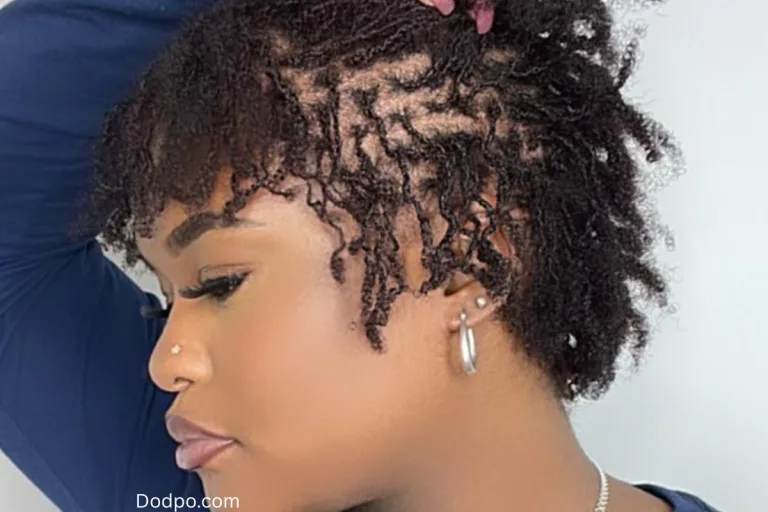
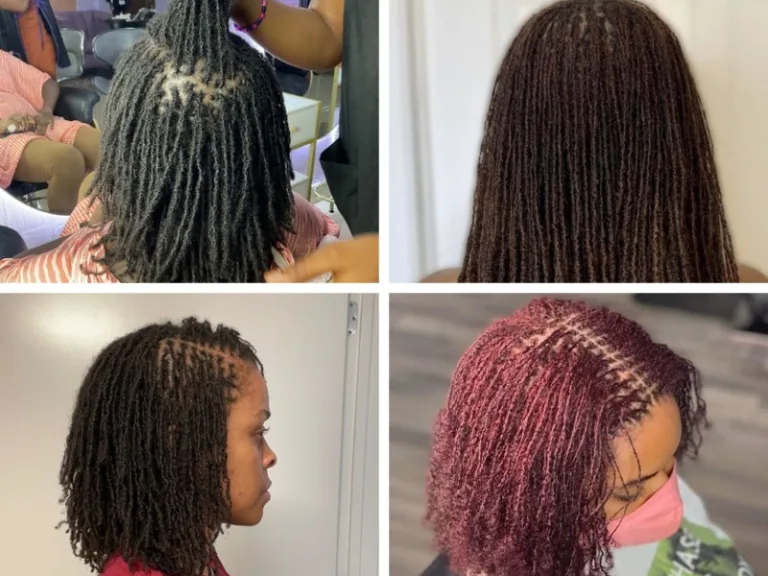
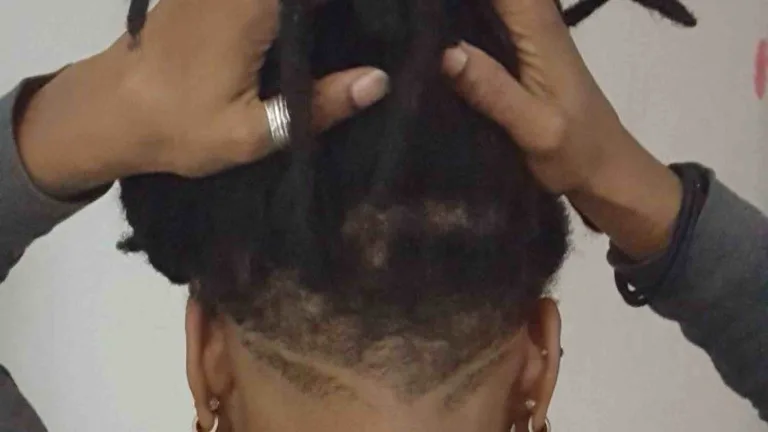
Frizz is your hair doing exactly what it is supposed to do. During the starter phase, individual strands are beginning to interlock and tangle.
The ones that have not yet locked sit slightly outside the main body of the loc. This creates the soft, fuzzy texture people recognise as starter frizz.
The frizz is more visible on some textures than others. Hair that is very fine or has a looser curl pattern may show more surface frizz.
Hair with a tighter 4b or 4c coil often has frizz that sits closer to the loc body and looks more like texture than disorder.
Either way, the cause is the same: incomplete locking.
Why You Should Not Try to Eliminate It
Frizz during the starter phase is proof that your locs are progressing. It cannot be fully removed without interfering with that progress.
Attempting to eliminate frizz completely through heavy gels, excessive manipulation, or heat causes buildup and disrupts the locking process.

If you are looking to understand How to Start Locs on Short Hair: A Beautiful Beginner’s Guide to Your Loc Journey
The goal before an interview is not a frizz-free head. That is not achievable yet. The goal is a controlled, intentional look.
Frizz tucked into a clean updo reads as textured and styled. Frizz left loose on a down style reads as unfinished.
The same hair looks completely different depending on how it is arranged.
2. The Night Before: How to Prepare Your Locs
Retwist Only If Your Schedule Allows It
A fresh retwist the night before an interview makes a visible difference.
Roots sit tighter. The overall shape is neater.
The frizz at the base of each loc is temporarily compressed. If your retwist schedule aligns with your interview date, this is the ideal preparation.
Do not do an emergency retwist the morning of the interview.
Freshly retwisted locs need time to dry fully.
Here’s a closer look at How to Start Sisterlocks on Natural Hair: A Beginner’s Step-by-Step Guide
Rushing the process with heat or tying them before they dry causes the shape to set incorrectly. Retwist the evening before and allow them to air dry overnight under a satin bonnet.
Palm Roll to Smooth the Outer Layer
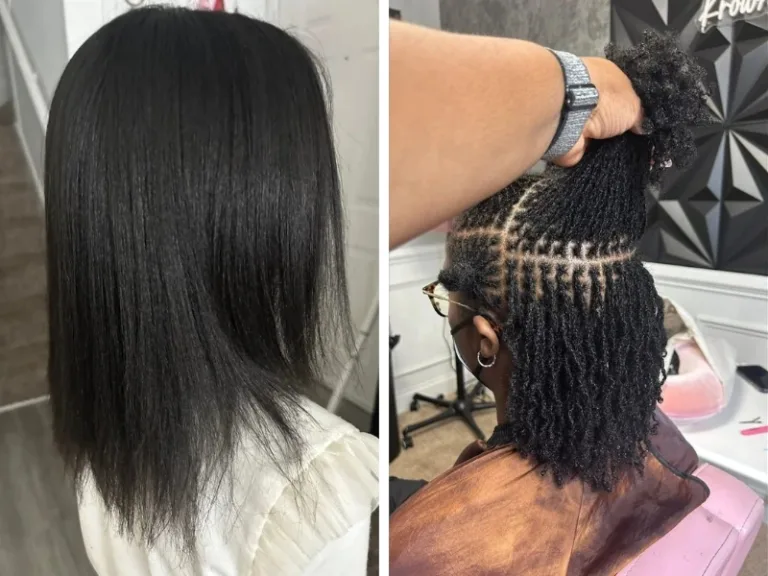
If a full retwist is not possible, palm rolling is your best alternative. It compresses the outer layer of each loc.
This reduces visible surface frizz without disturbing the internal locking process.

Work on damp locs, not soaking wet ones. Apply a very small amount of aloe vera gel to each section before rolling.
Roll in one direction only, from root to tip. Do this on every loc you plan to have visible in your interview style. Allow your locs to dry completely before styling.
Sleep in a Satin Bonnet the Night Before
This is non-negotiable.
Cotton pillowcases create friction throughout the night. That friction disturbs freshly retwisted or palm rolled locs and undoes much of your prep work before morning.
Wear a satin bonnet that covers all your locs fully. If your locs are too long for a standard bonnet, use a large satin scarf tied loosely at the nape.
Wake up gently and remove the bonnet carefully before styling. Do not rush this step — yanking the bonnet off disturbs the outer layer.
3. The Low Bun
Why It Works for Interviews
A low bun is the most reliable interview style for starter locs.
It works at every loc length. It requires minimal product. It tucks all visible frizz away from the face and neckline.
The result looks neat, professional, and intentional.
A low bun also works in your favour structurally. By gathering all your locs together at the nape, you reduce the surface area of frizz that is visible to an interviewer.
The locs at the back may still have texture, but they are gathered and compressed rather than loose and scattered.

How to Create a Clean Low Bun
Gather all your locs toward the nape of your neck. Use a soft satin-lined hair tie or a spiral hair coil, never a rubber band.
Gather them loosely rather than pulling tightly at the roots. Tight tension at the root during a long interview creates headaches and risks stressing your hairline.
Twist the gathered locs into a loose rope and coil them around the base. Secure with a second hair tie or bobby pins if needed.
Smooth any baby hairs or edge frizz at the front with a small amount of edge-control gel applied with a soft bristle brush. Do not press hard at the hairline.
4. The High Bun
When to Choose a High Bun Over a Low One
A high bun works well when your starter locs have enough length to gather at the crown. It lifts attention toward the face and gives a polished, confident silhouette.
It also works well for formal interviews in more corporate environments.
The high bun requires a bit more tension to stay in place.
This is fine for a few hours. Be careful not to pull too tightly at the roots. If your scalp starts to feel uncomfortable during the interview, it is a sign the tension is too much.
Go for a slightly lower gathering point next time.

Making the High Bun Look Intentional
The key to a professional high bun is clean edges.
Smooth the front hairline and the sides before gathering your locs up. Use a small amount of edge control along the perimeter only. Do not apply it throughout the locs.
For more insight 35 Loc Styles for Interviews: Professional, Polished, and Powerfully You
Once the bun is in place, wrap a small loc or a loc-friendly hair accessory around the base to hide the scrunchie.
This finishing detail takes thirty seconds and elevates the overall look significantly.
5. Pinned and Tucked Styles
Using Bobby Pins Strategically
Bobby pins let you shape starter locs into structured styles without tight elastic tension.
This is particularly useful if your locs are between lengths and do not quite reach a full bun. Pin-based styles give you control over exactly where each loc sits.
Choose bobby pins that match your hair colour.
This hides the hardware and makes the style look seamless. Secure pins into the body of the style, not just the surface of individual locs.
Pins that only catch the outer layer can pull loose strands out of the loc during a long day.

The Tucked Roll Style
Gather your locs at the nape. Roll them upward in a loose cylinder toward the crown. Secure the roll with three or four bobby pins along the back.
This creates a structured upswept look without requiring a bun shape.
The tucked roll works especially well for starter locs that are too short for a full bun but too long to leave neatly down.
It keeps everything lifted and contained. The frizz at the roots becomes part of the textured roll rather than a visible problem.
6. Headwraps and Loc Scarves
When a Headwrap Is Appropriate
A well-tied headwrap is a fully professional option for many interview settings. It is not a last resort. It is a deliberate styling choice that signals confidence and cultural intentionality.
A headwrap covers root frizz completely. It frames the face. It works at any starter loc length.
This Post explains How to Fix Thinning Locs at the Crown and Bring Your Locs Back to Life
The key is in the execution. A loosely tied scarf looks casual. A neatly folded and structured wrap looks styled.
How to Tie a Professional Headwrap
Use a smooth, structured fabric. Silk, satin, or woven cotton work well. Avoid very stretchy fabrics, which do not hold a clean shape.
Fold the scarf into a long band before wrapping.

Wrap from the front hairline backward, crossing at the nape and returning to the front to tie or tuck. Keep the tension even across the forehead.
A wrap that sits too tightly across the temples is uncomfortable over a long period. Practice the tie the night before so you are not figuring it out on interview morning.
7. Products That Help Without Causing Damage
Aloe Vera Gel
Aloe vera gel is the most loc-friendly hold product available.
It smooths the outer layer of each loc without coating the strands in residue. It dries clear. It does not slow down the locking process.
Apply it sparingly. A small amount on your fingertips, worked through the surface of the loc during palm rolling, is enough.
Using too much makes the locs stiff and shiny, which looks unnatural for an interview setting.
Light Water-Based Spray

A simple water spray bottle is, in fact, one of the most effective tools for starter locs. Because of its simplicity, it allows you to refresh your hair without buildup.
So, a light mist before palm rolling or even before setting your style, can make your locs noticeably easier to shape.
This article dives into The Ultimate Guide to Professional Loc Steam Treatments at Home: Restore, Hydrate, and Elevate Your Routine
At the same time, it helps reactivate any light product already sitting in your hair, which means you won’t need to keep adding more.
However, on interview day, it’s best to be cautious. Use water sparingly, and avoid soaking your locs that morning, since wet locs take time to dry properly.
Otherwise, if they remain even slightly damp when styled, they can develop an unpleasant smell. And by the time you’re sitting across from your interviewer, that’s the last thing you want.
Edge Control (Sparingly, at the Perimeter Only)
A small amount of edge control at the hairline creates clean, polished edges.
This makes any updo look significantly more professional. Apply it only at the hairline – not along the locs themselves.
Use a soft bristle brush to lay edges gently. Do not press hard or repeat the brushing motion over the same spot.
Repeated friction on the hairline causes thinning over time. One smooth pass with a soft brush is enough.
8. What to Do on Interview Morning
Wake up with enough time to style without rushing. Rushed styling on locs creates mistakes that are hard to fix quickly.
Thirty to forty-five minutes is usually enough for any updo or tucked style.
Remove your satin bonnet carefully. Assess the state of your locs in the mirror before doing anything else.
If your palm rolling from the previous night has held, a light water mist and a final pass of aloe vera gel is all you need before styling.
Here’s a closer look at How to Remove Lint from Locs Without Causing Damage: A Gentle Care Guide for Healthy, Clean Locs
If some locs have shifted, re-roll those specific ones before gathering everything into your chosen style.

Set your style, smooth your edges, and step back to look at the full picture.
The goal is a style that looks neat at three feet away – the distance across an interview desk.
Minor imperfections that are only visible up close do not register during a face-to-face conversation. Do not over-correct.
Bad Ideas When Styling Starter Locs for an Interview
Using heavy gel or wax to smooth down the entire head of locs. Heavy products make locs look wet and clumped rather than polished.
They also create buildup inside the locs that is very difficult to remove during the starter phase.
The locs may look neat for the first hour of the interview. By the time you are on your way home, they look worse than before you started.
Doing an emergency retwist the morning of the interview. Freshly retwisted locs need several hours to dry and set.
Retwisting and then immediately tying your hair into a style before it dries causes the locs to set in a compressed, flattened shape. This is hard to reverse and creates uneven locs over time.
Pulling your updo too tightly at the roots. Tight tension on starter loc roots causes real damage.
The root is the most fragile point of a starter loc. Repeated or prolonged tension at this point leads to thinning that compounds with every styling session.
A polished look does not require tight pulling.
Using rubber bands or regular hair ties directly on locs. Rubber bands catch on the forming structure of starter locs.
When you remove them, they pull individual strands out of the loc body.
This creates frizz, weakens the loc at the tie point, and can break partially formed locs at exactly the place where they are most vulnerable.
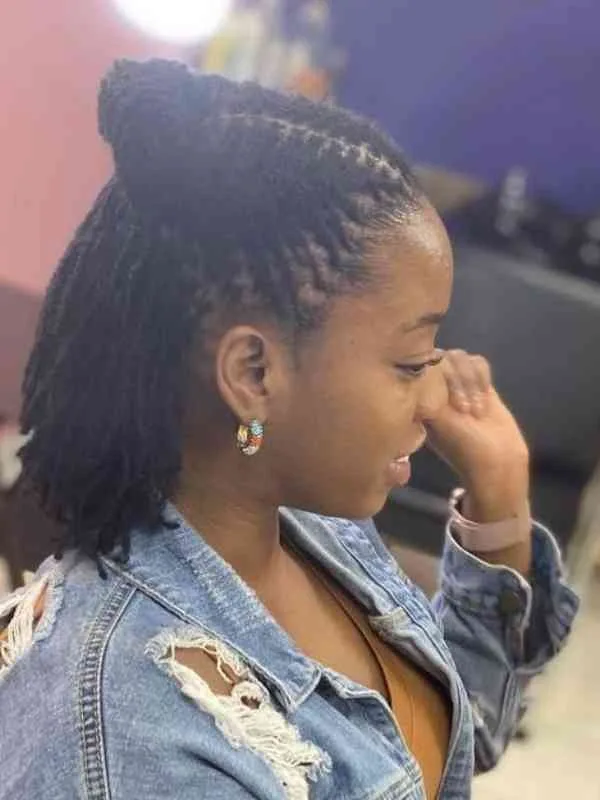
Trying to pick out or cut visible frizz before the interview. The frizzy strands around a starter loc are the raw material of the mature loc.
Cutting them removes strands that would eventually lock into the body of the loc. Picking at them disturbs the forming structure.
Either approach delays your loc progress and creates uneven, thin locs over time.
On Confidence and Professionalism
Starter locs in an interview are not a disadvantage. They are a choice that reflects commitment, patience, and intentionality.
These are qualities that read well in any professional setting.
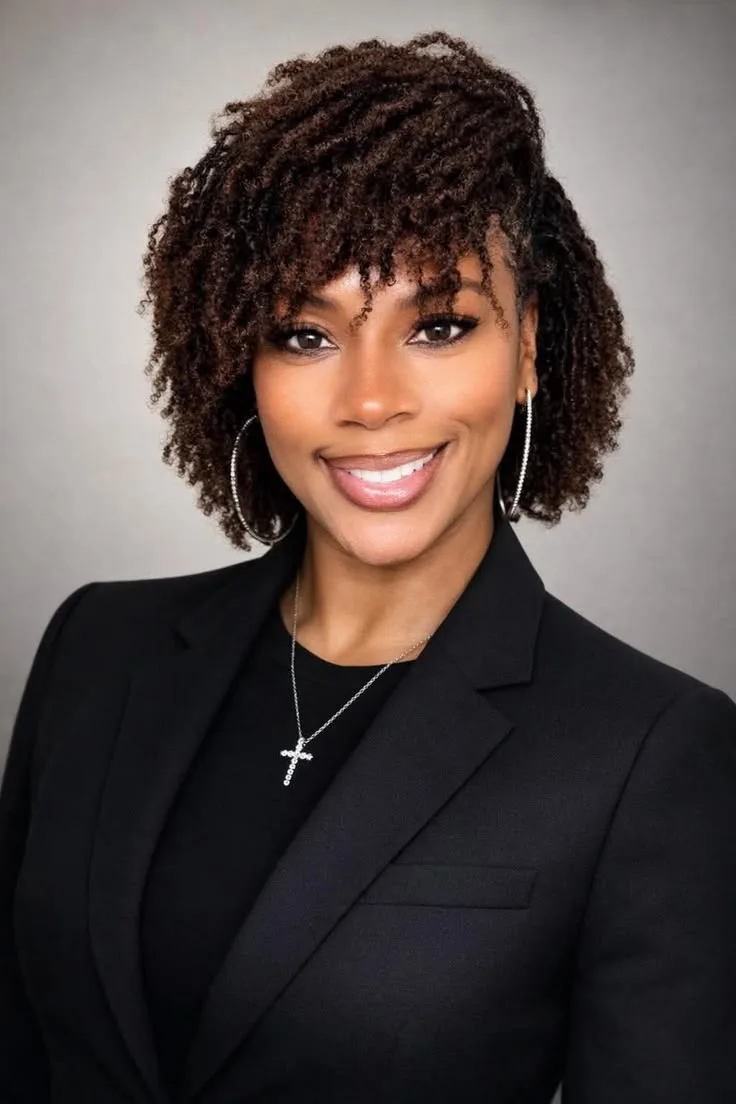
The goal of managing frizz for an interview is not to make your locs look like something else. It is to present them in a way that communicates care and deliberateness.

A neatly executed low bun or a well-tied headwrap on starter locs says that you take your appearance seriously. That message comes through regardless of hair stage.
You may find helpful Best Grid Patterns for Small DIY Locs: How to Choose the Perfect One for Your Hair
There are workplaces that hold discriminatory views about locs.
That is a real and documented problem. But the answer to that is not to minimise your hair, it is to find workplaces that value who you are.
A company that would reject a qualified candidate for wearing starter locs is not a company worth performing for.
Go into the room knowing that your locs are appropriate, intentional, and professionally styled. That confidence reads across any desk.
You Learnt How to Hide Starter Loc Frizz for Interviews (Without Damaging Your Locs).