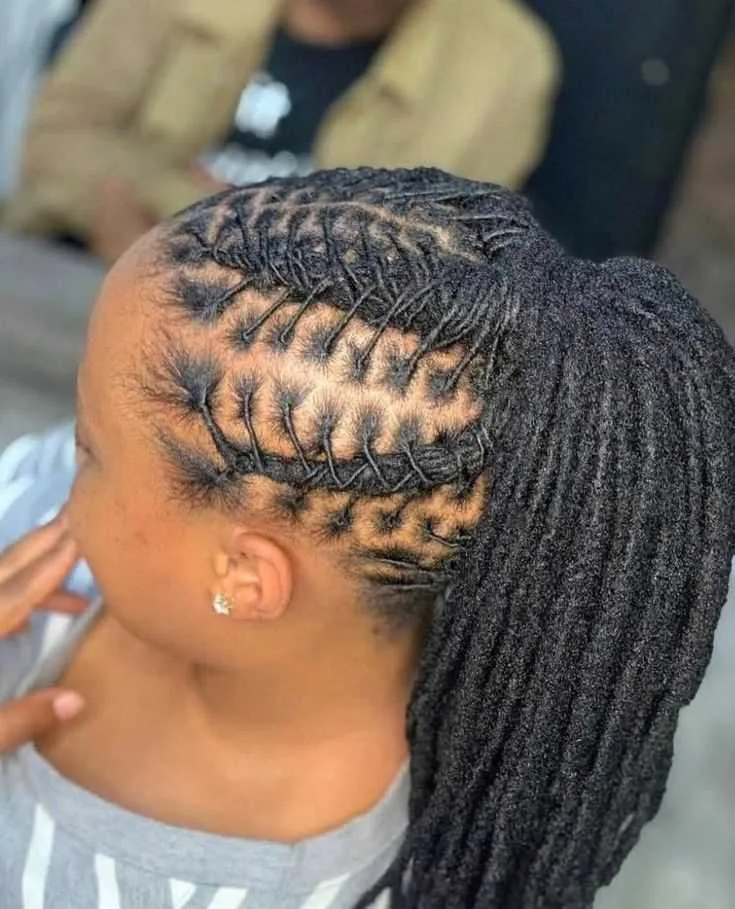
Learn About ACV Rinse Ratio for Sensitive Scalp Locs (The Safe Way to Detox).
Your scalp is already reactive. It itches easily.
It flakes when exposed to harsh products. And now you are trying to figure out whether an ACV rinse will help it or make things dramatically worse.
Apple cider vinegar rinses have genuine benefits for loc wearers. They remove buildup. They restore pH balance. They calm scalp irritation when used correctly.
However, the standard ACV ratio that works for a normal scalp is too strong for a sensitive one.
Using it at full strength or even at the commonly recommended one-to-three dilution can trigger burning, increased flaking, and prolonged inflammation on a scalp that is already reactive.

This guide ACV Rinse Ratio for Sensitive Scalp Locs gives you the exact ratios to use for sensitive scalp locs, explains why those ratios work, walks you through the full process step by step, and covers what to watch for so you know whether your scalp is responding well.
Everything here is calibrated specifically for sensitivity. Nothing here requires you to choose between clean locs and a comfortable scalp.
Below are ACV Rinse Ratio for Sensitive Scalp Locs (The Safe Way to Detox):
ACV Rinse Ratio for Sensitive Scalp Locs (The Safe Way to Detox)
1. What an ACV Rinse Actually Does
The Science Behind the Rinse
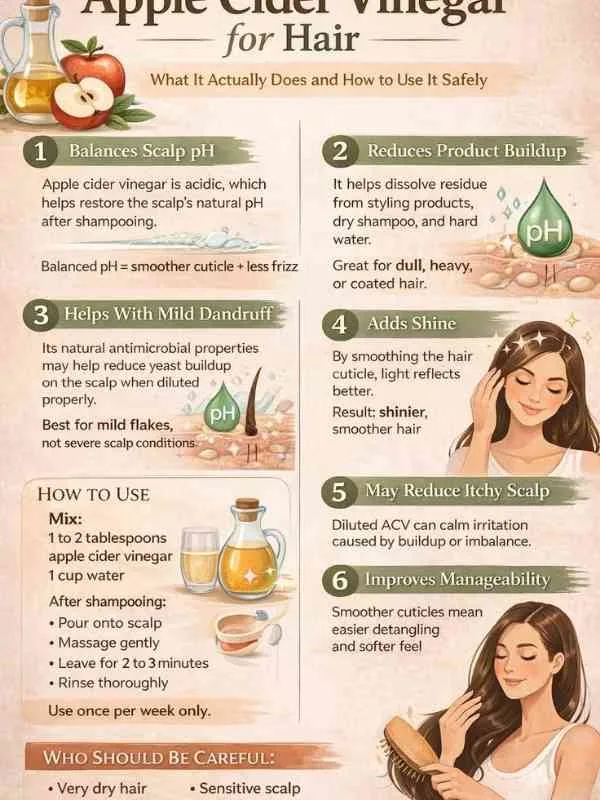
Apple cider vinegar is mildly acidic. Its pH sits between 2 and 3. Your scalp, on the other hand, has a natural pH of around 4.5 to 5.5.
When that pH rises, due to alkaline shampoos, hard water, or product buildup the scalp becomes irritated and flaky.
An ACV rinse works by temporarily lowering the pH back toward the scalp’s natural range. As a result, the hair cuticle flattens and closes.
The scalp produces less excess sebum. Buildup loosens because the acidic environment breaks down the alkaline residue that holds it in place.
Additionally, ACV contains acetic acid, which has mild antimicrobial properties. This helps address the bacteria and fungal activity that contribute to dandruff and itching.
Why This Matters Specifically for Locs
Locs trap product residue far more effectively than loose hair does.
Therefore, the buildup that forms inside and around a loc is denser and harder to dislodge through regular shampooing alone.
A well-diluted ACV rinse reaches inside the loc structure. It loosens residue that shampoo alone cannot shift.
Furthermore, locs take a long time to dry.
This article dives into The Ultimate Guide to Professional Loc Steam Treatments at Home: Restore, Hydrate, and Elevate Your Routine
Because of this, anything that disrupts the scalp’s barrier function, including an overly acidic rinse leaves the scalp vulnerable for longer than it would be on loose hair.
A properly diluted rinse cleans effectively while keeping that exposure time manageable.
2. Understanding Sensitive Scalp Specifically
What Makes a Scalp Sensitive
A sensitive scalp is one where the skin barrier is thinner or more reactive than average.
Consequently, it responds to stimuli that a normal scalp would tolerate without issue.
Those stimuli include fragrance, alcohol, alkaline products, and even acidity at levels that are technically within a normal range.
Sensitivity shows up in different ways. Some people experience immediate burning or stinging when a reactive product touches their scalp.
Others notice delayed responses; increased flaking, redness, or persistent itching that develops a day or two after a wash.
Both responses indicate that the scalp barrier has been stressed.
Similarly, a scalp that was not previously sensitive can become reactive after overuse of harsh products, over-washing, or a prolonged period of dryness.

How Standard ACV Ratios Affect a Sensitive Scalp
The standard ACV rinse ratio recommended for most loc wearers is one part ACV to three parts water. That dilution is appropriate for a healthy, non-reactive scalp.
However, for a sensitive scalp, it delivers more acidity than the barrier can comfortably absorb. The result is not a clean, refreshed scalp.
Instead, it is a scalp that feels tight, burns slightly during the rinse, and often becomes more inflamed in the twenty-four hours that follow.
That reaction discourages people from ever trying an ACV rinse again. Yet, the solution is not to avoid ACV entirely.
You may also find helpful 35 Loc Styles for Interviews: Professional, Polished, and Powerfully You
The solution is to use a significantly higher dilution that still delivers the cleansing benefits without overwhelming a reactive scalp.
3. The Right ACV Ratio for Sensitive Scalp Locs
The Starting Ratio
For a sensitive scalp, the safest starting ratio is one part ACV to six parts water.
This halves the standard recommendation and gives the scalp significantly less acidity to manage on first contact.
At this dilution, the rinse still delivers pH-balancing and mild cleansing benefits. However, it does so at a level the scalp barrier can absorb without triggering a reactive response.
Specifically, a practical measure for this ratio is one tablespoon of ACV per half cup of water.
That produces a small batch suitable for one application. For a full soak, use three tablespoons of ACV mixed into one and a half cups of water.
From there, add enough additional water to fill your basin to the depth needed to submerge your locs.

Adjusting the Ratio Over Time
After your first rinse at the six-to-one ratio, assess your scalp response over the following forty-eight hours.
If there is no burning, no increased itching, and no new flaking, your scalp has tolerated the rinse well.
Therefore, you can consider gradually working toward a five-to-one ratio on your next session.
Nevertheless, there is no obligation to increase the concentration.
For more insight How to Fix Thinning Locs at the Crown and Bring Your Locs Back to Life
A six-to-one rinse done consistently every six to eight weeks delivers real, cumulative benefit. Some scalps remain at this dilution permanently and experience excellent results.
On the other hand, if even the six-to-one ratio produces a reaction, dilute further to one tablespoon of ACV per full cup of water.
That eight-to-one ratio is the gentlest effective version of this rinse.
Choosing the Right Type of ACV
Not all apple cider vinegar is equally appropriate for scalp use.
Raw, unfiltered, organic ACV the kind that contains the “mother,” a cloudy strand of proteins and beneficial enzymes, is the most effective version for scalp care.
The mother contributes additional cleansing and pH-regulating properties that filtered ACV does not have.
Avoid flavoured or infused ACV products. Additionally, avoid any ACV that contains added sugars or preservatives.
Those ingredients introduce new potential irritants to an already reactive scalp.
Plain, raw, organic ACV diluted in filtered water is the cleanest and most controllable option.
4. Adding Scalp-Soothing Ingredients to the Rinse
Aloe Vera Juice
Adding two tablespoons of pure aloe vera juice to your rinse mixture immediately counteracts the drying effect that acidity can have on a sensitive scalp.
Aloe vera is anti-inflammatory and deeply moisturising. As a result, it buffers the mildly acidic rinse and supports the scalp barrier rather than stressing it.
Use food-grade or cosmetic-grade aloe vera juice, not the thick gel.
The juice blends into the rinse water evenly and rinses out cleanly. In contrast, thick aloe gel may leave residue in the locs if not fully flushed out after the soak.
Lavender or Tea Tree Essential Oil
Two to three drops of lavender essential oil added to your rinse mixture provides additional anti-inflammatory support.
Lavender specifically has been shown to calm scalp sensitivity and reduce the itch response.
For scalps that tend toward dandruff or fungal irritation, two drops of tea tree oil is a more targeted addition.
However, essential oils must always be added to the already-diluted mixture, never to undiluted ACV.
Here’s a closer look at How to Start Sisterlocks on Natural Hair: A Beginner’s Step-by-Step Guide
Furthermore, stay within the two-to-three drop range. More than that introduces its own potential irritants to a reactive scalp.
Rose Water
Replacing a portion of your plain water with rose water adds an extra layer of soothing benefit.
Rose water has a natural pH of around 5.5, which sits comfortably within the scalp’s optimal range.
It also reduces redness and calms the inflammation that can follow a wash session on a sensitive scalp.
Specifically, replace one third of the water in your rinse mixture with rose water. This does not change the overall dilution of the ACV.
It simply replaces some neutral water with a water that actively supports the scalp rather than merely diluting the acid.
5. Step-by-Step: How to Do the Rinse
Step 1 — Wash First, Then Rinse
Begin your session with a clarifying shampoo wash.
This removes surface-level buildup before the ACV rinse has to work.
Consequently, the rinse can focus on the deeper residue inside the loc structure rather than simply dissolving what is sitting on the outside.
Rinse the shampoo out completely before applying the ACV mixture.
Shampoo left in the locs when the ACV is applied creates a mixed-pH environment that can be unpredictable on a sensitive scalp.
Therefore, ensure every trace of shampoo is flushed out first.
Step 2 — Soak Gently
Pour the prepared rinse mixture into a basin wide enough to submerge your locs. Lean forward over the basin and lower your locs into the mixture.
Soak for ten to fifteen minutes.
Meanwhile, squeeze each loc gently every few minutes to work the rinse through the internal structure.
During the soak, pay attention to how your scalp feels. A mild tingling sensation is normal.
Burning or stinging, on the other hand, is a sign to remove your locs from the rinse immediately.
Dilute the remaining mixture with additional water before continuing. A sensitive scalp that experiences burning during a soak needs a lower concentration next session.

Step 3 — Rinse Thoroughly With Cool Water
After the soak, rinse your locs with clean, cool water for at least two to three minutes.
Cool water helps close the hair cuticle, which the ACV opened slightly during the soak.
As a result, the cuticle seals in the moisture you want to retain and keeps new residue from entering as easily.
If you are looking to understand How to Start Locs on Short Hair: A Beautiful Beginner’s Guide to Your Loc Journey
Rinse until you can no longer detect any vinegar scent. Residual ACV left in the locs continues to act on the scalp as it dries.
For a sensitive scalp, that prolonged exposure can cause irritation even after a session that felt comfortable during the soak. Thorough rinsing eliminates this risk entirely.
Step 4 — Follow With a Light Moisture Treatment
After rinsing, apply a lightweight, residue-free conditioner to your ends only. Do not condition the scalp or the root sections of the locs.
The ACV has already restored acidity at the scalp. Adding conditioner there disrupts that balance and defeats the purpose of the rinse.
The ends of locs, however, benefit from a light moisture treatment after any acidic soak. Rinse the conditioner out fully, then gently squeeze each loc downward to remove excess water.
Allow your locs to air dry completely before covering, tying, or sleeping on them.
6. How Often to Do an ACV Rinse on a Sensitive Scalp
For a sensitive scalp, the ideal frequency is every eight to ten weeks.
This is less frequent than the general recommendation of four to six weeks for standard scalps.
The longer interval gives the scalp time to fully recover and rebalance between sessions.
However, frequency should be guided by your scalp’s actual response rather than a fixed schedule.
If, after a session, your scalp feels calm and balanced for ten weeks, maintain that interval. If itching or flaking returns sooner, move the rinse slightly earlier, at around seven or eight weeks.

On the other hand, if your scalp takes longer than two weeks to feel comfortable after a session, extend your interval to twelve weeks and reduce your ACV concentration further.
You may also find helpful How to Start Locs Yourself at Home Without a Loctician: A Simple, Confident Beginner’s Guide
Over time, a consistent gentle rinse routine actually strengthens the scalp’s tolerance.
Many people with sensitive scalps find that, after six to twelve months of well-diluted rinses, their scalp becomes gradually less reactive.
Nevertheless, this is a slow process. Patience with the schedule is just as important as precision with the ratio.
7. Signs the Rinse Is Working
A successful ACV rinse on a sensitive scalp produces specific, observable results in the days that follow the session.
Understanding what success looks like helps you distinguish a well-tolerated rinse from a mild negative reaction.
After a session that has gone well, your locs will feel lighter and cleaner. The weight that heavy buildup creates inside the strands is noticeably reduced. Your scalp will feel calm rather than tight.
Any pre-existing itching should be reduced within twenty-four to forty-eight hours.
Additionally, your scalp may produce slightly less oil in the days following the rinse, because the restored pH balance regulates sebum production more effectively.
On the other hand, a rinse that was too concentrated or done too frequently produces the opposite results.

The scalp feels tight or burns during the session. Flaking increases rather than decreasing in the days that follow.
The itching that prompted the rinse in the first place returns within a few days, sometimes worse than before.
If you experience those responses, dilute your ratio further and extend your interval before the next session.
Bad Ideas When Using ACV on a Sensitive Scalp

Using undiluted ACV directly on the scalp. Undiluted apple cider vinegar has a pH of around 2.
That level of acidity causes chemical burns on sensitive skin. It strips the scalp’s protective layer entirely.
Consequently, the scalp is left raw, inflamed, and far more reactive than it was before the application. Always dilute, without exception.
Using the standard one-to-three ratio on a reactive scalp. This ratio is appropriate for a normal scalp.
However, it delivers roughly three times the acidity that a sensitive scalp can comfortably absorb.
Many people try the standard ratio, experience a strong reaction, and conclude that ACV is not for them.
In reality, a higher dilution would have worked. The ratio was the problem, not the rinse itself.
Rinsing more frequently to speed up results. Doing an ACV rinse every two weeks on a sensitive scalp does not accelerate the benefits.
Instead, it prevents the scalp from fully recovering between sessions.
The scalp needs time to rebuild its natural barrier after each acidic exposure. Too-frequent rinsing progressively weakens that barrier rather than strengthening it.
Leaving the rinse mixture in the locs without washing it out. Some guides suggest leaving an ACV rinse in the hair as a leave-in treatment.
For a normal scalp, this can work in small amounts.
For a regular scalp, the two substances work together to cleanse deeply. For a sensitive scalp, however, the baking soda is far too stripping.
It removes the scalp’s natural oils completely. As a result, the scalp overcompensates by producing excess oil and becomes more reactive than before.
When to Skip the ACV Rinse Entirely
There are specific scalp conditions where an ACV rinse even at a high dilution, is not appropriate.
Knowing when to skip it entirely is as important as knowing the right ratio.
If you have open sores, active eczema flare-ups, psoriasis patches, or any visible broken skin on your scalp, do not do an ACV rinse.
Even diluted acidity on broken skin causes burning and delays healing.
Therefore, wait until the scalp is fully healed before considering a rinse session.
Similarly, if you have recently had a chemical service, relaxer, colour, or any texture treatment – avoid ACV for at least three weeks.
The scalp barrier is compromised after chemical exposure and needs time to recover before an acidic rinse is appropriate.
Additionally, if you have been diagnosed with seborrheic dermatitis, consult a dermatologist before starting an ACV rinse routine.
Seborrheic dermatitis involves a specific fungal component that ACV may or may not address effectively, depending on the severity.
A dermatologist can advise whether ACV is a suitable complement to your treatment or whether it risks aggravating your specific condition.
Final Words on ACV Rinse Ratio for Sensitive Scalp Locs
A sensitive scalp does not mean you cannot benefit from an ACV rinse.
It means you need to approach the process with more precision than the standard guide requires.
The ratio matters. The additions matter. The frequency matters. Each of those factors is adjustable.
Start at one part ACV to six parts water. Add aloe vera juice if available. Do the patch test before your first full session.
Rinse thoroughly afterward.
Give your scalp forty-eight hours before assessing the result. From there, let your scalp guide the next adjustment.
Ultimately, a well-calibrated ACV rinse is one of the most effective tools a loc wearer with a sensitive scalp has.
It cleans without stripping. It balances without aggravating. It treats the inside of the loc where shampoo alone cannot reach.
Done patiently and correctly, it is the gentlest deep clean your locs and scalp will experience.
You Have Learnt About ACV Rinse Ratio for Sensitive Scalp Locs (The Safe Way to Detox).