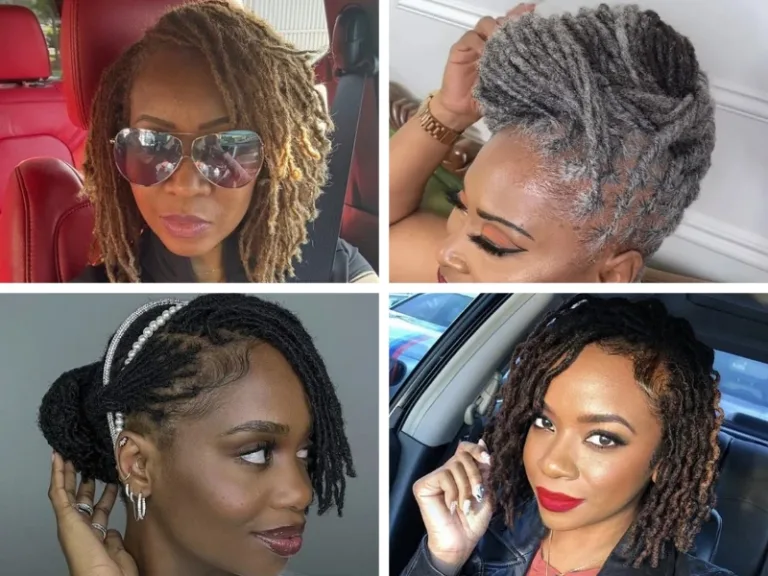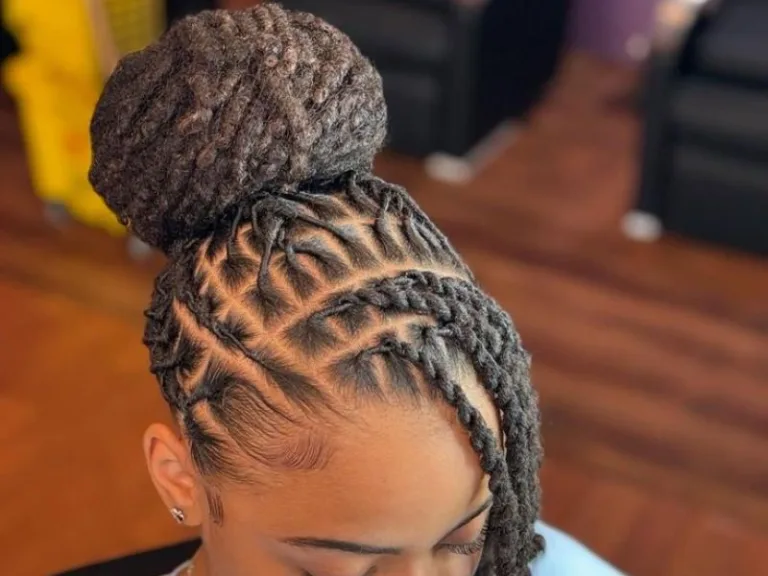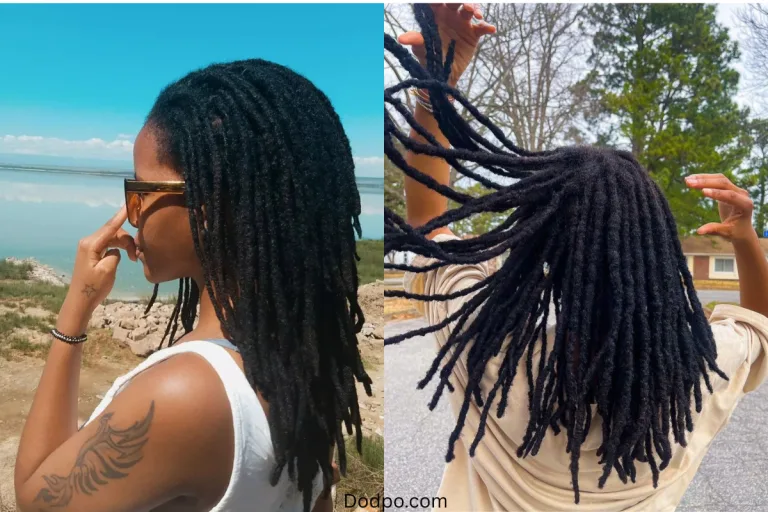
Your locs can be elegant, dramatic, romantic, traditional, or completely effortless on your wedding day.
You don’t have to change their character to make them bridal.
The right bridal loc style depends on more than how pretty a hairstyle looks in a photo.
Your loc length, thickness, wedding setting, dress neckline, veil, accessories, and even how much movement you want throughout the day can all affect which style works best.
That is why we’ve put together 25 wedding loc hairstyles with genuinely different silhouettes, from sculpted updos and braided crowns to flowing locs, ponytails, half-up styles, and options for shorter locs and microlocs.
Whether you’re having a glamorous ballroom wedding, a romantic garden ceremony, a beach celebration, a traditional wedding, or an intimate courthouse ceremony.
There’s a loc style here to help you find a look that feels unmistakably you.
25 Bridal Loc Styles for Every Wedding: Looks Made for Your “I Do”
From elegant updos and intricate braids to flowing locs, statement ponytails, and romantic half-up styles, these bridal loc looks prove that there’s no single way to wear your locs on your wedding day.
Find the silhouette that fits your locs, your dress, and the wedding you’ve dreamed of.
1. Sculpted Loc Chignon
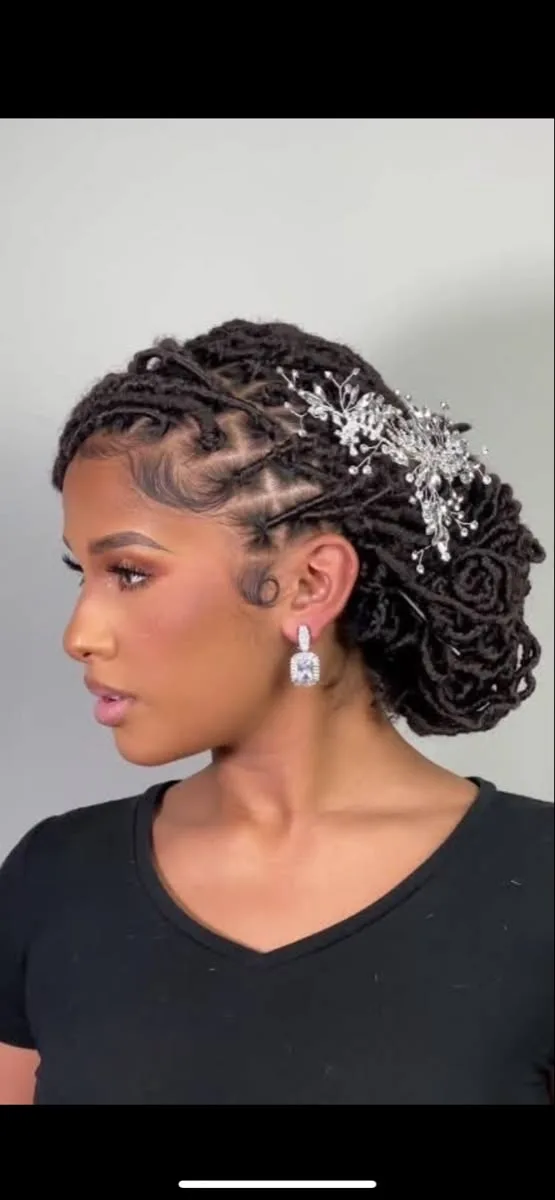
A sculpted loc chignon gathers the locs into a smooth, rounded updo at the back of the head, creating a polished silhouette with plenty of bridal elegance.
The clean structure makes it a natural choice for brides who want their locs to look sophisticated and intentional without relying heavily on accessories.
Best for:
Medium-to-long locs with enough length and density to form and secure the chignon.
Longer locs can create a fuller, more dramatic shape, while medium-length locs can produce a smaller, refined version.
Styling Tip:
Keep the chignon slightly above the nape instead of placing it directly at the base of the neck.
This gives the updo more lift and keeps its shape visible from the front, particularly with high-neck or detailed wedding dresses.
Wedding aesthetic:
Classic, formal, traditional, and black-tie weddings.
2. French Roll Loc Updo
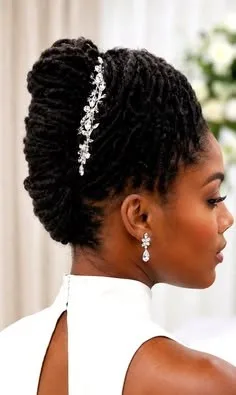
A French roll loc updo sweeps the locs upward and inward into a vertical roll at the back of the head.
Its elongated shape gives the hairstyle a refined, structured finish while keeping the locs completely off the shoulders.
It’s a particularly elegant option when the dress, neckline, or earrings deserve to remain visible.
Best for:
Medium-to-long locs.
Longer locs offer more length for creating a defined roll, while medium-length locs can work with a more compact version.
Styling Tip:
Build the roll vertically rather than too wide across the back of the head.
This preserves the signature French-roll silhouette and creates a clean line that works especially well with strapless, sweetheart, or open-back dresses.
Wedding aesthetic:
Classic, formal, sophisticated, and modern weddings.
You may also like:
Tension-Free Updos for Mature Locs: Protective Styles That Slay Without Pulling
30 Professional Locs Hairstyles for Black Women
3. Loc Ballerina Bun
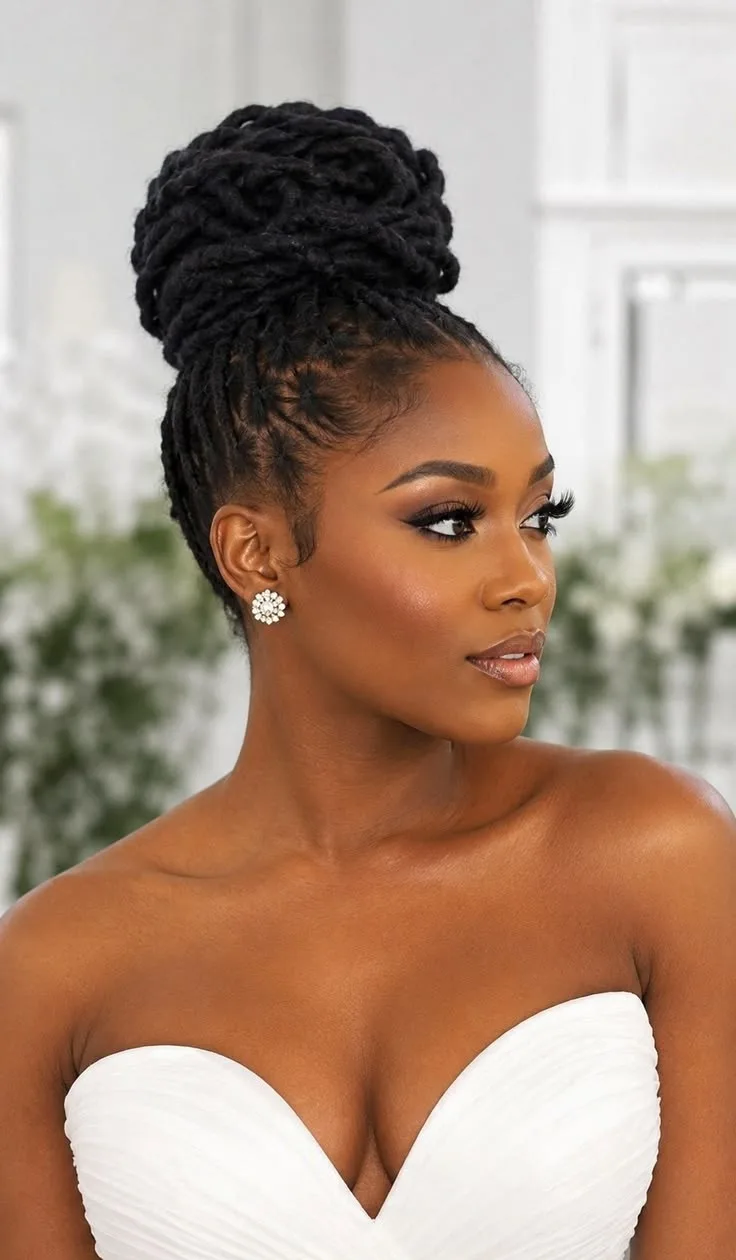
A loc ballerina bun gathers the locs into a neat, rounded bun positioned high on the head.
Its clean, lifted shape creates an instantly polished bridal look while drawing attention upward to the face, neckline, and shoulders.
The style can be kept sleek and compact or shaped into a fuller bun for a softer finish.
Best for:
Medium-to-long locs with enough length to wrap securely into a high bun.
Longer or denser locs can create a fuller ballerina shape.
Styling Tip:
Keep the bun firmly centered rather than shifting it too far toward the crown or back of the head.
A balanced placement gives the silhouette its classic ballerina shape and helps prevent the bun from looking heavy on one side.
Wedding aesthetic:
Classic, minimalist, formal, traditional, and modern weddings.
4. High Sculptural Loc Updo
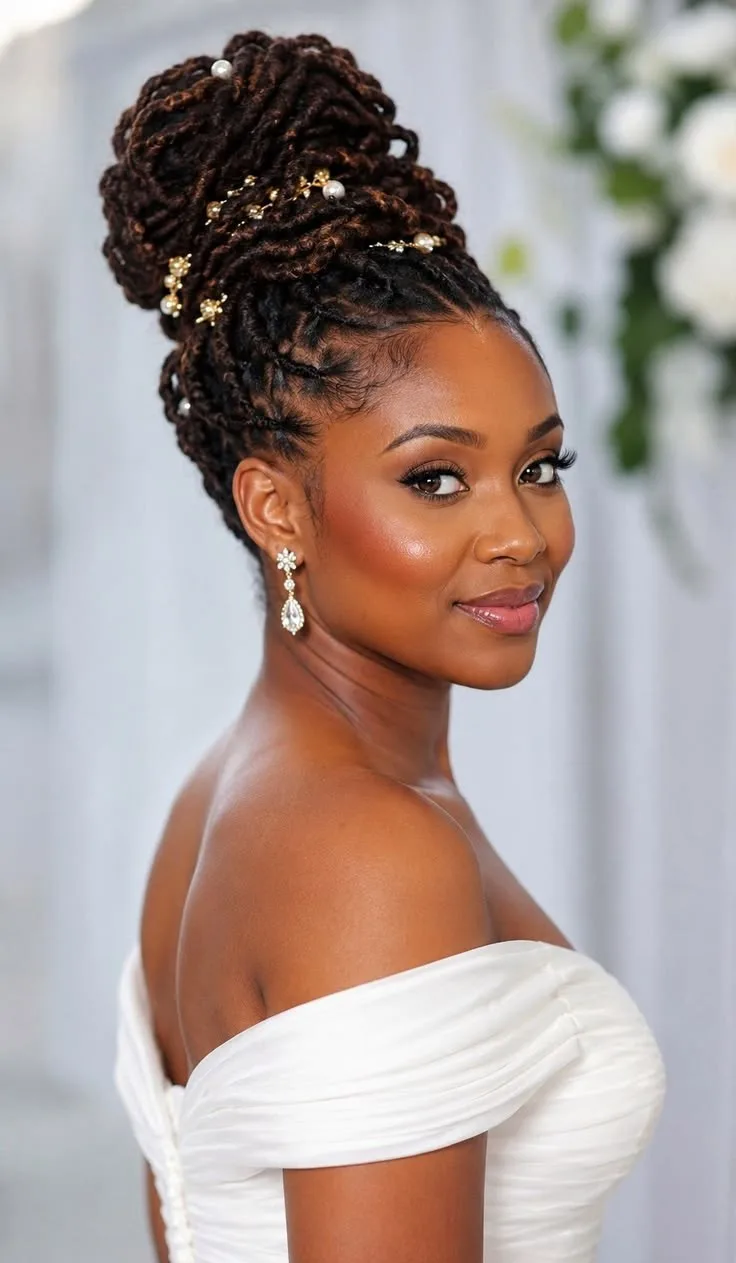
A high sculptural loc updo transforms the locs into a dimensional, elevated shape at the crown or upper back of the head.
Instead of forming one simple bun, the locs are arranged and pinned to create height, curves, folds, or other defined sections.
The result is a statement-making style that gives the bride plenty of visual impact without needing elaborate accessories.
Best for:
Medium-to-long locs, particularly thicker or denser locs that can provide enough volume for a substantial sculptural shape.
Styling Tip:
Build the height toward the crown while keeping the base securely anchored.
This helps the updo maintain its shape throughout the ceremony and reception without allowing the weight of the locs to pull the style backward.
Wedding aesthetic:
Modern, editorial, glamorous, formal, and traditional weddings.
5. Loc Fauxhawk
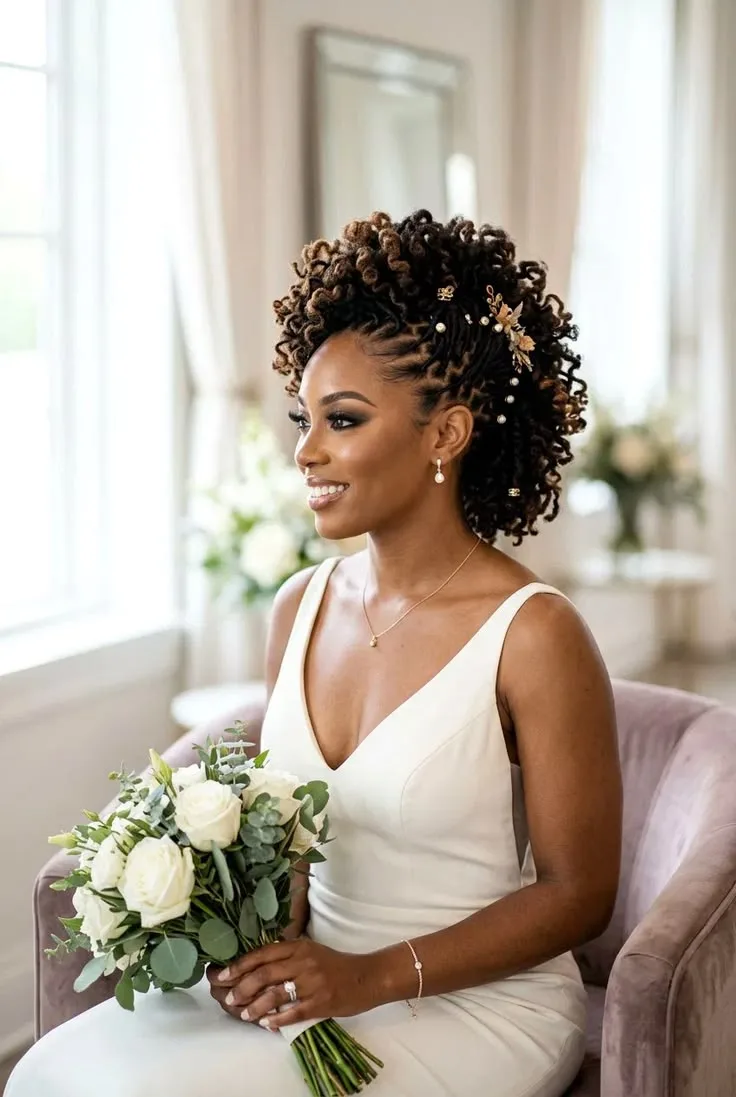
A loc fauxhawk brings the locs toward the center of the head, creating a raised, mohawk-inspired silhouette while keeping the sides more closely styled.
The result is bold and architectural without requiring the sides of the locs to be cut or altered, making it an eye-catching alternative to conventional bridal updos.
Best for:
Medium-to-long locs, especially locs with enough length and volume to build noticeable height through the center.
Styling Tip:
Concentrate the height along the center line of the head and secure each section individually rather than pulling all the locs into one mass.
This keeps the fauxhawk defined and helps distribute the weight more comfortably.
Wedding aesthetic:
Modern, edgy, editorial, glamorous, and contemporary traditional weddings.
6. Vintage Loc Finger Waves
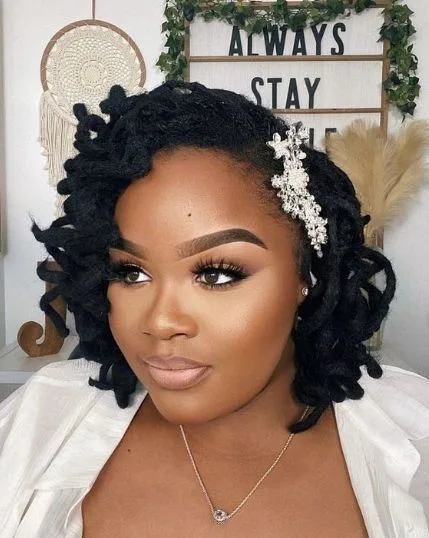
Vintage loc finger waves give the locs a sculpted, rippling pattern inspired by classic 1920s and 1930s hairstyling.
The defined waves create a polished, glamorous texture around the head while keeping the overall silhouette close to the face.
It’s a distinctive option for a bride who wants vintage character without giving up the individuality of her locs.
Best for:
Short-to-medium locs, particularly finer locs or microlocs that can be shaped closely to the head.
Longer locs may require a more structured adaptation of the look.
Styling Tip:
Work the waves in consistent sections and keep the ridges clearly defined rather than allowing the locs to merge into a loose curl pattern.
A clean side part can also emphasize the vintage-inspired shape.
Wedding aesthetic:
Vintage, glamorous, classic, art-deco, and formal weddings.
You may also like:
Transitioning from Relaxed Hair to Microlocs: Everything You Need to Know
How to Start Locs Yourself at Home Without a Loctician: A Simple, Confident Beginner’s Guide
7. Side-Swept Loc Cascade
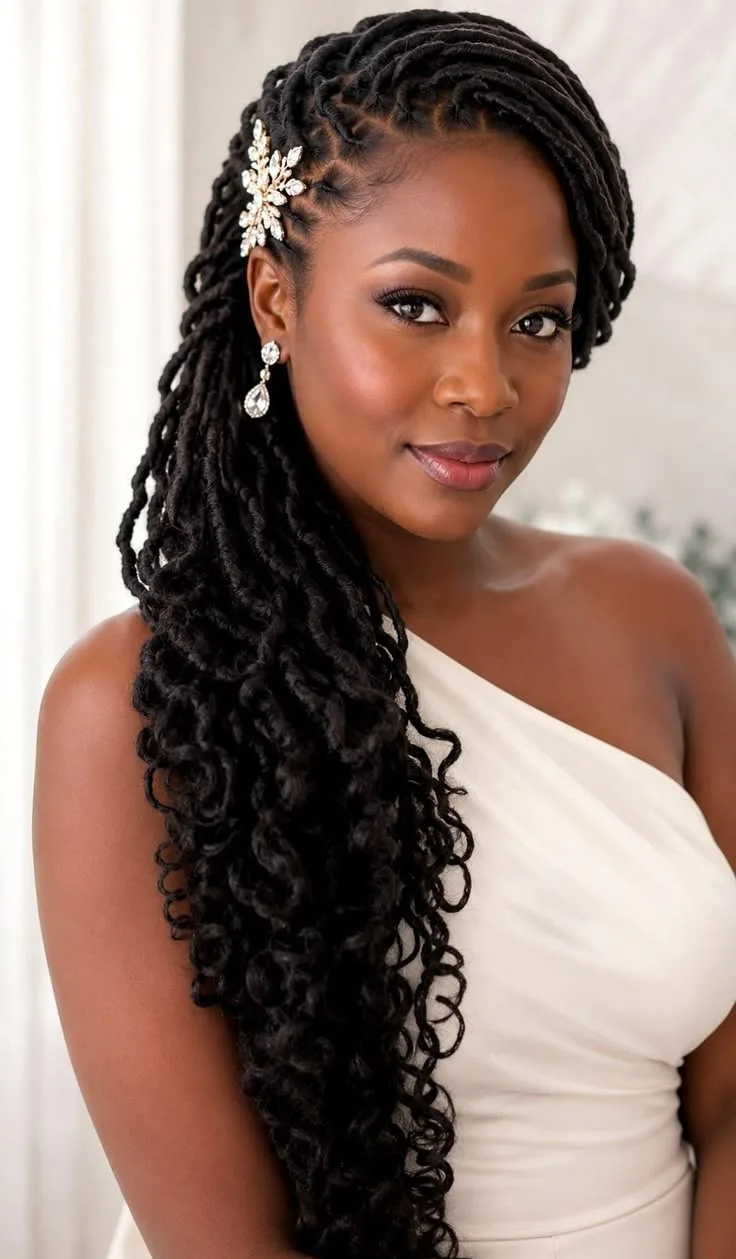
A side-swept loc cascade gathers the locs over one shoulder, allowing them to fall in a flowing, layered arrangement along one side of the body.
The asymmetrical shape creates movement while keeping the face open and giving the hairstyle a softer alternative to a fully secured updo.
Best for:
Medium-to-long locs, with longer locs creating a more pronounced cascade.
Thicker locs can give the style a fuller, more dramatic appearance, while finer locs create a lighter flow.
Styling Tip:
Secure the locs at the back of the head before sweeping them over the shoulder.
This gives the cascade a stable anchor and prevents the weight of the locs from gradually pulling the style out of place during the celebration.
Wedding aesthetic:
Romantic, glamorous, garden, boho, and destination weddings.
8. Free-Flowing Locs With a Veil
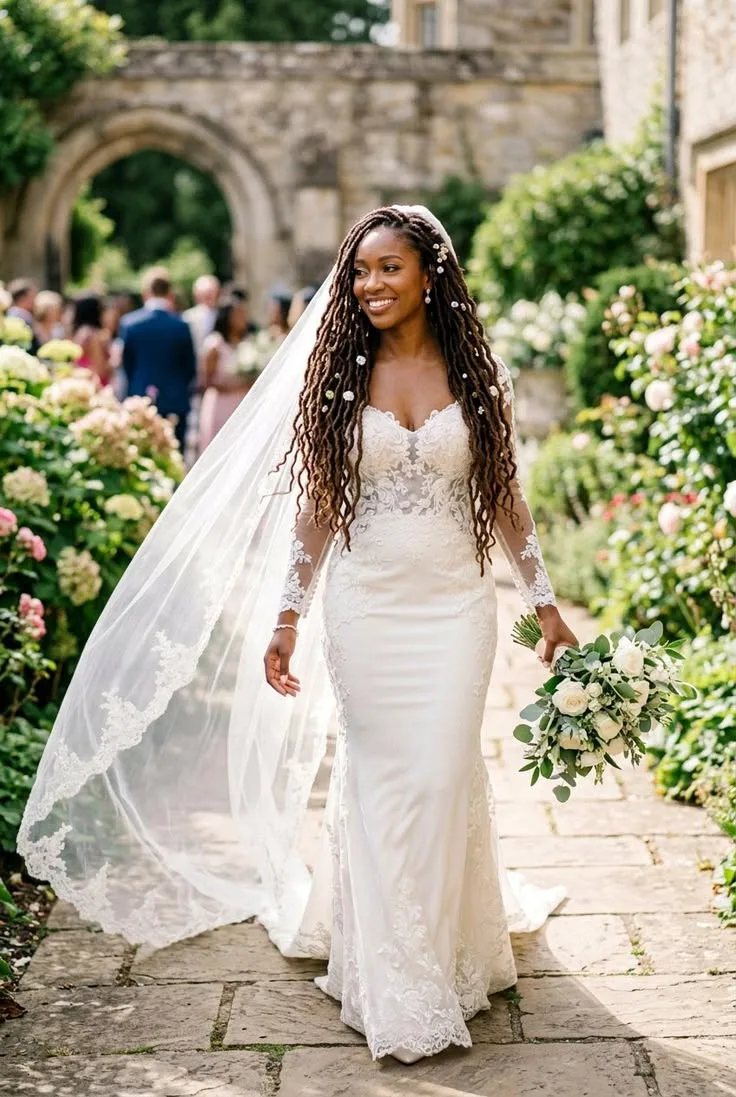
Free-flowing locs let the natural length and texture of the locs remain the focus, with a wedding veil incorporated into the finished look.
The locs can be worn loose over the back and shoulders, creating an effortless silhouette that feels bridal without requiring an elaborate updo.
It is especially fitting for brides who want their locs to remain visibly and unmistakably themselves.
Best for:
Medium-to-long locs. Longer locs create more movement and coverage, while medium-length locs can fall naturally around the shoulders.
Styling Tip:
Secure the veil at the crown or slightly behind it rather than placing its comb directly into the loose locs.
This provides a stable attachment point while allowing the locs to move freely underneath.
Wedding aesthetic:
Romantic, boho, beach, destination, rustic, and intimate weddings.
9. Curled Locs Half-Up
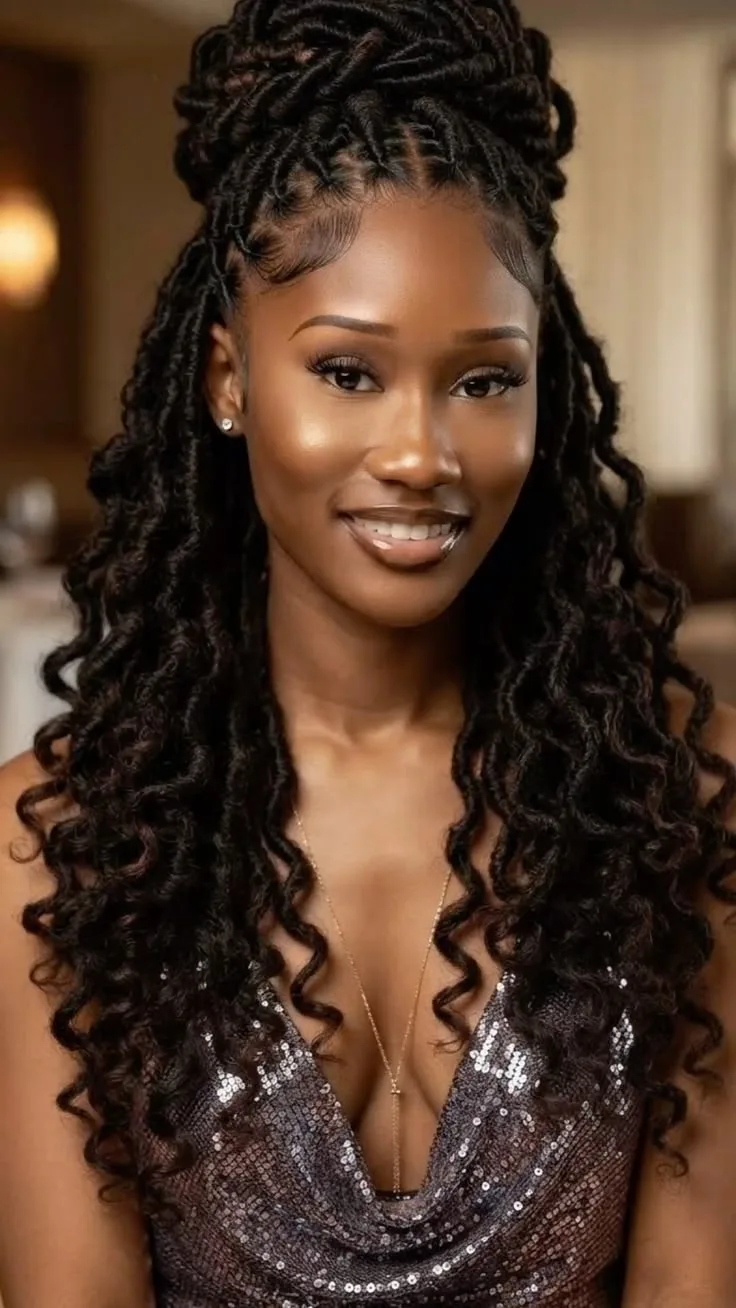
Curled locs half-up combines a softly curled lower section with the structure of a half-up hairstyle.
The top portion is gathered away from the face while the remaining locs fall freely down the back and shoulders.
This gives the look both definition and movement, making it a versatile choice for brides who want some of the elegance of an updo without putting all their locs away.
Best for:
Medium-to-long locs, especially locs with enough length to show the curled texture through the loose section.
Styling Tip:
Curl the lower locs in sections rather than treating the entire length as one piece.
This creates more visible definition and helps the curls retain their shape instead of collapsing into a single heavy mass.
Wedding aesthetic:
Romantic, garden, boho, classic, and soft-glam weddings.
10. Twisted Half-Up Loc Crown
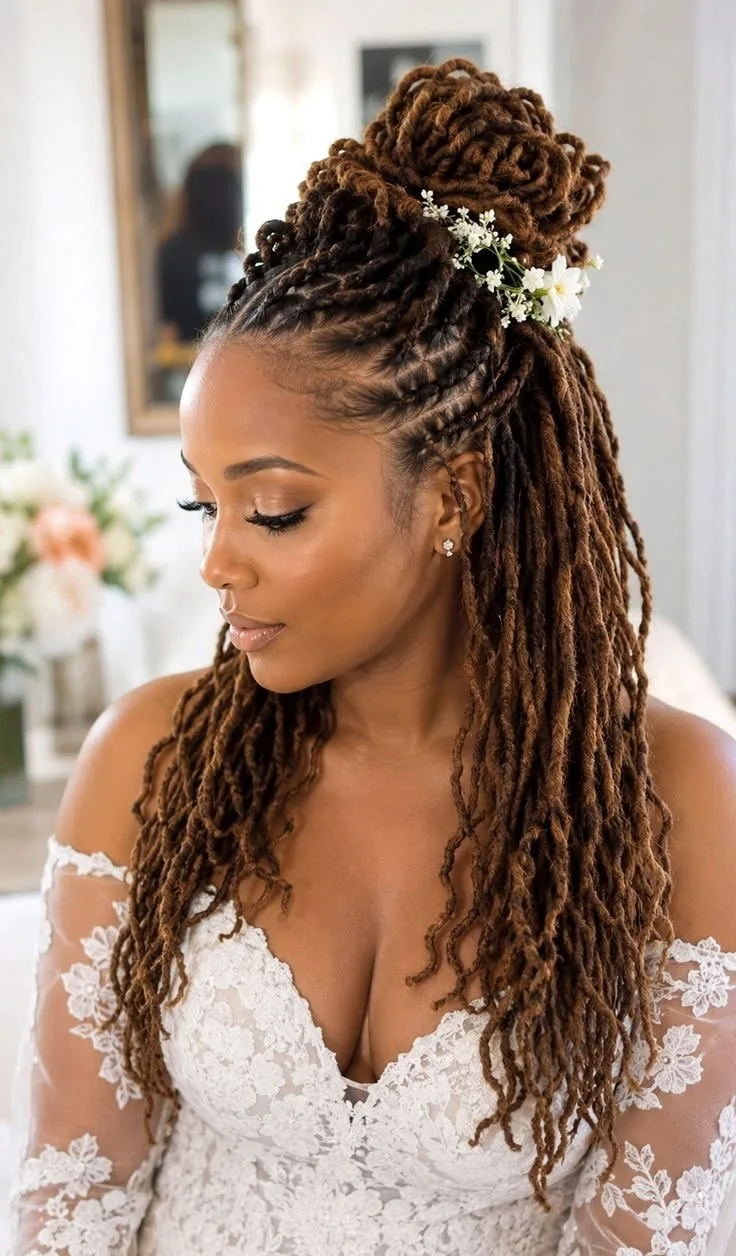
A twisted half-up loc crown creates a crown-like band by twisting sections of locs from both sides of the head and joining them at the back.
The remaining locs are left loose, giving the style a balance of structure and movement.
It frames the face without completely covering the natural length of the locs.
Best for:
Medium-to-long locs. Longer locs allow the twisted sections to wrap farther around the head, while medium-length locs can create a more compact crown.
Styling Tip:
Start the twists slightly behind the temples and keep them close to the head as they travel toward the back.
This leaves the front hairline open and creates a cleaner crown shape without making the style feel too bulky around the face.
Wedding aesthetic:
Romantic, garden, boho, classic, and outdoor weddings.
You may also like:
Locs Updos for Weddings and Formal Events: 25 Elegant Looks to Inspire You
30 Locs Styles for Black Women Entrepreneurs Brand Photoshoot
11. Loc Bow Half-Up
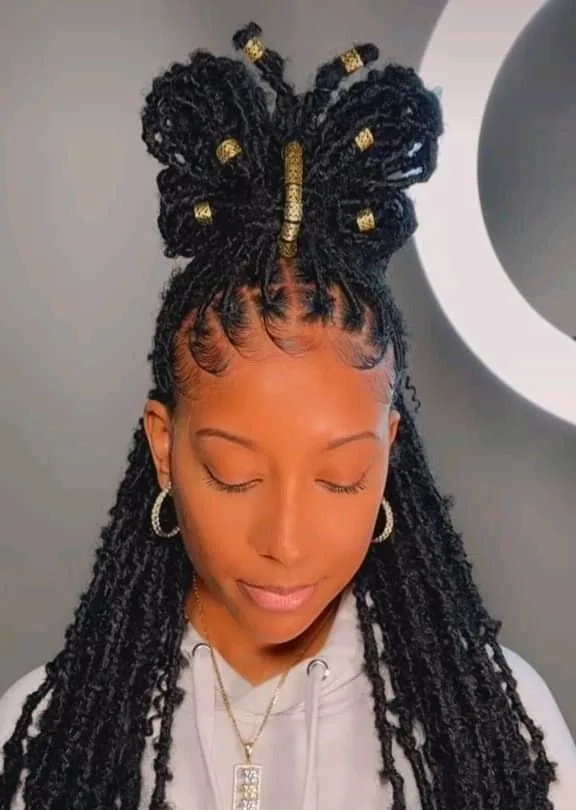
A loc bow half-up style turns a section of the locs into a defined bow at the back of the head while the remaining locs fall freely.
The bow becomes the focal point of the hairstyle, creating a playful but polished bridal look without requiring the entire head of locs to be pinned up.
Best for:
Medium-to-long locs with enough length and flexibility to form and secure the bow.
Finer locs can create a more delicate bow, while thicker locs produce a fuller shape.
Styling Tip:
Place the bow at the back of the head rather than directly on top of the crown, and secure its center firmly so the loops stay distinct.
Keep the loose locs underneath relatively smooth to prevent the bow from competing with the rest of the hairstyle.
Wedding aesthetic:
Romantic, whimsical, modern, garden, and intimate weddings.
12. Braided Loc Halo
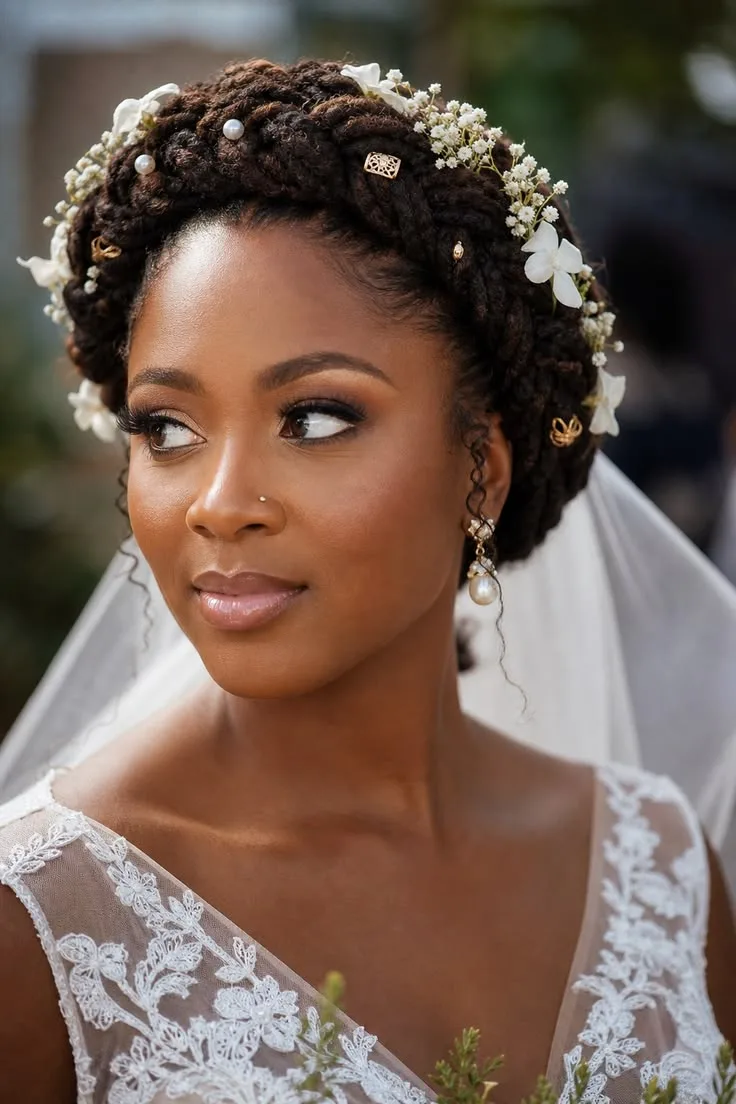
A braided loc halo wraps a section of locs around the head in a continuous braid, creating a crown-like frame while leaving the rest of the locs loose or gathered behind it.
The braided structure keeps the hairstyle visually defined while still allowing the natural length of the locs to show.
Best for:
Medium-to-long locs, including microlocs and Sisterlocks, which can be braided into a finer, more detailed halo.
Styling Tip:
Keep the braid close to the hairline without pulling it tightly against the edges.
Anchor it securely at the back where the ends meet, then loosen the braid slightly for a softer bridal finish and better comfort.
Wedding aesthetic:
Romantic, boho, garden, rustic, traditional, and outdoor weddings.
13. Crown Braid With Flowing Locs
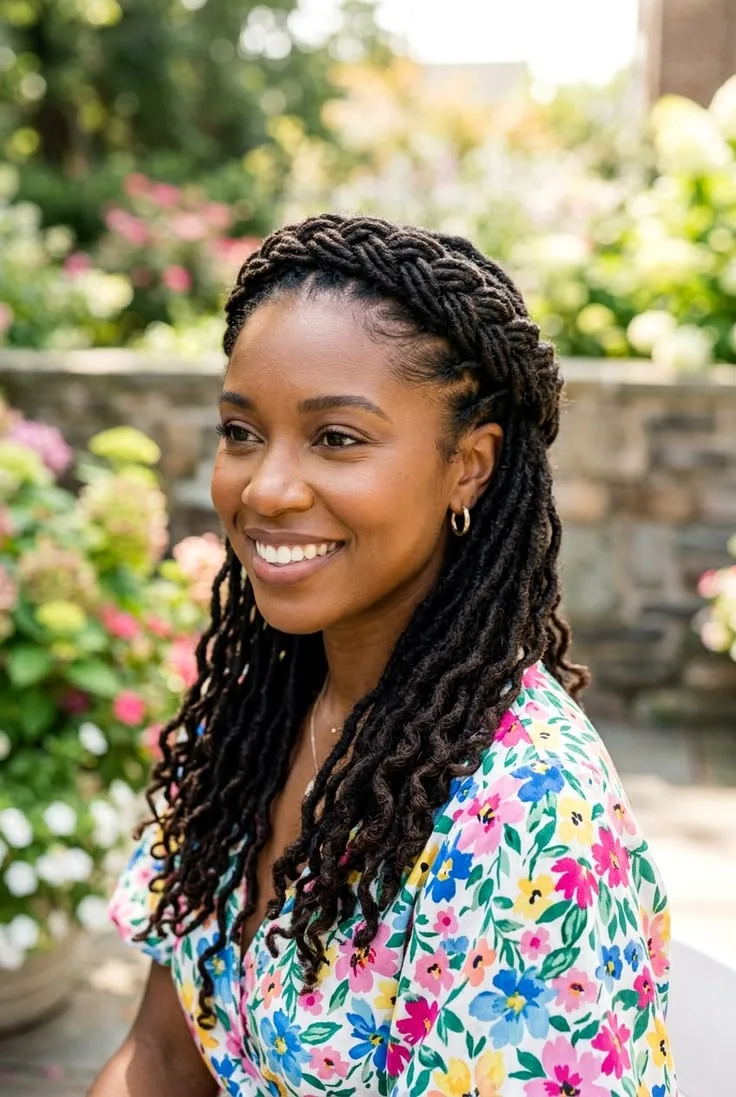
A crown braid with flowing locs combines a prominent braid that travels across the top or back of the head with locs left loose beneath it.
Unlike a full halo, the braid can sit more toward the crown, creating a distinct braided feature while preserving plenty of length and movement through the rest of the hairstyle.
Best for:
Medium-to-long locs, with longer locs providing more dramatic length beneath the braid.
Microlocs can also be incorporated for a finer, more intricate crown.
Styling Tip:
Keep the braid slightly raised from the hairline and let the loose locs fall naturally behind it.
This creates separation between the braided crown and the flowing length, so both elements remain visible rather than blending into one shape.
Wedding aesthetic: Romantic, boho, garden, rustic, destination, and traditional weddings.
14. Fishtail Loc Braid
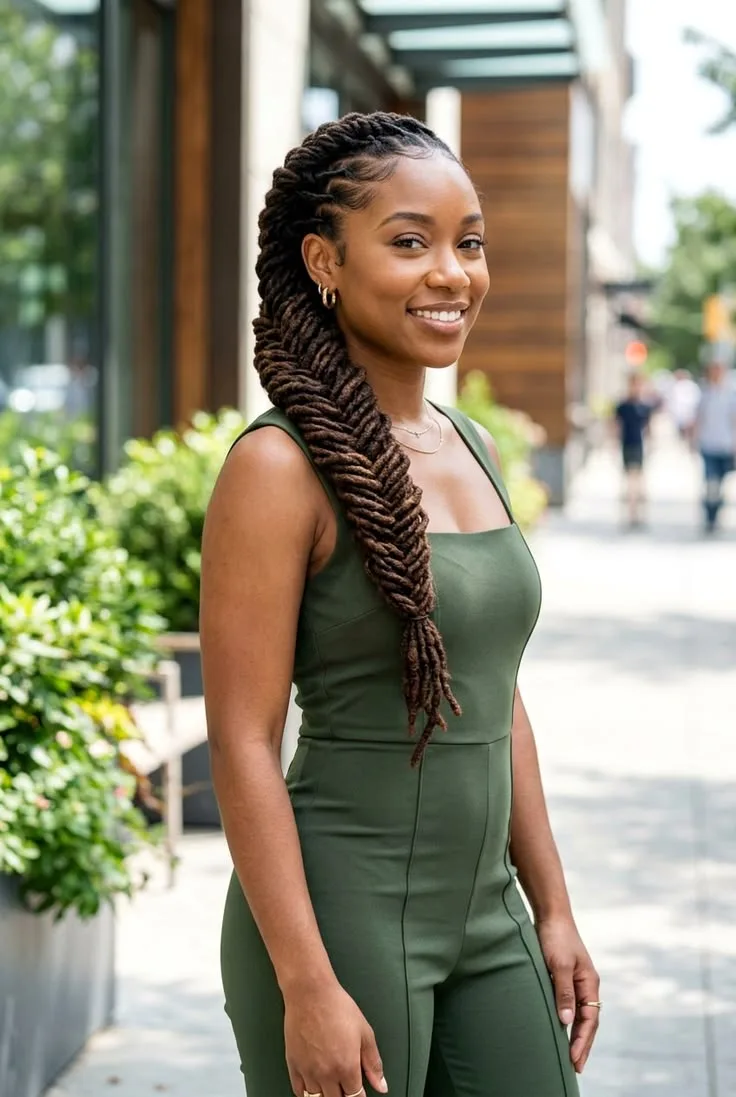
A fishtail loc braid creates a distinctive woven pattern by crossing smaller sections of locs over one another, producing the recognizable narrow, textured shape of a fishtail braid.
It can be worn down the back, swept over one shoulder, or incorporated into a larger bridal arrangement while keeping the locs visibly textured and dimensional.
Best for:
Medium to long locs. Longer, finer locs particularly microlocs or Sisterlocks can create more visible detail in the woven pattern, while thicker locs produce a bolder interpretation.
Styling Tip:
Keep the sections used for the braid relatively consistent in size.
Uneven sections can make the fishtail pattern difficult to distinguish, especially with thicker locs.
Secure the end firmly before gently loosening the braid for a softer finish.
Wedding aesthetic:
Boho, rustic, romantic, garden, destination, and traditional weddings.
15. Rope-Twist Loc Braid
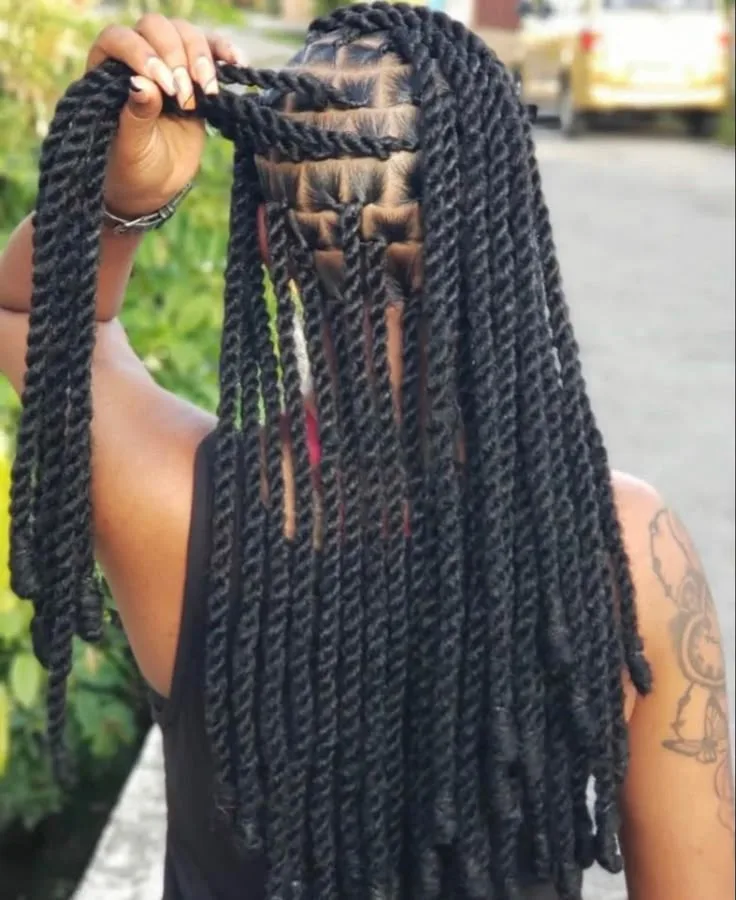
A rope-twist loc braid creates a bold, spiraling effect by dividing the locs into sections and twisting them around one another.
The result has a smooth, rope like appearance that can be worn down the back, swept over one shoulder, or incorporated into an updo.
Best for:
Medium to long locs, particularly medium-to-thick locs that give the twists enough volume to show their spiral structure.
Longer locs can create a more dramatic, elongated braid.
Styling Tip:
Keep the tension consistent from the top of the braid to the ends.
If the twists loosen unevenly, the rope effect can become less defined, so secure each section as you work downward before finishing the ends.
Wedding aesthetic:
Modern, boho, rustic, traditional, and destination weddings.
16. Intricate Microloc Braided Updo
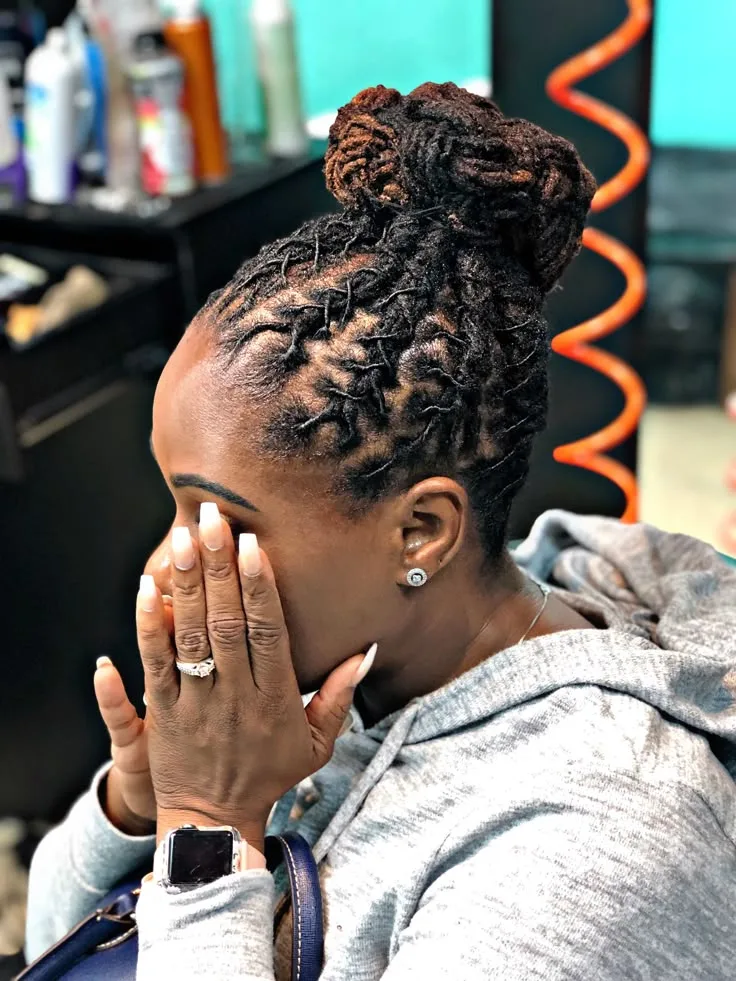
An intricate microloc braided updo combines multiple fine locs into detailed braids before arranging them into a structured updo.
The smaller scale of microlocs makes it possible to create more elaborate patterns, overlapping sections, and precise shapes than are typically possible with thicker locs.
Best for:
Microlocs and Sisterlocks, particularly medium-to-long lengths that provide enough material for both braiding and building the updo.
Styling Tip:
Have the stylist map out the braid pattern and final shape before securing the sections.
With many small locs involved, planning the structure first helps distribute the weight evenly and prevents individual braids from becoming unnecessarily tight.
Wedding aesthetic:
Classic, sophisticated, modern, traditional, cultural, and formal weddings.
You may also like:
How to Start Locs on Short Hair: A Beautiful Beginner’s Guide to Your Loc Journey
30 Stunning Bridal Locs Hairstyles for Black Women: Your Wedding Day Inspiration
17. Side Loc Ponytail
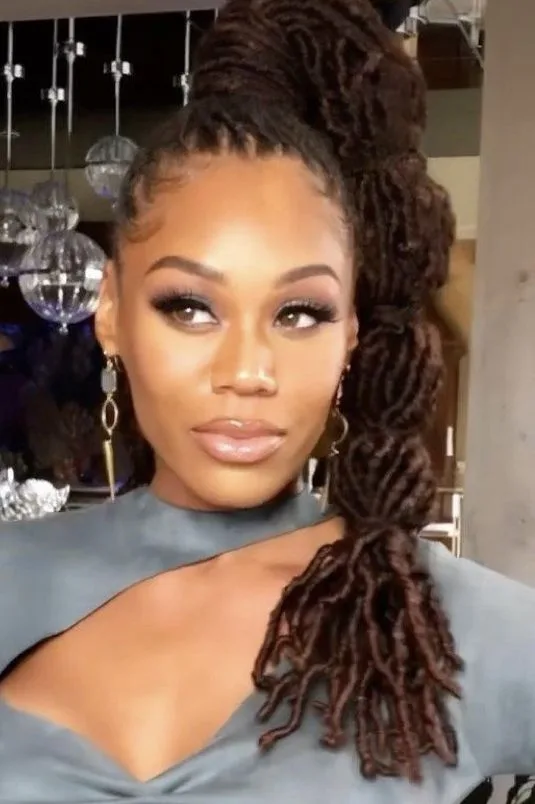
A side loc ponytail gathers the locs to one side of the head, creating an asymmetrical ponytail that falls over one shoulder.
The placement gives a classic ponytail a more romantic, directional shape while keeping the locs long and visible.
Best for:
Medium-to-long locs. Longer locs create a fuller sweep over the shoulder, while medium-length locs can form a more compact side ponytail.
Styling Tip:
Anchor the ponytail slightly behind the opposite ear rather than pulling it directly from the side of the head.
This creates a cleaner diagonal line across the back and helps distribute the weight of the locs more comfortably.
Wedding aesthetic:
Romantic, glamorous, garden, boho, and destination weddings.
18. High Loc Ponytail
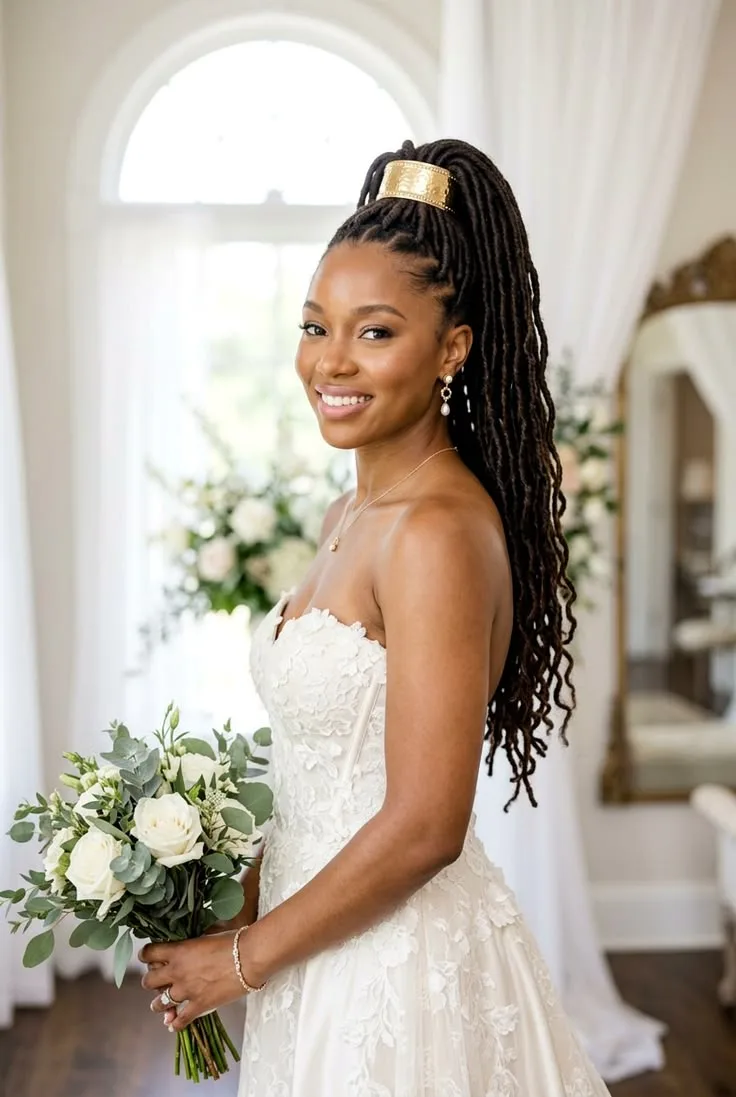
A high loc ponytail gathers the locs at or just below the crown, creating a lifted silhouette with the length cascading behind the head.
It keeps the overall look sleek and uncomplicated while allowing the locs themselves to provide the drama through their length, volume, and natural texture.
Best for:
Medium-to-long locs, with longer and denser locs creating a fuller, more dramatic ponytail.
It can also work beautifully with microlocs when gathered into a voluminous tail.
Styling Tip:
Use a secure, loc-friendly base at the crown and distribute the gathered locs evenly around it.
Avoid relying on a single tight elastic to carry the weight of dense locs; a properly anchored base helps the ponytail stay lifted without unnecessary tension.
Wedding aesthetic:
Modern, minimalist, glamorous, contemporary, and formal weddings.
19. Low Wrapped Loc Ponytail
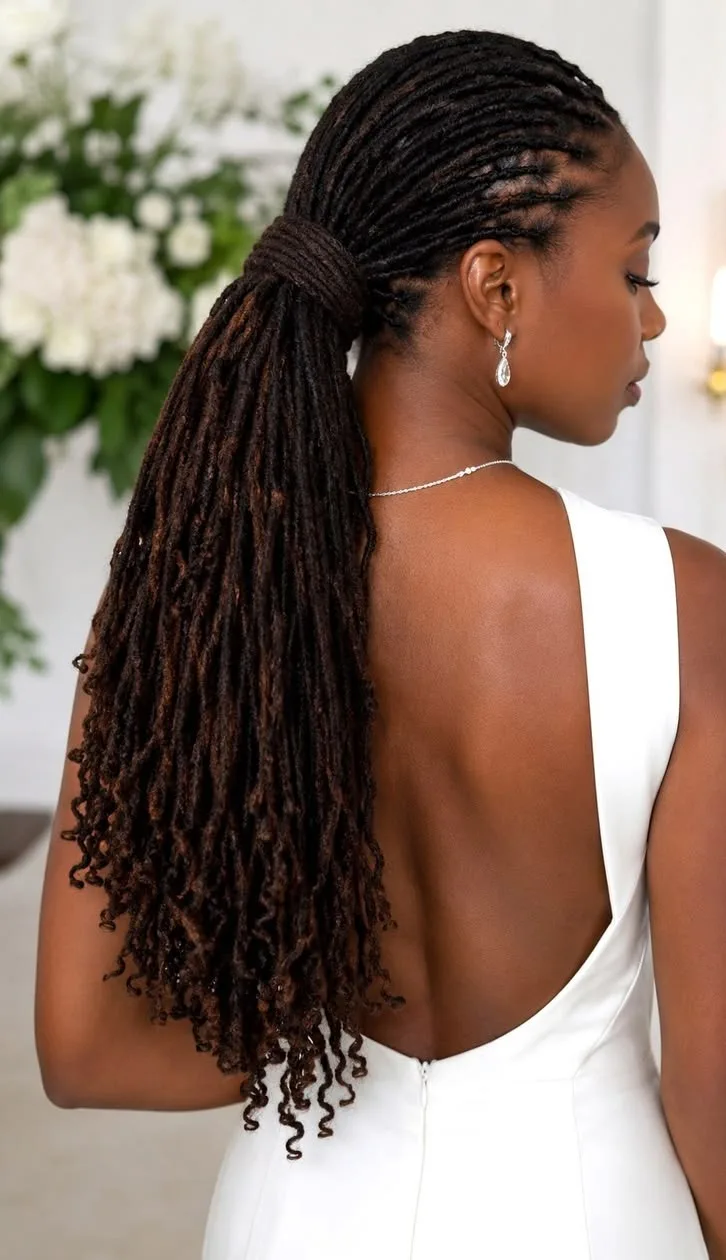
A low wrapped loc ponytail gathers the locs at the nape of the neck for a relaxed, polished silhouette.
One or more locs can be wrapped around the base of the ponytail to conceal the securing method, giving the style a clean finish without taking away from the natural texture and length of the locs.
Best for:
Medium-to-long locs. Longer locs provide enough length for a fuller ponytail and for wrapping a loc securely around the base.
Styling Tip:
Keep the ponytail close to the nape but not so low that it rests directly against the neckline.
Positioning it slightly above the base of the neck gives the wrapped detail room to show and prevents the locs from competing with the back of the dress.
Wedding aesthetic:
Classic, minimalist, romantic, traditional, and formal weddings.
20. Loc Bubble Ponytail
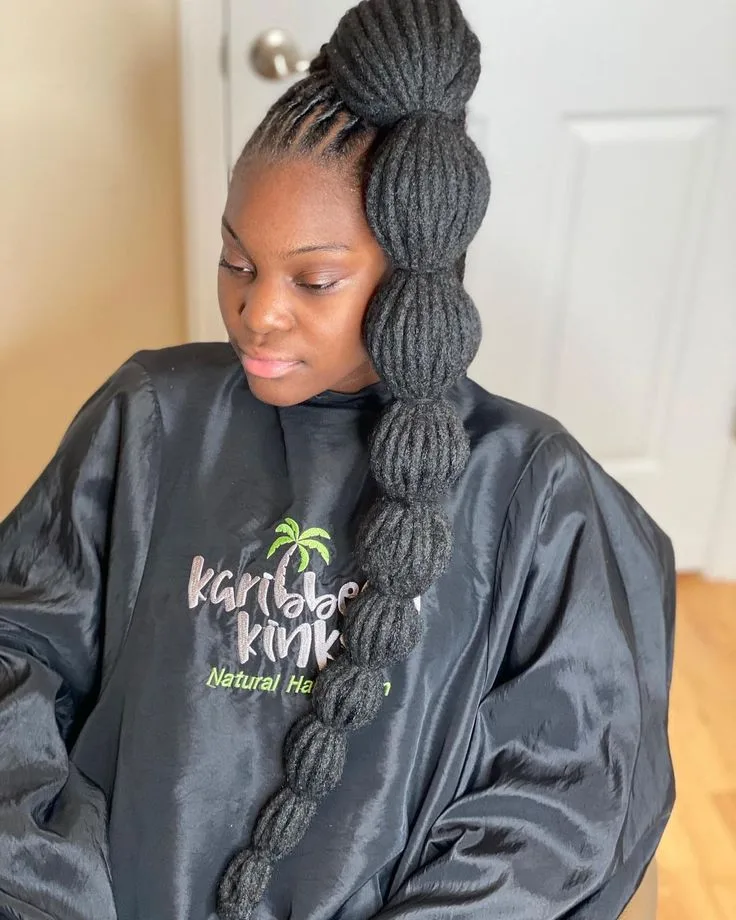
A loc bubble ponytail divides a gathered ponytail into several rounded sections, creating a series of “bubbles” along the length.
Each section is gently secured at intervals, giving the locs a sculptural, segmented appearance while keeping the overall hairstyle playful and polished.
Best for:
Medium-to-long locs, especially locs with enough length to create several distinct sections.
Longer locs allow for more bubbles, while shorter lengths can work with two or three larger sections.
Styling Tip:
Space the securing points evenly and keep each bubble similar in size.
For thicker locs, use wider sections and fewer bubbles so the hairstyle doesn’t become overly bulky or place excessive weight along the ponytail.
Wedding aesthetic:
Modern, contemporary, playful, editorial, and glamorous weddings.
21. Pinned Short Loc Sculpt
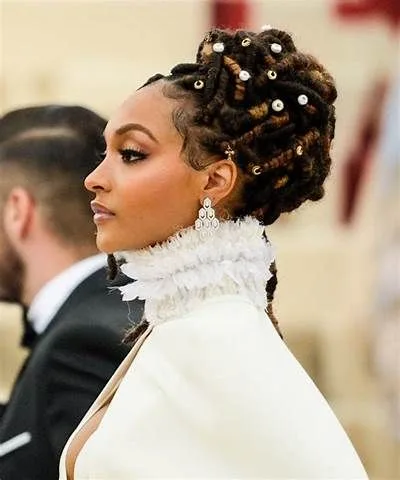
A pinned short loc sculpt arranges shorter locs into a deliberately shaped style using strategic pinning rather than relying on enough length for a conventional bun or ponytail.
The locs can be swept upward, curved around the head, or layered into a compact sculptural silhouette, making the most of shorter lengths.
Best for:
Short locs and shorter microlocs that cannot easily be gathered into larger updos.
The style works particularly well when the locs have enough density to create visible shape and texture.
Styling Tip:
Build the shape in small sections and secure each section close to its base rather than forcing the locs into one large arrangement.
This gives the style better stability and helps prevent excess pulling at the roots.
Wedding aesthetic:
Modern, minimalist, editorial, sophisticated, and intimate weddings.
22. Short Loc Side Sweep
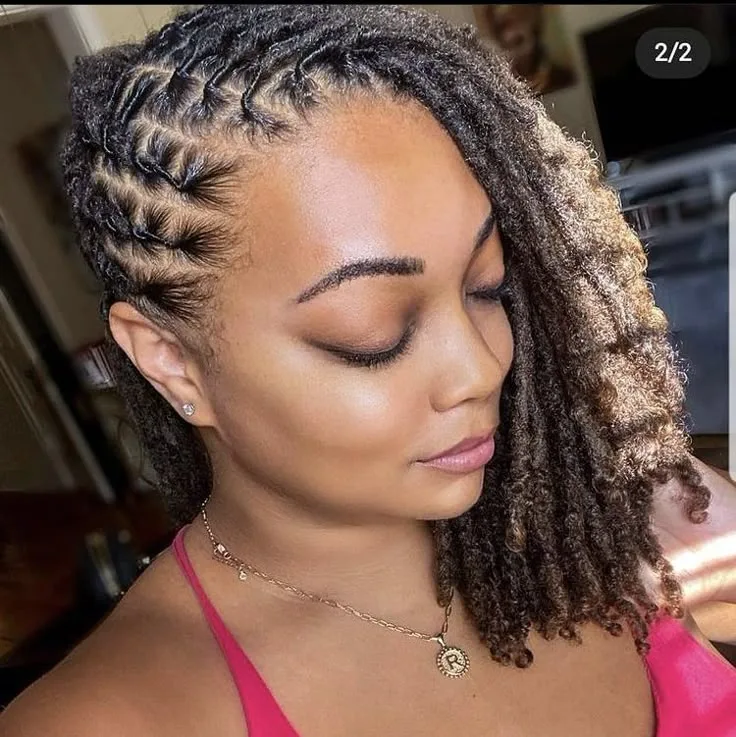
A short loc side sweep gathers the locs toward one side of the head, creating an asymmetrical style that frames the face while keeping the shorter length visible.
The locs can be shaped close to the head for a sleek finish or given more lift and texture for a softer, more dimensional look.
Best for:
Short locs and short-to-medium microlocs that may not have enough length for a ponytail or full updo.
It works particularly well when the locs have enough density to hold a defined side shape.
Styling Tip:
Create the side part slightly deeper than your everyday part and sweep the locs diagonally across the head rather than simply pushing them sideways.
Secure the heavier side in small sections so the style holds its shape without putting too much tension on one area.
Wedding aesthetic:
Modern, minimalist, romantic, vintage, and intimate weddings.
23. Loc Curl Updo With Face Framing Pieces
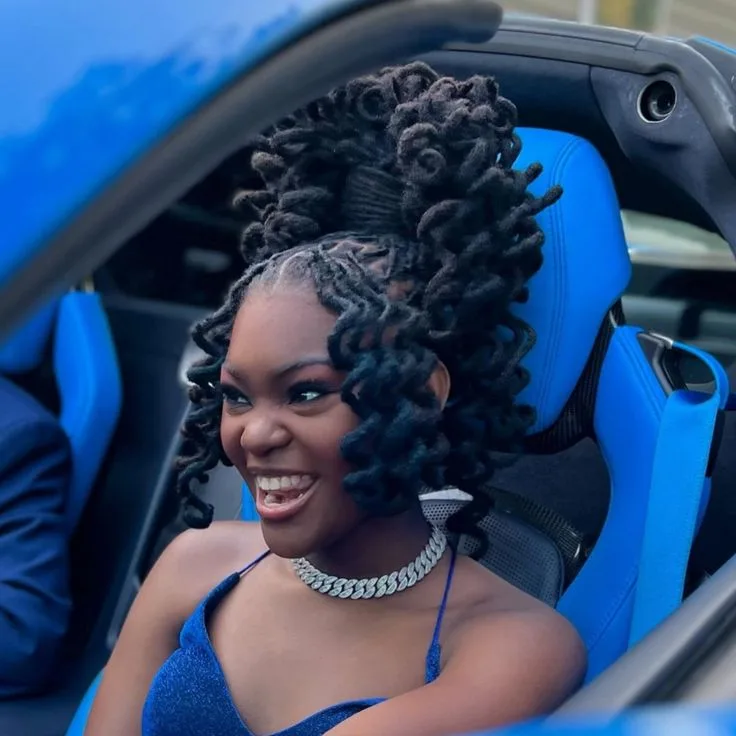
A loc curl updo gathers most of the locs into an elevated or pinned-up style while leaving a few curled locs around the face.
The contrast between the structured updo and soft, defined curls creates a romantic frame without making the hairstyle feel overly formal or rigid.
Best for:
Medium-to-long locs, particularly locs with enough length to form both the updo and defined face framing curls.
Styling Tip:
Keep the face framing pieces intentional and relatively narrow rather than leaving large sections loose.
Curl them away from the face and position them around the cheekbones or jawline so they soften the updo without obscuring the facial features.
Wedding aesthetic:
Romantic, classic, glamorous, garden, and formal weddings.
24. Double-Bun Half-Up Locs
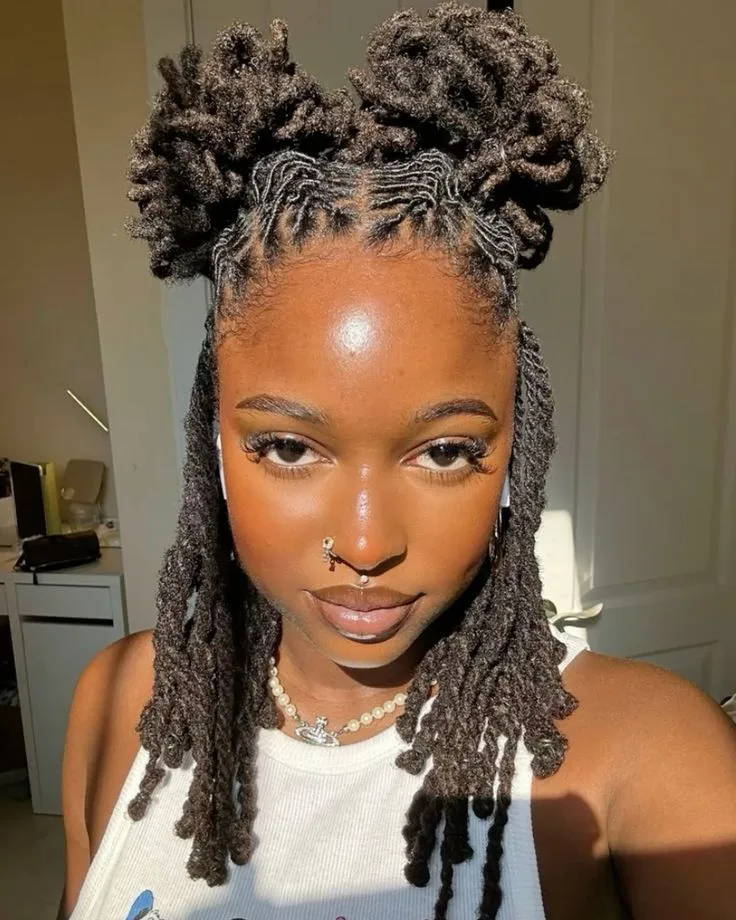
A double-bun half-up loc style divides the upper section of the locs into two separate buns, positioned symmetrically on either side of the crown or upper back of the head.
The remaining locs are left loose, balancing the playful double-bun detail with flowing length underneath.
Best for:
Medium-to-long locs with enough length to form two secure buns.
Medium-density locs can create smaller, defined buns, while longer or fuller locs produce a more substantial silhouette.
Styling Tip:
Keep the two buns balanced in size and height, but avoid placing them directly on top of the head where they can feel overly heavy.
Positioning them slightly toward the back creates a more refined half-up silhouette while leaving the loose locs free to fall naturally.
Wedding aesthetic:
Modern, whimsical, playful, boho, and garden weddings.
25. Loc Crown
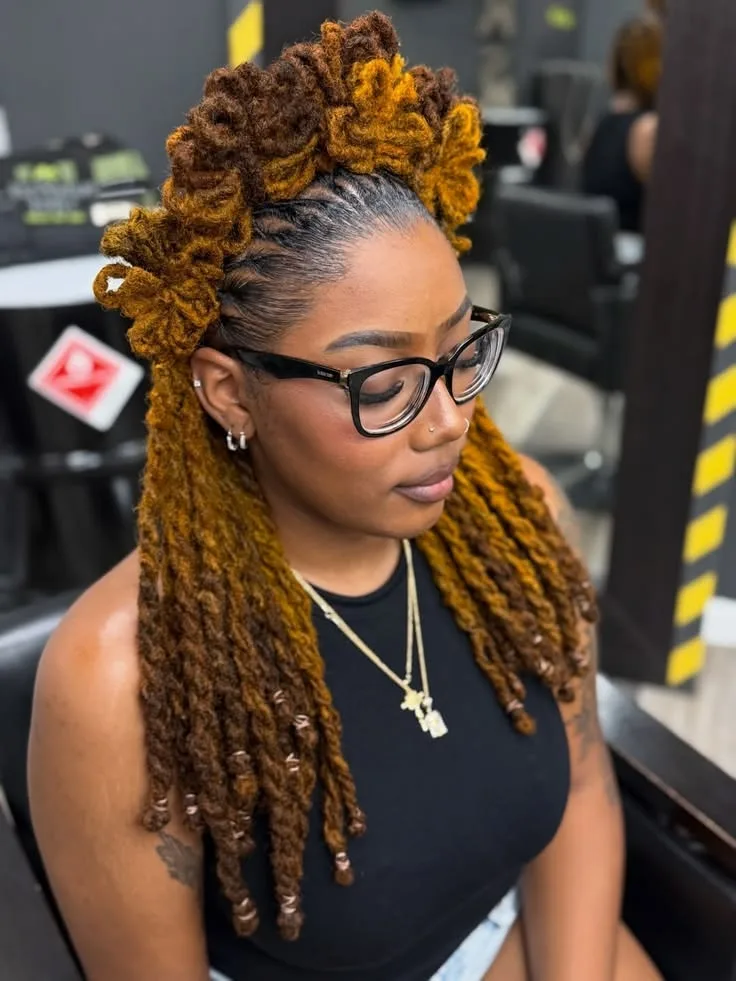
A loc crown creates a crown-like arrangement of locs around the top or perimeter of the head, giving the hairstyle a regal, structured silhouette.
The remaining locs can be left flowing down the back or gathered into a compact finish, depending on the desired shape.
Unlike a braided crown, this version relies on the locs themselves being twisted, wrapped, or pinned into the crown structure.
Best for:
Medium-to-long locs, with longer locs offering more flexibility for wrapping and securing the crown.
Microlocs and Sisterlocks can also create a more intricate, detailed crown.
Styling Tip:
Build the crown in sections rather than pulling all the locs tightly into one continuous ring.
This allows the stylist to control the shape and distribute the weight evenly while keeping the crown defined.
Wedding aesthetic:
Regal, traditional, romantic, formal, boho, and cultural weddings.
Best Bridal Loc Styles by Loc Length
Your loc length can influence which bridal hairstyles are practical, how much structure you can create, and how much styling freedom you have.
Short locs can be shaped into sleek, sculptural looks, while longer locs offer more options for braids, buns, ponytails, and flowing styles.
Microlocs and Sisterlocks can also be particularly versatile for intricate designs.
1.Short Locs
Short locs don’t need extra length to create a beautiful bridal look.
Styles that work with the existing length and texture:
such as the Short Loc Side Sweep, Short Loc Pinned Updo, and Vintage Loc Finger Waves.
Can create polished silhouettes without forcing the locs into styles that require more length.
2.Medium-Length Locs
Medium-length locs offer a balance between structure and movement.
Depending on their thickness and density, they can work well for styles such as the Sculpted Loc Chignon, Loc Ballerina Bun, Loc Fauxhawk, Curled Locs Half-Up, and Side Loc Ponytail.
3.Long Locs
Long locs give you more length to work with, making elaborate braids, updos, ponytails, and flowing styles possible.
Options from our list include the French Roll Loc Updo, High Loc Ponytail, Low Wrapped Loc Ponytail, Loc Bubble Ponytail, Fishtail Loc Braid, and Loc Crown.
However, longer and denser locs can also add significant weight, so the style needs to be secured properly and remain comfortable throughout the wedding.
4.Microlocs and Sisterlocks
Microlocs and Sisterlocks can offer plenty of flexibility for detailed bridal styling because their smaller size makes intricate braids, twists, and patterns possible.
Styles such as the Intricate Microloc Braided Updo, Fishtail Loc Braid, Rope-Twist Loc Braid, and Braided Loc Halo can showcase that detail particularly well.
How to Wear a Veil With Locs
Wearing a veil with locs is absolutely possible, you just need to consider where the veil will attach and how its weight will interact with the hairstyle.
The best placement depends on the structure of your bridal loc style, the length of your veil, and how much of the hairstyle you want to keep visible.
1. Choose the Right Veil Placement
A veil can sit at the crown, behind the hairstyle, or lower toward the back of the head.
For an updo, placing the veil behind or just beneath the style can keep the hairstyle visible while still giving you the traditional bridal effect.
With flowing locs, a crown or upper-back attachment can provide a secure base without disrupting the loose length.
2. Work With Your Hairstyle
The veil should complement the structure of your loc style rather than cover its defining details.
A heavily detailed braided crown, for example, may look better with a veil attached behind it, while a simple updo gives you more flexibility with placement.
3. Test the Attachment During Your Trial
Don’t wait until the wedding morning to find out whether your veil stays securely in place.
Have your stylist test the actual veil and attachment method during your bridal loc trial.
This also gives you a chance to check how easily the veil can be removed without disturbing the hairstyle.
4. Balance the Veil, Hairstyle, and Accessories
If your hairstyle already has substantial volume or intricate detailing, a simpler veil can prevent the overall look from becoming visually crowded.
Likewise, if you’re wearing a dramatic veil, keeping the hairstyle or accessories more restrained can allow each element to remain visible.
Bridal Loc Trial: What to Check Before the Wedding
A bridal loc trial is more than a chance to see whether you like the hairstyle.
It is an opportunity to make sure the style works with your locs, stays secure, and feels comfortable enough to wear through the ceremony, photos, and celebration.
1. Take Photos From Multiple Angles
Ask someone to take photos from the front, back, both sides, and slightly above.
A hairstyle can look perfect in the mirror but have a different silhouette in photographs, so checking multiple angles helps you spot anything that needs adjusting.
2. Test the Veil
Bring the actual veil you plan to wear, if possible.
Test where it will sit, whether the attachment feels secure, and how easily it can be removed without disturbing the hairstyle.
3. Test Your Accessories
Try the actual hair accessories during the trial rather than relying on a similar substitute.
This lets you see whether pins, combs, flowers, pearls, or other details complement the hairstyle without competing with its main shape.
4. Check Movement
Move your head naturally, sit down, stand up, turn from side to side, and walk around.
If you’ll be dancing or changing outfits, consider how the hairstyle behaves with those movements too.
5. Check Comfort and Tension
A bridal hairstyle may need to stay in place for several hours, so comfort matters.
Pay attention to excessive pulling, pressure, or heaviness during the trial.
If something feels uncomfortable during the trial, address it before the wedding rather than assuming you’ll get used to it.
6. Make Sure Your Stylist Understands Your Locs
Your stylist should know your actual loc type, length, thickness, density, and any limitations that affect styling.
Bring reference photos of the desired look and, if possible, show the stylist how your locs behave when they are loose and when they are gathered.
FAQs About Bridal Loc Styles
1. Can you wear locs with a wedding veil?
Yes. Locs can be worn with a wedding veil, whether they’re styled into an updo, braid, ponytail, or left flowing.
The key is choosing a secure attachment point that works with the hairstyle without putting unnecessary weight or tension on the locs.
2. Can locs styled for a formal wedding?
Absolutely. Locs can be shaped into highly polished updos, sculptural styles, elegant chignons, French rolls, and other formal silhouettes.
A wedding hairstyle doesn’t require locs to be straightened, covered, or otherwise changed to look sophisticated.
3. How early should I have a bridal loc trial?
It’s best to schedule your trial early enough to make changes if the first style isn’t quite right.
Ideally, bring your dress or neckline details, veil, and planned accessories or photos of them so you and your stylist can evaluate the complete look together.
4. What should I show my stylist before a bridal loc appointment?
Bring clear reference photos of the hairstyle you want, along with pictures showing your locs at their current length and thickness.
It also helps to communicate whether you’ll be wearing a veil, hair accessories, or multiple outfits so the hairstyle can be planned accordingly.
Conclusion
Your locs don’t need to be transformed to look bridal.
Whether you choose a sculpted updo, an intricate braid, a flowing style, or a simple side sweep, the right hairstyle is one that works with your locs and feels like you.
Consider your loc length, wedding style, dress, veil, and comfort when making your choice, and use your bridal trial to make sure everything works together.
Most importantly, let your locs remain part of what makes your wedding look uniquely yours.