Here’s everything You Need To Know About Transitioning from Relaxed Hair to Microlocs: Everything You Need to Know.
Something has shifted in you.
Maybe it happened slowly, a growing tiredness of the touch-ups, the chemicals, the waiting.
Or maybe it hit you all at once, one morning in the mirror.
You are done with the relaxer.
And the vision you keep returning to the one with the neat, full, versatile microlocs feels more and more like where you are supposed to go.
The problem is that you are not starting from natural hair. You are starting from relaxed hair.
And every guide you find seems to assume you are already there.
This guide does not make that assumption.
It is written specifically for you, the person sitting at the intersection of relaxed hair and a microloc dream, trying to figure out the honest path from one to the other.
You will learn why relaxed hair creates specific challenges for locking, the two routes you can take to transition, how to prepare your hair at every stage, and what to expect as your microlocs form and grow.
Most importantly, you will finish this guide Transitioning from Relaxed Hair to Microlocs knowing exactly what to do next.
Below you will find Transitioning from Relaxed Hair to Microlocs: Everything You Need to Know:
Transitioning from Relaxed Hair to Microlocs: Everything You Need to Know
1. Why You Cannot Simply Lock Relaxed Hair
What Relaxers Do to the Hair Structure
A relaxer does not just straighten the hair temporarily. It permanently changes the internal protein structure of the strand.
Specifically, it breaks the disulfide bonds that give natural hair its curl pattern and coil.
As a result, the strand becomes permanently straight at a chemical level not just at the surface.
Locs form because natural hair has a coil pattern that creates friction between strands.
That friction causes the hair to tangle, knot, and compress internally over time. Relaxed hair, however, lacks this coil structure.
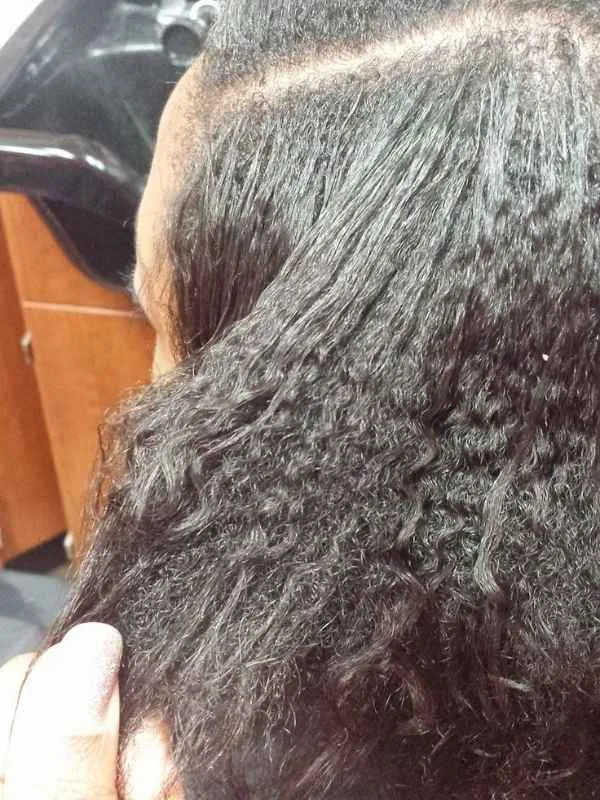
Consequently, relaxed strands do not grip each other the way natural strands do. They resist tangling. They resist locking. The very chemistry of a relaxer works against the locking process.
What Happens When You Try to Lock Relaxed Ends
It is technically possible to install microlocs on relaxed hair.
However, the relaxed sections will not lock at the same rate as the new natural growth.
As a result, you end up with locs that are tight and budding at the root but remain straight, limp, and unformed at the ends for months sometimes over a year.
Furthermore, relaxed ends are significantly more fragile than natural ends.
The chemical process weakens the strand’s tensile strength.
This article dives into How to Fix Thinning Locs at the Crown and Bring Your Locs Back to Life
Consequently, the repeated manipulation of retightening appointments stresses the already-compromised relaxed sections.
Over time, this leads to breakage at the demarcation line, the point where natural new growth meets the relaxed section.
That breakage point is one of the most frustrating experiences in any transition journey.
2. Your Two Options: Big Chop or Gradual Transition
The Big Chop
The big chop means cutting off all the relaxed hair at once and starting microlocs from your natural new growth.
It is the faster, cleaner option.
Consequently, there is no demarcation line to manage, no two different textures fighting each other, and no waiting for relaxed ends to eventually break off.
Furthermore, starting microlocs on a clean natural base means your locs form evenly from the very beginning.
Every section locks at the same rate. The budding process is consistent across the entire head.
For many women, the big chop also carries a significant emotional weight, it is a clear, definitive break from one chapter and the beginning of another.

That clarity is, for many people, part of the appeal.
The Gradual Transition
The gradual transition means growing out your natural hair alongside the relaxed ends before eventually trimming or cutting the relaxed sections away.
This approach takes significantly longer. However, it allows you to enter the microloc journey with more length from the start, which some people strongly prefer.
During a gradual transition, you can install protective styles to manage the two textures while your natural hair grows.
Additionally, you can begin trimming the relaxed ends progressively over several months rather than cutting everything at once.
For more insight How to Remove Lint from Locs Without Causing Damage: A Gentle Care Guide for Healthy, Clean Locs
As a result, the big chop happens incrementally rather than in a single session.
The tradeoff is time, a gradual transition to a clean natural base typically takes six to eighteen months, depending on how fast your hair grows and how much length you want to retain.
3. How Much Natural Hair You Need Before Installing Microlocs
This is one of the most common questions in any relaxer-to-microloc transition, and the answer is more nuanced than most guides acknowledge.
Microlocs can technically be installed on hair as short as two inches.
However, the shorter the hair, the more limited your method options become and the more frequently your early retightening appointments will need to happen.
For most textures, three to four inches of natural growth gives your loctician the most flexibility.
At this length, two-strand twists, interlocking, and finger coils are all viable starting methods.
Furthermore, the locs have enough initial length to hold their shape between appointments without unraveling completely after the first wash.
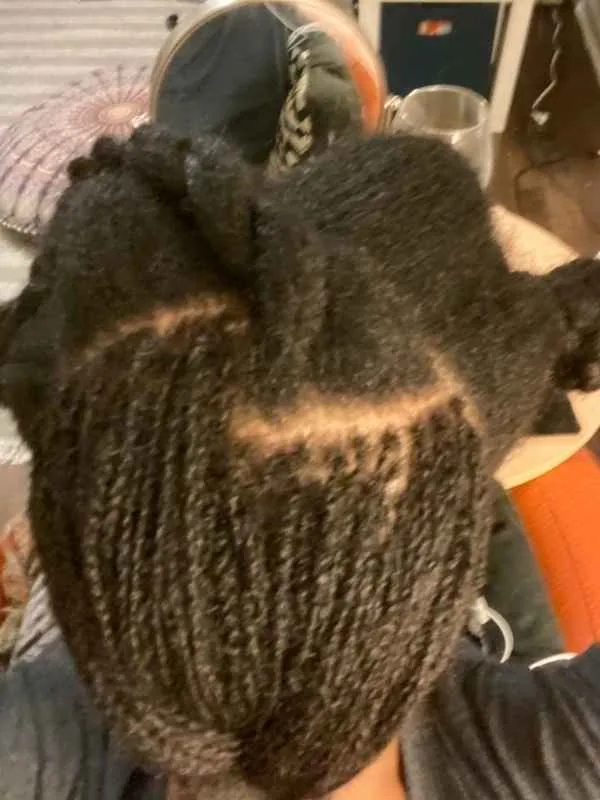
If you have done a big chop from a relaxed style, wait until your natural hair reaches at least two to three inches before installing.
This patience is not wasted time.
You may also like Best Grid Patterns for Small DIY Locs: How to Choose the Perfect One for Your Hair
Additionally, this growth window is the perfect period to strengthen your hair, address any scalp concerns, and build the healthy foundation your microlocs will grow from.
Starting on strong, healthy natural hair is always more valuable than starting sooner on compromised strands.
4. Preparing Your Hair During the Transition
Stop All Chemical Treatments Immediately
The moment you decide to transition to microlocs, stop all chemical relaxer applications.
This is non-negotiable.
Every additional relaxer application extends the transition period and adds more damaged hair that will eventually need to be removed.
Furthermore, it weakens the new natural growth that is forming, which is the very hair your microlocs will be built from.
Additionally, pause colour treatments if possible during the transition period.
Chemical dye weakens the hair shaft, particularly at the already-fragile demarcation line.
Therefore, the transition period is a time to let your hair grow and strengthen without any further chemical intervention.
Once your microlocs are fully established and mature, colour can be revisited with professional guidance.
Build a Strengthening Hair Care Routine

Your natural new growth needs consistent care during the transition to arrive at the installation point in the strongest possible condition.
Wash every one to two weeks using a gentle, sulphate-free shampoo.
Follow with a moisturising conditioner focused on the natural growth sections rather than the relaxed ends.
Furthermore, incorporate a protein treatment once a month.
The demarcation line is the weakest point on transitioning hair.
Protein treatments strengthen this junction and reduce the breakage that causes frustration and length loss during the transition.
Additionally, deep condition every two to three weeks to maintain elasticity in both the natural and relaxed sections.
Elasticity prevents the brittle snapping that transitioning hair is prone to under manipulation.
Handle the Demarcation Line with Extreme Care
The demarcation line is where your natural coiled growth meets the straight relaxed section.
This junction is the most fragile point on every strand during transition.
Consequently, any aggressive combing, manipulation, or tension at this point causes breakage.
If you are looking to understand Tension-Free Updos for Mature Locs: Protective Styles That Slay Without Pulling
Detangle gently with a wide-tooth comb, working from ends toward roots and never the reverse.
Moreover, avoid styles that require tight tension at the root during the transition period.
Protective styles box braids, twists, or loose updos are the most appropriate choices for managing both textures simultaneously.
They reduce daily manipulation while protecting the demarcation line from the stress that daily handling creates.
5. Choosing the Right Microloc Installation Method for Transitioning Hair
Why Method Matters More for Transitioning Hair
Natural hair can be started with almost any loc method and will eventually lock reliably because the coil structure does the work.
Transitioning hair does not have this advantage.
Therefore, the starting method needs to be chosen with more care, specifically to create a stable structure that survives the manipulation of early maintenance without unraveling.
Furthermore, some methods rely heavily on the natural coil to hold the initial shape.
Those methods underperform on hair that still has relaxed sections mixed into it.
The right method for a transitioning person is one that creates structural grip from the technique itself, rather than depending entirely on the hair’s natural curl to provide that grip.
Interlocking

Interlocking is the most reliable method for starting microlocs on transitioning or recently big-chopped hair.
The latch hook or interlocking tool pulls the ends of each section through the root, creating a mechanical knot that holds without depending on curl pattern.
Consequently, even sections where some residual relaxed texture is present can be started cleanly with interlocking.
Additionally, interlocking is the most durable maintenance method for active people, people who wash frequently, and people who live in humid climates.
The interlocked knot holds through water, sweat, and daily movement better than any twist or coil method.
For transitioning hair specifically, that durability during the vulnerable early months is a significant advantage.
Two-Strand Twists
Two-strand twists are the most popular microloc starting method overall and work well for transitioning hair provided the natural growth section is at least three inches long.
The twist creates a defined shape that holds reasonably well through the early weeks.
However, twists are more vulnerable to unraveling at the ends on transitioning hair, because the relaxed tips lack the coil that helps the twist stay closed.
Here’s a closer look at How to Hide Starter Loc Frizz for Interviews (Without Damaging Your Locs)
Therefore, if you choose two-strand twists on transitioning hair, be prepared to re-twist loose ends after washing in the first few months.
Additionally, transitioning to interlocking maintenance as the natural growth increases is a common and effective approach start with twists for the aesthetic, then switch to interlocking to maintain durability as the locs develop.
Braids
Starting microlocs with small braids is a particularly strong option for transitioning hair. Braids are self-holding structures.
They do not depend on curl pattern to maintain their shape.
As a result, the braided sections remain intact through washing and early maintenance regardless of how much relaxed texture remains in the strand.
Moreover, braid starter locs on transitioning hair create a neat, uniform starting point even before any visible locking has occurred.
The braided pattern gradually disappears as the loc matures and the hair internally tangles and swells.
By the time the braid pattern is fully gone, the natural growth has usually taken over entirely and the relaxed ends have been trimmed away through scheduled cutting sessions.
6. The Role of a Professional Loctician in Your Transition
Starting microlocs on transitioning hair is not the same as starting them on fully natural hair.
There are texture differences to manage, fragility at the demarcation line to account for, and section sizing decisions that have long-term consequences.
For all of these reasons, working with an experienced loctician for at least the installation and the first two to three maintenance appointments is strongly recommended.
A skilled loctician assesses your specific demarcation line before installing.
They advise on how much of the relaxed ends need to be removed before installation. Which method will suit your texture and lifestyle, and how to pace the trimming of remaining relaxed sections as your natural growth develops.

Furthermore, professional installation on transitioning hair produces a significantly more even, durable starting point than a home installation on hair that is managing two different textures simultaneously.
You may also find helpful How to Reattach a Broken Loc at Home (Without Losing Your Progress)
Additionally, a good loctician becomes a partner in your transition, not just a service provider.
They track the progress of your natural growth, advise when it is time to trim the remaining relaxed ends, and adjust the maintenance approach as your texture changes over the first year.
Choosing the right loctician for a relaxed-to-microloc transition is therefore one of the most important decisions of the entire journey.
7. Trimming the Relaxed Ends: The Schedule That Works
The relaxed ends will not lock.
Therefore, they need to come off eventually.
The question is when and how quickly.
The answer depends on your personal comfort with short hair, how quickly your natural hair grows, and how much length you want to carry into the loc journey.
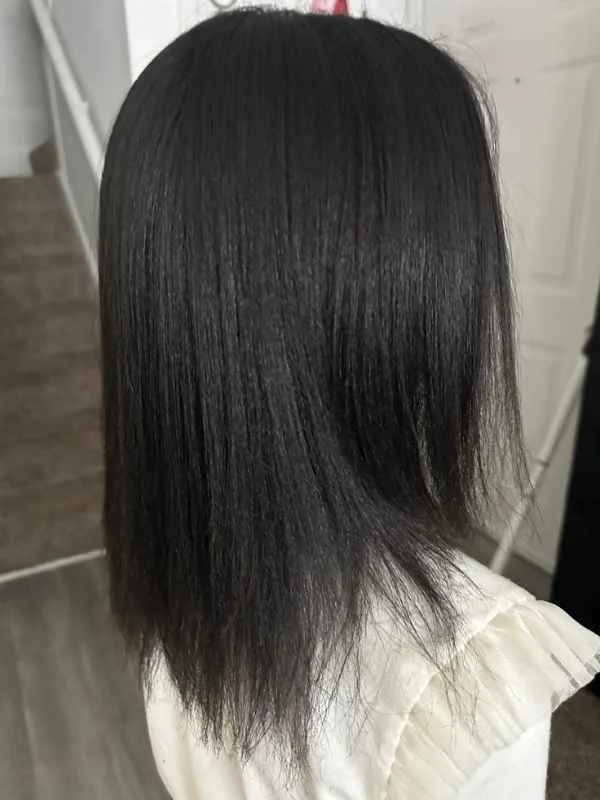
The most common approach is progressive trimming, scheduling small trims every two to three months during the first year of microloc growth.
Each trim removes a portion of the relaxed ends while the natural growth above it continues to mature.
As a result, the transition happens gradually and the loc length is never dramatically short at any single moment.
Furthermore, some people choose to do a final cut at around six months, once their natural growth is substantial enough that removing the remaining relaxed ends does not leave them with extremely short locs.
This combined approach, small trims early, then a decisive final cut is one of the most psychologically manageable ways to complete the transition.
Consequently, you are never making one enormous cut. Instead, you are making several smaller, less stressful decisions that cumulatively achieve the same outcome.
8. What to Expect in the First Year of Your Microlocs
Months One to Three
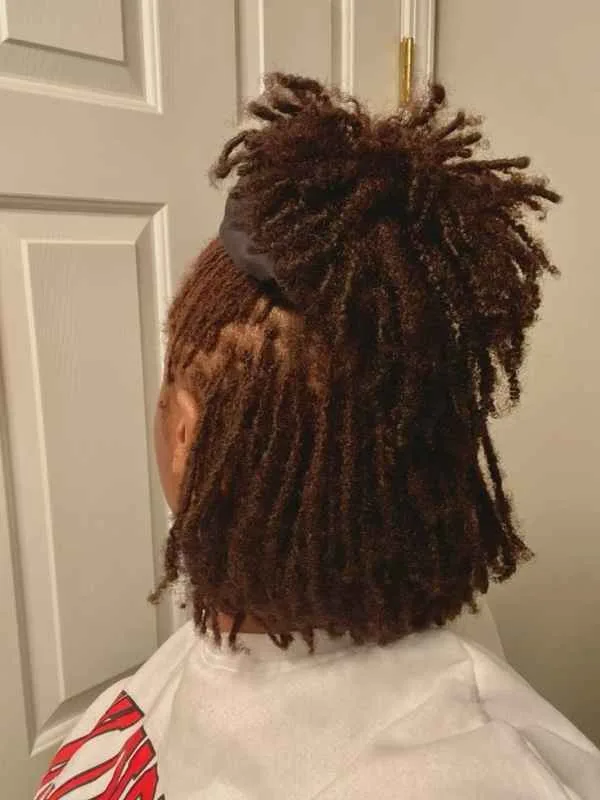
The first three months are the most challenging, particularly for transitioning hair.
Your locs are new. Some may loosen after washing.
The natural growth may look frizzy while the relaxed ends remain straight.
This contrast can feel discouraging.
However, it is a completely normal part of the process and not a sign that anything is wrong.
Furthermore, the natural growth above the relaxed ends is beginning to knot internally.
Even when the loc does not look dramatically different from the outside, significant locking activity is happening inside.
Consequently, trust the process during these early months and resist the urge to over-manipulate or apply extra product to make the locs look more formed than they currently are.
Months Three to Six
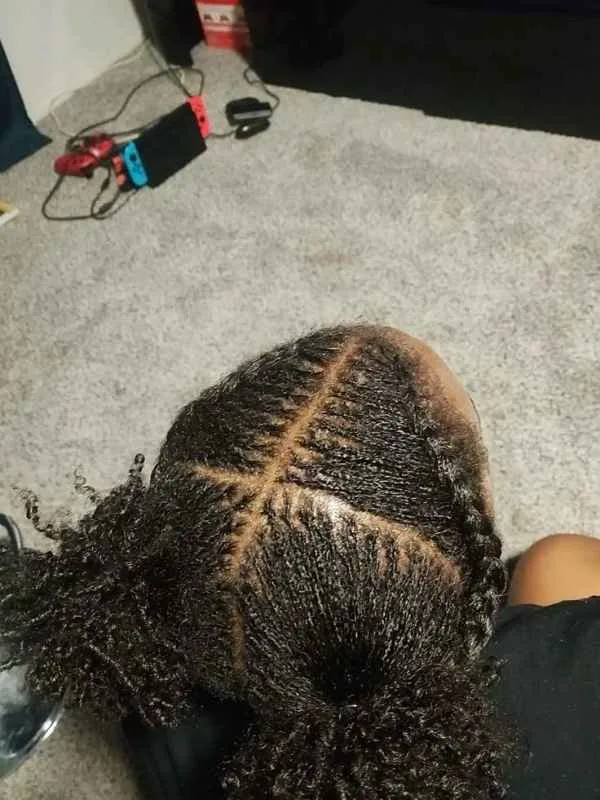
By the three-month mark, most people with type 4 textures begin to see visible budding, the swelling that signals active internal locking.
The natural sections start to feel denser.
The ends may still show relaxed texture, but the upper portions of the locs are clearly developing.
Additionally, this period is when most people experience the most itching and scalp adjustment.
This is also the period when many people schedule their first significant trim of the relaxed ends.
With three to four months of natural growth above the demarcation line, there is typically enough natural loc development to trim without leaving the locs feeling alarmingly short.
Furthermore, removing the relaxed ends at this stage allows the remaining natural sections to begin locking more uniformly.
You may enjoy reading How to Fix Thinning Locs at the Crown and Bring Your Locs Back to Life
Months Six to Twelve
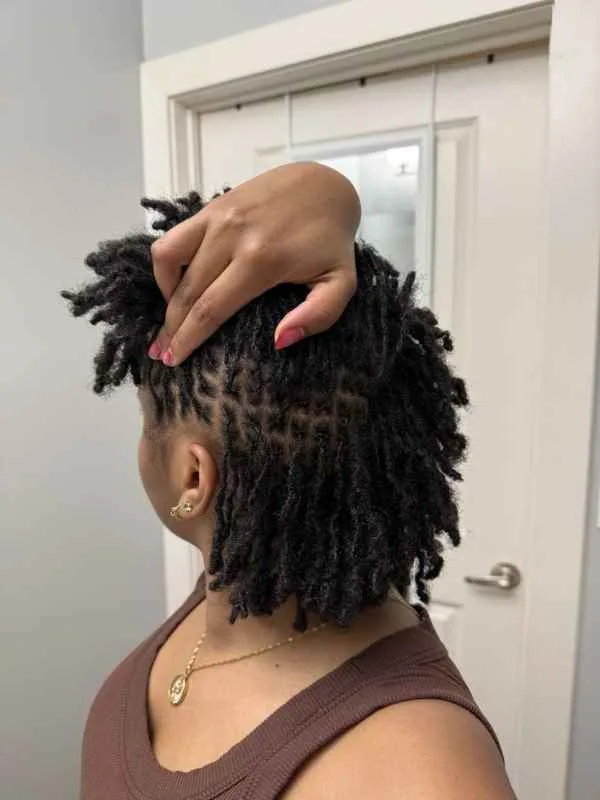
By six months, most transitioning microloc wearers have completed or nearly completed the removal of relaxed ends.
The locs are now locking consistently from root to tip on fully natural hair.
Additionally, the overall shape of each loc becomes more defined.
The frizz that felt overwhelming in month one now reads as the natural texture of an actively maturing loc.
Moreover, styling options begin to expand significantly in this window.
Buns, half-up styles, and simple gathered updos become more manageable as the locs develop more body and length.
By the twelve-month mark, many people feel the most significant shift in confidence, the locs are clearly maturing, the difficult transition period is behind them, and the beauty they originally imagined is starting to become visible.
9. Bad Ideas When Transitioning from Relaxed Hair to Microlocs
Continuing to relax the hair while trying to grow it out for locs. Every relaxer application adds more chemically processed hair that cannot lock.
Consequently, you extend the transition period indefinitely and keep introducing new fragile demarcation lines with every touch-up.
The decision to transition means the relaxer ends the day you make that decision.
There is no partial commitment to this process.
Installing microlocs without addressing the health of the transitioning hair first. Locs lock in whatever condition the hair is in at installation.
Damage, dryness, and breakage that exist at the start become part of the loc structure. Therefore, the pre-installation strengthening period is not optional.
Healthy transitioning hair produces significantly stronger, more durable microlocs than compromised hair does.
Skipping the loctician consultation to save money on installation.
Transitioning hair requires more expertise than natural hair.
The demarcation line, the texture differences between sections, and the section sizing decisions all need professional assessment.
Moreover, a poor installation on transitioning hair creates problems uneven locs, early breakage, merging sections that are far more expensive to correct than the initial consultation would have cost.
Save this post for later She’s a Catch: Bachelorette Party Ideas to Celebrate the Bride-to-Be
Keeping the relaxed ends indefinitely rather than trimming progressively. Some people hold onto the relaxed ends because they represent length they are afraid to lose.!!1】
Comparing your transition timeline to someone who started from natural hair.
A person starting microlocs from fully natural type 4 hair has a fundamentally different starting point than someone transitioning from a relaxer.
Their budding timeline, their locking rate, and their early styling options are all different.
Comparing your month three to their month three creates unrealistic expectations that cause unnecessary discouragement. Your journey has its own timeline.
10. Caring for Your Scalp and Locs When Transitioning from Relaxed Hair to Microlocs
The transition period places specific demands on both the scalp and the hair.
The scalp is adjusting from the chemical environment of regular relaxer applications to the natural sebum balance of a chemical-free routine.
As a result, it is common to experience increased dryness, itching, or flaking in the first few months after stopping relaxers.
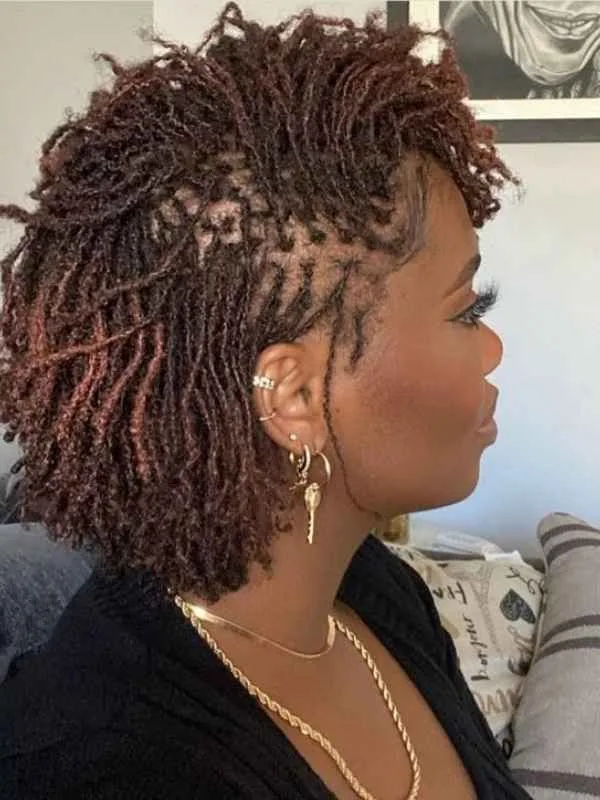
Address scalp dryness with a lightweight natural oil applied directly to the scalp jojoba, argan, or sweet almond oil work well.
Avoid heavy products during the transition period.
They create buildup in the new locs before the locking process is established.
Furthermore, wash on a schedule of every one to two weeks rather than daily.
Daily washing on new microlocs during the transition period disturbs the early locking structure before it has time to stabilise.
Additionally, protect your microlocs and transitioning hair at night with a satin bonnet every single night.
Cotton pillowcases create friction that pulls on the early locs, disrupts the locking pattern at the roots, and dries out the hair that is trying to build its natural moisture balance after years of chemical processing.
A satin bonnet is one of the simplest and most immediately impactful changes you can make during the transition.
Final Words on Transitioning from Relaxed Hair to Microlocs
Transitioning from relaxed hair to microlocs is not the most straightforward journey. But it is absolutely one of the most rewarding ones.
Every step you take during the transition every trim, every strengthening treatment, every protective style is building the foundation for locs that will grow with you for years.
The locs on the other side of this process will be entirely yours.
They will carry the story of the decision you made, the patience you kept, and the commitment you honoured through every moment of uncertainty along the way.
That is not a small thing.
Be honest about your starting point.
Be patient with your timeline. Be kind to your hair during the transition.
And trust, genuinely trust that the microlocs you are growing toward are worth every careful, intentional step it takes to get there. I am rooting for you.
This Post Showed You Transitioning from Relaxed Hair to Microlocs: Everything You Need to Know.