Thia post Will Show you Tension-Free Updos for Mature Locs: Styles That Protect Without Pulling.
Mature locs are heavy. They are dense. They carry years of growth, and that weight is genuinely beautiful. However, that same weight becomes a problem the moment a tight updo pulls at the root.
Tension damage in mature locs is one of the most misunderstood issues in the loc community. Many people assume that updos are inherently protective.
They gather their locs tightly, secure them firmly, and wear the same high bun every day. Over time, the hairline begins to thin.
The crown becomes delicate. The edges start to recede. None of those changes are random.
They are the direct result of repeated tension applied to the same roots, day after day, through styles that pull more than they protect.
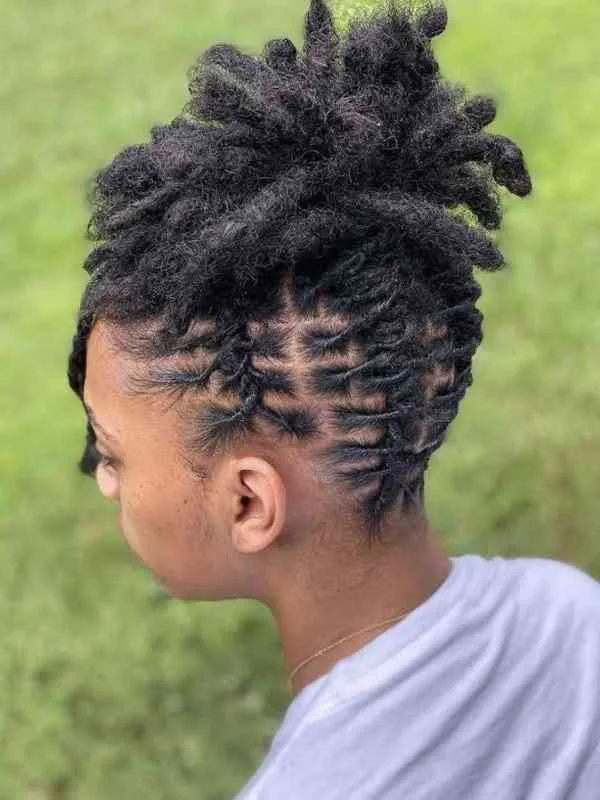
This guide on Tension-Free Updos for Mature Locs covers every major tension-free updo for mature locs. Each style here lifts, gathers, and shapes your locs beautifully.
Crucially, however, none of them require tight elastic tension, prolonged pulling, or repeated stress at the roots.
Whether your locs are shoulder-length or waist-length, these styles work. They are practical, polished, and genuinely protective when done correctly.
Tension-Free Updos for Mature Locs: Styles That Protect Without Pulling
1. Why Tension Matters More for Mature Locs
The Weight Problem in Tension-Free Updos for Mature Locs
Starter locs are light. They have little mass. As a result, the tension created by an updo on short, early locs is relatively minimal.
Mature locs, however, can weigh significantly more per strand.
Furthermore, when you gather many heavy locs and secure them at a single gathering point, you concentrate that weight into one tight zone of the scalp.
The scalp is not designed to bear that concentrated load repeatedly. Over time, the follicles in the gathering zone become stressed.
Consequently, the hair in those areas begins to thin. The thinning starts gradually and is easy to miss.
This Post explains The Ultimate Guide to Professional Loc Steam Treatments at Home: Restore, Hydrate, and Elevate Your Routine
By the time it becomes visible, however, the damage has usually been building for months.

Why Tension-Free Updos for Mature Locs Are Specifically Vulnerable
Younger locs are flexible. They bend and move easily. Mature locs, on the other hand, are rigid. They resist bending at tight angles.
Therefore, when a tight updo forces mature locs to bend sharply near the root, the stress is not distributed along the length of the loc. Instead, it concentrates right at the follicle.
Additionally, mature locs have often been through years of retwisting. The root area of each loc has been manipulated repeatedly.
As a result, that zone can be thinner and more delicate than the main body of the loc. Applying tight updo tension to an already-stressed root creates compounding damage that is difficult to reverse.
2. What Makes an Updo Truly Tension-Free
A tension-free updo achieves its shape through gathering, draping, and pinning rather than through elastic pulling.
The distinction matters. Elastic tension creates a fixed, continuous pulling force on the roots.
Gathering and pinning, on the other hand, distributes the weight of the locs across a broader surface area. Consequently, no single root zone bears the full load.
This article dives into How to Fix Thinning Locs at the Crown and Bring Your Locs Back to Life
Furthermore, a genuinely tension-free style should feel comfortable throughout the day. If your scalp aches after a few hours, the style is too tight.
If you feel pressure at the hairline or along the parting lines, the gathering point is too high or the hold is too firm.
A well-executed tension-free updo should feel as light as possible given the weight of your locs.
Additionally, the tools you use matter as much as the technique.

Satin scrunchies, spiral hair coils, soft fabric ties, and bobby pins placed correctly all reduce tension at the root.
In contrast, rubber bands, thin elastics, and metal clips create pressure points that damage the loc structure over time.
Switching your fastening tools is therefore one of the simplest and most immediate ways to reduce styling tension.
![]()
![]() 3. The Loose Low Bun
3. The Loose Low Bun
Why It Works
The loose low bun is the most reliably tension-free updo for mature locs. Because it sits at the nape of the neck rather than at the crown, the gathering point is close to the natural weight centre of the locs.
As a result, the locs do not have to be pulled upward against their natural fall. They simply gather downward, which requires almost no tension at the root.
Moreover, a loose low bun on mature locs carries significant elegance.
The weight and thickness of mature locs fill the bun naturally, creating a full, rounded shape that looks intentional.
Unlike starter locs, which often need padding or extensions to achieve a full bun, mature locs produce a generous bun from their own volume alone.

How to Create It Without Tension
Gather your locs loosely at the nape with one hand. Do not pull them tightly or lift them higher than the natural weight allows.
With your other hand, twist the gathered locs into a loose rope and coil them around the base. Secure with a satin scrunchie placed around the coil rather than tight at the root.
Instead of using pins to flatten the style into your head, allow it to sit gently at the nape without being forced into position.
For more insight 35 Loc Styles for Interviews: Professional, Polished, and Powerfully You
The bun should move slightly when you turn your head. That movement is a sign the tension is low. A bun that does not move at all has been secured too tightly.
4. The Pinned Cascade
What It Is
The pinned cascade gathers the top half of the locs and pins them loosely at the back of the head, allowing the remaining locs to fall freely below the pin point.
Unlike a bun, it does not wrap or coil all the locs. Instead, it simply holds the upper section back while the lower section hangs naturally.
This style is particularly effective for very long or very heavy mature locs.
Because only half the locs are gathered, the weight at the pin point is significantly less than a full bun creates.
Furthermore, the pinned section drapes rather than pulls, so the roots experience minimal upward tension.

How to Create It
Separate the top section of your locs at roughly ear height. Gather them loosely and fold them toward the back of the head.
Secure with two or three bobby pins placed horizontally through the gathered section. The pins should hold the fold without pressing tightly against the scalp.
Additionally, spread the pinned section slightly wider than you would for a bun.
A wider gathering point distributes the weight across more roots. As a result, each individual root bears less of the load.
Allow the unpinned lower locs to fall freely — their natural weight actually helps anchor the pinned section without adding any tension.
5. The Soft Loc Braid Crown
Why This Style Is Protective
A braid crown wraps sections of locs around the head in a circular pattern, creating the appearance of a crown.
Because the locs lie flat against the head rather than being gathered and pulled upward, this style exerts almost no upward tension on any root zone.
Moreover, the weight of the locs is distributed evenly around the entire circumference of the head.
Here’s a closer look at How to Start Sisterlocks on Natural Hair: A Beginner’s Step-by-Step Guide
Additionally, the braid crown covers the hairline completely.
This is particularly valuable for mature loc wearers whose edges have already experienced some thinning.
By laying the locs gently over the hairline rather than pulling them away from it, the crown style actively protects the most vulnerable part of the scalp.

How to Create It Without Tension
Begin at one side of the head, just above the ear. Take a section of locs and lay them flat toward the opposite side of the head.
Secure loosely with a pin at the ear on the far side. Repeat with additional sections, layering them across the head until the crown shape is complete.
The key is to lay, not pull.
Each section should rest against the head under its own weight. Therefore, avoid lifting sections high above the scalp as you work.
Furthermore, secure each section with the minimum number of pins required to hold it in place. Excess pinning creates unnecessary pressure points along the parting lines.
6. The Folded Updo
How It Differs From a Traditional Bun
A folded updo gathers the locs and folds them upward once rather than wrapping them into a coiled bun.
The fold creates a flat, structured shape at the back of the head without requiring the locs to wrap repeatedly around a central point.
As a result, the stress on the root zone is significantly lower than a full bun creates.
Furthermore, the folded updo works particularly well for very thick or very long mature locs.
Locs that are too heavy to coil into a comfortable bun can usually be folded upward comfortably.
The fold requires only one bend point rather than the multiple bends a coiled bun creates.

How to Execute It
Gather your locs at the nape as you would for a low bun. Rather than coiling them, fold the gathered bunch upward toward the back of your head.
Hold the fold loosely against your head and secure it with four to five flat bobby pins placed across the fold horizontally.
Allow the folded ends to sit naturally at the top of the fold rather than tucking them tightly underneath.
Similarly, do not press the entire fold flat against the head. A folded updo that sits slightly away from the head distributes weight more evenly than one that is pressed flat.
The style should look structured but not stiff.
7. The Twisted Low Updo
What Makes It Tension-Free
A twisted low updo takes two or three sections of locs and twists them around each other toward the nape before coiling them into a low bun.
The twisting motion distributes the gathering tension across the full length of each section.
Consequently, the root zone experiences far less concentrated pulling than a direct gather creates.
Moreover, the twist itself adds structure. Because the locs support each other through the twist, less external fastening is required.
As a result, you can secure the finished bun with a lighter, looser hold than you would need for an untwisted gather.
If you are looking to understand How to Start Locs on Short Hair: A Beautiful Beginner’s Guide to Your Loc Journey
The combined effect is a style that holds its shape firmly while exerting minimal root tension.

How to Create It
Divide your locs into two even sections from a centre parting at the nape.
Twist the right section clockwise and the left section counter-clockwise. Bring both twisted sections together and coil them around each other at the nape.
Secure with a satin scrunchie placed loosely around the coil.
Additionally, allow the gathering point to sit lower than you might instinctively position it. Many people pull their locs up slightly as they gather.
However, for a tension-free result, the gathering point should remain at or below the natural occipital bone at the back of the head.
Lower is always better for root health in mature loc styling.
8. The Half-Up Loc Tuck
Why It Works for Everyday Wear
The half-up loc tuck gathers only the top and side sections of the locs, leaving the lower sections to fall freely.
Because only a portion of the locs are gathered, the weight at the gathering point is lower.
Furthermore, the style works on any length of mature locs and requires very little time to create.
This style is also notably gentle on the hairline. The gathering point sits behind the crown, well away from the front hairline and temples.
You might enjoy reading How to Start Locs Yourself at Home Without a Loctician: A Simple, Confident Beginner’s Guide
As a result, the edges remain completely free from tension throughout the day.
For mature loc wearers experiencing any hairline sensitivity, the half-up tuck is often the most appropriate daily style.

How to Execute It Without Tension
Gather the top section of your locs, roughly from temple to temple and pull them gently toward the back of the crown.
Twist this gathered section once and fold it back on itself, creating a soft loop. Secure the base of the loop with two flat bobby pins placed crosswise.
Meanwhile, leave all remaining locs completely free. Do not add any additional pins or elastics to the loose portion.
The style should feel as though the upper locs are simply resting on top of the lower ones.
Therefore, if you feel any tension at the temples or front hairline while creating the style, reposition the gathering point further back.
9. The Headwrap Updo
How a Headwrap Becomes a Tension-Free Updo
A headwrap updo tucks the locs loosely inside the wrap rather than securing them with elastic or pins.
Because the wrap provides the structure, the locs themselves are not under any tension. They simply rest inside the fabric.
As a result, the roots experience no pulling force throughout the day.
Additionally, a headwrap updo is one of the fastest styling options for mature locs. It requires no mirror and no precision.
Furthermore, it is fully adjustable — if the locs feel uncomfortable inside the wrap at any point, the fabric can be loosened immediately.
This makes it an excellent option on days when the scalp is particularly sensitive.
How to Wrap Without Creating Internal Tension
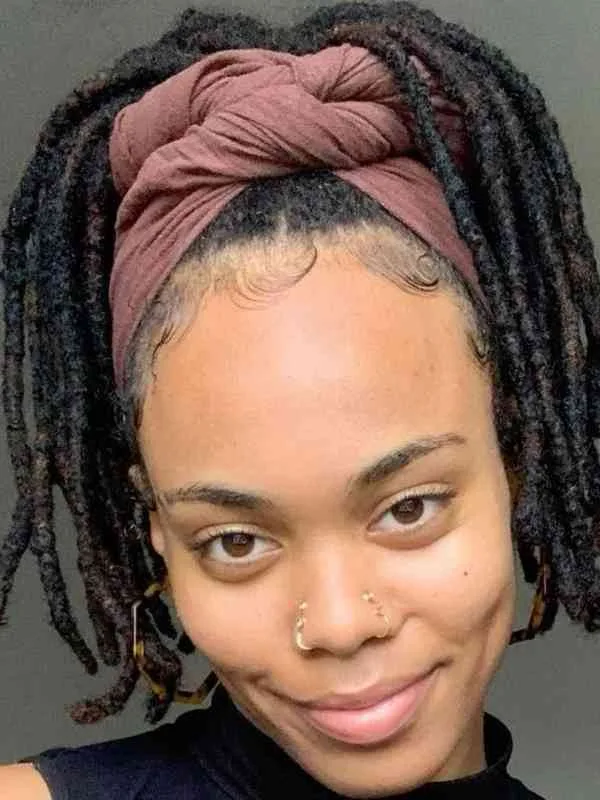
Gather your locs loosely and fold them into a low, soft bunch at the back of the head. Hold the bunch gently with one hand while you wrap the fabric around your head with the other.
Tuck the gathered locs inside the wrap as the fabric reaches the back of the head.
You may also like How to Remove Lint from Locs Without Causing Damage: A Gentle Care Guide for Healthy, Clean Locs
Consequently, the fabric holds the locs in place rather than any elastic or pinning at the root. Tie the wrap at the front using a loose knot or fold.
The wrap should sit snugly enough to stay in place but loosely enough that you can slide two fingers underneath it at any point.
Similarly, check that the fabric is not pulling at the hairline by pressing gently along the front edge of the wrap after tying.
Bad Ideas When Styling Mature Locs Into Updos
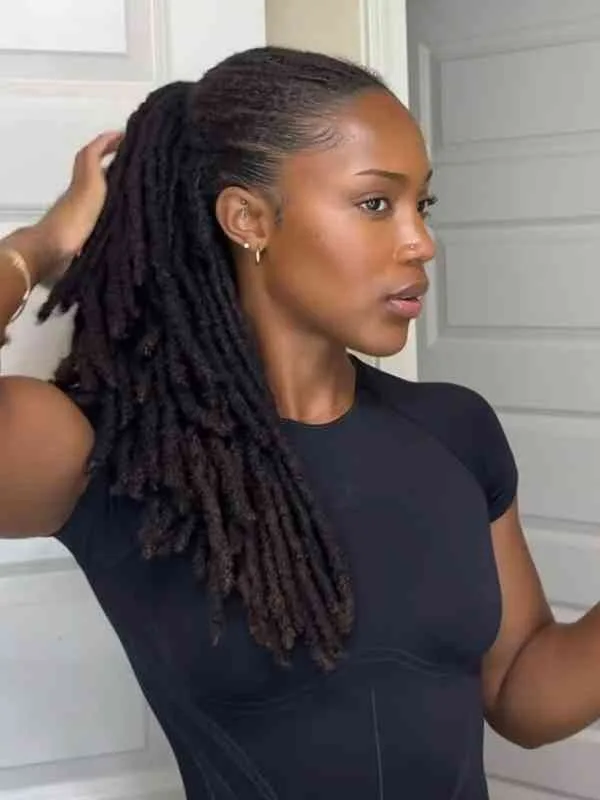
Using rubber bands or thin elastic hair ties directly on mature locs. Rubber bands cut into the loc structure at the wrapping point.
Over time, they create a permanent thinning indentation at the exact spot they were placed.
Moreover, removing them after a day of wear pulls individual strands free from the loc. Satin scrunchies and spiral coil ties avoid this damage entirely.
Wearing the same tight updo style in the same position every day. Even a moderately tight updo causes damage when the tension is applied repeatedly to the same roots.
Therefore, rotating your gathering point between styles gives each root zone adequate recovery time.
Alternating between a low bun, a half-up tuck, and a headwrap prevents the cumulative damage that any single repeated style causes.
Sleeping in a tightly gathered updo without a satin bonnet. Leaving mature locs tightly gathered overnight applies tension to the roots continuously for six to eight hours.
Additionally, the movement of sleep against a cotton pillowcase adds friction to an already-stressed style.
Both factors together accelerate root thinning faster than daytime styling alone. Always release the style before bed.
Pulling locs into a high updo to hide thinning at the roots. This is a deeply counterproductive response.
Thinning at the root zone is a sign that those roots need relief from tension.
Pulling the locs up and gathering them tightly to cover the thin area applies exactly the kind of force that caused the thinning.
The thinning will worsen. The correct response is to leave the area completely tension-free.
Over-pinning to force the style into a shape it does not naturally hold.
When a style requires twelve or fifteen bobby pins to stay in place, the style is fighting the natural weight and fall of the locs.
Each pin creates a pressure point. Consequently, by the end of the day, the scalp has absorbed the pressure of every single pin.
Use the minimum number of pins needed, and choose styles that work with the natural weight rather than against it.
You may enjoy reading 10 Dreadlock Edge Control Tips for Corporate Women: Stay Sleek Without Losing Your Style
Caring for Your Roots After Updo Styling

Even well-executed tension-free updos require intentional aftercare.
After removing any updo, take a moment to gently massage the root zones that were gathered or pinned. Use the pads of your fingers in slow circular motions.
This increases blood circulation to the follicles and helps relieve any residual compression from the style.
Additionally, apply a very light water-based spray to the roots after removing the style. Overnight compression reduces moisture at the root zone.
Rehydrating those roots before covering with a satin bonnet for the night gives the follicles the moisture they need to recover fully by morning.
Furthermore, check your gathering zones weekly for any early signs of thinning.
The first sign is usually a slightly shorter, finer fringe of hair at the spot where the style was gathered most frequently.
Catching this early allows you to adjust your styling approach before the thinning progresses. Early action is always more effective than waiting until the loss is clearly visible.
Final Words on Tension-Free Updos for Mature Locs
Mature locs deserve styling that honours the years it took to grow them.
Every root zone that thins from repeated updo tension is a root zone that grew through the starter phase, through budding, through the teen stage, and into full maturity.
That growth is worth protecting.
Tension-free updos are not a compromise.
They are not less polished or less intentional than tightly secured styles.
On the contrary, a well-executed loose low bun or a softly pinned cascade on mature locs looks more elegant than a strained high bun ever does.
The difference is that one ages your locs gracefully while the other works against them.
Choose styles that gather rather than pull.
Secure with fabric rather than elastic. Rotate your gathering points daily. Release every updo before sleep.
Over time, these habits compound into locs that remain full, strong, and beautiful at the root — which is ultimately the only place that matters for the long-term health of your hair.
This Post Showed You Tension-Free Updos for Mature Locs: Styles That Protect Without Pulling.