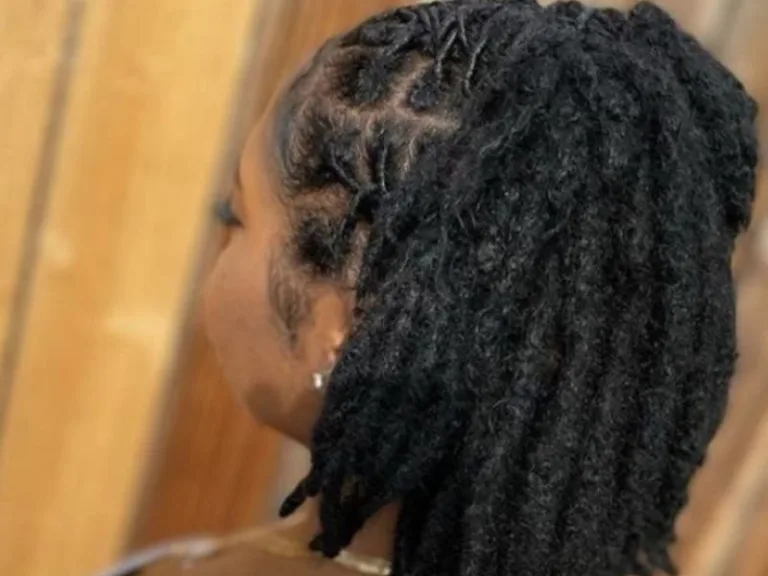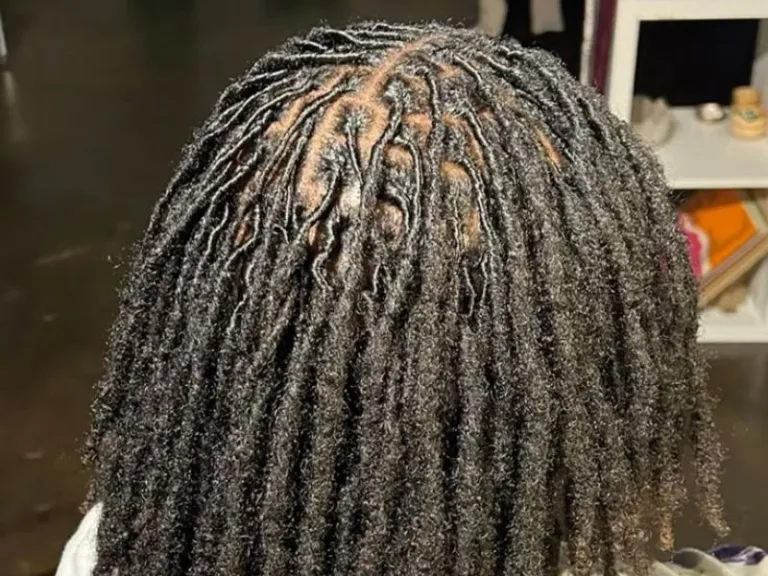
This Post Will Show You Best Sweat-Wicking Headbands for Locs (What Works and What to Avoid).
You just finished a solid workout. Your energy is high.
Then you reach toward your roots and feel it – that damp, heavy weight sitting right at your hairline.
Sweat and locs are genuinely complicated. Locs are dense, tightly compressed structures.
Unlike loose hair, they trap moisture deep inside every strand. Once sweat enters the loc, it does not leave quickly.
Mature locs can take up to twenty-four hours to dry completely after saturation. Meanwhile, the salt, bacteria, and mineral residue from that sweat begin building inside the strand.
Over time, that buildup creates persistent odour, scalp irritation, and brittleness that even a thorough wash day struggles to clear completely.
The right sweat-wicking headband changes this equation. A well-chosen band intercepts moisture before it reaches the root zone.

It moves that sweat through the fabric and outward, where it evaporates quickly.
As a result, locs stay significantly drier during exercise and recover faster afterward.
This guide Best Sweat-Wicking Headbands for Locs covers everything: the right fabrics, the ideal width, the grip features that actually work for locs, the styles worth considering, and the care habits that make headband use genuinely protective.
Below are Best Sweat-Wicking Headbands for Locs:
Best Sweat-Wicking Headbands for Locs (What Works and What to Avoid)
1. Why Sweat Is a Specific Problem for Locs
How Locs Trap Moisture Internally
Loose hair dries easily because individual strands are exposed to open air. Locs work very differently.
They are compressed and layered internally. Therefore, any moisture that reaches the root zone wicks inward and stays trapped.
Furthermore, the thicker a loc is, the longer that trapped moisture lingers. Fine locs may dry in eight to twelve hours.
Thick, mature locs need significantly longer.
Consequently, workouts that saturate the root zone repeatedly – without full drying between sessions – increase the risk of mildew developing deep inside the strand over time.

What Sweat Leaves Behind for Best Sweat-Wicking Headbands for Locs
Sweat contains salt, lactic acid, and urea. These are normal byproducts of the body cooling itself.
However, when they sit on the scalp repeatedly without being rinsed, they disrupt its natural pH balance.
As a result, the scalp becomes more prone to irritation, flaking, and excess oil production.
This Post explains How to Fix Thinning Locs at the Crown and Bring Your Locs Back to Life
Additionally, salt from sweat dehydrates both the scalp and strands over time. Repeated dehydration makes locs brittle.
Moreover, sweat residue combines with product buildup already inside the loc.
Over multiple sessions, that compounded residue hardens and becomes very difficult to shift through regular shampooing alone.
2. Wicking vs Absorbing — The Difference That Matters Most
What These Terms Actually Mean
These two words appear interchangeably in most headband marketing. They describe entirely different processes.
Absorbing means a fabric soaks up moisture and holds it. Wicking means a fabric pulls moisture away from the skin and moves it to the outer surface, where it evaporates.
For loc wearers, a wicking fabric is far more protective than an absorbing one.
An absorbing headband saturates quickly during a serious workout. It then holds that moisture pressed firmly against the hairline for the rest of the session.
In contrast, a wicking headband moves moisture outward before it can travel into the loc structure.
Consequently, roots stay significantly drier throughout the workout.

Why Drying Speed Matters Just as Much
A headband that wicks during exercise but stays wet for two hours afterward is still a problem. It continues depositing moisture into the root zone long after the workout ends.
Therefore, drying speed is not a bonus feature. It is a core requirement for any headband that genuinely protects locs.
Furthermore, a headband that dries slowly harbours bacteria between wash sessions.
That bacteria produces the musty smell many loc wearers notice after consistent gym use.
Moreover, a smelly headband transfers that odour directly to the hairline during the next workout, compounding the scalp issues it was supposed to prevent.
For more insight How to Start Sisterlocks on Natural Hair: A Beginner’s Step-by-Step Guide
Pro Tip: Remove your headband the moment the workout ends.
Once the band is fully saturated, it stops wicking and starts transferring stored moisture back into the root zone.
Removing it promptly stops that reverse transfer completely.
3. The Best Fabrics for Sweat-Wicking Headbands for Locs
Nylon and Spandex Blends
Nylon-spandex blends are the most loc-friendly wicking fabric available.
The nylon component moves moisture from the inner surface to the outer layer quickly.
The spandex adds four-way stretch, which allows the headband to conform to the three-dimensional, uneven surface of gathered locs.
Consequently, the band grips more consistently without needing tight elastic tension at the hairline.
Additionally, nylon is naturally smoother than most other synthetic fabrics. That smoothness matters specifically for locs.
A smooth inner surface creates less friction against the root zone during movement.
In contrast, rougher fabrics gradually frizz the front locs and disturb root structure through repeated mechanical contact.
For this reason, nylon-spandex is the top fabric recommendation for loc wearers.
Polyester Microfibre
Polyester microfibre is the most widely available wicking fabric in athletic headbands.
It pulls moisture away from the skin efficiently and dries very quickly after a session.
Most major athletic brands use polyester microfibre as their core headband material, precisely because of its reliable wicking performance.
Here’s a closer look at How to Start Locs on Short Hair: A Beautiful Beginner’s Guide to Your Loc Journey
However, standard polyester microfibre has a notable limitation for locs.
It grips less reliably on the textured, non-flat surface of gathered locs than on straight hair. As a result, polyester bands tend to slide backward during high-intensity movement.
Therefore, when choosing polyester headbands, specifically look for versions with silicone grip strips along the inner edge.
That single feature resolves the sliding problem.

Bamboo Fabric
Bamboo fabric is the gentlest natural wicking option for sensitive scalps. It is significantly softer than synthetic fabrics at the hairline.
Furthermore, bamboo has natural antimicrobial properties that reduce the bacteria growth responsible for headband odour between washes.
For loc wearers with reactive hairlines, bamboo is therefore a preferable alternative to synthetic materials.
The limitation of bamboo is its drying speed. It absorbs moisture well but releases it more slowly than polyester or nylon.
As a result, a bamboo headband stays damp longer after a session.
Nevertheless, for lower-intensity workouts – yoga, walking, or light training – bamboo headbands offer very comfortable, skin-friendly performance.
Why Standard Cotton Must Be Avoided
Cotton is the most common headband material. It is also the worst choice for loc wearers who exercise.
Cotton absorbs and holds moisture rather than wicking it.
Check out our How to Start Locs Yourself at Home Without a Loctician: A Simple, Confident Beginner’s Guide
Consequently, a cotton headband saturates within the first fifteen minutes of a hard workout and then sits as a wet compress against the root zone for the remainder of the session.
Moreover, cotton sheds fibres.
This is a specific problem for locs.
Those fibres enter the outer layer of the loc at the hairline with every use. Over repeated sessions, cotton headbands directly contribute to lint accumulation at the front of the locs.
Replacing cotton with any wicking alternative is one of the most immediate protective decisions a loc wearer can make.
Pro Tip: Check the inside label before buying any headband. If cotton is the primary material listed, choose something else.
Look for polyester, nylon, or bamboo listed first. Products marketed as “Dri-FIT,” “quick-dry,” or “moisture-wicking” almost always meet this standard.
4. Width — Why Bigger Is Better for Locs
What Width Actually Controls
The width of a headband determines how much of the hairline and root zone it protects during exercise.
A narrow band covers only a thin strip at the front forehead.
As a result, sweat from the temples, crown, and sides travels freely into the loc roots above and behind the band.

Furthermore, narrow headbands slide backward on locs far more often than wide ones.
This article dives into Best Grid Patterns for Small DIY Locs: How to Choose the Perfect One for Your Hair
The weight and shape of gathered locs create a raised, irregular dome at the back of the head. A narrow band has minimal contact area to grip against that surface.
Consequently, it migrates backward during movement until it provides no hairline coverage at all.
The Right Width Range for Most Loc Wearers
A headband between three and four inches wide provides the best coverage for most loc wearers.
This width covers the full hairline, both temples, and the first inch of scalp above the front locs.
Additionally, wider bands have more surface area in contact with the scalp, which creates more stable grip without requiring tight elastic tension.
For very high-density or voluminous locs, some wearers prefer a wrap-style band covering the entire upper scalp.
These wider wraps distribute sweat absorption across a much larger fabric area.
Consequently, they saturate more slowly during the same session and maintain their wicking performance for longer.
5. Grip — The Most Critical Feature for Locs
Why Locs Create a Unique Grip Challenge
Straight hair lies relatively flat against the scalp.
Locs sit at varying heights and create a textured, three-dimensional surface that standard headbands are not designed to grip.
Therefore, maintaining a stable fit during exercise is a specific challenge that most general headband reviews do not address.
Moreover, when locs are gathered into a bun for a workout, the back of the head becomes a smooth, rounded dome.
A standard elastic band placed in front of that dome has very little friction to hold on to. As a result, it slides backward repeatedly during movement.
This is a surface problem, not a tightness problem, and it requires a headband built for textured hair.

Features That Genuinely Solve the Sliding
Silicone grip strips along the inner edge are the most effective solution for locs.
These thin strips create friction against the loc surface without gripping tightly enough to disturb the root structure.
Consequently, the band stays in place through high-intensity movement without needing the tight elastic tension that damages the hairline over time.
Tie-back headbands solve the same problem differently. Instead of relying on elastic tension, they wrap around the head and secure at the nape with adjustable ties.
Therefore, the fit is fully customisable to the exact shape and volume of the locs underneath.
Additionally, tie-back styles exert zero elastic pressure on the hairline – a meaningful bonus for loc wearers concerned about edge health.
If you are looking to understand How to Remove Lint from Locs Without Causing Damage: A Gentle Care Guide for Healthy, Clean Locs
Pro Tip: If your headband slides despite silicone grip strips, position it slightly lower on the forehead.
Placing it just below the first row of locs rather than at the scalp edge gives the grip strip more loc surface to contact.
This one adjustment significantly improves stability during movement.
6. Headband Styles Worth Choosing for Locs
The Wide Athletic Band
A wide athletic band – typically three to four inches tall, made from nylon-spandex or polyester with silicone grip – is the most practical everyday workout headband for loc wearers.
It stays in place effectively, provides solid hairline coverage, and is readily available at most athletic retailers.
This style works especially well when locs are gathered into a high or low bun. The band protects the front hairline while the bun keeps remaining locs elevated away from the neck and back.
Consequently, only the root zone at the front is exposed to sweat during the workout, and the headband addresses exactly that area.
The Tie-Back Wrap
The tie-back wrap is a longer rectangular piece of wicking fabric that wraps around the head and ties at the nape or crown.
Because it ties rather than depending on elastic tension, it conforms precisely to the head regardless of how locs are arranged underneath.
As a result, it is one of the most universally effective headband options for loc wearers at any stage of growth.

Furthermore, the adjustable tie allows the band to be loosened instantly if it starts to feel tight during exercise.
This is particularly valuable for loc wearers with scalp sensitivity.
Moreover, tie-back wraps come in wider widths than standard elastic bands, making them well-suited for high-sweat sessions where broader coverage is needed.
You may be interested in reading Best Grid Patterns for Small DIY Locs: How to Choose the Perfect One for Your Hair
The Multi-Layer Gym Wrap
Multi-layer gym wraps – popularised by GymWrap and Gymshark’s Diffuse Sweat Headband, which was designed specifically with Black hair in mind – use a double-layer construction.
The outer layer wicks moisture.
The inner layer captures whatever the outer layer transfers.
As a result, sweat moves through two stages of management before it can reach the hairline.
Additionally, many of these designs include ventilation panels that allow heat to escape from the scalp during exercise.
A cooler scalp produces less sweat overall. Therefore, these headbands reduce the moisture problem at its source rather than simply managing it after it forms.
7. How to Wear Your Headband Correctly for Locs
Positioning for Maximum Protection
Most people place their headband directly at the hairline edge. For locs, a slightly higher position often works better.
Placing the band approximately one inch above the actual hairline covers a strip of scalp between the band and the front locs.
This creates a useful buffer zone.
Consequently, any sweat the band does not fully intercept has further to travel before reaching the first row of locs.
Furthermore, sitting slightly above the hairline gives the band more flat scalp surface to grip rather than resting entirely on the irregular surface of the front locs.
The result is better stability and better coverage simultaneously.
Always Pair the Headband With an Updo

A sweat-wicking headband manages the front hairline and temples.
It does not address the neck, back, or sides of the head, which produce significant sweat during intense exercise.
Therefore, a headband alone is not a complete solution for loc wearers who train hard or run warm.
Pairing the headband with a high bun or loose updo keeps remaining locs elevated away from the highest sweat-production zones. Additionally, elevated locs benefit from improved airflow around the scalp.
Better airflow means faster evaporation of any moisture that does reach the root zone.
The combination of a wide wicking headband at the front and a gathered updo at the back provides the most complete sweat management strategy available.
For more insight Tension-Free Updos for Mature Locs: Protective Styles That Slay Without Pulling
Pro Tip: After your workout, mist the scalp and hairline with plain water before air-drying.
This dilutes the salt concentration sweat leaves at the root zone before it compounds with existing buildup.
It significantly reduces the dehydrating effect of repeated sweat residue between wash sessions.
8. Caring for Your Headbands to Keep Them Performing
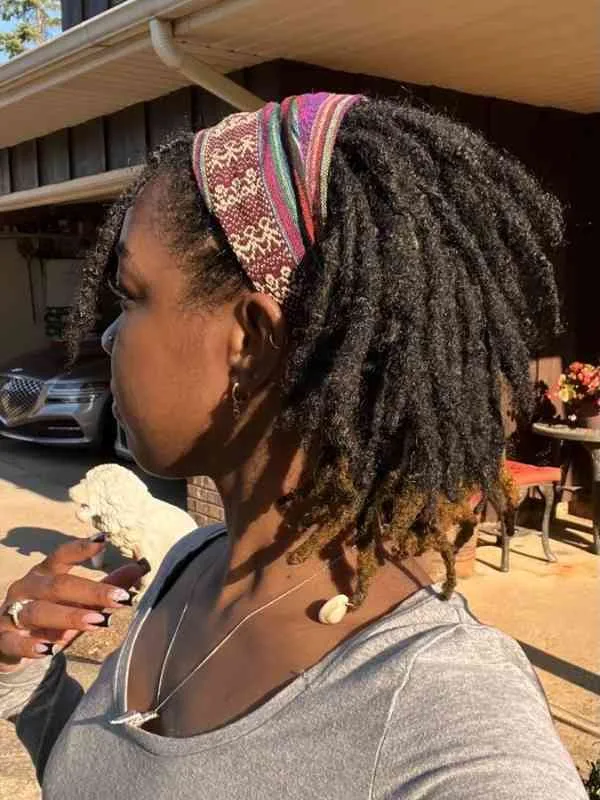
Even the best wicking headband loses its performance without proper care.
Sweat residue, detergent buildup, and fabric softener all damage the wicking properties of synthetic fibres over time.
Consequently, a headband that performs well in month one may be noticeably less effective by month three if it is not maintained correctly.
Wash headbands after every single use.
Sweat left in fabric feeds bacteria growth, degrades antimicrobial fabric treatments, and causes persistent odour.
Furthermore, avoid fabric softener entirely when laundering wicking headbands.
Softener coats the microscopic channels responsible for moisture movement with a waxy residue.
As a result, treated headbands gradually absorb sweat instead of wicking it, defeating their entire purpose.
Air-dry wicking headbands rather than tumble-drying them. High dryer heat degrades spandex elasticity over time.
Moreover, it can permanently damage silicone grip strips.
A headband that has lost its grip is essentially useless for loc wearers.
Air-drying preserves both the wicking fabric and the grip components significantly longer.
Bad Ideas When Choosing the Best Sweat-Wicking Headbands for Locs

Using a standard cotton headband during intense workouts.
Cotton saturates quickly and holds all that moisture pressed against the root zone for the entire session.
Moreover, cotton sheds fibres that enter the front locs with every use, directly contributing to lint buildup over time.
Replacing cotton with any wicking option is the most immediate protective upgrade available to loc wearers who exercise.
Pulling the band as tight as possible to stop it from sliding.
Tight elastic tension applied repeatedly to the same hairline causes cumulative traction damage over time.
Furthermore, tightening does not fix the underlying sliding problem. Locs cause headbands to slide because the surface is textured and irregular, not because the band is too loose.
A wider band with silicone grip solves the problem without any tension increase at the hairline.
Leaving a saturated headband on after the workout ends.
Once a headband is saturated, it stops wicking and begins transferring stored moisture back into the root zone.
Consequently, the longer it remains on after exercise ends, the more moisture the locs absorb from the band itself.
Removing it immediately at the end of the session eliminates this post-workout moisture transfer entirely.
Washing wicking headbands with fabric softener. Softener progressively coats the wicking channels in synthetic fabric, reducing moisture transfer with every wash cycle.
Additionally, softener residue transfers to the hairline during the next workout, compounding the buildup the headband was designed to prevent.
Gentle detergent only, every single wash.
Using the headband as the only sweat strategy without gathering the locs. A headband protects the front hairline only.
It does not address the neck, back, or sides of the head.
Without gathering locs into an updo during exercise, the lower sections absorb sweat from every high-production zone the headband cannot reach.
Therefore, pairing the headband with an updo is always more effective than either strategy alone.
You may enjoy reading 20 Tinned Fish Picnic Date Night Ideas for Simple, Romantic Moments on a Budget
Post-Workout Loc Care to Complement Your Headband
A good headband reduces sweat exposure for your locs. It does not eliminate moisture entirely.
Therefore, post-workout loc care remains important regardless of which headband you use or how well it performs.
After every session, mist the hairline and scalp with a plain water spray.
This dilutes the salt concentration sweat leaves at the root zone before it can compound with existing buildup inside the strand.
Furthermore, a gentle fingertip scalp massage after each workout increases blood circulation to the follicles and helps loosen surface residue before it sets.
Additionally, allow locs to air out fully before covering them for the night.
Covering warm, damp locs immediately after a workout traps moisture inside the strand, creating ideal conditions for mildew to develop.
Give them at least thirty minutes of open airflow after every session.
Consequently, locs dry more completely and post-workout odour reduces significantly over time.
Pro Tip: On non-wash days after a heavy workout, mix one tablespoon of witch hazel with two tablespoons of water in a small spray bottle.
Apply directly to the scalp with a cotton pad. It removes sweat residue, rebalances pH, and refreshes the scalp without needing a full wash session.
Final Words On Best Sweat-Wicking Headbands for Locs
Your locs do not have to absorb every drop of sweat from every workout you do.
The right headband, positioned correctly and paired with a simple updo, makes a measurable difference in how your locs hold up through consistent training.
The goal is not a perfectly dry scalp during exercise. That is not realistic.
The goal is to intercept as much sweat as possible before it reaches the root zone, and to ensure whatever does get through dries completely between sessions.
A wide nylon-spandex band with silicone grip and fast-drying fabric achieves both objectives.
Choose your headband the way you choose every product for your locs – based on what your hair actually needs, not what looks good in a product photo.
Wicking over absorbing. Width over narrow. Grip over tension. Air-dry over heat. Your locs carry years of patience and intention.
They deserve protection that genuinely works.
This Post Showed You Best Sweat-Wicking Headbands for Locs (What Works and What to Avoid).